Right in the heart of Tokyo, HOSHINOYA Tokyo masterfully weaves together the atmosphere of Edo and the deeper layers of Japanese culture. This is not just a place to stay—it is a sanctuary where architectural beauty blending tradition and modernity, cultural experiences that engage all five senses, and refined gastronomy create an extraordinary world.
Here, away from the bustle of the city, the vertical ryokan format delivers an uncommon retreat—an experience that resonates profoundly with travelers who thrive on intellectual curiosity.
What makes this fascinating is how the very notion of “luxury” in Japan often diverges from Western expectations. In Europe or North America, opulence is frequently associated with grandiose decoration or expansive space. By contrast, the Japanese aesthetic embodied at HOSHINOYA Tokyo rests on the “art of subtraction”—stripping away the unnecessary to reveal essential beauty. This contrasting approach becomes the key to stirring emotion that transcends cultural differences.
As a luxury ryokan that fuses traditional Japanese aesthetics with state-of-the-art technology, HOSHINOYA Tokyo has earned worldwide recognition.
This article is one doorway into the world of the ryokan. The Digital Guide draws its architecture, hospitality, and the quiet rituals of an anniversary stay into a single, connected reading.
Continue with the Digital Guide:
The Ultimate Ryokan Guide for Your Anniversary Celebration in Japan
The Architectural Beauty and Traditional Design of HOSHINOYA Tokyo
Breathing Edo spirit into a modern metropolis—HOSHINOYA Tokyo’s architecture captivates travelers eager to explore Japanese culture in depth. To truly appreciate it, however, you need to recognize the fundamental differences between Japanese and Western architecture.
While Western buildings often emphasize permanence and commemoration, Japanese architecture has traditionally valued adaptability and harmony with nature. These approaches stem not from superiority but from distinct climates and historical contexts, each reflecting a unique cultural sensibility.
By integrating traditional materials and motifs into a modern skyscraper, HOSHINOYA Tokyo has succeeded in re-creating the ryokan world within an urban structure—a vision that continues to draw global attention (*1).
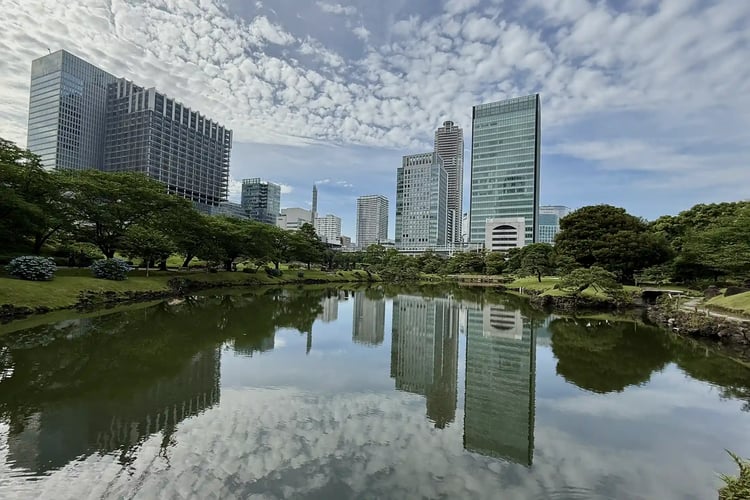
Architectural Philosophy and Design Inspirations
The philosophy guiding HOSHINOYA Tokyo merges centuries-old materials with the aesthetic sensibility of Edo culture. The vertical latticework covering its exterior is a modern reinterpretation of kōshido, the latticed wooden doors widely used in Edo-era townhouses.
Unlike the Western idea of privacy as complete separation, the lattice embodies Japan’s nuanced perception of space—an ambiguous boundary where inside and outside gently interconnect. These lattices filter views while letting wind and light flow through, softening the noise of the city (*1).
Inside, shoji screens and washi partitions create gentle boundaries that diffuse natural light into subtle gradations of shadow. This contrasts with the Western tendency for sharply defined rooms; in Japan, ambiguity between spaces has long been prized for creating openness. Washi, traditionally used for sliding doors, fusuma panels, and lighting, is lightweight and uniquely disperses light in a soft, hazy glow (*2).
Stone also plays a role. The black granite in entrances and shared spaces recalls the fortifications of Edo Castle, combining historical gravitas with modern sleekness. Beneath all this lies the Japanese concept of ma—not just empty space, but an aesthetic of balance shaped by light, shadow, sound, and movement (*3). At HOSHINOYA Tokyo, ma flows throughout, creating tranquility in the heart of the metropolis.
%20filled%20with%20soft%20sunlight.webp?width=750&height=500&name=A%20Washitsu%20(Japanese-style%20room)%20filled%20with%20soft%20sunlight.webp)
Interior Aesthetics and Artistic Spaces
The interiors of HOSHINOYA Tokyo breathe the aesthetic of “Japanese modern.” Tatami floors expand across the rooms, low wooden furniture draws your gaze horizontally, and simplicity guides the atmosphere.
This choice of “low furniture” is not only traditional but rooted in Japanese bodily culture. Life seated on the floor fosters a different sense of connection to nature than the chair-based lifestyle of the West. Importantly, these are not better or worse but adaptations formed over centuries. Low furniture broadens a room’s sense of space while reducing any feeling of confinement (*1).
Lighting here deserves special mention. Washi lampshades soften illumination, filling each room with gentle radiance. Unlike Western direct lighting, Japanese lighting embraces shadow—valuing gradations of darkness as part of beauty.
Contemporary artworks, often drawing on traditional techniques, accentuate the spaces. Lacquer panel art, folding-screen-inspired works with gold leaf, and other reinterpretations of heritage motifs elevate the ambiance. These are not mere decorations but intellectual cues, inviting you to engage with Japanese culture on a deeper level (*2).
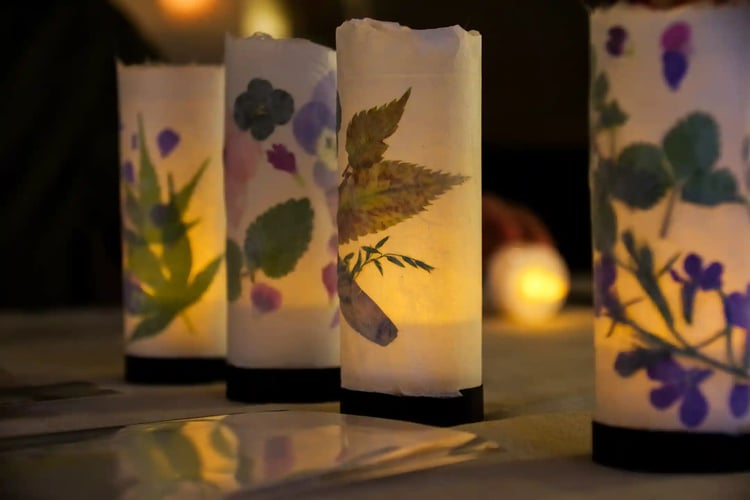
The Concept of a Vertical Luxury Ryokan in the City
What makes HOSHINOYA Tokyo so distinctive is its role as a “vertical ryokan”—a reimagining of the traditional inn within a skyscraper. Normally, ryokan are low-rise, merging seamlessly with nature. Here, the challenge was to transpose that sensibility into the constraints of an urban high-rise (*1).
This “vertical ryokan” is itself a cultural dialogue, merging Western skyscraper engineering with Japanese ryokan tradition. Each floor functions as part of a single ryokan, and every elevator ride shifts you into a subtly different atmosphere.
A striking feature is the practice of removing shoes throughout the building. Far beyond cleanliness, this custom carries ritual meaning—marking the threshold between outer and inner worlds. For many Western guests, slipping off shoes may feel unusual, yet it is a window into Japanese respect for space and purity (*2).
The result is a hidden sanctuary within the city: convenience paired with spiritual retreat, offering you a cultural exploration in vertical form.
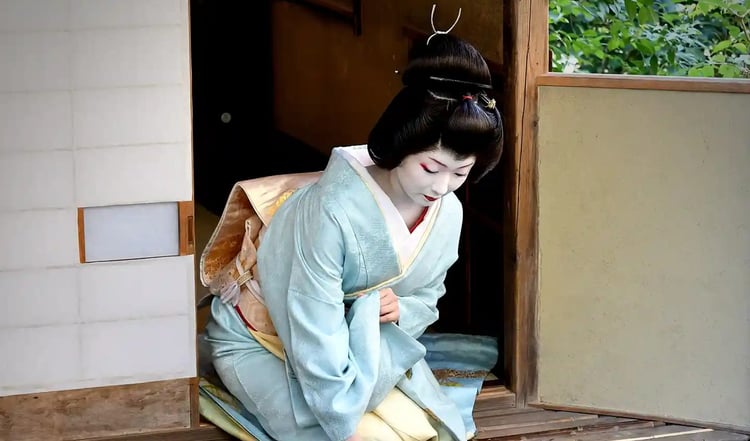
Where HOSHINOYA Tokyo Sits Among Tokyo’s Traditional Ryokan
Tokyo has no shortage of places to sleep, from international luxury chains to long-established Western-style hotels. Authentic Japanese-style ryokan, though—the kind with a genuinely wa atmosphere—are surprisingly few. That scarcity is part of what makes the survivors worth understanding, and it is also the context in which HOSHINOYA Tokyo’s choices make the most sense. Knowing what the city’s other ryokan are doing sharpens what is distinctive here.
From Edo Hatago to the Ryokan of Today
Trace the modern ryokan back far enough and you arrive at the hatago of the Edo period—the inns of the old highways and post towns. Travellers of every rank passed through Edo, from feudal lords on their mandatory journeys to ordinary townspeople, lodging at hatago or at the plainer mokuchin-yado, where you paid for floor space and little else. The ryokan of today inherited that lodging culture and its habits of hospitality, then developed further from the late nineteenth century onward. A handful of Tokyo ryokan have been operating since the Meiji era, and their buildings still carry the record. Hōmeikan in Hongō is a pure Japanese-style inn in a district once beloved by Natsume Sōseki and Mori Ōgai; its main building is now more than 120 years old and registered as a Tangible Cultural Property, and all three of its buildings still read much as they did at their founding. The wooden corridors, originally laid out for a student boarding house, remain narrow, and sliding a shōji open puts you straight into a guest room. Each room keeps its own flourish—a tokonoma alcove using a whole tree trunk as its pillar, or a fan-shaped window in the glass.
The Vertical Ryokan, in Concrete Terms
The urban ryokan is not one idea but several. ONSEN RYOKAN YUEN SHINJUKU, which opened in 2019, occupies an eighteen-storey tower in the middle of Shinjuku and puts an open-air hot spring bath on its top floor, filled with water brought from a Hakone source—real onsen water surrounded by skyscrapers. HOSHINOYA Tokyo answers the same question differently. It is a seventeen-storey building with two basement levels in the Ōtemachi business district, its exterior clad in a lattice worked in the traditional hemp-leaf pattern. Each floor holds only six guest rooms around a shared ochanoma lounge, so that every floor behaves like a small ryokan of its own. You spend the stay barefoot on tatami, as you would in a house. The rooms are built from natural materials throughout—tatami, washi, bamboo—with woven bamboo closets and thick drum-style shōji, and they add two pieces of furniture invented for the problem: a tatami sofa you use while still on the mats, and a futon bed that keeps the comfort of a futon in the familiar shape of a bed.
Ryokan Where the Furnishings Do the Talking
Elsewhere in the city, the furnishings carry the story. Andon Ryokan, in the old-downtown neighborhood of Minowa, was Tokyo’s first designer ryokan; its architecture takes its cue from the soft glow of andon paper lanterns and from the semi-communal housing of the Shōwa era, and it has been recognized with a prize from the Architectural Institute of Japan. Its lobby lounge holds antique mizuya cupboards and stained glass the owners collected across Japan over many years, pieces well past their first century, set against contemporary minimalist lines. Ryumeikan Honkan in Ochanomizu took a different route: a 116-year-old ryokan that evolved into a small all-suite hotel, keeping tatami areas and shōji with intricate kumiko latticework while meeting the standards of a modern high-end hotel in its beds and amenities, and adding a library lounge where you can sink into a chair with a book and a coffee. Seen alongside these, HOSHINOYA Tokyo is neither the most historic nor the most eclectic—it is the most thoroughly committed to reproducing a whole ryokan, vertically, without conceding the format.
Immersive Cultural Experiences at HOSHINOYA Tokyo
HOSHINOYA Tokyo is far more than a place to sleep—it’s a space where you engage all five senses and satisfy your intellectual curiosity through living culture. The key is not to present Japanese culture as a museum exhibit, but to invite you into a culture that’s very much alive.
While individual freedom and self-expression are deeply rooted values in many Western societies, Japan has cultivated a heritage that also treasures social harmony and the continuity of forms. These differences shape how cultural experiences are understood. At HOSHINOYA Tokyo, programs are carefully designed so guests from diverse backgrounds can grasp the essence of Japanese culture. Even in the heart of the city, you’ll encounter time-honored rituals and arts that spark discovery and wonder (*1).
Seasonal Rituals and Traditional Performing Arts
Throughout the year, HOSHINOYA Tokyo hosts a rich calendar of events tied to Japan’s seasons. In spring, for example, handcrafted hina dolls for the Girls’ Festival welcome you in the lobby.
.webp?width=750&height=500&name=Hina%20Ningyo%20(Dolls%20for%20the%20Girls_%20Festival).webp)
These seasonal observances are inseparable from Japan’s view of nature. Whereas some Western traditions have often framed nature as something to conquer or manage, Japanese life has long sought harmony with natural rhythms. This is not a matter of better or worse—it’s the outcome of different environments and histories. Experiencing customs like the Girls’ Festival helps you discover a new sense of time.
Summer brings the clear tones of wind chimes; autumn introduces displays that celebrate the turning leaves; winter features New Year’s decorations and kakizome (the first calligraphy of the year). Each season is thoughtfully expressed (*1).
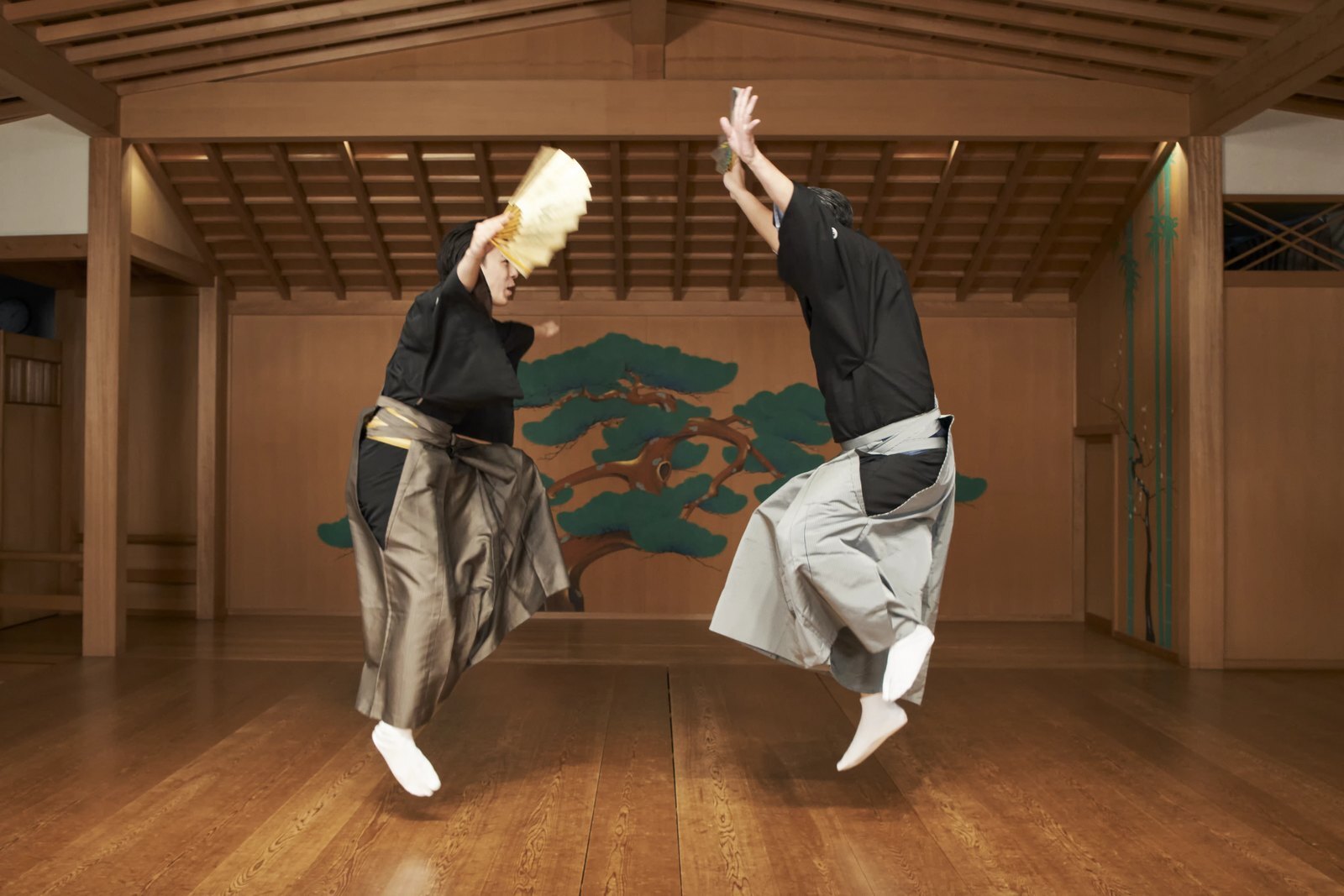
Programs may also include gagaku court music, tea ceremony, and incense ceremony, all supervised by experts. Gagaku, Japan’s oldest musical form dating back to the Nara period, creates a solemn sound world (*2). A fascinating aspect is its embrace of ma—the eloquence of silence. Whereas many Western musical traditions prize continuity of notes, gagaku treats the spaces between sounds as part of the music. It invites you to hear differently.
Tea and incense practices embody the spirit of ichigo ichie—cherishing each unrepeatable moment. Rather than only learning about traditions, you experience them yourself and come away with a deeper understanding.
Morning Practice, High Above Ōtemachi
Some of the programs take advantage of the building itself. A morning practice session is held in the rooftop garden, some 160 meters above the ground, combining sword-movement forms with deep breathing. The movements draw on Edo-period samurai training, and doing them in open air at that height leaves you noticeably clearer for the rest of the day—it is a cultural experience delivered as physical exercise rather than as explanation.
How the Cultural Programmes Actually Run
In practice, most of these sessions are smaller and less formal than the word “ceremony” suggests. A tea ceremony experience may be held in one corner of the ochanoma lounge, where staff guide you through whisking your own bowl of matcha and explain the meaning behind each gesture; the setting is relaxed enough that a complete beginner is not put on the spot, and you drink your own tea with a seasonal sweet. Gagaku, Japan’s ancient court music, may be performed live on certain days of the week, and hearing it in a tatami space is the kind of thing that stays with you long after the trip. There is a wider movement behind this. The Tokyo Metropolitan Government has been encouraging accommodations to partner with local experience-based tourism providers, which is why you now find ryokan converting a room into a tearoom, installing a small stage for Japanese dance or Noh, or arranging taiko and koto sessions, kendo or judo practice, sumo training observation, and kimono dressing with professional stylists.
Workshops for Learning Traditional Culture
If you’re driven by curiosity, HOSHINOYA Tokyo’s workshops are especially rewarding. In calligraphy, you feel the sweep of the brush, the fragrance of ink, and the texture of paper as you explore the aesthetics of written Japanese.
Calligraphy here is not merely a technique for writing characters; it has long been revered as an art that expresses the state of one’s heart and mind (*1). While Western calligraphy often emphasizes ornamental beauty, Japanese calligraphy stems from the idea of unity between technique and spirit—the writer’s inner condition is revealed on the paper. Understanding this difference deepens your appreciation of distinct writing cultures.
In the lacquerware workshop, you handle materials directly, discovering the lustrous depth and unique tactility of lacquer. Highly durable and profoundly beautiful, lacquer has become a cultural emblem—consider the very word “jet-black” (shikkoku) that derives from it (*2). Today, the decline of lacquer trees and the aging of craftspeople pose challenges. These sessions also encourage you to reflect on the realities behind the beauty.
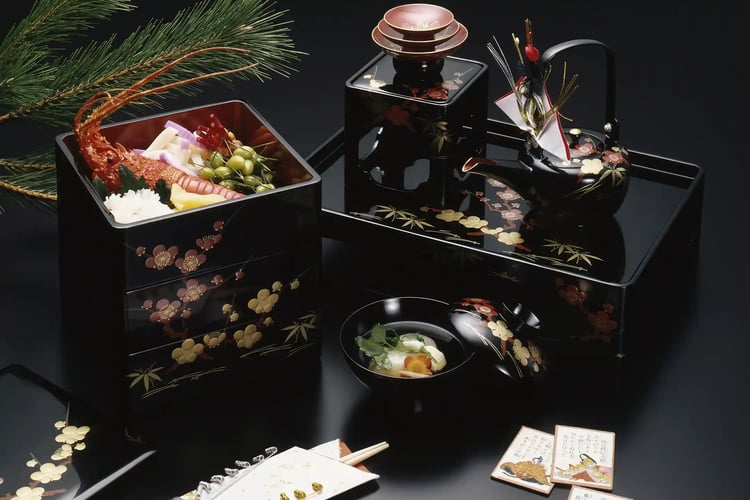
A fragrance-making workshop invites you to blend natural aromatics into an original sachet. Kōdō, the way of incense, is not only about enjoying scents; it also refines your mood and evokes memory. Specialists provide context on history, ingredients, and scent families, so you can savor the tradition with insight (*3).
HOSHINOYA Tokyo–Led Cultural Excursions in the City
HOSHINOYA Tokyo extends cultural immersion beyond the property with curated excursions that treat Tokyo itself as the stage. One option is a private tour of institutions like the Tokyo National Museum in Ueno and the National Art Center, Tokyo, in Nogizaka.
Crucially, these tours don’t stop at simply “seeing” Japanese culture; they explore the historical and social contexts that shaped it. For instance, popular culture in the Edo period blossomed under the unique conditions of long peace and a policy of limited international exchange. Understanding those roots clarifies traits of contemporary Japanese culture too. These institutions give you access to a wide spectrum—from history and traditional crafts to contemporary art—leaving you with vivid memories (*1).
Private visits with artisans and artists are also popular. You might watch master glass cutters at an Edo Kiriko studio or step into a contemporary artist’s atelier to witness creation in motion. Encounters like these offer a “living texture” of culture that you simply cannot get by viewing objects alone (*2).
What matters most is resisting the urge to fix tradition and contemporary art as “quintessentially Japanese” in static terms. Culture is not a relic; it evolves in dialogue with today’s society and individual creativity. As a luxury ryokan in the city, HOSHINOYA Tokyo becomes a crossroads of culture—broadening your perspective and feeding your curiosity.
Model Courses: Using HOSHINOYA Tokyo as a Base
A ryokan this deliberate rewards being treated as a base rather than a bed. Two shapes of itinerary work particularly well—one that uses the location to reach Tokyo’s art institutions, and one that never leaves the building at all.
Two Days of Museums and Galleries
Day one belongs to Ueno and Asakusa. After a Japanese breakfast, head for Ueno Park and the Tokyo National Museum, the oldest and among the largest in Japan, whose collection of roughly 120,000 items lets you follow Japanese art from the Jōmon period through to Meiji. If Japanese art is new to you, the main building’s Buddhist sculpture, ukiyo-e, and samurai armour give the fastest honest overview. Break for coffee in the park, then move east by way of Ryōgoku to the Sumida Hokusai Museum, devoted entirely to Katsushika Hokusai and holding work including the Thirty-Six Views of Mount Fuji. From there, cross the Sumida River on foot to Sensōji in Asakusa, where the temple architecture and the streets around it belong to the same afternoon. Return in the early evening; a rickshaw through the back streets, with Sensōji lit up, is worth the detour. Close the day with kaiseki at the ryokan.
Day two turns toward the modern. Take the morning slowly and join a lounge activity before check-out if one is running—a calligraphy lesson or an origami session leaves you with something to carry home. Afterwards, the University Art Museum of Tokyo University of the Arts near Akihabara is the natural first stop, and Ochanomizu around it rewards walking: the district holds bookshops, instrument shops, and architecture from several eras within a few streets of each other. The point of the two days is the contrast—Edo popular culture on the first, the institutions and the contemporary city on the second—with the ryokan as the fixed point you return to.
A Day That Never Leaves the Ryokan
The other option is to stay put, which in a building designed this carefully is not a wasted day. Wake in the quiet of a tatami room and start with the bath. Take tea or coffee in the lounge and let the morning begin slowly, then join the rooftop morning practice. Breakfast comes as an array of small dishes and freshly cooked rice, arranged closely enough to art that it changes how you eat it. Mid-morning is the right time for a tea ceremony lesson: you learn first as the guest, receiving a bowl of matcha and a seasonal sweet, then take the host’s role and whisk a bowl yourself. Handling the ladle for the first time is awkward, and that is the point—attention to each movement straightens your posture and quiets everything else. Lunch can be light, or a bentō from a local restaurant. Leave the afternoon unplanned: the art displayed through the building, the courtyard, a nap, or a short craft workshop such as mizuhiki chopstick rests or a wagashi demonstration. Change into a yukata toward evening, and let dinner and the lounge close the day.
Savoring Luxury Time at HOSHINOYA Tokyo Through Cuisine
Gastronomy at HOSHINOYA Tokyo is designed as cultural exploration. Each course transcends mere dining, expressing Japanese aesthetics, seasonality, and craftsmanship. Plate by plate, you’re invited into a quiet conversation with flavor—an experience that engages all your senses.
Tradition and Innovation in Kaiseki
In the main dining room, you’ll find Kyoto-style kaiseki traditions enlivened with contemporary sensibilities. Rooted in tea culture, kaiseki refines simplicity—highlighting the true character of ingredients while orchestrating vessels, placement, and color with precision (*1).
.webp?width=750&height=500&name=Osechi%20Ryori%20(Traditional%20Japanese%20New%20Year_s%20Food).webp)
Ingredients are strictly seasonal—spring’s mountain vegetables and sea bream, summer’s sweetfish and corn, autumn’s matsutake mushrooms, winter’s pufferfish and root vegetables. Courses flow one by one, letting you feel nature’s passing.
The vessels themselves carry artistic value—Shigaraki ware, Kutani ware, and other regional ceramics from across Japan. Chefs select pieces to harmonize with the menu and season, completing a “culinary art” in which food and craft resonate.
Honoring tradition while embracing modern techniques like fermentation and aging—and thoughtfully introducing Western ingredients—HOSHINOYA Tokyo offers refined surprises that speak to international palates.
Private Dining and Special Culinary Experiences
Your culinary journey can be tailored to your preferred style of stay. In-room dining goes far beyond typical room service, presenting a seasonal kaiseki sequence in a private setting. Each dish is served with care, so the experience feels like welcoming a personal chef into your suite.
With advance reservation, a “chef’s dialogue” dining experience lets you hear directly about ingredients and techniques as you eat—turning dinner into an immersive, intellectual encounter. You learn about sourcing, traditional methods, and the cultural context that frames each flavor.
Equally noteworthy is a commitment to sustainability. HOSHINOYA Tokyo sources from local partner farms and fisheries practicing responsible methods, offering what you might call “flavors that respect region and environment” (*2). Here, environmental stewardship and cultural continuity meet at the table—arguably the very definition of modern luxury.
Nippon Cuisine and the Mottainai Table
The dining room’s own course menu goes by the name Nippon Cuisine. Ingredients are drawn from across Japan and handled with the techniques and sensibilities of a head chef trained in French cooking, so each dish is built to bring out what the ingredient already is rather than to disguise it. Seafood carries the menu, and the sourcing is deliberately unfashionable: rare fish that seldom reach ordinary markets, and species that were long overlooked because no established way of cooking them existed. Bones and other parts that a kitchen would normally discard are worked back into the dishes. That is the mottainai instinct—the refusal to waste—raised from household habit to high-end gastronomy, and it is the part of the meal that tends to land hardest with guests who care about where their food comes from.
The Ochanoma Lounge and the Basement SAKE Lounge
Between meals, the drinking and resting spaces do a lot of the work of the stay. The ochanoma lounge on each floor is open around the clock, so you can step out of your room barefoot for a change of scene rather than spending the whole stay in one space. You will find sencha and hōjicha, seasonal sweets, books on the shelves, and ice pops waiting after a bath. In the basement there is a SAKE lounge stocked with regional sake from across the country alongside carefully chosen seasonal labels; a flight with small snacks after a day in the city is the easiest way to end one. In the evening, the refrigerators in each floor’s lounge may hold local craft beers and fruit liqueurs to take at your own pace, and there are enough non-alcoholic options that no one is left out of the ritual. The selection turns over with the seasons—strawberries and cherry blossom in spring, chestnut and sweet potato in autumn—so that even the lounge tells you what month it is.
HOSHINOYA Tokyo’s Vision of a Sustainable Luxury Ryokan
Sustainability isn’t a passing trend here—it’s part of the property’s core philosophy. Standing at the intersection of heritage and innovation, HOSHINOYA Tokyo proposes a mode of luxury that is deeply mindful of both environment and culture.
Sustainable Practices in Hospitality
Environmental considerations are woven into operations throughout the property. High-efficiency LED lighting is standard in guest rooms and shared areas, and state-of-the-art energy-saving HVAC systems are in place. The building envelope uses high-performance insulation to reduce cooling loads in summer, maintaining comfort while lowering energy consumption (*1).
An “eco-cleaning” program allows you to choose cleaning frequency during longer stays, reducing laundry and water usage and supporting staff well-being.
Across the Hoshino Resorts group, a clear sustainability policy prioritizes local-resource use, waste minimization, and responsible tourism (*2). It’s a stance that resonates strongly with conscientious travelers: a luxury ryokan that takes the future seriously.
Advanced Technology for a Seamless Stay
Comfort at HOSHINOYA Tokyo is quietly powered by Japanese technology. A contactless, online check-in ensures you’re guided smoothly to a room prepared in advance—easing the transition from travel to rest (*1).
In-room amenities may include air purifiers with humidification, HVAC systems designed for nano-level sterilization and deodorization, and voice-control capabilities—uniting comfort with meticulous hygiene. For many international guests, this seamless blend of innovation and attentive service is a distinctive draw.
The goal is not to put technology on display but to let you feel its benefits naturally. Here, tech supports presence—subtle, intuitive, and human-centered.
(*1 Source: Japan Tourism Agency “Promoting Tourism DX (Digital Transformation)” https://www.mlit.go.jp/kankocho/seisaku_seido/kihonkeikaku/jizoku_kankochi/kanko-dx.html)
EV-Friendly Amenities for Environmentally Minded Travelers
As electric vehicles become more common, HOSHINOYA Tokyo has aligned services with this shift. Across Hoshino Resorts, 38 properties nationwide (18 in the Kanto region) offer standard EV charging stations, accessible free or at special rates for guests, with advance reservation available (*1).
Tokyo’s broader “Zero Emission Tokyo Strategy” is accelerating EV adoption, and HOSHINOYA Tokyo stands out as a forward-thinking example within that movement (*2). For travelers seeking low-impact journeys, this level of consideration matters.
Stay a little longer in the world of the ryokan
This article offers one perspective on a tradition shaped over centuries. The Digital Guide brings together the architecture, hospitality, and quiet rituals that give a ryokan anniversary stay its lasting meaning — a fuller, more connected reading, carefully shaped for the moments worth marking together.

Conclusion
HOSHINOYA Tokyo is guided by a singular architectural philosophy that perfects the fusion of traditional Japanese aesthetics and contemporary urban space. From the flowing concept of ma to its Japanese-modern interiors—and the innovative idea of a vertical luxury ryokan—this sanctuary offers both fresh surprise and deep calm.
Seasonal rituals and performing arts, along with workshops in calligraphy and lacquerware, invite you to experience Japanese culture with all your senses. At the table, kaiseki cuisine crafted from peak-season ingredients is presented like art, while a serious commitment to sustainability—thoughtful sourcing, resource-conscious operations, and EV-ready amenities—underscores a future-forward vision of luxury. Cutting-edge yet understated technology ensures a stay that feels effortless and restorative.
In the end, HOSHINOYA Tokyo is a stage where tradition and innovation exist in harmony. It offers you the depth of Japanese culture and the fullness of luxurious time—an intimate hideaway for cultural exploration.