Surrender yourself to Hokkaido’s magnificent nature and step into a Hokkaido vacation that harmonizes mind–body wellness with thoughtfully sustainable indulgence.
In this guide, you’ll discover how to escape crowds and noise and instead spend time wrapped in quiet. From essential travel basics and the best seasons to visit, to area highlights, how to choose your accommodation, nature-based wellness programs, and the pleasures of organic food, we’ve covered it all in one place.
Let’s start planning a trip where you step away from your busy everyday life and savor stillness and quality time in Hokkaido together—designing a Hokkaido vacation that feels truly your own.
Hokkaido Travel Basics for a Relaxing Vacation (Duration, Cost, Access, Climate)
To enjoy Hokkaido slowly and quietly, it helps to organize a few basics first. Here, you’ll find guidance on ideal trip length, a rough budget framework, how to choose the right way to get around this vast region, and what to expect from the climate and clothing in each season. When you plan your Hokkaido vacation at a relaxed pace, you give your mind and body the room they need for a truly restorative wellness journey.
How Many Nights Are Ideal? (2 Days/3 Nights, 3 Days/4 Nights, 5–7 Days)
Because Hokkaido is so large, trying to “do it all” in one visit means you’ll end up spending a lot of time in transit instead of actually relaxing. If it’s your first time, plan for at least 2 nights/3 days, and if possible, 4 nights/5 days or more is recommended(*1). There are many places worth visiting and they’re widely spread out, so if your vacation time is limited, it’s better to narrow down the areas you visit and come back again on another trip(*1).
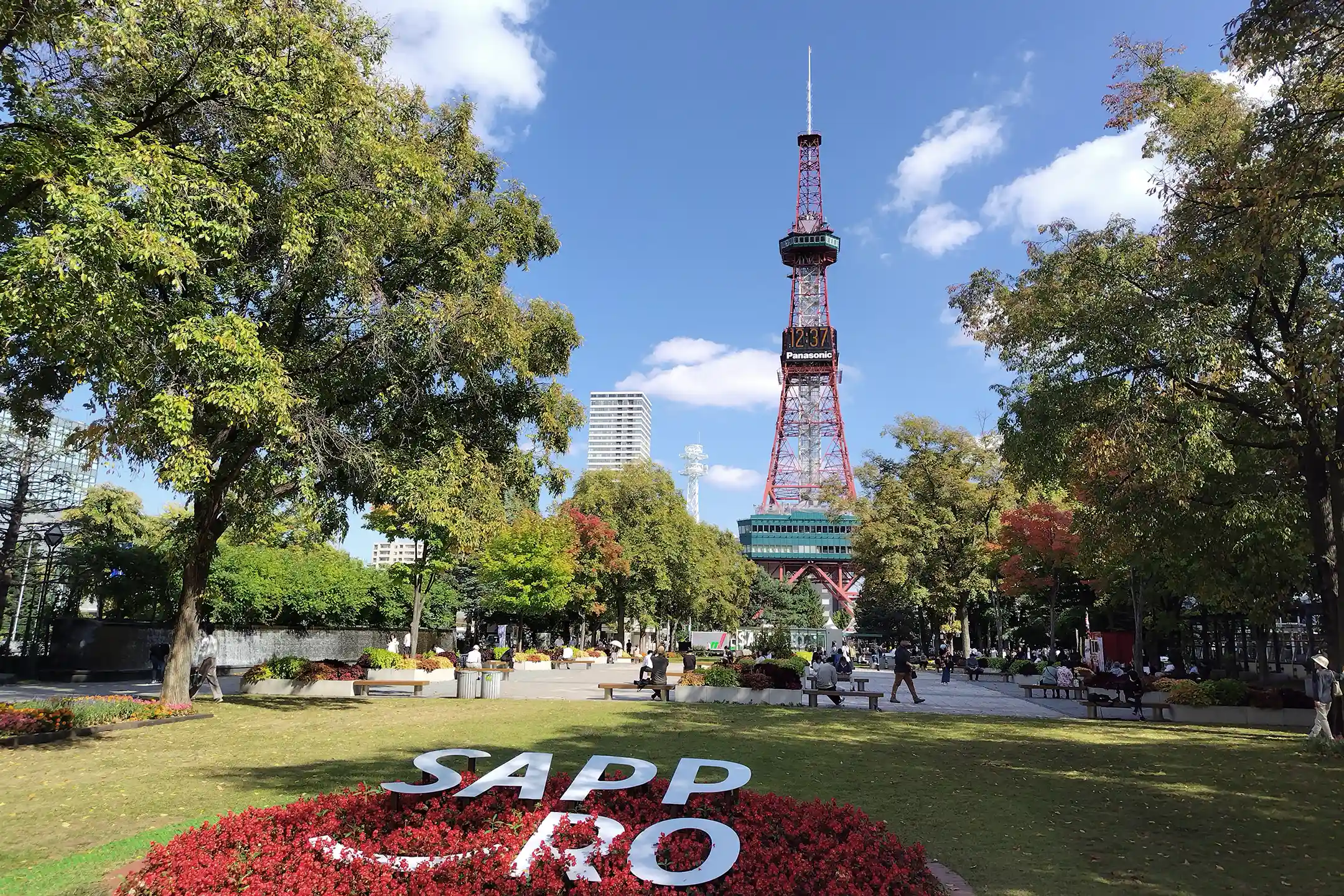
For example, if you focus only on the Central Hokkaido area—Sapporo and nearby Otaru—2–3 nights works well for a compact Hokkaido vacation. If you want to extend your journey all the way to Eastern Hokkaido, such as Shiretoko or Kushiro Marsh, you’ll want at least 5–7 days. It’s about 400 km from New Chitose Airport to Shiretoko via Sapporo by rental car, which takes around eight hours of driving(*2).
Instead of cramming a long-distance itinerary into one trip, it’s more realistic to design separate journeys by area, assuming you’ll return. If you’re seeking stillness and a sense of quality, it’s far better to stay a little longer in one place and really sink into it, rather than rushing from one destination to another.
Access & Getting Around (Airports, Rail, Bus, Rental Car)
There are 14 airports in Hokkaido, 12 of which are used as gateways for travelers. In addition to the main New Chitose Airport, Asahikawa and Hakodate also handle international flights, including direct services to and from Taipei (some seasonal or limited-period routes) and Seoul.
From Hong Kong, most direct flights go to New Chitose Airport (with schedules that may change seasonally)(*4). Depending on your itinerary, you can shorten travel time by flying into an airport close to your final destination—Memanbetsu or Kushiro for Eastern Hokkaido, Hakodate for Southern Hokkaido, and so on.
For onward travel from the airport, you can use JR rail or intercity buses between major cities, but public transportation alone will only take you so far. You can easily get around central Sapporo and Otaru by train and bus; however, for wider sightseeing in quieter areas, renting a car is highly recommended. With a rental car, you can freely reach secluded, peaceful spots and move at your favorite times of day, such as early morning or late evening.
In winter, though, snow and ice can cause delays and cancellations, and driving can be challenging. If you’re not confident driving on snowy roads, it’s safer to use sightseeing taxis or transfer services instead of pushing yourself(*4). From major airports and train stations you’ll also find sightseeing bus tours. Joining a small-group tour with an English-speaking guide is a good way to reduce travel stress while still enjoying rich, tranquil experiences.
Temperatures, Clothing & Essentials (By Season & Region)
Temperatures in Hokkaido are generally cooler throughout the year, and in midwinter, below-freezing days are common. It’s one of Japan’s snowiest regions, so if you travel in winter, you’ll need solid cold-weather gear.
In contrast, summer is pleasantly cool with low humidity, and you’ll hardly find the muggy, oppressive heat of mainland Japan(*4). However, Hokkaido is vast, and conditions can vary significantly from north to south on the very same day. Because of these regional differences, it’s best to prepare clothing you can layer.
In early spring and late autumn—and in highland areas at dawn and dusk—it can be colder than you might imagine. It’s reassuring to bring at least one light down jacket or fleece, even if it feels “off-season” where you live. Even in summer, you may want a light jacket in the mornings and evenings. If you plan to enjoy the outdoors, a waterproof shell and comfortable walking shoes are essential.
As for what to pack, sunglasses and a hat will protect you from strong highland sun. In summer, insect repellent and sunscreen are useful for forest walks. In winter, bring gloves, a knit cap, and thick socks; if you’ll walk on snow or ice, shoes with built-in spikes or sturdy trekking boots will make you feel far more secure. By preparing for the temperature swings of each season, you’ll be ready to fully enjoy Hokkaido’s quiet natural landscapes in comfort.
Best Seasons for a Hokkaido Vacation & How to Avoid Crowds
Hokkaido transforms with each of the four seasons. Here, you’ll find tips on how to enjoy its seasonal natural spectacles while avoiding crowds and protecting your quiet time. Spring buds, cool summer breezes over highland plateaus, fiery autumn foliage, and winter’s snowy wonderland—all have their own charm. Choosing the timing that suits your travel purpose will make your journey feel more personal. If you avoid national holidays and peak tourist periods, you’ll also find safer driving conditions and more peaceful roads, making it easier to immerse yourself in silence.
Spring (Snowmelt, New Growth & Gentle Quiet)
Spring in Hokkaido is the season when the snow melts and the land awakens from its long winter sleep. From mid-March to late April, temperatures are still low and this period is relatively quiet, with fewer tourists(*1). Because spring arrives later in Hokkaido than in mainland Japan, cherry blossoms and other flowers don’t reach their peak until May. That makes this shoulder season a hidden gem for enjoying nature in peace.
In marshlands where snow lingers, river levels rise with the meltwater, and you can hear the murmur of streams and calls of migratory birds. With fewer visitors around, you’ll have more opportunity to tune into the sounds of nature.
In Kushiro Marsh, for instance, the thaw reveals the earth beneath the snow, and wildlife gradually becomes more active. If you walk along the boardwalks and trails with binoculars in hand, you might spot wild Ezo deer or red-crowned cranes in the quiet expanse of wilderness.
Spring is also the season when alpine plants begin to sprout. Around the Daisetsuzan mountain range, flowers such as Ezo marsh marigolds start blooming from late May, and you can look forward to meeting these delicate blossoms in serene mountain foothills.
Golden Week (late April to early May) brings a temporary spike in visitor numbers, but outside of this period, early spring is a particularly good time to go(*1). As long as you prepare well for the cold and muddy trails, you can fully savor the tranquil spring awakening of Hokkaido.
.webp?width=750&height=500&name=Kushiro%20Shitsugen%20(Kushiro%20Marsh).webp)
Summer (Highland Breezes & Crystal-Clear Lakes)
Summer is peak travel season in Hokkaido, but with a little planning you can still enjoy plenty of quiet. The busiest period is from mid-July through August, yet early June and early July are before the peak flower season and tend to be less crowded(*1). At this time, refreshing breezes sweep across the highlands, and mornings and evenings are cool and comfortable.
The key to savoring summer stillness is to focus on early mornings and nights. Before sunrise, highland plateaus and lakeshores are cool, the air is crisp, and you’ll often find yourself alone with the scenery. On the hills of Furano and Biei, for example, you can have lavender fields all to yourself in the morning mist. Practicing yoga among the rolling hills with only birdsong in the background is a beautiful way to awaken your body and mind.
Daytime temperatures do rise, yet shady spots remain pleasant. In highland resorts, it helps to alternate between outdoor activities and generous rest. On hot days, you might cool down in a spa or day-use hot spring, rinsing away sweat and heat before continuing your day.
At night, you can enjoy dazzling starry skies in rural or mountainous areas. Hokkaido’s dry summer air makes the stars shine sharply, and in places with little light pollution you can even see the Milky Way stretching across the sky. Niseko and Tomamu offer organized stargazing tours, but if you prefer solitude, you can search out a quiet viewpoint for yourself.
If you avoid school holiday peaks—traveling in June, early July, or late August after the Obon period—you’ll find it easier to enjoy Hokkaido’s summer at a relaxed pace(*1). It’s best to avoid mid-August, when Obon brings heavy traffic and crowded accommodations(*1). Surrounded by lush green hills and clear lakes, you can refresh yourself in Hokkaido’s gentle summer.
Autumn (Foliage, Frost & Shimmering Light)
Autumn in Hokkaido is painted with vibrant foliage, and frost glitters in the mornings and evenings. From late September to early October, the leaves begin to change first in mountainous areas, and by mid- to late October, many regions across Hokkaido are ablaze with color.
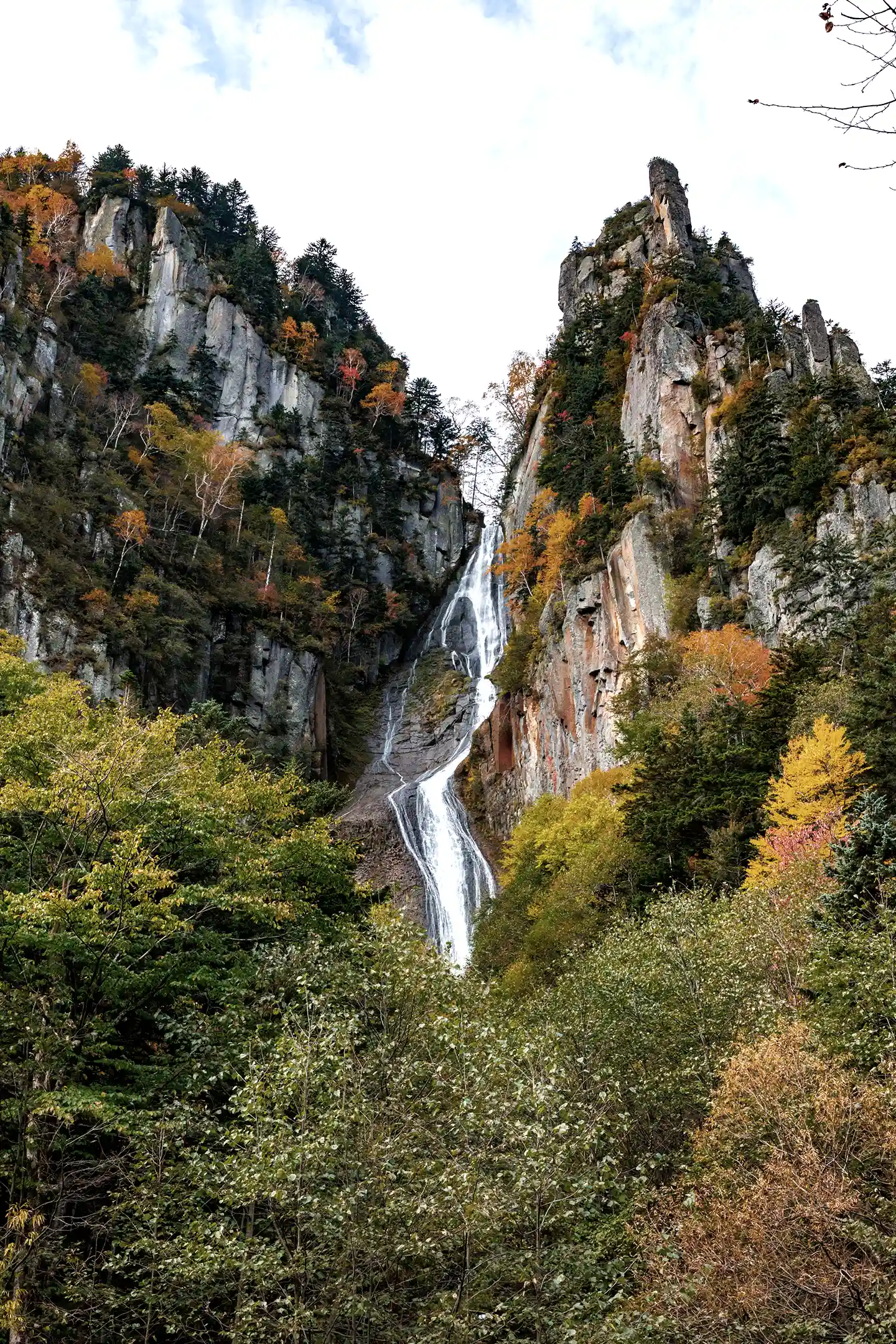
Because the foliage peak attracts more visitors, it can be ideal to come just after that peak—from mid-October to November(*1). By then, demand has settled, and even at famous viewpoints you’ll find a calmer atmosphere. In Sounkyo Gorge, for example, the cliffs are washed with autumn colors. If you go on a weekday just after the peak, you may find only a few other people, and you can focus on the sound of waterfalls echoing through the valley.
Autumn is also harvest season in Hokkaido. At orchards, you can sometimes join fruit picking for apples or grapes and then taste your harvest on the spot in the crisp air.
From a wellness perspective, autumn’s large temperature swings are perfect for contrast bathing—alternating between hot and cold. The chill in the mornings and evenings makes warm daytime soaks followed by cool air baths especially effective in supporting your autonomic nervous system. Switching between hot spring water and cooler air is said to boost circulation and help the body clear fatigue.
On clear autumn days, light hiking or cycling in the forest is wonderful, followed by hot springs and air baths as the sun goes down. This rhythm suits Hokkaido’s autumn mood perfectly. If you time your visit slightly outside the foliage peak, roads are quieter and safer, bookings are easier, and the overall ambiance is more peaceful. Let the autumn breeze reset your mind and body as you travel.
Winter (Silent Snowfields & Hot Springs)
In winter, Hokkaido becomes a world of snow. The way snow muffles sound and creates deep quiet is one of the season’s greatest luxuries. Tourist numbers are particularly low from late January to early February, just before the famous snow festivals, and many areas feel especially calm(*1). In many ways, winter is the ideal season for experiencing Hokkaido’s profound stillness.
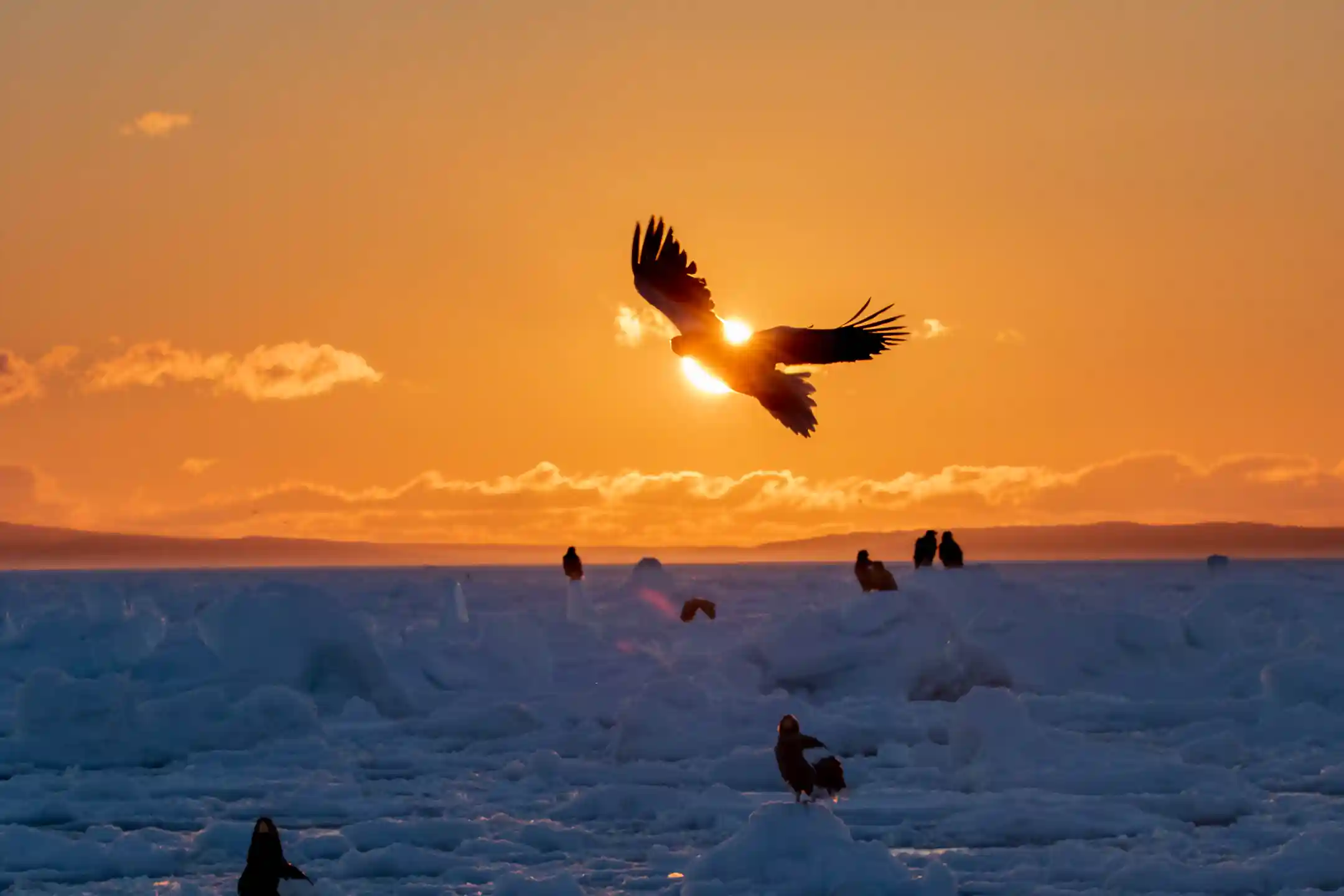
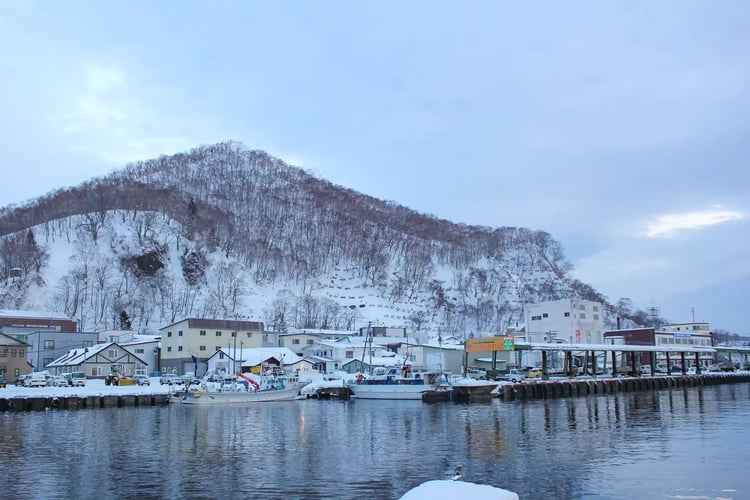
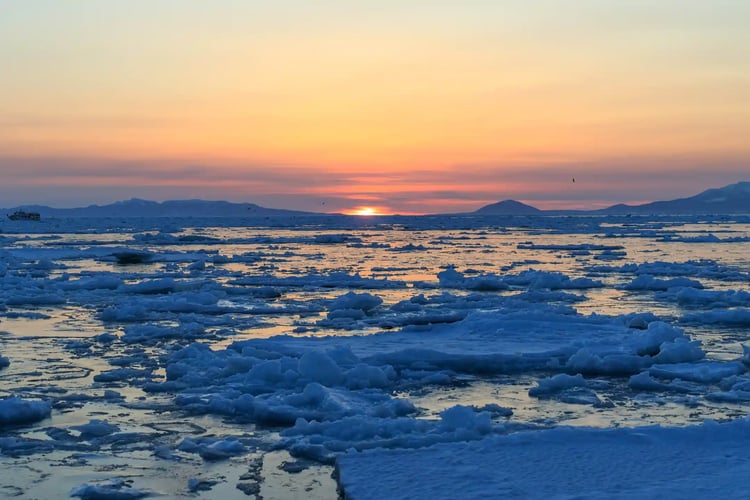
On the Shiretoko Peninsula, for instance, drift ice covers the Sea of Okhotsk in February. Amid this harsh cold, you’ll feel both the power and stillness of nature. If you join a small-group drift ice walk, all you’ll hear is the crunch of ice beneath your feet in an otherworldly landscape. At night, the sky is crystal clear and filled with stars, and sometimes moonlight reflects off the ice in a dreamlike scene.
In winter you must pay close attention to road conditions, but roads between major sightseeing areas are usually well plowed, and if you avoid driving early in the morning or late at night, it’s relatively safe. That said, some roads close entirely from early November to late April. For example, Route 334 over the Shiretoko Pass is closed every year from early November to late April, so in winter you need to detour via the Neboku Pass(*2). Always check official road information in advance and build your itinerary with safety first.
Rental cars are typically equipped with winter tires, but sudden steering or braking on icy roads is strictly off-limits. If you feel unsure about driving, combine public transport with shuttle or transfer services and avoid risky conditions.
The greatest winter attraction in Hokkaido is, of course, hot springs. Soaking in an open-air bath while looking out over snowy scenery is deeply soothing. Warm your chilled body, then cool down in the crisp outside air to create a gentle hot–cold rhythm. This contrast helps promote circulation and relaxation, and can lead to deeper sleep at night. It’s often said that taking a bath around two hours before bedtime, so that your core temperature can gradually fall, supports better sleep quality.
Snow-viewing hot springs, the cozy warmth of a wood stove, quietly watching snow fall outside the window… Winter in Hokkaido becomes a retreat where stillness and warmth exist in perfect balance. While the year-end/New Year holidays and snow festival periods (early February) are busy with visitors, the rest of winter is relatively quiet(*1). With solid cold-weather gear, you can enjoy a winter journey focused on silence and the healing powers of hot springs.
Area Highlights (Choosing Your Grand Natural Stage by Theme)
Across Hokkaido, each region offers its own concentrated expression of nature’s character. Here, you’ll discover key areas especially well-suited to quiet stays and wellness experiences—perfect starting points when you’re deciding where to base your Hokkaido vacation.
These include Shiretoko, a UNESCO World Natural Heritage site; Daisetsuzan, one of Japan’s largest national parks with its dramatic mountain landscapes; the internationally popular Niseko–Mt. Yotei area; the seasonally colorful Furano and Biei; Shikotsu-Toya, where lakes and volcanoes shape the scenery; and the marshlands of Eastern Hokkaido, where untouched nature still thrives. For each area, you’ll find tips on what to experience, how to stay, and how to keep your footprint light while preserving the region’s quiet.
Shiretoko National Park (World Natural Heritage Site)
The Shiretoko Peninsula juts out from Eastern Hokkaido and is often described as a remote frontier, where primeval nature remains largely untouched. It was inscribed as a UNESCO World Natural Heritage site in 2005 and is known as the southernmost region in the Northern Hemisphere where drift ice can be observed.
In winter, drift ice blankets the Sea of Okhotsk, bringing rich nutrients that nourish the marine ecosystem. Salmon swim upstream from the sea to rivers, and brown bears and eagles that feed on them create a tightly interwoven system in which the sea and mountains are deeply connected.
To truly appreciate this vast natural environment, it’s best to join a small-group guided tour. Shiretoko offers a wide range of treks and cruises with local guides. If you choose a private or small-capacity tour, you can observe wildlife in a quiet atmosphere. On a guided walk through Shiretoko Goko Lakes, for example, you may see Ezo deer or red fox if you move slowly and quietly. The silence and thrill of such moments are unforgettable.
For coastal scenery, consider choosing smaller boats or kayaks over large cruise ships. In a small vessel, you can listen to nothing but the sounds of waves and wind as you glide past sheer cliffs and waterfalls. On the Utoro side, you can watch the sun sink into the sea; on the Rausu side, you may find yourself enveloped in morning mist over the primary forest. Everywhere, you’ll feel the landscape shifting with every passing moment.
Shiretoko also has rustic hot springs scattered along the coast. Places such as Kuma no Yu in Rausu, Aidomari Onsen, or Iwaobetsu Onsen in Utoro offer simple baths with views of the sea or forest. These modest, unpretentious hot springs help you unwind in a world free from unnecessary noise. At night, with almost no artificial light, you may look up from your inn and find a sky full of stars.
When visiting Shiretoko, it’s important to remember your responsibility toward wildlife. Stay on marked trails, never feed wild animals, and if you encounter them, observe quietly from a distance. By following these basic rules, you help protect this precious environment for the future. Approach Shiretoko with the mindset that you, too, are part of nature, and listen closely to the deep stillness and vibrant life around you.
Daisetsuzan National Park (Central & Northern Hokkaido)
Daisetsuzan is a vast mountain area known as the “Roof of Hokkaido.” Centered around the Daisetsu mountain range, including Mt. Asahi (Hokkaido’s highest peak at 2,291 m), the park stretches across the Tokachi range and the Ishikari Mountains and is Japan’s largest national park(*2).
Sounkyo Gorge, with its towering columnar basalt cliffs, and Lake Shikaribetsu, a mystical mountain lake, are just two of many scenic highlights(*2). Hot springs bubble up throughout the area. The real charm of Daisetsuzan lies in its grand mountain vistas and the deep calm of the highlands. From summer into autumn, alpine meadows bloom across the slopes. Around Susoaidaira on Mt. Asahi and the area near Kurodake Stone Hut, you can quietly appreciate fields of delicate flowers. On weekdays in the morning, the only sounds might be the wind in the grasses and the squeaks of pikas, giving you a pure moment of stillness.
The Daisetsuzan area is also ideal for stargazing because of its clear air. If you stay in a mountain hut and step outside at night, you may feel as though the stars are close enough to touch. The high elevation limits city lights, so during meteor showers, the sky can look like a jeweled tapestry.
Nights can be very cold, so warm layers are essential. When your body is tired, soak in one of the area’s natural hot springs. Around Daisetsuzan you’ll find many beneficial baths, including Sounkyo Onsen and Tokachidake Onsen. In particular, the quiet, secluded hot springs around Mt. Asahi feel wonderfully restorative after a hike, as if the fatigue is melting away.
If you use Daisetsuzan as a mountain retreat, try turning in early after some light stretching or reading, then waking to birdsong and starting your morning with a short walk. Shifting away from your usual rhythm can bring an especially deep sense of rest.
Because high alpine zones are fragile, there are ongoing efforts to protect Daisetsuzan’s environment. Respect basic rules such as staying on the paths and carrying out all your trash. Your mindful behavior helps keep the mountains beautiful and quiet for future travelers.
Immersed in breathtaking panoramas and crystal-clear air, you may find yourself suddenly aware of your own breath and heartbeat—Daisetsuzan is truly a mountain resort where wellness and nature become one.
Niseko & Mt. Yotei Area
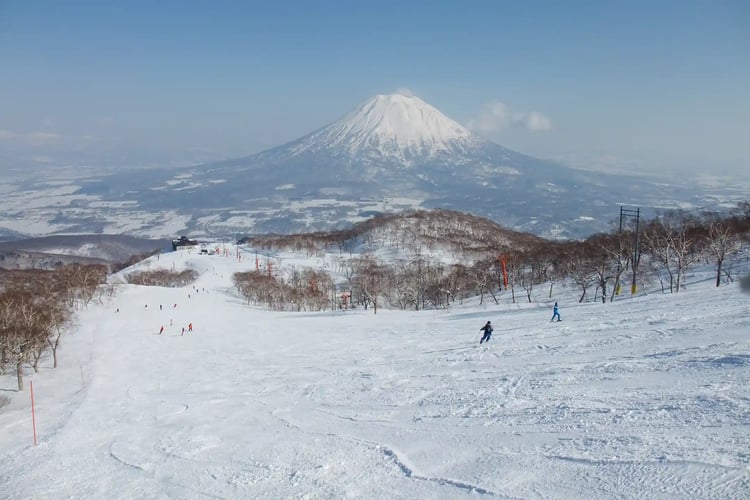
Located in Western Hokkaido, Niseko is an international resort region with sweeping views of the iconic Mt. Yotei (1,898 m). While the area is famed for its winter powder snow, the green season is actually when you can most fully enjoy its stillness and nature.
Niseko is covered with forests and clean rivers, and in recent years forest yoga and “river sauna” experiences have attracted attention as new forms of wellness. Imagine laying out your yoga mat in a forest where the only sound is birdsong, breathing slowly and flowing through poses. Unlike a city studio, yoga surrounded by dappled sunlight and the scent of earth heightens your senses and brings a deeper sense of calm.
At some riverside properties, you’ll find tent saunas set up by the water, offering programs designed for you to “reset” while listening to the gentle flow of the stream. Stepping out of the hot sauna and plunging into the cold, pure river sends a wave of exhilaration through your body and helps awaken your nervous system. Lying down on the ground afterward, feeling the cool breeze coming down from Mt. Yotei, you can sink into a rare sense of freedom.
Many of these outdoor wellness experiences in Niseko are small-group and by reservation only, which keeps them uncrowded. During the programs, participants usually keep conversation to a minimum, sharing the quiet and being considerate of one another’s time.
In winter, Niseko draws skiers from all over the world, yet away from ski slopes it can feel surprisingly tranquil. On a snowshoe hike through snow-covered forests, the snow absorbs sound so completely that even your own footsteps seem faint. If you’re lucky, you might catch sight of an Ezo flying squirrel bounding over the snow.
Some local roads and mountain routes close during winter, and driving a rental car can be difficult in heavy snow. Many accommodations in Niseko offer transfers from major stations or airports, so in deep winter it’s often safest and most relaxing to rely on these shuttles.
You can sip coffee made with pure spring water from the slopes of Mt. Yotei in front of a crackling fireplace, or gaze up at falling snow from an open-air bath. Year-round, Niseko offers a beautiful balance of activity and rest. You can move your body when you feel like it, and at other times simply lean into the rhythm of nature. Niseko gives you the space to enjoy that kind of grown-up luxury.
Furano & Biei
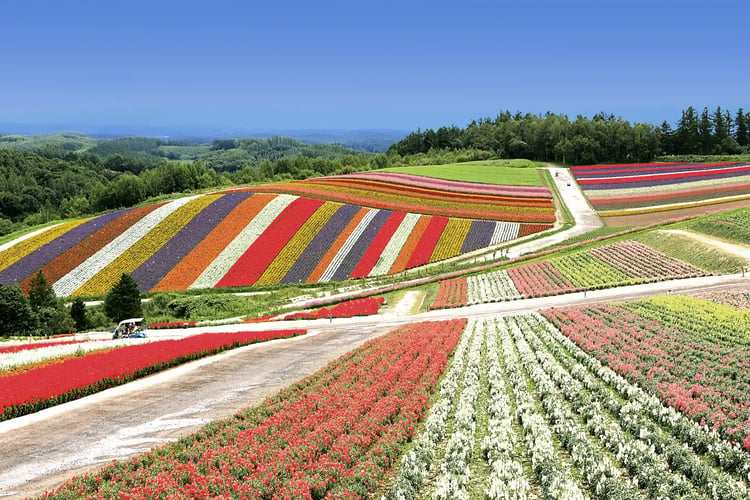
In central Hokkaido, Furano and Biei are known for their rolling hills and colorful fields of flowers. Summer lavender fields are especially famous, but if you want to enjoy the scenery in peace, consider coming in the early morning or evening, away from peak crowds, or visiting outside the main flower season.
Cycling is one of the best ways to explore Furano and Biei quietly. Dedicated cycling routes are well developed, and with a rental bike you can wander the hills at your own pace, discovering small viewpoints that you might miss by car. The 88-km wide-area cycling route between Furano and Biei takes you through farmlands, hills, and foothills of mountain ranges, offering ever-changing landscapes of rich nature(*3).
Once you leave the main roads and ride along smaller lanes, the only sounds are your pedaling and the wind. When you pause on a hilltop, you’ll see patchwork fields stretching out beneath you with the Tokachi range in the distance, and you may find yourself simply speechless. Even during peak season, one turn off the main route is often enough to leave the crowds behind—this is one of Biei’s special charms.
A “photo retreat” in the quiet hills is also popular—setting up your camera to capture the interplay of light and shadow across the rolling land. Time spent focused on nature as your subject can be deeply absorbing and clarifying.
In Furano, farm-to-table experiences are another highlight. You might visit vegetable fields or vineyards, help with harvesting, or learn about cheesemaking at a dairy farm—and then enjoy a meal prepared with those very ingredients.
By evening, famous spots like Zerubu Hill and the Blue Pond start to empty out, and quiet returns. Watching the lavender fields glow in the sunset, or seeing the Blue Pond lit up in a deep, mysterious hue after dark, you’ll encounter a completely different side of these landscapes.
Furano and Biei attract photographers, painters, and other artists who often stay for extended periods. If you base yourself in a pension or small hotel for several days, you’ll see a different face of the hills every day, depending on the light and weather. A solitary tree on a ridge, a winding country road—often, the unnamed spots are the ones that speak to your heart. Take your time to walk or cycle, and you’ll likely find your own quiet, unforgettable viewpoints.
Shikotsu-Toya National Park
Shikotsu-Toya National Park is conveniently close to Sapporo and New Chitose Airport, yet it offers dramatic caldera lakes and volcanic landscapes.
It’s home to two large caldera lakes—Lake Shikotsu and Lake Toya—as well as active volcanoes such as Mt. Usu and Mt. Tarumae, and the elegant cone-shaped Mt. Yotei (also known as Ezo Fuji). Despite its proximity to urban areas, the park provides a rich variety of nature experiences(*5).
Lake Shikotsu is Japan’s second-deepest lake and is renowned for its exceptional water clarity(*4). On a still morning, you can stand on its shores and see the stones on the lakebed through the water. If you head out onto the lake in a kayak or clear-bottom boat, you’ll find yourself immersed in a quiet world of blue where the only sound is your paddle dipping in and out of the water. Looking up from the lake’s surface, you’ll see the steep green slopes of Mt. Eniwa and Mt. Fuppushi reflected in the water in a dreamlike scene.
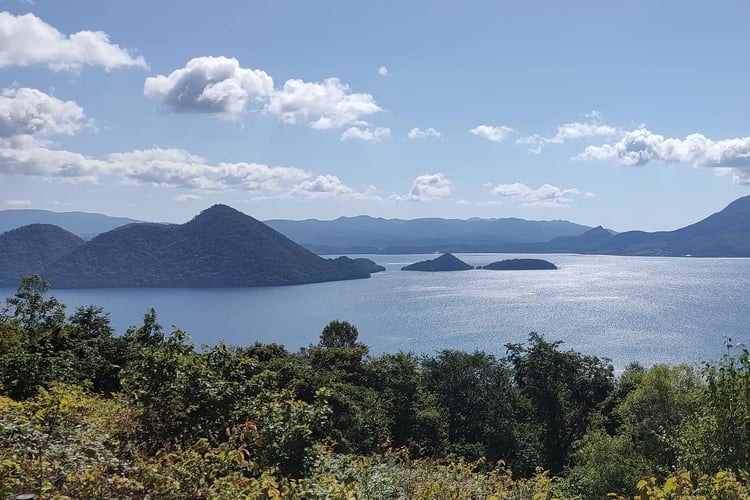
Lake Toya, on the other hand, is characterized by an island (Nakajima) in its center and the volcanic forms of Mt. Usu and Showa Shinzan rising behind it. There is a hot spring town along the lakeshore, but if you stay at a quieter inn a little removed from the bustle, you can enjoy sweeping views of the lake and volcanoes all to yourself. In early mornings or at night, you may hear nothing but the wind over the water and distant fumaroles. Choosing a lakeside retreat that prioritizes tranquility over convenience is one of the keys to enjoying this area.
Around both lakes, you’ll find spa resorts that market themselves as “adults only” or that have just a handful of guest rooms. Some offer private open-air baths or in-room saunas. Even at night, these properties tend to be very calm, so you can read with the cool breeze from the lake on your face or simply sit and watch the stars.
Shikotsu-Toya is among the most visited national parks in Hokkaido because of its easy access from Sapporo(*5). Still, you can enjoy plenty of quiet if you adjust when and how you visit. Weekdays, winter months, and early mornings or evenings are especially promising, and even popular viewpoints can feel almost private at those times.
There are many well-maintained trails in the park, and just a short walk away from main overlooks can be enough for human voices to fade, leaving only your footsteps and birdsong. At the Sobetsu Park lookout on the outer rim of Lake Toya, for instance, you can sometimes enjoy a sweeping view of the lake and volcanoes nearly alone if you visit during off-peak hours. Because this area is so accessible, intentionally visiting outside peak times can be one of the most rewarding ways to experience it.
Soak in hot springs born from volcanic energy while listening to the distant rumble of fumaroles—your stay in Shikotsu-Toya will let you feel both the strength and the serenity of nature.
Eastern Hokkaido Marshlands (Kushiro Marsh & Notsuke Peninsula)
In Eastern Hokkaido you’ll find a unique landscape of wide, unspoiled marshlands. Kushiro Marsh, Japan’s largest wetland, and Notsuke Peninsula, known for its “Todowara” dead spruce forest, are treasure troves of marsh ecosystems and wildlife. Canoeing is one of the best ways to quietly feel at one with nature in these wetlands.
If you join a canoe tour drifting down the Kushiro River, you’ll see the marsh from water level, which is a breathtaking perspective. If you lower your voice and listen carefully, you can hear Ezo deer moving through the reeds and the calls of red-crowned cranes in the distance.
Guides move the canoe slowly and carefully to minimize disturbance, and there’s a shared understanding among participants that it’s a time to quietly appreciate the scenery. Many people find themselves slipping into a meditative state. In early morning or evening tours, layers of mist often rise above the marsh, creating a deeply atmospheric scene.
On Notsuke Peninsula, the sight of weathered, standing dead spruce trees at Todowara is iconic. Beyond the end of the boardwalk, however, access is restricted, and the lack of people enhances the feeling of a vast, silent space where only the wind moves over the sand. Birdwatching is also popular here, and you may spot white-tailed eagles or blue rock thrushes. Following their movements through binoculars is about as far from a hectic city day as you can get.
When you visit these wetlands, following access rules is especially important. In Kushiro Marsh, for example, there are detailed guidelines such as “stay on the boardwalks,” “do not disturb plants and animals,” and “avoid landing your canoe at unauthorized points except when necessary.” There are also many hidden peat holes called yachimanako, which can be dangerous if you step off the paths, so staying on the boardwalk is critical not only for the environment but also for your own safety(*6).
This is also a region where rare birds like the red-crowned crane live. Even with telephoto lenses, you should avoid chasing or feeding them. Park authorities and guides will explain the rules in advance; by following them, you can minimize your impact while enjoying the marshlands. In the end, this care is what allows you to experience the area in true quiet.
In Kushiro Marsh, walking slowly along the boardwalk and simply gazing out over the sedge fields and the horizon of marshland can become its own form of meditation. On Notsuke Peninsula, stand on the sandy ground with the sea breeze on your cheeks and take a few deep breaths. With the horizon stretching in all directions where earth and sky meet, you may feel very clearly that you, too, are part of nature.
Because the marshlands of Eastern Hokkaido are less heavily developed for tourism, they offer a rare opportunity for deep quiet and genuinely sustainable travel.
How to Choose Where to Stay (Quiet × Quality × Environmental Care)
On a wellness journey that celebrates quiet, your choice of accommodation will shape the entire experience. In this section, you’ll find key points for choosing your stay so that your Hokkaido vacation feels serene, comfortable, and responsible.
You might opt for an adults-only inn that doesn’t accept young children, a hidden retreat with only a handful of rooms and attentive, discreet service, or a property that focuses on comfort with natural materials and local craftsmanship in its interiors. Some places prioritize renewable energy and waste reduction, while others highlight their sustainability practices. For international travelers, English-language support is also important. Let’s explore how to choose a stay that fits you from three perspectives: quiet, quality, and environmental care.
Choosing an Onsen Ryokan (Adults-Only Hideaways)
Hokkaido has many hot spring areas, but if you want a truly quiet stay, consider a small, adults-oriented onsen ryokan. One practical guideline is the number of rooms. If you’re seeking distance from everyday noise, ryokan with 10 rooms or fewer are ideal. With fewer guests, they can maintain a calm atmosphere and a strong sense of privacy—exactly what you’d expect from an adults-only hideaway(*1).
Some luxury ryokan limit reservations to five parties per day and only accept adult guests (no children under junior high school age). In such places, you don’t have to worry about running children or large, boisterous groups, and the entire property feels quietly composed.
In-room dining or private dining rooms are another plus if you value quiet. Large banquet halls shared with other guests can get lively, whereas in-room meals let you savor seasonal Hokkaido ingredients at your own pace. Private dining rooms allow you to talk freely without worrying that others will overhear.
If you choose a room with a private open-air bath, you can avoid the crowds in the large communal baths and dedicate your soaking time entirely to yourself or your companion. You might even put your phone away for the duration of your stay and spend your time reading, journaling, or meditating. That is when the ryokan’s best feature—its stillness—truly shines.
Some small ryokan are renovated traditional houses that you can rent as a whole. Staying in such a place feels almost like visiting a friend’s home, and you can enjoy Hokkaido nights without interruption. With carefully chosen bedding and lighting, you can sink into deep sleep and wake up to birdsong. This kind of onsen ryokan, offering a blend of quality, calm, and privacy, is an ideal base for an adult-oriented wellness journey.
Private Villas & Whole-House Rentals
If you’re looking for even more privacy, consider private villa stays or whole-house rentals. Across Hokkaido you’ll find high-end villas scattered in forests or along lakeshores. Imagine sinking into a sofa in front of a fireplace, playing soft music, and enjoying a drink at your own pace—that homelike comfort feels very different from a hotel stay.
Pay attention to lighting and interiors as well. High-end villas typically rely on soft, indirect lighting at night, creating a gentle glow that invites relaxation and doesn’t overpower views of moonlight or sunrise outside.
Natural materials—wool, linen, solid wood—used in interiors and furniture are pleasing to the touch and visually soothing. Thoughtful design details such as high-quality linens, comfortable beds that cradle your body, and a cypress-scented bathroom all contribute to an environment that nurtures your senses.
Sound and scent also matter. Some villas offer aromatherapy diffusers using Hokkaido essential oils like Furano lavender or Sakhalin fir. Being wrapped in your favorite natural aroma makes it easier to relax, and the absence of harsh artificial smells or noise enhances the quality of silence.
Ideally, your villa will stand in a location with few neighboring buildings, where you can feel as though you have Hokkaido’s landscapes to yourself—deep in the forest, on a hilltop, or on a bluff overlooking the sea. These settings soothe all five senses. In this world far removed from urban hustle, you can enjoy the luxury of time that belongs only to you and your companions. For wellness-minded travelers, that private, unhurried space is one of the greatest rewards of the trip.
Stays with Onsite Wellness Retreat Programs
In recent years, more accommodations have started to present themselves as “wellness retreats.” These properties offer programs such as yoga, Pilates, meditation, zazen (Zen sitting practice), and breathwork designed to rebalance body and mind.
When choosing among them, look closely at the quality and supervision of their programs. Even a simple yoga class varies widely depending on the instructor’s training and experience. It’s reassuring when the retreat has certified instructors who have also trained at wellness facilities abroad.
For meditation and breathwork, it’s ideal if programs are supervised by experts drawing on medical or psychological knowledge rather than purely self-taught methods. Some retreats invite renowned Zen priests or mindfulness specialists as advisors. You can check the official website or brochure for these details.
Consider whether the content suits your preferences. If you want to move actively, look for offerings such as dynamic morning yoga or forest trekking. If you’d rather turn inward, seek out candlelit evening meditation or calligraphy sessions. Comparing each retreat’s unique menu will help you find one that genuinely resonates.
Language support is important as well. Check whether instruction is available in English and whether bilingual staff are on hand; this often indicates that the retreat has international experience. Wellness retreats usually place strong emphasis on tranquility throughout the property—encouraging low voices indoors, restricting smartphone use to the lounge, and so on. For travelers seeking quiet, such rules are a welcome foundation.
A possible daily rhythm might start with tai chi or breathwork in the forest, followed by a visit to nearby power spots for a daytime hike. In the afternoon, you could enjoy a herbal compress spa treatment, ending your day with meditation under candlelight. Between programs, you can rest with a book or take a nap, honoring your own tempo rather than forcing yourself to join everything.
Food is also a key element in wellness retreats, so it’s worth checking whether they offer organic options, detox menus, or plant-forward cuisine (as described in the next section). When in doubt, look at guest reviews; comments such as “I truly forgot everyday life” or “I felt healed from the bottom of my heart” are good signs.
In a calm environment guided by specialists, wellness experiences can release deep-seated tension and stress. By the end of your stay, you may feel as if you’ve shed an old layer and stepped into a clearer, lighter version of yourself.
Reading Eco-Certifications & Sustainability Efforts
If you’re aiming for a more sustainable journey, it’s worth checking how your accommodation approaches environmental and social responsibility.
Globally, eco-labels for the hospitality industry, such as the Green Key certification, are becoming increasingly common. Green Key is an international eco-label that evaluates whether a property’s environmental policies and operations meet strict international criteria, including energy and water conservation, waste reduction, and cooperation with local communities. Properties undergo regular reassessment, and by 2024 more than 5,000 facilities in over 60 countries had obtained the certification, with numbers gradually increasing in Japan as well.
Japan also has its own certification system called Sakura Quality An ESG Practice, which evaluates tourism facilities based on safety, community contribution, environmental initiatives, and other factors. When choosing where to stay, it’s worthwhile to check official websites for these marks. Even without formal certification, some properties clearly state their concrete sustainability actions.
Pay attention to staff hospitality, too. Properties that take sustainability seriously often invest in staff training, and their service tends to be thoughtful and attentive. Staff who are knowledgeable about local culture and nature and support you quietly when needed can make your wellness journey even more fulfilling.
When you’re comparing options, it can be helpful to look at reviews mentioning “environmental awareness” or “sustainable tourism.” Time spent in a place that combines comfort, calm, and environmental kindness will likely leave you with a deep sense of peace and satisfaction.
Wellness Experiences in Harmony with Nature
Hokkaido’s vast nature is an ideal stage for designing a day that cares for your whole being. You might start your morning by “aligning” your mind and body, spend the day circulating your energy through the land, “calm” yourself at dusk, and “deepen” your rest at night. This kind of structured wellness design is possible precisely because of Hokkaido’s scale and diversity.
Let’s look at what kinds of experiences work well at each time of day, and how you can weave them into your personal program. With forests, hot springs, mountains, and rivers at your feet, you can design a day dedicated to caring for yourself.
Forest Meditation & Breathwork
Starting your day with meditation and breathwork in a fresh, quiet forest is one of the best ways to balance body and mind. Hokkaido has many forests designated as “forest therapy bases,” including places like Onuma Park in Southern Hokkaido and areas around Kushiro Marsh in the east. You’ll find numerous quiet forests where people are scarce, especially in the early hours.
Begin with a slow walk, noticing the soft give of fallen leaves under your feet. Once your body feels warm and loose, sit down where sunlight filters gently through the trees and begin your meditation. Close your eyes and practice deep abdominal breathing—slowly inhaling through your nose and exhaling fully. With time, you may start to sense the forest’s scent and even the temperature of the earth more vividly, and your mind will feel clearer as unnecessary thoughts fall away.
Research suggests that forest bathing can lower cortisol, a stress hormone, and support immune function(*1). Combined with conscious breathing, this effect can be even stronger. Afterward, a cup of warm herbal tea is a lovely way to finish your forest session.
Tea made from Hokkaido-grown herbs—for example, peppermint cultivated near Sapporo—refreshes your head and gently energizes you for the day ahead. A quiet morning spent in the forest plants a steady core of calm in your day, helping you move through everything that follows with a sense of inner stability.
Contrast Bathing with Hot Springs & Sauna
After an active day, or as evening approaches, you can turn to one of Hokkaido’s greatest gifts: hot springs and saunas. Many hot spring resorts here have excellent spa facilities with saunas and day-use baths.
Contrast bathing involves alternating between warming the body (with a hot bath or sauna) and cooling it (with cold water), which can help balance the autonomic nervous system and encourage healthy blood circulation. At onsen areas like Noboribetsu or Tokachigawa, you’ll often find large communal baths with hot springs, cold plunges outdoors, and dedicated rest spaces.
First, soak in the hot spring until you feel warmed to your core, then gently dry off and enter the sauna. Don’t push yourself—stay only as long as you feel comfortable (often 5–10 minutes is enough). Afterward, rinse off and slip slowly into the cold bath to cool your heated body.
Hokkaido also has excellent water, and many facilities provide cold baths that feel soft and pleasant on the skin. Finally, take a break in an outdoor resting area, allowing your body to naturally adjust. As your breathing slows, you’ll likely feel that unmistakable sensation of being “reset.”
Don’t forget hydration—before, during, and after bathing. It’s wise to drink a glass of water beforehand and keep water handy in the changing area(*2). Hokkaido’s hot springs range from sulfur and chloride types to carbonated waters, all rich in minerals that gently restore you from within.
When you enjoy contrast bathing in a favorite hot spring, you’ll drop into a deep state of relaxation and may also find your sleep quality improves. With the growing popularity of sauna culture, it’s more important than ever to be mindful of etiquette: keep conversation to a minimum, respect others’ personal space, and share the quiet.
If you stay mindful of water intake, contrast bathing can become your ultimate night-time ritual, helping your energy return by the next morning. In Hokkaido, the kingdom of hot springs, this is a luxurious form of self-care that you might want to make a central part of your trip.
The Pleasure of Food (Organic & Local Sourcing)
No wellness- and sustainability-focused journey would be complete without considering what—and how—you eat. Hokkaido is a treasure chest of seafood, mountain vegetables, and farm produce. Here, we’ll look at organic, body-friendly meals, local sourcing initiatives, and even non-alcoholic and fermented drinks that help you nourish yourself from within.
Eating slowly and mindfully in a quiet setting can be a meditative experience in itself. From light, seasonal tasting menus to dishes that harness the benefits of fermented foods, you’ll find many ways to enjoy cuisine that’s kind both to your body and to the planet on your Hokkaido vacation.
Choosing Farm-to-Table Experiences
In Hokkaido, it’s not only what you eat that matters, but how it’s grown and brought to your plate. Farm-to-table is a concept that highlights food directly connected to its producers—literally from farm to table.
Examples include restaurants that use vegetables from their own kitchen gardens or auberges that serve ingredients delivered straight from partner farms or fishing ports. In Hokkaido, some accommodations and restaurants have large fields of their own, and chefs who farm as well as cook. In these places, dishes like salads made with freshly picked lettuce or soups infused with just-harvested herbs truly express the energy of the ingredients. When choosing, check whether menus or websites mention details like “vegetables from our own garden” or “seafood direct from XX Port.”
Hokkaido also has its own food certification systems, such as “Kirari-pp,” which recognizes high-quality local agricultural and marine products and promotes local consumption(*1).
Local sourcing reduces transport-related environmental impact and lets you enjoy ingredients at their freshest. Imagine eating scallops caught that very morning, grilled simply over charcoal, or tasting fresh cheese at breakfast made from milk produced the day before. These experiences embody Hokkaido’s abundance.
One of the joys of farm-to-table dining is the chance to talk with chefs or producers. Hearing about the work behind each harvest, seasonal quirks, or favorite ways of cooking gives you a more intimate sense of place. Sitting in a quiet dining room while listening to the rhythm of the kitchen, you can savor each plate with gratitude for the land and the people who cultivated it.
Diverse Diets & Allergy-Friendly Options
On a wellness-focused trip, it’s important that your meals match your dietary preferences and needs. Fortunately, Hokkaido is rich in natural ingredients, and more and more places can accommodate vegan or vegetarian diets.
You’ll also find some accommodations offering gluten-free or low-carb menu options. However, outside major cities, these aren’t always standard, so advance communication is crucial. When booking, clearly explain your dietary policies and allergies. Instead of saying only “I don’t eat meat,” specify whether you also avoid animal-based broths and seasonings or whether dairy and eggs are acceptable.
If possible, send a short, clear note in simple Japanese outlining your needs—for example, “I prefer complete vegetarian meals with no fish or meat broth” or “I have allergies to wheat and soy.” This can reduce misunderstandings.
Awareness of diverse dietary preferences is growing across Japan. In Obihiro, for instance, you can find vegan ramen, while in Sapporo, gluten-free cafés are appearing. In areas where special meals are harder to arrange, you might choose room-only or breakfast-only plans, then supplement with food you buy locally or bring with you.
Hokkaido offers good access to fruits, nuts, rice, and other simple, high-quality ingredients. With a little creativity, you can maintain balanced nutrition wherever you go. Above all, prioritize foods that support how you feel. On a wellness trip, meal-related stress can undermine the very purpose of your journey, so thoughtful preparation and clear communication will help you relax and enjoy your time at the table. With Hokkaido’s variety of produce, you’ll almost certainly find ways of eating that suit you.
Tea, Herbs & Fermented Drinks
On a wellness journey, you may want to drink less alcohol and instead enjoy teas and fermented beverages. Hokkaido has long-loved traditional drinks as well as newer, health-focused options.
One classic welcome drink at ryokan is kombu-cha, a hot beverage made by infusing kelp. Rich in minerals, it gently hydrates you from within. Because it also contains salt, it’s useful after sweating.
Different from kombu-cha, the drink known internationally as kombucha is also making a comeback in Hokkaido. Kombucha—known as “black tea mushroom” in Japan in the 1970s—is a fermented drink made by fermenting tea with yeast and bacteria. It later gained popularity overseas among health-conscious communities and is now again drawing attention in Japan, with specialized cafés opening(*2).
Craft kombucha with fruity, refreshing acidity is now served in some cafés and restaurants in Tokyo and Sapporo. A few establishments offer kombucha pairings with dinner as a non-alcoholic, wellness-friendly alternative.
Hokkaido also has a strong culture of fermented dairy, so you’ll find high-quality drinkable yogurt and kefir. They’re well worth trying at breakfast buffets.
Another traditional fermented drink is amazake, made from rice koji and typically non-alcoholic. Thanks to its rich nutritional profile—including B vitamins, amino acids, and glucose—it’s often called a “drinkable IV drip,” believed to help with fatigue recovery and skin health(*3).
Before bed, a cup of caffeine-free herbal tea or warm milk can help you unwind. While it’s easy to overindulge in unfamiliar drinks on vacation, you’ll find plenty of wholesome alternatives here. Enjoy Hokkaido’s natural “wellness drinks” and let them support your beauty and health from the inside out.