Dining at the long-established “Hatsuhana Sushi” is more than a gourmet outing—it’s a special moment where you savor Japanese culture and artistry with all five senses. Approaching its 50th year, the restaurant treasures the traditions of Edomae sushi while presenting a menu illuminated by contemporary creativity.
In this article, you’ll explore the historical background and craftsmanship embedded in Hatsuhana’s menu structure, its seasonal sensibilities, the spatial design, commitments to sustainability, and even hands-on cultural programs—conveyed through an academic lens and an evocative storytelling voice. Let’s trace, together, the layers of a refined sushi experience you can enjoy in a sophisticated city.
The Allure and Historical Background of the Hatsuhana Sushi Menu
A Menu Structure that Inherits the Edomae Sushi Tradition
The menu at “Hatsuhana Sushi” faithfully carries forward the Edomae tradition. Edomae sushi—according to one account—was established in early 19th-century Edo (present-day Tokyo) by Hanaya Yohei as the prototype of today’s hand-formed nigiri.
At the time, Edo lacked refrigeration to keep fish fresh. Yohei developed techniques to “work” the seafood—vinegaring, simmering, curing—concentrating umami and improving shelf life to create quick-serve nigiri (*1). This was the origin of Edomae sushi, which swiftly became a favorite “fast food” among Edo’s townspeople (*1).
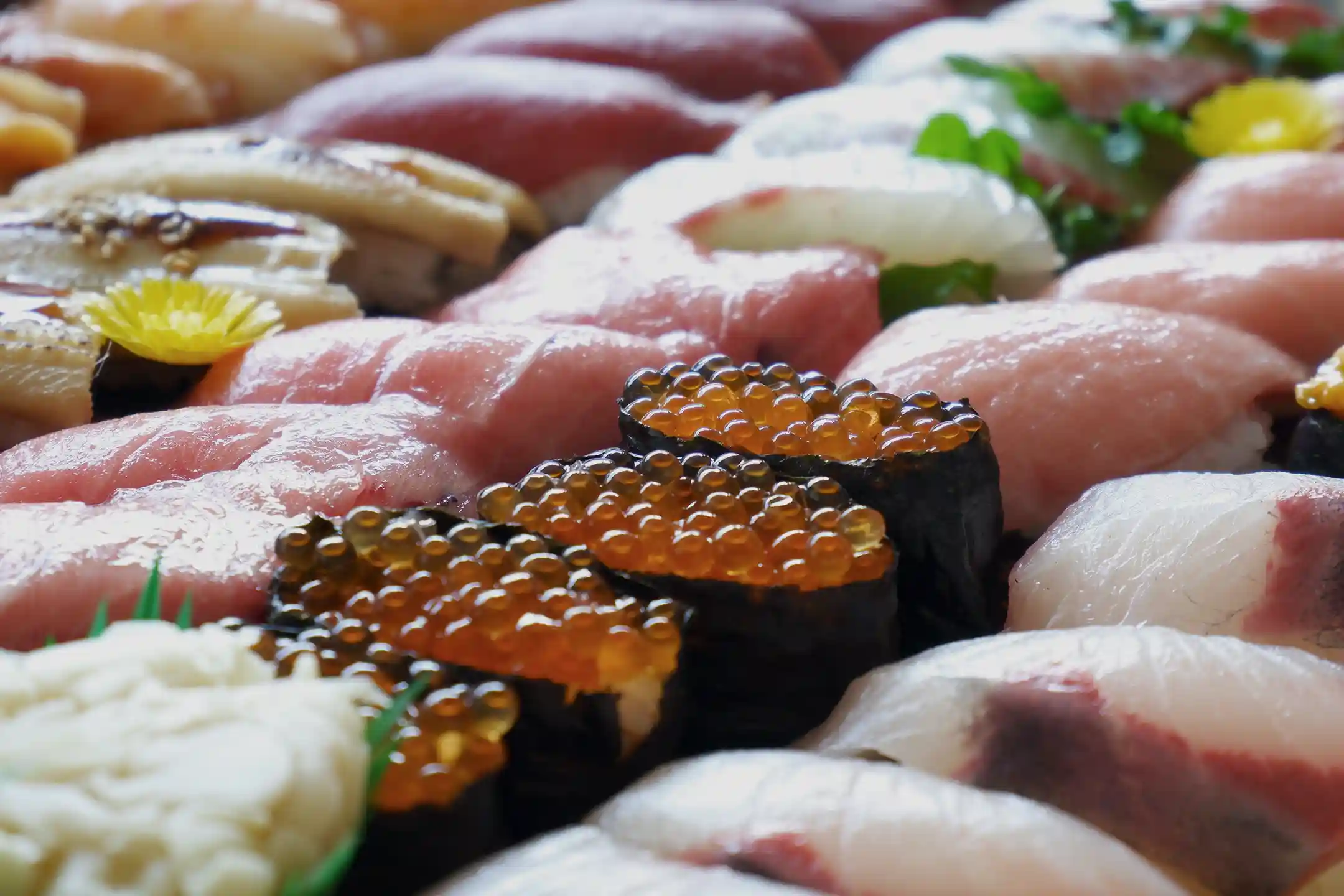
Hatsuhana honors this heritage: classic toppings like vinegared kohada (gizzard shad) and soy-marinated tuna (maguro-zuke) are prepared with care. Each piece—where neta (seafood) and shari (vinegared rice) become one—preserves ancestral ingenuity: a brush of nikiri (soy and mirin simmered to remove alcohol), a light salting for white fish—each bite receives the seasoning that suits it best, a hallmark of Edomae technique (*1).
Crucially, Hatsuhana doesn’t merely preserve tradition; it evolves to match modern tastes. While old-school Edomae prized local catches from Edo Bay—kohada, tiger prawn, anago—today’s logistics broaden the repertoire.
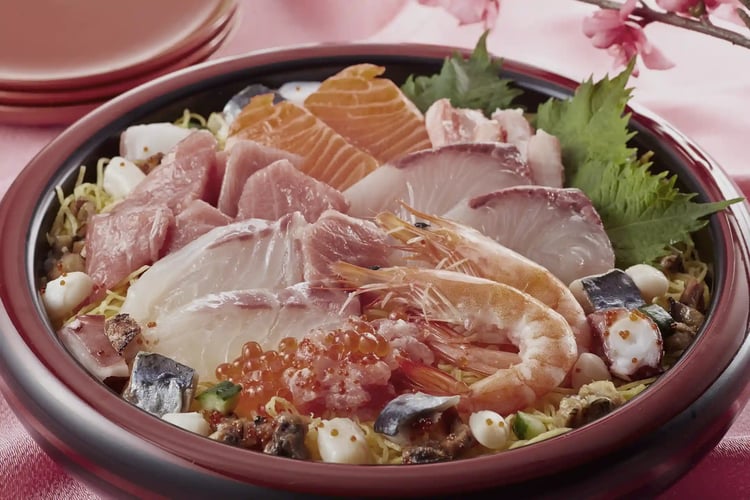
Hatsuhana’s chefs select the day’s finest at market, assembling pristine seafood delivered straight from Tsukiji/Toyosu. The sequence often follows the classic arc—white fish → silver-skinned fish → tuna → simmered items → tamago—so each piece unfolds like a chapter.
For example, you might begin with delicate flounder, progress to vinegared kohada, then to richly savory marinated tuna, enjoying a gradual shift in flavor. This narrative composition, true to Edomae spirit and technique, defines much of Hatsuhana’s appeal.
Distinctive Features of a Modernly Evolved Sushi Menu
Hatsuhana’s menu also gleams with contemporary sensibilities. Though venerable, the house never settles; it steadily pursues new expressions of deliciousness. Many long-standing sushi shops hold that “not only ingredients change with time—so do guests’ preferences and how they enjoy drinks. An old shop endures by adapting gracefully.” Hatsuhana exemplifies that view (*2).
Wine pairings have become more common in recent years, and Hatsuhana sometimes offers carefully chosen white wines to create unexpectedly seamless pairings. “Sushi Kō Honten” famously helped develop an original white wine tailored to sushi; pairings of sushi and Western drinks are now embraced as a polished adult pleasure (*2).
Technically, Hatsuhana blends time-honored methods with contemporary know-how. Each topping is managed with precise maturation and temperature: white fish may be lightly kelp-cured to draw out umami; red vinegar in the rice can heighten tuna’s depth.
Seasonally, a whisper of aburi (gentle searing) or straw-roasting adds a fragrant accent, showcasing the chef’s creativity. Plating reflects a modern eye as well—vivid contrasts of color and form turn each piece into a bite-sized work of art.
Grounded in Edomae yet infused with today’s refinement, “Hatsuhana Sushi” offers a singular experience where tradition and innovation meet in harmony.
Hatsuhana’s Seasonal Limited Sushi|An Artistic Way to Savor What’s in Season
Seasonal Limited Menus Featuring Japan’s Four Seasons
The soul of Japanese cuisine lies in savoring shun—ingredients at their seasonal peak. Hatsuhana offers limited seasonal menus that let you enjoy flavors unique to each time of year. Japan’s four distinct seasons inspire chefs to express the arrival of each through their cooking.
In spring: sakura-tai (sea bream before spawning) and bamboo shoots; in summer: pike conger (hamo) and sweetfish (ayu); in autumn: fatty Pacific saury (sanma) and matsutake; in winter: crab and cold-season yellowtail (kan-buri). Incorporating ingredients at their finest is a core charm of washoku (*1).
At Hatsuhana, spring brings budding mountain vegetables and fish associated with cherry-blossom season; summer features cooling blue-skin fish and shellfish; autumn highlights fragrant mushrooms and returning bonito; winter showcases rich milt (shirako) and ultra-fatty winter yellowtail.
These toppings are fleeting treasures, available only “right now,” making the moment itself delicious (*1).
Hatsuhana also highlights special limited-time items when peak ingredients are especially short-lived. Such rarities might be offered as “Available Only in Month X,” letting you encounter something truly scarce.
For instance, baby gizzard shad (shinko), obtainable for only a few weeks in early summer, or delicate icefish in early spring may appear as one-month-only nigiri. Historically, some old-line Edomae shops served such items for a single week; nowadays, many extend to about a month so more guests can enjoy them (*2).
These limited items showcase advanced technique. A March icefish nigiri might feature gently sweet-simmered fish layered with pink oboro (seasoned flakes), creating a white-and-blush contrast that announces spring. Hatsuhana’s seasonal limited menus embody the art of “eating the seasons.”
Japanese Aesthetics Expressed through Tableware and Plating
At Hatsuhana, you sense seasonality and aesthetic care not only in the sushi but in the vessels and presentation. In Japanese cuisine, tableware is the dish’s “clothing,” with materials and motifs chosen to suit the season.
Spring may bring plates accented with cherry motifs; summer, cool glass or celadon; autumn, colors evoking foliage; winter, warm, thick ceramics or wooden ware—staging the seasons on the table (*1).
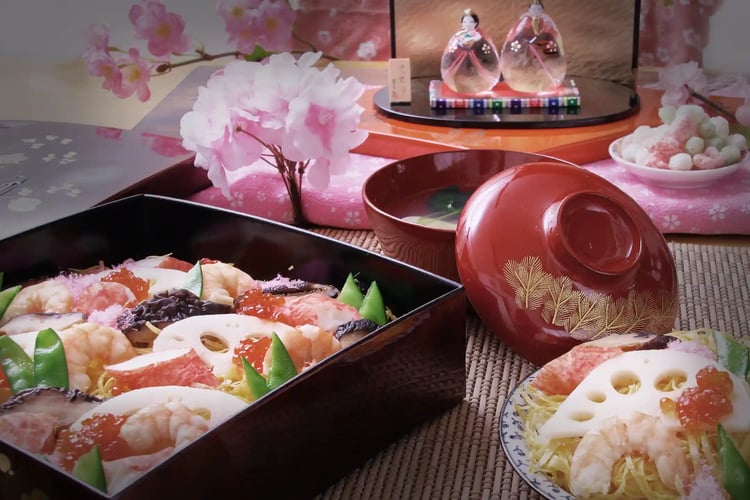 From the white-cedar counter to the plates and bowls set before you, seasonality radiates. In autumn, a maple-shaped dish might cradle the gari; in summer, rippled glass evokes water beneath sashimi. The season reaches you the instant you see the plate.
There’s also the uniquely Japanese practice of kaishiki—placing seasonal leaves or flowers beside the food. While inedible garnishes can feel unusual elsewhere, in washoku they quietly amplify the mood.
At Hatsuhana, nigiri might rest on a gardenia leaf in spring or be accented with a fresh green maple leaf in early summer. Though nigiri appears simple, these botanical touches deepen the seasonal atmosphere.
Chefs also finesse negative space and height. Pieces are set with slight intervals on wooden trays; like a tea alcove or ikebana, the space makes the food more beautiful—Japan’s “subtractive” aesthetic at work.
Through vessel choice and plating, Hatsuhana expresses seasonal color and wabi-sabi within sushi’s simplicity—art completed not just by food but by the harmony of presentation.
Hatsuhana’s Omakase Menu|The Appeal of a Special Sushi Experience
Secrets of Nigiri That Showcase Hatsuhana’s Craft
If there’s one experience you shouldn’t miss, it’s the omakase. Literally “I leave it up to you,” this Japan-born ordering style entrusts the entire selection to the chef. “Omakase” is now widely understood overseas and is celebrated as the finest way to enjoy high-end sushi (*1).
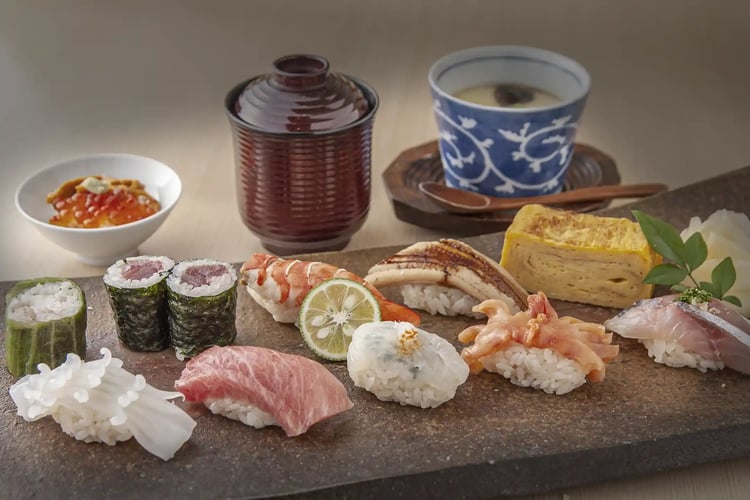
Hatsuhana’s omakase features the day’s best, moving from several otsumami (small appetizer-style dishes) into a composed nigiri sequence. Evening courses generally follow this flow: seasonal sashimi or a grilled dish to awaken your palate, then the nigiri chapter.
Nigiri typically progresses from delicate to rich, closing with tamago. At Hatsuhana, it’s “first otsumami, then nigiri,” shaped by the day’s market finds; afterward, you’re welcome to add favorites à la carte (*2).
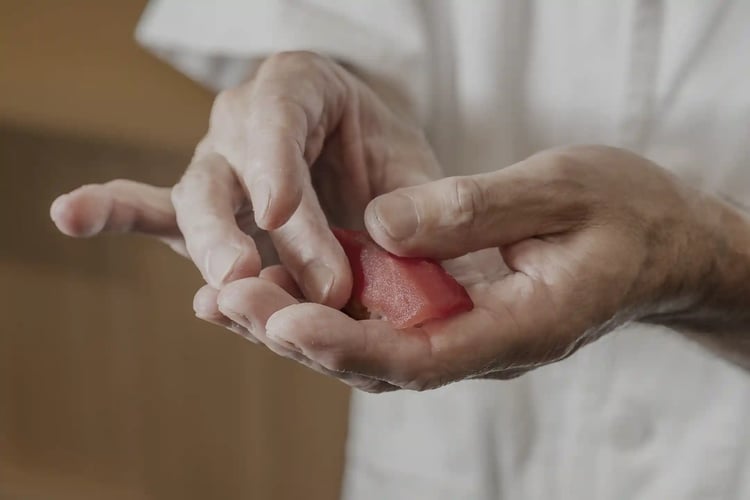
What dazzles is the chef’s precision. Each piece is timed so flavor and texture peak the instant you taste it.
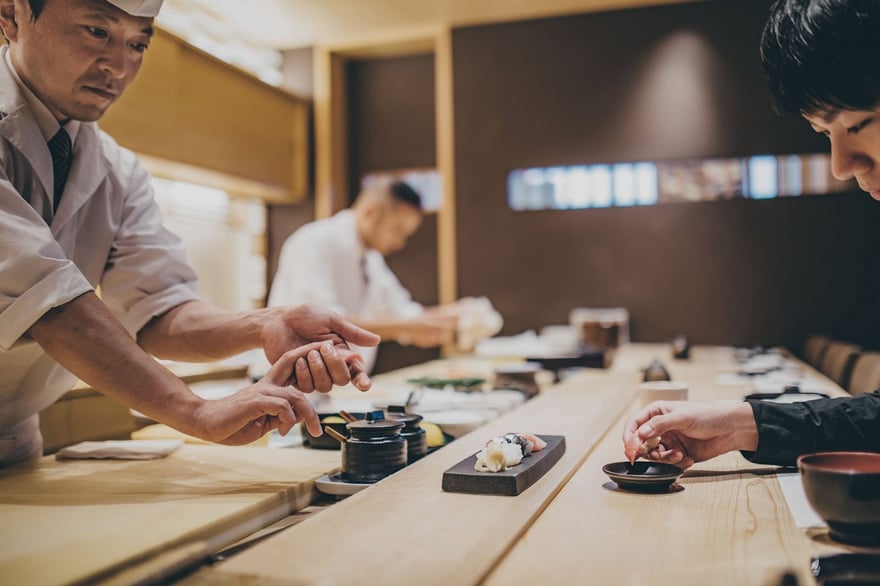
Shari temperature, for example, is fine-tuned by topping: slightly warmer rice helps melt toro’s fat; for kohada, slightly cooler rice harmonizes with the vinegar cure.
Seasoning is applied in advance so you can enjoy each piece as is: a brush of soy–mirin nikiri, sweet tsume for simmered anago, a pinch of coarse salt with a squeeze of sudachi for squid or white fish—each topping receives its ideal finish (*2).
All you do is lift and savor—tasting the ingredient’s character tuned by the chef’s balance. That delicate, piece-by-piece work is what makes Hatsuhana’s omakase feel extraordinary.
Another charm is conversational: as you eat, the chef reads your preferences. Share allergies or dislikes up front and they’ll adapt; say you love uni or want to explore white fish, and they’ll steer the course accordingly.
Omakase is often called “a style of dining built on trusting the chef’s knowledge, skill, and creativity” (*1). That trust, between chef and guest, becomes the finest seasoning. Across the counter, Hatsuhana’s master watches your reactions as each piece arrives—deciding what should come next.
This live, unfolding dialogue is the essence of omakase. While you watch the craft at arm’s length, a course shaped for you takes form—a true luxury in motion.
Cultural Stories Embedded in the Sushi Menu
Hatsuhana’s omakase is woven with stories rooted in Japanese food culture. Focus on each topping and gesture, and you’ll find layers of history and meaning.
Gari (sweet pickled ginger), for example, is more than a palate cleanser; it reflects ancestral wisdom: ginger’s antibacterial qualities help prevent foodborne illness (*2).
Wasabi also had a hygienic role—and, happily, enhanced flavor, too (*2). Even that small slice of gari carries Edo’s wit.
Tuna tells another tale. In Edo times, tuna spoiled quickly and was dismissed as “low-grade,” yet marinating in soy (zuke) made it viable as a sushi topping.
Today, toro is a star. With advances in freezing and distribution after the 1960s, eating toro raw became common and its popularity soared (*2). When zuke-maguro appears mid-course, you’re tasting that history.
Other threads include the contrast between Kansai’s pressed sushi and Edo’s hand-formed nigiri, the culture of vinegar-curing silver fish, and the tradition of finishing anago with a sweet, reduced tsume. Across the menu, you can trace regional ingenuity and exchange.
Ask the chef and you’ll hear these stories with easy warmth: “We used to do this step differently,” or “This fish was landed from XX waters this morning.” Sushi becomes more resonant when tasted alongside such context—it deepens your understanding of Japan.
And then there’s tamagoyaki (thick omelet), often called the “final dessert” of a sushi course and considered a test of skill. Made by repeatedly layering egg batter with dashi, it’s painstaking. One bite can reveal a shop’s craftsmanship.
Take a bite of Hatsuhana’s moist, gently sweet tamagoyaki and the refined aroma of dashi blooms—you’ll feel anew the richness of Japan’s seasons and culinary heritage. Omakase becomes a journey through the living stories inside sushi.
Spatial Design that Elevates the Hatsuhana Menu
A Space Where Japanese Architecture and Contemporary Art Converge
Your time at “Hatsuhana Sushi” feels special not only because of the food but because of the spatial design. Step inside and you’ll find the calm beauty of Japanese architecture in harmony with contemporary art.
Even the counter lighting is intentional: soft indirect light gently bathes the hinoki counter, set to a comfortably dim level that brings guests subtly closer. This restraint also helps you focus on the sushi’s temperature and aroma.
Some sushi houses even draw on the tea-room tradition of yobanashi, creating a darker ambiance—candlelight-like—so your senses sharpen as you eat (*1). Hatsuhana’s interior carries that refined mood, designed so you can center your attention under serene light.
Materials native to Japanese architecture meet elements of modern art. Natural wood—its grain warmed by time—shapes counters and pillars. On the walls, understated works by contemporary artists appear: graphics themed around “tradition,” subtly woven into the shop’s logo and design (*2).
You might notice an abstract ink-style piece inscribed with the shop name, or seasonal art panels that change through the year—an ongoing collaboration between heritage and contemporary art.
Rather than rigid formality, the room is relaxed and modern in just the right measure (*2). Like a small gallery where you contemplate art between bites, it’s a delight for culture-curious guests.
Details carry Japanese aesthetics: flooring with a tatami-like feel is gentle underfoot; counter stools are simple yet comfortable; a juraku-style plaster wall welcomes soft light and shadow.
Authentic craftwork appears throughout—the chef’s hinoki cutting boards, lacquered bowls for guests—each one handmade (*2). Surrounded by the real thing, you sense tradition with all five senses.
Hatsuhana’s design blends the composure of Japanese architecture with the essence of contemporary art—an inviting retreat nestled in a quiet old-town neighborhood.
Comfort and Quiet That Create a Singular Dining Moment
What further defines the experience is comfort and quiet. Seating is intentionally limited: the first floor centers on a hinoki counter; upstairs are small private rooms (serene, intimate spaces).
Whether you chat with the chef across the counter or relax in a private room, a shared constant is the enveloping hush. Sushi rewards attention to delicate aromas and subtle textures—loud noise or strong scents get in the way.
Background music is minimal or near-silent. You hear the knife tapping the board, hot water whispering into a yunomi. Conversation softens of its own accord, and the air takes on the poise of a tea room. It’s a soothing stillness, not a stiff one; the city’s bustle falls away once you step inside..webp?width=750&height=500&name=Battera%20(Pressed%20Mackerel%20Sushi).webp) Wood warmth, gentle light, and well-spaced quiet create an atmosphere where you can truly taste. The restaurant is entirely non-smoking; guests are asked to avoid strong perfume so everyone can enjoy the ingredients’ natural aromas.
Wood warmth, gentle light, and well-spaced quiet create an atmosphere where you can truly taste. The restaurant is entirely non-smoking; guests are asked to avoid strong perfume so everyone can enjoy the ingredients’ natural aromas.
Because Japanese cuisine values subtle fragrance, strong perfume is considered discourteous to other guests (*1). Hatsuhana embraces this, and etiquette is observed naturally. With senses considered at every turn, you can focus wholly on the sushi—enjoying it through taste, smell, and touch.
Most of all, thoughtful hospitality doubles the comfort. The okami and attendants welcome you with gentle grace; the chefs’ measured, friendly service blends poised focus with ease. It’s a special-occasion meal that still feels home-like.
With each bite, quiet contentment grows; conversation finds a calm rhythm. This attentive, unhurried time is a refined luxury for grown-ups. In the heart of the city, superb sushi and sophisticated design weave a memory that culture-seeking travelers carry with them.