As the gateway to Kyushu, Fukuoka has, from antiquity to the present day, been a meeting point of diverse cultures that has nurtured a remarkably rich food culture. Beginning with Dazaifu—an important diplomatic base in earlier eras—exchanges with East Asia took root, bringing in “foreign” flavors like sugar and spices. The festivals and yatai (street-stall) culture born from Hakata townspeople have been passed down to the present and continue to enchant people. In this guide, you’ll explore everything from traditional local dishes to cutting-edge dining, plus hands-on workshops where you can delve into the city’s culinary heritage.
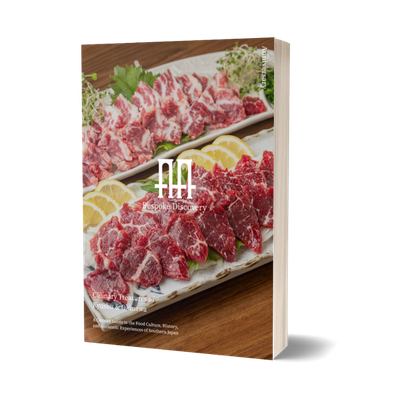
This article is one doorway into a much wider culinary landscape. The Culinary Treasures of Kyushu & Okinawa Digital Guide draws together regional dishes, food culture, local producers, and the distinct flavours of each island into a single, connected reading.
The Evolution and Traits of Fukuoka’s Food Culture|What Is Fukuoka Famous For?
Ancient to Early Modern — The Dazaifu Government Office and the Maritime Silk Road
In the Nara and Heian periods, Dazaifu—known as the “capital of the West”—handled Japan’s diplomacy with East Asia. Records describe hospitality for official envoys from Tang and Silla with splendid tableware and dishes (*1). These international banquets introduced tea and spices to Japan, while silk and sake were served in return—so the dining table became a multicultural stage from an early time.
From the medieval era, Song and Ming ships calling at Hakata Port brought spices, sugar, and wheat flour, helping Nanban sweets and noodle dishes take root across Kyushu. In the Edo period, the Nagasaki Kaidō—running north–south through northern Kyushu from the trading port of Nagasaki—was nicknamed the “Sugar Road.” Imported sugar and confectionery techniques spread to the surrounding domains along the route, forming the foundations of today’s confectionery culture (*2).
Hakata Merchant Culture and the Continuity of Festival Foods
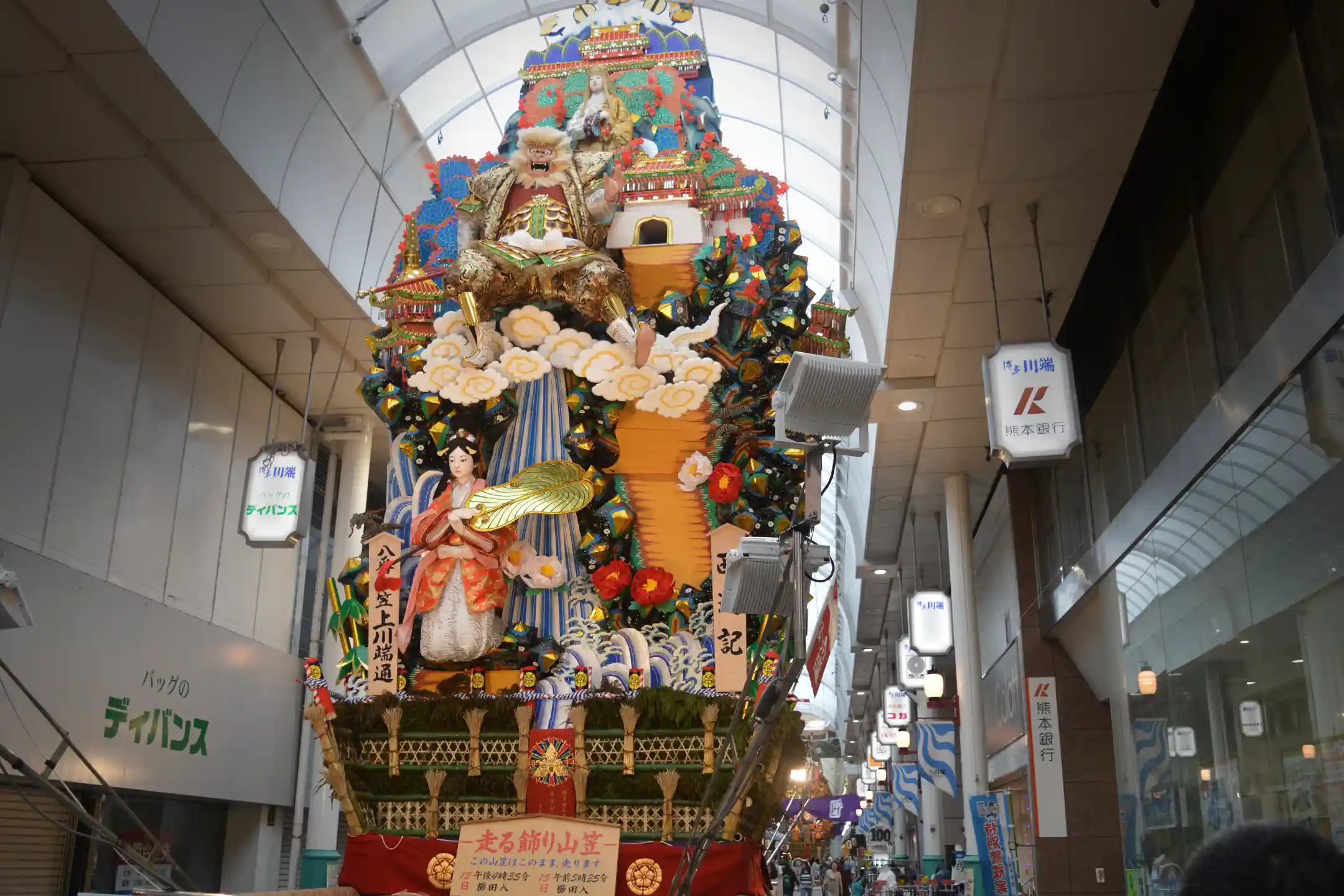
As a thriving autonomous city in the medieval era, Hakata fostered a hospitality culture that drew on trade goods. That tradition lives on in massive, citizen-participation festivals like “Hakata Dontaku” (held annually on May 3 and 4). Sake served to the crowd and yatai dishes offered in front of floats decorated with Yamakasa dolls carry forward the townspeople’s stylish spirit into the present (*3).
Meanwhile, at “Hakata Gion Yamakasa,” which boasts over 760 years of history, the post-shrine-rite banquet traditionally centers on large platters prepared by goryon-san (merchant household ladies) and on kashiwa-meshi (chicken rice). Customs like avoiding cucumbers during the festival period show how even table manners are tied to the rites and continue today (*4).
Yatai That Foster Social Connection and Late-Night Flavor
Yatai were born in the ashes of the postwar city—a “mobile kitchen” supporting workers with bowls of ramen and skewers of grilled meat. From a peak of more than 400 stalls, over 100 remain today, lighting up the night streets of Tenjin, Nakasu, and Nagahama. While the price point is friendly, menus range widely—from ramen to French-inspired creations—and conversation naturally begins among strangers seated side by side, making yatai an inclusive social space (*5).
Chat casually with locals, pair specialties with local sake or shochu, and you’ll experience both Fukuoka’s warmth and the city’s late-night culinary scene at its most authentic.
.webp?width=800&height=533&name=Hakata_s%20unique%20food%20stalls%20(Yatai).webp)
Top 10 Classic Local Dishes of Hakata & Fukuoka|Must-Try Hakata Food
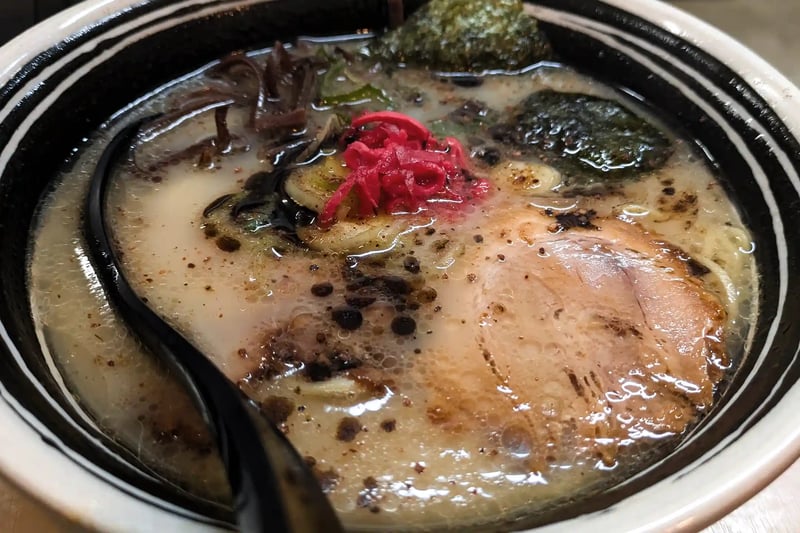
Tonkotsu Ramen — The Science of Milky Broth and the Kaedama Culture
The cloudy broth of Hakata tonkotsu ramen is created when collagen in bone marrow is boiled hard for hours, turns to gelatin, and acts as an emulsifier binding water and fat (*1). The thick, umami-rich soup clings to ultra-thin noodles, and you can choose your preferred doneness—from barikata (very firm) to yawa (soft).
Equally essential is the kaedama culture. To quickly serve busy fishermen, the Nagahama yatai “Ganso Nagahamaya” devised a system of serving a small initial portion of noodles, with the option to add a fresh ball of noodles to your remaining broth (*2).
Karashi Mentaiko — A Sea-Born Spice with Korean Roots
Rooted in Korean salted cod roe, “karashi mentaiko” was introduced in Hakata in 1949 by Toshio Kawahara, who had repatriated from Korea after the war. His original seasoning—chili accented with Japanese dashi—gained popularity, and today mentaiko is a nationally beloved souvenir (*3).
.webp?width=800&height=533&name=Seasoned%20cod%20roe%20(flavored%20with%20chili%20pepper).webp)
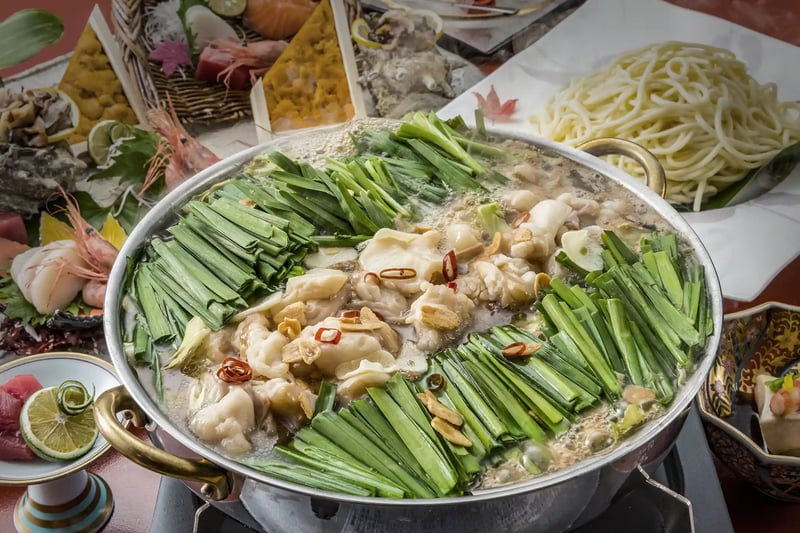
Motsunabe & Mizutaki — Seasonal Comfort in Circular, Resourceful Cooking
Motsunabe traces back to the postwar 1940s, when coal miners ate offal hotpot paired with bean sprouts and garlic chives; later, cabbage and champon noodles were added, shaping today’s Hakata style (*4).
Mizutaki, meanwhile, was devised in the late Meiji era by chef Heisaburō Hayashida, inspired by a chicken stew he learned in Hong Kong. You first savor the milky white broth made by simmering chicken from cold water, then add ingredients—a progression that embodies Japan’s “art of subtraction” (*5).
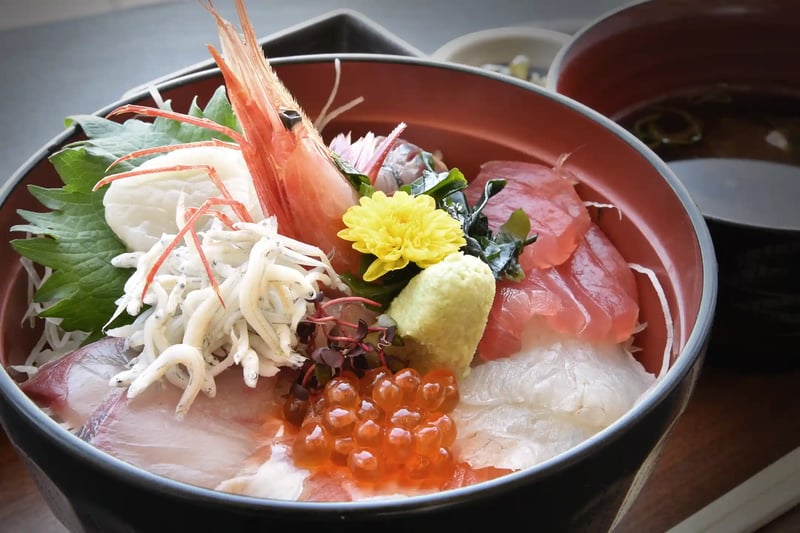
Gomasaba & Seafood Bowls — Relish the Freshness of the Genkai Sea
The Genkai-nada, fed by the Tsushima Current, is one of the world’s richest fishing grounds, landing fatty mackerel and sea bream (*6). Gomasaba—mackerel sashimi dressed with sweet soy and toasted sesame—has roots in local fishermen’s fare (*7). Although mackerel can host anisakis, the species predominant on the Sea of Japan side shows a lower muscle-invasion rate (*8); combined with swift handling, this supports Fukuoka’s raw-fish culture. Super-fresh seafood bowls are another indulgence unique to these waters.
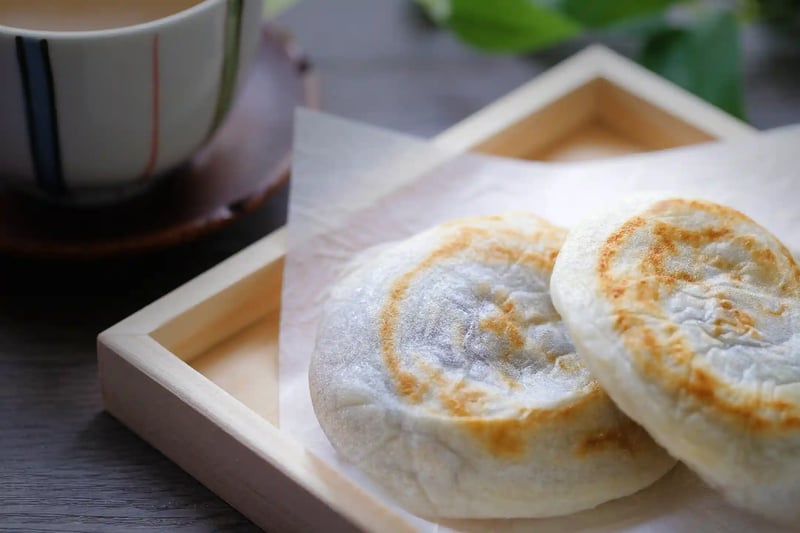
Umegae-mochi & Keiran Somen — Shrine-Origin Traditional Sweets
Umegae-mochi, a grilled rice cake stamped with a plum blossom, is a specialty of Dazaifu Tenmangu Shrine tied to the legend of an old woman who brought mochi to the exiled scholar Sugawara no Michizane (*9).
The Portuguese-influenced Nanban sweet keiran somen reached Hakata from Nagasaki in the 17th century and was refined as an official confection of the Kuroda domain. Made solely from egg yolk and syrup, its golden “threads” are counted among Japan’s top three confections (*10).
Evolved Dining & High-End Experiences|Contemporary Fukuoka Food
Yakitori Reboot — Nose-to-Tail and Counter Theater
While Fukuoka yakitori is famous for its “pork belly culture,” recent years have seen the rise of premium restaurants that “enjoy an entire chicken beak to tail.” Near Ōhori Park, Yakitori Toriji offers just 14 counter seats reminiscent of a sushi bar. The owner, licensed for poultry processing, breaks down same-day dressed whole birds in front of you, then grills everything—right down to rare cuts like sot-l’y-laisse and chōchin—over charcoal. With 400+ natural wines, pairings that brighten rich poultry fat with lively acidity open new horizons (*1).
In Takasago, Yakitori Taka serves more than 25 types of skewers from prized breeds like Tosa Hachikin and Kōsaka Chicken. The course continues until you say “stop,” delivering a vivid, live experience. Encircling the grill, the atmosphere becomes a true “skewer dinner theater” (*2).
Both champion nose-to-tail sustainability while offering a counter performance that reveals the depth of Fukuoka’s food culture.
Innovative Kaiseki in an Artful Space
Opened in 2023, Genjyu at The Ritz-Carlton, Fukuoka weaves Hakata-ori textiles and rantai bamboo lacquerware into a tranquil, gallery-like setting that houses kaiseki, sushi, and teppanyaki.
Seasonal hassun platters and soups, plated on Arita and Karatsu ceramics, become art pieces reflecting Kyushu’s ingredients in their “current form.” In the seasonal course “Hatsune,” seafood from the Genkai Sea and produce from Jōjima resonate with the design of the vessels to awaken all five senses (*3). Beyond cuisine, the interplay of space, tableware, and service creates a “culinary installation” ideal for culture-curious travelers.
A New Wave of Pairings: Tea, Sake, and Craft Beer
Beverage pairings are evolving too. At The Market F (Grand Hyatt Fukuoka), the “HERB MEETS TEA” dinner collaborated with Yame tea house Nakamuraen. Incorporating Yame matcha and in-house herbs into the dishes themselves, each course was paired with carefully selected sencha or herbal tea—a non-alcoholic gastronomy that drew attention (*4).
For alcohol, Washudokoro Shuho in Tenjin-Minami proposes courses pairing over 2,000 bottles of sake—stored at sub-zero temperatures—with delicate small plates. Vintage sake with Genkai seafood teaches you a new, three-dimensional expression of umami (*5).
Fukuoka’s craft beer scene—now home to more than 20 breweries—extends pairings from dish to glass: smoked ales with charcoal-grilled skewers, hop-forward IPAs to cut through rich tonkotsu ramen, and more (*6).
Learn Food Culture Through Markets & Workshops|Eat & Learn
Yanagibashi Rengō Market Sunrise Tour
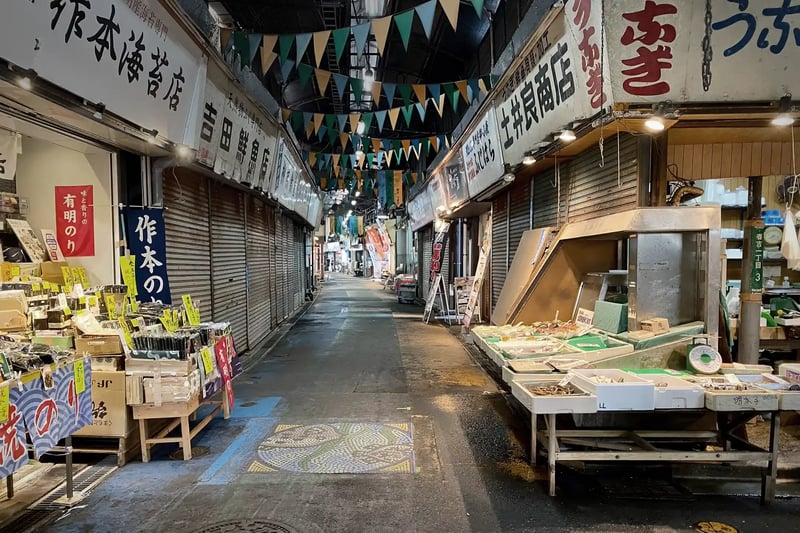
At “Hakata’s kitchen,” the Yanagibashi Rengō Market, early-morning English-guided tours are popular. Nibble sashimi at a fishmonger, stroll the arcade with freshly fried kamaboko in hand, then slurp classic noodles at nearby Sankaku Market’s long-loved Inaba Udon.
On the daytime plan you can relax with pudding and coffee at the jazz kissaten Bonet.; on the evening plan, sample local dishes at a neighborhood izakaya—experiencing the full flow from market culture to the dining table in one sweep (*1). A feature by FBS Fukuoka Broadcasting reported that posts by overseas influencers spurred a surge in foreign visitors, with pre-opening queues forming at seafood canteen Shokudō Hikari (*2).
Studio Visits: Koishiwara-yaki Pottery & Yame Lacquerware
At the Koishiwara-yaki Traditional Industry Hall in Tōhō Village (Asakura District), try wheel-throwing and decorating classes to learn hallmark techniques like tobikanna (chattering) and brush patterns. Receiving the piece you shaped after your trip, you’ll have a “plate that holds travel memories” to brighten your daily life (*3).
At Ogata Butsudan Main Store in Yame City, a workshop teaches lacquer shaving and gold-leaf application while you craft a one-of-a-kind pair of chopsticks. You’ll experience firsthand how lacquer’s deep luster elevates cuisine (*4). Linking craft studios with dining vessels, these programs are perfect lessons in the “beauty of utility.”
Ramen Broth & Mentaiko-Making Classes
You can also step into the “maker’s role.” The byFood-listed “Hakata Ramen & Gyoza Home Cooking Class” teaches you, in a home kitchen, how to extract tonkotsu broth, time noodle doneness, and fold gyoza; you then enjoy the bowl you made. The class covers broth theory and regional context too, so even beginners grasp ramen culture systematically (*6).
Near Fukuoka Airport, the Hakata Haneya Sohonke Mentaiko Dōjō offers a 30-minute “original mentaiko” experience where you mix chili, yuzu, and kombu to create your preferred seasoning. The roe cures for five days at home, so the fun continues after your trip (*5). Walking through the artisan process fosters a deeper respect for every slice you taste.
Luxury Food Travel Model Courses & Where to Stay|Luxury Food Travel Planner
3-Day & 5-Day Highlights, Plus How to Use Private Guides
In the 3-day model, open your first Hakata evening with a deeply savory motsunabe—offal simmered for hours until rich—finishing with champon noodles as is the local custom (*1). On Day 2 morning, head to Yanagibashi Rengō Market, “Hakata’s kitchen.” Among roughly 60 bustling shops, taste fresh seafood and mentaiko; consider an early brunch at a market eatery (*2).
At midday, sample tonkotsu ramen and gomasaba along Kawabata Shopping Arcade, then hop among Japan’s largest concentration of yatai at night for grilled ramen and bite-size gyoza (*1). On Day 3, tour a mentaiko workshop for production viewing and original seasoning, then close your journey with collagen-rich mizutaki.
For the 5-day model, spend the first three days on city gourmet, then on Day 4 visit Yame’s tea fields. Yame—GI-certified for gyokuro—lets you see covered-cultivation methods and savor a concentrated first infusion at a tea salon (*9). In the afternoon, enjoy sake-and-local-cuisine pairings at a brewery. Day 5 brings Yanagawa river cruising with steamed eel (seiro-mushi) and unique Ariake Sea delicacies for a grand finale.
To streamline everything, combine a small-group, interpreter-guided Fukuoka Walks food tour (market & yatai, 3.5h) (*3) or the JTB × byFood.com yatai-hopping tour (four stalls plus hotel transfer) (*4). You’ll drastically reduce planning and reservation effort.
Design-Forward Inns & Hotels with Art Collections
For artistically inclined stays in central Fukuoka City, consider Hotel Il Palazzo, designed by world-renowned architect Aldo Rossi. Its postmodern façade and interiors supervised by Shigeru Uchida make it a “museum you can sleep in” (*5). Opened in 2023, The Ritz-Carlton, Fukuoka features guest rooms inspired by the geometry of Hakata-ori textiles and hosts “The Art of Dining,” a gallery-style tour of Kyushu art that fuses cuisine and craft across the senses (*6).
For the suburbs, NIPPONIA HOTEL Yame Fukushima Merchant Town revives 200-year-old merchant houses. Rooms are dispersed among traditional townhouses, and dinner—creative Japanese cuisine using Yame tea—offers a “tea ceremony you can eat” (*7). In Kitakyushu, ART HOTEL Kokura New Tagawa blends a Meiji-era guesthouse with Sukiya-style architecture; stroll the property and then savor Genkai seafood on teppanyaki (*8).
Seasonal Booking Tips & Thoughtful Souvenirs
Spring (Mar–May) and autumn (Sep–Nov) offer mild weather with cherry blossoms and autumn leaves—peak seasons that drive up lodging prices. For “Hakata Dontaku Port Festival,” which attracts over two million visitors, booking accommodations six months in advance is safest. To avoid crowds: (1) travel on weekdays, (2) sightsee early mornings, or (3) target the off-peak window right after national holidays. Summer brings humidity, heat, and typhoons (with more beachgoers), while winter is a value season with fewer crowds.
High-value souvenirs include Hakata-ori silk accessories with a history of imperial presentation (*10); Hakata dolls, which shone at the Paris Exposition; Yame tea (GI) confections like gyokuro ganache and premium tea bags (*9); and Kurume-kasuri stoles, whose rustic cotton weave feels elegantly understated (*11). Each marries craftsmanship with story—perfect for “bringing culture home.”
Fukuoka Gourmet Travel FAQ|Frequently Asked Questions & Answers
What’s the Best Season and How Do I Avoid Crowds?
The prime seasons for Fukuoka are spring for cherry blossoms and autumn for foliage. Temperatures are pleasant and strolling is ideal, but domestic travel demand concentrates and lodging prices surge. Avoid long holidays and weekends; visit popular spots early on weekdays, or aim for off-peak windows like just after the rainy season or right after New Year for a more relaxed trip (*1) (*2).
Can I Find Vegan and Halal Options?
Ahead of the 2023 World Aquatics Championships, Fukuoka City released an English “Vegan & Halal Restaurant Map.” Masala Art uses halal-certified ingredients and offers vegan curries; Nile Restaurant provides a prayer space; and Shojin-ryōri (Buddhist vegetarian cuisine) in Sasaguri is another option (*3) (*4). Contact restaurants in advance for smooth allergy and religious accommodations.
What Should I Know About Credit Cards and Tipping?
In central Fukuoka, major cards like Visa and Mastercard are widely accepted at hotels, department stores, and many restaurants. However, yatai and market stalls are often cash-only—keep ¥1,000 notes and coins handy. Japan has no tipping culture. If you receive good service, a warm “arigatō” is enough; no extra payment is expected at taxis or restaurants.
The story behind the flavour
A single article can offer a glimpse — a taste, a thread to follow. The Culinary Treasures of Kyushu & Okinawa Digital Guide gathers those threads into something more complete: the people, the places, the traditions, and the quiet logic behind what each region puts on the table. It's a reading for those who want to understand not just what to eat, but why it matters.

Conclusion
Fukuoka is a captivating city where a food culture nurtured through centuries of exchange with East Asia still thrives. Beyond signature dishes like Hakata tonkotsu ramen, karashi mentaiko, motsunabe, and mizutaki, the ultra-fresh bounty of the Genkai Sea is unmissable.
Innovative yakitori embracing nose-to-tail philosophy and high-end dining that fuses cuisine with art reveal new ways to enjoy food. Through hands-on market tours and workshops, you’ll learn the stories and skills behind each dish—turning your journey into something far richer. Through Fukuoka’s diverse culinary culture, why not set out on a trip where you savor both the warmth of its people and the depth of its history?