Amid the bustle of modern Tokyo, you can still find quietly tucked-away traditional ryokan—inns where Japanese aesthetics and culture are carefully preserved. The feel of tatami under your feet, the soft light filtering through shoji screens, the stillness contained in a single bowl of tea—these moments add up to something far beyond “just an overnight stay.” They are an experience in themselves.
In this article, you will explore a selection of exceptional traditional ryokan that still exist in Tokyo today. From spatial design, cuisine, and art to environmental consciousness, we will delve into the essence of refined Japanese culture through the eyes of a traveler.
What is Traditional Ryokan Tokyo?
The Roots of Traditional Ryokan that Carry Edo Culture into the Present
Tokyo offers an abundance of accommodation options, from international luxury chains to long-established Western-style hotels. Yet when it comes to authentic Japanese-style ryokan with a distinctly “wa” atmosphere, the actual number is surprisingly limited. Precisely because they are so few, the remaining traditional ryokan in the city are truly special, and their warmth and hospitality are highly appreciated by overseas visitors. For Japanese guests who are used to Western-style hotels, spending time in a tatami-mat room wearing a yukata can also feel refreshingly new and deeply appealing (*1).
When people speak of a “Traditional Ryokan” in Tokyo, they are usually referring to a special kind of inn where you can enjoy the charm of a classic Japanese stay right in the heart of the city. If you trace the roots of these inns, you arrive at the “hatago” lodgings of the Edo period—the inns and post towns that welcomed travelers on the old highways.
In Edo, countless travelers passed through, from feudal lords on their mandatory journeys to the common people. They lodged at hatago or simple inns called “mokuchin-yado,” where guests paid for floor space and basic amenities. Modern ryokan evolved by inheriting the lodging culture and spirit of hospitality that blossomed in Edo, then developing further from the late 19th century onward.
Even today, there are historic ryokan in Tokyo that have been in operation since the Meiji era, and their very buildings tell a story. For example, Hongo’s “Homeikan” is a pure Japanese-style ryokan located in an area once beloved by literary giants such as Natsume Soseki and Mori Ogai. Its main building, now over 120 years old, is registered as a Tangible Cultural Property of Japan. All three of its buildings still strongly reflect the appearance they had at the time of their founding, and the meticulous details throughout convey both the charm of a bygone era and the artisanship that shaped it (*2).
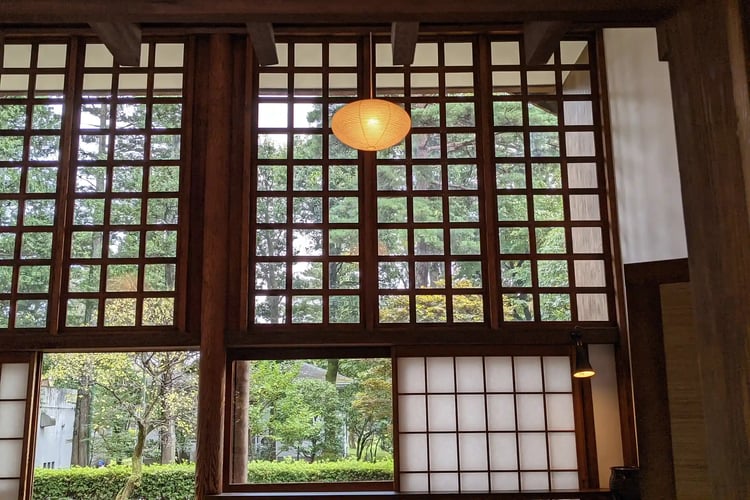
The wooden corridors, originally designed for a student boarding house, remain narrow, and sliding open a shoji door takes you directly into a guest room. At the same time, each room features distinctive craftsmanship, such as tokonoma alcoves that use whole tree trunks as pillars or fan-shaped glass windows that add a unique flourish.
In these richly detailed interiors, traditional Japanese craftsmanship is alive and well. By simply staying there, you can feel the depth of Japanese culture that transcends time (*3). In this way, Tokyo’s traditional ryokan serve as living stages, carrying the history and culture that connect Edo to the Showa era into the present day.
Cases of the Fusion of Architectural Beauty and Innovation in Kyoto’s Traditional Ryokan
Tokyo’s traditional ryokan are also fascinating in how they preserve the ambience of historical architecture while skillfully integrating modern convenience and innovative design. Some ryokan are housed in restored old buildings, while others use cutting-edge architectural techniques to create an “evolved Japanese space.”
For example, “ONSEN RYOKAN YUEN SHINJUKU,” which opened in 2019 in Shinjuku, is an urban ryokan that reimagines the appeal of a Japanese inn for contemporary life. Although it occupies an 18-story tower in the middle of the city, its top floor features an open-air hot spring bath filled with water brought from a Hakone source. You can soak in real hot spring water while surrounded by the skyscrapers of central Tokyo—a truly luxurious experience (*1).
While honoring traditional Japanese omotenashi, this bold attempt to create an oasis of relaxation high above the city demonstrates a harmonious fusion between classic ryokan culture and urban innovation.
Meanwhile, “HOSHINOYA Tokyo,” a 17-story building with two basement levels, is a luxury ryokan conceived as a “tower ryokan” in the business district of Otemachi. Its exterior is that of a sleek, contemporary high-rise, clad in a lattice featuring the traditional hemp-leaf pattern. Once you step inside, however, you are met by an expansive world of tatami-lined spaces.
Each floor has just six guest rooms and a shared “ochanoma lounge,” so that every floor feels like its own small ryokan. Even though it does not fit the stereotypical image of a single-story wooden inn with a garden, the interior design, the way staff move, and even the smallest details are imbued with Japanese aesthetics, creating a serene atmosphere where you can fully immerse yourself in Japanese culture (*2).
Inside, you spend your stay barefoot on tatami, as in a traditional home. Guest rooms are full of natural materials—tatami mats, washi paper, bamboo, and more. The space combines quiet, traditional beauty and cutting-edge comfort, so that guests from Japan and abroad alike are often pleasantly astonished. Tokyo’s traditional ryokan distill the essence of past and present into their architecture, offering a unique stay where tradition and innovation are in complete harmony.
Experiencing Art and Refined Spatial Design at Traditional Ryokan Tokyo
Artworks and Furnishings that Tell Each Ryokan’s Story
Step inside a traditional ryokan, and you will notice that the interiors are filled with artworks and furnishings that quietly tell the story of that particular inn. Sometimes the building itself is of cultural-heritage caliber; in other cases, the owner’s tastes and the history of the neighborhood are reflected in intricate design details throughout.
For instance, “Andon Ryokan,” known as Tokyo’s first designer ryokan, creatively incorporates antiques and art pieces into its interior design. Located in the nostalgic old downtown area of Minowa, this ryokan features an original architectural concept inspired by the soft glow of traditional andon paper lanterns and the semi-communal housing of the Showa era. Its distinctive architecture has even received a prize from the Architectural Institute of Japan.
In the lobby lounge, you will find antique mizuya cupboards and stained glass collected over many years by the owner couple from across Japan. These over-100-year-old pieces sit alongside contemporary minimalist design elements, creating a unique atmosphere where antique furniture and modern lines coexist in harmony (*1).
There is also a playful side to the space: a private jacuzzi area that evokes a neighborhood sento bathhouse is decorated with hand-painted tiles full of auspicious motifs, and in the washroom, you might encounter manga murals drawn especially for the ryokan by professional manga artists. In such ways, each ryokan uses its art and furnishings to tell a story, gently guiding you into the depths of local culture.
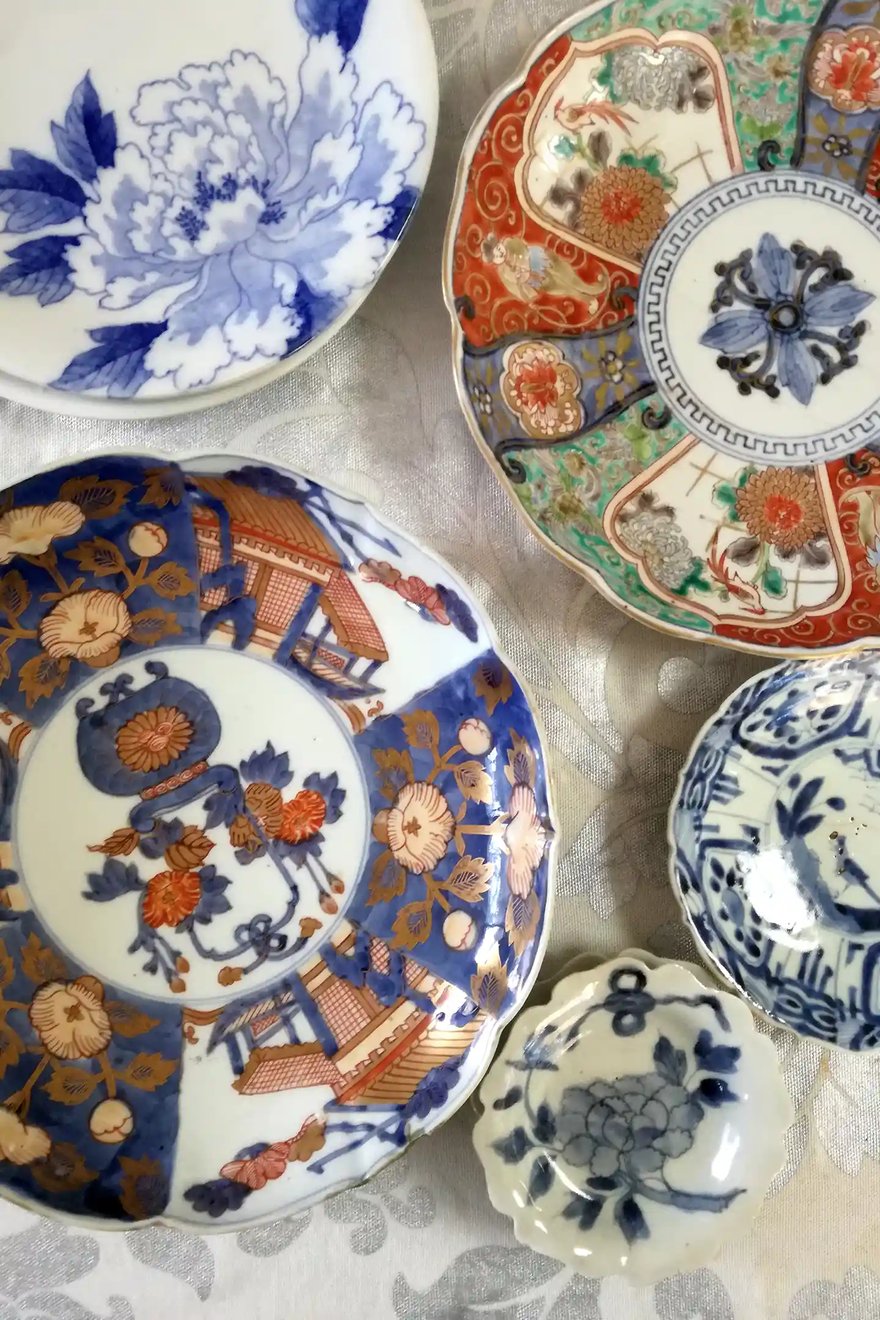
In the Asakusa area, where Edo atmosphere still lingers, many ryokan express shitamachi culture through their decor. At “Sukeroku no Yado Sadachiyo,” a ryokan formerly located near Sensoji Temple, the interiors and guest rooms were filled with ukiyo-e prints, old Imari porcelain, and other antiques, allowing guests to fully immerse themselves in the world of Edo Asakusa (*2). Although this ryokan has recently ceased operation, similar approaches can be seen at other Japanese-style inns in the Asakusa area.
Some ryokan create common spaces decorated with Edo-era toys and paper lanterns, while others use furniture from the Taisho and early Showa periods to recreate a retro atmosphere from 100 years ago. Each property devises its own ways to delight guests. When you spend time contemplating the stories behind the artworks and antiques around you, your stay becomes richer—almost as though you were lodging inside a small private museum.
Refined Spaces and Interiors Where Tradition Meets Modern Design
In Tokyo’s traditional ryokan, you can enjoy highly polished spaces in which classic Japanese aesthetics and contemporary design are beautifully balanced. Elements such as tatami, shoji, and coffered ceilings are preserved, while modern comfort and design sensibilities are layered on top. For guests from overseas, these spaces are a chance to experience what many describe as the “coolness” of contemporary Japan.
As mentioned earlier, the guest rooms at HOSHINOYA Tokyo draw on the aesthetics of traditional sukiya-style architecture but are composed with a distinctly urban sensibility. The rooms are fully tatami-floored, featuring woven bamboo closets and thick drum-style shoji screens that make full use of the warmth of natural materials. At the same time, they are equipped with original “tatami sofas,” on which you can relax directly on the mats, and “futon beds” that combine the comfort of futon with the familiar shape of a bed, offering a functional beauty that suits modern lifestyles (*3).
Lighting design also plays an important role. Indirect lighting is used with great care, and the patterns of light and shadow cast through the hemp-leaf lattice change subtly throughout the day, almost like an artwork that visualizes the passage of time. The space, which respects tradition while embracing contemporary design, is the very definition of “wa-modern” sophistication.
Another example is “Ryumeikan Honkan” in Ochanomizu, a ryokan with a 116-year history that has successfully evolved into a small luxury hotel where every room is a suite. Inside the rooms, you find tatami areas and shoji featuring intricate kumiko latticework, bringing in traditional Japanese textures. At the same time, the beds, furnishings, and amenities meet the standards of a modern high-end hotel.
Outside the guest rooms, there is a library lounge where you can relax with a book, sink into a massage chair, and enjoy a coffee—offering new forms of relaxation that old-style ryokan did not provide (*4).
In the in-house restaurant, you can enjoy creative Japanese cuisine built around the theme of “eating tea,” with dishes that incorporate Japanese tea and tea leaves. By blending tradition and novelty in both space and service, the ryokan provides an experience that satisfies both cultural curiosity and a desire for comfort (*4). In these ways, Tokyo’s traditional ryokan take the best of Japanese and Western, old and new, to create spaces where you can savor both cultural richness and contemporary ease.
Recommended Cultural Experiences and Workshops at Traditional Ryokan Tokyo
Learning Tea Ceremony and Ikebana in Depth at Your Ryokan
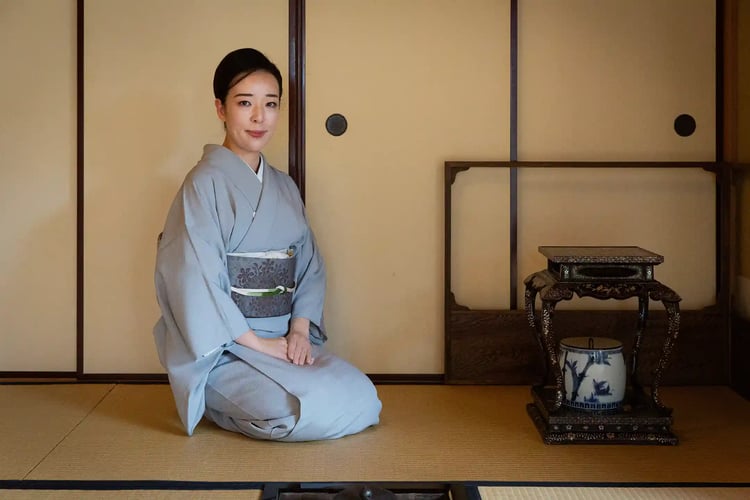
Many traditional ryokan in Tokyo offer rich cultural programs that you can enjoy without ever leaving the property. Among the most popular are experiences of tea ceremony (sadō) and flower arrangement (kadō/ikebana). Even if you feel intimidated by the idea of entering a formal tearoom as a complete beginner, ryokan-based programs make it easy to take your first step.
At HOSHINOYA Tokyo, for example, you may find a “Tea Ceremony Experience” held in one corner of the ochanoma lounge. Under the guidance of staff, you whisk your own bowl of matcha and learn the meaning behind each gesture and movement. The atmosphere is relaxed, so even first-timers can encounter the world of tea ceremony without feeling overly formal (*1).
Savoring your own tea with seasonal sweets, you begin to sense the spirit of hospitality contained in a single bowl. Some ryokan even offer a special tea bowl and bamboo whisk as a souvenir, so you can continue practicing and enjoying tea once you return home.
Ikebana workshops are also increasingly popular, particularly among international guests. To support beginners who have never arranged flowers before, more and more accommodations invite professional ikebana masters to lead small-group lessons directly on site.
For example, at a certain luxury hotel in Tokyo, an “ikebana atelier” inside the property hosts regular workshops that anyone can join. You handle seasonal flowers and plants, learning how to use floral scissors and how to work with stems and leaves from the basics up (*2).
Some plans even allow you to wear kimono while you arrange, deepening your immersion in traditional culture. Being able to study tea ceremony and flower arrangement—the very symbols of Japanese aesthetics—in the calm, intimate setting of a ryokan is a rare luxury for any traveler who wishes to expand their cultural horizons.
Encountering Local Artists Through Cultural Exchange Events at Tokyo’s Traditional Ryokan
What makes a ryokan stay even more memorable is the chance to meet local artists and practitioners of traditional performing arts through on-site events. Some traditional ryokan in Tokyo regularly host small concerts and performances in their lounges or halls.
At HOSHINOYA Tokyo, for instance, you may encounter live performances of gagaku, Japan’s ancient court music, on certain days of the week (*3). Listening to the ethereal sounds of gagaku in a tatami space is an experience that lingers long after your trip. Other properties offer live performances of shamisen or koto, as well as demonstrations of calligraphy or pottery—each ryokan devises its own unique cultural programs.
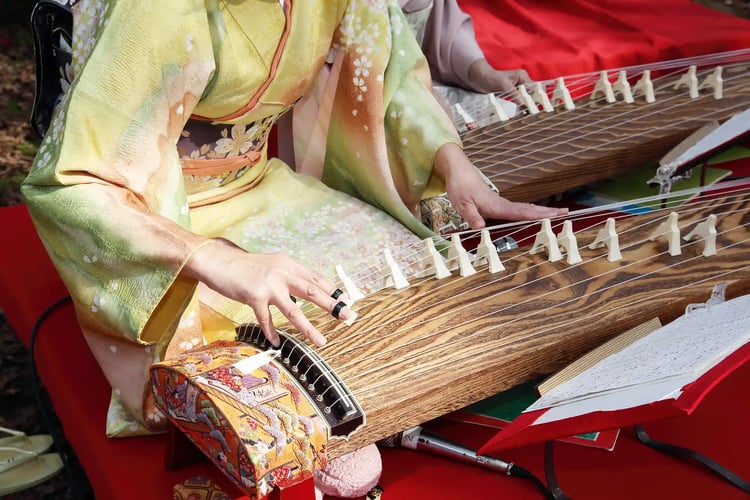
These events are increasingly supported by Tokyo’s initiative to promote cultural experiences in accommodation facilities. The metropolitan government has been encouraging ryokan and hotels to partner with local experience-based tourism providers to offer a wider range of cultural programs for foreign visitors, leading to concrete examples such as the following (*4).
Some ryokan convert one of their rooms into a tearoom for tea ceremony experiences. Others install a small stage for workshops in Japanese dance or Noh theater, or create events where you can try playing taiko drums or koto yourself.
Depending on the property, it may also be possible to arrange stays that include a practice session in martial arts such as judo or kendo, visits to observe sumo training with short hands-on elements, or kimono dressing experiences with professional stylists (*4). By participating in these programs, you gain access to concentrated cultural experiences that go far beyond what standard sightseeing can offer, transforming the ryokan into a place of learning and exchange.
Conversations and photos with local artists become treasured memories, and the human connections that emerge in such settings feel very much like an extension of the ryokan’s hospitality. In this way, traditional ryokan in Tokyo offer both the depth of Japanese culture and warm encounters with people through their cultural events.
Enjoying Tokyo’s Refined Culinary Culture at Traditional Ryokan Tokyo
Seasonal Cuisine Where Tradition and Artistry Come Together
No ryokan stay would be complete without its culinary pleasures. Traditional ryokan in Tokyo serve refined cuisine that showcases seasonal ingredients at their peak. Deeply rooted in the traditions of washoku, these course meals are as visually striking as works of art and hold great appeal for many international guests.
At HOSHINOYA Tokyo’s dining room, for example, you can experience an original course menu known as “Nippon Cuisine.” Carefully selected ingredients from diverse regions of Japan are prepared using the techniques and delicate sensibilities of a head chef trained in French cuisine. Each dish draws out the natural flavors of the components, embodying a fusion of tradition and innovation.
The menu particularly highlights seafood, including rare fish that rarely appear in regular markets and species that once had no established cooking methods and were often overlooked. Bones and other parts that might typically be discarded are incorporated creatively into the dishes (*1). This approach embodies Japan’s long-standing “mottainai” spirit of avoiding waste, while elevating it into high-end gastronomy—an approach highly praised by guests who care deeply about sustainability.
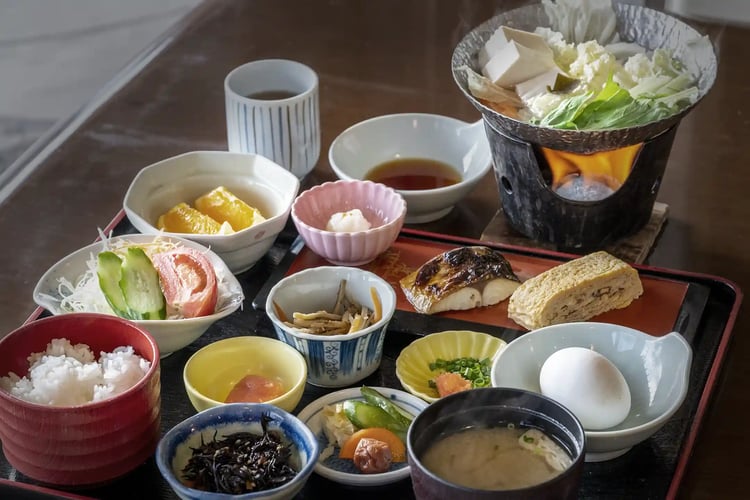
At Hotel Ryumeikan Tokyo, you may encounter meals that reinterpret the food culture of Edo for the present day. In one ryokan’s breakfast, for instance, you might find a lavish Japanese set meal centered on traditional vegetables from the Tokyo area (Edo-Tokyo vegetables) and seafood historically cherished by “Edokko,” the residents of old Edo. Steaming multigrain rice, seasonal vegetable side dishes, grilled fish, chawanmushi (savory egg custard), and an array of pickles are beautifully arranged in stacked lacquered boxes.
Among the highlights are small dishes of simmered and seasoned delicacies such as bonito and tuna tsukudani, tiny whitebait with sansho pepper, ginger simmered in soy sauce, and more. You might also find pickles made from classic local varieties such as Aonegi daikon radish or traditional baby eggplants (*2).
Each dish carries its own history and story, and if you ask the okami (proprietress) about the background and meaning of each item, your meal can feel almost like a cultural seminar. In Tokyo’s ryokan, the dining experience reminds you that “cuisine itself is culture,” fully engaging both your senses and your curiosity.
Special Café and Bar Experiences Unique to Traditional Ryokan
Beyond full meals, the café and bar experiences you have at a ryokan are not to be missed. Sipping matcha and seasonal wagashi on tatami, or enjoying sake and cocktails in a quiet lounge late at night—these moments extend and deepen the atmosphere of your stay.
Many Japanese-style inns provide lounge areas separate from the main dining room, where guests are free to relax. There you might find coffee, tea, Japanese green tea, and herbal infusions that you can enjoy whenever you like.
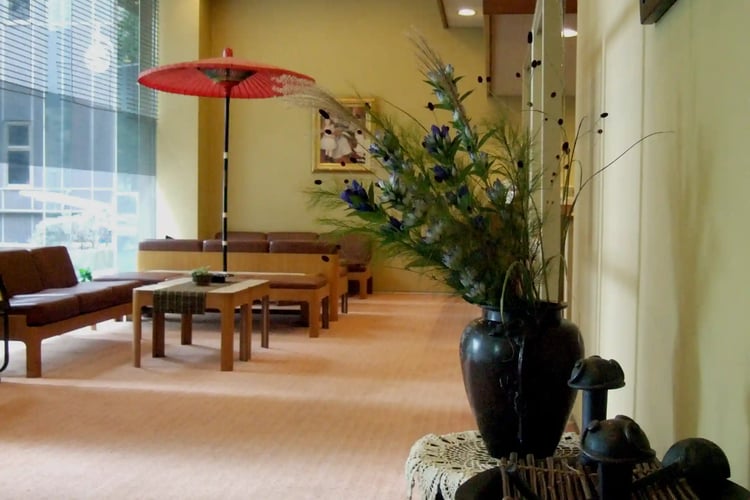
At HOSHINOYA properties, the ochanoma lounges located on each floor are accessible 24 hours a day. This allows you to step out of your room barefoot for a change of scene, rather than spending your entire stay in one space. In the lounge, you will find sencha, hōjicha, seasonal sweets, and even complimentary ice pops ready for you after a bath. You can casually wander in, pick up a book from the shelves, and enjoy a quiet moment over tea—almost like being in your own living room.
Some ryokan also feature distinctive bar lounges. At HOSHINOYA Tokyo, for instance, there is a SAKE lounge in the basement, stocked with regional sake from all over the country and carefully chosen seasonal labels. After a day of exploring the city, tasting a flight of sake paired with small snacks here is a delightful way to wind down.
In the evening, refrigerators in each floor’s lounge may be stocked with local craft beers and fruit liqueurs that you can enjoy at your own pace. Even if you don’t drink alcohol, there are plenty of non-alcoholic drinks and sweets available, so you can still appreciate the atmosphere.
The selection of drinks and snacks changes with the seasons: in spring, you might encounter cocktails featuring fresh strawberries or sweets infused with cherry blossom; in autumn, there may be chestnut and sweet potato desserts. These thoughtful touches turn café and bar time at the ryokan into moments where you can “taste culture,” not just food.
In the early evening at a traditional ryokan in Tokyo, you might find yourself in a softly lit lounge chatting with other guests about your day, or quietly raising a glass while gazing at the garden outside. Even in the middle of a vast metropolis, the ryokan offers a cocoon of calm. In what could be called a refined “Japanese bar culture,” you can savor traditional drinks and seasonal flavors that lend a graceful accent to your travels.
Choosing a Traditional Ryokan Tokyo That Values Sustainability and Technology
Sustainable Stay Experiences at Traditional Ryokan
Traditional ryokan, which place great importance on culture and history, are also gaining attention for their environmentally conscious, sustainable initiatives. The materials used in traditional Japanese houses—wood, washi paper, tatami—are naturally gentle on both people and the planet.
For example, choosing washi wallpaper instead of synthetic vinyl wall coverings reduces the emission of harmful substances such as formaldehyde, helping to create a safer indoor environment (*1). Washi also has natural humidity-regulating properties: in summer, it absorbs excess moisture from the air to keep the room feeling pleasantly dry; in winter, it releases moisture to ease dryness. This contributes to comfortable interiors throughout the year (*1). Tatami, too, is an eco-friendly material with excellent insulation and sound absorption, as well as its own humidity-regulating effects. Revisiting and reusing these traditional materials not only enhances Japanese aesthetics but also directly supports sustainable building practices.
Preserving traditional crafts and local culture is another key pillar of sustainability. Many ryokan carefully source organic vegetables and traditional ingredients from local producers, thereby reducing food miles and making efforts to minimize food waste through thoughtful menu planning.
A hospitality group that operates ryokan and hotels across Japan, such as Hoshino Resorts, has been working on environmentally conscious architecture, food loss reduction, support for traditional crafts and culture, eco-tourism promotion, and the reduction of CO₂ emissions and plastic waste—long before the UN’s Sustainable Development Goals (SDGs) became widely known (*2).
Tokyo’s ryokan are part of this wider movement. They use locally crafted furnishings for many years instead of frequently replacing them, introduce renewable energy sources, conserve water and electricity, and decrease single-use plastic amenities. Examples include switching to bamboo toothbrushes, installing motion-sensor LED lighting to reduce energy consumption, and replacing paper-based check-in forms with tablet-based digital procedures.
These small, steady steps convey a clear message to guests: that “protecting tradition is itself an investment in the future.” Increasing numbers of visitors resonate with this philosophy. As accommodation options that consider sustainability from both environmental and social perspectives, Tokyo’s traditional ryokan are increasingly recognized internationally as places where staying itself supports SDG principles.
Ryokan Equipped with Modern Facilities Such as EV Chargers (Including Tesla)
Traditional ryokan in Tokyo are also proactive when it comes to adopting new technologies. Among today’s affluent travelers, those who drive their own electric vehicles (EVs) or rent them during trips are on the rise. This is particularly common among guests from Europe and North America who prefer to travel with environmentally friendly vehicles such as Tesla.
To meet these needs, more ryokan in Tokyo are installing EV charging facilities. HOSHINOYA Tokyo’s operator, Hoshino Resorts, for example, had installed standard chargers at 23 of its main properties nationwide by 2023 and launched a system that allows guests to reserve charging stations in advance (*3).
By letting you secure a charging space at the time of booking your stay, they remove concerns such as “Will I be able to charge at the hotel?” or “When will a charging station be available?” EV users can arrive knowing their needs will be taken care of (*3).
Charging fees are typically set at a flat rate per night, so you can fully recharge during your stay without worrying about finding fast-charging stops along the way. Hoshino Resorts is also introducing EVs for shuttle services—for instance, in Karuizawa, they were quick to deploy electric vehicles for guest transfers—helping to lead decarbonization efforts within the hospitality industry (*3).
Beyond EV support, ryokan facilities themselves incorporate advanced technology in ways that quietly enhance comfort. High-speed Wi-Fi is available throughout, and you can finely adjust room temperature and lighting using dedicated controllers or panels.
Warm-water bidet toilets (washlets), which are often a pleasant surprise for overseas guests, are usually accompanied by multilingual instructions. Some ryokan provide digital services that allow you to check facility information or nearby sightseeing tips via your in-room television, or even use your smartphone as a room key.
Despite all this, modern devices are thoughtfully integrated so as not to disrupt the atmosphere of the space. Air-conditioning ducts and sprinkler systems—essential components of modern buildings—are neatly concealed within coffered ceilings or transom designs, so they do not intrude visually.
The ideal pursued by these Tokyo ryokan is a space where “there is no inconvenience whatsoever, yet the traditional beauty of the setting remains intact.” In terms of harmonizing technology and hospitality, their standards are remarkably high. Supported by these discreetly deployed modern systems, you can feel the interplay of Japanese tradition and advanced technology throughout your stay—an aspect that holds strong appeal for culturally curious travelers.
Recommended Model Courses for Exploring Traditional Ryokan Tokyo
A Museum and Gallery Itinerary Using a Traditional Ryokan as Your Base
If you choose to stay at a traditional ryokan in Tokyo, you’ll want to take advantage of your surroundings by exploring nearby museums and galleries. For culturally curious travelers, here is a suggested model course that lets you efficiently tour Tokyo’s art spots with your ryokan as your base.
<Day 1: Enjoying Art and Edo Culture in Ueno and Asakusa>
After a Japanese-style breakfast at your ryokan, head toward Ueno. Within Ueno Park lies the Tokyo National Museum, the oldest and one of the largest museums in Japan. Its vast collection, including National Treasures and Important Cultural Properties, numbers around 120,000 items, allowing you to follow the flow of Japanese art from the Jōmon period through to the Meiji era.
.webp?width=750&height=500&name=The%20Tokyo%20National%20Museum%20(often%20abbreviated%20as%20TNM).webp)
If you’re new to Japanese art, the main building’s displays of Buddhist statues, ukiyo-e woodblock prints, and samurai armor provide a compelling overview of the country’s diversity of expression. After a leisurely morning visit, take a break at a café in the park. Sipping coffee surrounded by greenery while reflecting on the works you’ve just seen is a quiet pleasure in itself.
In the afternoon, head toward Asakusa via Ryogoku to visit the Sumida Hokusai Museum. Dedicated exclusively to the genius Edo-period artist Katsushika Hokusai, this museum features masterpieces such as “Thirty-Six Views of Mount Fuji,” along with other prints and paintings. After immersing yourself in Hokusai’s world and the vibrant urban culture of Edo that shaped his work, stroll across the Sumida River and make your way to Sensoji Temple in Asakusa. Here, you can experience both the grandeur of the temple’s architecture and the lively atmosphere of the surrounding streets.
In the early evening, return to your ryokan. If you are staying in Asakusa, consider joining a rickshaw tour through the nostalgic neighborhood streets. Watching Sensoji Temple illuminated at night and passing by retro storefronts while chatting with your rickshaw driver feels almost like slipping back in time. End the day with a kaiseki dinner at your ryokan, savoring the flavors of the season and reflecting on everything you’ve seen.
<Day 2: A Blend of Modern Art and Classical Culture Around Akihabara and Ochanomizu>
On your second day, shift your focus to modern art and classical culture. Enjoy a slow morning at the ryokan, perhaps joining a cultural activity before check-out.
If there is a calligraphy lesson or origami workshop in the lounge, this is a perfect opportunity to try it. You might practice writing a simple Japanese phrase with brush and ink, or fold washi paper into traditional gift-wrapping shapes. These small creations become tangible reminders of your trip.
After check-out, head to the University Art Museum of Tokyo University of the Arts near Akihabara Station. Depending on the season, you can explore special exhibitions showcasing Japanese and international modern art and crafts. The academic atmosphere of the art university and the chance to encounter works by emerging talents alongside historical masterpieces can be very stimulating.
For lunch, stop at a long-standing café in Ochanomizu and enjoy a Western-style meal with a nostalgic Japanese twist. In the afternoon, visit Kanda Myojin Shrine, known as the guardian shrine of Edo. Its bright vermilion buildings and unexpectedly quiet grounds offer both beauty and a sense of calm in the middle of the city.
Afterward, if you have time and interest, you might venture further to museums like the Ōta Memorial Museum of Art (in Harajuku) or the Nezu Museum (in Aoyama). Nezu Museum, with its tea houses and exquisite Japanese garden, feels like an oasis in the urban landscape.
Later in the day, return to your ryokan to pick up any luggage you left in storage and then head out to enjoy Tokyo’s night views. Recommended spots include Tokyo City View at Roppongi Hills or vantage points along the Sumida River that offer stunning views of Tokyo Skytree. As you take in the sparkling panorama of the metropolis, your journey reaches its finale.
Using a traditional ryokan as your home base, your exploration of Tokyo’s art and culture becomes a trip filled with both learning and emotion—one that lingers in your memory long after you return home.
A Day Immersed in Culture and Art Without Leaving the Ryokan
Finally, here is a model plan for spending an entire day inside the ryokan, fully immersing yourself in Japanese culture and art. Rather than rushing from one tourist site to another, you surrender to the non-everyday atmosphere of the ryokan itself and slow down—a true luxury.
<An Example of a Day Devoted to Your Ryokan Stay>
Wake up in the quiet of your tatami room and start the morning with a soak in the large public bath. If your ryokan has an open-air bath with natural hot spring water, enjoying the crisp morning air while gazing up at the sky through the steam is unforgettable. Afterward, sip freshly brewed coffee or seasonal herbal tea in the lounge and ease gently into your day.
Next, join a morning cultural program hosted by the ryokan. At HOSHINOYA Tokyo, for example, there is a “Skyward Morning Practice” session held in the rooftop garden 160 meters above the ground. This original exercise combines sword-movement forms and deep breathing. Filling your lungs with fresh air while moving your body leaves you refreshed in both mind and spirit, and the movements, inspired by Edo-period samurai training, offer you a tangible connection to Japanese culture.
Enjoy a ryokan-style Japanese breakfast served in your room: an array of colorful small dishes and freshly cooked rice arranged so beautifully that it feels like edible art. After taking your time with breakfast, move on to a tea ceremony lesson. In a tearoom or tatami room within the ryokan, you will learn everything from how to sit and bow properly to the etiquette of receiving and preparing tea.
First, as a guest, you learn how to receive a bowl of matcha and seasonal sweets. Then you take on the role of host and try whisking tea yourself. Handling the ladle and tea utensils for the first time may be a little nerve-wracking, but as you focus on each movement, your posture naturally straightens and you may feel an unexpected sense of calm and clarity.
When you finally present the tea you have whisked to your fellow guests, you will have completed the sequence and perhaps discovered both the depth of tea ceremony and a sense of personal accomplishment. In some cases, the tea bowl and bamboo whisk used during the lesson may be given to you as a souvenir, so you can recreate the experience at home and call to mind the memories of your trip.
Lunch can be a light meal prepared by the ryokan or a bento from a renowned local restaurant. The afternoon is free time. You might spend it browsing the ryokan’s art displays, strolling through the courtyard garden, napping in your room, or requesting a simple craft workshop—such as making chopstick rests using decorative mizuhiki cords or attending a wagashi demonstration to learn how artisans shape seasonal sweets.
Toward evening, change into a yukata for a special experience with geisha and taikomochi entertainers. In areas like Asakusa or Kagurazaka, where geisha culture remains active, some ryokan can arrange small, intimate banquets with geisha for guests upon request.
Up close, you can watch elegant dance accompanied by shamisen and song, and enjoy light-hearted games and witty banter led by taikomochi entertainers. At first, you might feel shy or unsure what to expect, but as laughter fills the room, barriers dissolve and genuine connection arises beyond language.
After sunset comes your final dinner: a full kaiseki course in a private dining room reminiscent of a traditional restaurant. From the opening appetizer to the soup, sashimi, grilled dishes, and simmered courses, each plate expresses the season in color, aroma, and flavor. The choice of tableware and the presentation are as meticulous as an art exhibition. Hearing the chef’s explanation of the ingredients and cooking methods in English deepens your understanding and makes every bite even more meaningful.
End the night in the bar lounge with a final drink. You might try a tasting flight of local sake selected by a certified sake expert, or a house cocktail using matcha liqueur—options that feel delightfully specific to a ryokan in Japan.
Conversations with the staff and other guests may turn into moments of cross-cultural exchange. By the time you return to your room, you may be struck by the realization that you have spent an entire day in Tokyo without needing the city’s usual rush at all—yet you have gained a profound cultural experience.
A traditional ryokan is a treasure house of Japanese culture, and simply staying there can be the most meaningful form of “sightseeing.” This is precisely the kind of richness that Traditional Ryokan Tokyo offers.
In Closing
Choosing to stay in a traditional ryokan in Tokyo is fundamentally different from booking an ordinary hotel room. It is a cultural and intellectual experience in its own right. Within these spaces, you encounter a long-nurtured spirit of hospitality that dates back to Edo, and a finely tuned sense of beauty that has shaped Japanese life over centuries.
Relaxing in a tatami-mat room, savoring kaiseki cuisine that reflects the changing seasons, and engaging with tea ceremony or ikebana—all of these moments stimulate your senses and invite you into a deeper dialogue with culture. Through your stay, you are not merely observing Japan; you are participating in it.
In recent years, new forms of “urban ryokan” have emerged, incorporating innovative architecture and interiors, while environmentally responsible ryokan have adopted EV charging facilities and sustainable materials. These properties preserve traditional beauty while offering contemporary comfort. At the same time, encounters with local artists and participation in cultural workshops provide countless opportunities to satisfy your curiosity and expand your perspective.
A ryokan is not just a place to sleep; it is a place where your cultural awareness and sensitivity can grow. That understanding is gaining renewed attention today.
If you want to experience both the multifaceted nature of Tokyo and the depth of Japanese culture, Traditional Ryokan Tokyo offers an ideal base. A night—or several—in these quiet, richly layered spaces will shape a journey that lingers in your memory long after you have returned home.
Author Bio

/The%20Autumn%20Foliage%20at%20Rurikoin%20Temple%20in%20Kyoto.webp)