.webp)
In this guide, you’ll discover how to experience Tokyo’s Shinto (shintō) spiritual culture in an elevated, wellness‑forward way—and where to find the best hatsumode tour packages Tokyo visitors can book with ease. Even in the heart of the city, shrine precincts—where nature and tradition harmonize—draw you into a crisp, dignified atmosphere. Here you can pause, turn inward, and spend restorative time that feels both healing and renewing.
By joining seasonal festivals and annual rites, you’ll cultivate gratitude for nature and a sense of harmony. And once you learn how to enjoy hatsumōde—your first shrine visit of the New Year—without the crowds, your New Year’s prayers become a richer wellness experience. This article explores the appeal of Tokyo’s shrine‑based spiritual culture, curated tour packages that deepen the experience, how to choose sustainable stays and dining, and the etiquette and practical tips you’ll want before you go.
In Tokyo, where tradition and modern life blend seamlessly, set out on a journey that steadies body and mind as you savor Japan’s sacred culture.
This article offers one way into hatsumode — its atmosphere, its meaning, one thread of a much older story. The Hatsumode Digital Guide draws together the ritual itself, its regional variations, the spiritual architecture of shrine culture, and the quiet codes of conduct that shape the experience into a single, connected reading.
Foundations of Shinto Spiritual Culture and Its Connection to Wellness
Japan’s ancient Shinto embraces a view of nature in which the yaoyorozu no kami—countless deities—dwell in all things, expressing a world where people and nature live in deep symbiosis(*1). Seeing divinity in forests, rocks, water, and every natural form resonates with contemporary wellness values that honor awe for nature and seek balance.
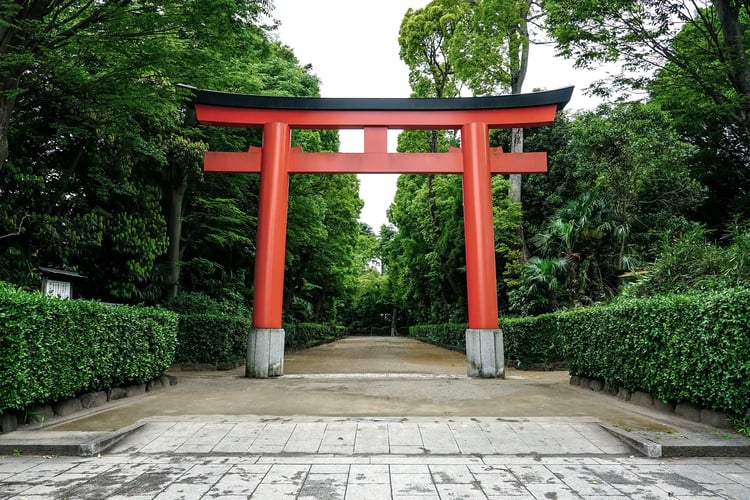
The moment you step into a shrine precinct, the torii gate marks the boundary between the everyday and the sacred. Pausing to bow beneath it and quiet your mind before you enter is itself a ritual that shifts you into a different state(*2).
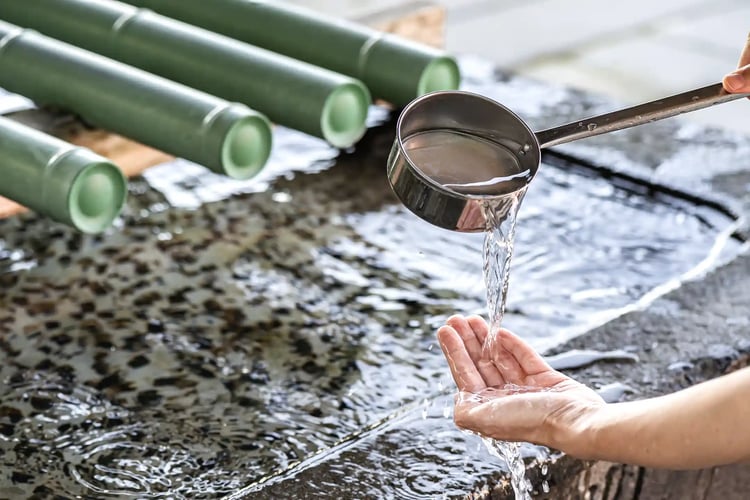
As you walk the approach, the city’s noise falls away. Wrapped in greenery, your breathing naturally deepens; you can feel your heart rate slow. Shinto teaches purification through harae and misogi, and before worship you cleanse hands and mouth at the temizuya (water pavilion) in a set order(*3).
Resetting body and mind before you stand before the kami helps you focus more deeply on your prayers. Strolling the path slowly, listening to the crunch of pebbles underfoot, and taking in dappled light and the dignity of the shrine buildings becomes a kind of walking meditation that settles your spirit.
In the next section, you’ll attune your senses to the healing design of shrine spaces and try a simple, anyone‑can‑do version of misogi.
.webp?width=750&height=500&name=Watatsumi%20Shrine%20(Tsushima).webp)
Designing the Sacred Space for the Five Senses
Shrine spaces engage all five senses to soothe body and mind. Vermilion torii gates draw your eye, the soft ring of bells sharpens your hearing, the scent of cypress and sakaki stirs your sense of smell, and the cool water at the temizuya refreshes your skin. Through these sensory cues, distractions drop away, helping you center your attention on the “here and now.”
Mini-Practice of Purification and Breath (A Simple Health-Oriented Adaptation)
Here’s a short misogi practice to try before you worship.
After passing through the torii, take your time at the temizuya. Move with intention—each step calms your mind and puts you in a clear, receptive state. Before approaching the main hall, lengthen your spine, close your eyes, and take three slow, deep breaths. On a winter morning, notice the crisp air filling your lungs; in summer, savor the green aroma of the trees as you inhale through the nose and exhale slowly. Deep breathing regulates your autonomic nervous system and eases tension.
When you feel settled, proceed to the worship hall. At many shrines the basic etiquette is two bows, two claps, one bow (this may vary by shrine). Bow slowly twice, clap twice with hands at chest level, then bow once more—this sequence is the traditional way to express gratitude and reverence before the kami.
When you pair thoughtful movements with deep breathing, your visit becomes more than making a wish—it supports your health. Moving your body and breathing with awareness boosts circulation, clears mental noise, and helps you concentrate on the prayer before you. Even as a brief, simple misogi, it’s a wonderful way to refresh body and mind at the start of a new year.
What Is Hatsumōde—Its Meaning in Shinto and the Basics in Tokyo
Hatsumōde is the custom of visiting a shrine or temple for the first time in the New Year to pray for peace and safety in the year ahead. Its origins are said to lie in the older practice of toshikomori, when the head of a household would keep vigil at the ujigami (local tutelary deity) shrine from New Year’s Eve through New Year’s morning; from the Meiji era onward, it took on the form you see today.
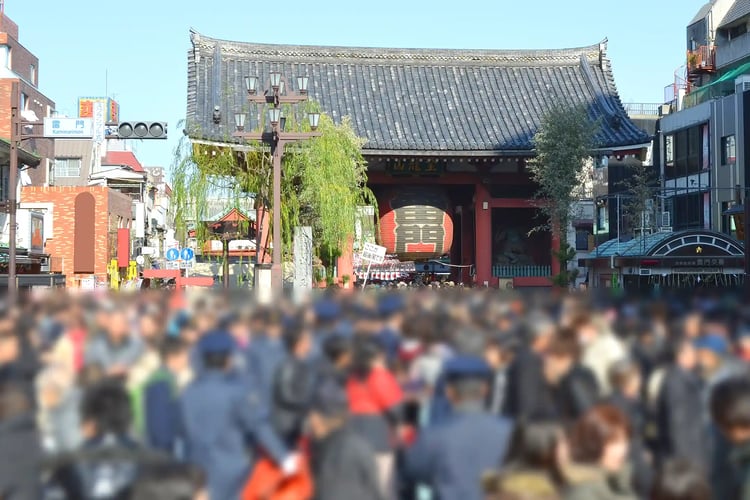
In Tokyo, millions visit renowned sites such as Meiji Jingū, Sensō‑ji, and Kanda Myōjin. Meiji Jingū alone welcomes roughly three million visitors over the first three days of the year, making it Japan’s most‑visited hatsumōde destination.
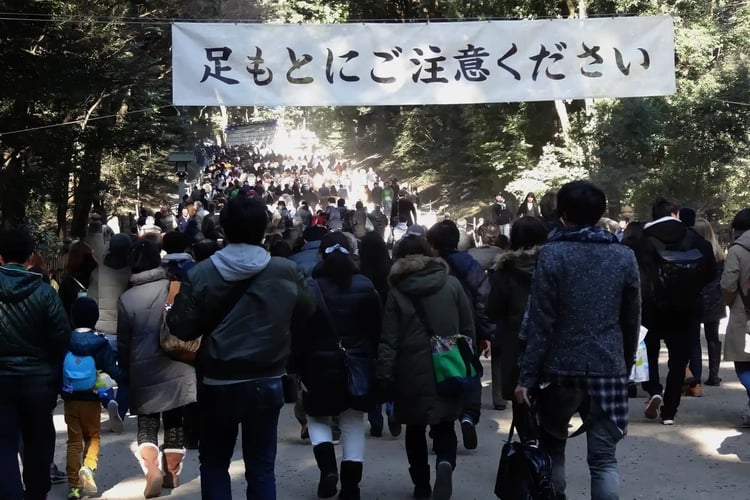
Many shrines open through the night on New Year’s Eve, and as the clock strikes midnight, large crowds arrive at once(*1). To ease congestion, more people now visit throughout January, not just during the first three days. Shrines themselves generally suggest that visiting during matsu‑no‑uchi—the “pine‑decorating” period, roughly until around January 7 in the Kanto region and January 15 in Kansai—is perfectly fine. Choose timing that fits your health and schedule; a relaxed, unhurried visit is encouraged.
Representative Hatsumōde Spots in Tokyo and Their Character
Tokyo offers countless places for hatsumōde; here are a few standouts and what makes them special.
Meiji Jingū (Shibuya): A vast forest in the heart of the city. About three million visit over the first three days. Walk the approach in the early morning to pray in clear, still air wrapped in greenery.
Hie Shrine (Chiyoda): Once revered as the guardian of Edo Castle. Despite its central location among office towers, the grounds are green and tranquil. Known for blessings such as harmonious relationships and business prosperity.
Kanda Myōjin (Chiyoda): Long beloved as the “general guardian of Edo,” famous for blessings across every aspect of life—good matches, warding off misfortune, business success, and victory in endeavors. Its ties to contemporary culture are unique, attracting everyone from business leaders to anime fans (you may even spot ema votive plaques featuring popular characters).
Asakusa Shrine (Taitō): Next to Sensō‑ji and known for the Sanja Matsuri, this neighborhood shrine exudes old‑town charm. While Sensō‑ji’s New Year crowds are intense, Asakusa Shrine is comparatively calm—ideal if you want to pray quietly while savoring Edo‑era atmosphere. Visit at night with the five‑story pagoda illuminated behind you for a moment that lingers long in memory.
Time Your Visit to Avoid Crowds
To enjoy hatsumōde at your own pace, timing is everything. The top recommendation is early on New Year’s Day. After the late‑night rush passes, shrines at daybreak are sparsely crowded, the air is crisp, and the experience feels extraordinary.
Midday tends to be peak time everywhere, so avoid it if you can. Consider visiting on a weekday from January 4 onward rather than insisting on the first three days, and check each shrine’s official updates for hours and crowd guidance. If you must go during those first days, a later‑night visit can work (just mind your footing in the dark).
Above all, be flexible. If you’re not feeling well or the weather turns, reschedule. Prioritize safety and plan hatsumōde at a time that’s truly best for you.
Tokyo’s Festivals & Annual Rites Calendar (Four Seasons)
Through the cycle of annual rites, people in Japan express gratitude to—and pray with—nature. Tokyo’s shrines host a wide range of ceremonies in every season.
Spring celebrates budding life and renewal; summer focuses on purification with water and light; autumn gives thanks for the harvest and offers the arts; winter is the time to cleanse the year’s impurities and welcome the New Year. Here are seasonal ways to enjoy shrines.
Spring—Rites of Budding and Renewal
Spring marks new life, and shrines hold events for bountiful harvests and warding off misfortune. Around early February, Setsubun festivals feature mame‑maki (bean‑throwing) to scatter evil and welcome spring.
March 3 brings the Peach Festival (Hinamatsuri), a beloved rite for the healthy growth of girls. It’s also the season of blossoms—sakura and plum—so many Tokyo shrines host cherry or plum festivals perfect for slow strolls through blooming precincts.
Summer—The Season of Purification
All over Tokyo, summer brings events to dispel heat and cleanse. On June 30, many shrines set up chinowa—large rings of braided grass—for the Nagoshi no Ōharae (Great Midyear Purification). People walk through the ring to cleanse the sins and defilements of the first half of the year(*1).
At dusk, priests conduct the Ōharae, resetting body and mind for the months ahead. July brings festivals to welcome ancestral spirits, and markets for wind chimes and hōzuki ground cherries offer cool delights. At night, shrines feel different—lantern light and the sound of wind chimes make you forget the heat.
Autumn—Gratitude for the Harvest and a Season of the Arts
Autumn centers on giving thanks for the year’s bounty and on artistic offerings. On November 23, shrines nationwide conduct the Niiname‑sai, presenting the new rice and sake to the kami. Families also celebrate Shichi‑Go‑San in mid‑November, when children aged 3, 5, and 7 visit shrines in festive attire to give thanks and pray for healthy growth(*2).
Autumn is also called the season of the arts. At Meiji Jingū, the November Grand Autumn Festival features classical performing arts—bugaku, Noh, kyōgen—and horseback archery (yabusame), giving you a window into the essence of Japanese culture(*3).
On a quiet autumn day, consider a sutra‑copying session or a small reading circle in the shrine grounds. With autumn leaves ablaze, shrines take on a special beauty—an ideal setting to spend unhurried time with yourself.
Winter—Purification and Renewal
Winter concentrates rites that close one year and open the next. In December, shrines conduct the year‑end Ōharae to purify the year’s impurities and prepare for the New Year(*4).
On New Year’s Eve, many hold the Great Purification ceremony, transferring misfortune onto paper figures (hitogata) to be ritually burned.
%20A%20Glimpse%20of%20Tokyo.webp?width=750&height=500&name=Yushima%20Tenmangu%20Shrine%20(Yushima%20Tenjin)%20A%20Glimpse%20of%20Tokyo.webp)
New Year’s Day then welcomes hatsumōde, when crowds surge during the first three days. As noted earlier, consider early mornings or later dates to avoid congestion. For a winter‑only ascetic practice, Kanda Myōjin’s mid‑January kanchū misogi has participants douse themselves in icy water to purify body and mind to the limit.
Even without such rigorous practice, a winter morning visit in clear, cold air leaves you feeling grounded and renewed.
An Elevated Approach to Hatsumōde (Tokyo)
If you want to savor hatsumōde at a higher level, plan ahead and learn the basics. Here you’ll choose Tokyo shrines based on your intentions, review essential Shinto etiquette, and note tips for receiving formal prayers (kitō) and goshuin (shrine seals). With an English‑speaking guide, you’ll understand more—and a priest‑led ceremony or goshuin collecting can become a truly special memory.
Choosing Tokyo Shrines for Hatsumōde (Intention, Route, and Quiet)
Pick shrines that match your wishes and preferences to make your visit more meaningful. If you want quiet green surroundings to restore body and mind, look to shrines with spacious forests such as Meiji Jingū.
For business fortune or career advancement, Kanda Myōjin and Hie Shrine have long been revered guardians. If you hope for a good relationship, Tokyo Daijingū (Iidabashi) is popular as a “power spot” for romantic fulfillment.
For academic success, Yushima Tenmangū (Yushima Tenjin) draws deep faith from students. Once you’ve chosen by purpose, plan an efficient route if you’ll visit several shrines—pair nearby locations and use trains or taxis to save energy and time.
To keep things elevated, visit during quieter hours. Early morning or evening lets you feel the shrine’s inherent solemnity while you pray at an unhurried pace.
Shinto Basics—Torii, Temizu, and Worship
A few basics prevent missteps. Pause and bow lightly before passing under the torii to request permission to enter the sacred space(*1). On the approach path, avoid the center line (the seichū) and walk along the side.
At the worship hall, place your offering quietly into the box. Use the two bows, two claps, one bow etiquette to express gratitude and prayer. Stand tall and bow deeply twice; clap twice with hands shoulder‑width apart at chest height(*2); then finish with a final respectful bow.
At the temizuya, cleanse hands and mouth in the proper order. With these fundamentals, your demeanor will be poised and beautiful before the kami—and considerate to those around you.
Prayers, Goshuin, and Lucky Charms
For an extra‑special memory, receive a formal kitō (prayer) from a priest or request a goshuin.
Kitō (or kigan) are official rites of purification and petition conducted by priests; you apply at the shrine office. Afterward, you may receive an ofuda (household talisman), omamori, or sacred sake as a token of the blessing.
Goshuin are stamps and calligraphy unique to each shrine. At the office, open your goshuinchō (stamp book), hand it over, and wait quietly until your name is called; speaking to the calligrapher mid‑writing is a breach of manners(*3). Treat your goshuin as a personal record of worship and keep your book with care.
New Year‑only lucky items include hamaya (literally “evil‑defeating arrows”), kumade rakes for “gathering fortune,” and clay bells featuring the year’s zodiac animal. A hamaya symbolizes breaking evil and is received for household safety and protection in the New Year(*4).
Carry these respectfully—don’t bend them in your bag. Return last year’s omamori or ofuda to the shrine’s collection area for ritual burning, and welcome the New Year with fresh blessings and a clear heart.
(*1 Reference: Minatogawa Shrine, “Worship Etiquette and Manners at Shrines” (Bow at the torii)https://www.minatogawajinja.or.jp/grounds/manner/ )
(*2 Reference: Minatogawa Shrine, “Worship Etiquette and Manners at Shrines” (Steps for two bows, two claps, one bow)https://www.minatogawajinja.or.jp/grounds/manner/ )
(*3 Reference: Minatogawa Shrine, “How to Receive Goshuin” (Handling your stamp book)https://www.minatogawajinja.or.jp/products/goshuin/ )
(*4 Reference: All About, “What Is a Hamaya? Origins and How to Display It”https://allabout.co.jp/gm/gc/466875/ )
Tokyo Hatsumōde Tour Packages (hatsumode tour packages Tokyo)
In recent years, luxury hatsumōde options—specifically hatsumode tour packages Tokyo travelers can book—let you enjoy the New Year visit comfortably with a private guide. An English‑speaking guide‑driver accompanies you, explaining Shinto background and etiquette with care(*2).
Many include organic‑leaning breakfasts, mini‑experiences of tea ceremony or incense appreciation, and time at an onsen or spa—so you can relax and reset as you make your New Year visit. Special out‑of‑hours access (such as early‑morning entry) depends on each shrine and product, so always confirm in advance via official channels. Below are two model plans, A and B.
Model Itinerary A (Approx. Three Hours, Early‑Morning Focus)
Depart your hotel early. Arrive at major shrines around sunrise, when general visitors are few, and enjoy a spacious, unhurried hatsumōde. Opening times, routes, and any restrictions vary by shrine, so advance checks are essential. If you wish, a formal kitō by a priest can be arranged.
After worship, settle into the shrine’s café (or tea room) for warm matcha or coffee, relaxing as morning light filters through the forest.
Then your private car returns you to the hotel. Because you cover key spots privately in limited time with minimal physical strain, this plan is well reviewed by older travelers and those who want a concise hatsumōde.
Model Itinerary B (Half Day—Learning and Hands‑On)
Leave your hotel around 8:00 a.m. With your English‑speaking guide, begin at a quiet shrine for worship and a priest‑led kitō. On site, your guide gives short talks on Shinto history and shrine architecture, so you don’t just “visit”—you understand.
Next, move to a private salon or tea room near the shrine for a mini‑session in Japanese culture. Try a compact tea ceremony experience whisking matcha, or a brief incense appreciation to discern aromas—short programs that connect you to Japan’s spiritual culture through the senses.
Afterwards, enjoy a special Japanese breakfast featuring seasonal organic vegetables and shōjin‑style dishes. Fermented foods and the depth of dashi are gentle on the body, and conversation with your guide or host turns into a meaningful cultural exchange.
Finally, your private car returns you to the hotel before noon. It’s only half a day, but rich in content—your senses (and your appetite) will be satisfied. Itineraries are customizable: swap shrines, adjust start times, request vegetarian menus—there’s plenty of flexibility.
Standards of Sustainability and Quality—Curating Stays, Food, and Transport
A truly elevated journey weaves in sustainability. When you plan a Tokyo hatsumōde trip, choose lodging, dining, and transport that care for the environment and local culture. You’ll enjoy comfort and contribute responsibly at the same time. Here are key points to keep in mind.
Stays—Designing for Quiet and Recovery
For restorative stays, look for “quiet,” “natural materials,” and “small scale.” Guest rooms that use wood and washi, unified in gentle earth tones, help your body and mind relax.
At high‑end hotels in Tokyo, even lighting levels and the handfeel of linens are engineered for deep sleep and recovery. Strong soundproofing shields you from urban noise, and some rooms frame views of gardens or greenery.
For example, Hotel New Otani (Kioicho, Chiyoda) maintains a 10‑acre Japanese garden and operates an on‑site composting plant that turns food waste into resources. Processing up to 5,000 kg of food waste per day and reusing 100% of it, the system effectively eliminates food loss(*1).
More properties now offer quiet spaces for meditation or yoga, and some feature natural hot springs or private saunas—design decisions that prioritize recovery.
Choosing buildings with environmental certifications (such as Green Key or LEED) means even your stay becomes an act of care for the planet.
Food—Local Sourcing, Fermentation, and Shōjin
Let meals reflect local bounty and health. Restaurants championing local sourcing serve organic produce from greater Tokyo and pesticide‑free rice—fresh, safe ingredients that taste alive.
At the washoku restaurant “Nanairo,” for instance, the chef uses house‑made fermented seasonings—miso, shōyu, vinegar—and offers vegetable‑forward obanzai dishes(*2). Fermented foods can support gut health and immunity, making them kind to a travel‑tired body.
Umami‑rich dashi from kombu and katsuobushi, along with the depth of Japanese tea, delivers satisfaction while keeping salt and oil in check. Many luxury ryokan and hotel restaurants now offer shōjin cuisine or fully vegan courses. With advance notice, most can accommodate allergies and vegetarian/vegan preferences so everyone can enjoy the heart of Japanese cooking with peace of mind.
Tableware often features local crafts—Edo kiriko glass, Edo lacquer bowls—so you savor regional culture alongside the flavors. A sustainable dining experience that pleases both palate and eye elevates your journey.
Choices that Give Back to Culture
Supporting the culture and community you visit is a key to high‑quality travel. Purchasing shrine offerings—omamori, ema, hamaya—not only makes meaningful souvenirs, it directly sustains shrine upkeep and ceremonies. Choose well‑made items, and when available, crafts by local artisans to help the regional economy and the survival of traditions.
When booking, hire local guides and drivers whenever possible. You’ll gain insights only a local can offer while ensuring income returns to the community.
For transport, consider options that enable carbon offsets—EV vehicles or public transit. With mindful choices at every step, you create a form of tourism that leaves both visitors and hosts smiling.
Etiquette and Practical Information (Photography, Dress, and Donation Basics)
Finally, a quick roundup of practical tips and manners for a smooth hatsumōde. You’ll prep clothing and gear, learn how to handle offerings and fees, follow photography rules, and time your visit to avoid crowds. With the basics down, you can enjoy a composed, heart‑centered New Year visit.
What to Wear and What to Bring
Because you may spend long periods outside, dress warmly and move freely. Layer heat‑retaining innerwear with a sweater or fleece and a heavy coat(*1).
Wrap a scarf around your neck, wear gloves, and choose broken‑in, non‑slip shoes with thick socks to keep feet warm. Use a bag that frees both hands, and bring a handkerchief for temizu, hand warmers, and pocket tissues for peace of mind.
Offerings, Fees, and Amulets
When you offer coins at the shrine, thoughtfulness matters. There’s no fixed coin or amount, but 5 yen (go‑en, “good ties”) or 15 yen (“ample ties”) are considered auspicious wordplay. Prepare change in advance and place it quietly in the offering box.
It’s not about giving more—it’s about gratitude. If you request a formal kitō, you’ll present the hatsuhoryō (offering fee). Use a white envelope (noshibukuro preferred), write “初穂料 (Hatsuhoryō)” on the front, and your name on the back before handing it to the shrine staff(*2).
For individuals, a common range is ¥5,000–¥10,000, but it varies by content. As for shrine goods, consider omamori, ofuda, hamaya, and other New Year charms. These also help support shrine operations.
Treat them with respect—don’t let them bend in your bag. Return last year’s items to the shrine’s collection area for ceremonial burning, and welcome the year with fresh talismans and a fresh spirit.

Photography and Social Media
Mind photography etiquette during hatsumōde. Some areas—especially inner sanctums—are no‑photo zones; follow posted signs and priestly guidance.
Many shrines prohibit photographing the inner main hall and using flash(*3). Avoid tripods and selfie sticks that hinder others.
Set your phone to silent to prevent tones or alerts during worship(*1). Avoid making calls in the precincts; if urgent, step outside the shrine grounds first.
When posting on social media, respect privacy—avoid faces of other visitors, and refrain from shooting in dense crowds.
Best Times and How to Dodge Crowds
For an unhurried visit, timing is crucial. Early New Year’s Day is ideal: once the midnight wave subsides and dawn breaks, shrines are calm, the air is pristine, and the experience feels exceptional.
Avoid midday if possible, when crowds peak. Consider a weekday visit from January 4 onward rather than insisting on the first three days. If you must go then, a late‑night visit can work (take care in the dark).
If the weather or your condition isn’t ideal, change the date. Safety first—plan hatsumōde at a time that truly suits you.
.png)
There is more to stay with here

In Closing
Tokyo’s shrines, though set in the city’s heart, brim with chinju no mori (sacred groves) and clear, uplifting energy, offering visitors a quiet space for renewal. This guide reframed the Shinto view of nature and the yaoyorozu no kami, the practices of harae and misogi, breathing and mindful movement, and the benefits of walking the approach path as meditation—all through a wellness lens.
We curated a four‑season calendar of festivals and rites, English‑guided prayers, goshuin know‑how, mini‑experiences of tea and incense, and model itineraries paired with baths and spa time. From locally sourced fermented foods and environmentally certified hotels to sustaining culture through offerings and donations, you’ll find elevated, sustainable choices at every step.
A journey that honors quiet—and gives back to the community—turns your New Year’s prayer into deeper peace. Whether you go independently or join well‑reviewed hatsumode tour packages Tokyo offers, step out into the stillness of early morning, open your senses, and begin with time to listen to your own breath. That single step will polish your Tokyo hatsumōde into a memory for life.