Japan’s New Year tradition of hatsumode—the first shrine or temple visit of the year—is far more than sightseeing; it is a sacred ritual that helps realign body and mind. As you breathe deeply in the stillness of a shrine, you offer thanks for the past year and make pledges for the one ahead, following Shinto etiquette that brings you back to the “here and now” in a restorative well‑being experience.
Through acts of purification, you reset your heart and welcome the new year with clarity. In this hatsumode etiquette guide, you’ll learn how to honor tradition while polishing your inner life—covering cultural context, specific etiquette, and practical ways to carry what you learn into daily living. Customs can vary by shrine; always follow on‑site guidance from clergy and posted notices.
This article offers one way into hatsumode — its atmosphere, its meaning, one thread of a much older story. The Hatsumode Digital Guide draws together the ritual itself, its regional variations, the spiritual architecture of shrine culture, and the quiet codes of conduct that shape the experience into a single, connected reading.
What Is Hatsumode | Meaning, Origins, and the Basics of Shinto
Hatsumode is the first visit of the new year to a Shinto shrine or Buddhist temple. Its core purpose is twofold: to pray for happiness in the year ahead and to give thanks for the safety of the previous year to the deities with gratitude(*1).
Historically, it traces back to Heian‑period customs in which a household head prayed overnight at the clan’s tutelary shrine—toshigomori—and to Edo‑period practices of visiting a shrine or temple located in that year’s auspicious direction—ehomairi. The now‑familiar pattern of the wider public visiting shrines from New Year’s Day onward spread in the Meiji era, helped by railway companies promoting excursions to famed suburban shrines and temples(*2).
Shinto sees divinity in all phenomena—often expressed as the “eight million deities.” Shrines are where these kami are enshrined, and the sacred groves that shield their precincts have long been cherished as sanctuaries.
In Shinto, you first purify body and mind and compose yourself before approaching the kami; cleansing rituals—such as purification with water at the temizuya—are considered indispensable(*3). Rooted in this culture of purification, hatsumode asks that you cleanse yourself before entering the grounds and approach the deities with humility.
During worship, you usually follow the “two bows, two claps, one bow” etiquette. First, convey thanks for protection over the past year, and only then pray for safety and intentions in the year to come. In Shinto, wishes are not merely pleas; they are pledges you etch into your heart before the kami.
So rather than “Please make X come true,” try “This year I will accomplish X—please watch over me.” Framing your prayer as a forward‑looking vow clarifies your resolve and is said to invite good fortune(*4).
This aligns with the effect of affirmations: hatsumode becomes more than a test of luck—it becomes a ritual for renewing your personal commitment.
.webp?width=800&height=533&name=Children%20praying%20at%20a%20shrine%20(with%20their%20siblings).webp)
How Hatsumode Nurtures Well‑Being
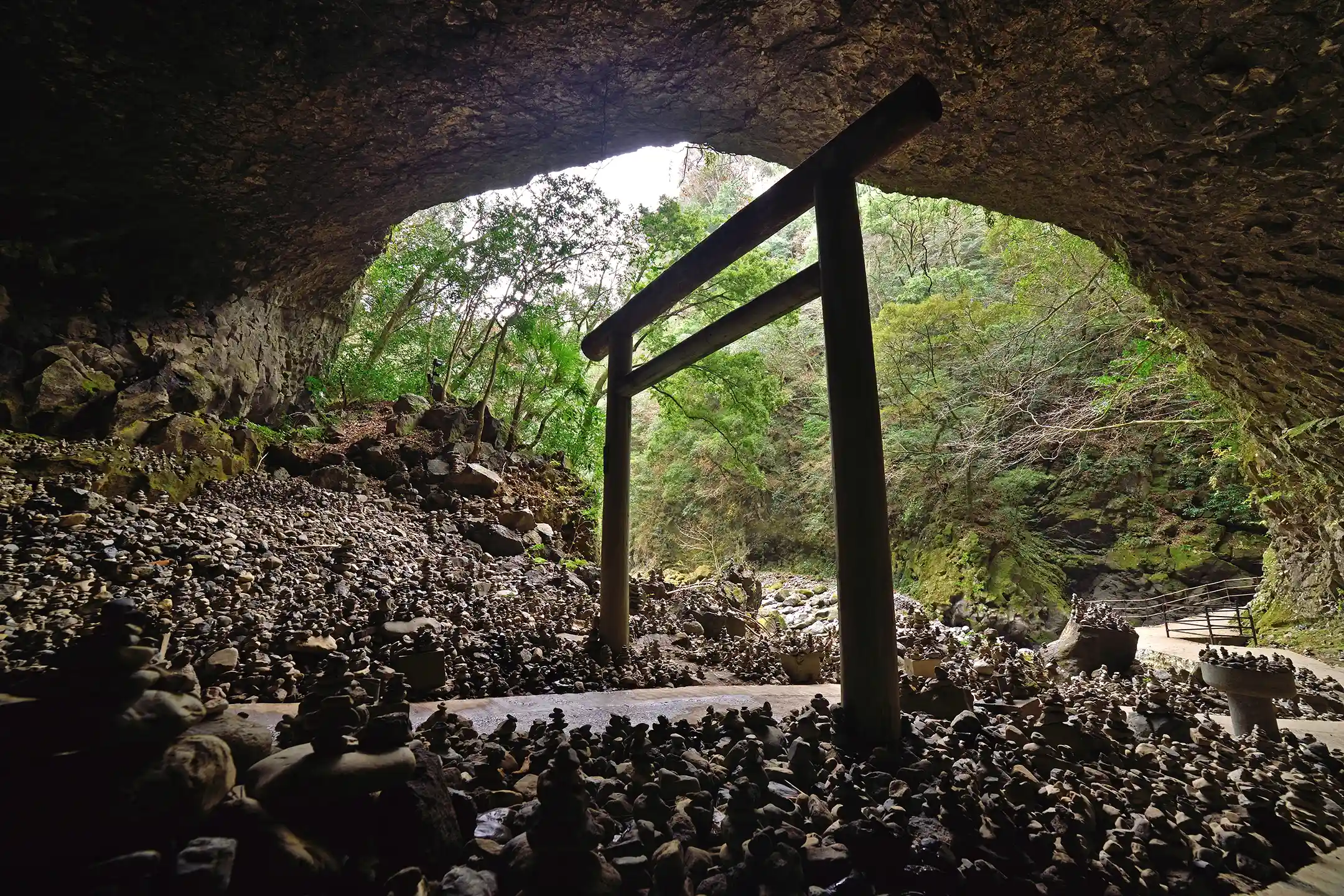
A shrine visit can deeply support your mental well‑being. Walking slowly along the approach and passing under the torii—the threshold between the secular and the sacred—functions like a walking meditation that settles the mind.
Within the shrine grove, removed from the city’s clamor, your senses sharpen, wandering thoughts quiet, and you may experience a state of mindfulness. A deep bow and steady breath before the kami echo yogic or Zen breathing, easing tension and anchoring you in the present.
Hatsumode also gives you space to voice gratitude you might not say aloud elsewhere. In a shrine, you can bow deeply and simply whisper “thank you,” and the psychological lift this brings is real.
It isn’t mere superstition—it’s valuable time to restore your inner balance and gather positive energy for the year ahead.
Preparing for Hatsumode: What to Wear and Bring
Dress in a way that suits a sacred place. Choose clean, modest clothing; avoid overly flashy colors, loud patterns, and excessive accessories(*1).
If you plan to receive a formal prayer (kito), men are generally expected to wear a suit and tie, and women a suit or understated dress(*1). Even for casual visits, skip shorts and flip‑flops. In winter, layer up with a warm coat.
If possible, remove hats and sunglasses within the grounds, and lower your head in respect before the kami(*1). Go easy on strong fragrances—let the natural scents of wood and incense take the lead.
Wear shoes you can walk in for long stretches. Lines can be lengthy at New Year’s, so familiar flats beat high heels. Expect to wait outdoors; dress warmly with layers, scarf, and gloves. Since you’ll briefly remove a glove at the temizuya, choose a pair that’s easy to take on and off.
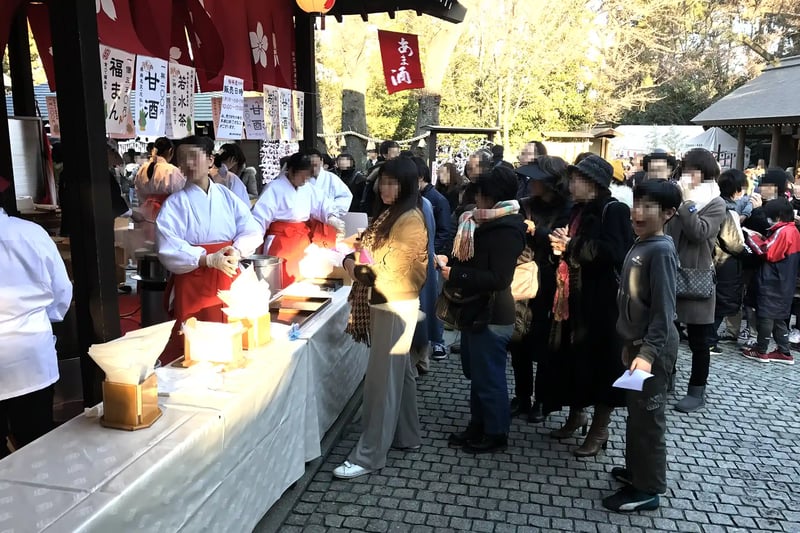
Bring a few essentials. Prepare enough coins for offerings, especially several 5‑yen coins. The 5‑yen coin is favored because go‑en (five yen) echoes go‑en (good ties). Some people also like the 50‑yen coin with its hole, seen as “a clear view ahead.” A superstition says 10‑yen coins may hint at “distant ties,” but what truly matters is your heart, not the amount.
Some shrines now accept cashless offerings via smartphone QR codes(*2). Still, availability is limited—carry cash. Other handy items include:
Goshuincho (seal book) – If you’d like a goshuin (a calligraphed seal as proof of worship), prepare your book. Many shrines sell them, but bringing a favorite design helps things go smoothly.
Handkerchief – You’ll need it after purifying your hands and mouth (paper towels are often not provided).
Folding umbrella – New Year’s weather is changeable; a compact umbrella is reassuring. Use it carefully in crowds.
Eco‑bag – Useful for amulets, talismans, and omikuji, or small purchases from stalls. Shrines generally ask that you carry your trash home, so bring your own bag.
Mobile battery – Lines, photos, and cashless payments can drain your phone. If you rely on digital payments, battery life is essential.
Cold‑Weather and Bad‑Weather Tips
Protect areas where heat escapes quickly—ears and neck—with a knit cap, earmuffs, or a scarf. If you visit at dawn or night, solid cold‑weather gear is a must.
A water‑repellent coat handles sudden snow or drizzle. Since you’ll remove gloves at the temizuya, choose a pair that stows in a pocket. Wear thick socks to keep your feet warm.
Year‑end weather can shift fast. If the forecast turns rough, put safety first. In heavy rain or snow, consider changing your plans. If you must go, choose non‑slip boots and a raincoat—don’t rely on an umbrella alone.
Shrine paths are often gravel or stone; puddles and ice can be slick. Watch your footing and keep your own calm pace, even if others rush.
Getting There Sustainably: Transport and Access Tips
Public transport is the most considerate choice for the environment and for neighbors. Popular shrines sometimes add overnight or extra train/bus services around New Year—make good use of them.
If you drive, expect heavy congestion and limited parking. If you must rent a car, fully charge an EV beforehand and watch your battery in traffic. Keep in mind the pollution and CO₂ emissions of jams—carpooling or switching to public transport is ideal.
Adjusting your visit time helps ease crowds. New Year’s morning and daytime during the first three days (sanganichi) are peak hours. If possible, shift your visit. Early morning or later evening can be serene, though visiting in daylight is generally safer.
If you go while it’s dark, carry a flashlight app or a small torch to light your path.
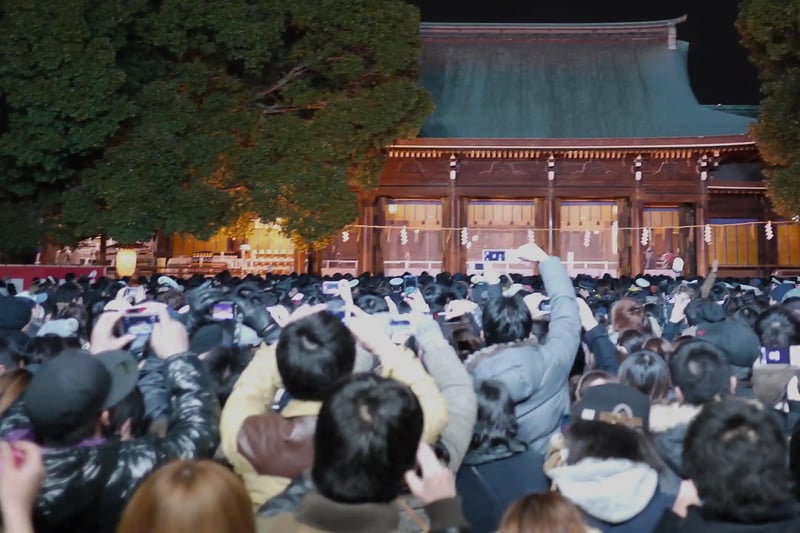
Check your walking route in advance and choose a safe path from the station; some approaches are narrow or stepped. A quick look on Street View can be reassuring.
With a stroller or wheelchair, many shrines now offer barrier‑free routes—check official websites beforehand. Be a considerate neighbor on local streets: keep voices low and bring your trash home.
Hatsumode Etiquette Guide | From Torii to Worship Hall
Thousands visit during hatsumode, and each person’s manners preserve the shrine’s sacred atmosphere. Here’s a step‑by‑step overview from passing the torii to finishing your prayer at the worship hall.
How to Pass Through the Torii
The torii marks the border between the everyday world and the divine realm. Before you pass under it, make a small bow(*1). On the approach, avoid the center line and walk quietly along the side(*1). This simple shift prepares your heart to enter a sacred space.
Purification at the Temizuya
At the temizuya (water pavilion), purify hands and mouth. Use the ladle to rinse your left hand, then your right; pour water into your left palm to rinse your mouth(*2). Don’t touch the ladle spout to your lips(*2). Keep your movements calm and brief, mindful of others waiting.
At the Worship Hall (Two Bows, Two Claps, One Bow)
After purification, proceed to the worship hall. Offer a polite nod before the offertory box and place your coins gently—do not throw them. In crowds, people are tempted to toss from afar; instead, move as close as you reasonably can and place them quietly(*3).
Offerings are gifts to the kami; it’s courteous to give them without clatter. If there is a bell or waniguchi above the box, ring it once; the sound is said to drive away impurity.
Face the kami, compose your posture, and perform the basic etiquette: two bows, two claps, one bow(*4). In practice:
Two bows – Bend at the waist to about 90 degrees, twice.
Two claps – Bring hands together at chest height; shift your right hand slightly back, open hands about shoulder width, and clap firmly twice.
Prayer – With fingers aligned, keep your hands together and pray in silence. State your name and address inwardly, then express thanks and your specific intentions.
One final bow – Bow deeply once more.
Some shrines vary the claps (for example, Izumo Taisha uses two bows, four claps, one bow). Follow on‑site guidance. At temples, you do not clap; simply place hands together, bow once, and pray—be mindful of the shrine/temple difference.
When you finish, step back slowly from the offertory area. If others are praying, move quietly to the side to avoid blocking them. Before leaving the worship area, bow lightly toward the hall.
Offering Coins: What Matters
With offerings, the amount matters less than the sincerity you place into it. As noted, place coins gently rather than tossing(*3). You don’t have to fixate on 5‑yen coins. What helps most is having small change ready so you won’t fumble at the front.
If crowds keep you from getting close, don’t push—offer quietly from where you can. What counts is a clear “Thank you for watching over me again this year.”
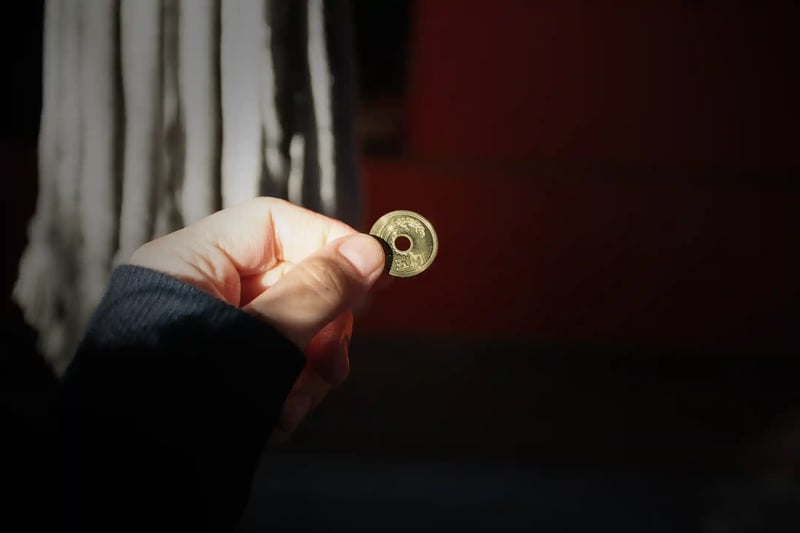
Photo and Video Etiquette
You may want to capture your hatsumode moments for photos or social media. Generally, casual photography is fine, but follow these manners:
Never shoot where signs prohibit it or during sacred rites. Avoid photographing the sacred object (goshintai) or clergy without permission. Don’t block the worship hall for long poses, and don’t use tripods or drones. For formal photo sessions (e.g., Shichi‑Go‑San or wedding portraits), seek the shrine’s permission.
Be careful not to capture strangers’ faces clearly, especially in New Year crowds—respect privacy. Flash and rapid shutter sounds disturb others.
Set your phone to silent before entering and keep shooting discreet. Some shrines ban photography altogether even for noncommercial use; always follow posted notices(*5).
Receiving Goshuin, Omikuji, and Omamori
Three favorite parts of hatsumode are goshuin (calligraphed seals), omikuji (fortune lots), and omamori (amulets). Here’s how to enjoy each with good manners and a wellness mindset.
Reading Omikuji (Through a Wellness Lens)
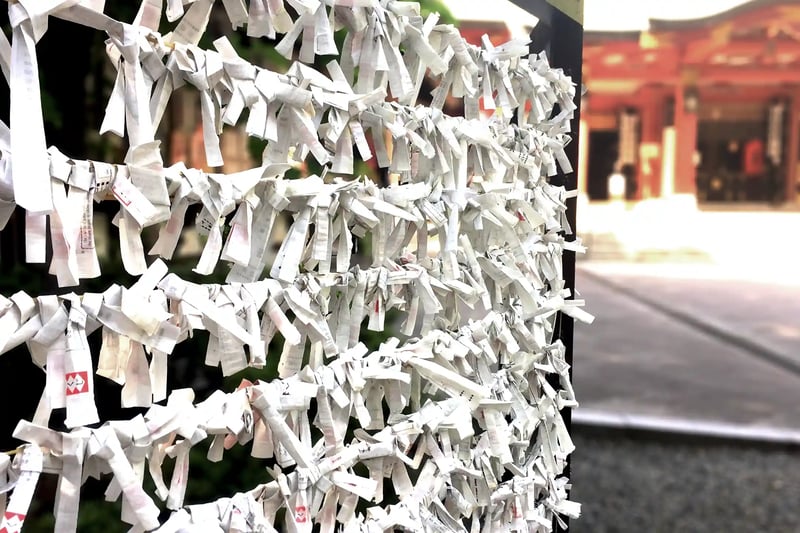
An omikuji is a message from the kami. It’s natural to focus on the luck level (great blessing, middle blessing, etc.), but the real value lies beyond that.
The short poems or sayings printed on the lot often matter most. Regardless of the luck verdict, take your omikuji home and read it calmly, end to end(*1). If a phrase or poem resonates, copy it into your notebook as “guidance for the year.” Jot down the wish or worry you held when drawing the lot; seeing it on paper helps you reflect on your inner state.
In waka‑style omikuji, a classical poem appears as the kami’s message at the start. This form is old in temple lots, while standardized luck levels at shrines became common in modern times; both approaches coexist(*2). Even if the poem feels archaic, interpret it in your own present context.
If you’re wrestling with work and your lot suggests “Don’t blame others for the unrest in your own heart,” you might hear the kami advising, “The cause is within—stay calm and act.”
Receive your omikuji as constructive advice and let it shape your actions for the year—that’s a direct path to well‑being.
Goshuin Manners and How to Wait
A goshuin is a hand‑inscribed seal you receive as proof of worship. Because demand is high during hatsumode, be especially mindful:
Always worship first at the hall before requesting a goshuin; asking for one without praying is discourteous. Hand over your goshuincho at the office and wait quietly while it’s written.
At major shrines, lines can get long. Some offer kaki‑oki—pre‑written seals on paper for later pickup(*3). Check on‑site guidance and follow staff directions. Having small change ready speeds things along.
When you receive it, check the inscription carefully and avoid smudging the ink. Offer a brief word of thanks to the priest or miko.
Each shrine’s design is unique, but try not to let “collecting” become the goal. Treat each seal as a remembrance of your bond with that shrine and store your book with care.
Types of Omamori and How to Care for Them
Omamori are amulets or talismans that protect and support your aims. You’ll find many types during hatsumode. Broadly, some ask for universal protection—household safety, health—while others address specific intentions like academic success, traffic safety, or good relationships(*4). Choose what matches your hopes for yourself and family.
Cute designs featuring characters and amulets with English labels have grown popular among international visitors(*4). Still, more isn’t better—carry what you truly need.
Omamori are sometimes called embodiments of the kami. Handle them with respect. Don’t open the pouch or remove the contents. Strap‑style or wallet cards can be carried daily; pouch‑style amulets can hang on your bag or rest in a special place at home.
Some say you shouldn’t mix amulets from different faiths, but you needn’t worry excessively; constant gratitude matters more.
When an omamori grows old or has fulfilled its role, return it with thanks. Ideally, bring it back to the shrine where you received it(*5). Around New Year, many shrines set up collection points for old talismans to be ritually burned (otakiage). Some regions also burn New Year ornaments in a bonfire rite called Dondo‑yaki (Sagicho)(*6).
If returning to a faraway shrine is difficult, nearby shrines sometimes accept amulets for return—ask in advance..webp?width=800&height=533&name=Good%20luck%20charm%20(Red%20and%20Yellow).webp)
Sustainable Hatsumode
Hatsumode isn’t only about personal intentions—it also affects communities and the environment. A sustainable approach that protects shrine ecosystems and respects neighbors is drawing attention.
Shrines have long sheltered sacred groves that nurture biodiversity and protect watersheds, acting as buffers against overdevelopment. Treat these groves with care. Don’t break branches or pluck leaves, and never leave trash or plastics in sacred spaces.
Carrying your trash home is the foundation of sustainable visiting. Food stalls often line the roads at New Year, but always take your waste with you. Even if you find bins, aspire to bring it all the way home.
Leaving trash in a holy place visited by many is out of the question. Don’t rely on volunteers to clean up—take responsibility for your own waste. With a simple bag or eco‑bag, you can carry empty containers without soiling the area.
A quiet visit is another form of care. In a space where many come to pray, avoid loud conversations or walking with music playing. Keep talk to a minimum; if you need a long chat, step outside the grounds.
Some shrines reduce nighttime lighting for energy saving and quiet. Switch off device sounds and move at an unhurried pace.
Supporting local producers and making fair donations also contribute to sustainability. Buying local specialties and using neighborhood shops is a direct way to give back. Offer your coins and prayer fees with gratitude.
In short, hatsumode is a chance to pray for your happiness and show kindness to the community and the planet. Let’s act with intention so that welcoming the new year in a forest‑wrapped shrine remains beautiful for the next generation.
Accessibility: Making Hatsumode Comfortable for Everyone
Be mindful so that older adults and people with disabilities can worship comfortably. Watch for steps and uneven ground, guide one another toward ramps and rest areas, and practice the spirit of giving way.

Bringing Harae Purification into Daily Self‑Care
Carry the clarity you feel after hatsumode into everyday life. Adapting Shinto’s idea of harae (purification) becomes a simple self‑care practice that keeps your inner balance amid modern busyness. Here are ideas to use daily or monthly:
Morning Bow and Deep Breaths – Begin each day with a small bow, as if passing under a torii.
Open a window, fill your lungs with fresh air, and feel gratitude for being alive today. Take a few slow breaths, align your posture, and bow. You’ll feel alert and centered.
Simple Purification with Salt and Water – In Shinto, salt and clean water are purifying.
When you return home, try a pinch of salt lightly over the shoulder before entering—symbolically brushing off negativity so you don’t bring it inside (akin to the custom observed after funerals). In the morning or before bed, drink a glass of water, or add a tiny amount of salt to your gargle. These simple acts refresh body and mind.
A Monthly Rhythm of Visits – Keep a gentle cadence with monthly worship.
On the 1st or 15th, greet your local ujigami (tutelary kami), thank them for the past month, and pray for peace in the next(*2). If you can’t go to a shrine, face your household altar or amulet and renew this month’s intention. Marking even one day a month helps you take stock and reset.
Create a Simple Home Altar – You don’t need a grand setup.
Dedicate a small shelf for your talisman or ofuda, offer fresh water and a pinch of salt each morning, and bow. A sprig of sakaki or a favorite incense can turn a corner of your home into a calm, contemplative nook.
Recite a Short Norito (Prayer) or Purification Formula – No need to memorize long rites.
Try a brief phrase: “Harae tamae, kiyome tamae, kami‑nagara mamori tamae, sakiwae tamae”—“Please purify me, cleanse me, protect me in the way of the kami, and bless me”(*1).
Repeat it quietly in your morning bow or before bedtime. Many people find the words steady the mind and wash away the day’s residue of worry.
Mini‑Guide | A Three‑Minute Routine of Breath and Gesture
Here’s a distilled three‑minute self‑care ritual inspired by hatsumode. Even on busy mornings, this short practice helps you reset before the day begins.
Align Your Posture – Stand or sit in a quiet spot with your spine long.
Feet grounded, imagine the crown of your head lightly lifted toward the sky.
Breathe Through the Nose – Inhale slowly through your nose, letting the breath reach your belly.
Exhale gently through your mouth, imagining stale air and worry leaving your body. Repeat a few cycles and keep attention on the breath.
Bow to Quiet the Heart – Close your eyes softly and lower your head in a gentle bow.
Pause for two seconds, set the ego aside, empty the mind, then lift your head slowly.
Bring Palms Together in Thanks – Join your hands at the chest.
Align the fingers and focus on the fingertips. Inwardly say “thank you” for the gift of this new day and for all who support you.
Speak a Short Intention – Choose one clear aim for today.
“I will greet people with a smile.” “May my presentation go well.” “May my family be safe.” Keep it positive and specific.
Finish with One Bow – Make a final slow bow.
Release your hands, take one calm breath, and open your eyes.
Just three minutes, practiced daily, can steady your inner axis and help you live with energy and ease.
.png)
There is more to stay with here.
Hatsumode is not a single moment — it is a practice shaped by centuries of spiritual culture, regional meaning, and quietly observed tradition. This article has traced one path through it. The Digital Guide follows the wider landscape: the shrines and their significance, the rituals and their origins, the unspoken customs that give the experience its depth.

In Closing
Hatsumode lets you experience an age‑old Japanese custom while elevating your own well‑being. Keep the etiquette and gestures from this hatsumode etiquette guide in mind, and visit a shrine with the spirit of Shinto in your heart.
In the quiet, breathe deeply. Offer thanks and a sincere pledge. That time will rinse away stress and restore balance.
Purify your heart in hatsumode, feel the comfort of being watched over by the kami, and set out with strength into the new year. May this hatsumode etiquette guide support a rich first visit—and the healthy, hopeful days that follow.