Tokyo has earned global renown as a city of gastronomy, and among its many delights, wagyu steak commands passionate loyalty from diners in Japan and abroad.
Wagyu’s signature marbling delivers mellow savoriness and a melt-in-your-mouth texture; celebrated brands such as Kobe, Matsusaka, and Omi appear on the menus of Tokyo’s top restaurants. In this article, you’ll dive into the allure of Tokyo’s high-end steak culture—where tradition and innovation meet—and discover the ultimate steak experiences the world dreams about.
Best Steak You Can Savor in Tokyo: A Culinary Culture Where Tradition Meets Innovation
Tokyo has long nurtured wagyu culture and, in particular, “wagyu steak” enjoys a sterling reputation worldwide. Marbled beef from Japan’s native Japanese Black cattle offers a mellow depth of flavor and tender texture that have earned it the moniker “the king of beef”; brands like Kobe and Matsusaka inspire admiration from gourmets across the globe (*1).
Much of this premium wagyu is served in Tokyo steakhouses, and according to the MICHELIN Guide Tokyo 2025, the city features 12 three-star restaurants and 507 total listings, sustaining Tokyo’s status as one of the world’s great dining capitals (*2). Blending Western dining culture with techniques rooted in Japanese tradition—and elevating it with gracious omotenashi—Tokyo’s steak scene continues to earn international acclaim.
Why Tokyo’s Steaks Earn Global Praise—and the History Behind Them
The rise of high-end steak in Tokyo traces back to the Meiji era, when Western cuisine spread and beef consumption returned to mainstream dining. Dishes such as gyunabe and sukiyaki took root in urban culture and eventually evolved into teppanyaki and specialty steakhouses.
Today, “wagyu”—Japan’s finely marbled beef—enjoys worldwide popularity. The instant the fat melts on your tongue, a gentle sweetness and rich umami bloom, captivating international gourmets (*1).
Tokyo also concentrates a remarkable number of MICHELIN-starred restaurants; in the 2025 edition, the city again leads with 12 three-star spots and 507 total listings (*2). In this environment, Tokyo’s steakhouses serve extraordinary ingredients—including Japan’s “big three” wagyu brands—drawing discerning diners from around the world.
What Sets Tokyo’s Steakhouses Apart—And Why International Guests Seek Them Out
In recent years, Tokyo’s steakhouses have become must-stops for global food lovers. In Ginza, for instance, “Oniku Karyu” is known for an omakase steak course built on carefully selected wagyu.
You explore the depth of wagyu through a variety of dishes that combine Western and Japanese techniques—think wagyu sushi or roast beef—crafted to showcase nuance and balance (*3). In Minami-Aoyama, “Niku Kappo JO” embraces a “meat kappo” concept: charcoal-grilled steak anchors the menu, while playful dishes such as chateaubriand katsu sando and rib-eye nigiri delight guests (*4).
Both are MICHELIN-recognized and offer serene, modern-Japanese interiors where you can savor the finest plates at your own pace. Beyond these, Tokyo is dotted with top-tier destinations—from teppanyaki atop skyscrapers to intimate hideaways helmed by famous chefs—delivering experiences where cutting-edge technique meets the refined aesthetics unique to Japan.
Best Steak in Tokyo: A Deep-Dive Comparison of the Premium Wagyu Brands That Define the Scene
In Tokyo’s high-end steakhouses, Japan’s flagship wagyu brands take center stage. Kobe, Matsusaka, and Omi each boast a long history and distinctive husbandry methods that yield singular flavor profiles. Here’s how the “big three” captivate connoisseurs.
Kobe Beef — The Secret Behind Marbling Admired as a Work of Art
“Kobe Beef,” raised in Hyogo Prefecture, is the pinnacle of quality: a top brand certified under exacting standards within the Tajima strain of Japanese Black. Fine webbing of marbling laces sweet, savory red meat, creating a depth of flavor that invites comparisons to art itself (*5).
Tajima cattle are maintained as a pure bloodline without outside genetics and are managed within Hyogo from rearing through shipment, resulting in exceptionally fine muscle fiber and a low fat melting point (*5). As you taste it, the fat gently liquefies, melding with the umami of the lean to release an enveloping aroma. In Tokyo’s top steakhouses, Kobe Beef often appears at the very highest grades.
Matsusaka Beef — Traditional Methods Yield Exquisite Flavor
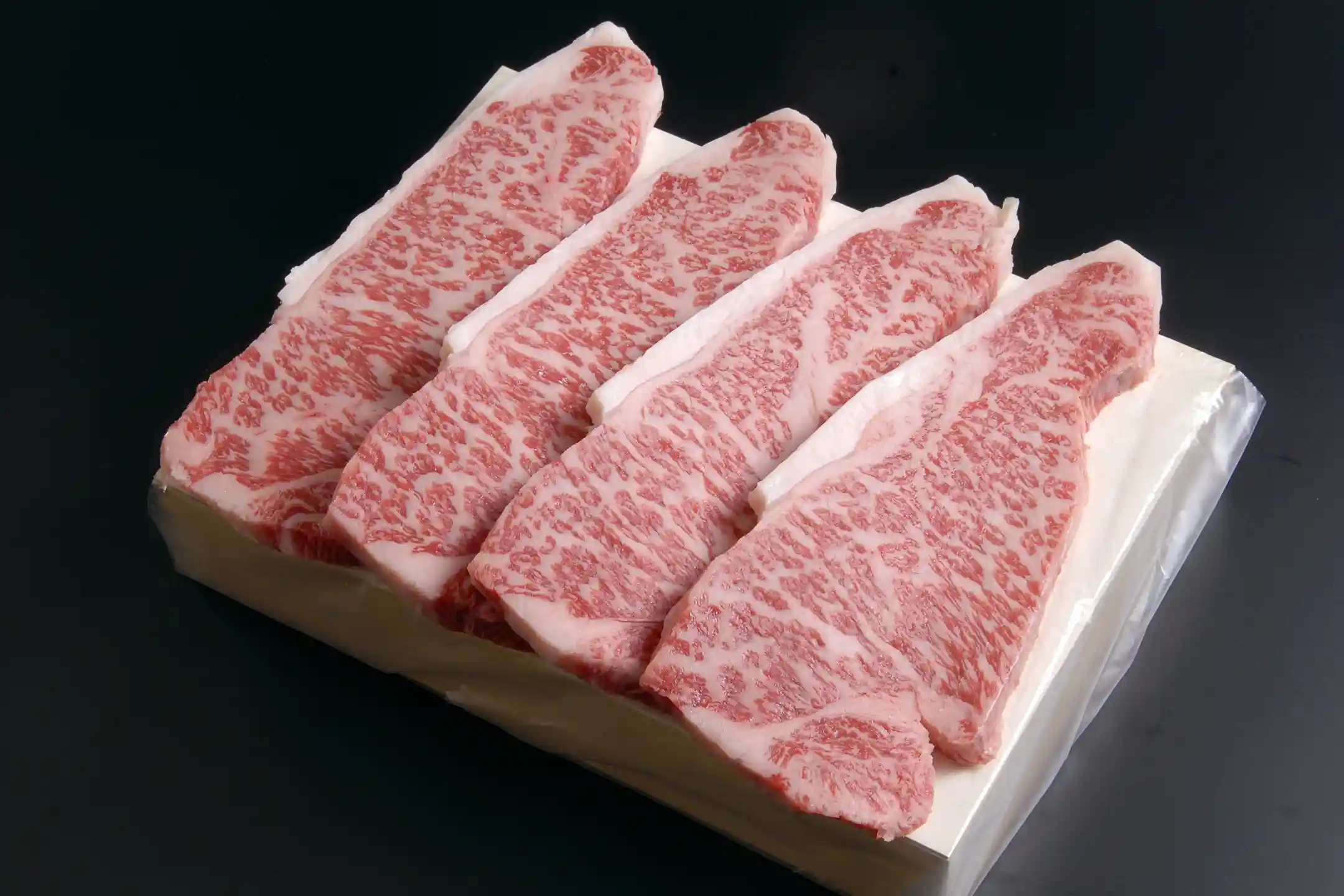
From the Matsusaka area of Mie Prefecture, “Matsusaka Beef” ranks among Japan’s top three wagyu. Its hallmark is an incredibly delicate, even marbling. The signature “sashi” melts beautifully; the sweet, rich fat spreads across your palate, earning the nickname “a work of meat art” (*6).
Producers traditionally select only unbred heifers and raise them to develop fat rich in oleic acid, associated with a more favorable health profile. With a low melting point—about body temperature—the fat dissolves quickly when cooked, releasing the distinctive wagyu aroma (*6). This remarkable flavor is the gift of painstaking care.
Omi Beef — Japan’s Oldest Brand and Its Layered Appeal
From Shiga Prefecture, “Omi Beef” is famed as Japan’s oldest branded beef, with roots back to the Edo period (*7). Guided by artisanal know-how, Omi achieves a refined balance of marbling and lean, offering an elegant sweetness and umami. Raised amid the rich natural environment around Lake Biwa, the beef features a low fat melting point and a silky finish that never feels heavy (*7).
Health-conscious diners also appreciate it. Produced with safety and trust in mind under the Omi merchant ethos of “good for seller, buyer, and society,” Omi Beef has earned loyal support.
Tokyo’s Luxury Steak: An Exceptional Experience Where Spatial Beauty Meets Sustainability
Savor Steak in Spaces Where Art and Architecture Intertwine
At Tokyo’s top steakhouses, the appeal goes beyond flavor—the staging engages all five senses. In a city renowned for aesthetics, restaurants elevate interior design and plating to the realm of art (*1), turning dinner into an experience akin to visiting a gallery. Collaborations with contemporary art and architecture have birthed immersive, multisensory meals that satisfy the eyes and the nose as much as the palate.
A prime example is Ginza’s “Saga Beef Sagaya.” In partnership with teamLab, the dining room transforms into an immersive digital art space (*2). Clear streams ripple across your table; place a plate and flowers bloom while birds flutter—seasonal scenes respond to your gestures so you feel as if you’ve stepped inside the world of the cuisine (*2).
Offered for just eight seats in a private room, this multisensory steak course embodied the idea that “you eat with your eyes first,” igniting conversation across the city (*2). You enjoy top-grade Saga wagyu from Kyushu on traditional Arita and Karatsu porcelain, surrounded by digital art—a consummate fusion of food and art (*2).
Sophisticated interiors shaped by architects and designers also define Tokyo’s steakhouses. In Ginza, “GINZA STEAK Tajima” earned praise for an interior by the Doyle Collection (*3).
Glossy solid-chestnut panels pair with Oya stone to form walls that feel both stately and warm, harmonizing marble-like elegance with the gentle presence of wood (*3). Gradated staining and symmetrical paneling create rhythm—an original space reminiscent of a museum, a truly “one-and-only restaurant” (*3).
Venues designed by luminaries such as Kengo Kuma are appearing as well. At “Kinari” near Gaienmae, Kuma crafted a serene, modern-Japanese interior that harmonizes with curated tableware and furnishings from across Japan (*4) (a teppanyaki beef course is also available). Surrounded by art and beauty, your steak experience becomes even more memorable.
Enjoy Tokyo’s Best Steaks the Sustainable, Eco-Conscious Way
Figure: The sustainable “Mottainai Lamb” once served at The Oak Door, Grand Hyatt Tokyo (*1). By feeding animals trimmed produce and olive-pressing by-products, the program achieves wagyu-like marbling and a clean, pleasant flavor—an ingredient born of a responsible approach.
In Tokyo, sustainability-minded steak destinations are receiving more attention. Even with a luxury ingredient like wagyu, more restaurants are integrating environmental care into production and service (*2).
At “The Oak Door,” the steakhouse inside Grand Hyatt Tokyo in Roppongi Hills, the team introduced “Mottainai Lamb” to Japan for the first time (*1). Over 80% of the feed blends otherwise discarded fruits and vegetables and olive pomace—the name reflects a spirit of re-use that values ingredients rather than wasting them (*1).
Thanks to this upcycled feed, the meat develops marbling reminiscent of wagyu, with a tender bite free of off-odors (*1). Presented as “true luxury that considers the planet,” the lamb chops united sustainability with deliciousness. The restaurant also works with responsibly farmed seafood—such as large, two-year-cultivated scallops from Iwate—served herb-butter grilled to promote ocean stewardship (*1).
On the local-production front, you’ll also see rare Tokyo-raised wagyu. At “Keyakizaka,” the hotel’s teppanyaki restaurant, chefs serve “Keyakizaka Beef,” developed from “Akigyu,” Japanese Black cattle raised at Akigawa Farm in Tokyo (*3).
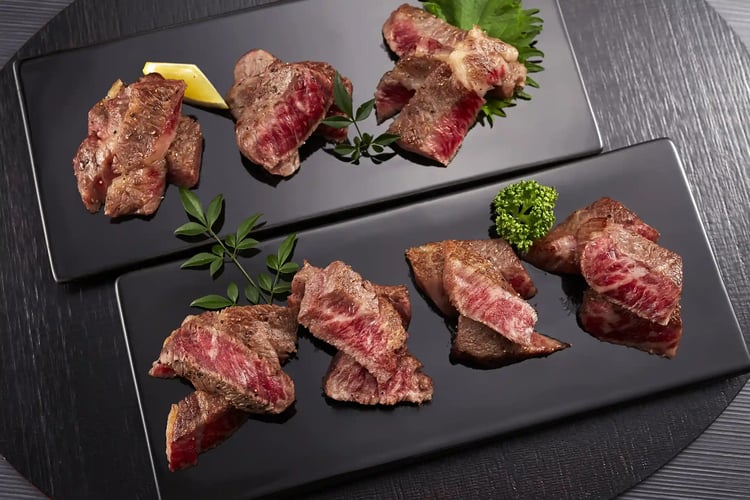
Executive Chef Honda pursued an ideal lean-to-fat balance, rearing cattle in a stress-minimized, small-scale environment nurtured by Tokyo’s springs and greenery, and enhancing quality by incorporating superfoods such as quinoa, seaweed, cacao, and blueberries into the feed (*3). Only a few head ship each month, but guests praise it as “a new wagyu that highlights the meat’s true character rather than chasing marbling alone” (*3).
This focus on traceability and collaboration with local producers reduces environmental impact while elevating flavor.
Sustainability extends beyond the plate to overall operations. In Aoyama, grill restaurant “The Burn” champions a “sustainable grill” ethos (*4).
Chef Fumio Yonezawa—trained in New York—defines a sustainable restaurant as one that can be run sensibly over time (*4). He places charcoal-grilled wagyu alongside fully developed vegan dishes on the same menu (*4). Given beef’s environmental footprint, offering alternatives helps moderate consumption—“so you can keep enjoying beef for years to come” is his philosophy (*4).
Alongside its signature wood-fired steak made from a mature cow from Kirishima, Kagoshima, the menu features vegan options such as whole-roasted carrots with soy-milk yogurt sauce, satisfying both meat lovers and those who prefer plant-forward dining (*4).
The team is active in social contribution, supporting local cafés that employ people with disabilities and curating food events at the Echigo-Tsumari Art Triennale (*4). Caring for environment, society, and people—this is sustainability at its core (*4).
Across Tokyo’s luxury hotels and restaurants, eco-friendly investments continue. Grand Hyatt Tokyo now runs on 100% renewable electricity (*5) and advances plastic reduction and food-waste initiatives (*5). Such large-scale transitions directly shrink the carbon footprint of high-end dining.
Access by EV is easier than ever: Roppongi Hills (home to The Oak Door) offers four 24-hour Tesla Superchargers (*6). If you travel sustainably in an EV powered by renewable energy, you can pair clean mobility with a steakhouse that honors sustainable sourcing.
In Tokyo, luxury steak experiences leave a lasting impression in two ways: the cultural thrill of design and art, and a shared commitment to sustainability.
Imagine savoring a beautifully plated course surrounded by notable architecture and art—and knowing that the ingredients reflect care for the planet and local communities. For international visitors, Tokyo’s steakhouses become destinations where culture, aesthetics, and ethics come together (*5).
An Intelligent Steak Experience: Cooking Classes and Workshops You Can Join in Tokyo
Tokyo offers a wealth of hands-on culinary experiences for visitors keen to explore steak and wagyu more deeply.
“Cooking Sun,” founded in Kyoto and now operating in Tokyo as well, is a popular cooking school with local, English-fluent instructors. In its three-hour wagyu-themed class held daily, you prepare a full kaiseki-style course—from seasonal appetizers to dessert—with a luxurious wagyu steak as the centerpiece (*1).
Beyond technique, you’ll learn about dashi, seasonings, and Japan’s approach to seasonality, enriching your understanding of food culture. Led by instructor Maki Ogawa and her team—known for warm hospitality honed in Kyoto—you can ask questions in English and explore the craft behind wagyu with confidence (*2).
Buddha Bellies in Yushima is another standout. Recommended by Lonely Planet and recognized by Tripadvisor, the school is notable for flexibility, offering vegetarian and halal options (*3).
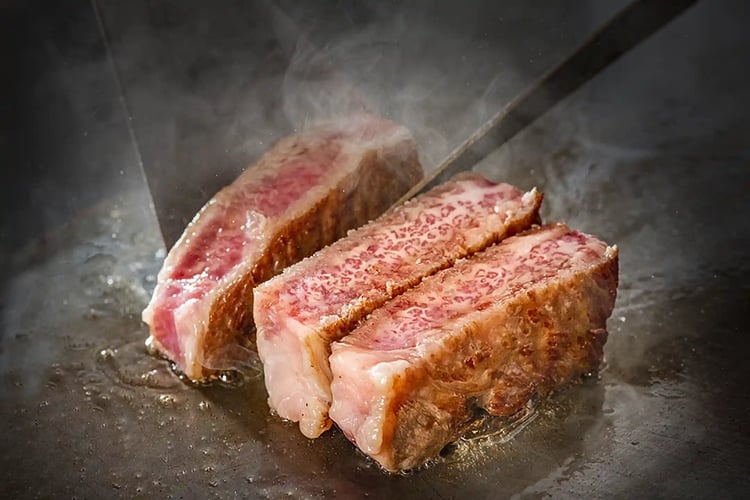
Its sukiyaki class featuring wagyu is especially popular, introducing guests to Japan’s hot-pot culture and the flavor of A5 beef. Founder Emi Edo teaches with humor in English, guiding you through Japan’s meat culture and ingredient selection. Learning technique alongside the stories—of old-line butchers and wagyu breeds—turns cooking into a journey through culture.
If you’re seeking an even deeper dive, special workshops led by wagyu experts and artisans are also available.
For example, the “Wagyu Masterclass” organized by major travel company H.I.S. features a live butchery demonstration of a Japanese Black side of beef at a special venue in Roppongi. You learn about each rare cut and practice the optimal grilling approach for each through hands-on sessions (*4).
This is far more than a tasting. The program “seamlessly combines the joy of cooking with educational insight, offering an unforgettable journey into the art of wagyu” (*5), helping you understand—through all five senses—why wagyu has become a world-class icon. You’ll even take home a chef-made “gyujo” beef sauce to re-create the magic later.
These workshops typically run a few times a month at lunch and dinner, in small, reservation-only groups (*6). Conversation flows among participants and instructors, making it a rare chance for travelers who love meat to enjoy both intellectual stimulation and a memorable meal.
Meet the Chefs: Conversation-Driven Gastronomy Events in Tokyo
For culturally curious travelers, Tokyo offers rare opportunities to dine while speaking directly with renowned chefs and experts. In recent years, hotels and restaurants have expanded intimate chef’s-table events with limited seating.
One example is the 2024 series “The Road of Canton Flavour” at “Sense,” the Cantonese restaurant at Mandarin Oriental, Tokyo. Executive Chef Toshiyuki Nakama himself designed each themed evening and cooked for just 12 guests per session (*7).
As he finishes dishes before you, Chef Nakama shares the stories behind ingredients and techniques (*8). You enjoy an inventive Cantonese menu—often off-menu dishes—while engaging in conversation: a truly special evening.
At a May event centered on “dashi,” guests tasted broths made from Jinhua ham and dried abalone, then savored a swallow’s nest course prepared with those stocks—an experience that drew widespread attention. In an elegant hotel setting, these small gatherings feel like a salon where cuisine and culture meet, exciting the mind as much as the palate.
If you prefer something more casual yet artistic, look to “CHEF’S TABLE” at NEW LIGHT in Shibuya’s MIYASHITA PARK. This six-seat private space attached to an open kitchen hosts an offline salon on select Wednesdays and Sundays (*9).
Each edition invites specialists—pastry chefs, sommeliers, bartenders, guest chefs—for dessert courses with drink pairings, wine sessions, or collaborative dinners (*10).
At one dessert-focused evening, a young pastry chef presented an all-assiette course themed around beans and citrus. Guests watched final touches up close, listening to reflections on sourcing and craft. With only six seats, the distance between chef and guests narrows, inviting lively dialogue.
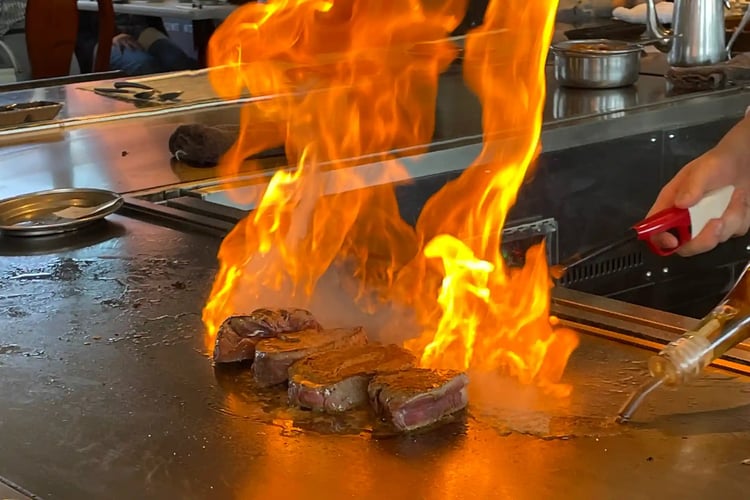
.webp?width=750&height=500&name=Teppanyaki%20Steak%20(2).webp)
The restaurant frames it as “a hub for food events that differ from everyday NEW LIGHT,” celebrating not only cuisine but also the chemistry of human connection.
Tokyo also welcomes encounters with international stars. In September 2024, “Spain Fusion Tokyo 2024,” a satellite symposium of Spain’s gastronomic congress Madrid Fusión, debuted at Conrad Tokyo (*11).
Three-star chefs such as Quique Dacosta and Joan Roca visited to lead demonstrations and tastings. With advance registration, many sessions were free, drawing young Japanese cooks and students who relished direct exchange with world-class talent.
While some events target industry professionals, many welcome passionate travelers as well—so you might find yourself trading notes with a local gourmand seated nearby.
High-End Steakhouses by Area in Tokyo
Ginza – Savor Prestige and Tradition at Long-Standing Icons
Ginza gathers venerable steakhouses steeped in tradition. Among the most famous is “Aragawa,” founded in 1967. Its name resonates worldwide, long reigning as a destination for Japan’s finest hearth-grilled steaks.
Aragawa selects only rare, pure-blood Tajima heifers that have never calved, and slowly grills them over binchotan charcoal—an “Aragawa style” that has secured an unshakable reputation (*12). In its calm setting, even salt and pepper are used sparingly, drawing out the meat’s true character. As you take a bite, tenderness yields to a growing wave of umami—cue a quiet sigh of delight (*13).
Other standouts include “Misono,” the postwar pioneer credited with first serving teppanyaki steak in 1945, and “Kato Gyu-nikuten Ginza” from a historic butcher’s lineage—each a temple to history and quality (*14). Watching the chef’s craft across a stately wood counter while savoring wagyu is a uniquely Ginza luxury.
Roppongi & Aoyama – Modern Steak Dining Where Design Shines
Trend-forward Roppongi and Aoyama brim with stylish, design-driven steakhouses.
At Roppongi-itchome, “Ruby Jack’s” offers a leafy terrace and chic bar lounge; its contemporary warmth and thoughtful spatial design set the stage for special moments (*15). High ceilings and a generous floor plan draw many international guests, evoking the energy of a top New York steakhouse.
BLT Steak Roppongi, the Tokyo outpost of the American brand, brings a modern-American approach that blends classic steakhouse fare with bistro accents. The signature piping-hot popovers—cheesy and aromatic—are irresistible (*17).
Aoyama also hosts distinctive options: “Il Lupino Prime,” a Hawaii-born Italian steak concept, and “XEX Atago,” a Japanese-Western fusion restaurant by celebrity chef Masaharu Morimoto.
Lighting and interiors are meticulously considered so each plate arrives like a work of art. Beyond the excellence of the beef itself, the joy lies in savoring the space. Step away from the city’s bustle and into these rooms to find a luxurious, transportive world where you can lose yourself in flavor (*18).
Daikanyama & Ebisu – Refined Hideaways for a Discreet Steak Night
In refined Daikanyama and Ebisu, you’ll discover discreet, high-end steak spots tucked into buildings and quiet neighborhoods—no loud signs, just doors that open onto another world.
Though technically in Azabu-Juban, the mood matches these areas: “Ranma,” a renowned teppanyaki hideaway, sits in a tranquil residential pocket (*19). Its wood-accented interiors and polished Japanese details create a warm, serene atmosphere befitting an adult retreat.
Throughout Daikanyama and Ebisu, natural materials like wood and stone soften interiors. Private rooms and counter seating foster a sense of intimacy where you can linger.
At “Lawry’s The Prime Rib, Tokyo,” which relocated to Ebisu Garden Place, the décor pivoted from the previous Akasaka location’s lavish classicism to a calmer palette of brick and reclaimed wood (*20). The result is a comfortable, casually elegant setting where prime rib tastes even better—and you can relax without formality.
New-wave steakhouses are also emerging—some course-only spots focus exclusively on Japanese Black sourced directly from select farms, earning praise from epicures.
With clearly defined concepts, Daikanyama and Ebisu restaurants often feel like “places you’d keep to yourself.” Settle into a quiet, refined room and savor a chef’s best work; you may forget the city outside as contentment takes over.
Summary
Tokyo’s steak culture has evolved beyond sheer deliciousness into an artistic, multisensory pleasure. From venerable icons in Ginza to design-forward modern rooms in Roppongi and Aoyama, and intimate hideaways in Daikanyama and Ebisu, each area offers its own path to an extraordinary steak.
Sustainability-minded sourcing and spaces that fuse cuisine with architecture and art express a distinctly Tokyo aesthetic. Add in cooking classes and conversation-driven events with chefs, and your experience gains cultural depth.
Together, these facets attract gourmets from around the world. For visitors to Tokyo, luxury steakhouses are more than places to dine; they are destinations where culture and ethics find harmony. As tradition and innovation continue to interlace, Tokyo’s steak scene will keep leading the world’s culinary conversation.
Author Bio