Kyoto, the thousand-year capital, is more than a sightseeing destination. Here, you’ll find an aesthetic sensibility polished over centuries, alongside quiet wisdom for restoring both body and mind. One of its most eloquent expressions is the onsen. In contrast to Kyoto’s more glamorous city image, its hot spring culture is understated yet profound—shaped in harmony with nature, architecture, art, and spirituality.
In this article, while touching on the cultural roots of Kyoto’s onsen tradition, you’ll discover exceptional hot spring stays connected to art, architecture, and sustainability, along with cultural experiences that spark intellectual curiosity. A Kyoto onsen journey that nourishes relaxation and learning at once—let’s open that door together, right here.
Kyoto’s Onsen Culture and Its Historical Allure
Kyoto has fostered its own distinct onsen culture since ancient times. A legend from the Nara period tells that the monk Gyōki praised the healing properties of Kizu Onsen in Kyōtango, soothing people’s injuries and illnesses. And in the late Heian period chronicle Chūyūki, you’ll already find references to public bathhouses known as “yuya.”
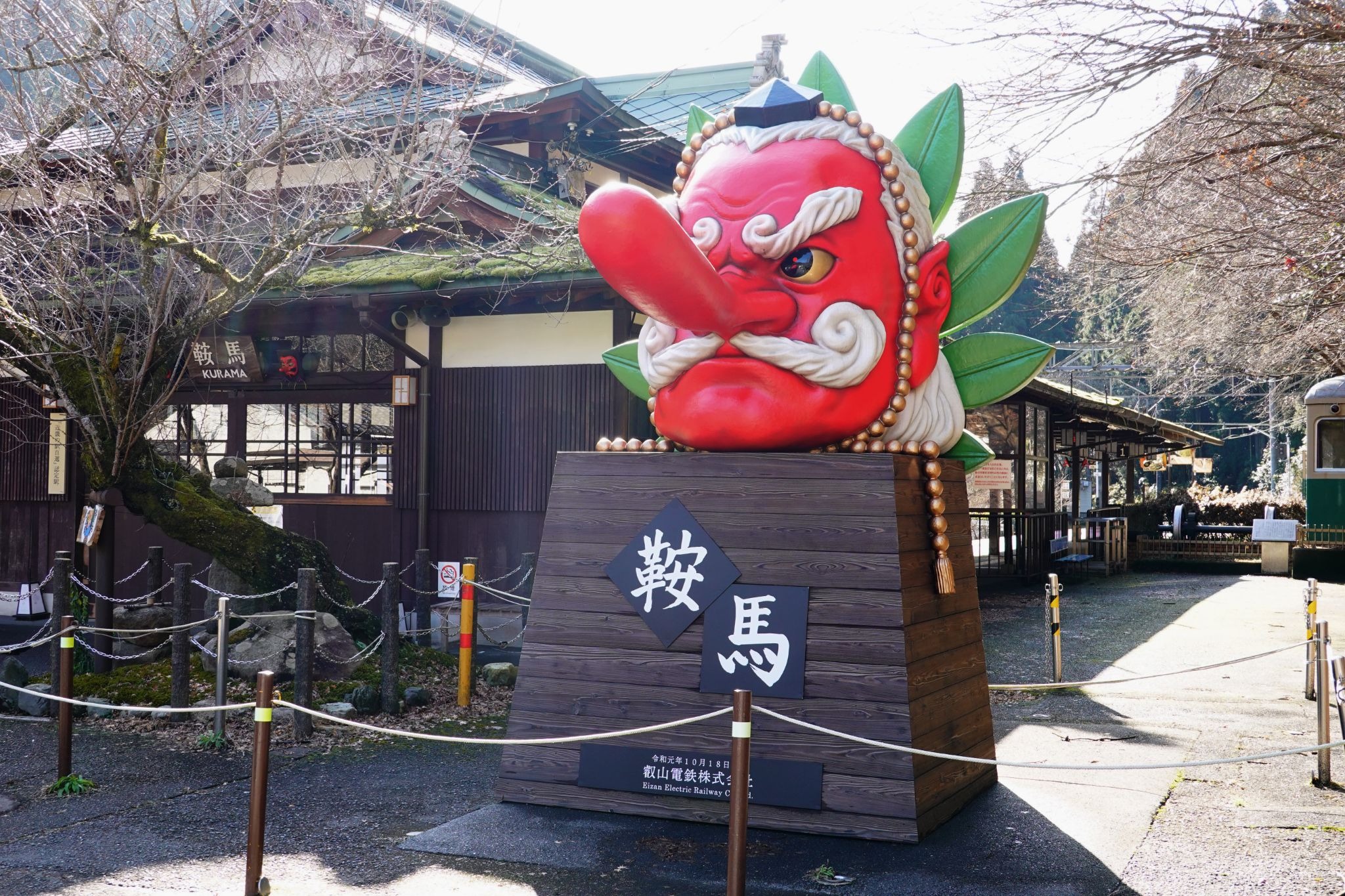
During the Sengoku era, stories also remain of warlords healing sword wounds in the hot springs of Kameoka. By the Edo period, it is said that Kurama Onsen opened as a therapeutic retreat along the road connecting central Kyoto with Kurama-dera Temple (*1). In other words, people of the capital have long lived close to hot springs, drawing on their gifts to sustain health.
Kyotoites are also known as passionate bath lovers. From the Muromachi through Edo periods, countless sentō (public bathhouses) were built across the city. At its peak, around 600 bathhouses are said to have lined the streets, enjoyed daily by everyone from court nobles to townspeople. That legacy continues today: for example, Funaoka Onsen (Kita Ward, Kyoto City), founded in the Taishō era, still operates as a nationally registered tangible cultural property—one of Kyoto’s beloved historic bathhouses (*2).
Seasonal bathing customs—such as yuzu baths at the winter solstice—are also said to have originated in Kyoto, and a traditional culture of therapeutic bathing cherished even within the imperial court took root here. Over a long history, Kyoto’s onsen culture has become deeply intertwined not only with wellbeing, but with seasonal atmosphere and a refined sense of beauty itself.
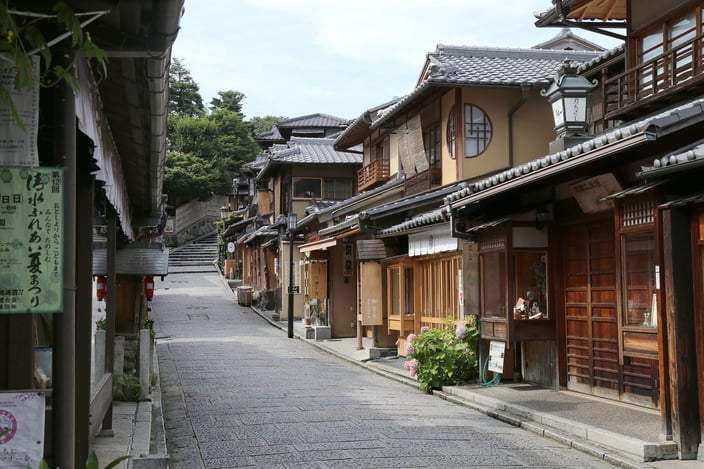
Three of Kyoto’s Best Onsen Ryokan: Where Art and Architecture Become Part of Your Stay
In historic Kyoto, you’ll also find a strong lineup of luxury stays that combine hot springs with a highly cultivated artistic sensibility. Here are three Kyoto onsen accommodations where contemporary art and traditional architecture come together in uniquely Kyoto ways.
An Onsen Stay Surrounded by Contemporary Art — ‘HOSHINOYA Kyoto’
Cradled by the lush nature of Arashiyama, ‘HOSHINOYA Kyoto’ is an inn reborn—opened after renewing a ryokan that had operated since the Meiji era. In a design led by architect Rie Azuma, the space draws on the details of a century-old wooden structure while adding modern comfort, creating a new kind of spatial beauty (*1).
Inside the guest rooms, you’ll find touches such as Kyoto-crafted Kyō-karakami (traditional paper for sliding doors) and custom tatami sofas. Throughout the property, an artful environment unfolds—where Japanese aesthetics and modern design feel seamlessly interwoven. Reaching the inn by private boat across the Hozu River, you’re set up for something that feels almost unreal: it’s as if you’ve stepped into a painted scene and get to stay there.
A Hot Spring Inn Where Traditional Beauty Meets Modern Architecture — ‘Suiran, a Luxury Collection Hotel, Kyoto’
Set against Arashiyama’s stunning scenery, ‘Suiran’ is a luxury hotel that reanimates Meiji-era buildings with a contemporary sensibility. Its concept is “Keiō Kairai”—honoring the past while opening the future—expressed through spaces where Kyoto’s history-bred traditions and modern beauty blend vividly. The result is a one-of-a-kind stay that holds both dignity and freshness at once (*2).
Seventeen of its 39 rooms feature private open-air baths fed by Arashiyama Onsen, so you can enjoy natural hot spring water whenever you like, 24 hours a day, right in your room (*3). There are also refined hinoki open-air baths and two private spa spaces—“Raku” and “An”—including serene rock baths. As you take in Arashiyama’s changing seasons, you’ll experience the rare luxury of enjoying traditional beauty and modern comfort in the same breath.
A Hot Spring Resort Where You Can Connect with Kyoto Artists — ‘Aman Kyoto’
Tucked quietly into the forest of Takagamine in northern Kyoto, ‘Aman Kyoto’ is a resort where cultural exchange can unfold within a deep, nature-aligned stillness. On-site, a spa facility draws on mineral-rich natural hot spring water, and you can soothe yourself in a spacious indoor bath and an open-air rock bath. You’re free to soak whenever you wish—while also enjoying a range of activities that bring you closer to local culture.
For instance, early in the morning you can join a Zen experience at a normally non-public temple, practicing zazen alongside a local monk and settling your mind in the quiet (*4). Within the resort, you’ll also find workshops that let you explore Kyoto’s traditional crafts, as well as tea-room experiences where you can learn the art of making tea. As you connect with Kyoto artists and artisans, culture becomes something you don’t just observe—you taste it, touch it, and carry it with you. In a space that feels like an artwork surrounded by forest, you can fully absorb Kyoto culture and onsen healing through all five senses.
Intellectually Rich Museum Experiences Around Kyoto’s Onsen Areas
A Kyoto onsen trip doesn’t have to be only about soaking and switching off. Pairing your time in the baths with nearby encounters in art and history is one of the most satisfying ways to feed your curiosity. Here are museum experiences you’ll want to combine with Kyoto’s hot spring spots.
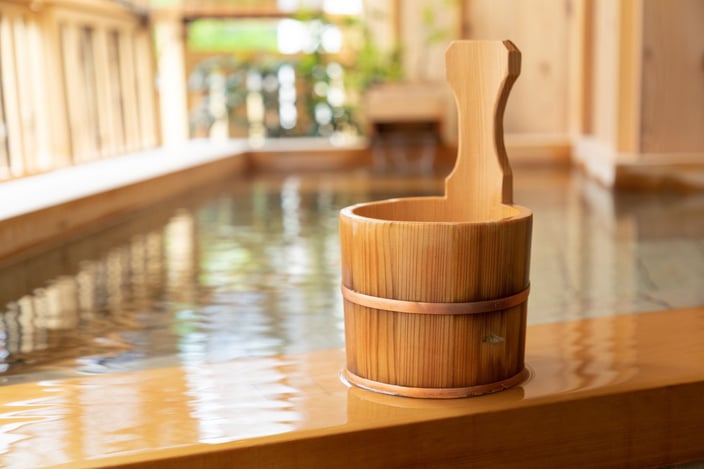
Arashiyama Onsen + Art — ‘A Collaborative Tour with the Fukuda Art Museum’
After soaking in Arashiyama’s atmospheric hot springs, try spending a thoughtful hour at the Fukuda Art Museum—an easy walk away. Opened in 2019 in Saga-Arashiyama, the museum sets out with the concept of being “a museum that lasts 100 years,” aiming to pass Japanese culture forward and help it evolve.
The collection includes around 1,500 works, from Edo through modern periods, including holdings associated with Takehisa Yumeji. You’ll encounter masterpieces by artists such as Tawaraya Sōtatsu of the Rinpa school, along with the Kanō school, Maruyama Ōkyo of the Shijō school, and later figures like Takeuchi Seihō and Uemura Shōen. Even if you’re not deeply versed in art, you’re likely to feel genuinely moved by what’s here (*1).
The building itself is a modern design that harmonizes with the riverside scenery along the Katsura River, and from the museum café you can take in sweeping Arashiyama views. Hot springs followed by great paintings—this is the kind of indulgent route that refreshes both mind and body.
A Historical Visit from Kurama Onsen — ‘Kuramayama Reihōden’
If you step away from the city’s bustle and pause at Kurama Onsen, nestled in Kurama’s nature-rich mountain village, consider visiting Kurama-dera’s Reihōden. Kurama Onsen is a secluded hot spring said to have opened in the Edo period as a therapeutic stop for travelers moving along the old highway. Its open-air bath, surrounded by Kitayama cedar forest, is a true sanctuary. Just nearby, Kuramayama Reihōden (the Kurama-dera museum) houses and exhibits cultural treasures connected to Kurama-dera Temple.
Inside, each floor has a distinct theme: the first floor is a natural science exhibition room introducing Kuramayama’s rocks, plants, and living creatures; the second floor features temple treasures and a memorial room for Akiko Yosano and her husband Hiroshi; and on the third floor you’ll find precious Buddhist statues, including the National Treasure Bishamonten triad (*2).
Kurama is also known for the Heian-period legend in which Minamoto no Yoshitsune learned martial arts from tengu. After soaking in the hot springs, standing close to these historical legacies can help you sense Kyoto’s deep spiritual culture in a very immediate way.
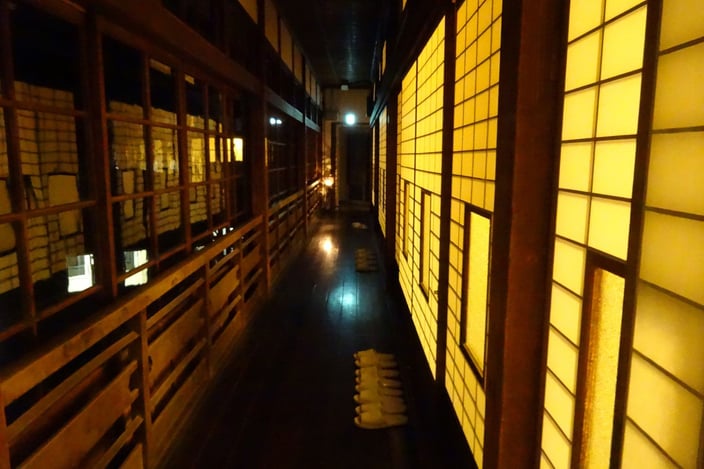
Interiors and Amenities in Kyoto Onsen Stays That Enable a Truly Refined Retreat
In high-end onsen accommodations, you’ll often feel the property’s philosophy and attention to detail expressed through architecture, interiors, and amenities. Let’s look at what elevates a stay—while noticing how Kyoto tradition and modern design harmonize in these spaces.
A Stay Where Nordic Style Meets Kyoto Tradition — ‘GOOD NATURE HOTEL KYOTO’
Located in Kyoto’s Kawaramachi area, ‘GOOD NATURE HOTEL KYOTO’ is a sustainability-minded hotel built on the concept of “good for people, good for nature.”
Guest rooms—shaped by emerging Japanese designers expressing Kyoto’s essence—are composed with a refined sensibility, and all rooms use natural wood flooring. Carefully selected amenities include organic shampoo and organic cotton towels. That material choice and comfort have been so highly regarded that the hotel became the world’s first to obtain the international building certification “WELL” in the hotel category (*1)(*2).
Inside the property, you’ll find a courtyard green wall recreating Kyoto’s native plant life, along with a full range of wellness programs such as yoga and meditation. In this space where Nordic functional simplicity meets Kyoto’s traditional beauty, you can truly unwind—body and mind together.
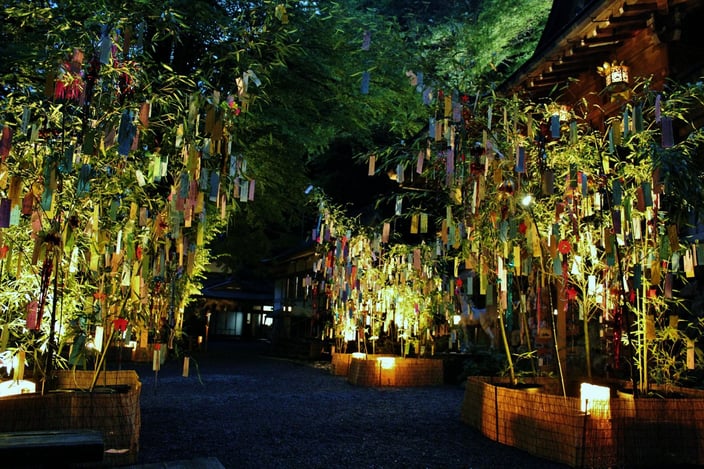
A Modern Reinterpretation of Traditional Beauty — ‘Fufu Kyoto’
Quietly set in the Okazaki area near Nanzen-ji, the small luxury ryokan ‘Fufu Kyoto’ is a Japanese-style resort that expresses the old capital’s miyabi—its refined elegance—through a contemporary sensibility. Every guest room includes a hinoki indoor bath, offering you the luxury of a private onsen-like mood while still in central Kyoto (*3).
Throughout the interiors, Kyoto’s traditional beauty and artisan skill are alive in the details. In the lobby, for example, you’re welcomed by a bonsai that appears to float in midair. In corridors and guest rooms, latticework featuring motifs inspired by Genji-kō patterns (the Genji incense diagram), and lighting made with hand-scooped rakusui washi paper, set an atmosphere that feels both rooted and fresh. Even furnishings—such as maki-e lacquered trays crafted by Kyoto artisans—carry a polished sense of play (*4).
From the Japanese garden that reflects the seasons to time spent in a bar created by renovating a tea room, you’ll experience a worldview that is new and graceful while still grounded in tradition. In a space where beloved Kyoto design and modern luxury merge, you can savor a kind of relaxation you won’t find elsewhere.
Cultural Experiences and Workshops to Deepen Your Kyoto Onsen Journey
If you’re staying at a Kyoto onsen ryokan, make time to join the cultural experiences available both inside and beyond the property. Activities unique to Kyoto—traditional crafts, tea ceremony, Zen—can make your trip feel richer, more personal, and far more memorable.
A Long-Established Onsen Ryokan Where You Can Experience Traditional Crafts and Tea — ‘Tawaraya Ryokan’
One of Kyoto’s most iconic longstanding ryokan, ‘Tawaraya,’ is known not only for its dignified hospitality, but also for valuing opportunities for guests to connect with Japanese culture. Inside the ryokan, workshops—such as wagashi-making and tea ceremony—are held regularly, allowing you to experience Kyoto’s traditional crafts and cultural practices and taste them more deeply through your own hands (*1).
You might try making seasonal wagashi yourself, or learn how to perform tea in a tea room. Skilled artisans and attentive staff guide you with care, so even if it’s your first time, you can join with confidence. In a serene space, the simple act of enjoying matcha and sweets becomes a rare moment where you can feel Japan’s beauty and spirit through all five senses. That such cultural programs exist at all is part of what makes Tawaraya—an inn with over 300 years of history—so distinctive.
Experience Zen and Mindfulness at an Onsen Stay in the Myōshin-ji Area
Kyoto is also home to temple-run lodgings and unique stays shaped by Zen spirit. Among them, the hotel ‘Hanazono Kaikan,’ located just east of the head temple Myōshin-ji, is known as “a temple hotel”—a place where you can stay in a quiet setting while brushing close to Zen. Inside, you’ll find a large communal bath with a garden to ease travel fatigue, as well as a dining venue where you can enjoy Kyoto cuisine arranged with influences from shōjin ryōri (Buddhist vegetarian cooking).
In the early morning, you may also join a zazen experience guided by Myōshin-ji monks—ideal for resetting your mind and body away from daily life. With over 80 rooms in both Japanese and Western styles, the hotel is praised for being clean and comfortably maintained, offering a relaxing retreat in a calm environment removed from the city’s noise (*2).
There’s also the practical ease of leaving your luggage before and after check-in, then heading out to sightsee around Arashiyama. If you choose a stay like this—where you can experience Zen mindfulness in the spaces between your hot spring moments—you’ll be able to taste both Kyoto’s spiritual healing and the physical restoration of your onsen journey.
Summary
A Kyoto onsen journey is an experience that goes beyond simple “relaxation.” Beginning with a historic culture of therapeutic bathing, it has evolved in modern times into a more layered, intellectually rich stay—through connections to art, architecture, and environmental consideration.
In nature-filled hot spring areas such as Arashiyama and Kurama, cultural experiences linked with museums and temples are readily available, and the time you spend soaking itself can become a pathway to learning and reflection. Meanwhile, the aesthetic sensibility embedded in interiors and amenities, along with a quietly sustained commitment to sustainable operations, may gently prompt you to reconsider what you value in travel.
Kyoto’s onsen accommodations do not seek to flaunt luxury; instead, they carefully convey the ideas and memories rooted in their places. That is precisely why a stay here becomes more than a fleeting indulgence—it can be time that enriches your sensibilities for life. For you, if you’re seeking a journey that satisfies both heart and intellect, Kyoto’s hot springs will likely remain a place you’ll want to return to—again and again.
Author Bio