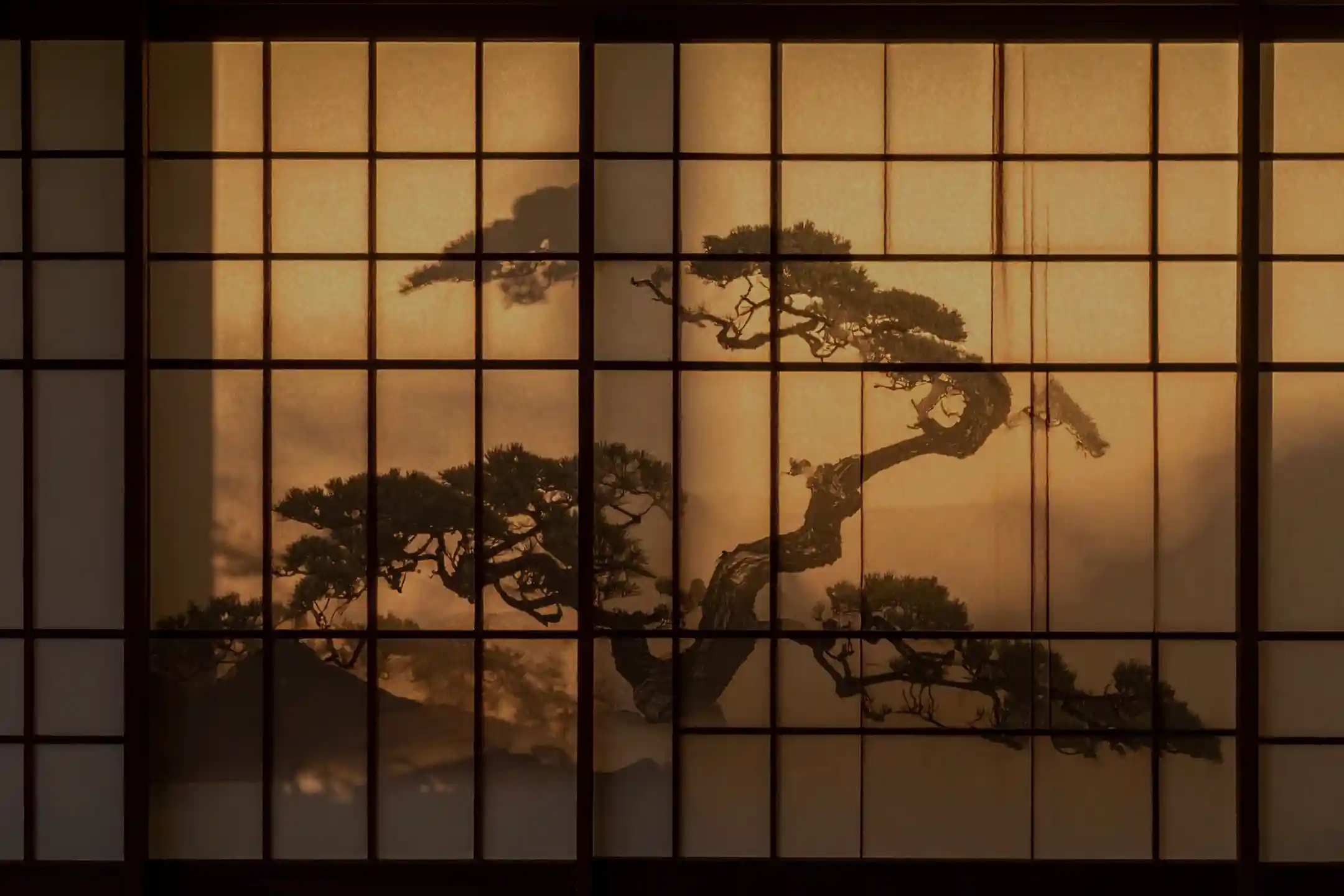
A Selection of Japanese Literary Masterpieces to Enrich Your Life
The shortest path into another culture is to read a great book—and then walk the ground where that book was born. This guide is designed for readers with a strong intellectual appetite, linking the “pleasure of reading” with the “pleasure of visiting” through standout works of Japanese literature and culture. To let you savor the aesthetics and ideas refined on the page while staying rooted in your contemporary sensibility, we neatly organize each work’s background, key terms, and points of appreciation
Take, for instance, the “beauty of old Japan” that Jun’ichirō Tanizaki evokes, the “shades of the heart” Natsume Sōseki examines, the philosophy of wabi-sabi that Tenshin Okakura carried across cultures, and the “ethics of honor and conduct” articulated by Inazō Nitobe—each text gently hones the senses you live by today and deepens your inner ruler for judgment. At the end, we also propose a book-themed travel plan that traces story settings and places tied to the authors, expanding your reading into a journey.
This guide focuses on opening a doorway into the classics. You can skim the overview first and then dive into the text, or revisit it mid-journey. Read in any order, freely aligned with your interests. All you need is curiosity. May the chapter you choose today become a small adventure where you meet a Japan you haven’t yet known.
Savor Modern Japanese Beauty in “The Makioka Sisters (Sasameyuki)” (Jun’ichirō Tanizaki)
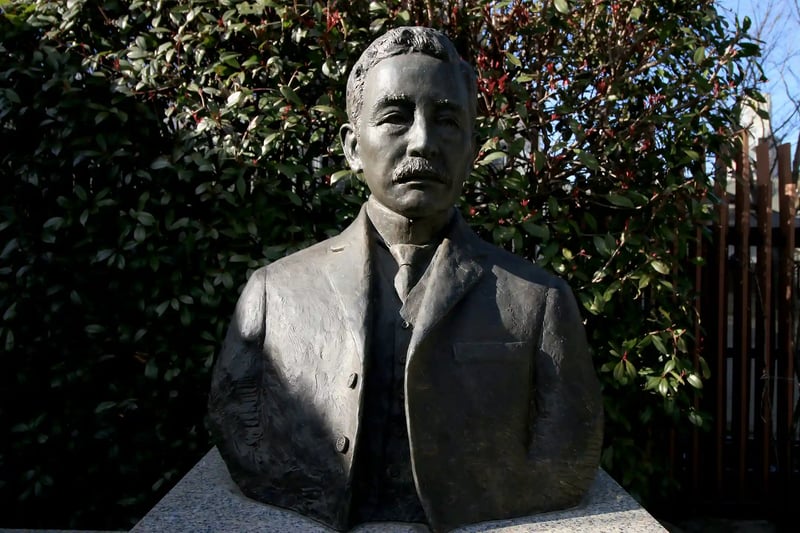
Jun’ichirō Tanizaki’s novel “Sasameyuki” (The Makioka Sisters) is a masterpiece that captures, with exquisite fullness, the beauty of old Japan amid the upheavals from prewar to postwar years.
After the Great Kantō Earthquake, Tanizaki moved from Tokyo to Kansai, where traditions remained deeply rooted; he was so captivated by the atmosphere and emotion of this “old Japan” that he resolved to settle there permanently(*1). That love flows through “Sasameyuki,” which carefully depicts, through the daily lives of four sisters from an old family, the refined customs, mores, and aesthetic sensibilities of early Shōwa-era Japan.
.webp?width=800&height=533&name=Monument%20to%20Sasameyuki%20(The%20Makioka%20Sisters).webp)
Because the narrative records the changing scenes of the four seasons in vivid detail—and even weaves in historical events such as the 1938 Hanshin flood (Shōwa 13)—you can infer that the story unfolds from autumn of Shōwa 11 (1936) to spring of Shōwa 16 (1941)(*2). For readers from abroad, its meticulous everyday textures open a rare window onto traditional Japanese life.
Equally compelling is the contrast among the sisters’ temperaments and life choices. The third daughter, Yukiko, embodies a traditional modesty, while the youngest, Taeko, is independent and modern—their contrast symbolizes how classical values and rising modernity vied within Japanese society at the time.
Western societies also saw transformations in women’s roles and values in the early twentieth century. Through these sisters you can sense Japan’s distinctive blending of tradition and modernity. Tanizaki kept writing despite wartime hardship and completed the novel after the war; the work is suffused with both elegy and praise for a traditional beauty then slipping away.
Once you start reading, a modern yet graceful aesthetics of Shōwa-era Japan seems to rise from the page and draw you in. By lingering with the quietly rendered seasons and the sisters’ way of life, you step beyond national and cultural divides and find a moment of fullness—time apart from the rush of everyday life today.
Touch the Japanese Mind and Its Philosophy in “Kokoro” (Natsume Sōseki)
Natsume Sōseki’s “Kokoro” is indispensable to any account of modern Japanese literature. The story unfolds around the confession of the protagonist known only as “Sensei,” illuminating with calm depth the inner life of a solitary intellectual in late Meiji Japan(*3).
Set against the backdrop of rapid Westernization at the end of the Meiji era, the novel reflects the tensions of a society caught between traditional values and a new individualism. The narrative follows Sensei’s consuming guilt over betraying his student friend, K, and the loneliness that follows—laying bare the human suffering brought on by self-centered egoism(*4).
When Sensei learns of the Emperor Meiji’s passing and General Nogi’s ritual death, he is shaken to his core and ultimately chooses to end his own life. That stark conclusion invites you to consider Japanese ethics, the depth of self-examination, and a finely tuned sensitivity to ideas like “shame” and “guilt.”
For many Western readers, a moral world rooted in a keen awareness of shame may feel unfamiliar at first. Yet as you read, universal human subtleties emerge—remorse born in relation to others, and a regard for honor that crosses cultures.
The prose appears plain on the surface, yet leaves generous room between the lines, revealing something new on every reread. What can seem like a tragic triangle at first later yields, through the cadences of Sōseki’s language, a profound sense of Japanese moral culture and philosophical reflection.
Surrender to the music of Sōseki’s Japanese, and explore the layered meanings tucked into the word “kokoro”—heart, mind, spirit. It’s the kind of reading that stirs your curiosity and resonates across borders.
Carefully Chosen Books That Reveal the Essence of Japanese Culture
A Philosophy of Japanese Beauty in Shadow and Shade: “In Praise of Shadows” (Jun’ichirō Tanizaki)
Having rendered traditional beauty into fiction with “Sasameyuki,” Tanizaki turned, in the 1933 essay “In Praise of Shadows” (In’ei Raisan), to a philosophical exploration of Japanese aesthetics. Focusing on “shadow”—the interplay of light and darkness—he writes in a distinctive voice about how dusk, dimness, and soft illumination are vital to Japanese beauty.
In contrast to a Western impulse to cast things into the clear light of day, Tanizaki argues that the half-dark of old wooden houses and the glow of an andon lamp are what allow emotion and beauty to stand out. His invitation helps you rediscover the richness of “shade,” offering fresh insight even if you’re used to the brightness of modern life.
“In Praise of Shadows” is one of the works that introduced Japanese aesthetics abroad, and it remains essential reading for anyone drawn to art, design, or architecture. Thinkers such as Michel Foucault and world-renowned architect Tadao Ando are said to have been influenced by it; Tanizaki’s aesthetics resonated across borders(*1).
When Tanizaki wrote the essay, Japan was undergoing rapid Westernization and modernization, and he worried deeply that indigenous aesthetics were being lost(*1). The book calls for a return to cultural roots, urging a renewed appreciation for the wabi and sabi that dwell in shadow. Immerse yourself in its stillness, and your eyes open to delicate beauties overlooked in bright glare—you feel the Japanese philosophy of harmony in “light and shadow.”
Far from spectacle, Tanizaki’s insight finds richness in quiet gradations of tone. For life today—often optimized for brightness and convenience—it suggests a timeless alternative: the pleasure of seeking ease and beauty in the dark.
Understand Japanese Culture Through Wabi-Sabi: “The Book of Tea” (Tenshin Okakura)
Tenshin Okakura’s “The Book of Tea” (1906) is a landmark written in English to introduce Japan’s traditional culture and inner world to the West. At a time when Japan’s victories in the Sino-Japanese and Russo-Japanese wars had drawn global attention, Okakura lamented that curiosity focused mostly on military prowess.
He insisted that “Japan’s cultural essence lies not in battle but in honoring peace and harmony—an ideal crystallized in the tea ceremony”—and sought to convey the Japanese sense of beauty and philosophy through chanoyu(*2). The book explains how Eastern thought—Daoist and Zen philosophies—shapes the spirit of tea. Among its most celebrated chapters is Okakura’s account of the aesthetics of wabi-sabi.
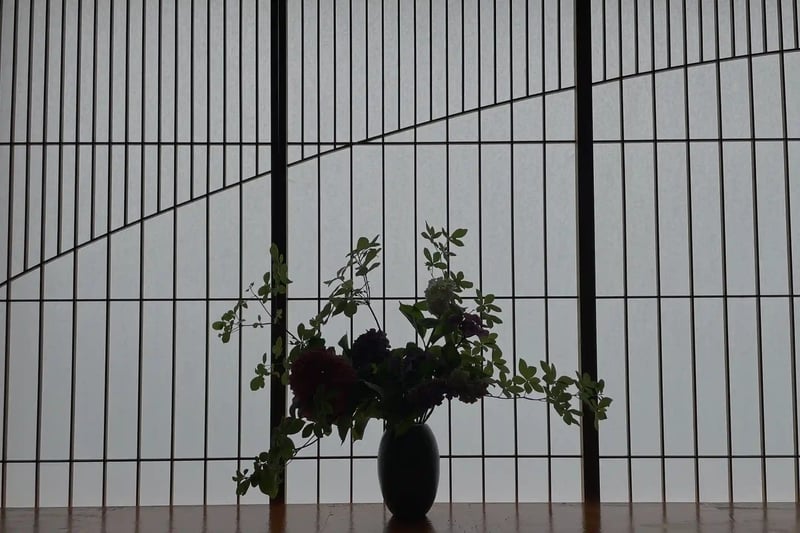
Wabi-sabi is a uniquely Japanese sensibility: “wabi,” the quiet grace within simplicity, and “sabi,” the mellow beauty felt in the weathered and time-worn. It is a value system that finds depth in the imperfect and unadorned. Okakura writes that at the heart of tea lies reverence for the imperfect, and he elevates wabi-sabi’s preference for the chipped, the shadowed, and the understated as the very essence of Japanese culture.
He expresses this succinctly for Western readers with the word “Imperfect”—a formulation that left a strong impression(*3). Consider the purposely irregular shape of a tea bowl, or the quiet presence of a small roji garden; that is wabi-sabi, and the realm the tea ceremony embodies. Open “The Book of Tea” and you’ll find that within the small space of a tearoom, the distilled heart of Japanese culture becomes palpable.
From the hospitality infused into a single bowl of matcha to the shared, unhurried moment of a tea gathering, the long-standing ideals of harmony and respect emerge with gentle clarity. Because it is a lyrical essay rather than an academic tome—and written in beautiful English—it moved Western readers in its day and continues to be read worldwide.
Revisiting wabi-sabi gives you a fresh lens for finding “beauty because it is not complete” in the objects and rhythms of your own life. It’s a book that helps you rediscover Japanese subtlety—and a universal appeal—without rhetoric or distance.
%20at%20Kenrokuen%20Garden%20in%20the%20Snow%20(Ishikawa).webp?width=800&height=533&name=Y%C5%ABgao-tei%20(Tearoom)%20at%20Kenrokuen%20Garden%20in%20the%20Snow%20(Ishikawa).webp)
Essential Reads to Grasp Japan’s History Through Story and Thought
Understanding Japan’s Moral Culture: “Bushido: The Soul of Japan” (Inazō Nitobe)
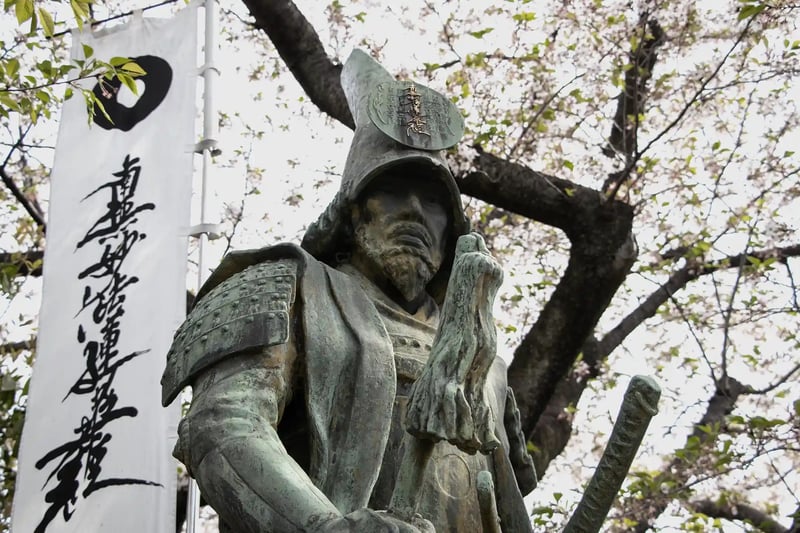
Born as Japan stepped into modern nationhood, Inazō Nitobe’s classic “Bushido: The Soul of Japan” introduced the samurai ethic to the world in clear, accessible English.
Nitobe—an international figure who later served as Under-Secretary-General of the League of Nations—published the book in 1900, explaining one of the spiritual foundations of the Japanese people for a global audience(*1). At the time, some in the West still clung to prejudiced images of Japan as a curious “Oriental” other; through his diplomatic work and books like “Bushido,” Nitobe set out to overturn such fixed notions at their root(*1).
What, then, is bushidō? Nitobe describes it as “the way the warrior (samurai) should follow in duty and in daily life,” an unwritten code passed down orally for centuries among the warrior class(*2). He traces its sources to three currents embedded in Japanese culture: Buddhism, Shintō, and Confucianism.
From Buddhism, bushidō draws a calm acceptance of death—the poise to stand unshaken in peril; from Shintō, loyalty to one’s lord and reverence for ancestors and land; from Confucianism, a morality that esteems benevolence, righteousness, and propriety(*2). Blended together, these nurtured a code that prizes honor even more than external measures of right and wrong—captured in the samurai injunction to “guard your name (know shame).”
Nitobe’s prose, resonant with Christian ethics and Western philosophy, spoke plainly and powerfully to readers abroad, and the book continues to be read widely. After its publication, understanding of samurai ethics and Japanese moral sensibilities spread across Europe and America, and “bushido” itself entered international vocabulary.
Although feudalism fell and bushidō as an institutional code became a relic, its inner spirit—respect for honor and a refusal of cowardice—still quietly breathes within modern Japanese society. By picking up “Bushido,” you touch a source of Japan’s moral culture and find a model for living with steady conviction, even when facing hard choices.
Presented in a voice accessible across cultures, this vision of the Japanese spirit offers hints for empathy in an interconnected world. More than a century later, its value hasn’t dimmed.
Feel History Up Close: “Japan’s Longest Day” (Kazutoshi Hando)
Kazutoshi Hando’s nonfiction “Japan’s Longest Day” reconstructs, with gripping detail, what truly unfolded in Japan at the end of World War II.
A leading scholar of the Shōwa era, Hando recreates the approximately twenty-four hours from August 14 to 15, 1945—when Emperor Shōwa issued the “sacred decision” to accept surrender and the Gyokuon-hōsō (the recording of the Imperial Rescript) was broadcast on the radio(*3). Testimony from many participants brings to life the “Palace Incident,” a coup attempt by a group of army officers who stormed the Imperial Palace, and the desperate efforts of those who supported the Emperor’s decision from the shadows. The result is a you-are-there immediacy that stays with you(*3).
As the title suggests, events race toward the narrow window in which the war finally ended, and history’s tension is palpable on every page. Hando’s decades of reporting and research—interviews with those involved and exhaustive review of records—give the book overwhelming realism.
The struggle over the physical records of the Emperor’s rescript, the anxiety and resolve of those who made the broadcast possible—these episodes read like suspense, yet never stray from the historical record. Because the narrative is about living, breathing people rather than just dates and names, you finish the book feeling that Japan’s history has become personal.
In the extreme conditions of war, what convictions did people hold, what doubts did they carry, and how did they strain to pass peace to the next generation? This book opens a page of history every Japanese person ought to know. For readers abroad, stepping beyond the simple frame of enemy and ally to encounter the dilemmas and decisions of the time makes World War II’s history more dimensional.
Even for us in the Heisei and Reiwa eras, the book is essential for renewing our sense of the preciousness of peace and drawing lessons for the future. As you turn the pages, emotions and human ties omitted in textbooks surge forth—moving you even as they satisfy your curiosity.
An Intellectually Rich Book Tour: Walk the Places of Japanese Literature
Tokyo’s Literary Haunts and Stylish Bookish Spots
If a Japanese classic has moved you, why not step into the settings and the authors’ own neighborhoods? In Tokyo, traces of Meiji- and Taishō-era writers are woven throughout the city.
Bunkyō ward became a hub of modern literature after the Meiji period, when many educational institutions—including the Imperial University (today’s University of Tokyo)—were established there(*1). Literary greats such as Natsume Sōseki, Mori Ōgai, Higuchi Ichiyō, and Ishikawa Takuboku lived in Bunkyō and produced many masterpieces.
You can still visit can’t-miss spots: the site of Sōseki’s former home (nicknamed the “Cat House”), where he wrote “I Am a Cat,” or the Mori Ōgai Memorial Museum on the grounds of his former residence, Kanchōrō. As you follow the discreet monuments and small museums tucked into quiet residential streets, scenes you once read in textbooks begin to overlap with the city around you—an uncanny, delightful feeling.
Then there is Kanda–Jinbōchō in Chiyoda, Japan’s best-known “Book Town.” Roughly 130 secondhand bookshops line Yasukuni-dōri, forming the country’s largest concentration of antiquarian bookstores and drawing volumes from every era and corner of the world(*2). Since the Meiji period, students and cultural figures have walked these streets, and the allure of paper-and-ink remains vivid. Duck into the shops—specialist journals, magazines, foreign-language books, even ukiyo-e prints crowd the shelves—and you may feel your heart leap when you uncover a treasure.
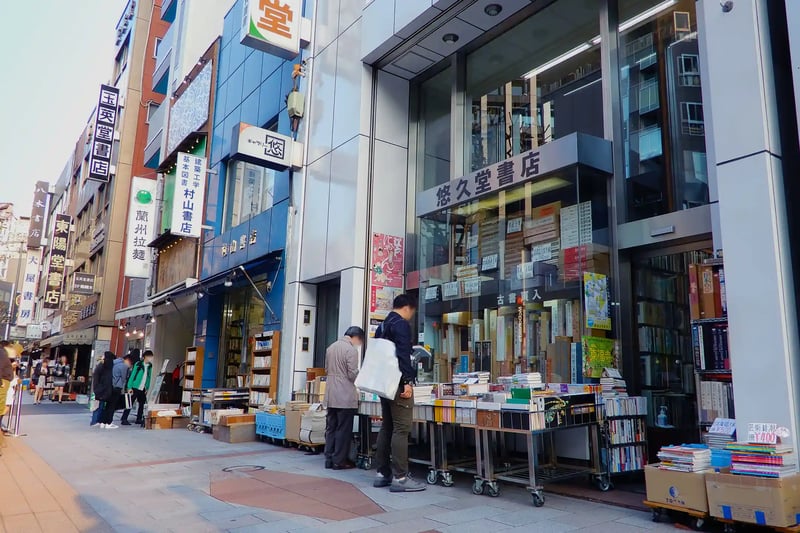
This neighborhood also keeps alive many beloved cafés and curry institutions favored by writers. Pause at Sabouru, with its retro Shōwa atmosphere, or Bondy for its rich, European-style curry; these are the kind of places where literary conversation once blossomed. As artists once gathered in cafés in Paris or London, inspiration in Tokyo often found its way over coffee—or a favorite curry.
In recent years, museums dedicated to modern literature have flourished, such as the Sōseki Sanbō Memorial Museum in Shinjuku (opened in 2017), a reconstructed version of Sōseki’s home where you can experience the author’s life and work through exhibits. For an explorer like you, roaming Tokyo’s literary sites brings its own special joy. Stroll the alleys and residential quarters as if turning the pages of a book, and you’ll catch the lingering scent of literature amid the city’s bustle.
Step Into the Worlds of “The Tale of Genji” and “Essays in Idleness” in Kyoto & Nara
Kyoto and Nara—the ancient capitals—offer many places where you can relive the world of classical Japanese literature. To savor the pinnacle of Heian literature, “The Tale of Genji,” head to the Tale of Genji Museum in Uji, Kyoto.
The last ten chapters of the fifty-four—known as the “Uji Ten”—are set primarily in Uji, where the story reaches its climactic, elegant close. At the museum you’ll find full-scale reconstructions of ox-drawn carriages and furnishings from the narrative, along with films that bring the refined life of Heian aristocrats into clear focus(*4).
Even a millennium later, immersing yourself here in the romance of Prince Genji and Ukifune lets you feel the air of courtly culture on your skin. The town of Uji itself is perfect for wandering with the book in mind: riverside vistas along the Uji River, Byōdō-in Phoenix Hall, and other sites tied to the tale dot the landscape.
If you’re drawn to the medieval essay “Tsurezuregusa” (“Essays in Idleness”), plan a route that spans Kyoto and Nara. Written by Yoshida Kenkō (Kenkō Hōshi), it is counted with “The Pillow Book” and “An Account of My Hut” among Japan’s three great essays, and it is sprinkled with episodes about the capital and its temples. In Kyoto you can visit Yoshida Shrine, where Kenkō—born into a family of Shinto priests—spent his youth (his given name was Urabe no Kenkō), and Ninna-ji, the temple that appears in the well-known anecdotes “The Priest of Ninnaji” and “Another Priest of Ninnaji.”
At Chōsen-ji, a temple at the foot of Narabi-ga-oka near Ninna-ji, you’ll find the site traditionally said to be Kenkō’s hermitage; a stone marker engraved “Former Site of Kenkō Hōshi” stands quietly before the gate(*3). Step into the calm of the temple garden, and the famous opening—“Bored with nothing to do, I spent the days before my inkstone…”—floats into mind; even now, you can share a writer’s state of mind. Extend your walk to Nara, and you’ll feel the hush and long history of ancient temples such as Tōdai-ji and Kōfuku-ji.
%20at%20Ninna-ji%20Temple%2c%20Kyoto%20City.webp?width=800&height=533&name=View%20of%20the%20Five-Story%20Pagoda%20from%20the%20North%20Garden%20of%20the%20Shinden%20(Main%20Hall)%20at%20Ninna-ji%20Temple%2c%20Kyoto%20City.webp)
“Essays in Idleness” includes anecdotes about warrior monks in Nara; setting foot there makes the breath and daily life of medieval people feel close. Look at the mossy stone lanterns, the weathered pillars of shrines and temples, and Kenkō’s love of tranquility and sabi begins to make intuitive sense.
On a book-focused journey through Kyoto and Nara, classical literature resonates with the living scenery, stirring your sensibilities as a traveler. With a paperback in hand at each site, pages and landscape align quietly, leaving you with a timeless cultural experience and a lingering afterglow.