In this article, you’ll unpack the essence of the Edomae sushi style—edomae-style sushi as both a food tradition and a form of cultural literacy. From a clear, misconception-free definition and historical backdrop, to a full overview of the traditional techniques known as shigoto (“craft” or “work”), to the depth of shari (seasoned rice) made with red vinegar, to how to savor an omakase experience at the counter—and finally, practical points for appreciating Edomae sushi in modern-day Tokyo—this guide weaves a careful, source-aware lens together with a traveler’s sense of wonder. Taste the world of Edomae sushi, where history and technique are intricately intertwined, and step into its remarkable depth.
What Is the Edomae Sushi Style|A Misconception-Free Definition of edomae-style sushi
Originally, Edomae-zushi referred to sushi made with seafood caught “Edomae”—literally “in front of Edo,” meaning the waters of Edo Bay (today’s Tokyo Bay). Today, however, the term no longer strictly means “from Tokyo Bay,” and Edomae is more widely used to indicate a traditional sushi manner and style that traces back to Edo (*1).
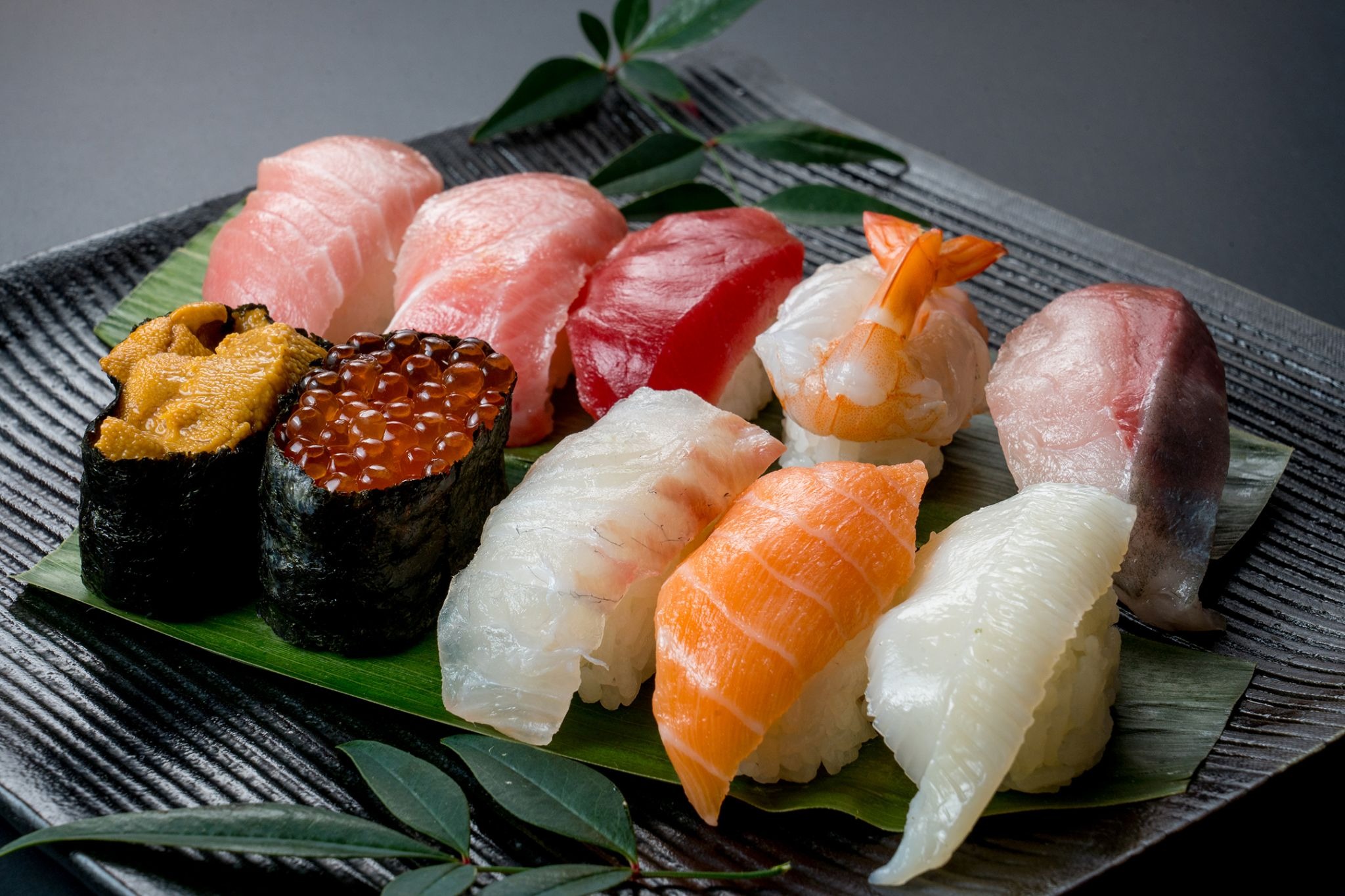
More specifically, it refers to nigiri sushi in which the chef doesn’t simply serve fish raw for its freshness alone, but applies thoughtful preparation to draw out each ingredient’s best qualities. A defining hallmark of Edomae sushi is the use of toppings that have undergone a range of shigoto—tightening with vinegar or salt, marinating in a soy-based sauce, curing with kelp, simmering, grilling, and more.
There’s tradition in the shari (sushi rice), too. In Edomae sushi, shari is often seasoned with akazu (red vinegar made by fermenting sake lees). That pairing—red-vinegar shari and carefully worked neta—is a key element that ultimately shapes the taste of Edomae sushi. In other words, the Edomae sushi style is a traditional Tokyo-born form of nigiri, created through the fusion of “seafood from Edomae waters” and “Edomae techniques”—and it’s this fusion that many people mean today when they say edomae-style sushi.
The Meaning of “Edomae” Shifted From Geography to Style
The word “Edomae” originally described a geographic area: the sea stretching out in front of Edo Castle (part of what is now Tokyo Bay). In the Edo period, it also functioned almost like a brand in seafood distribution, distinguishing “Edomae” (caught nearby) from tabimono—seafood shipped in from far away (*2).
Over time, dishes made with seafood caught “Edomae” gained a strong reputation in Edo. “Edomae kabayaki (eel),” for instance, became an example where being “from Edo” served as a kind of quality assurance. In that flow, “Edomae” gradually evolved beyond a simple indication of origin, growing into a word that also suggested “Edo-style” methods and preferences—an Edo sensibility.
The sushi world followed a similar path. At first, the meaning was literal: “sushi made with fish caught Edomae.” But even after refrigeration and distribution networks advanced, Edomae sushi established itself as a style that carries forward traditional Edo techniques and temperament.
Today, the best seafood from across Japan—Hokkaido, Kyushu, and beyond—converges in Tokyo. When those ingredients are prepared and formed according to Edomae practice, the result is called “Edomae sushi.” In that sense, while “Edomae” retains a geographic origin, it has also transformed into a term that symbolizes a distinct sushi culture passed down since Edo.
At the Core of the Edomae Sushi Style Are “Shigoto” and “Design”
What defines the Edomae sushi style at its core is delicate shigoto applied to ingredients—and the “design” of flavor built from that work. Rather than simply forming fresh seafood into nigiri, an Edomae chef chooses the most suitable preparation for each neta, drawing out umami, aroma, and texture with precision.
For example, lean fish may be kelp-cured to deepen umami, while red tuna may be marinated (zuke) to add richness. In the Edo period, these methods were also practical wisdom for preservation in an era without refrigeration. Today, they’re carried forward as pure culinary craft—an inheritance that keeps each piece from feeling repetitive by creating a wide range of expressions, one bite at a time.
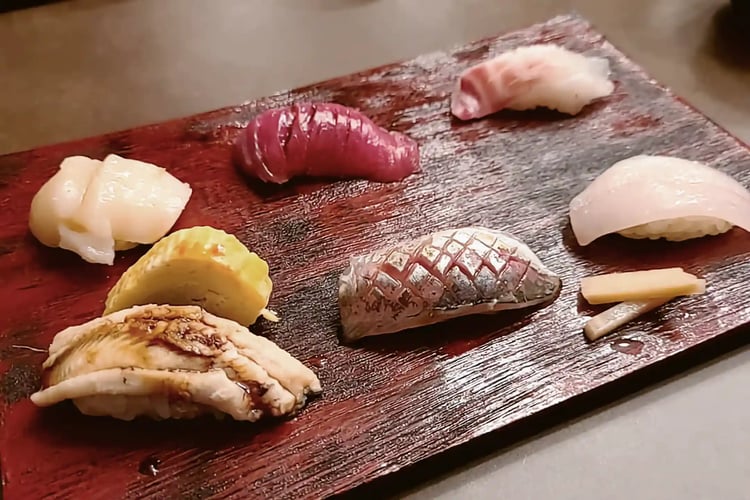
Just as importantly, the chef designs the arc of the entire course. Starting with clean, delicate white fish, moving gradually toward fattier neta, and finishing with sweet-sauced anago or tamagoyaki—this sequence is a calculated rhythm of flavors. Edomae sushi is not merely “food”; it’s a highly designed dining experience that strings together “small complete works,” piece by piece, to weave a single narrative. Beneath it all lies careful shigoto—and that is precisely the essence of the Edomae sushi style.
.webp?width=750&height=500&name=Soy-Marinated%20Tuna%20Rice%20Bowl%20(Zuke%20Don).webp)
Key Terms to Know First
To enjoy Edomae sushi more deeply, it helps to know a few foundational terms. First is zuke (ヅケ/漬け). This technique most often involves soaking lean tuna (akami) in a soy-based sauce. In the pre-refrigeration era, it was devised both to help preserve the fish and to heighten its flavor. Zuke tuna sheds just enough moisture, while the sauce’s salinity and umami seep in, creating a distinctive, deeper richness.
Next is nikiri. Nikiri is a seasoned soy sauce used for sushi: soy sauce briefly brought to a boil with sake or mirin added, then simmered so the alcohol evaporates. A chef prepares this nikiri in a small pot and brushes it onto nigiri—kohada, for example—before serving. Because you don’t need to dip the fish in soy sauce yourself, the topping’s aroma stays intact while the seasoning remains elegant: a very Edomae kind of wisdom.
Then there’s nitsume (tsume) (煮ツメ/つめ): a sweet-salty sauce made by reducing the simmering liquid from anago and similar ingredients into a glossy, thick glaze. It’s brushed over simmered anago, and the house’s “secret” balance of flavor often shines most clearly here..webp?width=750&height=500&name=Kohada%20Nigiri%20(Gizzard%20Shad%20Sushi).webp)
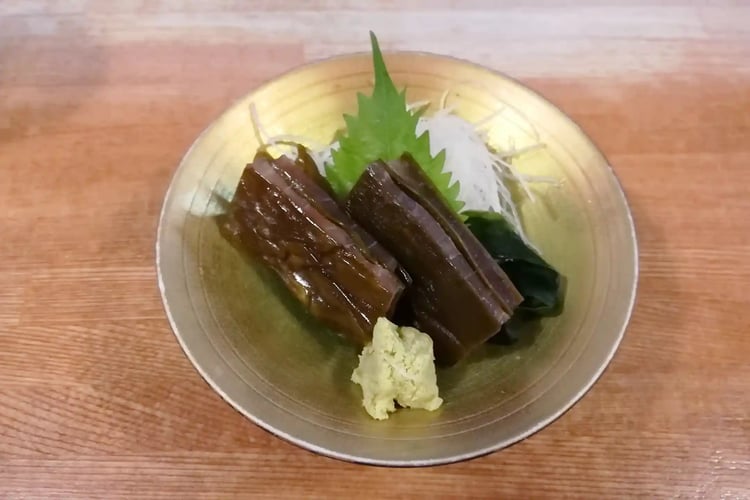
Kobujime (昆布締め) is a technique in which fish is sandwiched between sheets of kelp and left for a set time. Umami from the kelp transfers to the fish while excess moisture is drawn out, giving white fish in particular a dramatically deeper, more layered aroma and taste.
Another essential word is tsumami: small, sake-friendly dishes served in the first half of an omakase course (*3). Sashimi, vinegared items, tiny grilled bites—these arrive before the nigiri, helping your palate “wake up” while building anticipation.
Finally, omakase means exactly what it sounds like: “I’ll leave it to you.” It’s a course format in which you entrust all ordering to the chef. The chef selects the best seasonal neta and serves it in the ideal sequence, and you simply surrender to that flow. It’s reassuring even at a first-time restaurant—you can enjoy a top-tier lineup without guesswork—while also carrying an etiquette: as a rule, you receive what is served with appreciation, without leaving items uneaten. Knowing these key terms will make your experience at an Edomae sushi counter feel instantly more vivid and meaningful.
A History of the Edomae Sushi Style|From Yatai Efficiency to Refined Craft
Let’s trace how the Edomae sushi style was born—and how it evolved into the refined form you encounter today. Edomae sushi is widely said to have emerged in Edo in the early 19th century. In a city of more than a million people, sushi stalls (yatai) became wildly popular as convenient fast food for busy townspeople.
The prototype of modern nigiri—often attributed to a sushi chef named Hanaya Yohei—was revolutionary: place neta atop vinegared rice and serve it quickly. This is commonly described as the beginning of “Edomae sushi.” Over time, as techniques developed and sushi moved into higher-end establishments, what began as “quick, rational street-stall food” evolved into “a refined Edomae experience”—a carefully edited sequence you savor as a complete encounter.
Speed and Ingenuity Born From Yatai Sushi
When nigiri sushi was born in the Edo period, sushi was a casual snack served at yatai stalls. To fill the bellies of always-busy Edo townspeople, the prevailing style was to hand over nigiri directly—often without a plate—so you could eat immediately. Speed wasn’t just a feature; it was the whole point.
Hanaya Yohei’s idea—combining vinegared rice with fish as nigiri—won fame across Edo as “delicious sushi you can eat without waiting.” At yatai stalls, people didn’t typically use a soy-sauce dish, either. Instead, the chef brushed nikiri soy sauce onto the nigiri in advance and handed it to you, so you could bring it straight to your mouth.
But raw fish spoils easily with time, so yatai sushi chefs developed countless practical innovations. They tightened fish with salt or vinegar to maintain quality, marinated it in soy sauce to deepen flavor, and simmered shellfish and anago so they would keep—wisdom created so sushi could be served quickly and eaten safely. Those rational, street-stall innovations became the origin of Edomae sushi’s distinctive shigoto (*1).
For example, delicate, fast-spoiling silver-skinned fish like kohada and saba were lightly cured with salt and vinegar to increase both umami and keeping quality. Lean tuna was soaked in soy-based sauce to preserve it while retaining a pleasing raw texture. All of it was speed-minded knowledge refined within the realities of yatai life. At the very beginning of Edomae sushi, that characteristic quickness and ingenuity was undeniably alive (*2).
.webp?width=750&height=500&name=Simmered%20Sea%20Eel%20(Ni-Anago).webp)
Distribution and Refrigeration Expanded Neta—and Strengthened the Style
From the Meiji era onward, Japan’s railway network, along with refrigeration and freezing technology, made it possible to obtain fish from far beyond Edo (Tokyo) while keeping it fresh. As a result, the variety of neta used in Edomae sushi expanded dramatically. In earlier periods, the range of white fish that Edo sushi shops could handle was limited, but postwar improvements in freezing and refrigeration facilities—together with transport infrastructure—gradually brought a far broader diversity of white fish into the sushi repertoire.
Tuna, for example, is often described as being served mainly as zuke beginning around the Tenpō era, and until the mid-Meiji period it was largely the lean akami that dominated. The rise of fatty cuts (toro) as a prized, premium item is frequently placed after the Great Kantō Earthquake, with toro popularity spreading more widely from the early Shōwa period onward.
At the same time, regardless of where a fish is from, Edomae chefs apply traditional shigoto to shape it into an “Edomae” expression. At Toyosu Market (formerly Tsukiji), exceptional seafood from across the country gathers in one place; chefs then handle it with classic methods—salt-curing, marinating, simmering—elevating it into the taste profile you recognize as Edomae.
In a sense, expanding ingredient possibilities enriched Edomae sushi’s expressive range and made the style itself more firmly refined. Because Edomae sushi is not simply “fresh fish served raw,” but a tradition of technique, the name “Edomae” continues to hold a central place in sushi culture even in an era of diverse sourcing.
The Counter and Omakase Completed the “Experience”
From around the middle of the Shōwa era onward, sushi shifted from being mainly yatai-centered to being served at counter seats inside restaurants, establishing itself as high-end cuisine. Along with that shift came the culture of omakase.
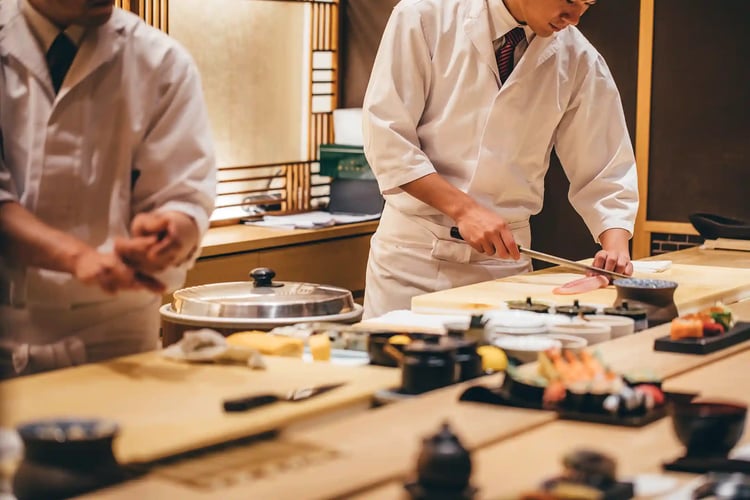
The sushi chef selects the best neta of the day and serves each piece in the optimal order—Edomae sushi became not merely a meal, but an “experience-based” cuisine completed only when chef and guest face each other across the counter. From your seat, you can watch the chef’s skillful hands up close—perhaps you’ll find yourself captivated by the beauty of a swift brushstroke of nikiri soy sauce across a kohada nigiri.
Another pleasure unique to counter sushi is hearing directly from the chef—where the fish is from, how it was prepared, why it’s served now. Even among luxury dining worldwide, it’s rare to have a style where the chef finishes each bite in front of you, one by one, while conversation flows. In that sense, the sushi counter is a special kind of stage—a live performance recognized around the globe.
The essence of high-end Edomae sushi isn’t only price; it’s the value created through a five-senses experience, including dialogue with the chef. The live immediacy of nigiri formed before your eyes, the seasonal stories behind each neta, even the gentle tension shared with other guests—together, the counter and omakase elevate Edomae sushi into something beyond eating. Sitting at a sushi counter—just that act—is your step into the world of Edomae. And only there does Edomae sushi truly come fully to life.
The World of Red-Vinegar Shari|The Foundation That Defines the Edomae Sushi Style
When you talk about Edomae sushi, you can’t avoid the presence of shari (seasoned sushi rice) prepared with akazu—red vinegar. Akazu is made by fermenting and aging sake lees over a long period; its color ranges from pale amber to a deeper reddish-brown. Compared with typical rice vinegar, it tends to feel less sharply acidic, offering a fuller body, a rich aroma, and a sense of umami (*1).
In Edomae sushi, red-vinegar shari becomes a vital foundation: it supports a neta’s flavor, sometimes highlights it, and sometimes gently wraps it in harmony. Here, you’ll look at the differences between red vinegar and white vinegar, the “design elements” of shari—temperature, firmness, salt balance—and the flavor outline shaped by supporting players like nori, wasabi, gari, and green tea. Once you understand the deep world of red-vinegar shari, the emotion of tasting Edomae sushi should become even more intense.
What Is Red Vinegar|The Difference From White Vinegar Shows Up Not in Sourness, but in Aroma
Red vinegar, as its name suggests, has a reddish hue—but its character is far more than color alone (*2). In the 1800s, toward the end of the Edo period, a method emerged for brewing vinegar from sake lees, and it spread as a substitute for rice vinegar, which was expensive at the time.
Sake-lees red vinegar wasn’t simply cheaper than rice vinegar. Its unique richness and subtle sweetness—born from long aging—won acclaim, and it was praised as an ideal vinegar for Edo’s sushi. Because red vinegar accumulates amino acids through maturation, it carries stronger umami and a mellow, rounded fragrance that reflects that aging.
By contrast, white vinegar made from rice is known for its clean acidity and bright aroma, giving a sharper impression. The acidity itself isn’t “stronger” because it’s red vinegar—if anything, long-aged red vinegar tends to feel gentler and more rounded. The major difference lies in aroma and depth of body.
When you take red-vinegar shari into your mouth, a faint toasted nuance and a lingering umami aftertaste gradually spreads. When people say Edomae sushi is “delicious all the way through the aroma that rises into your nose,” much of that is owed to the fragrance of red-vinegar shari.
Even with delicate toppings like white fish, pairing them with red-vinegar shari can make a richer scent bloom the moment you bite, lifting the neta’s subtle umami. In Edomae sushi, red vinegar is more than a seasoning—it’s a presence that embodies the Edomae character itself.
Designing Shari|Temperature, Firmness, and Salt Balance Change the Impression
Sushi rice can shape the impression of sushi even more than the neta. The key design elements are temperature, firmness (how the rice is cooked and how tightly it’s formed), and the balance of vinegar and salt. Start with temperature: freshly formed shari is often considered ideal around body temperature, and the temperature gap between shari and neta is also calculated.
For fatty toppings like tuna, slightly warmer shari with a more pronounced vinegar presence can help the fat loosen and bloom, bringing aroma and umami forward. On the other hand, neta that are sensitive to heat and can lose fragrance easily—like certain shellfish—may be paired with slightly cooled shari so you can enjoy them in a fresher, lighter way.
Because a single temperature shift can transform the taste impression, top restaurants even cook small batches of shari repeatedly during service to maintain an optimal temperature. Next is firmness. Shari’s melt-in-the-mouth quality is determined by how the rice is cooked, how the vinegar mixture is folded in (the cutting-and-mixing motion), and the pressure used when shaping the nigiri.
Shari that’s firm enough yet gently crumbles into soft grains creates a satisfying texture on its own—and its harmony with the neta’s texture is also part of the design. Salt balance matters, too. Vinegared rice isn’t only vinegar; small amounts of salt and sugar are added. In Edomae sushi, shari often carries a relatively assertive saltiness (*3). That touch of salt lifts the neta’s sweetness and tightens the overall flavor.
Sugar, meanwhile, softens the vinegar’s sharpness and also helps the rice retain moisture. In this way, chefs fine-tune the ratios of vinegar, salt, and sugar based on rice variety and season, creating a house-specific shari flavor. There’s even a saying that “great sushi is 60% shari and 40% neta”—so much does shari determine the overall impression.
At renowned Edomae restaurants, attention is meticulous: how the neta is sliced, its size and thickness, the shari’s firmness and stickiness, its sweetness and salt, and above all the temperatures of both neta and shari. When these elements align, neta and shari harmonize beautifully in your mouth, and a blissful flavor is born.
Nori, Wasabi, Gari, and Tea|Supporting Players Shape the Flavor Outline
To talk about the taste of Edomae sushi, you shouldn’t forget the supporting players. First, nori. Toasted nori used for rolls and gunkan has a fragrant aroma and crisp bite, and it’s an essential element supporting the deliciousness of Edomae-style maki. High-quality nori releases a sea-scented fragrance the moment it hits your mouth; it also contains umami components such as glutamic acid, supporting sushi’s flavor outline through aroma and texture.
Next, wasabi. Fresh hon-wasabi has a sharp, nose-clearing heat and is used as a condiment for sashimi and sushi; in Edomae sushi, an appropriate amount is tucked inside the nigiri. Its role is to briefly stimulate taste and smell so fishy notes don’t stand out. It also has antibacterial properties, making it a rational pairing for sushi, which handles raw fish even at peak freshness. Freshly grated hon-wasabi is aromatic and its heat feels clean; it can even make rich, fatty neta feel lighter and easier to enjoy.
Gari (thinly sliced ginger pickled in sweet vinegar) is also indispensable. You take gari between bites to reset your palate and clear the previous neta’s flavor. Ginger’s pungent compounds—such as gingerol and shogaol—are often described as helping reduce unwanted odors, and ginger is also commonly associated with supporting digestion. After savoring a fatty piece, chewing gari leaves your mouth refreshed, so you can meet the next neta with a renewed palate. Its crisp texture and gentle sweet-tartness also make it a welcome palate rest (*4).
Then there’s tea. When you sit down at a sushi restaurant, you’re often served a yunomi filled generously with hot tea. Tea’s astringent catechins are commonly said to help cleanse the palate and wash away lingering fish notes. In Edomae sushi, serving strong powdered green tea piping hot has long been customary, giving you that feeling of your tongue being cleanly reset even after rich neta.
Because sushi contains a good amount of salt, you also tend to feel thirsty, and tea helps refresh you. With nori, wasabi, gari, and tea each doing their job, every piece of Edomae sushi stands out more clearly and the full course’s flavor outline is drawn in sharper relief. You’ll feel, in a very real way, that sushi is a comprehensive art—completed not only by neta and shari, but also by the supporting cast that frames them.
What Is Edomae “Shigoto”|Organize Techniques by Purpose to Truly Understand Them
The many techniques called shigoto—which support the tradition of Edomae sushi—can feel complex at first glance. But when you sort them by the purposes behind them, they become far easier to understand. For preservation, for boosting umami, for adding aroma, for adjusting texture—Edomae chefs have long worked on neta with specific intentions in mind. Here, let’s look at representative techniques in a structured way, grouped by what they aim to achieve.
From tightening fish with salt and vinegar, to kobujime, to zuke, to simmering and reducing sauces, to grilling and steaming, to resting (aging), and even knife work and temperature control—if you approach Edomae technique not as rote memorization but through the lens of “why this work is done,” the depth of Edomae sushi becomes much clearer.
Shimeru (Salt and Vinegar Curing)|Refining Blue-Skinned Fish Into Fragrant Elegance
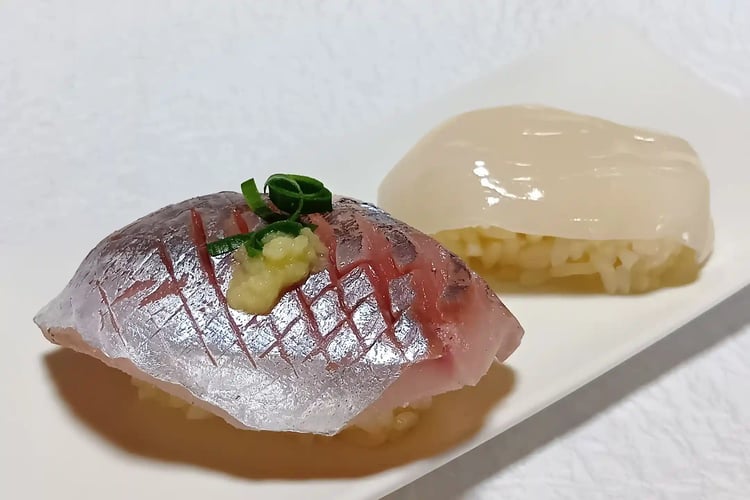
Shimeru (“to tighten/cure”) refers mainly to lightly curing fish using salt and vinegar. It’s a traditional method applied to silver-skinned fish (hikarimono) such as kohada, saba, and aji—blue-skinned fish whose skin gleams with a silvery sheen. In Edomae sushi, these fish are not simply served raw. First, salt is applied to draw out excess moisture and unwanted odor; then the fish is briefly passed through vinegar to lightly cure it. This softens the assertive character typical of blue-skinned fish, firms the flesh, and creates a refined bite (*1).
Kohada, for instance, is famous as a neta whose taste can change dramatically depending on the exact balance of salt-and-vinegar curing over just a few hours. Properly cured kohada loses any heavy greasiness; vinegar’s brightness lifts the aroma, and umami spreads as you chew. Vinegar also has antibacterial effects, so curing increases keeping quality as well.
Born in the Edo period to serve hikarimono safely without refrigeration, this technique is now passed down as “a finishing touch that makes blue-skinned fish even more delicious.” The curing degree is where a chef’s experience and intuition speak loudest, with time and salt adjusted to the fish’s size, fat content, and season. From skillfully cured hikarimono, you’ll sense a rich aroma and clean finish unlike anything “raw” alone can offer—one of the clearest expressions of Edomae sushi’s distinctive brilliance.
Kobujime|Giving White Fish a Clear Umami Outline
For delicately flavored white fish, Edomae chefs developed the technique of kobujime. Fillets of refined but subtly flavored fish—tai, hirame, suzuki—are sandwiched between umami-rich kelp and left to rest for a set period. Through kobujime, an appropriate amount of moisture leaves the fish, while kelp’s glutamic acid transfers in, creating far more depth and dimensionality.
If you kobujime hirame overnight, for example, a faint kelp fragrance migrates in and the fish’s natural sweetness becomes more clearly defined. The texture also shifts—softer, more supple—bringing a quality that feels as if it melts on your tongue.
The beauty of kobujime is that it elevates without breaking the ingredient’s original character. It’s not a dramatic transformation like cooking or heavy marination; instead, it creates an elegant shift that makes you think, “Wait—was this white fish always this flavorful?” In Edomae sushi, it’s common to serve white fish after kobujime or after resting for a few days, creating umami depth that goes beyond mere “freshness.”
The time is adjusted by fish—sometimes a few hours, sometimes overnight, sometimes even two nights. Too long and kelp aroma dominates; too short and the change is faint. The chef reads the weather and the fish’s condition, then removes the kelp at exactly the right moment. The result is a white-fish kobujime that reveals a clear umami outline—an excellent piece whose flavor slowly expands the more you chew.
Zuke (Marination)|Growing Tuna With Nikiri Soy Sauce and Time
Tuna is a star of Edomae sushi—and the technique that makes lean akami even more compelling is zuke. Zuke means soaking sliced akami in a sauce made by simmering soy sauce with mirin and sake (a nikiri-style tare), then letting it sit for a controlled time. In the Edo period, it began as a way to make good akami keep longer; today it has been refined into a method that amplifies tuna’s umami.
On its own, akami can feel clean and light. As zuke, soy sauce’s salinity and umami permeate in, the color deepens into a glossy richness, and the flavor gains weight. If the soak is too long, it turns overly salty; too short and the effect is limited—so chefs judge timing within minutes, often just a few to at most a dozen or so.
Some restaurants also adjust texture by briefly blanching the surface, chilling it quickly, and then marinating for a short time—approaches that can tighten the flesh and control how deeply the tare penetrates, depending on the house style.
When you take it in, a roasted soy aroma and a subtle sweet-salty note melt into the tuna, and a dense umami emerges the more you chew. This is the allure of Edomae zuke-maguro. Today, some restaurants also apply zuke to chutoro or katsuo, but in every case, the key is the tare’s balance and the exact soaking time suited to that ingredient.
Tuna “raised” by zuke gains a depth different from raw—richer body, longer finish, and a more resonant aftertaste. In Edomae sushi, tuna’s value is elevated even further through this craft.
Simmering and Reducing|Creating Aftertaste With Ni-hamaguri and Anago
In Edomae sushi, flavor isn’t built only through rawness—“simmering down” is also a major element. Two representative examples are ni-hamaguri and anago. For ni-hamaguri, Edomae tradition simmers large clams in their shells in a sweet-salty soy-based sauce, cooking the flesh until it becomes plump and tender.
Once simmered, the clam gleams a caramel-like color. As nigiri, it fills your mouth with concentrated shellfish umami and the sauce’s richness. It isn’t simply sweet; the simmering liquid—infused with clam essence—adds depth, and the gentle aftertaste that lingers after chewing feels deeply satisfying. When Edomae sushi was still yatai-based, this style of simmered clam nigiri was devised and became popular as a luxurious, hearty topping.
Anago, meanwhile, is the symbolic neta that often adorns the close of an Edomae course. Conger eel traditionally associated with Tokyo Bay is lightly grilled first, then simmered slowly in a sweet sauce until tender. Properly cooked, anago becomes so soft it falls apart at the touch—you can almost let it dissolve on your tongue without chewing.
Here, the chef finishes it with a thick, glossy tare called nitsume, brushing it onto the nigiri. The sheen of the sauce, paired with anago’s umami, becomes an exquisite sweetness; together with a fragrant savor that rises into your nose, it brings a happiness that’s hard to name (*2).
Anago is often served toward the end of an Edomae course because its sweet, aromatic aftertaste is meant to close the meal. Some restaurants also serve anago with salt instead. Without tare—just a light sprinkle of salt on simmered anago—the eel’s natural aroma and umami stand out, and the finish becomes surprisingly clean. In contrast to the rich finale of tare-anago, salt-anago may appear as a palate-clearing counterpoint.
In this way, simmered neta reveal a restaurant’s personality—how the tare is used, how sweet it is, and how the “closing impression” is shaped. Edomae chefs don’t believe sweetness alone is the goal; they express the house flavor through tare concentration, balance, and brushing technique. The faint lingering fragrance of ni-hamaguri, the sweet afterglow of anago—this emotional resonance created by simmered neta is one facet of Edomae sushi’s profound charm.
Grilling and Steaming|Adding Rise and Fall to the Course Through Aroma
From the middle to the later part of an Edomae course, grilled and steamed items often appear between nigiri, giving the flow contrast and lift. Two classics are tamagoyaki and kuruma-ebi. Tamagoyaki (thick omelet) is a staple at sushi restaurants, but Edomae-style tamagoyaki is distinctive. Fish paste from white fish or shrimp, grated yam, dashi, and more are mixed into egg, then carefully cooked over time into a gently sweet omelet.
With a fluffy, castella-like texture and a refined sweetness sometimes compared to dessert, it’s an item that looks simple yet demands high technique and sensibility—so much so that people have long said, “tamagoyaki is a sushi chef’s resume.” In fact, the more renowned the restaurant, the more unique thought and craft you’ll often find in its tamagoyaki. When you taste it, you may be surprised by how dashi fragrance expands and how moistly it melts.
Tamagoyaki is often served at the end of the course, its gentle sweetness settling the aftertaste. Kuruma-ebi, on the other hand, is an essential cooked neta when discussing Edomae sushi. Beautifully red and neatly shaped, kuruma-ebi can be eaten raw when extremely fresh—but in Edomae tradition, it is lightly boiled in salted water. Heating tightens the flesh and makes its sweetness more vivid.
When formed into nigiri while still faintly warm, it offers a springy bite, and the shrimp’s natural sweetness fills your mouth. It carries a fragrance and character different from raw shrimp’s sticky richness—making you nod at the Edomae wisdom that “it’s delicious precisely because it’s boiled.”
Some courses also incorporate aburi (light searing) to bring out aroma. Searing the skin of kamasu or nodoguro, for example, releases fat and creates a fragrant smoky note, making the piece especially memorable. For steaming, items like tender-simmered abalone may appear as a tsumami—another example of how controlled heat can concentrate umami.
By weaving in grilling and steaming techniques, the course gains rhythm and contrast, keeping you engaged to the last bite. Edomae sushi is not only about raw fish—it also understands “deliciousness that can only be born through heat,” and it is built with that knowledge in mind.
Resting and Aging|Aligning With the Ingredient’s Peak Day
Edomae sushi also carries the philosophy that “fish can taste better after it rests.” While sushi is often assumed to be all about immediate freshness, many neta actually develop more umami after a few days. This comes from aging effects, where enzymes break down proteins into amino acids.
Fish like hirame or kue, for example, can taste dramatically richer after being tightened and left in refrigeration for two to three days. Tuna, too, gains deeper umami and body after blood-rich portions are removed and it rests at a controlled temperature; even toro develops a sweeter impression as its fat settles. In classical Edomae practice, katsuo may be adjusted by zuke or a light sear, depending on the restaurant, to refine aroma and flavor.
Resting periods vary widely—some neta need only about a day, while restaurants known for aged sushi may rest fish for over a week. What matters is the chef’s eye for the peak. Even within the same species, ideal aging time changes with season and the individual fish. If aging goes too far, pleasant umami can tip into unwanted odor, so the ideal is to serve just before that point. Properly aged neta can surprise you with an intensity of umami you hadn’t previously felt.
Conversely, fish eaten immediately after being caught may have a crisp, firm bite, but the umami has not yet fully emerged. In Edomae circles, an old saying suggests, “Better than live is tightened; better than tightened is rested”—a way of expressing the inherited idea that, when needed, resting draws out an ingredient’s full potential. This is a deep realm that freshness-above-all thinking can’t fully explain, and it’s one of the clearest expressions of the craft Edomae sushi has cultivated over generations.
Knife Work and Temperature|Invisible Technique That Comes Alive in Your Mouth
Finally, let’s touch on two elements that may look modest but are extremely important: knife work and temperature. In Edomae sushi, the way a fish is cut can change both texture and taste. Slice along the grain and the mouthfeel becomes smoother; cut across the grain and you get a cleaner bite and easier chew.
Thickness and size are also calculated. Squid, for instance, may receive kakushi-bōchō (hidden knife cuts) to make it easier to bite through and to bring out sweetness. Kohada may be scored with a few cuts so vinegar penetrates evenly and the flavor becomes rounder.
Some chefs even adjust the slicing angle of tuna from the same block, changing the cut subtly by section to keep the mouthfeel consistent. These invisible knife decisions quietly support the deliciousness of the neta. Temperature control is equally vital. As mentioned earlier, the temperature gap between shari and neta strongly affects taste.
A chef deeply understands “what temperature tastes best the moment it enters your mouth” for each neta. That’s why they control exactly when to take a topping out of refrigeration, and even which part of the shari to use (the interior being warmer, the exterior cooler). Toro may be paired with shari slightly warmer than body temperature, while white fish may be formed with slightly cooled shari—small adjustments that maximize the impact the instant you taste it.
The practice of asking you to eat immediately after the nigiri is formed also reflects care: shari and neta temperatures shift moment by moment. Edomae sushi is sometimes described as “a dish completed in your mouth,” and to make that true, chefs sharpen their attention to what you can’t easily see—knife work and temperature management. That concentrated technique is what allows the flavors to bloom into harmony the moment you take a bite.
Reading the Edomae Sushi Style Through Signature Neta|Savoring by Season and Sequence
An Edomae sushi course is carefully woven with seasonality, shifts in intensity, and rises and falls in aroma. Here, let’s focus on representative categories of sushi neta—how to enjoy each, and what to notice from an Edomae perspective.
In the order of hikarimono, tuna, white fish, shellfish, anago, and tamagoyaki, you’ll see the role each category plays within a course and the character of its flavors. Even if you’re new to Edomae sushi, reading this section will help you understand the flow of an omakase course—so the next time you sit at the counter, you’ll be able to taste each piece with far greater depth.
Hikarimono (Kohada, Aji, Iwashi)|The True Highlight Is Balance of Aroma and Acid
Hikarimono are small fish whose skin gleams silver, and in Edomae sushi they are indispensable. Typical examples include kohada, aji, and iwashi. As described earlier, they are often served after being cured with salt and vinegar, and the impression can change dramatically depending on how strongly they’re cured and how aromatics are used.
One of Edomae sushi’s great highlights lies in how it balances the aroma and acidity of hikarimono. Kohada, for instance, is almost a symbol of Edomae itself—simple yet deeply layered, with a clean acidic lift from vinegar curing.
When a chef carefully cures kohada with salt and vinegar, heaviness drops away and the flavor becomes fresh and fragrant—yet the fish’s own umami is also concentrated. In your mouth, vinegar’s aroma rises first; then refined umami seeps out from the soft flesh; and finally a gentle vinegary aftertaste glides away. The harmony of that sequence is so complete that a single kohada nigiri can make you feel you’ve understood the heart of Edomae.
Aji and iwashi, depending on the restaurant, may sometimes be only lightly vinegared—or in more recent cases, occasionally served raw. Still, restaurants that ground themselves in Edomae tradition often tighten them with salt and vinegar to refine both umami and aroma.
With aji, it’s common to add grated ginger or chopped scallion to temper any strong notes and contribute fragrance. With richly fatty summer iwashi, sashimi with ginger soy sauce is delicious—but in sushi, a quick vinegar rinse before forming the nigiri can emphasize freshness and lightness. Hikarimono are delicate neta whose flavor changes with the day’s curing and freshness, which is precisely why they are also a category where the chef’s skill shines.
At the counter, try tasting with a quiet question in mind: “How is today’s kohada?” In the harmony between a bright vinegar fragrance and flesh that softly breaks apart, you’ll likely feel the understated, stylish spirit that defines Edomae.
Tuna (Akami, Chutoro)|Zuke and Temperature Decide Its Dignity
Tuna is often called “the king of sushi,” and in Edomae sushi it receives special attention. Tuna varies by cut—akami, chutoro, otoro—but within the Edomae world, chefs have long devoted ingenuity to how they elevate akami. That’s where zuke comes in.
By marinating akami in soy-based tare, you heighten umami and give it a moist, refined mouthfeel and concentrated flavor. Akami that has taken zuke well develops such depth that you could call it “dignity”—its flavor gains a composed richness. The moment it touches your tongue, soy aroma arrives with condensed tuna umami, offering a luxuriant experience distinct from raw akami. That’s why many Edomae restaurants serve akami as zuke in their omakase nigiri.
Chutoro and otoro, with their abundant fat, generally rely on the ingredient’s own power. Because toro is so fatty it repels soy sauce, it isn’t usually marinated; instead, temperature receives maximum attention. If toro is too cold, the fat hardens, the texture becomes less pleasant, and the aroma is harder to perceive. So chefs adjust the temperatures of both shari and neta so the fat loosens at just the right moment in your mouth.
The more masterful the chef, the more carefully they manage toro’s temperature—bringing it closer to room temperature just before forming the nigiri, or slightly warming the shari so the fat melts. With chutoro, where lean and fat are balanced, they may even lightly sear it to add aroma.
Toro prepared with such care melts in a single bite, and a luxurious sweetness rises through your nose—an experience at the highest level. If you’ve heard the phrase “Edomae sushi is the art of temperature,” you may feel it most strongly in tuna. Akami gains a crisp, dignified depth through zuke; toro reveals its true worth through ideal serving temperature. In that wisdom and craft—pulling out tuna’s full charm—you may find yourself quietly impressed.
White Fish (Tai, Hirame, etc.)|Drawing the Outline Through Kobujime and Resting
White fish sushi is delicate and refined, but served as-is it can sometimes feel indistinct. That’s why Edomae sushi adds a small step to white fish to draw a clear “outline of flavor.” The classic approaches are kobujime and aging.
Seasonal white fish—tai, hirame, suzuki—are often not used the very day they arrive; instead, they may be rested for a day to bring out umami. In colder seasons, winter hirame can become exceptional after two to three days of refrigerated aging, increasing umami components and shifting into a supple, slightly sticky texture.
With kobujime, as described earlier, kelp-derived umami joins in, creating a more aromatic, layered white fish. If you kobujime madai overnight and form it into nigiri with thin slices, the kelp fragrance and tai’s sweetness seep out the more you chew, and what once felt mild suddenly carries a striking presence. This is the idea of not making a flavor “stronger,” but making it “deeper.” Rather than adding taste through more soy or salt, Edomae draws out and clarifies the ingredient’s internal umami, creating dimension.
In Edomae sushi, white fish are not mere supporting roles. When white fish appears early in the course and you sense generous umami within that delicacy, your anticipation for what follows naturally rises. Conversely, if white fish feels faint, you may remember only the stronger neta later on.
Chefs put real skill into how they handle white fish—pulling out the fish’s full potential and shaping the harmony of the entire course. The Edomae technique that transforms mild white fish into deep flavor is, in many ways, an art cultivated through dialogue with the ingredient itself.
Shellfish (Ni-hamaguri, Akagai)|Umami, Bite, and Aftertaste
Shellfish neta are also a major charm of Edomae sushi. From early-spring ni-hamaguri to year-round akagai, you can enjoy distinctive umami and texture in each. In Edomae tradition, shellfish are also given shigoto. Large clams are gently simmered in sweet-salty tare to create ni-hamaguri—classic Edomae. Carefully simmering purged clams lets rich shellfish umami mingle with sauce depth, producing a piece that releases juicy flavor as you chew.
Akagai, by contrast, is served raw after being cleaned and prepared. Its crisp bite and ocean aroma are essential, and truly fresh akagai has such distinctive texture that people say it almost squeaks as you chew. Looking into Edomae history, it’s said that before the Great Kantō Earthquake (1923), akagai and aoyagi were commonly served after being soaked in vinegar; from the late Taishō period onward, serving them raw became more common.
Today, akagai is typically washed by rubbing with salt to remove slime, then served raw. With just a small touch of soy sauce, when you bite in, a sea breeze-like aroma spreads with akagai’s characteristic sweetness. That resilient, springy bite remains vivid, and you may feel a sense of “aliveness” in its freshness.
Ni-hamaguri, as mentioned earlier, is defined by Edomae sweet-salty tare. Each restaurant has its own secret balance, and that flavor is part of the house identity itself. After forming the nigiri, the chef brushes tare on the clam to add shine. When you take it in, umami spills from the tender clam, and the sauce’s refined sweetness expands gently. Then a long shellfish aftertaste lingers—so satisfying you may instinctively want a sip of Japanese tea.
Shellfish sushi is compelling because it engages all five senses: umami on the tongue, bite under the teeth, and ocean aroma rising through the nose. In Edomae sushi, depending on season, other shellfish like torigai or mirugai may also appear raw, but in every case, the ingredient’s natural character is respected while needed preparations—quick vinegar washing or brief blanching—are applied thoughtfully.
Because shellfish are difficult to manage in terms of freshness, only skilled chefs handle them well. When a restaurant serves shellfish confidently, you may think, “This place has real ability.” At an Edomae sushi counter, try enjoying both cooked shellfish and raw shellfish—the contrast—and immerse yourself in the rich sensory experience shellfish uniquely offer.
Anago and Tare|An Edomae Symbol That Creates the Course’s Final Afterglow
Anago is indispensable in Edomae sushi, and it’s often a highlight near the end of the course. Because it traditionally uses ma-anago associated with Tokyo Bay, it can be called a symbol of Edomae itself—and a neta that makes a chef’s skill unmistakably visible. Anago nigiri generally falls into two types: “served with nitsume” and “served with salt.”
Many restaurants present anago generously brushed with rich nitsume as the second-to-last or final piece, closing the course on a sweet afterglow. As the soft anago loosens in your mouth, a sweet-salty sauce reminiscent of black syrup clings to it, creating a happiness that can make you smile without trying. It wouldn’t be an exaggeration to say this taste decides your final feeling of “Ah—I ate truly good sushi.”
Some restaurants, however, deliberately serve anago with salt. Salt anago is simply a light sprinkle over simmered anago, but the result is astonishingly elegant. Without tare’s strong sweetness, anago’s own umami and aroma come through directly, and the aftertaste disappears cleanly after a soft, airy mouthfeel—an effect that feels deeply pleasing.
When served with salt, it doesn’t have to appear only at the end; it may come in the middle to lightly reset the palate. Salt and tare are opposite approaches, yet both are established Edomae methods for drawing out anago’s diverse expressions. Historically, anago was an inexpensive fish abundant in Edomae waters (Tokyo Bay), yet Edomae sushi elevates it into something this refined.
From the precise tenderness achieved in simmering, to tare blending and reduction, to the exact way salt is sprinkled—this neta contains years of accumulated ingenuity and experience. When anago arrives late in the course, you may feel the chef’s determination: “I’ll make a piece worthy of the conclusion.”
Edomae anago isn’t just a topping—it’s an essential chapter that completes the meal’s story. The moment you sip tea while feeling its afterglow may be, for sushi lovers, one of life’s quiet peak pleasures.
Tamagoyaki|The Chef’s Resume Served at the End
Tamagoyaki is a standard finale in Edomae sushi, but it carries deep meaning. A sushi restaurant’s tamagoyaki is often called “that restaurant’s resume”—a dish packed with the chef’s technique and sensibility.
Edomae-style tamagoyaki is known for a gently sweet seasoning rich with dashi, often baked with minced shrimp or white-fish paste mixed in—famously, a “thick omelet with shiba-ebi” (*1). Cooked slowly over low heat to avoid browning, it finishes a beautiful golden-brown color; when you bite, it crumbles softly with a cake-like texture. Balanced between sugar’s sweetness and dashi umami, it’s delicious even on its own, but appearing near the end of a course, it also gathers and settles everything that came before.
There is also the expression 『In the end, you finish with tama. This is the moment of bliss.』 (from Tsuneyasu Takeda’s writing), and along with the saying “you can tell skill by tama,” this perspective highlights how seriously tamagoyaki is regarded. In practice, Edomae omakase often ends with a slice of tamagoyaki; when you finish with that sweetness, the whole meal feels more rounded and mature in its aftertaste.
Tamagoyaki varies widely by restaurant—very sweet, gently sweet and refined, pudding-soft and melting, or more structured with a firm bite. Because you can glimpse the chef’s lineage, preferences, and technical heritage in those differences, it’s described as a “resume.” Some seasoned regulars even order tamago first when they sit down, precisely because “if you taste the tama, you know the restaurant’s skill” (*2).
The sweet tamagoyaki that closes Edomae sushi is not merely dessert—it’s the culmination of a chef’s spirit and technique. The Edomae mindset of never easing up until the final bite lives here, too. Take your time, savor it slowly, and let the restaurant’s unique afterglow settle in.
End Summary:
Japanese Fine Dining Mastery
The Edomae sushi style is not merely a meal—it’s a comprehensive art nurtured by Japanese culture. Its history, rooted in geography yet continually adapting to changing times; the many forms of masterful shigoto shaped by listening closely to each ingredient; inherited ingenuity such as red-vinegar shari; and the once-in-a-lifetime story that unfolds between you and the chef across the counter—only when all of these come together can you truly call it a complete experience. You taste neta that shift with the seasons, sense the intentions behind the labor, and enjoy sushi with all five senses. To savor edomae-style sushi as cultural literacy is also to eat while letting your mind travel to the craft and pride behind the chef’s hands. With this guide in hand, when you taste Edomae sushi, you’ll surely find discoveries you hadn’t known before. Edomae sushi, enjoyed while feeling the history and meaning held within a single piece of nigiri, will nourish not only your palate but your spirit as well. Next time, take a seat at the counter and immerse yourself fully in the essence of the Edomae sushi style. That afterglow, surely, will continue to live within you as a rich fragrance long after you leave the restaurant.