When you travel in Japan, even a little communication in the local language makes your journey richer. If you’re coming from Europe or North America, you might worry, “Will people understand me?” Yet a simple greeting or a sincere “thank you” in Japanese instantly signals that you care about the culture, and you’ll often be met with a warm smile.
Because there’s a language barrier, the effort you make to bridge it becomes the spark for heartwarming exchanges. In this guide, you’ll find beginner‑friendly greetings, elegant seasonal expressions, thought‑provoking proverbs, and practical question phrases you can use on the road—everything you need to make conversations in Japan more rewarding. Enjoy the differences, deepen mutual understanding, and savor each conversation with Japanese people to the fullest.
Must‑Know Basics for Beginners—Greetings and Expressions That Open Up Conversations on the Road
Polite Greeting Phrases That Elevate Your First Impression
In Japan, courteous greetings are the foundation of any relationship. When you meet someone for the first time, try starting not with a Western‑style handshake but with a friendly “Hajimemashite” (Nice to meet you). It also helps to adjust your greeting to the time of day—“Ohayō gozaimasu” (morning), “Konnichiwa” (daytime), and “Konbanwa” (evening).
In English, you might default to a simple “Hello” with anyone. In Japanese, switching greetings by time of day conveys attentiveness and respect. In first‑meeting scenarios, you’ll also hear “Yoroshiku onegaishimasu.” Literally untranslatable, this uniquely Japanese phrase expresses, “I look forward to a good relationship with you.”
Add a light bow and you’ll come across as even more considerate. You may feel a touch nervous at first, but leading with a Japanese greeting tells people you respect their culture and often becomes the opening for a lively, friendly exchange.

Ways to Say “Thank You” That Carry a Little More Heart
“Arigatō” is the go‑to expression of gratitude, but in Japan you’ll choose forms to match the situation. With store staff or someone you’ve just met, the polite “Arigatō gozaimasu” is the norm. With close friends or family, the casual “Arigatō” lands perfectly well.
For someone senior or someone who has truly helped you, opting for the more formal “Arigatō gozaimasu” shows both respect and appreciation. In English you often rely on a single “Thank you,” but in Japanese, switching levels depending on context lets you express gratitude with more nuance.
By the way, do you know where “arigatō” comes from? Written in kanji as 「有難う」, it originates from 「有り難し」—“something so rare it’s hard to come by.” From the medieval period onward, people used 「有難う」 to thank blessings like those from the Buddha—precious, seldom‑received favors—and in the early modern era it spread into everyday speech as a general “thank you.”
Knowing this background lets you feel the depth tucked inside “arigatō.” On your trip, try voicing thanks often, even for small kindnesses. You’ll be surprised how much that one phrase brings you closer to people.
Phrasebook for Japan’s Four Seasons and Holidays
Beautiful Seasonal Expressions That Help You Feel the Changing Year
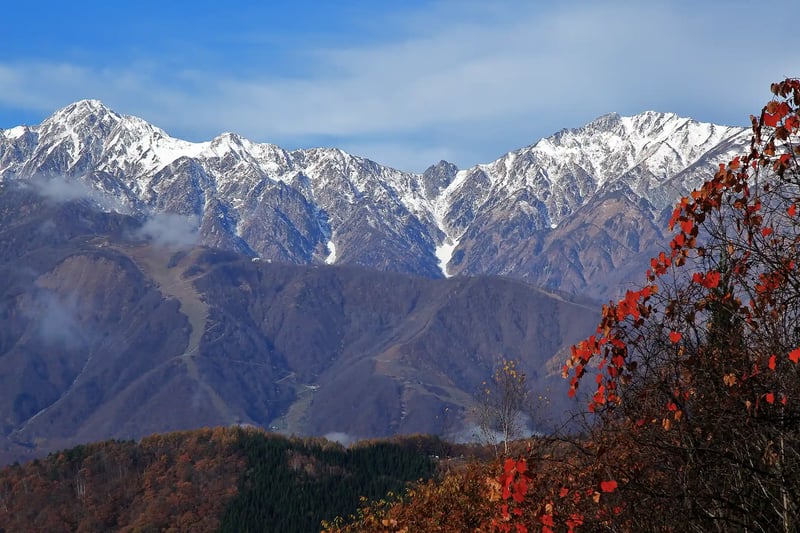
Japan has four clearly defined seasons—spring, summer, autumn, and winter—and talk of weather and seasonal scenes regularly surfaces in everyday conversation. In spring it’s sakura (cherry blossoms), in autumn it’s the turning leaves; when you weave seasonal words into small talk, your exchanges with locals feel instantly richer.
In the West you might say “Nice weather today,” and move on. In Japan, it’s common to say things like “The cherry blossoms are beautiful, aren’t they?” or “Autumn evenings have such charm.” Seasonal activities also come with iconic terms worth learning: “hanami” (flower‑viewing, especially cherry blossoms) and “momijigari” (enjoying the autumn foliage).
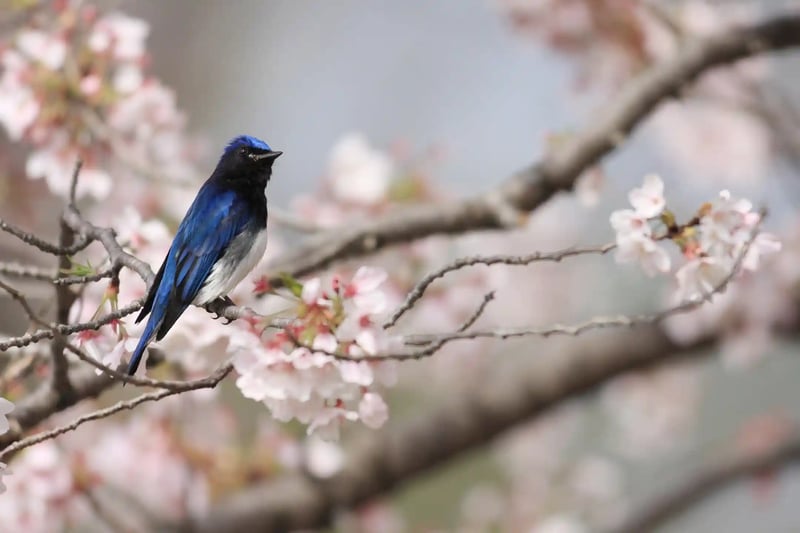
For centuries, Japanese people have nurtured a culture of appreciating nature’s changing beauty. One emblematic phrase is 「花鳥風月(かちょうふうげつ)」—literally “flowers, birds, wind, and moon.” It points to the natural world’s elegant sights and the refined pleasure of savoring them. There isn’t a perfect one‑word equivalent in the West, but it neatly captures a Japanese way of seeing nature.
Noticing each shift in the seasons and letting that awareness color your conversation is a distinctly Japanese form of connection. In spring you might say, “It’s getting so much warmer, isn’t it?” In autumn, try “There’s a special elegance to fall evenings.”
These phrases may feel a touch poetic at first, yet opening a chat with seasonal sensibility often delights your conversation partner and invites you to share in an appreciation of nature. By using season‑infused language, you step into Japan’s aesthetic richness and turn everyday small talk into genuine cultural exchange.
Go‑To Lines for Enjoying Festivals and Events
Throughout the year, Japan hosts a wide array of events, each with its own set phrases. At the top of the list for New Year’s is 「あけましておめでとうございます」—the counterpart to “Happy New Year!” While similar in meaning, New Year’s in Japan marks the most auspicious turning point of the year, and the greeting carries the joy of “It truly is a happy dawn of a new year.”
Among close friends you’ll also hear the casual 「明けおめ!」, but in formal situations you’ll say the full phrase. Paired with New Year’s greetings, 「今年もよろしくお願いします」 adds the wish, “Let’s keep up our good relationship this year, too”—a uniquely Japanese habit of affirming ongoing ties.
As the year winds down, you’ll hear 「良いお年を(お迎えください)」—“May you welcome a good New Year”—to wrap up conversations in late December.
At festivals and parties, remember 「乾杯!」—the celebratory “Cheers!” said together as you clink glasses. When someone has something to celebrate, 「おめでとうございます」 is the catch‑all congratulation, from birthdays and weddings to promotions and seasonal milestones.
If you stumble upon a traditional festival while traveling, join in with a hearty 「乾杯!」, and tell your host with a smile, 「楽しい時間をありがとうございます!」—“Thank you for such a wonderful time!”

Proverbs and Famous Turns of Phrase That Deepen Your Understanding of Japanese Culture
Five Well‑Known Japanese Proverbs You Can Use in Everyday Conversation
Japanese is rich in age‑old proverbs and idioms—short sayings that distill life lessons and shared values. English has classics like “When in Rome, do as the Romans do,” and Japan has just as many expressions packed with wisdom.
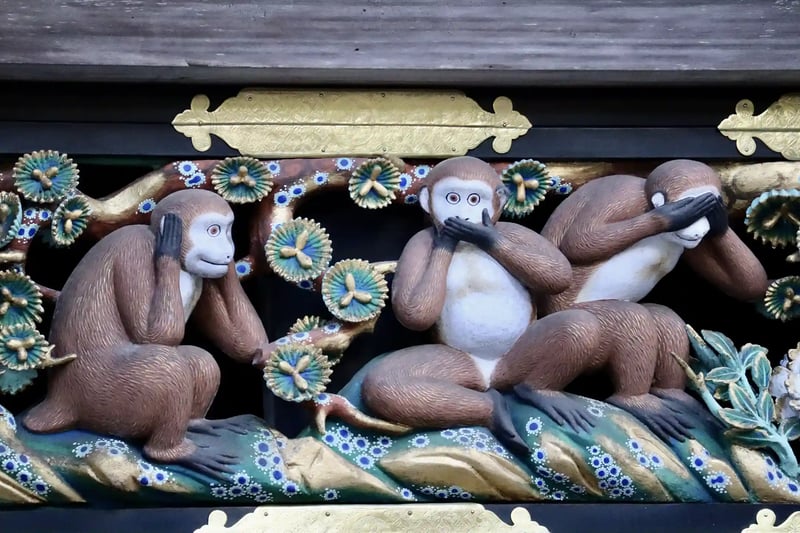
七転び八起き(ななころびやおき) – “Fall seven times, stand up eight.” Even when you fail repeatedly, keep getting back up. It celebrates the grit to keep challenging yourself no matter the setbacks.
猿も木から落ちる(さるもきからおちる) – “Even monkeys fall from trees.” If an expert can slip, anyone can make a mistake. It’s a gentle reminder that perfection isn’t human.
塵も積もれば山となる(ちりもつもればやまとなる) – “Dust amassed becomes a mountain.” Small efforts, patiently stacked, grow into major results or resources.
郷に入っては郷に従え(ごうにいってはごうにしたがえ) – “When you enter a new place, follow that place’s ways.” In an unfamiliar environment, adapting to local customs and rules is wise.
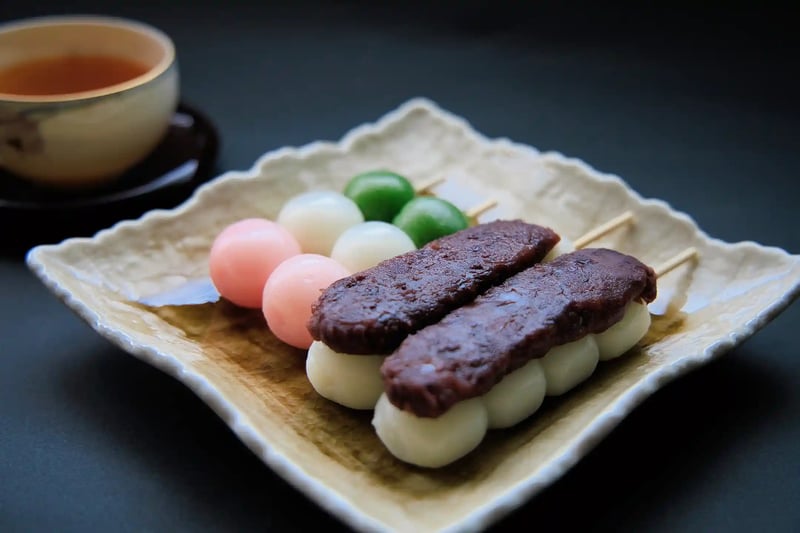
花より団子(はなよりだんご) – “Dumplings over flowers.” From the tale of getting more absorbed in sweets than in blossoms at a hanami picnic, it means preferring practical benefit over aesthetic flair—a playful nod to choosing substance over romance.
These sayings capture truths about the world and the subtleties of daily life, passed down for generations. Some say younger people don’t quote proverbs as often in today’s smartphone era, which is precisely why, when you understand their meanings and drop one naturally into conversation, you might earn an impressed “You know your stuff!”
They also offer a window into Japanese values and humor. And when someone uses a proverb with you, recognizing it can make your conversation flow that much more easily.
Elegant Japanese Phrases That Touch Literature and the Arts
Japan abounds with words and expressions cultivated in literature and traditional arts—brief phrases that carry deep feeling and reflect a distinct aesthetic.
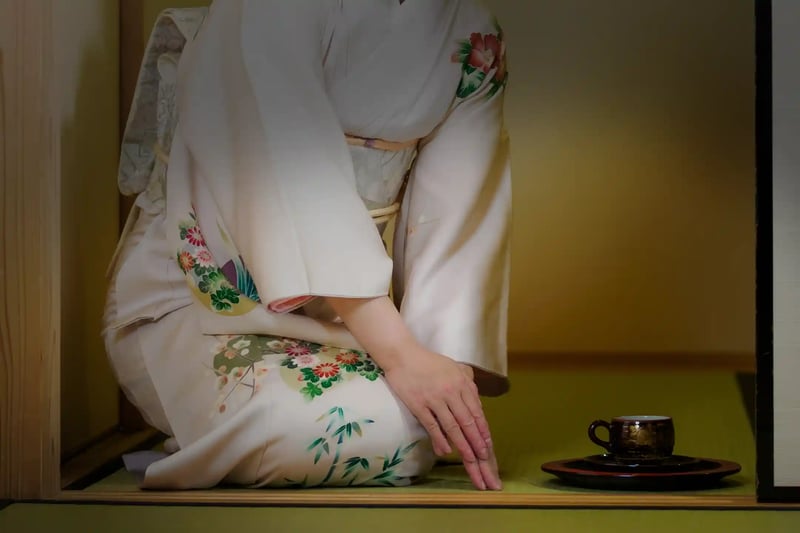
A key concept in tea ceremony and garden culture is 「侘び寂び(わびさび)」. In essence, it values the beauty found in things imperfect and transient. Rather than flash or engineered perfection, it prizes quiet elegance in the simple and unadorned, and the patina that time bestows. Think of a cracked tea bowl repaired with kintsugi and cherished anew, or the moss‑softened stones and scattered leaves of a garden—this is the spirit of wabi‑sabi.
Another cherished teaching from tea ceremony is 「一期一会(いちごいちえ)」. Literally “one meeting, one lifetime,” it reminds hosts and guests that each encounter will never repeat, and so you should approach it with full sincerity. Today, it’s widely used to mean “This moment won’t come back—treasure your chances and connections.”
From classical literature comes 「物の哀れ(もののあわれ)」, a key aesthetic in works like The Tale of Genji and Essays in Idleness. It points to the tender, unnameable feeling stirred by impermanence—cherry blossoms you witness, or leaves as they fall.
Essential Question Phrases So You Don’t Get Stuck While Traveling in Japan
Handy Questions for Public Transportation and Taxis
In a place you’re visiting for the first time, a few transport phrases give you peace of mind.
On trains, buses, or in taxis, keep these basics handy. To ask directions, first get someone’s attention with “Sumimasen” (Excuse me), then say the place and add “—wa doko desu ka?”—the simplest “Where is…?” in Japanese (e.g., “Eki wa doko desu ka?” = Where is the station?).
Similarly, on a train or bus, “—ni tomarimasu ka?” asks whether the vehicle stops at your destination (e.g., “Kono basu wa Akihabara ni tomarimasu ka?” = Does this bus stop at Akihabara?). To confirm if you’re on the right line, try “Kono densha wa — ni ikimasu ka?” (e.g., “Kono densha wa Shinjuku ni ikimasu ka?” = Does this train go to Shinjuku?).
For timing, “Tsugi no — wa nanji desu ka?” is practical (e.g., “Tsugi no basu wa nanji desu ka?” = What time is the next bus?). You can also use “— wa nanji desu ka?” to ask opening hours.
In a taxi, say your destination and add “— made onegaishimasu” to mean “Please take me to —.” For example, mention a hotel or landmark: “Tōkyō‑eki made onegaishimasu” (Please take me to Tokyo Station). When you pay and step out, a cheerful “Arigatō gozaimashita!” conveys your thanks clearly.
Useful Phrases for Restaurants and Hotel Stays
Knowing a few expressions for dining and lodging makes things easier. In restaurants, the basic way to order is to name the item and add “— o onegaishimasu.” If you point to the menu, “Kore o onegaishimasu” is the natural equivalent of “I’ll have this, please.” Try “Bīru o onegaishimasu” or “Kōhī onegaishimasu.”
If you’re undecided, ask “Osusume wa arimasu ka?”—“Do you have any recommendations?” The staff will suggest the house favorites.
When your food arrives, you can say “Itadakimasu” before you start—a uniquely Japanese custom of expressing gratitude for the meal, akin to saying grace or “bon appétit,” though more a matter of everyday courtesy than religion. After you finish, say “Gochisōsama deshita,” which conveys thanks for the meal and your satisfaction.
At your hotel, if you have a reservation, simply state your name: “Yoyaku shita ___ desu” (e.g., “I have a reservation under Tanaka”). At the front desk, use “— wa arimasu ka?” to ask about amenities and services: “Wi‑Fi wa arimasu ka?” (Is Wi‑Fi available?) or “Randorī sābisu wa arimasu ka?” (Do you have laundry service?).
These high‑frequency phrases for restaurants and hotels are true lifesavers. When you can manage simple Japanese at the table, you’ll often feel the service grow warmer and more personal.


.webp)