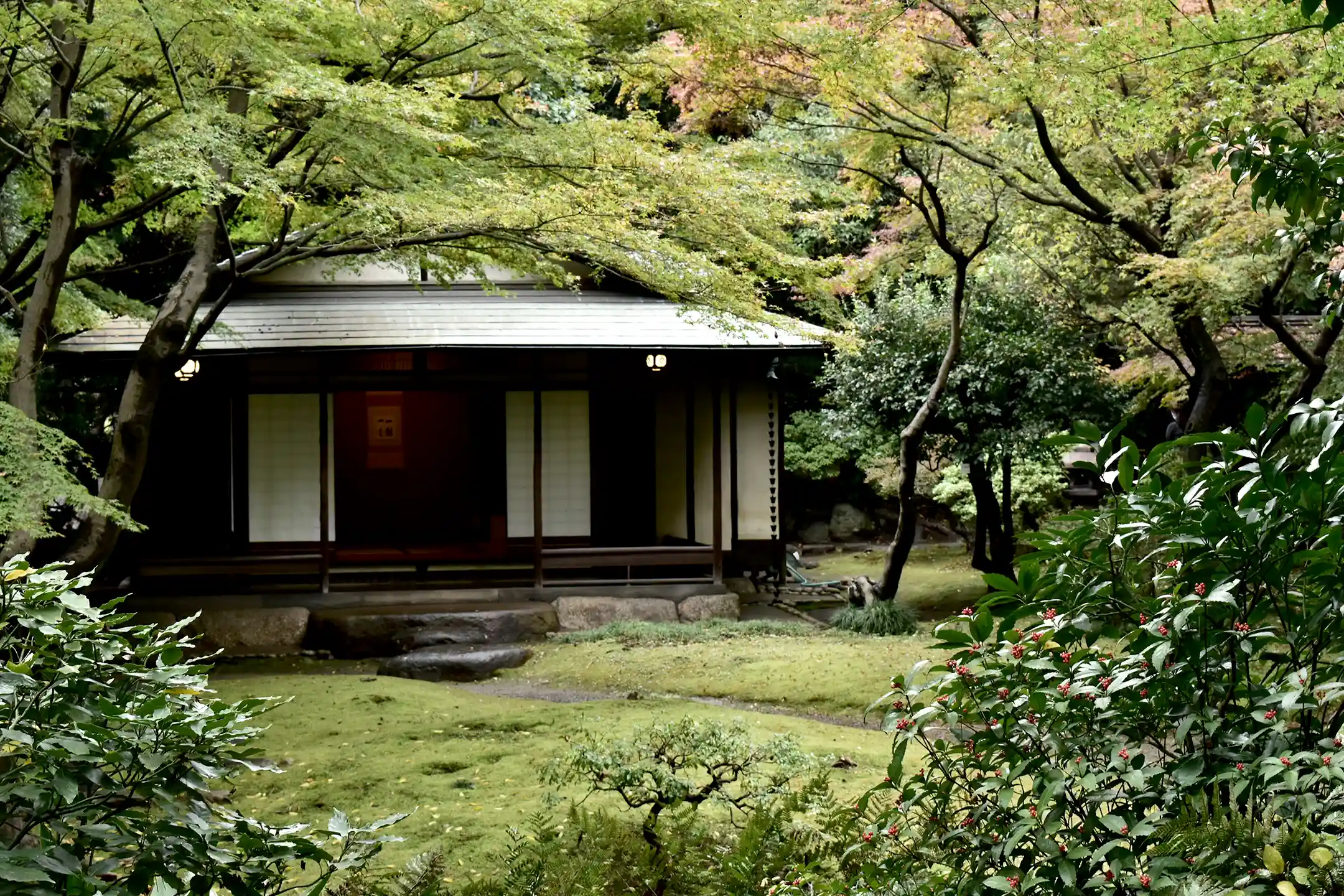
A single bowl of matcha is far more than a drink. The light filtering into the tea room, the texture of the vessel in your hands, a single line of calligraphy on a hanging scroll, seasonal flowers, and even silence itself—all of these are woven together into one unified experience.
Once you begin to understand the traditional Japanese tea ceremony, your journey through Japan shifts. Temples, gardens, crafts, seasonal sweets, and the quiet details of your lodging suddenly become "readable," and the resolution of your travels sharpens. In this guide, you'll find a complete walkthrough—from the basics of the tea ceremony to its history, aesthetics, etiquette, spatial design, and the ways you can enjoy it today.
What Is the Traditional Japanese Tea Ceremony? The Essentials You'll Want to Know First
The traditional Japanese tea ceremony isn't simply a sequence of movements for whisking and serving matcha. At its heart lies a distinctly Japanese cultural philosophy: host and guest share the same stretch of time, and together they weave an experience that encompasses utensils, space, season, words, and even the silences in between.
On the surface, it may appear to be a quiet accumulation of formal gestures. But layered within are respect for people and places, a sensitivity to nature, and an eye trained to find beauty in unexpected places. Rather than thinking of the tea ceremony as "a ritual for drinking tea," it helps to see it as "a cultural practice of designing time with care." That shift in perspective is your first step toward real understanding.
Chado, Chanoyu, and the Matcha Experience—What's the Difference?
In English, "tea ceremony" is the catch-all term, but in Japanese the nuances split apart. "Chanoyu" is generally the broader name, encompassing the entire culture that surrounds tea, while "chado" carries a stronger sense of "the path you cultivate through ongoing practice (keiko)" (*1)(*2).
Meanwhile, the "matcha experience" you'll often encounter on your travels is genuinely valuable as an entry point—a chance to whisk and taste matcha for yourself. That said, it's best understood as a condensed summary, in a short window of time, of the etiquette and philosophy that have been built up over centuries around chaji (formal tea gatherings) and chakai (less formal tea gatherings). Going in with that framing helps you avoid common misunderstandings (*2).
Why the Tea Ceremony Is Called "a Microcosm of Japanese Culture"
What makes the traditional Japanese tea ceremony so fascinating is that the beauty of its movements doesn't stand on its own. It connects—within the same stretch of time—architecture (the tea room), the roji garden, craft (tea bowls, kettles, and other utensils), calligraphy (the hanging scroll), flowers (chabana), food (kaiseki and wagashi), and incense. A document from Japan's Agency for Cultural Affairs describes it as a living cultural art form staged as "a drama in two acts," built around the interplay of food and tea—and this captures its essence as a true total art form (*3).
How Knowing the Tea Ceremony Transforms the Quality of Your Travels
Once you know a little about the tea ceremony, travel in Japan shifts from "ticking off famous spots" to "reading the intention behind them." Stepping stones in a garden, for instance, aren't just a path—they're an experience designed down to your stride length and the pace of your gaze. The slight warp of a bowl or an uneven glaze isn't a flaw; it's a deliberate pocket of openness, left in on purpose.
This perspective ripples outward, shaping how you see temple architecture, tea utensils in museums, sukiya-style ryokan, and even the choice of tableware at a quiet Japanese restaurant. It adds a layer of intellectual pleasure to every stop on your journey (*1)(*3).
The History of the Traditional Japanese Tea Ceremony—How Samurai Culture, Zen, and Aesthetics Shaped It
Tracing the history of the tea ceremony is also a way of understanding how Japanese culture arrived at the serene aesthetic sensibility it's known for today. Tea made its way across from the continent, and as it took root in the practices of Zen temples, the cultivation of samurai society, and the refinement of urban merchant culture, it matured into the uniquely Japanese world of chanoyu.
Along the way, the center of gravity shifted—from a taste for lavishness and the display of power toward an aesthetic that finds depth within simplicity. Learning this history reveals, in three-dimensional clarity, why the tea ceremony remains more than a traditional performing art and still resonates with the sensibilities of people living today.
The Arrival of Tea and Its Connection to Zen Temple Culture
Tea came to Japan from China, and in its earliest days it was tied to the worlds of monks and the imperial court. A report by the Agency for Cultural Affairs notes that tea is not a plant native to Japan, and that it's believed to have been brought from China during the 8th to 9th centuries via the Japanese envoys to Tang China. Based on writings by the monk Saicho, it's estimated that tea cultivation had already begun in Japan by the early 9th century.
As for firm records, the "Nihon Koki" mentions that on the 22nd day of the 4th month of Konin 6 (815), a monk named Eichu brewed tea and offered it to Emperor Saga. The same source records that in the 6th month of that year, tea was planted in provinces including the Kinai region (*1).
Later, in the Kamakura period, Eisai—known for introducing the Rinzai school of Zen to Japan—brought matcha (tencha) with him. According to the "Azuma Kagami," when Shogun Minamoto no Sanetomo was suffering from a hangover in 1214, Eisai offered him "a single bowl of tea" and presented him with the "Kissa Yojoki," considered Japan's first book on tea. In this way, tea was refined within the life of Zen temples—both ritual and everyday—laying the foundation for the chanoyu of later generations (*2).
The Aesthetics Built by Murata Juko, Takeno Joo, and Sen no Rikyu
In time, tea was absorbed into the cultures of the samurai and the urban merchant class, and it was systematized into chanoyu. The Agency for Cultural Affairs report describes how, in the latter half of the 15th century, a new aesthetic sensibility began to take shape around Murata Juko—one that deliberately used utensils different from the prized pieces favored by the shogunal family. This later developed into what came to be called "wabi-cha."
By the 16th century, this influence spread from Kyoto to Sakai, moving through figures like Takeno Joo, until Sen no Rikyu—active in the age of Toyotomi Hideyoshi—brought chanoyu to every corner of the country. The crucial point is that this tradition stepped away from the competition for lavish display, choosing instead to build a highly refined stillness out of everyday materials and small, carefully bounded spaces (*2).
The Spread of Schools and Their Transmission to the Present Day
After Rikyu's death, chanoyu diversified, weaving together with the tastes of the samurai class and the culture of the court nobility. According to the Agency for Cultural Affairs report, the sons of Rikyu's grandson, Sen Sotan, each founded their own house—Omotesenke, Urasenke, and Mushakojisenke—and the "Senke-ryu" style of tea spread not only among the samurai but also among the townspeople (*2).
For newcomers, what matters isn't ranking the schools by their fine differences, but understanding that every school shares the same underlying framework: preparing the space, and savoring time together as host and guest (*2).
The Philosophy and Aesthetics at the Heart of the Tea Ceremony
The appeal of the tea ceremony can't be fully explained by the orderly grace of its outward movements alone. Flowing quietly beneath the surface are ideas that have come to symbolize Japanese culture itself—wabi, sabi, ichigo ichie, and wa-kei-sei-jaku. A space stripped of showiness, the lived-in surface of well-used utensils, an arrangement that subtly mirrors the turning of the seasons—each element is placed not as decoration, but as a practice of spirit and aesthetic sensibility.
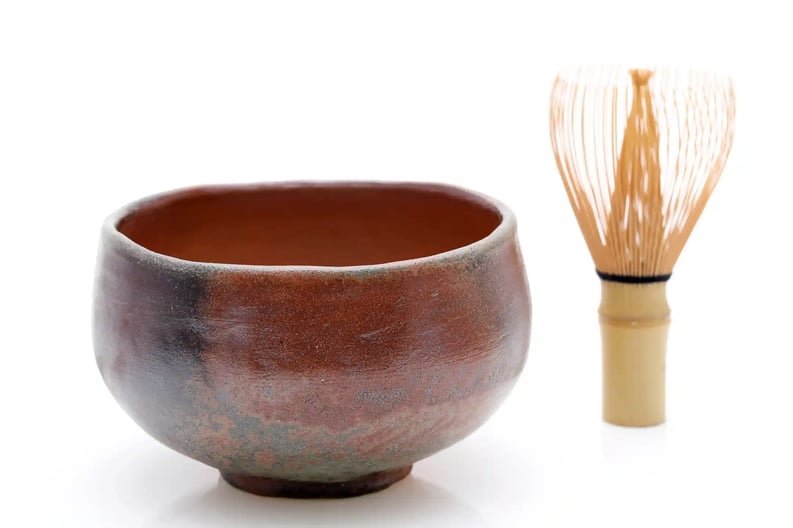
To truly understand the tea ceremony, it's essential to look beyond what is done and how, and to consider the deeper layers of thought: why things are arranged this particular way, and why stillness itself is held up as a form of beauty.
Wabi, Sabi, and Negative Space—The Japanese Aesthetic of Cherishing Stillness
"Wabi" and "sabi," so often discussed in the context of the tea ceremony, summon beauty along a different axis than opulence. Research materials from Kyushu University describe how the arrangement of a tea room avoids repetition and symmetry, breaking perfect balance in order to open up a realm of fluid, "ambiguous" beauty (*3).
For instance, if the kettle is round, the water jar might be chosen with angular lines—this kind of combinational design isn't just a rule, it's a philosophy of presentation (*3). By paring back the visual information that reaches you, your senses are actually sharpened. This paradox sits at the very heart of the tea ceremony.
What Ichigo Ichie Really Means
"Ichigo ichie"—the idea that this moment, right now, is to be treasured—is increasingly known around the world as a distinctive Japanese phrase. But within chanoyu, it functions as a philosophy put into concrete practice. According to the Hikone Castle Museum, Ii Naosuke's work "Chanoyu Ichie Shu" uses terms like "ichigo ichie" and "dokuza kannen," teaching that a tea gathering should be approached as a once-in-a-lifetime encounter, into which you pour your full sincerity (*4).
What's important here is that this isn't just lofty sentiment. Precisely because the gathering happens only once, everything—the hanging scroll, the flowers, the utensils—is chosen for this day, and completes itself in the light of this day alone.
Hospitality and the Relationship Between Host and Guest
The host–guest relationship in the tea ceremony doesn't quite fit the provider–customer model you might be used to. The host gives everything to make a single bowl of tea into an unforgettable one, and the guest responds in gratitude—this reciprocity is described by Urasenke as the heart of the practice (*2).
The Agency for Cultural Affairs report similarly frames the aim of a tea gathering as "the host extending hospitality to the guest, and through a single bowl of tea, deepening a rich exchange of hearts between host and guest" (*1). In other words, as the guest, you're a co-creator of the gathering. That's why much can be communicated without many words, and why there are moments when silence itself grows richer.
A Sensibility That Draws in the Seasons
The sense of season in the traditional Japanese tea ceremony isn't simply about reciting seasonal phrases. Urasenke's introductory materials describe how the season is expressed through subtle touches that evoke coolness in summer and warmth in winter (*1). The words on the hanging scroll, the flowers, the sweets, the handling of charcoal, the materials and colors of the utensils—all of these transplant a "hint of the season" into the room.
Once you begin to notice these choices on your travels, everything connects—garden viewing, crafts at a museum, even the vessels used for your meal. They all begin to converse in the shared language of the seasons (*1)(*3).
The Flow and Etiquette of the Tea Ceremony—Basic Manners Even Beginners Can Follow
Many people encountering the traditional Japanese tea ceremony for the first time feel a bit tense about the fine points of etiquette, worrying they might accidentally commit a social misstep. In reality, though, the etiquette of the tea ceremony isn't a set of rules designed to test anyone. It's a quiet inheritance, passed down as a way of preparing the space and expressing mutual respect in a natural form.
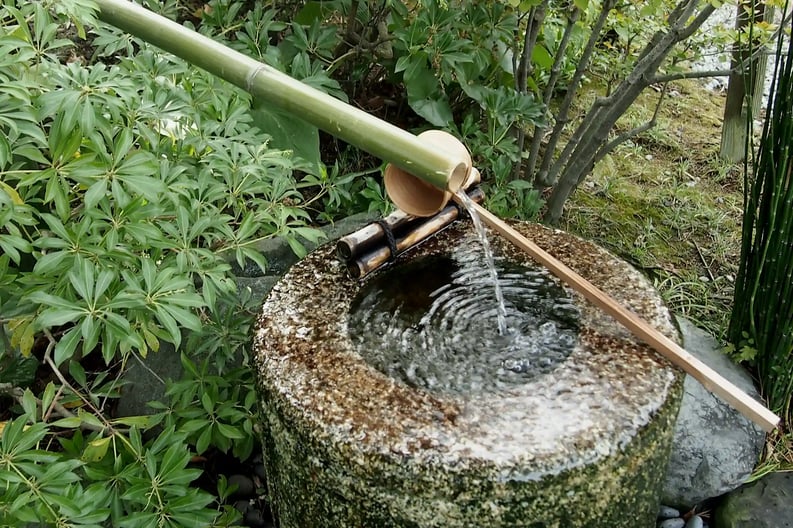
From how you approach the tea room, to receiving the sweets and the tea, to appreciating the utensils, to exchanging words—every small gesture carries meaning. Once you're familiar with the basic flow, you can step in without needing to brace yourself, and simply take in the quiet abundance of the time that has been carefully shaped for you.
What to Know Before Stepping Into the Tea Room
When it comes to dress, cleanliness and ease of movement matter much more than trying to stand out. A tea gathering is a space where you're meant to appreciate the delicate scents of matcha, charcoal, and, in some settings, incense—so it's best to skip any strong perfume (*2).
Watches and larger accessories are also best removed before entering, to reduce the chance of scratching the tatami or the utensils (*1). And being punctual reflects your understanding that chanoyu is a culture that treasures "the appointed hour" (*3).
The Basic Flow of a Tea Gathering
Simply knowing the broad outline of what will happen will ease a surprising amount of tension. According to the Japan National Tourism Organization, guests remove their shoes, are led from a waiting area to the tea room, purify their hands and mouth at a stone water basin, and then enter the tatami room, where it's customary to acknowledge the hanging scroll in the tokonoma alcove and the seasonal flowers (*1). The host purifies the utensils, whisks the matcha with water heated over a charcoal fire, and offers the bowl to you (*1).
The finer details of the sequence vary depending on the school and the formality of the setting, but the underlying arc—prepare, savor, give thanks—remains the same (*1)(*3).
The Minimum Etiquette Worth Remembering
What you'll want to learn first isn't so much a "correct form" as a consideration for the utensils and for the people around you. Holding the tea bowl carefully and rotating it slightly before drinking, for example, satisfies two things at once—showing respect for the bowl, and preserving the beauty of its most prized face (*1).
Offering a few brief words about the hanging scroll, the flowers, or a utensil is also a quiet way of responding to the host's intentions (*1). If you're unsure what to say, honest questions or simple impressions are more than enough—something like "What does this phrase mean?" or "I really like the atmosphere of this bowl."
The Tea Ceremony as a Total Art Form—A World Woven from Architecture, Utensils, Scrolls, and Sweets
What makes the tea ceremony remarkable is that, with a single bowl of tea at its center, it brings together a remarkable range of expression into one unified setting: architecture, gardens, calligraphy, flowers, ceramics, lacquerware, textiles, and sweets. The size of the tea room and the way windows are cut, the pacing of your walk through the roji garden, the words on the hanging scroll, the texture of the bowl, and the color and design of the sweets—every element is carefully chosen to support the theme and the sense of season for that particular day.
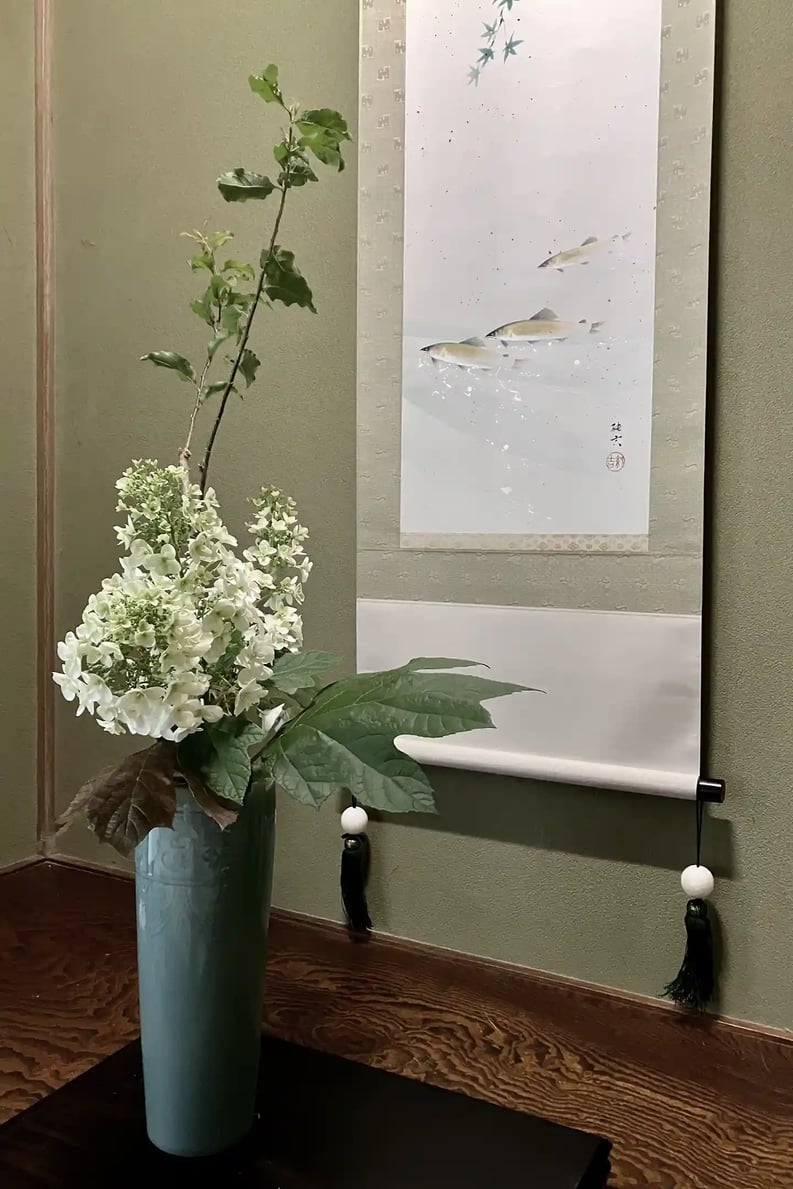
In other words, the tea ceremony isn't a single art form on its own. It's a "used total art"—an intricate weaving together of multiple aesthetic sensibilities. Once you adopt this perspective, a tea gathering becomes something more than an experience of food and drink: it opens up as a remarkably rich occasion for appreciating culture.
Tea Room Architecture and the Roji That Create a World Apart
Tea rooms are designed so that the moment you step inside, your senses shift gears. One celebrated example is the National Treasure tea room Tai-an, preserved at Myoki-an temple. Built around a two-tatami-mat core, with deliberate treatment of the tokonoma alcove and windows, it is described as an early surviving example of tea room architecture that deftly handles a tight space (*2).
Small spaces like these compose your gaze and your breathing, and even slow the pace of your conversation. The roji garden, too, is more than just a garden: it's a prelude that carries the rhythm of your steps and the shift in your body and mind. Research shows that the tea garden originally aspired to be a pristine space without a single tree or blade of grass, and that plantings were gradually introduced over time (*3).
The Craftsmanship Embodied in Tea Bowls, Kettles, Tea Scoops, and Tea Caddies
Tea utensils represent the pinnacle of "beauty in use." The Agency for Cultural Affairs report notes that they span nearly the entire range of Japanese craft traditions—including tea caddies, kettles, tea bowls, and tea scoops, along with the tools used for the charcoal procedure—covering castings, ceramics, lacquerware, and textiles (*1). Many of the older pieces are designated as National Treasures or Important Cultural Properties (*1).
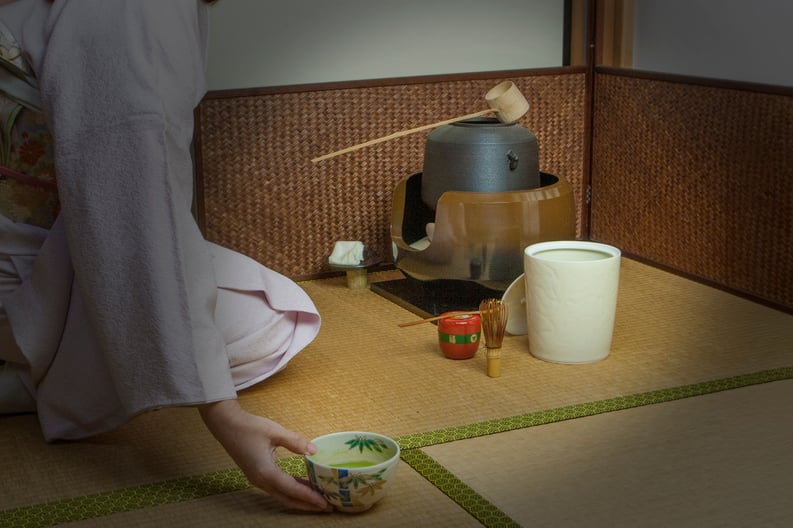
The Tokyo National Museum positions the tea bowl as "the most important utensil in chanoyu," introducing both bowls that were reappraised for tea use during the peak period from the mid-16th to early 17th centuries, and those made in Japan specifically for chanoyu (*4). When you start to see these vessels as "art you hold and use," exhibitions you visit on your travels take on a whole new depth.
What Hanging Scrolls and Tea Flowers Reveal About Cultivation
The hanging scroll placed in the tokonoma alcove is the "theme statement" for the day. According to Japan Past & Present (the academic educational project "Teaching Tea"), after entering the room, guests traditionally move first to the tokonoma to appreciate the scroll and the flowers chosen by the host (*5).
Many scrolls feature Zen phrases or single-line calligraphy, and guests attune themselves not only to the meaning of the words, but to the presence of the person who wrote them and the spirit of the brushwork itself (*5). Chabana (tea flowers) aren't ornamental flourishes—they're arranged to convey the life-force of the season in a single stem.
The Aesthetics of Wagashi and Seasonal Expression
Because matcha carries a touch of bitterness, sweets are served first at a tea gathering. Wagashi aren't just confectionery—they function as an art form through which you taste the season. The Ministry of Agriculture, Forestry and Fisheries explains that wagashi place great value on seasonal feeling, and that certain sweets, such as nerikiri, use the same ingredients to express not only the four seasons but also the 24 solar terms through changes in shape and color (*6).
The All Nippon Kashi Association also notes that the production techniques for "namagashi bearing poetic names" (nerikiri and konashi) have been registered as Registered Intangible Cultural Property, signaling that wagashi have entered the sphere of cultural policy as "a transmission of technique" (*7). These sweets vanish the moment they touch your tongue—and it's precisely because of that ephemerality that their transmission demands such care.
How to Experience the Traditional Japanese Tea Ceremony on Your Travels—From Authentic Encounters to Learning and Elevated Stays
Although the tea ceremony is a classical tradition, it's also an experience that can add a new kind of depth to modern travel. From short matcha tastings to settings where you can encounter the full arc of a formal chaji, the entry points are wide-ranging—but what matters isn't only "what you experience," but also "the context in which you encounter it."
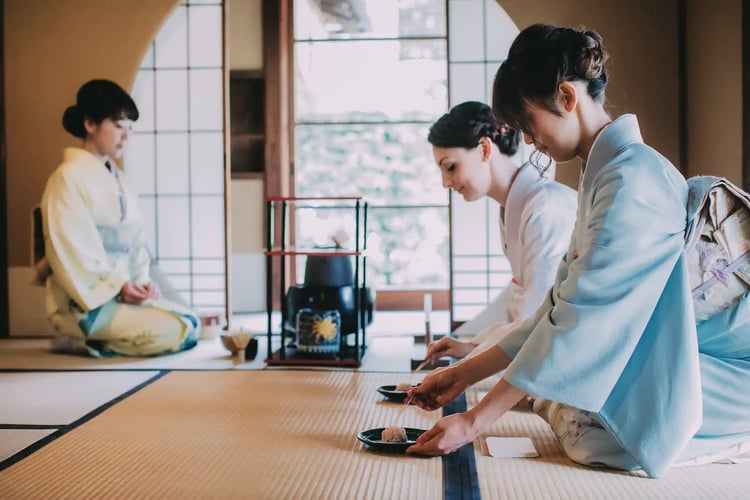
The tea room, the garden, the utensils, the quality of the explanations, the number of participants, the availability of an English-speaking guide—these factors can dramatically change how much depth you walk away with, even for what looks like the same experience. And when you combine a tea encounter with your choice of lodging, a garden visit, a museum, or craft appreciation, the tea ceremony stops being a standalone program and starts acting as a thread that elevates the sensibility of your entire stay (*1).
How to Evaluate an Authentic Tea Ceremony Experience
There are four useful criteria: (1) whether the group is small enough for real conversation, (2) whether there's explanation of the historical and material background, (3) whether the tea room, garden, and utensils are presented within their "original context," and (4) whether the experience includes not just usucha (thin tea) but also koicha (thick tea) or kaiseki—or, if those are omitted, whether it's clearly explained why.
A full chaji traces a long arc from kaiseki through charcoal, koicha, and usucha, while public demonstrations often focus on usucha alone due to length and complexity (*2). "A short experience" doesn't mean "lower value," but the settings that take time to explain what is a summary and what is the essence will satisfy you on a completely different level (*2).
What You Can Learn Through English-Language Courses and Workshops
With English-language programs, what matters isn't just the translation itself—it's whether the design fills in the cultural context you'd otherwise miss. Urasenke describes chado as "a way of spiritual and aesthetic self-cultivation," placing at its core the warm moment shared between host and guest over a single bowl of tea (*3).
A strong course will offer you four things in tandem with the experience: (1) clarity on the vocabulary (terms like temae and chaji), (2) the meaning behind the movements (why things are purified, why utensils are examined), (3) the background of the utensils and materials (bamboo, lacquer, clay), and (4) the philosophy of seasonality and combinational design (*3).
Ideal Lodgings and Complementary Experiences for the Tea Enthusiast
Once you fall for the tea ceremony, your standards for choosing a place to stay start to shift. Sukiya-style architectural details, the rhythm of a garden's open spaces, the selection of tableware, lighting that doesn't disturb the quiet—you become attuned to all of these. Japan's Database of National Cultural Properties, in its entry on Tairyu Sanso—a modern sukiya-style building designated as an Important Cultural Property—highlights the harmony and unity between building layout and garden, the careful use of different materials, and the character of the tea rooms as standout points of evaluation (*4). On your trip, combining garden visits, craft galleries, museum displays of tea utensils, and Japanese restaurants that pay attention to their vessels will bring the world of the tea ceremony into three dimensions (*4).
Looking at the Tea Ceremony Through the Lens of Sustainability
The traditional Japanese tea ceremony has strong affinities with contemporary sustainability. That's because an attitude of "less, better, and longer-lasting" is embedded right into how utensils are chosen and cared for (*5).
A document from the Ministry of the Environment introduces the Japanese word "mottainai" as the feeling that "it's a shame to waste something without fully drawing out its potential," linking it to a way of life that prizes quality (*5). That same sensibility runs through kintsugi—the practice of repairing broken vessels with lacquer and gold powder, "turning scars into beauty." TOKYO UPDATES, an official media outlet of the Tokyo Metropolitan Government, introduces kintsugi as a traditional technique that began with the tea culture of the Muromachi period, and speaks to the value of repairing with natural materials and using things over the long term (*6).
Beyond that, even the cultivation of tea itself offers examples where biodiversity and agriculture coexist. The National Agriculture and Food Research Organization (NARO) reports that the "chagusaba" method of tea farming in Shizuoka Prefecture preserves the diversity of native plants and animals by maintaining grasslands, and that this led to recognition as a Globally Important Agricultural Heritage System in 2013 (*7). When you can take in "the land and life behind a single bowl," your experience grows richer still.
Points of Appreciation and Approaches to Learning for a Deeper Understanding of the Tea Ceremony
The fascination of the tea ceremony is not something a single experience can exhaust. On the contrary, once you step back into a tea room with the basics under your belt, details that went unnoticed before come into view, and your understanding begins to open up. The words on the hanging scroll, the choice of flower, how the utensils are combined, the way the season is quietly woven in—a tea gathering is a cultural form whose layers of meaning reveal themselves the more you observe.
Because of this, learning is less about cramming knowledge and more about gradually cultivating "a way of seeing." Getting to know the vocabulary, encountering the real pieces, and reconnecting words with sensation through your own experience—this is how the tea ceremony grows into something you truly understand.
What to Observe at a Tea Gathering or in a Tea Room to Deepen Your Understanding
The first thing to pay attention to is "toriawase" (the combinational design). Teaching Tea explains that much of the conversation at a tea gathering turns toward the background of the hanging scroll, tea bowl, tea caddy, shifuku (fabric pouch), and tea scoop, with the guests—especially the shokyaku, or main guest—guiding the flow through questions and impressions (*2).
In other words, silence here isn't "wordlessness"—it's time for observation and appreciation. The next thing to take in is how the season has been folded into the room. As the Kyushu University materials describe, the tea room's arrangement avoids repetition and deliberately breaks balances of color and shape to generate beauty (*3). Rules like "if flowers are present, avoid pictures of flowers" are an editorial technique for keeping the expression of the season clear and uncluttered (*3).
Recommended Ways for Beginners to Learn
Learning works best when you build it up in stages. The first stage is "having the vocabulary"—getting organized with terms like chanoyu, chado, otemae, and chaji, and understanding the broad flow (*4)(*5).
The second stage is "seeing the real thing"—encountering tea bowl exhibitions at museums and information on tea rooms designated as cultural properties, and letting the materials and structures register in your own bodily sense (*5).
The third stage is "practicing small"—even during a short experience, making it a habit to "read the scroll," "observe the design of the sweet," and "put the feel of the bowl into words." These become portable "modes of appreciation" you can take with you (*2). And if possible, taking a course with English commentary on the meaning of each gesture will send your understanding climbing (*4).
The Essence of Japanese Culture That Comes Into View Through the Tea Ceremony
What the traditional Japanese tea ceremony reflects is simplicity, courtesy, a view of nature, handcraft, and the savoring of time. The Agency for Cultural Affairs report notes that tea utensils carry enough craft significance to be designated as National Treasures and Important Cultural Properties, and that tea rooms themselves present ongoing challenges of preservation as cultural properties (*1).
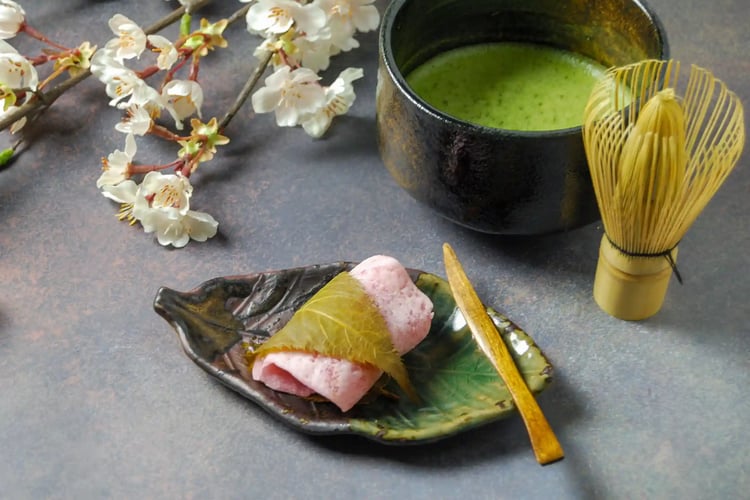
In other words, the tea ceremony is simultaneously an object of appreciation and a living site of transmission. Encountering it through your travels isn't about "consuming" Japanese culture—it's about participating in the shared work of understanding (*1).
Closing Thoughts
The traditional Japanese tea ceremony is both the skill of whisking matcha and the culture of editing time with care. A history of drinking tea that begins with records from 815, the aesthetic refined through Juko, Joo, and Rikyu, and the living system of transmission that carries on through the three Senke houses. At its core lies a "respect for others and for the place you share," symbolized by ichigo ichie and wa-kei-sei-jaku.
When you encounter the tea ceremony on your travels, architecture, gardens, crafts, and seasonal sweets connect within a single thread of meaning, and the scene in front of you suddenly becomes something you can "read" with much greater depth. Listening for quietness, finding meaning within negative space—that sensibility is something that stays with you long after the journey ends, settling into the aesthetic of everyday life.
Author Bio