This is a complete guide to one of Japan’s most beloved donburi dishes: Kaisendon (a seafood rice bowl). We’ll start with what Kaisendon is—its definition, key features, and why it’s often discussed alongside sushi. Then we’ll introduce the major types of Kaisendon and how to choose the right bowl for your taste and travel style, with clear explanations of how it differs from chirashi sushi and salmon don.
We’ll also cover practical ways to spot a truly delicious bowl, and touch on the market culture and distribution networks that support it, as well as the aesthetics of bowls and plating. Let’s step into the world of Kaisendon—where you can savor the sea’s best, one bowl at a time.
What Is Kaisendon? Definition, Key Features, and How It Differs From Sushi
Kaisendon is central to conversations about Japanese food culture—yet its “official” definition can feel surprisingly fluid. Most people share the basic image of “sashimi on rice,” but once you get into details—white rice or vinegared sushi rice, plain sashimi or marinated, and where the line is drawn for what counts as Kaisendon—interpretations can vary by person, restaurant, and region.
Many people also use terms like sashimi-don, zuke-don, tekkadon, and even “sushi” without being able to clearly explain the differences. But that ambiguity is part of Kaisendon’s depth—and it’s also what gives the dish so much freedom and flexibility.
In this chapter, we’ll first organize what “Kaisendon” typically means, then compare it with similar names and with sushi so you can understand the dish from multiple angles. Once you see what makes Kaisendon more than “just another rice bowl,” the value of a single bowl comes into sharper focus.
The Definition of Kaisendon: A Simple Structure of Rice, Sashimi, and a Bowl
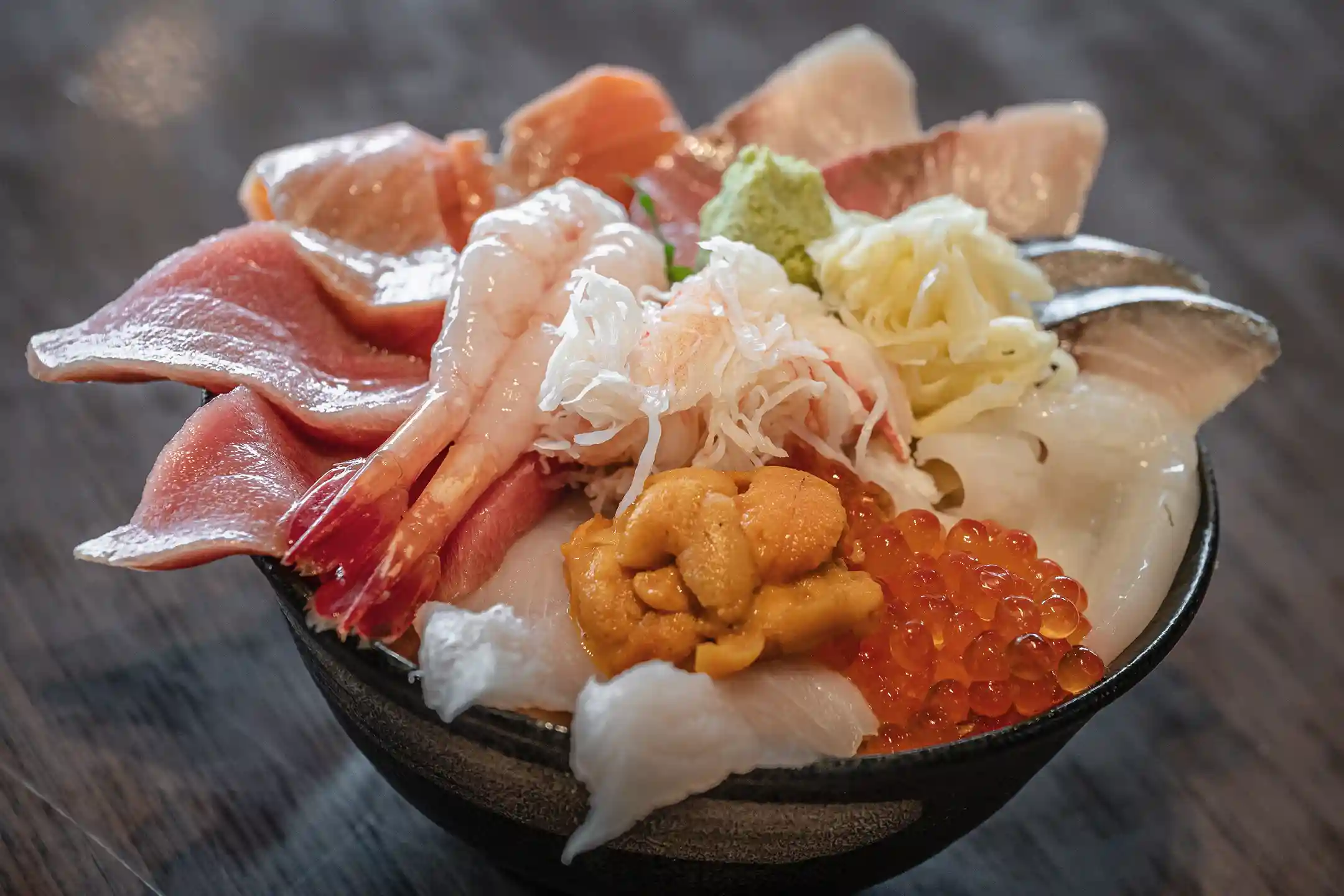
Kaisendon is, quite literally, a donburi bowl of rice topped with fresh seafood sashimi arranged on top. In many cases, the base is steamed white rice, finished with ocean favorites such as tuna, salmon, shrimp, squid, ikura (salmon roe), and uni (sea urchin). Sometimes a bowl features just one kind of sashimi; other times multiple varieties are combined for a vibrant, colorful presentation.
Wasabi is often served alongside, and you might dip the sashimi in soy sauce poured into a small dish as you eat. Another common style is having a soy-based sauce poured over the bowl from the start. The structure is simple—but that simplicity is exactly why you can enjoy endless variations depending on freshness, balance, and the combination of toppings.
As for the rice, some restaurants and regions use vinegared sushi rice instead of plain white rice, so it isn’t accurate to say “it must be white rice.” In fact, some sushi restaurants serve Kaisendon made with sushi rice, and you’ll find both “white-rice people” and “sushi-rice people.” There’s no single industry-wide rule, and opinions still vary on whether vinegar should be used in the rice (*1).
Sashimi-don, Zuke-don, Tekkadon: How These Similar Names Differ
You may hear names like “sashimi-don,” “zuke-don,” and “tekkadon” used for bowls that resemble Kaisendon. The simple takeaway is that they can usually be understood as sub-types within the broader Kaisendon family.
“Sashimi-don” means a rice bowl topped with sashimi, and it’s often used almost interchangeably with Kaisendon. In particular, it can describe a straightforward bowl where slices are placed on top without being seasoned or marinated in advance.
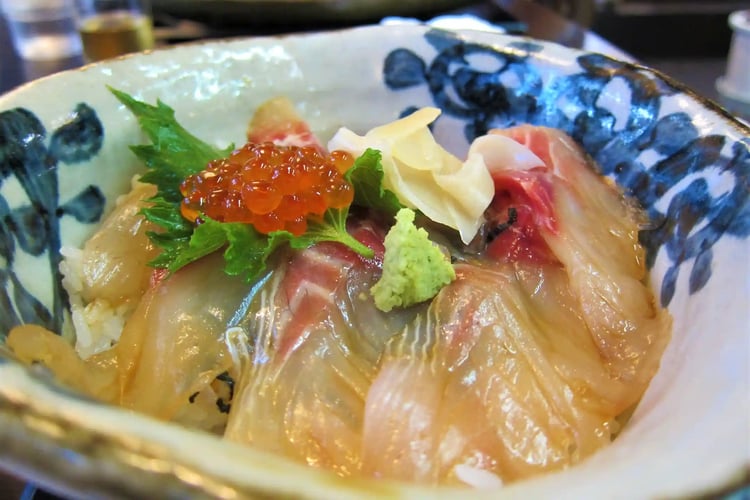
“Zuke-don” is a bowl where sashimi is marinated in a soy-based sauce before being placed on rice. For example, marinating tuna or bonito brings out deeper savoriness and creates a stronger sense of unity with the rice. The marinade can soften any strong “raw-fish” notes and helps the flavor feel cohesive, which can make it an approachable option if you’re trying a seafood rice bowl for the first time. Another reason zuke-don is popular is that the sauce gently seasons the rice—so even the last bite stays satisfying.
“Tekkadon” is a bowl topped with red tuna sashimi, a name that emerged from the world of Edomae sushi. Traditionally, tekkadon refers to lean tuna arranged over sushi rice, often finished with shredded nori and scallions, and eaten with wasabi and soy sauce. There are multiple theories about the name, but one says the tuna’s red color was likened to “tekka” (red-hot iron). Some tekkadon is served with tuna already dressed in a soy-based sauce rather than having you dip it—so it can overlap with zuke-don as well.
So, in practical terms: sashimi-don = plain sashimi bowl, zuke-don = marinated sashimi bowl, tekkadon = tuna-focused bowl (served either plain or marinated)—all of which you can understand as Kaisendon variations.
.webp?width=750&height=500&name=Chirashi%20Sushi%20(Scattered%20Seafood%20Sushi%20Bowl).webp)
Kaisendon vs. Sushi: Comparing the Vessel, How You Eat, and the Freedom You Have
At a glance, Kaisendon can look like “sushi in a bowl,” but the eating experience is very different from nigiri sushi. Start with the vessel: sushi is shaped piece by piece, and you pick up each bite—rice and topping together—with your fingers. Kaisendon, on the other hand, is served as one bowl where you use chopsticks and combine rice and sashimi as freely as you like. Because you control the rice-to-sashimi ratio in each bite, how you use soy sauce and wasabi is also up to you (*2).
You can dip sashimi directly into wasabi soy sauce, or you can drizzle sauce over the entire bowl to give it a “zuke-don feel.” With sushi, the chef often applies the right amount of wasabi or sauce before serving, so the basic idea is to enjoy it as presented.
Kaisendon is more casual and flexible: you adjust the flavor as you go (*3). Even the pacing is different. With nigiri, the order and combinations are usually guided by the serving sequence, and each piece delivers a complete, self-contained taste.
With Kaisendon, you can combine different sashimi in each bite, change the rice ratio, and enjoy how flavors mingle and evolve across the bowl as a single dish. There’s also a bold, generous quality to Kaisendon: you can enjoy multiple kinds of sashimi in one sitting. Where nigiri can feel like a carefully structured course—each piece a delicate “composition”—Kaisendon offers the pleasure of packing your favorite seafood into one bowl and savoring an immediate, satisfying sense of unity.
In reality, a Kaisendon piled high with colorful sashimi has strong visual impact and an irresistible, photo-worthy richness. This is one reason sushi can feel like a formal “special occasion” meal, while Kaisendon often feels like an approachable feast—something you might enjoy for breakfast at a bustling market while traveling (*4). It’s not a matter of one being “better.” The experience differs because the way you eat—and the way the meal is staged—differs.
Why Kaisendon Becomes a “Special Feast” Experience
Kaisendon may be structurally simple, but the satisfaction you get from one bowl can make it feel like a true feast. One reason is the sheer luxury of the ingredients. The sashimi used for Kaisendon is often exceptionally fresh, sometimes shipped directly from producing regions, and you can sense that quality from the first bite.
A truly great Kaisendon is designed to let the ingredients shine at their peak—so the moment you taste it, you understand its value. For example, sashimi prepared with skill by an experienced chef using market-direct seafood from places like Toyosu can be remarkable, with umami that deepens as you chew.
Some places also take the rice seriously, using high-quality rice much like a sushi restaurant would. Beyond that, seasonings and aromatics—soy sauce, sauce blends, wasabi—can decisively shape how “special” the bowl feels. Long-established Kaisendon specialists may prepare signature sauces with different soy blends to match specific fish, or serve freshly grated hon-wasabi. That attention to detail elevates Kaisendon beyond “just a rice bowl” into a memorable feast.
The setting matters, too. For many people, Kaisendon is tied to travel memories—eating in a harbor town or a market diner. Imagine sitting in the lively atmosphere of an early-morning fish market and enjoying a seafood rice bowl made with fish caught in nearby waters. It’s a sensory experience that can feel more thrilling than a normal meal, and it often stays with you as a “travel memory” or a taste of extraordinary indulgence. That value—created through ingredients → technique → setting—is exactly why Kaisendon becomes a special bowl for so many people.
Types of Kaisendon: Organizing by Style and by Toppings
The appeal of Kaisendon is often summarized as “a bold way to savor fresh seafood,” but the ways you can enjoy it are far from one-note. Depending on how it’s prepared and served—and on which toppings are used—you can think of Kaisendon as branching into multiple styles and lineages. There’s the classic “simply top the rice” approach, bowls where sashimi is seasoned in advance for greater unity, bowls that are mixed to completion, and even two-stage bowls finished with broth poured in so you can enjoy the finale.
And when star ingredients like tuna, uni, or ikura take center stage, the satisfaction and overall impression can shift dramatically—even if the dish is still “Kaisendon.” If you don’t organize this diversity, it’s easy to end up with a vague idea like “Kaisendon = some kind of lavish bowl.”
In this chapter, we’ll systematize Kaisendon by style and by toppings, and clearly lay out the features and how to choose each. Once you know the differences, you’ll be able to see more clearly which bowl fits you—and how to enjoy Kaisendon in a way that feels closely tied to the place you’re visiting.
By Style: Topped / Marinated / Mixed / Dashi Chazuke Finish
Kaisendon can be grouped into several styles based on how it’s prepared and eaten. The foundational style is the “topped” type—fresh sashimi placed as slices directly over white rice or sushi rice. This is the most common form of Kaisendon, and it’s the most direct way to taste sashimi’s natural texture and flavor.
In contrast, the “marinated” type adds a small but meaningful step. Like the zuke-don discussed earlier, sashimi is briefly marinated in a sauce made with ingredients such as soy sauce and mirin, then placed on rice once it has absorbed just the right amount of flavor. Marination highlights the fish’s umami and improves harmony with the rice.
It can also firm the surface slightly and create a richer, more velvety texture—one of the marinated style’s signature pleasures.
Next is the “mixed” type, where rice and ingredients are combined ahead of time. This style is conceptually close to Kansai’s bara-zushi or gomoku-zushi: chopped sashimi, vegetables, thin omelet strips, and more are mixed into sushi rice. You might also encounter it as home cooking. At a glance it can resemble chirashi sushi, but it’s positioned as a Kaisendon variant because raw seafood remains the main feature. The mixed style is defined by a unified flavor in every bite—rice and ingredients arriving together.
And then there’s the distinctive “dashi chazuke finish” style. In some restaurants and regions, you first enjoy the bowl as a standard Kaisendon, then, near the end, pour hot dashi broth or tea over what remains and finish it as ochazuke.
For example, in parts of the Murakami area of Niigata Prefecture, there is a custom of enjoying salmon and salmon roe bowls with broth—known as harako chazuke—so you can experience it twice: first as a sashimi bowl, then as a comforting broth finish. When you add dashi, the seafood’s savory notes move into the liquid and into the rice, creating a new, lingering flavor that lets you enjoy the aftertaste all the way to the end.
In this way, Kaisendon splits into distinct styles depending on how it’s eaten. If you’re new to it, it’s a good idea to begin with the simple topped style. As you get comfortable, try the marinated style for deeper cohesion—and if you get the chance, treat yourself to the dashi chazuke finish for a memorable finale.
Why Zuke-don Is Easy to Choose
If you’re new to Kaisendon, one bowl that’s often recommended is zuke-don. Let’s look more closely at why it’s such an easy choice. First, it tends to be consistently cohesive in flavor. Even if you feel a little unsure about the taste or texture of raw fish, marination gives the topping a reliable base seasoning—so whichever bite you take, you get stable deliciousness. The richness of soy sauce and the gentle sweetness of mirin also make the rice pairing especially satisfying.
Second, it creates unity in aroma and texture. In a tuna zuke-don, for instance, marination lightly tightens the surface, giving a pleasantly sticky, luscious texture, and each chew releases the sauce’s fragrance. With the topped style, sashimi itself hasn’t absorbed flavor, so you may find yourself re-dipping in soy sauce bite by bite. With zuke-don, that extra step disappears. Wasabi is often blended into the sauce as well, so the heat spreads evenly and can feel milder than eating wasabi directly with sashimi.
Additionally, marination can draw out excess surface moisture, which may reduce “fishy” notes and slightly improve how well the topping holds (though freshness is still essential, and long-term storage is not recommended). Overall, zuke-don is a Kaisendon style with fewer surprises and fewer chances of disappointment. If you’re stepping into a serious seafood rice bowl experience for the first time, choosing a zuke-don—where the sauce’s umami ties everything together—is a smart way to start.
Some restaurants also serve original zuke-don with touches like sesame oil and aromatics added to the soy-based sauce. Those bowls are often praised for their deep, fragrant richness that feels easy for anyone to enjoy.
What the Dashi Chazuke Style Is
As a unique offshoot of Kaisendon, the dashi chazuke style has been drawing attention as a “twice-delicious” way to eat. You begin by enjoying about half the bowl as a normal Kaisendon, savoring the harmony of sashimi and rice. Then you pour in piping-hot dashi broth or tea over what remains. Instantly, the bowl transforms into a smooth, comforting ochazuke, and the sashimi lightly changes from the heat, creating a different kind of deliciousness.
White fish and squid, for example, can become slightly sweeter when gently warmed, and the seafood’s umami dissolves into the rice, creating a deeper flavor. As toppings, sprinkling mitsuba, nori, or arare adds aroma, crunch, and extra complexity.
The charm of the dashi chazuke Kaisendon is how dramatically the flavor shifts from the beginning to the end. In the first half, you taste sashimi’s raw umami directly; in the second, you’re wrapped in the gentle comfort of dashi—truly “twice delicious” in one bowl. On a cold morning, that warm finishing broth can feel especially luxurious, turning the meal into an unforgettable travel breakfast.
One note: because the rice swells in the broth and the bowl becomes much more filling, it’s best to choose the timing based on your appetite.
Either way, the dashi chazuke style is a fascinating expression of Japan’s ingenuity in eating—and if you get the chance, it’s absolutely worth experiencing.
Representative Examples by Topping
Kaisendon also branches into many variations depending on the seafood used (the “toppings”). Here are representative topping-based bowls and what makes each one satisfying. A classic—almost synonymous with Kaisendon itself—is the tuna bowl. Tuna tastes different depending on the cut—akami (lean), chutoro, and otoro. A simple tekkadon with only lean tuna is clean yet deeply savory, letting you savor tuna’s true character.
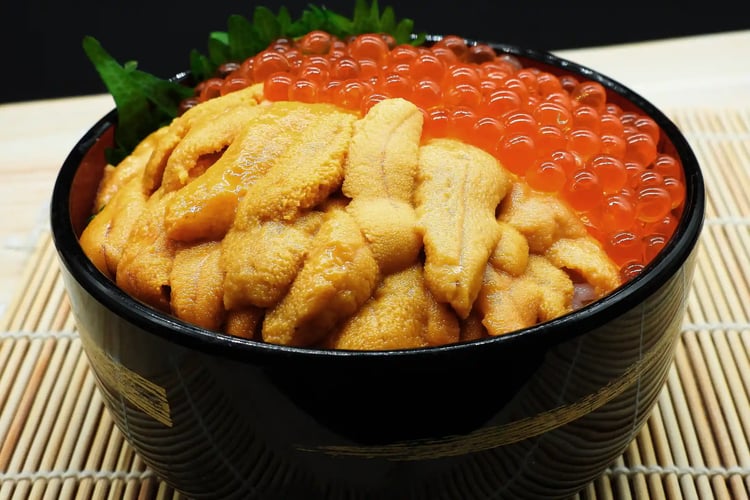
If you pile on chutoro or toro generously, you’ll get a rich, melt-in-your-mouth satisfaction that’s hard to beat. Next is the uni bowl. A bowl lavishly topped with uni lets you fully enjoy its creamy sweetness and concentrated oceanic umami. Uni’s flavor changes dramatically with freshness, but uni bowls made with exceptionally fresh murasaki uni or bafun uni can be astonishing—no unpleasant odor at all, just a pure seaside aroma and sweetness spreading across your palate.
The ikura bowl is another favorite. It’s a bowl where soy-marinated salmon roe is poured generously over rice, delivering a popping texture, deep savory richness, and soy fragrance that seeps into the rice and keeps you reaching for the next bite. In places like Hokkaido, sake oyako-don (a salmon-and-ikura “parent-and-child” bowl) is also a staple, offering the luxury of enjoying salmon and ikura together.
Other bowls—scallops, crab, and various shellfish—are equally worth your attention. A scallop bowl highlights thick, sweet adductor muscles with springy bite, releasing briny sweetness that pairs beautifully with rice. A crab bowl topped with flaked boiled snow crab or hairy crab features refined sweetness and delicate, fibrous texture. For extra indulgence, uni-ikura bowls (with both uni and ikura) and “three-color bowls” (often combinations like tuna, uni, and ikura) are also popular, letting you enjoy the harmony of distinct ocean flavors side by side.
In short, Kaisendon’s personality changes completely depending on the topping. When choosing, it’s great to pick a bowl starring your personal favorite—but it’s also highly recommended to look for bowls featuring seasonal seafood. When seafood is in season, its fat content and umami can be on another level, letting you taste something truly specific to that moment. For example: winter buri bowls, summer raw shirasu bowls, and other regional “local topping bowls” can become one of the great pleasures of traveling through Japan.
How It Differs From Chirashi Sushi: Why They Look Similar but Aren’t the Same
If you compare only appearances, Kaisendon and chirashi sushi are easily confused as “a dish with seafood on top of rice.” For people encountering Japanese food for the first time, the difference can be especially hard to grasp. Yet the two have taken different paths in terms of origins, culinary logic, and how flavors are constructed.
Chirashi sushi sits squarely as an extension of sushi culture: it centers on sushi rice and is designed for balance and overall harmony. Kaisendon, by contrast, highlights sashimi and rice as the main event, valuing the power of the ingredients and the freedom of how you eat.
These differences show up not only in how the rice is seasoned and how ingredients are handled, but also in when the dishes are eaten and what they tend to mean in context. Precisely because they look similar, the differences are easy to overlook—and organizing them makes each dish’s role and charm much clearer.
What Is Chirashi Sushi? A Design That “Scatters” Ingredients Over Sushi Rice
Before comparing it directly with Kaisendon, let’s clarify what chirashi sushi is. Chirashi sushi is a type of sushi made by scattering or mixing various ingredients over (and sometimes into) sushi rice. As the name suggests, it comes from the idea of “scattering” toppings in and on the vinegared rice.
In a typical chirashi sushi, you’ll see colorful ingredients such as kinshi tamago (thin omelet shredded into fine strips), nori, simmered shiitake, vinegared lotus root, shrimp, and kohada arranged over the rice. In the Kanto region, Edomae chirashi served at sushi restaurants is well-known—this is where a container packed with sushi rice is topped with sushi-grade toppings like tuna, white fish, and shrimp, lined up beautifully.
In Kansai, a traditional style is gomoku sushi (bara-zushi), where seasoned ingredients are mixed into the sushi rice itself—shiitake, carrots, and more—then finished with kinshi tamago and shrimp on top. Either way, the defining points are the use of sushi rice and the frequent use of cooked ingredients or sweet-savory simmered toppings. Because it looks festive, chirashi sushi often appears at celebratory occasions.
In particular, many families make chirashi sushi for Hinamatsuri (Girls’ Day) using auspicious ingredients like shrimp, lotus root, and beans, and it has become established as a spring seasonal dish. That’s the basic picture of chirashi sushi—now let’s look at how it differs from Kaisendon.
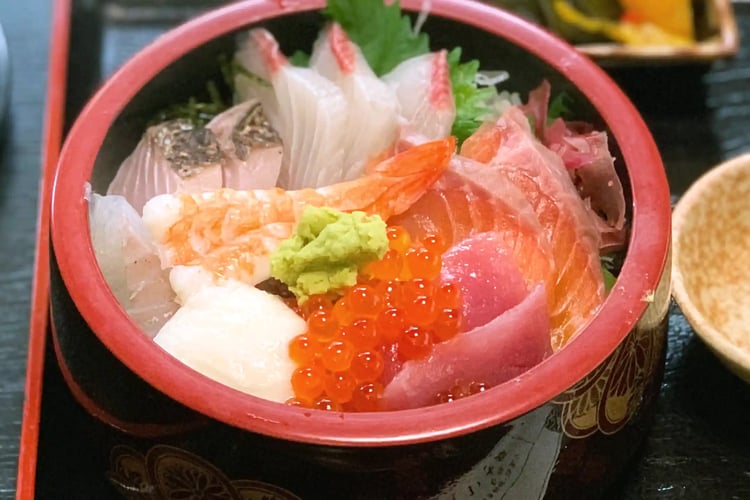
The Rice Difference: Sushi Rice Is Fundamental for Chirashi / White Rice Also Works for Kaisendon
The decisive difference begins with how the rice is seasoned. Chirashi sushi, as the word “sushi” indicates, is fundamentally made with sushi rice. Sushi rice is warm steamed rice mixed—while cooling—with vinegar, sugar, and salt, creating a clean acidity and gentle sweetness. Because chirashi sushi’s rice is already seasoned, it’s easier to achieve balance and harmony with the toppings.
With Kaisendon, as noted earlier, it’s common to use plain white rice rather than sushi rice. Placing sashimi on warm white rice lets you enjoy the contrast between the rice’s subtle sweetness and the seafood’s savory saltiness (often brought out with soy sauce). Still, it’s important to remember that some Kaisendon uses sushi rice as well. In particular, sushi restaurants serving Kaisendon—or tourist spots known for seafood bowls—may let you choose “sushi rice or white rice.”
Interestingly, regional preferences can also show up, and it’s often said that places like Hokkaido and Ishikawa have many white-rice fans. This may relate to local habits of eating just-caught fish boldly with white rice, as well as the presence of zuke-don culture. In summary: chirashi sushi cannot be chirashi without sushi rice, while Kaisendon has the flexibility to work with either white rice or sushi rice.
This difference in rice seasoning strongly shapes the direction of flavor. Sushi rice’s light acidity lifts sashimi’s umami, while white rice’s straightforward sweetness receives seafood flavors more directly. Each has its own appeal, and you can enjoy choosing based on your preferences and even your mood that day.
A Difference in Structure: Scatter and Mix / Build Layers in One Bowl
Chirashi sushi and Kaisendon also differ in their underlying structural philosophy. Put simply, chirashi sushi moves toward “scattering and mixing flavors into a unified whole,” while Kaisendon moves toward “building layers of rice and toppings, then letting the eater mix and combine while eating.”
In chirashi sushi, ingredients are scattered both inside and on top of the sushi rice. In Kansai-style gomoku chirashi, for example, finely chopped simmered shiitake, bamboo shoots, and fried tofu are mixed into the rice itself, so every bite naturally brings rice and toppings together. Seasoning is often integrated in advance—ingredients may be cooked with flavor, and their juices mixed into the rice—resulting in an overall sweet-savory harmony from start to finish (*1).
Kaisendon, meanwhile, basically places sashimi on top of rice, so rice and toppings remain clearly layered. Seasoning is usually limited to dipping sashimi in soy sauce or pouring a small amount over the bowl—there’s no cooking process intended to “finish the flavor” during preparation (though you may mix as you eat). This difference also shows up in how flavors unfold while you’re eating.
Chirashi sushi tends to maintain a consistent, integrated taste from the first bite to the last. Kaisendon, on the other hand, changes as you go: the distribution of sashimi shifts, sauce coats differently, and you can create your own gradients of flavor. If chirashi sushi “finishes” the flavor by scattering and mixing in advance, Kaisendon leaves room for you to “finish” the flavor through how you eat it.
Historically, there’s also a difference in origin stories: Edomae chirashi was served by sushi chefs who arranged toppings beautifully, while Kaisendon is often linked to fishing-town diners, where people piled on whatever seafood they liked and ate with bold satisfaction. That difference in background is reflected in the dishes’ philosophies.
To summarize: chirashi sushi is a harmony-first, pre-designed flavor, while Kaisendon is an ingredient-first, customizable flavor.
Different Occasions: Seasonal Family Celebrations / Eating Out and Travel Staples
The situations where chirashi sushi and Kaisendon appear also differ.
Chirashi sushi, as mentioned, is often made at home for celebratory occasions like Hinamatsuri. It’s associated with warmth and family—served on a large platter to share, or packed like a bento side dish. Sushi restaurants do serve it too, but compared to nigiri, it’s often positioned as a more affordable lunch option—chosen when you want a bit of seafood indulgence without the formality of a full nigiri meal.
Kaisendon, in contrast, is strongly associated with eating out and with travel. In harbor towns and tourist areas—especially at morning markets and fish markets—it’s often offered as a local specialty. Travel media frequently frames it as a must-try: “Taste fresh seafood Kaisendon at XX market,” and it can become a travel goal in itself.
Chirashi sushi, meanwhile, carries familiarity as a local, seasonal, and family-centered taste. In this way, chirashi sushi can feel like a dish that connects you to family and community in everyday life, while Kaisendon can feel like a dish that lets you taste a destination’s energy and seasonality through eating out and travel.
So “which should you choose?” really depends on the moment. For a celebration around the table, chirashi sushi. For savoring fresh ocean gifts on the road, Kaisendon. Both styles have been carefully nurtured within Japanese food culture, and ideally, you’ll enjoy both—each in the setting where it shines most.
What Is Salmon Don? Popularity, History, and Key Safety Points
Among the many kinds of Kaisendon, salmon don enjoys especially strong support. It has become a standard menu item everywhere—from markets and diners to conveyor-belt sushi restaurants—and many people even have a default mindset of “If you’re unsure, choose salmon.” Its popularity isn’t just a passing trend; it reflects multiple strengths overlapping—flavor, appearance, and a sense of reassurance.
At the same time, Japan did not originally have a widespread tradition of eating raw salmon, so when you learn how salmon came to be embraced so broadly, salmon don becomes much more three-dimensional in meaning.
Once you organize why people love its rich taste, how salmon spread through sushi and Kaisendon culture, and how safety is approached for raw consumption, you’ll naturally understand why salmon don continues to be chosen as “a reliably delicious bowl you can enjoy with confidence.”
The Taste Design Behind Salmon Don’s Popularity: Fat, Sweetness, Color, and Ease
Within Kaisendon, one bowl that has surged in popularity is salmon don. Salmon has long been familiar in Japan, but as a sashimi and sushi topping it’s a relatively newer presence—yet it’s loved across generations. There are several reasons built into its “taste design.”
First is salmon’s generous fat content (*1). Salmon carries abundant fat, and when sliced as sashimi you can often see white marbling within the orange flesh. That melt-on-your-tongue richness creates depth and umami, giving a satisfying sense of substance. And it isn’t an unpleasant greasiness—the finish is often gently sweet, with a clean, high-quality fat.
Second is salmon’s balance of umami and sweetness without being overly intense. It lacks the iron-rich punch of lean tuna, yet it’s not as delicate as many white fish—an in-between balance that’s often said to feel approachable even if you’re eating raw fish for the first time. Many people describe it as “almost no fishy smell, with a creamy sweetness,” which is why it’s so easy to recommend to sashimi beginners.
Third is the visual appeal of that vivid orange. When salmon is in your bowl, the whole presentation instantly feels brighter. Next to deep red tuna, translucent white fish, and shining ikura, salmon’s orange adds warmth and a sense of volume. Because it photographs well, this is also one reason it’s strongly supported by younger diners.
Fourth is how easy it is to eat—and how widely it can be adapted. Salmon works not only as plain sashimi but also as seared salmon, marinated salmon, “yukke-style” with sesame oil and egg yolk, or mixed with avocado for a “salmon avocado don.” Because it isn’t overly assertive, it pairs well with many sauces and aromatics, making it easy for you to build a bowl that feels personally “just right.”
With these four strengths—fat, sweetness, looks, and ease—salmon don earns strong support as an entry point into Kaisendon, and also as a satisfying, comforting choice even for seasoned diners. In fact, many popularity rankings at major sushi chains consistently place salmon among the top choices year after year, showing how firmly it has become a modern staple in Japan’s sushi and seafood rice bowl scene.
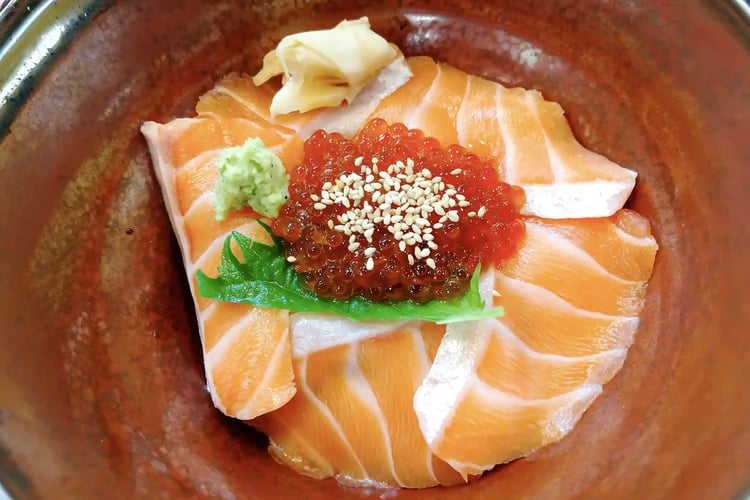
How Salmon Culture Spread in Japan
Today, salmon is a beloved topping for Kaisendon and sushi, but its rise is relatively recent—and surprisingly fascinating.
A major turning point came from Norway’s salmon export push beginning in the late 1980s, when attention increasingly turned toward Japan’s sushi and sashimi market. At that time, farmed salmon supply and market pressures in Europe made overseas demand more important, and Japan became a key strategic target.
Bjørn Eirik Olsen, who worked on seafood market strategy for Norway, became closely associated with the effort to position Norwegian salmon for raw consumption in Japan and to make salmon a standard sushi topping.
In Japan at the time, salmon was primarily a fish eaten cooked—such as salted and grilled—and eating raw salmon as sushi was not common. One reason was parasites such as Anisakis. In particular, wild autumn salmon (shirozake) and trout species caught in Japan carried parasite risks, so there was a strong tendency to avoid raw consumption (*2).
In fact, Hokkaido’s local dish ruibe—thinly sliced salmon served after freezing—reflects the wisdom of neutralizing parasites through freezing. Against this backdrop, Norwegian salmon was promoted as suitable for sashimi through strict handling and freezing practices, and it was positioned as a different category from domestic salmon traditionally eaten cooked.
By marketing it not as a fish for grilling, but as a high-quality ingredient specifically for sushi and sashimi, the goal was to establish a position that could be accepted even at a higher price point. Over time, that approach worked: salmon began appearing widely at sushi chains and elsewhere, and salmon sushi spread rapidly through the 1990s.
Through this historical path, salmon became deeply rooted in Japan’s Kaisendon culture as well—especially as conveyor-belt sushi and casual dining expanded and made salmon a familiar, everyday choice.
Today, salmon is supplied not only from Norway but also from Chile and from domestically farmed salmon trout, making it easier to access reliably tasty salmon year-round. As a result, salmon don remains a beloved standard that consistently ranks among the top Kaisendon choices.
How to Judge Safety and Quality: Handling, Freezing, Smell, and Drip
To enjoy salmon don with confidence, attention to safety is essential. As noted above, salmon can contain parasites such as Anisakis, so salmon intended for raw consumption must be properly treated. Guidance indicates that freezing “at -20°C or below for 24 hours or more” is effective for neutralizing parasites (*3).
Because of this, commercially sold “sashimi-grade salmon” is often frozen once and then thawed before it’s served. If you hear “thawed,” you might imagine reduced freshness—but with modern freezing and thawing control, it’s possible to improve safety while preserving flavor. As a consumer, the first key is choosing “sashimi-grade salmon” from a trustworthy shop or manufacturer.
From there, here are practical points to identify better quality. First, check the smell. Fresh salmon sashimi has little to no fishy odor—just a faint sea scent, if anything. If you notice an unpleasant smell (like oxidized fat or ammonia), freshness may have declined.
Next, look at color and sheen. Fresh salmon has a bright orange color and a glossy surface. Avoid salmon that looks dry and dull, or has a muted, brownish discoloration. If you’re buying a block (saku), examine the cut face: good salmon has springy resilience, sharp edges that aren’t crushed, and a surface that doesn’t look watery. If the cut face looks swollen with drip (liquid), or the flesh crumbles easily, you should suspect loss of quality after thawing.
If it’s pre-sliced in a tray, another key point is whether there’s excessive drip pooling in the container (*4). Properly thawed sashimi tends to release less liquid and keeps a firm texture. Finally, pay attention to temperature control. Keep salmon chilled in the refrigerator until just before eating, and don’t leave it at room temperature for long.
When you’re ordering a Kaisendon at a restaurant, you can often sense freshness management through things like the condition of the display case and how quickly the bowl is assembled and served. If you feel uncertain, choosing a well-reviewed shop in a tourist area or an established conveyor-belt sushi chain can be one practical approach. Properly processed and well-managed salmon is nutritious and enjoyable with confidence—so with the right knowledge, savor salmon don to the fullest.
How to Spot a Truly Delicious Kaisendon: Seasonality, Freshness, Temperature, Rice, and Aromatics
Whether you meet an outstanding Kaisendon isn’t decided by luck or price alone. Even a bowl that looks lavish can show clear differences in quality if you observe carefully. How the seafood is chosen and handled, how it relates to the rice, and the attention paid to details—those layers add up to a Kaisendon that genuinely satisfies you.
Most crucial are: choosing toppings with seasonality in mind, managing freshness properly, balancing the temperature of sashimi and rice, and finishing thoughtfully with sauce and aromatics. These are also the points where a chef’s—or a shop’s—attitude shows most clearly, and knowing them greatly increases your chances of picking a “hit” bowl.
Even at a market, on the road, or in a shop you’ve never tried before, having a few clear criteria means you won’t hesitate when choosing. If you learn to look beyond flashy presentation and judge what’s truly delicious, your meal satisfaction will rise dramatically.
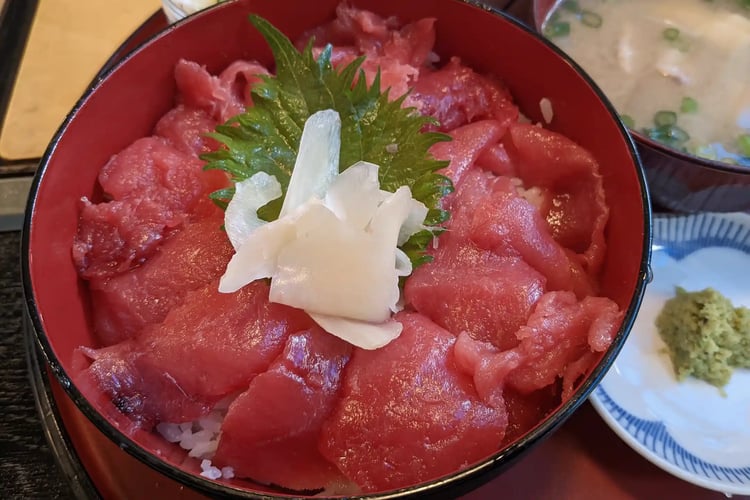
The Appeal of Key Toppings Changes With Season: Umami and Fat Shift Throughout the Year
If you want to take your Kaisendon experience to the next level, paying attention to seasonality is essential. Seafood changes significantly by season in fat content and firmness, and each period has its own peak deliciousness.
For example, migratory fish like tuna and yellowtail (buri/hamachi) build fat from autumn into winter to prepare for colder months, so their flavor peaks in the cold season. Winter yellowtail caught in places like Toyama Bay is a perfect example: fish landed roughly from November to February can develop beautiful marbling, creating a rich, concentrated taste. Winter yellowtail is often described as having “marbling like wagyu,” and it can taste completely different from summer yellowtail (*1).
Bonito (katsuo) has two seasons: spring (April–May), known as hatsugatsuo, and autumn (September–October), when it returns with more fat. Spring bonito is light and refreshing; autumn bonito is richer and silkier—so even the same fish changes flavor across seasons. Uni and ikura also have seasons tied to spawning cycles: in Hokkaido, uni is particularly good from early summer through summer, while ikura (salmon roe) is in season in autumn.
Because ikura is harvested from salmon approaching spawning season in autumn, soy-marinated ikura at that time tends to have plump, firm grains and exceptional taste. Among shellfish, scallops and clams come into season from early spring, growing thicker and sweeter. On the other hand, some seafood peaks in summer—such as shirasu (young sardines), striped jack (shima-aji), and rock oysters. When choosing Kaisendon, it helps to know these seasonal rhythms by topping. Seasonal seafood tends to carry more fat and umami components, raising your overall satisfaction.
In fact, the idea that “fish get fattier in winter” is scientifically sensible: many fish store fat as energy to thrive in colder waters. For you, that becomes delicious richness. That said, modern aquaculture and distribution have also increased the number of toppings that taste consistently good year-round. Tuna and salmon, for instance, are supplied throughout the year, so you may feel less dramatic seasonal difference.
Still, when you’re traveling, try choosing Kaisendon that reflects that place and that season. Spring cherry salmon bowls, summer raw shirasu bowls, autumn returning-bonito bowls, winter oyster bowls—seasonal bowls can be enjoyed all year long. Once you start thinking seasonally, Kaisendon becomes more than a meal; it becomes a way to taste the turning of the year.
How to Judge Freshness: Color and Sheen, Aroma, Cut Surface, and Temperature Control
The biggest factor in identifying a delicious Kaisendon is, without question, the freshness of the seafood. Fresh sashimi is naturally sweeter and more savory, with better texture—and it can make or break your satisfaction with the whole bowl. So when you’re looking at a shop or a bowl in front of you, what should you check?
First, look at color and sheen. For red-fleshed fish like tuna and bonito, fresh sashimi has a deep, vivid red with a healthy gloss. As freshness declines, the color dulls or turns brownish, and the sheen fades—often something you can recognize instantly. For white fish, freshness shows up as a translucent pale pink-to-white; with time it can yellow, dry out, and turn opaque (*2).
Next, check aroma. Fresh seafood doesn’t smell unpleasant. If you bring the bowl close and notice a strong fishy odor, you should question freshness. Ideally you’ll sense only a faint seaside scent—or almost nothing at all.
Third is the quality of the flesh. Professionally cut sashimi has clean edges and a firm, taut feel. Fresh sashimi has springiness, and when you lift it with chopsticks it holds its shape. If the cut edges droop, or the flesh breaks easily, moisture may have seeped out over time. If it’s packaged sashimi, avoid trays with lots of drip (liquid) pooling inside (*3).
Fourth is serving temperature. Sashimi shouldn’t be icy cold, but it should be properly chilled. If the toppings feel lukewarm when you’re eating Kaisendon at a restaurant, freshness management may be questionable—especially in warmer seasons, when temperature rises can quickly dull aroma and texture.
Good shops manage temperature carefully in display cases or refrigeration, then assemble and serve the bowl quickly after you order. If you use these viewpoints to judge freshness, your odds of finding a “hit” bowl rise dramatically. In a first-time shop, it’s also reassuring to consider the overall environment—cleanliness, staff appearance, and how ingredients are stored. Fresh sashimi is a feast in itself, so it’s well worth checking.
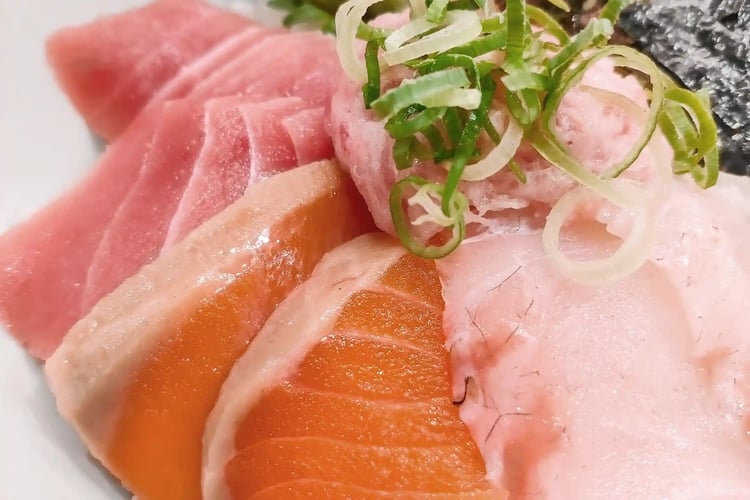
Why Rice and Shari Matter: Temperature and Texture Support the Sashimi
When you think of Kaisendon, it’s easy to focus on the sashimi—but the quality of the rice (shari) that supports it is just as important. In sushi, there’s a saying: “The taste of nigiri is 40% topping, 60% rice,” meaning rice can influence flavor even more than the fish. The same is true for Kaisendon. Even if the sashimi is excellent, if the rice is mushy, watery, or cold and hard, the overall deliciousness drops dramatically.
Ideally, Kaisendon rice should be fluffy and still gently warm. Sushi restaurants adjust sushi rice to about body temperature, and similarly, if Kaisendon rice hasn’t gone fully cold at serving, it helps create a sense of unity with the sashimi (*4). Some people enjoy the temperature contrast of warm rice and cold sashimi, but if the rice is chilled, sashimi fat melts less easily in your mouth—so rice with a slight warmth remaining is generally preferable.
Texture also matters. The grains should be distinct, with a balanced firmness and stickiness. Rice that’s crushed and soggy—or rice that’s undercooked and hard at the core—throws off the balance with the sashimi. If sushi rice is used, what matters is whether the vinegar level and seasoning are adjusted to lift the topping’s flavor. For example, shari made with red vinegar has deeper richness that pairs well with tuna and other robust toppings. Shari made with white vinegar is cleaner and tends to suit white fish beautifully.
This may not be discussed as strictly as in sushi, but great shops absolutely care about their rice. Some use specific premium rice varieties (for example, Hokkaido’s Yumepirika or Niigata’s Koshihikari), or blend rice vinegars—like rice vinegar and red vinegar—to create a signature shari. Don’t underestimate it just because it’s “a bowl.” Paying attention to rice differences reveals how deep Kaisendon can be.
When searching for a delicious Kaisendon, one practical method is choosing shops praised in reviews for “great rice” or “great shari.” People with experienced palates evaluate not only sashimi but also the rice beneath it. If the rice is truly delicious, it’s strong evidence that the overall quality is high. And if you make Kaisendon yourself, simply cooking rice carefully and serving it at the right temperature can elevate your bowl to the next level—so it’s worth remembering.
Sauce, Soy Sauce, Wasabi, and Aromatics: How You Use Them Changes the Impression
The final factor that determines a Kaisendon’s flavor is how you use seasonings and aromatics. In fact, even with the same sashimi and rice, the impression can change dramatically depending on the soy sauce, wasabi, and toppings you choose.
Even with soy sauce alone, flavor cohesion differs depending on whether you dip the sashimi directly, drizzle a little over the rice, or pre-mix it into a sauce and dress the toppings. For example, a tuna-forward Kaisendon pairs well with a rich koikuchi soy sauce blended into a slightly sweet sauce with a touch of mirin—bringing out tuna’s umami and matching the rice beautifully.
For a white-fish-centered bowl, a lighter sauce—such as nikiri soy sauce with a few drops of citrus juice (like yuzu or sudachi)—can create a refreshing harmony. With salmon, soy sauce + wasabi is excellent, but adding a small amount of mayo-soy or sesame sauce can bring a richer dimension and a different kind of deliciousness.
How you handle wasabi matters, too. Freshly grated hon-wasabi has a bright aroma that highlights sashimi’s sweetness, while pre-made powdered or tube wasabi can sometimes feel harsh and overly sharp. If you don’t love the nasal heat, you can dissolve it into soy sauce to soften it, or simply use less.
If you want a crisp accent instead, adding aromatics like chopped green shiso, myoga, or ginger can be a great move. For fatty toppings, ginger can brighten the finish; shiso’s fragrance pairs wonderfully with almost any sashimi and refreshes the overall aroma. A small squeeze of lemon or sudachi can add a clean lift. Sesame seeds, nori, and scallions create shifts in texture and aroma, giving the bowl more depth. With these seasoning and aromatic choices, Kaisendon becomes a playground where you can tune the flavor to your personal preference.
In fact, another core appeal of Kaisendon is that the taste changes widely depending on which sauce and aromatics you choose—and thinking through that pairing is part of the fun. Some shops offer multiple soy sauces, or serve original “special sauces.” Trying them side by side can be a satisfying way to explore.
Ultimately, if you find the combination that feels best to you, your enjoyment of Kaisendon becomes limitless. The freedom to season your bowl as you like at the table is one of Kaisendon’s greatest pleasures—so enjoy exploring different sauces and aromatic “marriages.”