.webp)
Onsen (Japanese hot springs) are an essential part of how Japan understands comfort, care, and everyday beauty—and thanks to their depth and restorative atmosphere, they continue to draw attention both in Japan and around the world. Of course, there’s the physical benefit of soaking in heat that warms you to the core. But an onsen also offers something harder to explain: a gentle worldview that loosens your mind, not just your muscles.
For travelers from overseas, Japan’s onsen culture can feel both fascinating and deeply inviting. If you’ve ever wondered “what is an onsen,” this guide gives you a clear, confident answer—covering what legally qualifies as “onsen,” the major mineral types (泉質), essential bathing etiquette, and practical tips for choosing the right hot spring for your trip. We’ll blend an academic lens with the romance of travel, so even if it’s your first onsen, you can step in with confidence—and leave with something that stays with you.
What Is an Onsen—Definition and Key Features
In the simplest terms, an onsen is naturally emerging water (or steam/gas) from underground that is warm and/or mineral-rich. In Japan, however, “onsen” is not just a poetic idea—it has a clear legal definition. Under Japan’s Hot Springs Act (温泉法), “onsen” refers to hot water, mineral water, water vapor, and other emissions that spring from the earth and either (1) have a temperature of 25°C or higher, or (2) contain specific mineral components above designated thresholds (*1).
For example, if the source water is 25°C or higher, it qualifies as an onsen regardless of mineral composition (*1). Even if it’s under 25°C, it can still be legally defined as an onsen if it contains above-threshold levels of any one of 19 specified substances—such as lithium ions or metasilicic acid (*1).
In other words, even naturally emerging “cold mineral springs” can be called onsen if they’re rich in qualifying components. Because of this precise definition, hot springs across Japan develop distinct personalities—each with its own texture, scent, and story—captivating travelers again and again.
At the same time, it helps to understand the difference between “natural hot springs” (天然温泉) and “artificial bathing” (人工温浴). Natural onsen water meets the legal criteria above, while many artificial bathing facilities (like typical public baths or some spa complexes) mainly heat ordinary tap water for use (*2).
Even though calling a facility an “onsen” requires strict conditions when a true source is involved, baths that use tap water can still serve as beloved daily gathering places for locals—this is the role of the sento (銭湯), Japan’s public bathhouse culture. Of course, while many sento use heated tap water, some public bathhouses do use natural hot spring water as well.
Generally speaking, you’ll often visit an onsen to step away from the ordinary—whether for travel, wellness, or quiet recovery—and many onsen resorts now offer expansive natural views and a variety of baths to explore. By contrast, sento are usually located in towns and cities, with the easy familiarity of dropping in after work. Since the purpose and atmosphere differ, you’ll enjoy Japan’s bathing culture even more if you choose based on what your trip—and your body—needs.
A Clear, Simple Explanation of the Legal Definition of Onsen
Let’s break down the Hot Springs Act standards—temperature and mineral composition—in a concrete way. If the water emerging from the source is 25°C or higher, it is recognized as onsen regardless of what it contains (*1). Conversely, even if the temperature is lower, it is still defined as onsen when the amount of at least one of the 19 listed components—such as carbon dioxide gas, lithium ions, or metasilicic acid—exceeds the legal benchmark (*1).
Put differently, “cool but mineral-rich water” can still be part of the onsen family. The law also makes it clear that, under certain conditions, onsen can include not only water but also underground steam and gases (*1). The legal language may feel technical, but for travel purposes, you’ll be well prepared if you remember two keywords: 25°C and 19 designated components.
You’ll also often hear the term “gensen” (源泉) at onsen destinations. Gensen refers to the source itself—the original spring where the water emerges. Some facilities have their own private source; others draw water from a shared community source. You may see an “Onsen Analysis Report” (温泉分析書) posted on-site, listing details like source temperature, mineral composition, and how the spring emerges (naturally or by drilling). Onsen enthusiasts love comparing these reports—almost like reading a wine label before tasting.
On top of that, you’ll encounter terminology about how the water is used. “Gensen kakenagashi” (源泉かけ流し)—often translated as “free-flowing from the source”—means fresh hot spring water is continuously supplied to the bath without being reused. It’s a luxurious format, and many onsen fans seek it out.
Meanwhile, larger facilities with big baths may use heating (加温), added water (加水), or circulation filtration (循環ろ過) to secure enough volume and maintain temperature. These details are typically displayed on-site as notices like “heated,” “added water,” “circulated/filtered,” and so on. If you care about the “purity” of the spring experience, it’s worth checking. Since there are disclosure requirements, you can usually understand the style of use before you soak.
All told, Japan’s onsen are natural resources supported by legal standards—and that reliability is part of what makes them so special.
.webp?width=750&height=500&name=Hot%20spring%20resort%20(2).webp)
How Onsen Differ from Sento, Spas, and Saunas
The difference between onsen and sento can be summed up in one phrase: whether there is a natural source (gensen) or not. Onsen use naturally emerging hot spring water (or gas) from underground, and that water is defined by law based on temperature and mineral composition. Sento (public bathhouses), on the other hand, generally provide heated tap water. There are no strict mineral requirements for sento water, though sento operations are regulated under the Public Bathhouse Act in areas such as fees and facilities (*2).
In pricing, onsen facilities typically set admission fees independently. Sento often follow a uniform fee system with a cap set by local authorities. In terms of atmosphere, many onsen ryokan baths are designed for stays focused on rest, wellness, and travel—often featuring open-air baths (露天風呂), private reservable baths, and other thoughtful touches. Sento, built for everyday neighborhood use, may provide soap and shampoo, and sometimes even include coin laundries—facilities that sit close to daily life. Both aim to help you warm up and feel refreshed, but the cultural background and typical use-cases are different.
As for “spas,” the word in Japan can be used broadly to include onsen, or more narrowly to mean relaxation facilities centered on treatments like esthetics and massage. In that narrower sense, it often refers to high-end relaxation bath areas inside hotels, regardless of whether there’s a natural spring source.
Saunas originated in Finland and are traditionally centered on dry heat. You sweat in high heat, then cool down—often with a cold bath or shower—and this contrast bathing can create a crisp sense of clarity and deep relaxation. The key difference from onsen is that it’s less about soaking in mineral water and more about balancing heat, sweat, and cooling cycles. Saunas are increasingly common at onsen ryokan, and “sa-katsu” (サ活, sauna activity) has become popular—where you sauna, then soak, and savor the afterglow.
On a trip, if you want to sink in slowly and melt away fatigue, choose onsen. If you want a quicker reboot, a sauna or spa might fit better. The best choice is the one that matches how you feel in that moment.
The Cultural Background and Worldview of Onsen
For many Japanese people, onsen have long meant more than “taking a bath”—they’ve nurtured a distinct cultural tradition over centuries. A representative example is “toji” (湯治, therapeutic hot-spring stays). Toji refers to the traditional practice of staying in an onsen town for an extended period and bathing repeatedly for healing, recovery, or long-term conditioning.
Historically, some traditions described seven days as one cycle and recommended at least 21 days (three cycles) of toji, reflecting the enormous expectations people placed on the healing power of hot springs. Even today, in classic toji destinations—such as Akita Prefecture’s Nyuto Onsenkyo—you may still see guests staying long-term while cooking for themselves.
Another essential part of the onsen worldview is “sotoyu-meguri” (外湯めぐり), or “external bath-hopping.” Instead of staying only in one ryokan bath, you visit multiple public baths scattered through an onsen town, enjoying different mineral qualities and atmospheres. This style is famous in places like Kinosaki Onsen in Hyogo and Shibu Onsen in Nagano. The sight of people strolling in yukata from bath to bath is one of the town’s signature charms.
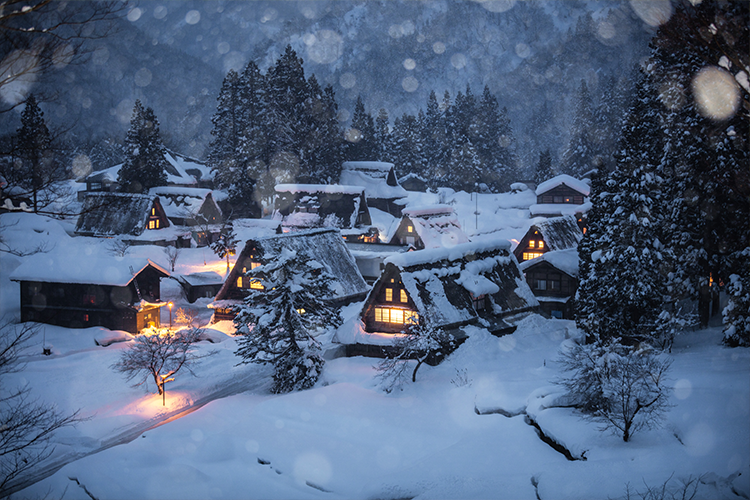
And then there’s the open-air bath (露天風呂), an icon of onsen romance. Soaking outside while taking in the changing seasons is extraordinary—especially “yukimi rotenburo,” where you bathe while watching snow fall. The quiet, the steam, and the snow drifting down can feel almost cleansing, which is why it’s beloved by many international visitors as well.
If you want to enjoy onsen privately, some inns offer “kashikiri-buro” (貸切風呂, reservable private baths) or guest rooms with their own open-air baths. You can soak with family or as a couple without worrying about others, and these options can also be reassuring for guests with tattoos (*4).
Historically, mixed bathing (男女混浴) used to be common in traditional onsen, but today most facilities are separated by gender. Still, a small number continue mixed bathing with towels wrapped or special bathing garments. If you’d like to bathe together with your partner while avoiding unwanted attention, choosing a private bath is usually the safest, most comfortable option.
It’s also fascinating to notice how onsen connect with shrines and temples. Many famous hot springs across Japan have onsen shrines that “watch over” the source, reflecting the long-standing sense that hot springs are blessings from nature—and, in some traditions, from the divine. For example, Kusatsu Onsen has sites associated with Yakushi faith, and Dogo Onsen preserves sacred elements and shrine traditions connected to local hot spring lore. In this sense, hot springs have long been revered as “gifts from the earth.”
Bathing itself has sometimes been layered with ideas of purification, and festivals expressing gratitude for the spring water have been held in many regions. When you know this background, you begin to feel how each bath carries deep history—and quiet prayer.
As you stroll through an onsen town, you may notice small roadside shrines or Jizo statues dedicated to protecting the waters. Pausing to offer a brief prayer at a shrine or temple beyond the rising steam, then stepping into the bath with gratitude for nature’s gifts—this spiritual sensibility is also an important side of onsen culture.
.webp?width=2048&height=1365&name=Hot%20spring%20resort%20(3).webp)
The History of Onsen and Their Wellness Value
Japan’s onsen have been closely woven into daily life since ancient times, evolving in a uniquely Japanese way. Let’s trace that history—and then revisit the value of onsen today through the lens of wellness (mind–body health).
From Ancient Toji to the Development of Modern Onsen Towns
The history of hot spring use is long: even in written records alone, it stretches back more than 1,300 years. There is a tradition that in the Asuka period, Prince Shotoku visited Dogo Onsen (known then as Iyo no Yuyu). In the Nara and Heian periods, records show that aristocrats and monks also traveled to famous springs for toji.
From early on, hot springs were called “the gods’ waters” and “medicinal waters,” believed to hold mysterious power to ease many ailments. From the medieval era into the early modern period, toji sites were developed across Japan, and people from many social strata—warlords, travelers, and more—began to frequent hot springs. In the Edo period, onsen opened widely to ordinary people, and “toji trips” became a major leisure activity. As highways developed, destinations like Arima Onsen and Kusatsu Onsen became established sightseeing spots, and onsen towns formed with rows of bath inns (湯宿) supporting long stays and travel.
In that era, shared bathhouses and small bath huts became the heart of local community life, and regional culture grew through connections made at the bath. For example, in Kusatsu, the practice of “yumomi” (湯もみ)—stirring very hot water with wooden boards to lower its temperature—was developed during the Edo period, and it is still performed for visitors today. In this way, each onsen town cultivated its own customs and hospitality traditions.
From the Meiji era onward, modernization and expanding rail networks transformed onsen destinations even further. Railway companies promoted hot spring development along their lines and built ryokan to attract guests. Onsen close to major cities, such as Hakone and Atami, flourished as honeymoon and summer-retreat destinations, while regional sites like Beppu drew visitors with distinctive attractions such as “Jigoku Meguri” (地獄めぐり, source-viewing tours of dramatic hot spring “hells”).
This modern development marked a time when onsen expanded from primarily therapeutic sites to places of tourism and recreation. At the same time, as public hygiene awareness spread, rules and systems for bathing—including the establishment of bathhouse regulations—also progressed.
Today, many onsen destinations operate tourism associations and promote their appeal domestically and internationally as a unified region. Onsen culture—rooted in history yet continually evolving—truly deserves to be called one of Japan’s treasures.
A Bathing Mindset Shaped by Purification and Prayer
Underlying Japan’s bathing mindset is a spiritual sense of “cleansing yourself through water.” In Shinto, there has long been the concept of “misogi” (禊), cleansing away impurity by bathing in water. Warm onsen, too, have been understood as something that purifies both body and mind. That’s why you’ll find shrines dedicated to the gods of the waters in onsen towns, and why ceremonies of gratitude—often called “yu-matsuri” (湯祭り)—take place. Some older visitors even press their hands together briefly before bathing, as a kind of prayer for the blessings held within the water.
Also, because bathing involves being unclothed in a shared public space, manners based on mutual consideration naturally developed over time. As the phrase “naked companionship” suggests, the bath could become a place where social status and titles fall away, and people open up more honestly. Thanks to this cultural background, Japanese onsen often share unspoken norms such as “enjoy the bath quietly” and “don’t inconvenience others.”
In modern ryokan, you’ll still see notices in large baths such as “No photography” or “Please keep conversation minimal.” These are rules to protect privacy and rest, but at their core, they reflect long-standing Japanese bathing values. The uniquely Japanese habit of calming your mind while soaking may be a lifestyle worth rediscovering—especially for busy people today.
Reframing Onsen Through a Wellness Lens
In recent years, onsen have been reevaluated as an important resource for “wellness tourism.” Wellness refers to promoting and strengthening mind–body health, and onsen can fit naturally into that practice when enjoyed safely and within your comfort range.
For example, in today’s high-stress society, the stress-reducing effect of onsen bathing has been increasingly discussed alongside research and survey findings. In one survey, after bathing in hot springs, 83% of people reported “reduced fatigue,” and 82% reported “greater happiness,” suggesting a tendency toward eased mental and physical tension (*3). When you soak in warm water, the parasympathetic nervous system becomes more dominant, encouraging relaxation—and that’s one reason psychological stress can soften.
Onsen can also support sleep routines. Bathing temporarily raises core body temperature, and if you go to bed as your temperature gradually falls afterward, it can become easier to slip into deep sleep. When you feel “I slept so well” at an onsen ryokan, it’s often because the pleasant post-bath tiredness and the timing of temperature drop gently invite rest. Time in the onsen—spent with your senses awake—aligns beautifully with modern wellness trends as a soothing, grounding activity.
.webp?width=750&height=500&name=Hot%20spring%20resort%20(4).webp)
What Is “Senshitsu”—Understanding Types and Benefits Scientifically
What gives each onsen its personality is its senshitsu (泉質)—the “type” of hot spring water. Depending on mineral composition, the water’s color, scent, and feel on your skin can differ, and so can the effects people traditionally associate with the bath. Here, you’ll learn the main types of senshitsu, their characteristics, how to read ingredient displays, and how to choose hot springs that suit your skin and condition.
Representative Senshitsu Types and Their Characteristics
Japanese hot springs are often classified into 10 categories based on their dissolved components. The simplest is simple hot spring water (単純温泉). This is relatively low in dissolved substances—less than 1,000 mg per 1 kg of water—and it is one of the most common types in Japan. Because it’s gentle and feels soft on the skin, it’s widely enjoyed by everyone from children to older adults. (Alkaline simple springs can feel slightly silky and are sometimes called “bihada no yu,” or “beauty-skin baths.”)
Next is a group commonly referred to as salt springs (塩類泉), with a representative type being chloride springs (塩化物泉). These contain salt components similar to seawater, and many are clear and colorless—though if you taste them, they can be salty. Because salt clings lightly to the skin and helps prevent sweat evaporation, they offer strong heat retention and are known as “netsu no yu,” or “heat baths,” since you’re less likely to chill afterward. They’re common in colder regions north of Kanto and in coastal onsen areas, making them especially ideal in winter.
Bicarbonate springs (炭酸水素塩泉), also called “baking soda springs,” contain bicarbonate ions. They tend to be mildly alkaline and can leave skin feeling smooth after bathing, which is why they’re often associated with “bijin no yu” (“beauty baths”). Many onsen long celebrated for that reputation—such as Ureshino Onsen or Kawanaka Onsen—often fall into this category, and they remain popular for travelers seeking that refreshed feeling.
Sulfate springs (硫酸塩泉) are rich in sulfate ions and have traditionally been called “kizu no yu,” or “wound baths.” Calcium-based sulfate springs are often linked in traditional descriptions to recovery support for minor skin troubles. They are also known for strong heat retention, making them a comfortable choice for people who want lasting warmth after bathing.
From here, we enter hot springs with more distinctive components. First, carbon dioxide springs (二酸化炭素泉), also called “carbonated springs,” are rare waters containing at least 1,000 mg of free carbon dioxide gas per 1 kg. When you bathe, bubbles cling to your skin, which is why they’re sometimes nicknamed “ramune baths” (like a fizzy soda). Carbon dioxide absorbed through the skin is often discussed as supporting circulation, and even if the water is lukewarm, you may feel thoroughly warmed afterward. Oita Prefecture’s Nagayu Onsen is a well-known example.
Next is iron-containing spring water (含鉄泉). These contain at least 20 mg of iron (the total of iron(II) and iron(III) ions) per 1 kg. Even if the water appears clear as it emerges, it can turn reddish-brown after exposure to air—one of its signature traits. Iron springs are widely associated with “that unmistakable onsen feeling,” including deep warmth, but note that medical benefits depend on many factors and should not be assumed. Also, iron-rich water can stain tubs and towels reddish-brown, making it difficult to handle at home—one more reason it feels uniquely “onsen.”
Acidic springs (酸性泉) have high hydrogen ion concentration and strong acidity, often with a pH under 3. Their cleansing power is powerful, and they have historically been used in traditional contexts for skin-related concerns. Sometimes called “shiage no yu” (“finishing baths”) or “naoshi no yu” (“fixing baths”), they were valued as the final soak in a hot spring circuit—used traditionally to help with issues like athlete’s foot or eczema.
However, when acidity is very strong, you may feel a tingling sensation and stronger stimulation on the skin. If you have sensitive skin, it can be a good idea to rinse lightly with fresh water after bathing. Kusatsu Onsen (often described as around pH 2) is a famous example.
Iodine-containing springs (含よう素泉) are rare waters containing 10 mg or more iodine ions. The water often appears brownish, and it is sometimes discussed as stimulating the body in a noticeable way, so people who are sensitive to strong baths may prefer a shorter soak. It exists only in limited areas, such as parts of Hokkaido like Toyotomi Onsen.
Sulfur springs (硫黄泉) are a classic representative of onsen—defined as having 1 mg or more total sulfur (and 2 mg or more for therapeutic springs). Many sulfur springs have a distinctive “egg-like” scent (hydrogen sulfide) and are known for milky, cloudy waters.
Sulfur springs are often associated with strong cleansing effects and are traditionally said to help with acne and dermatitis. They can also soften and loosen dead skin cells, so a “slightly squeaky” feel after bathing may be a sign that older keratin has lifted away. Many of Japan’s best-known onsen destinations—Kusatsu, Hakone, Noboribetsu, and more—feature sulfur springs.
Finally, radioactive springs (放射能泉) contain trace amounts of radon and are also called radium springs. The radiation level is extremely low, and bathing is sometimes discussed in terms of a hormesis effect—mild stimulation that may feel beneficial for some people. As with any health-related topic, individual differences are large, so treat this as traditional context rather than a guarantee. Misasa Onsen in Tottori and Masutomi Onsen in Yamanashi are well known.
That’s an overview of the main senshitsu types. Each has its own signature destinations, and choosing a hot spring trip based on your goal—beauty, warmth, recovery, calm—can be a deeply satisfying way to travel.
Bathing Etiquette and Mindfulness—Finding Your Zen-Like Balance
So you don’t feel unsure on your first visit, this section introduces the basic manners of Japanese onsen—and then, as a step up, a mindful way to soak. If you follow the etiquette, stay considerate of those around you, and meet the water with quiet attention, you may find your mind and body settling as if you’re doing a Zen practice.
Basic Etiquette Steps
There are several steps to onsen bathing. Let’s walk through them in order.
Step 1:Undressing – In a large public onsen bath, being fully nude is the standard. In the changing room (脱衣所), remove your clothes and place valuables in a locker. Entering with a swimsuit or underwear is not allowed (except in mixed-bathing areas or special zones; in general Japanese onsen rules assume nude bathing). Head to the bathing area with just a towel.
Step 2:Kakeyu (Rinsing) – Once you enter the bathing room, don’t slip straight into the tub. First, rinse your body with water—this is called “kakeyu,” and it’s a very important onsen manner. Starting from your hands and feet (areas farther from the heart), scoop water with a wash bucket and pour it over your body. This removes sweat and dirt and also helps your body adjust to the temperature. Especially in hot baths, entering suddenly can spike blood pressure and be dangerous—so think of kakeyu as a warm-up.
Step 3:Soaking in the Bath – Now you enter the onsen. Begin with a half-body soak to acclimate, then gradually sink up to your shoulders. Keep the first soak to about 5–10 minutes and be careful not to overheat (*1). In the tub, the default is quiet relaxation. If the space around you is calm and people aren’t chatting, try listening to the sound of the water or the breeze. Depending on the minerals, the edge of the bath may be slippery, so take care when entering and exiting.
Step 4:Washing Your Body – After one soak, it’s time to wash. Sit on a stool in the washing area and use the shower or bucket to wash with shampoo and soap. It’s also good manners to keep suds and splashes from flying onto others. If you have long hair, tie it up so it doesn’t touch other people or the water.
Because warming your skin first can make it easier to remove dirt and makeup, the order of soak → wash can be especially effective. Once you finish washing, rinse away all foam thoroughly. Then rinse the stool and bucket you used and return them neatly for the next person.
Step 5:Soak Again, Slowly – Once you’re clean, return to the bath. This time, stay a little longer and fully savor the onsen. If you close your eyes and sit quietly, you may feel warmth spreading from the center of your body outward.
But don’t push yourself. In very hot water, it’s better to soak briefly, step out to breathe, then soak again—this “split bathing” approach (分割湯) helps your body warm more deeply with less strain.
Step 6:How to Get Out – When you’re warm enough, step out of the bath. If the spring water is strongly stimulating—like sulfur springs or acidic springs—lightly rinsing with fresh water can help prevent irritation. Before leaving the bathing room, use your towel to wipe off water droplets. This is not only polite (so the changing room floor doesn’t get wet) but also helps prevent slips and falls. Back in the changing room, dry quickly and get dressed so you don’t chill.
Step 7:Hydration – Don’t forget to rehydrate after bathing. You may sweat more than you realize, so replenishing fluids and salts with about a glass of water or a sports drink is important. Some onsen towns have drinkable spring-water stations, but the taste can be salty or the minerals unbalanced, so in general, familiar drinking water is the safest choice. After hydrating, try to stay warm and calm—so the pleasant, “settled” state you found in the onsen lasts longer.
Those are the basics. As a small but important extra note: pay attention to how you handle your towel. The small face towel you bring into the bathing room should not be dipped into the tub. Towels can carry bacteria and lint, and putting them in the bath can inconvenience others. Many Japanese bathers fold the towel and place it on their head or shoulder while soaking—this, too, is solid etiquette. Likewise, keep long hair tied up or wrapped so it doesn’t enter the bathwater.
As a rule, remove accessories before bathing. Silver items in particular can darken in sulfur springs, and there’s also the risk of losing jewelry (*2). If you keep these manners in mind, you’ll be able to enjoy your first onsen without awkwardness—just ease.
.webp)
A Breathing and Body-Scan Routine
Once you’re soaking and your body is warm, try a simple meditation using breathing and a body scan. The method is straightforward. First, settle into a comfortable posture in the bath and gently close your eyes. Then breathe slowly, focusing your attention on the breath itself.
For example, with a rhythm like “inhale for 4 seconds, exhale for 6,” using abdominal breathing, you may gradually feel your heart rate becoming calmer. If you feel self-conscious because others are nearby, a “visual meditation” can also help: keep your gaze softly fixed on your own hand resting under the water, and anchor your attention there while you breathe.
Next, do a body scan—moving your awareness from the top of your head down to your toes. Notice, piece by piece, what you feel: “Right now, my hips are touching the bottom of the bath,” “My legs are folded to fit in the tub,” and so on. If stray thoughts appear, don’t panic. Simply notice, “Ah, I was thinking about something else,” and return your attention to sensation again. With repetition, your mind can begin to clear.
Because onsen warmth tends to shift your nervous system toward parasympathetic dominance, it can be an environment where meditation comes more naturally. Stepping away from your phone or laptop—and setting aside mental noise—may be easier in the bath than anywhere else. When you let your body be held by the water and taste the luxury of “doing nothing,” you might feel your mind become suddenly lighter.
The key is to focus on sensations in the present moment. If you place your awareness on the warmth of the water, the air against your skin, and the sound of the bath, worries can slip away in a surprisingly quiet way. To close your mindful soak, take about three deep breaths and open your eyes softly.
You may find the view in front of you looks a little more vivid—along with a clean, renewed sense of clarity. That’s the synergy of onsen + mindfulness. If you can, try this Zen-like routine at least once.
.webp?width=750&height=500&name=Hot%20spring%20resort%20(7).webp)
Tattoos, Swimsuits, and Privacy
Finally, let’s address tattoos, bathing attire, and privacy—topics many travelers wonder about. In Japan, tattoos have historically carried social stigma, and many onsen have rules restricting tattoos. However, as international visitors have increased, responses have been changing. Depending on the ryokan, you may find case-by-case approaches such as “a small, simple tattoo may be overlooked,” or “it’s OK if you cover it with a skin-tone patch.”
Also, even if a large public bath isn’t possible, some facilities provide private baths or in-room open-air baths so that guests with tattoos can enjoy onsen time with just family or close companions. If you have tattoos, it’s best to contact the ryokan in advance to confirm their policy, or consult websites that compile tattoo-friendly onsen. Even in the worst case—if you can’t use the public bath—booking a room with a private open-air bath can let you enjoy onsen without holding back (*3).
Next, about swimsuits. As a rule, Japanese onsen assume nude bathing, so wearing a swimsuit in a public bath is considered improper. That said, there are exceptions: some mixed-bathing areas allow swimsuits, and some large leisure facilities have “pool-style onsen” zones. Famous examples include Hakone Kowakien Yunessun and Oita’s Suginoi Hotel “The Aqua Garden,” where couples and families can soak together in swimsuit areas.
Some resort hotels also use the term “spa” for infinity-style onsen pools designed for swimsuit use. In ordinary onsen towns, even in mixed bathing, some facilities allow “yugamigi” (special bathing garments) or towels wrapped around the body—so if mixed bathing is important to you, confirm ahead of time.
Lastly, privacy. Because onsen are shared nude spaces, you need to be especially mindful of others’ privacy. Photography in the bath area is strictly prohibited, and smartphone use should be avoided. Some people may want a selfie for social media, but if anyone else appears in the background, it becomes a serious problem. For travel memories, take photos in a private bath when no one else is present, or at a footbath—never bring a camera into the large public bath.
Also, some Western visitors may enjoy chatting in the tub, but many people in Japanese onsen value quiet. Soft conversation isn’t necessarily an issue, but in baths where voices echo, sound can carry farther than you expect—so keep that in mind. If you follow these manners, you and everyone around you can enjoy a private, restorative time in comfort.
.webp?width=750&height=500&name=Hot%20spring%20resort%20(8).webp)
Safety and Points to Watch—Feel Confident Even on Your First Visit
Onsen are safe when enjoyed properly, but if you let your guard down, overheating (のぼせ) or unexpected accidents can happen. Here, you’ll find guidelines for time and temperature, cautions based on physical condition, and post-bath care. If it’s your first time, check these points in advance so you can soak with peace of mind.
Bath Intensity and Time Management
To prevent “yuatari” (feeling unwell from bathing) and overheating, it’s important to manage both water temperature and time. As a general guideline, water around 40–41°C and a soaking time of about 10–15 minutes is often described as warming you comfortably without excessive strain (*1).
Especially when the bath exceeds 42°C, it can overstimulate the sympathetic nervous system and leave you feeling wiped out afterward—or, conversely, too keyed up to fall asleep. A short, hot “Edokko-style” soak can feel invigorating, but if you’re not accustomed to it, it can put strain on your heart, so it’s better to avoid.
On the other hand, in a lukewarm bath (38–39°C), you can soak longer—around 20 minutes—but if you do, “split bathing” is recommended. By soaking 5–10 minutes, then resting 3–5 minutes, and repeating, you can gradually raise your deep core temperature. Compared to soaking 15 minutes straight, this can reduce bodily burden and make it less likely you’ll overheat afterward (*1).
It’s also useful to understand how deep body temperature changes. When you soak, your internal temperature rises—but it can continue rising for a while even after you get out. It typically peaks about 15–30 minutes after bathing, then slowly declines. So if you stay in the tub until you feel “maxed out” and then exit abruptly, your temperature may keep climbing afterward and make you feel sick. You might feel fine in the bath, but become lightheaded while changing—this is one reason why.
Preventive measures include sitting on the edge of the tub to cool down before exiting, and resting in a well-ventilated, cooler place immediately after. Also, when you stand up to leave the bath, rise slowly—briefly kneel or shift gradually before walking. If you lift your head suddenly, blood pressure can drop, making dizziness more likely.
We should also mention heat shock. In winter, moving from a warm room to a cold changing area, and then into hot water can cause blood pressure to spike and plunge—potentially triggering heart attacks or strokes in older adults. That’s why even onsen ryokan often place heaters near changing rooms and bath entrances in winter to reduce temperature gaps. At home, too, warming the changing area and avoiding excessively hot water are essential. Don’t soak too long in water above 42°C, and avoid sudden temperature differences—these two points are fundamental rules for safe bathing.
Cautions for Chronic Conditions, Pregnancy, Children, and Older Adults
Next are cautions for specific conditions and age groups.
If you have a chronic condition, the best approach is to consult your physician before bathing. Heart disease, severe hypertension, kidney disease, and similar conditions can worsen under the stimulation of hot bathing. In particular, activities that heavily strain the heart—like saunas and cold plunges—should be avoided. There’s nothing to gain from getting sick while traveling, so soak only within a range that feels comfortable and safe for you.
For pregnancy, there used to be a belief that “pregnant people shouldn’t enter onsen,” but today it is generally not treated as a universal medical rule. If you’re in a stable period and your pregnancy is progressing smoothly, bathing is often considered acceptable. However, early pregnancy can come with rapidly changing condition due to morning sickness, and late pregnancy increases fall risk—so caution is important.
Choose lukewarm water (38–40°C), keep the soak to around 10 minutes, and reduce strain. Open-air baths in winter can have big temperature differences with the outside air, so take care not to chill your abdomen. Also, avoid long soaks alone—bathing when you have someone with you is important for safety.
Don’t forget basics like hydration and using handrails when entering and exiting the tub. If you feel anxious, consult your doctor beforehand and plan your trip with that reassurance.
If you’re traveling with children, note that young kids can overheat more easily than adults. Their temperature regulation is still developing, so adult-level water temperature may feel too hot. As a rule, lukewarm water and short bathing time are best. For example, for a 3-year-old, soaking about 5 minutes in water under 40°C is usually sufficient.
If you’re bathing with an infant, choose a facility with a small baby-bath option, or use a private in-room bath. In many public baths, babies who are not yet out of diapers may not be allowed—so confirm in advance. Also, if a child swims or jumps into the tub, it can be dangerous to others, so an adult should always hold their hand or keep them close.
After bathing, dry them even more carefully than you would yourself, dress them quickly so they don’t chill, and let them rest. Onsen can become a wonderful family memory—so please put safety first.
For older adults, there are also key points. Because the risk of accidents from blood pressure changes and slips is higher, hydration before and after bathing is essential. Dehydration thickens the blood and increases the risk of cerebral infarction, so drink water frequently—tea or sports drinks are fine.
Keep bathing time short—something like “soak 10 minutes, then rest” is often ideal. When exiting the tub, stand slowly using handrails or the wall as support. Some older adults may feel pain or heat less strongly, so they may not notice the water is too hot—checking with a thermometer can be helpful.
In winter, warm the bath area and changing space to reduce heat shock risk. Before undressing, while still clothed, you can also do a small “foot bath” by pouring water over your legs with a wash bucket to soften the shock of entering. If dizziness or palpitations occur, exit immediately and cool your face with a cold towel. If you’re traveling together, gentle check-ins and attentive observation help ensure safety.
Post-Bath Recovery
After you get out of the onsen, proper recovery helps stabilize your condition and extend the benefits.
First is replenishing fluids and electrolytes. Bathing can easily lead to sweating equivalent to 1–2 cups of fluid, so leaving it unchecked can mean mild dehydration. You might crave cold milk or beer afterward, but for hydration, plain water or a drink containing salts and sugars is more suitable.
Sports drinks or oral rehydration solutions can replace electrolytes lost through sweat. Some onsen destinations even offer local natural water or barley tea as a service—accept it with gratitude. Especially after a sauna, consciously taking around 500 ml can help prevent waking up thirsty at night.
Next is moisturizing your skin. Some hot spring components may leave your skin feeling hydrated, but in many cases, oils are washed away and your skin can dry more easily after bathing. The 10 minutes after bathing are sometimes called the golden time for skincare—so while minerals remain on the skin, seal in moisture with lotion or cream.
Especially if you didn’t rinse off after a sulfur spring, minerals remain on your skin—moisturizing while they’re still present can feel particularly effective. Many onsen inns provide skincare items like toner and emulsion in women’s areas, so use them smartly. Hair can also feel stiff from minerals, so a leave-in treatment can help smooth it out.
Finally, connect this to sleep. After an onsen, your deep core temperature is elevated, and as it gradually declines, natural sleepiness arrives. Since you have a chance to improve sleep quality, if you bathe at night, try not to disrupt that relaxed state—head smoothly toward bed.
The key is to spend the 1–2 hours before sleep quietly. Vigorous exercise or strong smartphone light can stimulate the sympathetic nervous system, disrupt the cooling rhythm, and make sleepiness disappear. Many onsen inns offer lounges or calm in-room tea time designed for exactly this wind-down.
Enjoy that time, and if you get into bed while your body still feels gently warm, a comfortable night’s sleep is all but guaranteed. Even with a morning bath, the same idea applies—avoid intense activity immediately afterward, breathe deeply, and let your body temperature return to normal. You may find yourself staying pleasantly warm all day.
Recovery after onsen isn’t complicated. “Drink, moisturize, and rest”—keeping just these three points in mind lets you fully enjoy the benefits. People who stayed long-term at traditional toji sites did the same cycle repeatedly, building health gently without forcing the body. After you bathe, don’t rush—give yourself time to rest slowly.
Choosing Onsen Areas by Season and Theme
Japan has an astonishing variety of onsen destinations, each offering different expressions and pleasures depending on the season. Here, we’ll spotlight all four seasons—introducing seasonal hot spring experiences and recommended regions. With travel time from major cities in mind, use these as hints to choose an onsen area that matches the theme of your trip.
Winter—Snow-Viewing Open-Air Baths and the Stillness of Temples and Shrines
Nothing sinks into your heart quite like an onsen in winter. The moment hot water wraps around a body chilled to the bone can feel like being brought back to life. And in snowy regions, “yukimi rotenburo”—snow-viewing open-air baths—are one of winter’s great joys.
If you soak while watching snow quietly drift down from the night sky, the surrounding silence can make it feel like another world. Destinations such as Noboribetsu Onsen in Hokkaido, Nyuto Onsenkyo in Akita, and Kusatsu Onsen in Gunma become silver landscapes in winter, and the view from the open-air baths is unforgettable.
Winter is also a wonderful time to pair onsen with temple-and-shrine visits. In colder months there are fewer worshippers, and sacred sites feel wrapped in crisp stillness. In Nagano’s Bessho Onsen, for example, there is an old temple called Kitamuki Kannon; stopping by before or after bathing can leave you feeling quietly purified as you enter the water.
Imagine this: early on a winter morning, you soak alone in an empty open-air bath, feeling your mind and body reset—then you visit a small local shrine to pray for health through the year. It’s a beautiful way to spend a day.
If you travel to snowy onsen areas, note that transport delays and icy roads can be a concern. Put safety first—use shuttle buses, taxis with studless snow tires, and careful planning.
.webp?width=750&height=500&name=Hot%20spring%20resort%20(1).webp)
Spring—Chasing Minerals from Sea and Volcano
Spring is a season of awakening—life begins to move again. Why not choose your onsen route with a theme of dynamic nature: coastal areas and volcanic regions? In seaside hot springs, you can enjoy chloride springs rich in sea-derived minerals.
For example, Yugawara Onsen in Kanagawa faces Sagami Bay, and the sodium chloride waters combined with the ocean breeze can feel especially comforting on spring skin. If you go a bit further, island hot springs—such as those on Izu Oshima or Awaji Island—can also be an excellent target. Island baths often feature spectacular open-air views that feel fused with the sea, and soaking with the sound of waves as your background music is something you’ll remember.
Spring also softens the cold and welcomes the start of ocean activities. You could enjoy diving or sea kayaking—and then warm your body immediately afterward in a seaside onsen. That kind of luxury is entirely possible. Kannon Onsen in Shimoda, Izu, is surrounded by both sea and mountains, offering a secluded atmosphere and a highly concentrated alkaline spring that’s perfect for recovery after time in the water.
And spring means cherry blossoms. For a coastal × cherry blossom hot spring scene, Wakayama’s Kawayu Onsen is known for natural open-air baths that emerge when you dig into the riverbed, and you can enjoy footbaths along the river when sakura bloom. For volcano × cherry blossoms, you might enjoy the pairing of mountain cherry trees and sulfate springs around areas like Shima Onsen in Gunma. In spring, set out on a hot spring journey that traces the energy of Japan’s seas and volcanoes.
Summer—Digital Detox in Forests and Highlands
Summer and onsen may sound surprising together, but high-altitude hot springs and deep-forest baths are ideal for escaping heat and doing a true digital detox. In places like Okuhida Onsenkyo in Gifu or Manza Onsen in Gunma (at an elevation of 1,800 meters), even midsummer mornings and evenings are cool—comfortable without air-conditioning. At night, the sky can fill with stars, and you might soak in an open-air bath while looking up at the Milky Way. Time away from city noise and digital devices—guided only by natural sounds—can feel like washing your mind clean.
In summer highland onsen, try staying up late. Because the elevation is high and city lights don’t reach, it’s perfect for stargazing. On new-moon nights, some ryokan even host astronomy sessions. Spend the day actively—walking along mountain streams, visiting waterfalls, moving your body in nature—then rinse away sweat in the onsen in the evening. At night, soak again while listening to insects, then cool off on a veranda in a light yukata after bathing—this slow rhythm can fill you up from the inside.
Leave your phone and PC in your room. Since you’ve come for an escape, give yourself permission to disconnect. A summer onsen trip isn’t only about cooling down—it can also become a silent retreat where you face yourself gently. Sweat, wash it away in the onsen, move your body in moderation, then sleep deeply at night. For resetting daily stress, it’s hard to imagine a richer luxury.
Autumn—Soaking in Fall Colors and Fermentation Culture
Autumn is the season of appetite and beauty. On an onsen trip, pairing vivid fall foliage with a region’s fermentation food culture can engage all five senses. First, choose hot spring areas suited for leaf viewing. Mountain onsen such as Nasu Yumoto in Tochigi or Matsunoyama Onsen in Niigata are colored by brilliant foliage from October to November. In open-air baths along streams, leaves in red and gold drift onto the surface of the water—scenery that belongs to this season alone.
Arashiyama Onsen in Kyoto is a famous tourist area, but bathing while viewing illuminated autumn leaves at dusk is exceptional. And since it’s also the season of art, it can be rewarding to add tea gatherings or craft workshops to your itinerary. In Ishikawa’s Yamashiro Onsen, for example, you can experience Kutani-yaki painting, and some ryokan offer matcha hospitality. Enjoying matcha and wagashi while looking out at an autumn garden is pure Japanese refinement. If you also visit local workshops for ceramics or lacquerware, you may find yourself growing attached even to something as small as a teacup.
On long autumn nights, consider a quieter style: reading after your bath, or sampling local pickles with regional sake. Fermented foods support your gut and may boost immunity, and together with onsen, they can make you feel healthier from the inside out.
In this way, Japan’s onsen offer different charms in every season. Whenever you visit—spring, summer, autumn, or winter—you can find emotions and experiences that belong specifically to that time of year. When planning your route, consider climate, access, and crowd levels, and set a seasonal theme. Do that, and your onsen trip becomes far more than “just soaking”—it becomes a richly layered travel experience.