Japan’s onsen aren’t simply places to warm your body. Beyond the veil of steam, you’ll find local history, architecture, craft traditions, and a quiet aesthetic sensibility that lives in the details.
In this article, we’ve carefully selected destinations for adult travelers who want to deepen their cultural knowledge—from luxury ryokan to storied hot-spring towns, from stays steeped in architecture and art to environmentally minded resorts. By approaching onsen as a “gateway to learning,” you’ll be guided to renowned baths across Japan that satisfy both your senses and your intellect.
Luxury Onsen Ryokans — High-end Inns Where You Can Savor Culture and Art
At prestigious luxury onsen ryokan, you’re not just indulging in comfort—you’re stepping into experiences that bring you closer to culture and art. From serene spaces infused with Japanese aesthetics to artworks curated throughout the property, there’s an abundance here to captivate a refined sensibility. Through each ryokan’s concept and programming, you can immerse yourself—unhurriedly—in Japan’s traditional culture and artistic expression.
HOSHINOYA Karuizawa (Nagano)
Architectural Beauty That Echoes Zen, Alongside Artworks
As one of Japan’s leading luxury retreats, HOSHINOYA Karuizawa is defined by its buildings scattered through a verdant forested valley. Its architectural design makes full use of Karuizawa’s terrain, adopting a method of placing standalone villas along the natural rises and dips of the landscape (*1).
With its village-like presence tucked into a green ravine, the property exudes a quiet, centering atmosphere reminiscent of “Zen,” gently drawing you away from the noise of everyday life. From your room or the library lounge, the harmony of water and trees comes into view, and an elegant Japanese-modern sensibility lingers throughout the grounds.
Artworks and carefully chosen furnishings are placed throughout the property, allowing artistry to breathe within a minimalist setting. You may feel as though you’re staying inside a single, cohesive work of art—an experience that can leave you deeply restored in both body and mind.
Refine Your Sensibility Through Cultural and Pottery Workshops
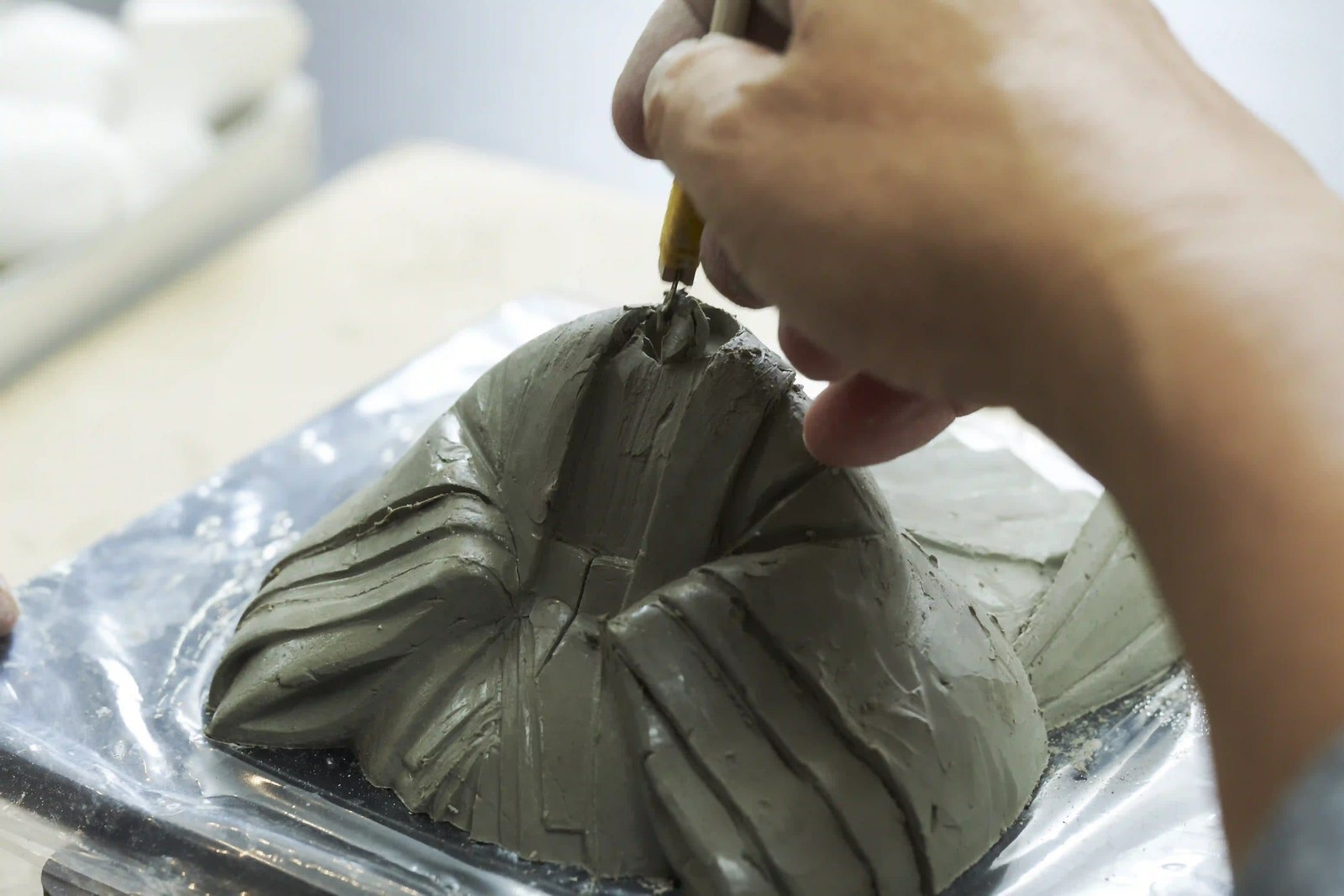
At HOSHINOYA Karuizawa, cultural experience programs for guests are also richly developed. One of the most popular is the “Forest Pottery Experience.” Under the attentive guidance of a local ceramic artist, you knead clay and hand-form small plates or tea bowls in a workshop where you can fully lose yourself in making—while enjoying the tactile pleasure of the earth itself (*2).
In the still air of the forest, time spent creating a vessel with your own hands becomes a rare opportunity to polish your sensibility. After firing, your finished piece is shipped to your home, so you can enjoy it for years as a lasting travel memory. Beyond that, programs such as early-morning nature walks and zazen meditation are also prepared, letting you connect with the area’s culture and landscape and shaping a journey rich in learning and depth.
Beniya Mukayu (Ishikawa / Kaga)
Kaga Architecture Where Tradition and Modernity Converge
Located in Yamashiro Onsen in Kaga, Ishikawa, “Beniya Mukayu” is a luxury ryokan whose name—suggesting “the richness of having nothing”—perfectly reflects its appeal: a simple yet highly refined spatial beauty. Inside, traditional Kaga elements and contemporary design are beautifully balanced.
For example, some guest rooms maintain a classic Japanese style with tatami flooring and futon bedding, while many others feature semi-double beds to enhance comfort (*1). Outside the spa building, a black circular water basin—created by design director Kenya Hara—is a contemporary artwork that has also been exhibited at the 21st Century Museum of Contemporary Art, Kanazawa (*1). From corridors and lounges that highlight the texture of wooden architecture, you can look out onto a beautiful garden and a 300-year-old pine, in a space where the warmth of tradition and the polish of modern art coexist in a single breath.
Even the furnishings and lighting placed throughout the property carry Kaga design motifs, offering a one-of-a-kind stay where a historical hot-spring inn merges with a modern aesthetic consciousness.
A Cultural Workshop Experience in Kaga Yuzen
In the Kaga region where Mukayu is located, you’ll also find abundant opportunities to experience local traditional crafts.
Among them, dyeing experiences in “Kaga Yuzen” are particularly popular. At the Kaga Yuzen Hall (Kanazawa City, Ishikawa), for instance, there are workshops where you use stencils to try Yuzen dyeing and color your own handkerchief or tote bag (*2). Because you can casually experience the vivid “Kaga Yuzen five colors” (red, indigo, yellow, purple, and grass green) and its signature gradation techniques under a craftsperson’s guidance, even first-timers to Japanese culture can feel at ease. You can take your finished piece home as a travel keepsake—and deepen your appreciation for traditional craftsmanship in the process.
Depending on the ryokan, you may also find an on-site gallery for viewing Kaga crafts, or live demonstrations and events featuring local artisans. If you weave these cultural experiences into the pauses between relaxing baths, your journey’s intellectual satisfaction will rise all the more.
Historical Onsen Towns — Onsen Towns That Satisfy Your Curiosity Through Historical Strolls
In onsen towns that once flourished as therapeutic hot-spring retreats and gave rise to countless stories, the town itself becomes a living museum of history. As you walk Taisho-romantic streetscapes or visit famous baths tied to literary greats, you can imagine the culture of earlier eras and the lives of the people who lived there. By joining guided tours or visiting local museums to learn how a hot-spring destination was formed and what traditions it carries, your journey can become far more profound.
Ginzan Onsen (Yamagata)
A Guided Walk Through Taisho-era Romance
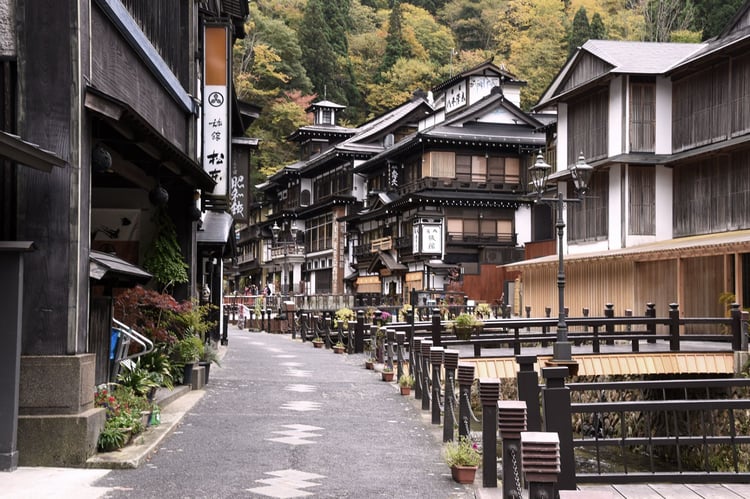
Tucked into the mountains of Obanazawa City, Yamagata, Ginzan Onsen is a beautiful hot-spring town lined along a river with multi-story wooden ryokan in Western-influenced styles, built from the late Taisho period through the early Showa era. Its atmospheric streetscape can feel like stepping back in time—and it’s sometimes talked about for evoking the world of the film Spirited Away.
Here, walking tours led by local guides are especially popular. Starting from Shirogane Bridge, you stroll past the footbath “Waraku Ashiyu” and along the river where gas lamps glow, listening to stories tied to each ryokan’s history as you make your way to Shirogane Falls (*1). In a nostalgic landscape filled with drifting steam, learning about Ginzan Onsen’s origins and culture through your guide’s commentary can make even the simplest view feel richer and more resonant.
After the tour, it’s also worth enjoying local specialties like curry bread or handmade soba. As you wander stone-paved alleys scented with history and listen closely, you’ll hear the river’s gentle murmur—and perhaps even the faint, familiar sound of the gas lamps.
Museum Visits and Architectural Strolls That Bring History to Life
True to its name, Ginzan Onsen traces its origins to a mining town that prospered in the Edo period through the extraction of the “Nobezawa Silver Mine.” After the mine closed in the Meiji era, the area developed as a therapeutic hot-spring destination, and following a major flood in Taisho 2 (1913), the onsen town underwent a remarkable reconstruction.
In the early Showa period, each ryokan was rebuilt into three- to four-story Western-style wooden buildings, forming the distinctive townscape you see today (*2). These historical structures are preserved through community-wide efforts, and Ginzan Onsen’s streetscape is protected by local ordinance.
As you walk, try focusing on the fine details that still carry the era’s imprint: wooden railings, stained-glass-like windows, signage typography—Wa-Yo eclectic design from Taisho to Showa appears everywhere.
Near the entrance to the onsen town, you’ll also find remnants of Ginzan’s mining tunnels, along with a small exhibition. If you take the walking path to the Nobezawa Silver Mine ruins—designated a national historic site—you may feel as though you can almost hear the breath and footsteps of the miners who once worked there. Pairing the hot-spring town with the area’s mining history is a satisfying way to feed your curiosity.
Dogo Onsen (Ehime)
Touring One of Japan’s Oldest Hot Springs and Its Literary Landmarks
Dogo Onsen in Matsuyama City, Ehime, is said to have a history of around 3,000 years and is known as one of Japan’s oldest hot springs. With legends such as a white heron healing its wounds, and stories of Prince Shotoku bathing here, it is a venerable onsen whose name appears in classics including the Man’yoshu, the Nihon Shoki, and The Tale of Genji (*1).
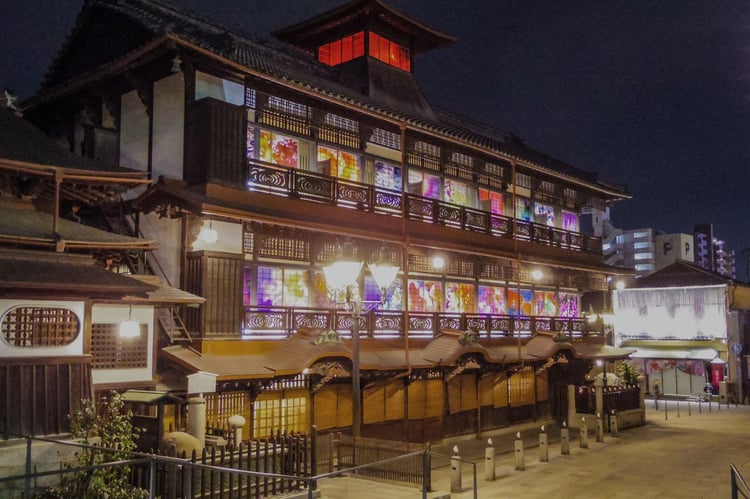
Dogo Onsen Honkan, built in Meiji 27 (1894), is a three-story wooden bathhouse that represents the pinnacle of public-bath architecture and is designated an Important Cultural Property of Japan. It’s also famous for appearing in Natsume Soseki’s novel Botchan, as Soseki frequently visited during his posting in Matsuyama.
Inside the Honkan, there is a private room known as “Botchan’s Room,” said to be where Soseki and his close friend, the haiku poet Masaoka Shiki, relaxed after bathing; the room displays Soseki’s bust and photographs (*2). Touring the building while touching these literary traces can be a pleasure in itself.
Matsuyama also has sites such as the Shiki Memorial Museum and other locations connected to Natsume Soseki, making it easy to enjoy a literary stroll alongside your onsen-town walk. Dogo Onsen has long been praised as a place that “cures anything but lovesickness,” and as you visit, you can feel the history of how it has soothed and uplifted generations of travelers.
Experiencing Contemporary Art Through “Dogo Onsenart”
Tradition-rich Dogo Onsen has also been exploring new synergy with contemporary art in recent years. At the art festival “Dogo Onsenart (DOGO ART),” held every few years since 2014, the entire onsen town transforms into an immersive artistic space.
In particular, in 2024, a large-scale project launched to commemorate the 130th anniversary of the Dogo Onsen Honkan, featuring artists from Japan and abroad—including photographer and film director Mika Ninagawa. Contemporary artworks were installed throughout the onsen town and its ryokan, sharing a new appeal born from the meeting of an ancient hot spring and contemporary art (*3). For example, a massive installation featuring photographs of seasonal flowers and goldfish appeared on the Honkan’s exterior wall, illuminated at night to create a dreamlike scene.
In the station-front plaza, you’ll find a mechanical clock inspired by Botchan alongside nearby art displays, allowing you to enjoy a town walk where tradition and the avant-garde coexist. The streets of Dogo—usually steeped in history—take on an entirely different expression during the event period, stirring your senses in unexpected ways. Rather than simply soaking in the baths, roaming the town as if it were a gallery is a fitting experience for an intellectually engaging, stimulating adult journey.
Onsen Destinations for Architecture & Art Lovers — Refined Stays to Enjoy Architecture and Art
An onsen journey spent in spaces surrounded by beautiful design and artworks is a special pleasure for adults with a discerning eye. Here, we introduce onsen ryokan where the architecture itself feels like art, as well as properties that display artworks throughout the building like an intimate gallery. Savor one-of-a-kind direction born from harmony with local nature and collaborations with artists—and enjoy a stay that’s rich in creativity.
KAI Sengokuhara (Kanagawa / Hakone)
Modern Interiors That Merge with Artworks
“KAI Sengokuhara” in Hakone’s Sengokuhara is part of Hoshino Resorts’ onsen ryokan brand “KAI,” and it embraces the concept of an “atelier onsen ryokan” infused with an artistic spirit.
Throughout the property, you can see the fusion of contemporary art and the onsen ryokan tradition—especially in the guest rooms, which feel like small galleries. Paintings created by 12 artists from Japan and abroad who participated in an artist-in-residence program before opening are displayed in the rooms, making each one its own distinct art space (*1). The brushwork and colors are powerful up close, and as the light shifts from morning to afternoon to night, the artwork’s impression changes too—so you can keep looking and still never tire of it.
The furniture and lighting are also simple and refined, creating a modern interior that lets the artworks shine. Outside your window, the expansive nature of Hakone and Sengokuhara stretches out, and you can enjoy a luxurious moment where the art inside and the landscape outside seem to resonate with one another.
How to Enjoy a Stay-as-a-Gallery Experience
At KAI Sengokuhara, you’re not only invited to view art—you’re also given opportunities to create. Inside, there’s a creative space called the “Atelier Library,” where around 2,000 colored pencils are displayed across an entire wall.
These freely usable pencils change in length and arrangement the more they’re used, and the shifting display itself becomes a single artwork expressing a “changing town” (*2). Here, you can sketch scenery in a notebook or translate the impressions you feel into color—naturally awakening your own desire to express.
In addition, regularly held art workshops sometimes feature the very artists who created the in-house pieces as instructors, allowing you to experience painting inspired by the nature of Sengokuhara. Time spent drawing under professional guidance is filled with discovery and the joy of creation. Through an experience where the stay itself feels like a gallery, you’ll likely take home a kind of inspiration you rarely find in everyday life.
Tobira Onsen Myojinkan (Nagano / Matsumoto)
Modern Japanese Design in Harmony with Nature
Quietly nestled in the forests outside Matsumoto City, in the embrace of the Northern Alps, Tobira Onsen Myojinkan is an exceptional hidden retreat—an over-90-year-old ryokan thoughtfully renovated into a contemporary sanctuary. Its design and interiors are unified by the concept of “a modern space open to the forest,” and throughout, you can sense an intentional harmony with nature.
In the main dining area and lounge, for instance, large glass windows frame the deep greens of the forest and the shifting mountain scenery close at hand. The building itself is designed in an arch along the slope, a distinctive structure that makes the most of the land’s incline. The interiors were created by the acclaimed design team “THE WHOLEDESIGN,” who introduced bold openings in the exterior walls to achieve a spaciousness that feels—as if you were already in the forest (*1).
At the same time, the color palette throughout the property is unified in gentle Japanese tones that highlight natural materials like wood and earth, creating a sense of quiet and composure. In the daytime, filtered sunlight streams in; at night, indirect lighting softly illuminates floors and walls—an exquisite staging that honors the beauty of shadow and subtlety. In a space that could be called a modern revival of an “ideal therapeutic hot-spring retreat,” you can savor deep relaxation in both body and mind.
A Stay Style That Lets You Enjoy Contemporary Art
Inside Myojinkan, art pieces and crafts are scattered throughout. Every work is one-of-a-kind, created specifically for Myojinkan by emerging artists and artisans based in Nagano and Matsumoto. Under the project direction of craft artist Daisaku Maeda, six creators—including sculptor Hirotoshi Ito, known for distinctive stone art—participated and developed a remarkable collection of collaborative works for the Myojinkan setting (*2).
For example, objects displayed around the property incorporate old larch wood grown nearby, while plaster walls using Shinshu soil, straw, and sand create textures that feel like art in themselves. These works—where traditional handcraft techniques meet contemporary sensibility—add a refined warmth to the space and stir your creativity (*2). During your stay, make time to wander the property and look closely at the pieces. If you find a favorite, you might even ask the staff about the artist behind it.
Once you know the story behind a work, your travel memories will feel richer and more meaningful. Time at Myojinkan—where nature and art intertwine—can become a luxurious experience that fully satisfies an adult sensibility.
Sustainable & Eco-friendly Onsen Resorts — Forward-thinking Onsen Stays That Care for the Environment
As environmental awareness continues to grow, onsen destinations are also advancing initiatives that prioritize sustainability. From facility operations powered by natural energy to eco-friendly equipment, a new wave of onsen resorts is emerging to offer stays that are kinder to the planet. At these cutting-edge properties—where comfort and sustainability coexist—you can soothe body and mind while experiencing a future-oriented way of traveling.
Yunoyama Onsen AQUAIGNIS (Mie)
An Eco Resort Powered by Natural Energy
“AQUAIGNIS,” located in Yunoyama Onsen in Komono Town, Mie, is a new-style hot-spring resort built around the themes of “healing” and “food.” On its expansive grounds, you’ll find a free-flowing hot-spring facility, restaurants and a bakery led by acclaimed chefs, lodging buildings and detached villas, as well as farms and even strawberry houses—making it a multi-facility destination you can enjoy all day long.
Thoughtful environmental consideration appears throughout—especially in how the hot spring itself is used. Their privately sourced spring, “Kataoka Onsen,” is pumped from 1,200 meters underground and boasts an abundant output of about 750 liters per minute. It’s delivered to the baths exactly as it is: with no added water, no heating, and no circulation filtration whatsoever—100% pure source water (*1). The temperature is around 42°C, and even the showers use the spring water, letting you experience natural energy and mineral components directly. This not only eliminates the need for fuel-based heating, but also supports sustainable operation that preserves the onsen’s inherent qualities.
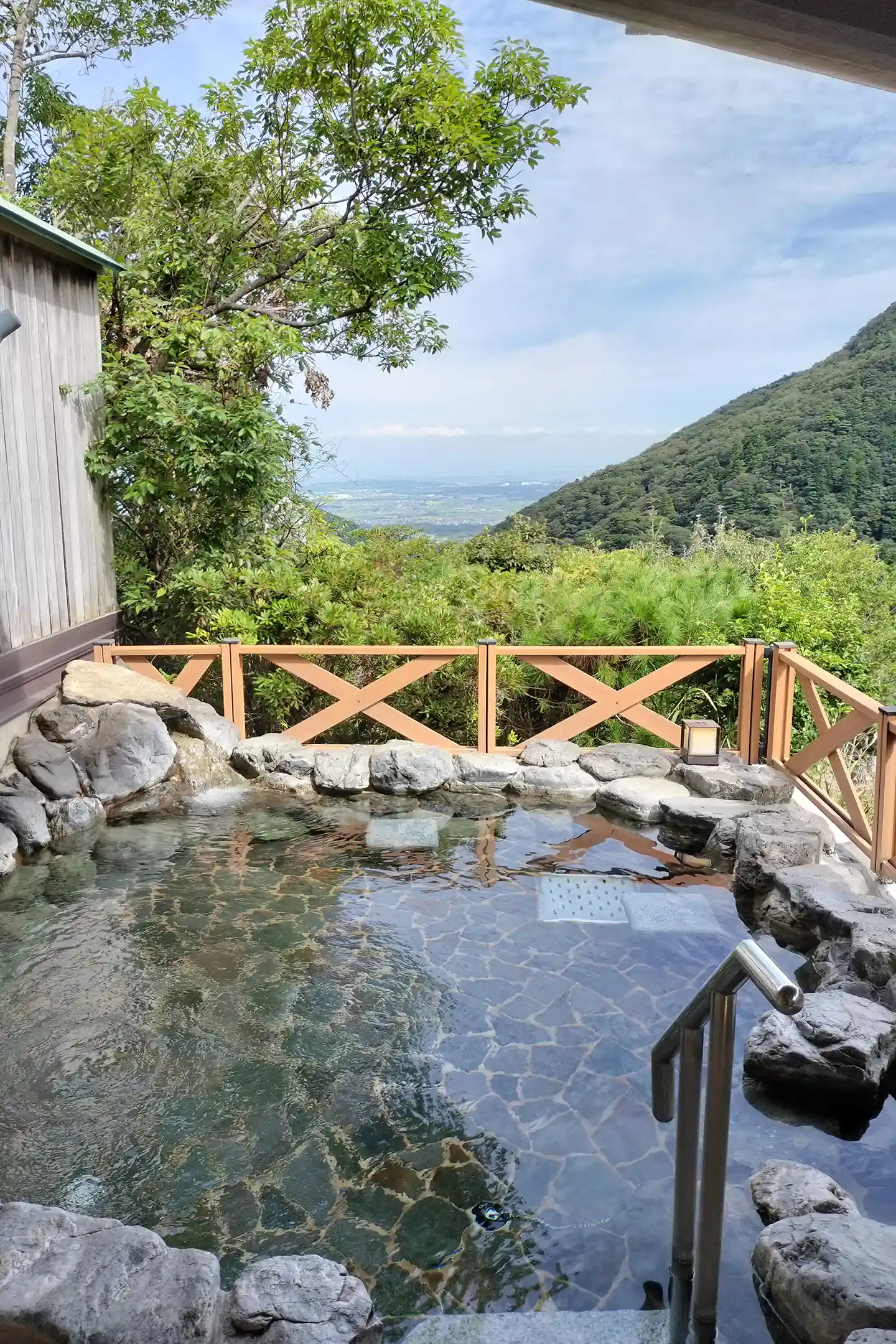
The sulfur scent rising from the water and its silky feel are, truly, gifts from nature. A bamboo grove surrounds the spacious open-air bath, designed so you can enjoy the changing seasonal scenery as you soak. By leveraging abundant hot-spring flow and natural energy, AQUAIGNIS’s onsen draws attention as an initiative that comforts your body and mind while also being gentle on the environment.
Environmental Initiatives Including EV Support
At AQUAIGNIS, you’ll also see many efforts to reduce environmental impact through everyday operations. One example is support for electric vehicle (EV) users. EV charging stations are installed in the large parking area, allowing guests visiting for overnight stays or day-use bathing to charge their vehicles on-site (*2). Since travel in sightseeing areas often relies heavily on cars, enhancing charging infrastructure encourages EV visits and reflects a commitment to contributing to a decarbonized society.
The architecture on the property also uses many natural materials and adopts a low-rise, separated-building layout that harmonizes with the landscape—another sign of respect for the surrounding environment. Restaurants actively incorporate locally produced organic vegetables, contributing to reduced food loss and supporting local production for local consumption. In addition, the resort maintains a sustainable operating policy down to the details, including introducing the latest energy-saving equipment and thoroughly separating waste.
In a nature-rich space that spreads out at the foot of Mt. Gozaisho, you can fully enjoy hot springs and fine food while putting an eco-friendly lifestyle into practice—AQUAIGNIS offers a stay that brings that ideal experience within reach.
ONSEN RYOKAN YUEN Shinjuku (Tokyo)
A Leading Example of an Urban Eco-friendly Ryokan
“ONSEN RYOKAN YUEN Shinjuku” is a unique ryokan in Tokyo’s Shinjuku that recreates authentic hot-spring bathing and Japanese ambiance inside a high-rise city building. With a large public bath on the upper floors of an 18-story tower, you can enjoy quality hot-spring water transported from Hakone—right in the heart of the city. While an urban facility like this might seem energy-intensive at first glance, eco-friendly initiatives are woven throughout. One of the most symbolic examples is the sustainable amenities introduced in guest rooms.
Since 2022, the property has adopted amenity sets made from bamboo, a circular material used by the Japan-born sustainable brand “MiYO Organic.” From toothbrushes and hairbrushes to cotton swabs, bamboo products are provided throughout (*1). By reducing disposable plastics as much as possible and introducing reusable bamboo products, the ryokan achieves a balance between lowering environmental impact and preserving a distinctly Japanese warmth. These bamboo amenities come in a logo pouch, and guests are encouraged to take them home and continue using them.
The interiors are also unified in a simple, no-waste Japanese design, and by avoiding excessive decoration and equipment, the property supports resource conservation. Lighting uses LEDs, and guest-room brightness and climate control can be managed efficiently. Even the tea sweets served in-house use domestically sourced ingredients—showing careful attention to both environment and culture down to the smallest details.
These efforts have been well received, and YUEN Shinjuku is praised by travelers in Japan and abroad as an “eco-friendly urban stay.” It’s a forward-looking example where you can relax in a calm, quiet space while experiencing hospitality designed with the future in mind.
Introducing Cutting-edge Environmentally Minded Technologies
At YUEN Shinjuku, you’ll also find the latest technologies designed with environmental care. For example, high-efficiency heat pump technology is used in the building’s hot-water supply and air-conditioning systems, enabling comfortable temperature management while reducing consumption of city gas and electricity.
In addition, only the necessary amount of hot-spring water is transported from Hakone, and for hygiene management the property employs methods such as ozone sterilization that do not rely on chemical agents—reducing environmental burden and waste. Elevators are equipped with an energy regeneration system that converts energy generated during descent into electricity and reuses it within the building.
Lighting throughout the property uses motion sensors to automatically dim or turn off when no one is present, preventing unnecessary power use. Check-in is handled via tablets for paperless procedures, and in-house guidance is digitized, helping conserve paper resources. In amenities as well, beyond the bamboo products mentioned earlier, refillable bottles are used for shampoo and soap to avoid plastic packaging, dramatically reducing annual waste from disposable containers.
Through this accumulation of advanced technology and practical ingenuity, YUEN Shinjuku realizes lodging in the city center while minimizing environmental impact. Its commitment to pursuing ecology without sacrificing comfort can be seen as a model case for the future of the hotel and ryokan industry.
Events & Workshops for Cultural Immersion — Onsen Destinations Where You Can Enjoy Cultural Experience Events
To make your onsen journey even more fulfilling, it’s also worth joining cultural experience events unique to the region. Through live demonstrations of traditional performing arts, workshops, and lectures by specialists, you can encounter the area’s culture and history directly. Rather than only being soothed by soaking in the baths, learning through hands-on experience can deepen your understanding of—and affection for—the place you’re visiting.
Kusatsu Onsen (Gunma)
Experience the Tradition of Yumomi
Kusatsu Onsen in Gunma is counted among Japan’s three most famous hot springs. Because its source water emerges at very high temperatures, a distinctive bathing method known as “yumomi” has been practiced since long ago. This traditional technique uses boards about 1.8 meters long to stir the water, lowering its temperature while also softening the feel of the bath—an emblem of Kusatsu’s therapeutic onsen culture. At Netsunoyu in the center of Kusatsu Onsen, the “Yumomi and Dance Show” is held daily, and the sight of yumomi performers in matching yukata powerfully handling the boards while singing the Kusatsu-bushi folk song is unforgettable.
Between show segments, there’s also a hands-on corner where audience members can try yumomi themselves (*1). No reservation is required, and during the allotted time you can join on a first-come, first-served basis (the participation fee is around 300 yen) (*1). As you move the board while learning the calls from locals, the rhythm of Kusatsu-bushi seems to seep into you along with the spring’s heat—letting you feel Kusatsu’s bath culture in a truly tangible way.
With steam rising from Yubatake and the yumomi song echoing around you, taking part in this living tradition will surely become a highlight of your trip.
A Specialist Lecture on Therapeutic Onsen Culture
Kusatsu Onsen has been cherished since ancient times as a “toji” (therapeutic hot-spring) destination. The culture of bathing in its highly beneficial waters for a set period to improve physical conditions continues to draw attention even today.
In Kusatsu, experience sessions are held for a therapeutic method known as “Jikanyu” (time bathing), where you can learn traditional bathing techniques under specialized guidance. Jikanyu is a group bathing practice in which participants enter and exit the water according to the calls of a “Yunaga” (a traditional instructor role). It’s a Kusatsu-specific custom once practiced communally by people seeking therapeutic bathing.
Today, it is conducted daily at a public bath called Chiyo-no-yu, and you can participate even if you’re not visiting specifically for therapy (same-day sign-up available) (*2). For first-timers, the Yunaga carefully teaches how to enter the bath and how to breathe, so you can try it safely. By repeating a cycle of soaking in hot water for a set time, stepping out, and resting, it’s said that improved circulation and detox effects can be expected. When you actually experience it, you may be surprised by the unique rules and sense of togetherness—and find yourself imagining how people in earlier times placed their hopes in hot-spring water.
Beyond this, Kusatsu also offers museums where you can learn about how hot springs work and their benefits, as well as free footbath spots—making it possible to go beyond simple sightseeing and take a true “journey to learn about onsen.” Why not explore the depth of onsen therapy through lectures by specialists and local volunteers?
Arima Onsen (Hyogo)
Tea Ceremony, Flower Arrangement, and Traditional Craft Workshops
Arima Onsen (Kobe City, Hyogo), known as one of Japan’s three oldest hot springs, is a celebrated onsen beloved by many historical figures—from Toyotomi Hideyoshi to Hirobumi Ito. In this storied hot-spring town, you’ll also find a rich selection of programs that let you experience Japanese traditional culture with ease.
For example, at the long-established ryokan Gekkoen, an authentic matcha experience is held with Arima geiko (Arima’s geisha) as your hosts. In a serene tearoom, you watch a geiko demonstrate the tea procedure up close, and then you prepare and taste matcha yourself (*1). It’s said to be an enjoyable way to learn tea ceremony history and etiquette even if you’re new to Japanese culture—while also touching the spirit of hospitality nurtured through geiko tradition (*1).
In this way, a special tea experience where Arima geiko serve as your teachers is a rare opportunity unique to Arima Onsen. Depending on the ryokan, you may also find mini-lessons in flower arrangement (ikebana) or hands-on making experiences with traditional crafts (such as Arima baskets). You’re not only soaking in exceptional waters—you’re also engaging with Japan’s traditional arts and deepening your cultural knowledge.
Cultural Exchange Events with Japanese Culture Specialists and Artists
Arima Onsen also offers unique spaces where travelers can connect with the people who carry Japanese culture forward. A representative example is the “Geiko Cafe ‘Ito’,” which opened in 2015. Created to support the continuation of Arima geiko and share their appeal, this café has active geiko on-site, and while enjoying tea or alcohol you can watch their dances, shamisen performances, and traditional ozashiki games up close (*2).
Visitors can drop in casually without a reservation, and because you can talk with geiko and experience traditional arts directly, it’s become popular with a wide range of guests (*2). Geiko are also professional artists, and meeting them in such an approachable setting can make Arima’s culture feel far more immediate and personal.
In addition, every autumn Arima hosts the “Arima Great Tea Gathering,” where outdoor tea ceremonies are held at autumn-leaf viewing spots such as Zuihoji Park. Tea practitioners from across Japan gather, and general participants can also experience formal tea—an event that carries forward Arima’s tea culture once beloved by the ruler Hideyoshi.
There are also diverse cultural events—such as workshops in traditional cut-glass work and kumihimo braiding, as well as experiences in calligraphy and kōdō (the art of incense). While these are seasonal and limited in timing, they add wonderful variety. If you enjoy the atmosphere of the onsen town and join such events, the learning and emotion you gain on your journey will surely deepen even further.
After soaking in a famed hot spring and restoring your body and mind, you connect with Japanese culture specialists and artists and gain fresh insight—Arima Onsen is, in that sense, truly an onsen destination worthy of an adult’s intellectual curiosity.