Sado is both the practice of preparing tea to welcome guests and a word that expresses the "Way" of refining one's spirit. Within the simple act of sharing a single bowl of tea lies a concentrated blend of etiquette, aesthetic sensibility, and inner cultivation—holding within it the very philosophy of Japanese culture.
You may have heard the words "sado" or "chanoyu" before, but pausing to explore their origins and the deeper chanoyu meaning more carefully reveals just how rich a philosophical system lies beneath the surface. In this article, you'll be guided step by step—from the roots of each character, "cha" (茶) and "do" (道), to the distinctions between chanoyu and chaji, the historical backdrop, and the spiritual heart of this tradition.
The Short Answer: What Sado Really Means
Sado (also read as chado) is a traditional Japanese cultural practice of whisking matcha to welcome guests—and at the same time, a form of "the Way" that seeks to refine character and spirit through that very practice. Even in Japan's Fundamental Law for the Promotion of Culture and the Arts, sado is listed at the top of "lifestyle culture," positioned as a cornerstone of the country's spiritual heritage (*1).
Behind a single bowl of tea lies centuries of accumulated thought and aesthetic refinement—and that's the first thing worth holding in mind as you read on.
The Origin of Sado Lies in Combining "Cha" and "Do"
The word "sado" is formed from two Chinese characters. "Cha" refers not only to tea as a drink, but also to the entire culture of exchange and hospitality that unfolds around it. In Japan, the older term "chanoyu" was once more common, but over time, the character "do" ("Way") was added to emphasize the dimensions of spirit and self-cultivation, giving rise to the word "sado."
What matters most here is the meaning of "do." In English, it's often rendered as "Way" or "Path," but in Japanese, "do" is far more than a "method." It refers to a way of living itself—one in which you grow as a person and continually refine your inner world through sustained practice. Just as words like budo, judo, and kendo are now used directly in English, the concept of "do" is widely recognized as a philosophy unique to Japanese culture (*1).
As for how "茶道" is actually pronounced, it varies by school. The Urasenke school generally reads it as "chado," while the Omotesenke school says "sado." Even small details like this hint at the layered depth of a tradition shaped by centuries of lineage. What matters more than pronunciation is understanding the spirit carried within the word—both readings point to the same world of "the Way."
The Meaning of Sado Goes Beyond Tea Etiquette
Sado is often thought of as simply "learning how to drink tea," but its true nature is far broader and deeper. On the official Urasenke website, sado is described as a "total art form" that brings together many of Japan's traditional cultural practices (*1).
In other words, sado is a highly refined cultural practice that integrates etiquette, hospitality, aesthetics, seasonal awareness, spatial design, and personal development. Before a single bowl of tea can be served, the host selects seasonal flowers, chooses a hanging scroll with care, handpicks the utensils, commissions the sweets, and even fine-tunes the temperature of the room. Every one of these considerations is directed toward the simple act of drinking tea—and within them lies the very essence of sado.
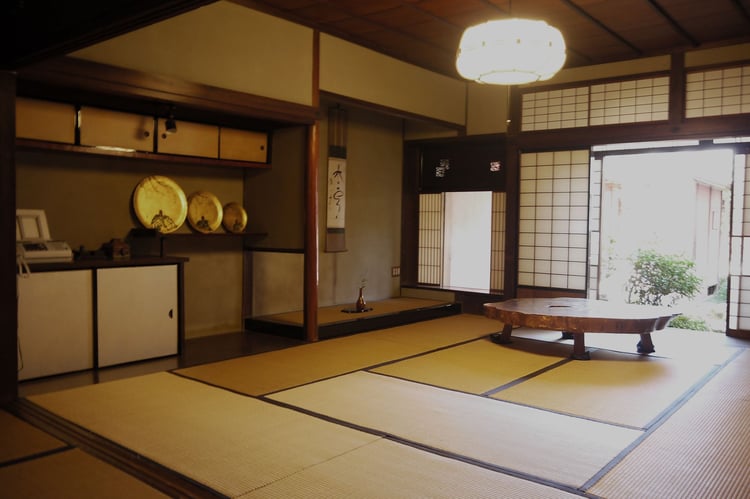
To study sado is not to memorize a set of gestures, but to gradually embody this full spectrum of attentiveness. Much like how repeated visits to a museum deepen your way of looking at paintings, or how studying cooking cultivates a growing respect for ingredients, sado is a lifelong pursuit—one whose field of vision expands the more you engage with it.
How Sado Differs from Chanoyu and Chaji
Sado, chanoyu, and chaji—these three words are easy to mix up, yet each refers to a different concept or scope. Grasping how they differ will deepen your appreciation of Japanese tea culture considerably. This is often exactly where newcomers to tea first get confused, so let's untangle it carefully here.
Chanoyu Meaning: The Umbrella Term for Tea Culture
"Chanoyu" is the overarching term for the cultural act of whisking matcha and welcoming guests. Taking shape between the Muromachi and Azuchi-Momoyama periods, this culture involves arranging tools such as tea bowls, kettles, and shelving, whisking matcha according to established gestures, and sharing a single gathering with your guests. It's commonly translated into English as "Japanese tea ceremony," and it's the term most widely recognized across the West (*1).
It may help to think of the chanoyu meaning as focused on the practice itself rather than its inner, spiritual dimension. The word refers to the full sweep of concrete cultural acts—"whisking tea," "gathering in the tea room"—and has long been a familiar expression in Japan. Well before "sado" became widespread, "chanoyu" was already an emblematic term for Japanese culture, and today both expressions remain in everyday use (*1).
Sado Is a Concept That Includes Spirit and Self-Cultivation
"Sado" is a broader concept that encompasses the practice of chanoyu while also embracing the spiritual and philosophical dimensions of how that practice refines your inner self. It isn't simply about gestures that are beautiful to watch—it also includes the awareness of propriety behind those gestures, consideration for the other person, and the process of personal formation through self-reflection, all gathered under the name of "the Way." The Agency for Cultural Affairs describes sado as something "indispensable when speaking of Japanese culture, particularly its spiritual dimension" (*1).
If you were to describe the relationship between chanoyu and sado, you might say that "chanoyu" describes the practice itself, while "sado" adds philosophical meaning and a path of personal development to that practice. Even when the physical act of whisking tea is the same, the subtle difference between "chanoyu" and "sado" comes down to whether there is an awareness of "this as a Way."
Individual schools also reveal their own character in how they use these words: Omotesenke tends to treasure the term "chanoyu," while Urasenke more commonly uses "sado."
Chaji Is the Formal Practice of Hospitality
Of the three words, "chaji" refers to the most specific, concrete setting of practice. A chaji is generally a formal gathering that proceeds through the initial charcoal laying, kaiseki (a sweet is served later in the sequence), a midway recess (nakadachi), thick tea (koicha), the second charcoal laying, and thin tea (usucha)—with the full, traditional form taking roughly four hours from arrival to departure (*2). Within those hours, as host and guest build a shared experience together, you'll find the spirit of "ichigo ichie"—one time, one meeting—that sado holds so dear.
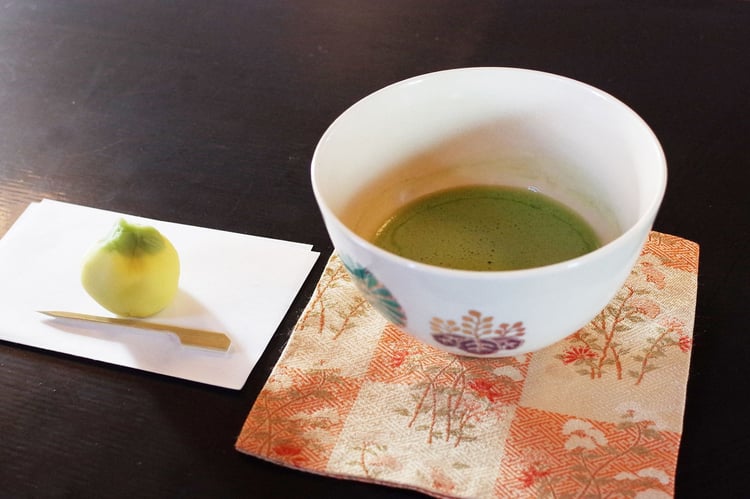
As for the terms, "koicha" refers to a rich, thickly whisked tea shared from a single bowl passed among several guests, while "usucha" is a smoother tea whisked individually for each guest. In English, these are sometimes called "thick tea" and "thin tea." Getting to know the full shape of a chaji is the most direct path to experiencing what the word "sado" truly means (*2). A chaji is a special occasion—distinct from typical tea experiences designed for visitors—but understanding its structure and significance will noticeably deepen your appreciation of tea culture.
Why Is It Called "Sado" and Not "Chajutsu"?
If the goal were simply to master a skill, "chajutsu" (the art or technique of tea) could just as easily have been the word of choice. And yet in Japan, the character "do" was deliberately chosen instead. Behind this naming lies a philosophy that reaches far beyond the acquisition of technique. The question "Why is tea called a Way?" is one that touches the very heart of Japanese culture.
The Philosophy of "Do" in Japanese Culture
In Japan, there's a cultural tradition of pursuing personal growth through dedicated practice—and that idea is precisely what's captured by the character "do." Kado (the Way of flower arrangement), shodo (the cultivation of mind through calligraphy), budo (character formation through martial training)—all of these share the view that the acquisition of skill is not the goal in itself. Rather, it's through the steady accumulation of practice that your inner self is refined (*1).
Article 12 of the Fundamental Law for the Promotion of Culture and the Arts calls for "the promotion of sado, kado, shodo, food culture, and other culture related to daily life (lifestyle culture)." The fact that these are placed side by side tells you something important: the culture of "do" is recognized within Japanese society as a unified system (*1).
There's a clear intention behind calling these practices a "Way" rather than an "art." The philosophy is that they are not things to be completed and then admired, but something the practitioner walks endlessly, without a final destination.
In Sado, "Do" Is a Practice That Tunes Your Inner Self
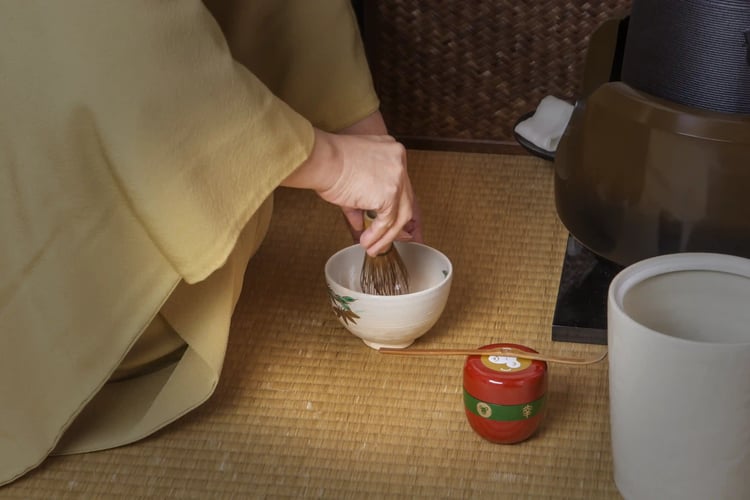
What embodies "do" in sado isn't just the beauty of the movements. It lies in what you choose for your guest, in what you speak and what you leave unspoken—even the quality of silence becomes part of this thoughtfulness. The host, for instance, selects each element—a single hanging scroll that evokes the season, one flower placed in the vase, even the "landscape" of a tea bowl (its visual character)—while imagining what the guest will feel and the kind of time they will spend (*2).
This is a practice that calls for deep observation of the other person and genuine empathy. To shape your movements beautifully is, at the same time, to shape your heart—and that is part of why sado is called a "Way." When seasoned tea practitioners say, "Only when the movements have sunk so deeply into the body that you forget them does the mind finally become free," they are pointing to exactly this feeling. The essence of sado as a "Way" lies in the inseparable bond between bodily movement and the state of your heart (*2).
Why Sado Is Tied to Spiritual Cultivation
Behind sado's deep connection to spiritual cultivation lies the influence of Zen Buddhism. Murata Juko is said to have had a relationship with the Zen master Ikkyu Sojun and is regarded as a figure who brought a Zen background into chanoyu. The phrase "cha zen ichimi" (the unity of tea and Zen), however, is linked in Omotesenke's account to Takeno Joo (*2). It was Juko's receipt of the teaching that "the Buddha's Way is also within chanoyu," and his discovery of beauty in the simplicity shaped by Zen, that would later form the foundation of tea as a "Way."
What Zen treasures is concentration on this very moment and self-reflection that moves beyond form. The act of whisking tea in the quiet of a tea room becomes precisely that kind of practice. As you attend to each complex gesture one by one, stray thoughts fall away, and a shared sense of "being here, now" emerges between host and guest.
This is the essential reason sado is positioned as a "Way" rather than a technique (*2). At a time when mindfulness and meditation are drawing so much attention in the West, it's only natural that growing interest has turned toward the spiritual depth held within this practice.
When Was Sado Born? Tracing the Origin of the Word Through History
To understand when the word "sado" came into being and how it took root, it helps to follow the historical arc—from the arrival of tea culture in Japan through to the modern era. The origin and meaning of a word can't be told apart from the context of the time that gave it life.
Tea Culture From China and Its Reception in Japan
Tea is thought to have first reached Japan sometime between the Nara and early Heian periods. But what truly sparked its establishment as a cultural practice was the Kamakura-era Zen monk Eisai, who brought tea seeds back from Song-dynasty China.
According to the Agency for Cultural Affairs' Japan Heritage Portal, since tea was first transmitted from China to Japan, the Minamiyamashiro region of Kyoto has spent roughly 800 years producing the country's finest tea, leading the evolution of Japanese tea culture (*1).
At first, tea was embraced mainly within temples, where monks drank it as an aid to meditation. In Eisai's work "Kissa Yojoki" (Notes on Drinking Tea for Health), tea is extolled as "a miraculous remedy for preserving health," which helped the practice spread among the samurai class and learned elite. Before long, tea moved beyond being simply a health drink and came to be reimagined as a space for spiritual exchange and the pursuit of beauty (*1).
As the act of drinking tea was elevated into a cultural pursuit, the groundwork for what would later become "sado" was gradually laid. Eisai, incidentally, came to be venerated by later generations as the "Ancestor of Tea" (chaso), a testament to the historical weight he still carries in Japan's tea culture today.
The Spirit of Wabi-cha Cultivated by Murata Juko, Takeno Joo, and Sen no Rikyu
Between the late 15th and late 16th centuries, tea culture went through a transformative turning point. Before then, "shoin tea" had meant enjoying tea in lavish rooms filled with ornate karamono utensils imported from China. In contrast, "wabi-cha"—which prizes Japan's own sensibility of quiet simplicity and the spirit of inner reflection—was born (*2).
The flourishing of wabi-cha owes much to three tea masters: Murata Juko (1422–1502), Takeno Joo (1502–1555), and Sen no Rikyu (1522–1591) (*3). Juko brought the spirit of Zen into chanoyu and was the first to raise the question of "the matter of the heart" within tea. His writing known as the "Letter of the Heart" (Kokoro no Fumi) articulated chanoyu as a "Way of the heart" that fosters human growth, and stands as the starting point of wabi-cha (*2).
Takeno Joo inherited Juko's spirit, and it was Sen no Rikyu who deepened that vision both philosophically and aesthetically, bringing the culture of chanoyu to full flower (*3). Rikyu established a world of tea defined by the stillness of a single bowl served in a tearoom as small as two tatami mats, a sensibility that finds beauty in the incomplete, and an all-encompassing attentiveness to the guest. His thinking runs beneath all the major sado schools today—and it's fair to say that the spiritual core of "sado" took shape in this era.
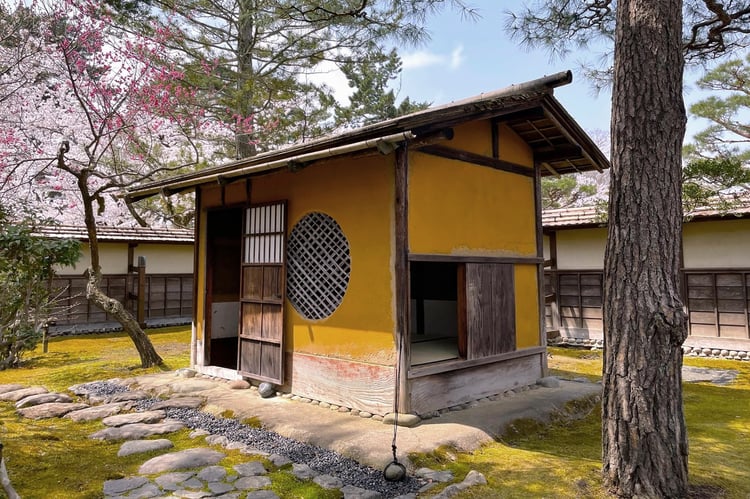
.webp?width=750&height=500&name=The%20Roji%20(The%20Traditional%20Tea%20Garden%20Pathway).webp)
How Sado Became Widely Known in the Modern Era
The word "sado" appears in usage by the early to mid-Edo period at the latest, and from the Meiji era onward, its social reach expanded further through women's education and the spread of tea instruction in schools (*4).
Especially significant were the development of the iemoto system (a framework in which a particular school's lineage certifies master-level qualifications) and the inclusion of sado within school and etiquette education. At Urasenke, successive grand masters from the Meiji period onward actively promoted the practice, working to incorporate it into girls' school curricula, among other initiatives (*4). Around the same time, the thinker Okakura Tenshin wrote "The Book of Tea" (1906) in English, and its wide readership in the West became a pivotal moment in bringing the concept of "sado" to international recognition. In this way, sado established the social standing it holds today—as a symbol of Japanese etiquette and spiritual culture (*4).
Three Ideas That Deepen the Meaning of Sado
Once you've explored its origins and history, touching on the core ideas that sado holds dear will bring both its meaning and the underlying chanoyu meaning into even fuller dimension. Here, you'll find three particularly important concepts—each one a distinctly Japanese idea that resists a clean translation into English or any other language.
What Wabi and Sabi Mean in Sado
"Wabi" and "sabi" are indispensable concepts when speaking of Japanese aesthetics, and together they form the spiritual foundation of sado. In contrast to the "perfection" and "abundance" often pursued in Western aesthetics, wabi points to "the richness found within simplicity," while sabi speaks to "the mellow depth that comes from the passage of time."
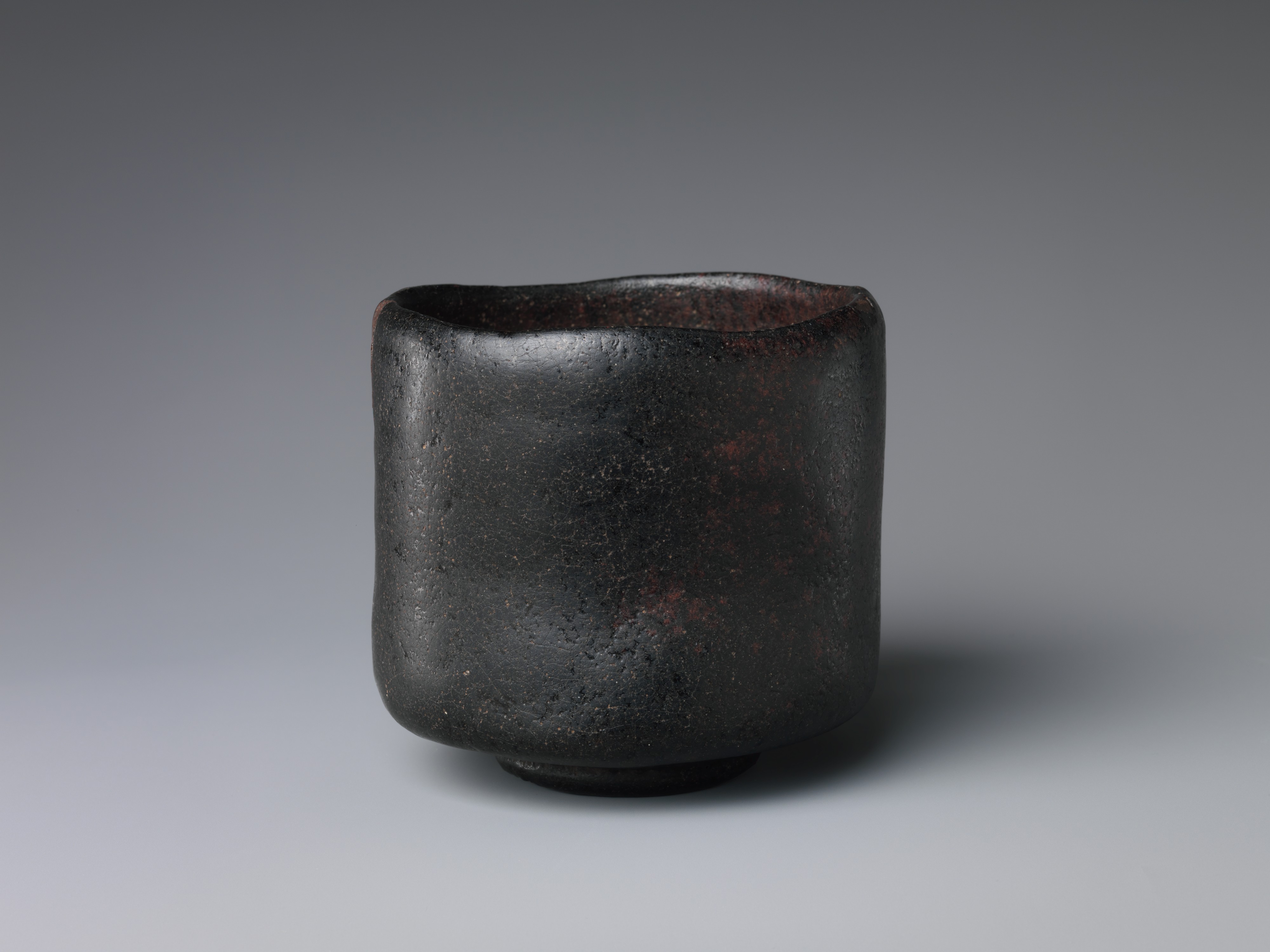
Step into a tea room and you'll notice plaster walls, a modest space of bamboo and earth, the faint slant of light filtering in, the gentle warp of an aged tea bowl—a sensibility that discovers beauty in "what is not excessive." Sen no Rikyu redefined beauty itself, finding it even in the scratch on a wall or the drip of a glaze (*1). The culture of repairing a chipped bowl with kintsugi (golden joinery) and then appreciating even the scar as part of its beauty was born from this same wabi-sabi spirit.
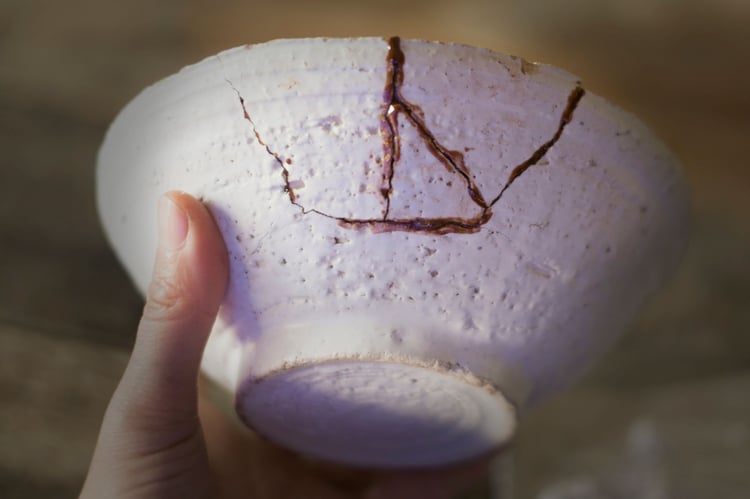
This sensibility resonates with contemporary minimalism and Scandinavian design, and in recent years "wabi-sabi" has entered English as a word used in its original pronunciation. Yet its essence isn't simple simplicity—it's the capacity to perceive "the radiance of life that dwells within imperfection." Sado's aesthetic is a comprehensive practice of weaving this wabi-sabi sensibility into every space, object, and movement (*1).
What Ichigo Ichie Tells Us About the Value of a Single Encounter
"Ichigo ichie" is one of the phrases that most symbolizes the spirit of sado, carrying the meaning "this encounter comes only once in a lifetime." Even with the same utensils, the same setting, and the same faces, no moment is ever repeated exactly—and it is from this awareness that the host pours everything into each and every gathering (*1).
This concept is believed to have been formally articulated by Ii Naosuke, the late-Edo lord of Hikone, in his work "Chanoyu Ichie Shu," and the phrase "the resolve of ichigo ichie" became widely known thereafter. In English, it's most often rendered as "once-in-a-lifetime encounter," but its deeper meaning runs further—this isn't merely about a "rare occasion," but about the sincerity of giving your best to this very moment.
Even in modern business settings in Japan, people speak of "approaching something with the spirit of ichigo ichie," a sign of how deeply this idea is woven into daily life. The fact that a philosophy cultivated within the practice of sado has extended into so many areas of society also speaks to the reach of tea as a "Way" (*1). Just as the moment of standing before a work of art carries its own irreplaceable charge, a single bowl shared in a tea room is precious precisely because it cannot be recreated.
The Meaning of Hospitality in Sado
In sado, "hospitality" means far more than simply offering a drink. From the host's selection of utensils, to the preparation of the room, the cleaning of the garden, the commissioning of the sweets, and the precise temperature of the water, every element is a finely tuned arrangement born from thoughtfulness toward the guest (*2).
This spirit of "hospitality"—"omotenashi"—has attracted attention around the world. One account of its origin traces "omotenashi" back to the verb "motenasu," meaning to receive someone attentively. In the setting of a tea gathering, the host's care never calls attention to itself. A space so naturally arranged that the guest doesn't even notice the effort is considered the highest form of hospitality (*3).
When the host quietly sprinkles water along the roji—the garden path that leads to the tea room—so you can walk through it with ease, that's one example of the kind of hospitality that never makes itself visible. It's the steady accumulation of these small gestures of care that lifts sado's "hospitality" beyond ordinary service and into a realm of cultural depth. You may sense a kindred spirit in the way a fine dining restaurant fixates on the origin of its ingredients, or in the attention to the smallest detail that defines a top-tier hotel.
Why the Meaning of Sado Becomes Clear Through Experience
So far, you've followed the meaning of "sado" through words and concepts—but the essence of this practice is something you understand not only as knowledge, but also with your whole body through direct experience. The origins and philosophy you've taken in intellectually only truly settle into you as felt sensation when you finally encounter it in person. That's part of the quiet magic of sado.
The Stillness of the Tea Room and the Meaning Behind Each Movement
When you enter a tea room, you pass through a small doorway called the "nijiriguchi," so low that even an adult must bow their head to step through (an almost-square opening of roughly 60 to 70 centimeters across). This design means that regardless of your social standing or status, everyone must lower their head and enter the space humbly (*1).
In the Japan of the past, even the highest-ranking samurai commanders had to stoop before this entrance. This small door is also a symbolic threshold that separates the outside world from the world of the tea room.
Inside, the space of tatami mats, the earthen walls, a single scroll of calligraphy or painting hanging in the alcove, and the sound of water coming from the hearth—all of these sensory elements create a "quality of stillness" that words alone cannot convey. The sound of the boiling water is called "matsukaze" (the wind through pines), and that sound alone has the power to draw your awareness back to the here and now (*1).
The tea room is designed as a space that stands apart from daily life, a place of another dimension. Only when you take in its atmosphere with your whole body do you begin to grasp the essence of sado as a "Way"—something that reaches beyond words.
Choosing a Sado Experience if You're New to It
If this is your first encounter with sado, look for a program that offers thorough explanation ahead of time. Programs available in English or other languages are especially worth seeking out, since understanding the cultural context alongside the experience leads to deeper insights.
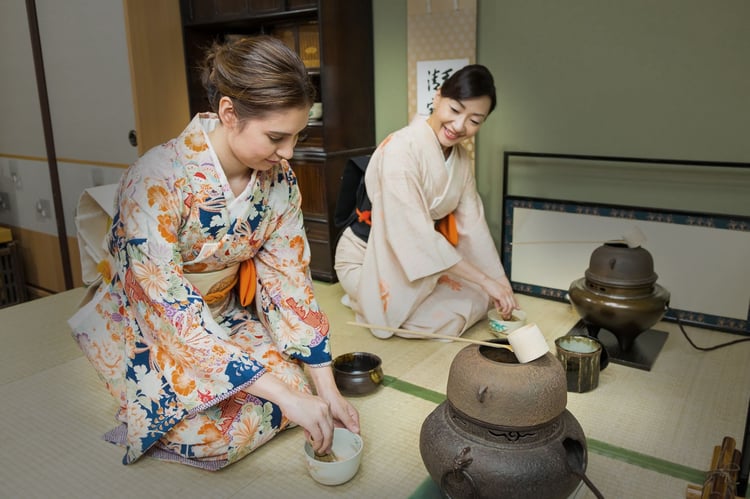
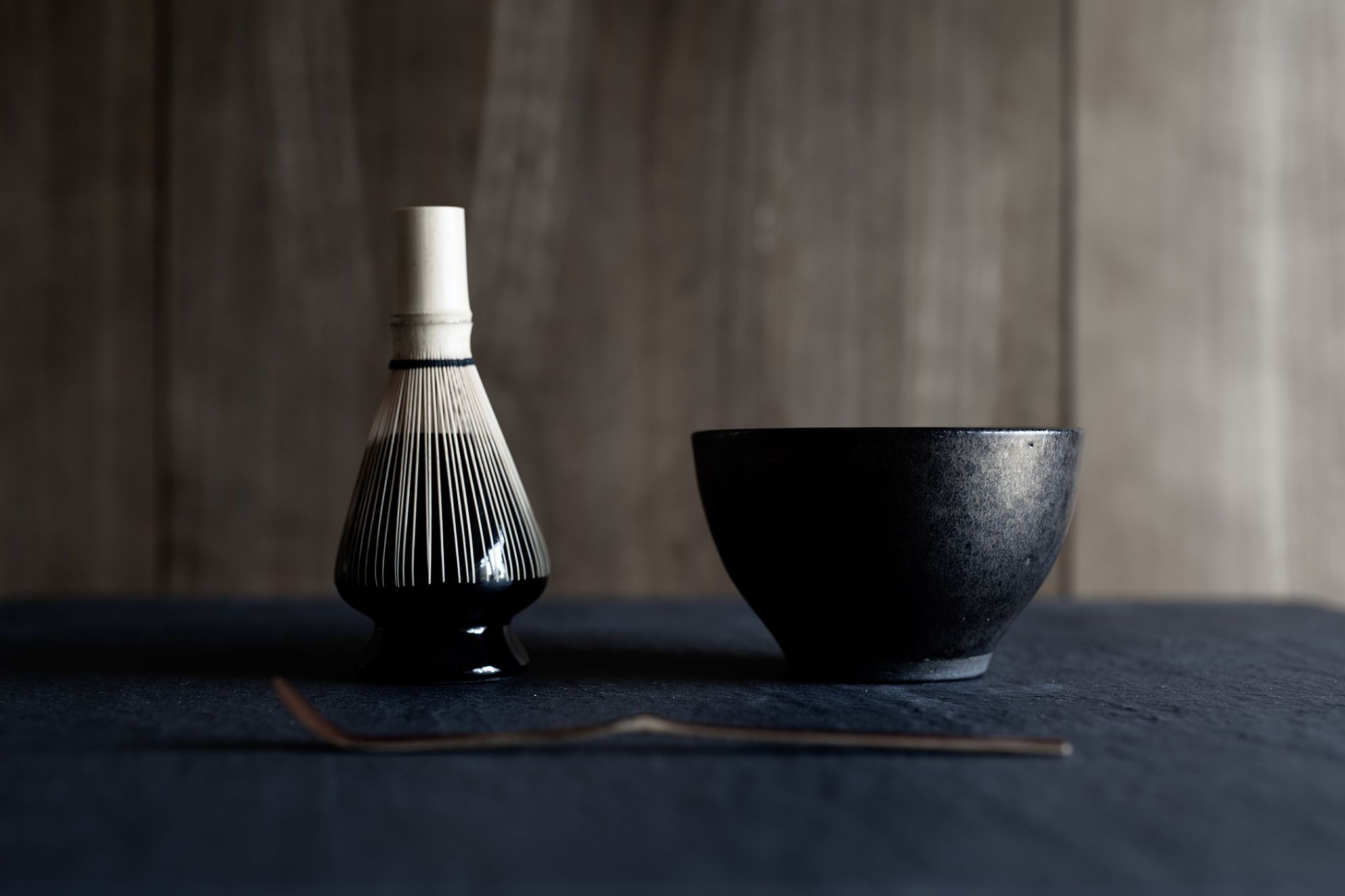
Experiences generally come in two formats: "observation-based" and "hands-on." The observation format is ideal for grasping the overall flow of a tea gathering, while the hands-on format lets you actually hold a chasen (a bamboo whisk) and whisk your own matcha, letting you feel the rhythm of the movements and the tactile presence of the tools directly (*2). If you're starting out, beginning with the observation format and moving on to the hands-on experience once you feel drawn in again is an ideal way to deepen your understanding step by step.
And if sitting in seiza (the traditional kneeling posture) isn't comfortable for you, there's no need to worry. Many experience programs also offer a "ryurei" format using chairs, which allows you to enter the world of sado without strain on your legs (*2). You don't need to wear kimono—Western attire is perfectly fine. Choosing a program explicitly marked as "beginner-friendly" or "open to observation" will let you take that first step with real peace of mind.
Choosing an Experience That Deepens Your Learning
If you're already drawn to the origins and historical background of sado, opting for a program that goes beyond a basic "matcha experience"—one with genuine intellectual depth—will bring your understanding into fuller dimension.
More specifically, programs that include the appreciation of tea utensils (explanations of the different types and meanings of tea bowls, natsume tea caddies, and tea kettles), tours of tea room architecture (the intent behind the placement of the nijiriguchi, windows, and hearth), experiences paired with commentary on the history of tea and its schools, or combined sessions with wagashi (Japanese sweets) making, all offer excellent entry points that engage both your knowledge and your senses (*2).
Sado is a world that continues to deepen across years and even decades of practice. And yet, even a single experience can offer you, through direct encounter, a real sense of the answer to the question "Why have the Japanese held this culture so dear?" Just as standing before a masterpiece in a national museum tells you more than reading a description of the painting—letting its meaning settle into you through the simple fact of being there—sado, too, is a practice whose words only truly find completion within the lived space of experience (*2).