.webp)
That hush the moment matcha is poured into a bowl. The faint whisper of a bamboo chasen (a whisk crafted from bamboo, used to froth matcha) working through the green liquid. The charged stillness of two people kneeling face to face on tatami.
Tea ceremony is far more than a way of drinking tea. It's a unified artistic universe where architecture, gardens, ceramics, calligraphy, philosophy, and human encounter all meet.
In this guide to Japanese tea ceremony history, you'll trace how a tea-drinking tradition carried over from China was gradually refined into a purely Japanese aesthetic—from the Nara and Heian eras all the way into the present. Once you hold the "map" of this history in your hands, your next cup of tea is bound to feel many times richer.
What Is Tea Ceremony? Essentials to Know Before You Dive Into Its History
Before you set off tracing the history of Japanese tea ceremony, there's one thing worth keeping in mind: this isn't simply a set of table manners for drinking tea. It's a total art form in which Japanese aesthetics and spiritual culture are distilled into a single practice.
Every step leading up to the preparation and sharing of a single bowl of matcha weaves together etiquette, architecture, garden design, craftsmanship, Zen-inflected thought, and the finely tuned attentiveness of hospitality. That's why the history of tea ceremony isn't just the story of how tea itself evolved—it's a mirror reflecting what the Japanese have found beautiful and how they've chosen to meet one another across the centuries. Let's start by sorting out the basic vocabulary and ideas that will help the later chapters come alive for you.
Tea Ceremony vs. Chanoyu vs. Senchadō
"Sadō," "chanoyu," and "senchadō" all seem to point to the culture of enjoying tea, yet each carries its own distinct shade of meaning.
Chanoyu is the traditional term for the cultural act of preparing and drinking matcha (green tea leaves stone-ground into an ultra-fine powder). This practice took shape between the Muromachi and Azuchi-Momoyama periods, and as it acquired philosophical and spiritual depth and became systematized, it developed into what we now call sadō—the "Way of Tea." You'll hear it pronounced both "sadō" and "chadō," and both readings are equally common.
Senchadō, on the other hand, is an independent cultural tradition that uses loose-leaf tea brewed in a teapot, and it remains historically and stylistically distinct from the matcha-centered chanoyu (*1).
Senchadō developed along its own path from the mid-Edo period onward, closely tied to bunjin shumi (a refined lifestyle of intellectual and artistic pursuits inspired by Chinese literati culture), and spread primarily among the educated classes. Throughout this article, unless noted otherwise, "tea ceremony" refers to the matcha-based chanoyu lineage.
Key Concepts to Unlock the History
To really get under the skin of Japanese tea ceremony history, it helps to keep a few core concepts close at hand.
First, wabi refers to a sensibility that finds a distinct beauty within imperfection and simplicity. Think of a cracked tea bowl or the moss-covered roji (the garden path leading to a tea house)—the quiet beauty that lives in spaces left deliberately unadorned. Sabi speaks to the depth that only the passage of time can create: the quiet grace of an aged iron kettle, or the faded elegance of old calligraphy.
Wa-kei-sei-jaku is the four-character phrase that captures the guiding spirit of Sen no Rikyū's tea (you'll meet this master of tea shortly). It calls on host and guest to live in "harmony" (wa), show mutual "respect" (kei), keep the space "pure" (sei), and settle the heart into "tranquility" (jaku) (*2). Ichigo ichie—"this encounter, once in a lifetime"—captures the mindset you bring to every gathering at a tea house. These ideas will come up again and again as the historical thread unfolds.
A Timeline of Japanese Tea Ceremony's History
Japanese tea ceremony history begins with the arrival of tea-drinking culture in the Nara and Heian eras, takes root in the Kamakura and Muromachi periods, reaches a pinnacle under Sen no Rikyū in the Azuchi-Momoyama era, and continues to evolve through the Edo, Meiji, and modern periods—a story that has unfolded over more than a thousand years.
That said, with so many overlapping layers of people, philosophies, and shifting aesthetics, the bigger picture can feel a little tangled at first. So let's begin by laying out the flow chronologically—you'll get a clear overview of what happened when, and of the precise moments where tea shifted from "beverage" to "way." Having a map of the whole journey will make every later chapter much easier to grasp.
From the Arrival of Tea to the Emergence of Chanoyu
The history of Japanese tea ceremony stretches back more than 1,200 years. Tea first arrived in Japan from China during the 8th and 9th centuries, carried home by envoys and traveling monks.
At first it was treated as a medicinal or ritual drink, confined to the imperial court and temples. But at the end of the 12th century, the Zen monk Eisai brought a systematic knowledge of Song-dynasty tea culture back to Japan and wrote the Kissa Yōjōki ("Drinking Tea for Health"), which finally introduced tea to a wider audience (*1). From the Kamakura period onward, tea-drinking culture took root in temples and gradually spread into warrior society.
By the Muromachi period, a competitive game called tōcha—in which participants gathered to compare and appraise imported premium tea implements—had become all the rage. Under the patronage of the Ashikaga shoguns, this evolved into the refined "tea of the shoin" (shoin being the warrior-class architectural style centered on a study or reception room). In the late 15th century, Murata Jukō brought the spirit of wabi into the tea room, decisively changing the direction of tea practice.
From Sen no Rikyū to the Present Day
In the latter half of the 16th century, Sen no Rikyū (1522–1591) pulled all these threads together, deepened them, and perfected what we now call wabi-cha. Serving both Oda Nobunaga and Toyotomi Hideyoshi, Rikyū redefined tea from its aesthetic foundations upward and left an imprint that still shapes the practice today (*2). After Rikyū's death, his grandson Sen no Sōtan carried the flame forward, and in the 17th century Sōtan's sons founded the three family lineages known as the san-Senke. Under the iemoto (headmaster) system, tea ceremony spread widely throughout the Edo period.
The Meiji era brought a wave of modernization that forced tea ceremony to rethink its place in society. Through its introduction into girls' school education and active promotion abroad, it has since blossomed into an international art form with devoted practitioners all over the world.
The Origins of Tea Ceremony | From China to Japan
One of the first things to appreciate about Japanese tea ceremony history is that it isn't a story contained entirely within Japan.
Tea was originally cultivated in mainland China as a medicine and a luxury beverage, and it traveled to Japan through networks of religion, scholarship, and trade. What truly matters, though, is not simply that tea "arrived" but how it was received once it got here.
In Japan, tea first took root within temple culture, and then began its own distinct journey as it intertwined with warrior society and the world of aesthetics. Let's follow the path by which Chinese tea culture reached Japan and gradually blossomed into the prototype of tea ceremony.
Tang and Song Tea Culture and Its Arrival in Japan
The tea plant is thought to have originated around Yunnan Province in China, where it was first used as a medicinal herb in ancient times.
During the Tang dynasty (618–907), Lu Yu compiled the world's first book on tea—the Cha Jing ("Classic of Tea")—and tea-drinking became a cultivated pursuit among aristocrats and scholars. Then, in the Song dynasty (960–1279), the "whipped-tea" method of frothing powdered tea with hot water became widespread, pushing tea culture toward even greater refinement (*1).
This East Asian tea culture reached Japan through lively exchanges between the two countries. From the late Nara through the early Heian period, envoys to Tang China are thought to have brought both knowledge of tea and actual tea leaves home with them. The Nihon Kōki notes in its entry for the 22nd day of the fourth month of Kōnin 6 (815) that the monk Eichū served tea, personally brewed, to Emperor Saga. Japan began as a "recipient" of tea culture—but in time it would raise up a tea tradition of its own.
Saichō, Kūkai, Eisai, and the Spread of Tea Culture
Religious figures played a crucial role in bringing tea culture to Japan. In the early 9th century, both Saichō—founder of the Tendai school—and Kūkai—founder of the Shingon school—traveled to Tang China and, on their return, are said to have brought back knowledge of tea.
.webp?width=764&height=509&name=The%20Banryutei%20Rock%20Garden%20at%20Kongobuji%20Temple%20on%20Mount%20Koya%20(Koyasan).webp)
There's also a record that a monk named Eichū offered tea to Emperor Saga in Kōnin 6 (815), which is considered one of the earliest mentions of tea drinking in Japanese literature.
Still, during this period tea remained largely confined to the imperial court and a handful of temples—it had yet to take hold throughout Japanese society. The decisive turning point came with the Zen monk Eisai (1141–1215) (*2). Eisai traveled twice to Song China, where he trained in Zen and deeply studied the Song tea method. His Kissa Yōjōki, written after his return, was Japan's first serious book on tea—positioning tea as "a miraculous medicine for health and a marvelous technique for prolonging life"—and tradition holds that he presented tea to Shōgun Minamoto no Sanetomo.
Early Tea Raised Within Temple Culture
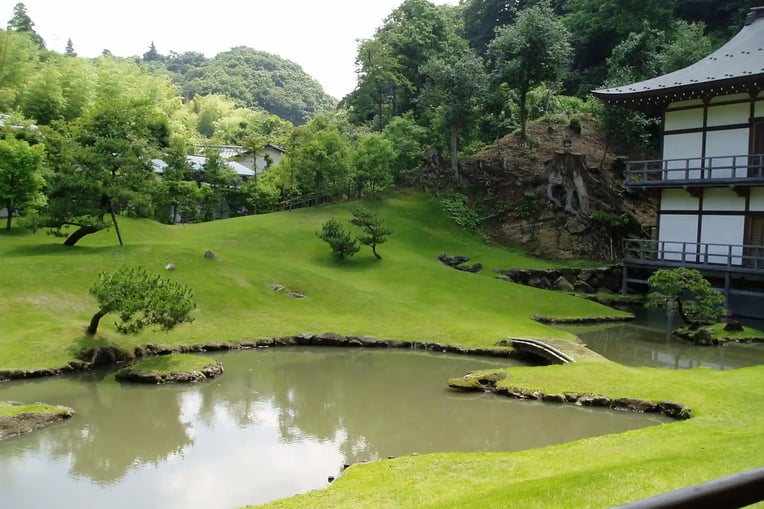
When Eisai brought back tea seeds and planted them at sites like Kennin-ji (one of Japan's oldest Zen temples, located in Kyoto) and other temples around the country, tea drinking gradually spread outward with Zen temples as its core. In Zen training, tea was prized as a "medicine to ward off drowsiness"—a practical companion for the long hours of zazen (the seated meditation practice of the Zen school) (*3).
There's a well-known tradition that the monk Myōe received tea seeds from Eisai and began cultivating them at Toganoo in Kyoto. In recent years some scholars have questioned this account, but it's well established that by the Kamakura period, Toganoo tea had earned a reputation as a premium variety.
Here's the important point: the "arrival of tea" and the "establishment of tea ceremony" are two entirely different events. Several hundred years passed between tea first landing in Japan and tea ceremony emerging as a codified practice. In those earliest days, tea was purely medicinal, ascetic, and restorative. The layers of aesthetics and philosophy came only later, beginning in the Muromachi period.
The Birth of Chanoyu in the Muromachi Period
After tea first reached Japan, centuries would pass before it took on the shape we now recognize as tea ceremony. The decisive turning point arrived in the Muromachi period.
In this era, tea moved beyond being a simple drink or a form of amusement and began to evolve into a highly polished art, woven together with architecture, visual arts, and the spirit of Zen. The transition from a world of ostentatious displays of Chinese imports to one that discovered beauty in quiet and deliberate scarcity—that reversal of values is exactly what laid the groundwork for tea ceremony. Let's look at the dramatic shifts of the Muromachi era, moving from tōcha to shoin tea and the first stirrings of wabi-cha.
Tōcha and Chinese Treasures: How Tea Was Enjoyed at First
From the late Kamakura through the Nanboku-chō period, a pastime known as tōcha caught fire among warriors and the upper classes. Players would sample multiple teas and try to guess their origin and grade—and at the same time show off their lavish karamono (luxury craftwork imported from China) tea utensils.
The culture of this era was marked by a fierce competitive drive: collecting famous tea bowls and chaire (small ceramic containers for storing matcha) and parading them as symbols of power and wealth. Tea, in other words, carried a strong undercurrent of display.
This pleasure-seeking, competitive approach to tea sits at the opposite pole from the "beauty within simplicity" that wabi-cha would later pursue. Yet knowing this contrast is exactly what lets you see just how radical Rikyū's "revolution" really was (*1).
The Ashikaga Shogunate and Higashiyama Culture Refined Chanoyu
Beginning under the third shōgun Ashikaga Yoshimitsu and reaching full bloom around the eighth shōgun Yoshimasa's Higashiyama mountain villa (today's Jishō-ji, popularly known as the Silver Pavilion), "Higashiyama culture" played a decisive role in shaping chanoyu.
%20in%20Kyoto.webp?width=764&height=509&name=Ginkaku-ji%20Temple%20(The%20Silver%20Pavilion)%20in%20Kyoto.webp)
Yoshimasa favored shoin architecture, which featured a tokonoma (an alcove for displaying hanging scrolls and flowers) and built-in shelves. These rooms became settings where guests could appreciate Chinese paintings, calligraphy, and ceramics while sipping tea—"shoin tea" had arrived.
Yoshimasa's attendants—the dōbōshū, aesthetically trained courtiers with refined artistic sensibilities—took charge of appraising tea utensils and staging tea gatherings, elevating tea into a sophisticated aesthetic practice. A sensibility that had once revolved exclusively around Chinese imports began, at last, to shift in new directions (*2).
Murata Jukō and Takeno Jōō Laid the Foundations of Wabi-cha
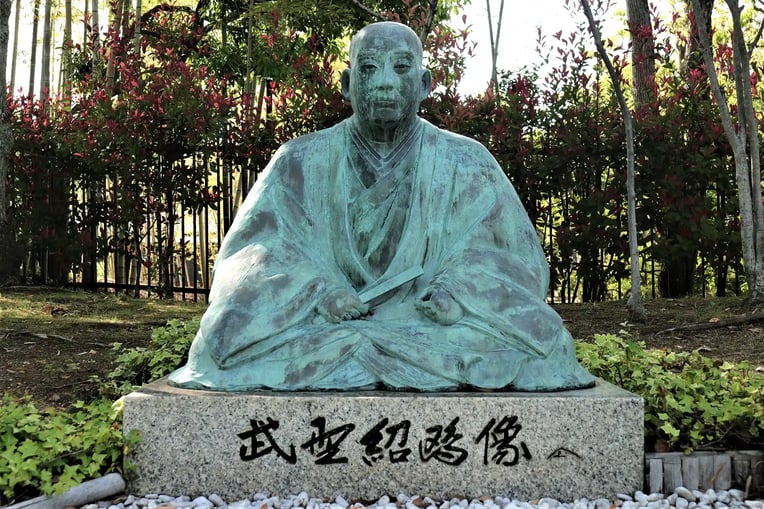
Within the polished atmosphere of Higashiyama culture, Murata Jukō (1422–1502) pursued a radically different direction.
Through Zen training, Jukō brought into tea a spirit that valued imperfection over perfection—captured in the line "A moon without clouds is not to my taste" (*3). He found value not only in Chinese imports but also in humble domestic utensils, and he envisioned tea practiced within a sōan (a simple space resembling a modest hermit's hut).
Jukō's thinking was inherited and carried even further by Takeno Jōō (1502–1555), a merchant from Sakai. Jōō studied under the renga poet Sanjōnishi Sanetaka and deeply embedded Japanese aesthetic ideals like yūgen (profound subtlety) and impermanence into chanoyu. The line that runs from Jukō to Jōō became the direct foundation on which Sen no Rikyū would later build his fully realized wabi-cha.
Sen no Rikyū's Wabi-cha, Perfected in the Azuchi-Momoyama Period
In the history of tea, Sen no Rikyū's arrival wasn't just the debut of another celebrated master. It was the moment chanoyu crystallized into a fully realized culture that embraced aesthetics, spirituality, and the design of space all at once.
The Azuchi-Momoyama era still hummed with the tensions of the Warring States period. Even while moving within the orbits of power, Rikyū chose the quiet abundance that sits directly opposite opulence. A cramped tea room. A simple bowl. The damp scent of the roji. The charged intimacy of one meeting, taken as a whole life. As you follow the threads of his thinking, you'll begin to see exactly why tea ceremony still draws people in today.
.webp?width=764&height=509&name=Traditional%20Raku%20Ware%20(Raku-yaki).webp)
Oda Nobunaga, Toyotomi Hideyoshi, and Chanoyu
In the late 16th century, as Japan moved from the turmoil of the Warring States era toward unification, tea ceremony became closely linked with politics.
Oda Nobunaga, who seized power, gathered meibutsu-dōgu (prized tea implements that had been formally designated as treasures) from across the country and presented them to his most accomplished generals as rewards—turning tea utensils into symbols of political authority. He kept sadō (tea masters) close at hand and used tea gatherings strategically, as venues for diplomacy and formal hospitality.
Nobunaga's successor, Toyotomi Hideyoshi, was equally devoted to tea, and in 1587 he hosted the spectacular Kitano Grand Tea Gathering at Kitano in Kyoto. Remarkably, it was open to every tea practitioner in the city regardless of social standing, and tradition holds that a great many people came (*1). It was a vivid sign that tea, once the province of a handful of powerful figures, was beginning to spread across society.
The Wabi-cha Aesthetic Perfected by Sen no Rikyū
The figure who decisively reshaped tea in this era was Sen no Rikyū (1522–1591). Born into a wealthy merchant family in Sakai (a commercial city in southern Osaka), Rikyū studied under Takeno Jōō before rising to the very top as tea master to both Nobunaga and Hideyoshi—yet he never stopped questioning what tea was really for. What he pursued was not tea decked out in wealth and authority but the essential beauty that remains once everything unnecessary has been stripped away.
At the heart of Rikyū's aesthetic sits wabi. This is not a sense of embarrassment about poverty or imperfection but an active embrace of the unique richness such qualities can hold (*2). The plain shape of a kuro-raku-chawan (a Raku-ware tea bowl, hand-shaped rather than thrown on a wheel, and known for its asymmetry), the two-tatami compactness of his tea rooms, utensils left unpolished so their raw materials could speak—everything in Rikyū's setting was an embodiment of this philosophy.
Rikyū's Philosophy in the Tea House, the Roji, and the Tea Bowl
One of Rikyū's most famous tea rooms, "Tai-an," still stands today at Myōki-an in Kyoto. Just two mats in size, it's designated a National Treasure. With its deliberately low ceiling and carefully placed windows, light and shadow cross in exquisite balance, giving anyone who steps inside a taste of a pure moment cut off from the ordinary world.
Rikyū's philosophy is just as present in the roji, the path that leads to the tea room. The irregularly laid stepping stones and the unaffected scenery of moss and fallen leaves serve as a kind of threshold, quietly guiding your awareness away from the clamor of daily life and into the world of tea (*3).
And the Raku tea bowls Rikyū created together with the potter Chōjirō—hand-shaped rather than thrown on a wheel—celebrate the accidental beauty born of that process, a beauty standing at the opposite pole from industrial perfection. All of this adds up to a three-dimensional expression of Rikyū's philosophy of wabi.
Tea Ceremony and the Three Senke Houses in the Edo Period
The chanoyu perfected by Sen no Rikyū didn't come to a halt with his death—if anything, his passing marked the moment tea sank even more deeply into society. The Edo period is when the spirit of tea, sharpened by an age of warfare, was inherited and formalized in an age of peace, becoming established as an essential part of cultivated life.
The rise of the three Senke houses, the consolidation of the iemoto system, and the way tea practice spread from warrior families into the merchant class—following this movement lets you see how tea shifted from an indulgence of the powerful into cultural capital that would shape Japanese society as a whole. Let's unpack that quiet but important era of widening reach.
The Birth of Omotesenke, Urasenke, and Mushakōjisenke
In 1591, after Sen no Rikyū was forced to commit seppuku by order of Toyotomi Hideyoshi, tea's lineage faced a momentary crisis.
But Rikyū's adopted son Shōan received Hideyoshi's pardon and revived the Sen family, and Shōan's son Sen no Sōtan (1578–1658) in turn preserved Rikyū's spirit in its purest form. Sōtan lived wabi so thoroughly that he was nicknamed "beggar Sōtan," and in his later years he retired to Konnichi-an and passed the Sen family tea tradition on to his sons (*1).
The three houses founded by three of Sōtan's sons are the source of the san-Senke (Three Senke) that continue today. His third son Sōsa inherited Sōtan's residence "Fushin-an" and founded Omotesenke; his fourth son Sōshitsu inherited the retirement house "Konnichi-an" and founded Urasenke; and his second son Sōshu inherited "Kankyū-an" and founded Mushakōjisenke (*1). The names "Omote" (front) and "Ura" (back) come from the fact that Konnichi-an sits on the back street behind Fushin-an.
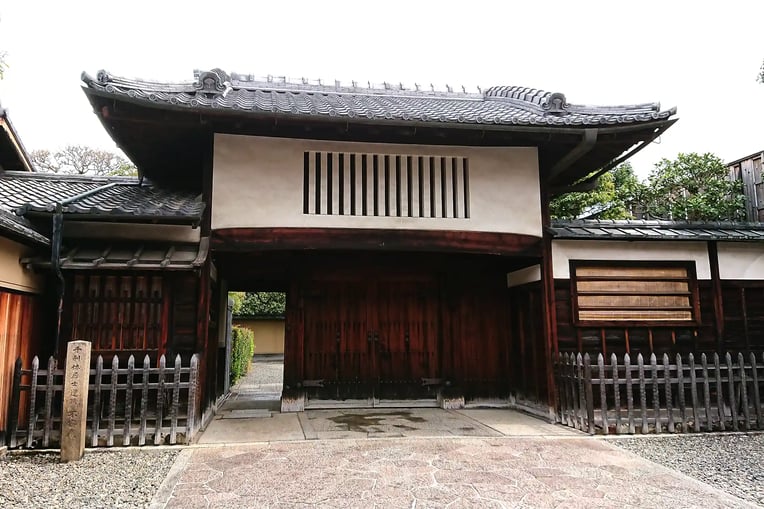
The Iemoto System and a Culture of Practice Spreads
Alongside the founding of the three Senke houses, the iemoto system took shape as the framework for passing tea down through the generations. The iemoto is the supreme authority of a given school, responsible for transmitting the proper techniques and spirit to the next generation. Students progress step by step by earning kyojō (certificates recognizing that one has completed a particular stage of learning) issued directly by the iemoto (*2).
In the mid-Edo period, the eighth Urasenke master Ittō and the seventh Omotesenke master Joshinsai worked together to establish a framework of training known as the shichijishiki ("seven exercises"). The shichijishiki is a comprehensive training system combining various styles of tea preparation—koicha (thick tea), usucha (thin tea), kagetsu, and ichi-ni-san among them—designed to maintain the quality of tea practice as the number of practitioners grew (*2). Through this, tea became systematized as an "art to be studied," and a culture of lessons passed from teacher to student, from household to household, took firm root.
Tea Ceremony Spreads to Warriors and Townspeople in the Edo Era
Under the stable rule of the Tokugawa shogunate, tea ceremony reached ever wider circles of society. The daimyō of each domain treated tea as a cultivated refinement fitting for their governance, inviting iemoto of the three Senke to serve as ocha-gashira (chief tea officials). At the same time, as prosperous chōnin (townspeople) rose to economic prominence, tea practice spread among them as well. In urban centers especially, tea shifted from being "the culture of a few power-holders" to "the culture of cultivated citizens" (*3).
In cities like Kyoto, Osaka, and Edo, markets for tea utensils boomed, and crafts like ceramics, lacquer, and ironware all flourished in close dialogue with chanoyu. It's worth remembering that tea ceremony acted as an engine lifting the whole of Japan's craft culture upward. The idea that emerged in this period—that tea ceremony is a mark of cultivated refinement—has been carried through to the present day.
Tea Ceremony Redefined After the Meiji Era
Modernization is often a moment of trial for traditional culture. From the Meiji Restoration onward, Japanese society was swept up in waves of Westernization and institutional change, and tea ceremony was forced to reexamine its reason for being.
Rather than disappearing, tea was reshaped into something that fit the new era. The invention of a chair-and-table style of etiquette, the introduction of tea into school curricula, connections with art collecting and cultural preservation, and active promotion abroad—all of it stands as proof that tea ceremony has survived by responding thoughtfully to change. Let's walk through how tea was redefined across the modern era.
Tea Ceremony Reevaluated After the Meiji Restoration
The Meiji Restoration of 1868 sent modernization surging through Japanese society at breakneck speed. As Western civilization poured in, traditional arts briefly found themselves branded as old-fashioned and pushed to the margins. Tea ceremony was no exception, and for a time it faced real institutional difficulty, with fewer students and a sluggish market for tea utensils.
Even under that pressure, the tea world actively sought ways to adapt. The eleventh Urasenke master Gengensai (1810–1877) created the ryūrei style—a seated tea preparation that uses chairs and a table—for the 1872 international exhibition (*1).
The innovation made it possible for foreigners and Western-dressed guests, who might find kneeling difficult, to experience tea for themselves. It's a striking example of tea ceremony's willingness to open itself up to the times. That same year Gengensai also published Sadō no Gen'i ("The Original Meaning of Tea Ceremony"), arguing that tea was not mere entertainment but a culture with deep spiritual foundations, and in doing so set the stage for the modern redefinition of tea (*1).
The Influence of Modern Sukisha and Art Collecting
From the Meiji era through the Taishō and Shōwa periods, private tea enthusiasts known as sukisha played a vital cultural role. Sukisha were wealthy individuals outside the hereditary schools whose deep knowledge of tea extended to art, craft, and architecture, and who built their own collections while supporting cultural life broadly. Industrialists such as Masuda Takashi (known by his tea name Donnō) and Hara Tomitarō collected and preserved antique works and tea implements, and shared their value with the world through the tea gatherings they hosted (*2).
The sukisha also did much to promote sukiya architecture (a Japanese architectural style that incorporates the aesthetic sensibility of the tea room). The design philosophy of sukiya directly shapes what we now call "Japanese modern" architecture, a reminder that the aesthetic forged by tea continues to inform the spaces where we live today.
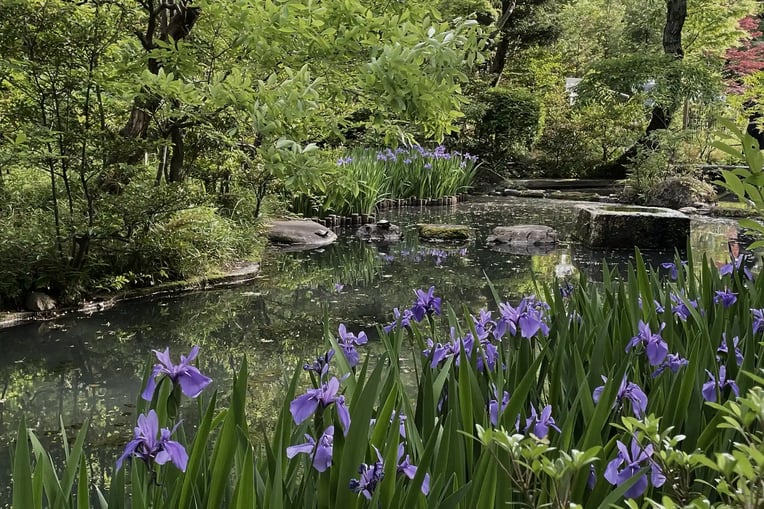
The sukisha movement of the modern era was also closely tied to the rise of museums and art galleries, and helped build the foundation on which tea utensils have come to be protected as works of art.
Tea Ceremony Goes Global
After the Second World War, tea ceremony's international reach expanded dramatically. The fifteenth Urasenke master, Hōunsai, carried the message "Peacefulness through a bowl of tea" to audiences around the world, championing tea as a symbol of peace and dialogue (*3). Today, Japan's Ministry of Foreign Affairs presents traditional arts such as tea and ikebana abroad through its overseas cultural activities, and tea ceremony stands as one of the central pillars of Japanese cultural diplomacy (*4).
Practice studios have opened across Europe, North America, and Asia, and a tea ceremony experience has become one of the most sought-after activities for visitors to Japan. In English-speaking countries it's often introduced as "The Way of Tea," and part of why it resonates so broadly is that it arrives framed through familiar touchpoints like "Zen aesthetics," "mindfulness," and "Japanese design."
The Enduring Appeal of Tea Ceremony Today
Tea ceremony isn't a relic of the past sealed away in history books. If anything, its value is being rediscovered most vividly in the present. In the crush of a busy day, the simple act of giving meaning to every gesture, setting a space in order, and offering a single bowl to someone else delivers a freshness you may not have expected.
Tea ceremony also works beautifully as a gateway into the many other currents of Japanese culture: the tea room, the garden, the crafts, the cuisine, the sense of the seasons. Let's look at why tea continues to draw modern hearts and how knowing the history can deepen the experience when you step into it yourself.
Experiencing and Learning Tea Ceremony Today
Ways to study tea ceremony in today's Japan have never been more varied. Practice studios and cultural centers across the country run introductory classes, where you can pay a monthly tuition and build up the basics from the ground.
Temples and tea houses in Kyoto, Nara, Kanazawa, and other cities offer tea gatherings designed specifically for visitors, and dressing in kimono to take part is a popular option (*1). Whether you're looking for a one-day introduction, a multi-session course to master the fundamentals of tea preparation, or a path toward formal study under one of the three Senke schools, there are entry points calibrated to whatever depth you're after.
Urasenke continues to invest heavily in "school tea ceremony," creating spaces where children can absorb courtesy, concentration, and respect for others through tea practice (*2). Online classes for people living outside Japan have also appeared in recent years, making it easier than ever to engage with the philosophy and foundational manners of tea without traveling.
Your first encounter with tea can be as modest as you like. Preparing a single bowl of matcha, carefully, for someone else—that one small act is all it takes to begin.
Appreciating Tea Rooms, Gardens, and Crafts Through a Historical Lens
Once you know the history of Japanese tea ceremony, the landscapes you encounter on your travels start to look entirely different. Imagine standing before a tea room like Urasenke's Konnichi-an or Omotesenke's Fushin-an in Kyoto, or Seisonkaku, the elegant residence next to Kenroku-en in Kanazawa. The small nijiriguchi—the low, narrow entrance to a tea room so compact that even high-ranking warriors had to bow their heads to pass through—suddenly speaks with far greater resonance, as a design that embodies the equality inside the tea room.
Warrior, merchant, or otherwise, everyone sheds their status the moment they enter the tea room and kneels on equal footing. That architectural choice is itself a spatial embodiment of Rikyū's philosophy.
And then there are the crafts that tea's aesthetic raised up. Legendary kilns like Raku, Shigaraki, Hagi, and Karatsu all grew up in close dialogue with chanoyu. When you pick up a single tea bowl and feel its unevenness, the temperature of the clay, the flow of the glaze, you're holding centuries of aesthetic exploration in your hands.
Tea ceremony is a "total art" in which architecture, gardens, ceramics, lacquer, calligraphy, cuisine, and seasonal sensibility all converge. Taking in that whole picture is what a true tea experience really is.
Why Knowing the History Deepens Your Tea Experience
It would be a shame to treat tea ceremony as nothing more than a set of manners to memorize. Why is the tea room so small? Why are the stepping stones along the path laid out unevenly? Why do you rotate the bowl before drinking? The answers to these questions all live inside the history (*1). Murata Jukō's spirit of wabi, Sen no Rikyū's aesthetic revolution, Sōtan's life of disciplined simplicity, the passion of the modern sukisha—all of them support the bowl of tea sitting in front of you right now.
Knowing the history isn't just about accumulating facts. It's about sharpening the resolution of your experience.
Two people can share the same bowl of matcha, but the one who carries centuries of story along with it is going to taste something richer than the one who doesn't. A tea ceremony experience is more than an unusual ritual—it's a conversation with a living archive in which Japan's aesthetics and philosophy have been concentrated drop by drop.
A Summary of Japanese Tea Ceremony's History
The history of tea ceremony is the long journey of a cup of medicinal herbs blossoming first into culture, and then into philosophy. From its arrival in the 8th and 9th centuries, tea grew up inside temple life, fused with the aesthetics of the Muromachi era, reached a spiritual peak under Sen no Rikyū, and spread across the country through the iemoto system of the three Senke houses. Surviving the trial of Meiji-era modernization, tea ceremony kept questioning itself, and today it has expanded its stage all the way out to international cultural exchange.
Through all these changes, what has never wavered is the spirit of wa-kei-sei-jaku and ichigo ichie. No matter how the era shifts, how the tea room is rebuilt, or how the styles of preparation evolve, the pure moment when one person meets another over a single bowl of tea is exactly as it was in Rikyū's day, five centuries ago. To know the history of Japanese tea ceremony is, in the end, to touch the very heart of Japan's aesthetic sensibility.
Author Bio