When you talk about Japan’s meat market, at the very heart of it lies the cultural world of “Wagyu.” From the Meiji Restoration’s lifting of the ban on meat-eating to the birth of regional brands—and on to those “flavors with a story” represented by Kobe, Matsusaka, and Ōmi—Wagyu has been refined by the interplay of history, terroir, and craftsmanship.
In recent years, the evolution has moved well beyond the dining table: a shift from volume to quality, sustainability through circular agriculture and smart livestock technologies, experiential enjoyment through tasting courses and spaces that fuse craft and architecture, and even transparency supported by blockchain. This article unpacks the essence of Wagyu from four angles—history, region, experience, and technology.
What Is Japan’s Meat Market? — Essentials of Wagyu Culture
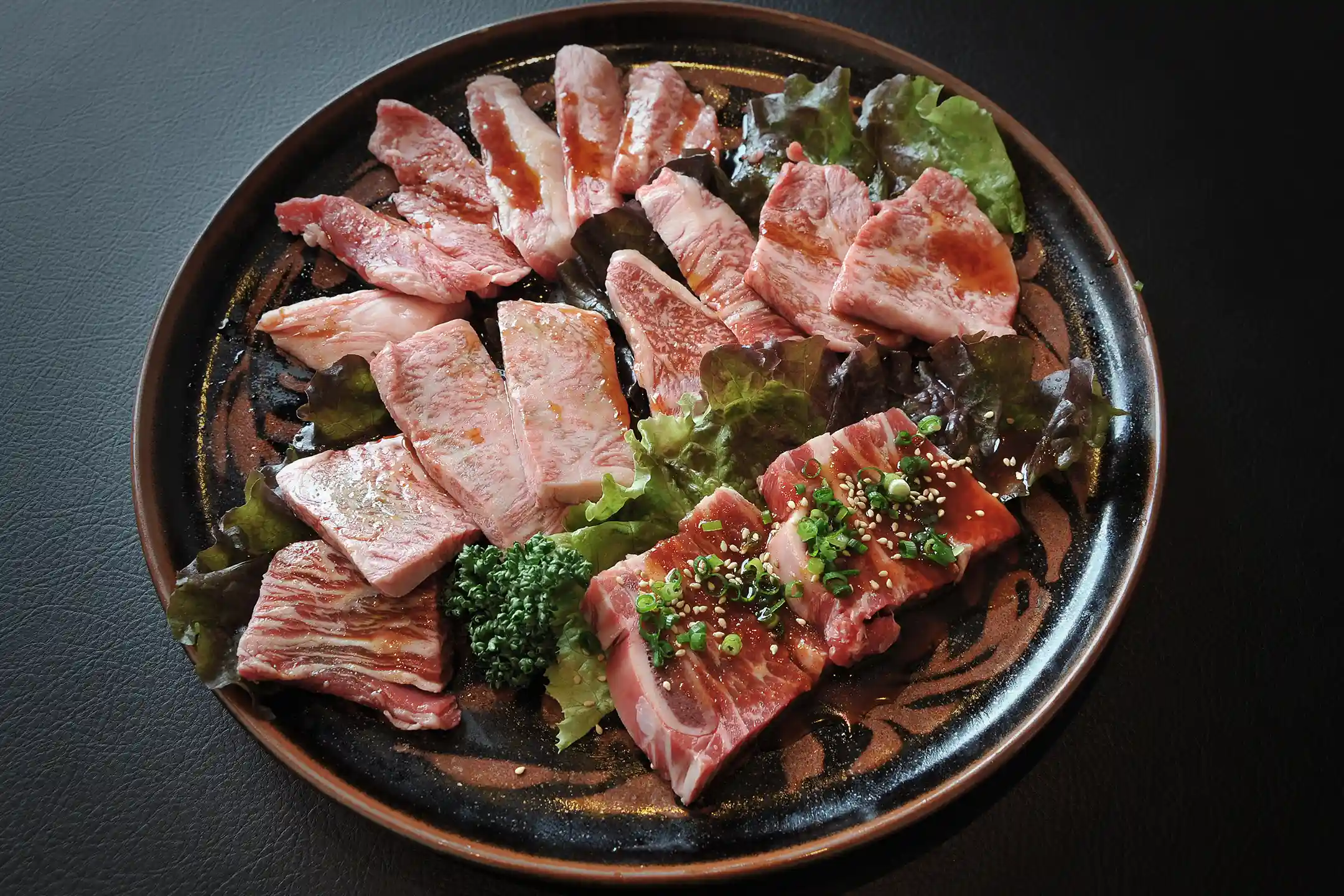
Wagyu refers to Japan’s indigenous improved breeds—primarily four breeds: Japanese Black, Japanese Brown, Japanese Polled, and Japanese Shorthorn—and their crossbreeds (*1). In particular, Japanese Black (commonly called “Kuroge Wagyu”) accounts for about 97% of all Wagyu. Its meat is known for fine grain and vivid red accented by “shimofuri” (fat marbling) (*1).
Shimofuri describes the web-like fat within the muscle. Rich in oleic acid with a low melting point, it yields a smooth melt-in-your-mouth quality and a uniquely tender, juicy texture (*2). This silky feel and deep aroma have won high acclaim overseas; today, Wagyu under the name WAGYU has become synonymous with top-tier beef globally (*3).
In fact, buoyed by the worldwide popularity of Japanese cuisine, 98% of foreign respondents say they “like” or “somewhat like” Wagyu; the reasons most often cited are precisely Wagyu’s softness and juiciness (*2). There are more than 200 Wagyu brands nationwide, with Kobe, Matsusaka, and Ōmi commonly called “Japan’s Big Three Wagyu,” all enjoying global popularity (*1).
Overview of Japan’s Meat Market — Market Size and Consumption Trends
Since the Meiji era, meat consumption in Japan has steadily increased alongside Westernization of diets and a decline in seafood consumption. In 1960 (Shōwa 35), annual per-capita meat consumption was only about 3.5 kg; by 2019 (Reiwa 1), it had risen nearly tenfold to almost 30 kg (*4).
Demand for meat surged during the high-growth era. Beef consumption climbed from about 1 kg per person per year in the 1960s to 7.6 kg around 2000 (*5). After a temporary drop due to the 2001 BSE outbreak, it has hovered around 6 kg per person per year (*6).
As of 2023 (Reiwa 5), it stood at about 6.1 kg, and the government aims to raise it to 6.9 kg by 2030 (*6). While quantitative beef consumption grows moderately, in Japan beef is still often positioned as a “hare no hi” delicacy—something you choose for special occasions.
Indeed, surveys show Wagyu is chosen for family celebrations at home at rates about 20 points higher than other meats, and it is favored for special-occasion dining such as business entertaining. Meanwhile, Japan’s beef self-sufficiency rate is only about 35% by weight (*5), leaving much demand to imports.
Wagyu is therefore scarce and treated domestically as a high-value luxury. Against the backdrop of population decline, there’s also a strong push to expand exports and inbound tourism demand (*3). To meet this quality-first trend, Japan’s meat market is embracing the ethos: “Savor the very best, even in small quantities, on special occasions.”
The History of Japan’s Meat Market — The Unique Path of Wagyu
The Meiji Restoration and “Civilization and Enlightenment” — How Lifting the Meat Ban Changed Japan’s Food Culture
Before the Meiji era, influenced by Buddhist thought and agrarian culture, meat-eating was shunned for centuries. Since Emperor Tenmu’s 675 decree prohibiting consumption of meat from quadrupeds such as cattle and horses, eating four-legged animals had largely disappeared from public life.
With the Meiji Restoration (1868), however, meat-eating was legalized and encouraged as part of Westernizing reforms. In 1872 (Meiji 5), newspapers reported that Emperor Meiji ate beef at court for the first time, symbolically ending a 1,200-year taboo (*8).
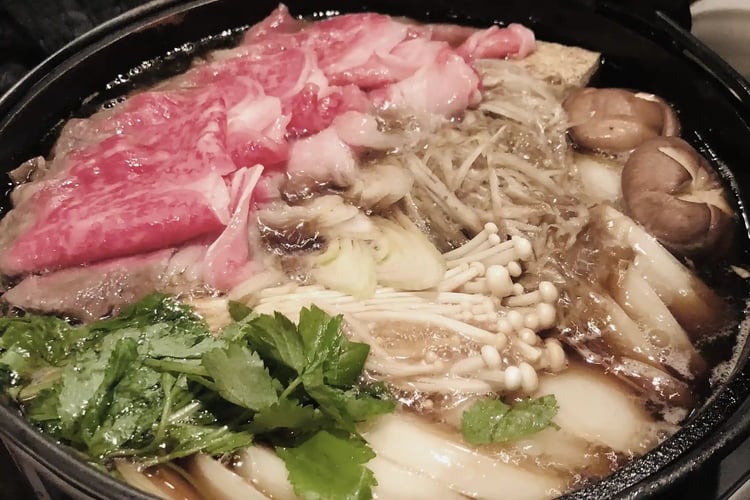
Government leaders and intellectuals promoted meat-eating as a path to “civilization,” national strength, and health. In 1870, Yukichi Fukuzawa wrote “On Meat Eating,” rejecting the popular belief that beef was “impure,” and the writer Kanagaki Robun provocatively declared in his 1871 novel An’gura Nabe that “those who don’t eat gyūnabe (the forerunner of sukiyaki) are uncivilized” (*9). Spurred by such commentary, a “gyūnabe boom” swept Tokyo in the 1870s.
After the emperor’s 1872 beef dinner made headlines, gyūnabe shops sprang up like bamboo shoots after rain. By 1877, Tokyo reportedly had over 550 beef hotpot eateries (*9). Gyūnabe—ancestor to modern sukiyaki—blended Japanese communal hotpot culture with a new Western-influenced appetite for beef.
While some initially hesitated at the taste, nutritional benefits and hopes for physical vigor led to steady acceptance. “Eating meat = modern and healthy” took root. Roughly half a century after the push began, the postwar economic boom put meat on everyday tables, and beef became common in ordinary households (*10). The Meiji-era lifting of the ban thus dramatically reshaped Japanese eating habits and prepared the ground where Wagyu culture could flourish.
The Birth of Wagyu Brands — The Stories of Matsusaka, Kobe, and Ōmi
Kobe Beef’s story begins with the opening of the international port of Kobe (1868). With a foreign settlement established and many Westerners living in the city, local beef began to be served at their request in the early Meiji years.
According to one anecdote, an Englishman who first tasted Tajima cattle in Kobe praised its flavor extravagantly, helping spark the broader trend of eating beef (*11). As word spread, exports from Kobe grew, and the name “KOBE BEEF” gained global recognition (*11).
There is no cattle breed called “Kobe.” Rather, the finest meat from Tajima cattle (raised in Hyōgo’s Tajima region) distributed through Kobe came to be known as “Kobe meat,” which later evolved into “Kobe Beef” (*12).
Before official grading standards were established in the 1980s, the term loosely meant “beef you enjoy in Kobe.” The city’s name itself had brand power because beef shipped from this cosmopolitan port was of such prized quality. Rooted in its popularity among foreigners, Kobe Beef now stands as one of the world’s best-known beef brands (*11).
Matsusaka Beef’s tale is entwined with the traditions of Mie Prefecture’s Matsusaka region, which includes the Ise Plain. In the Edo period, local farmers used excellent Tajima-born, Kii-raised heifers as draft animals. Calves born in Hyōgo (Tajima) were sent to Wakayama (Kii) for a year to acclimate, then brought to Matsusaka around age two to pull plows—small, docile Tajima heifers were treasured as “hard workers” (*13).
As meat culture took root after Meiji, Matsusaka farmers refined techniques to finish these former draft heifers into exceptional beef cattle. By the early Meiji era, Matsusaka’s delicious beef earned a reputation, and from the 1870s through the 1890s, cattle drovers regularly walked herds from Matsusaka to Tokyo in what was called the “Cattle-Driving Journey.”
Records state that in the early Meiji years, more than 100 head were walked to Tokyo every two months, taking three weeks on foot (*14). The man who led many such drives was Yamaji Tokusaburō, whose perseverance helped make Matsusaka beef famous in Tokyo—planting the idea that “Matsusaka beef is Japan’s best” (*15).
In 1935 (Shōwa 10), Matsusaka won the honorary prize at a national meat livestock exposition. Postwar, top bids at shows further cemented its status. Today, only unbred (virgin) Japanese Black heifers finished in the Matsusaka region meet the strict criteria to be certified as “Matsusaka Beef,” enshrining it among Japan’s top beef brands.
Ōmi Beef boasts Japan’s oldest history. Blessed by Lake Biwa, Shiga Prefecture has nurtured cattle since the early Edo period, roughly 400 years ago (*16). In Hikone Domain, beef preserved in miso—called “Henpongwan” (Henpongwan/“Henpon-gan”)—was devised as a fortifying medicine and even presented to the shogunate (*16).
During an era when meat-eating was officially forbidden, people found a way to enjoy beef by calling it “medicine.” In 1687, retainer Hanaki Den’emon reportedly created miso-preserved beef inspired by the Chinese materia medica Bencao Gangmu, and it was prized by feudal lords for its supposed benefits—“calming the body and nourishing the qi” (*16).
In the 1770s–80s, Hikone also sent miso-preserved and dried beef to the shogun and daimyō, so Ōmi beef became known among the elite as a kind of “medicinal meat” (*16).
With the Meiji era, Ōmi cattle began circulating widely for food. Interestingly, in the early Meiji years, cattle shipped from Ōmi were sent to Tokyo via Kobe, so all such beef was treated as “Kobe Beef.” Brand names were effectively determined by the port of shipment—but it also means Ōmi cattle formed a core of “Kobe Beef” at the time.
After the Tōkaidō Main Line opened in 1889, chilled meat began to be sent directly from Ōmihachiman to Tokyo, and the “Ōmi Beef” name finally spread. The Ōmi Beef Association was established in 1951, and with concerted branding efforts, Ōmi secured its place among the “Big Three Wagyu,” carrying on four centuries of tradition.
Regions That Create Wagyu Brands — Local Traditions and the Secrets of Quality
Kobe Beef — A Brand Story Nurtured by the International Port City of Kobe
Kobe Beef is the title given only to the highest-quality Japanese Black cattle: Tajima cattle born in Hyōgo’s Tajima region and finished and selected around Kobe according to strict criteria. Kobe has long absorbed international influences as a port city; that open spirit also shaped Kobe Beef’s brand identity.
In the Meiji era, Tajima beef served to foreigners in the settlement gained a reputation as “exceptionally delicious,” elevating Kobe’s name for beef (see previous section). By the 1870s, live cattle and beef shipments left Kobe for Yokohama and overseas, cementing the association of “beef from Kobe = Kobe Beef” (*1).
Kobe Beef’s hallmarks are its delicate marbling and rich aroma. The fat melts the moment it touches your tongue, leaving a gentle sweetness without a heavy finish. That flavor profile is possible because Tajima cattle—the foundation of Kobe Beef—are compact, with fine muscle fibers and high-quality fat with a low melting point.
Producers have also devoted decades to precise lineage and husbandry management, preserving lines from outstanding brood cows—like the famed Tajiri-go—often called the “Tajima of Tajima” (*1). As a result, an astounding 99.9% of today’s Japanese Black trace back to Tajiri-go, a genetic legacy that improved Wagyu quality nationwide, not just Kobe (*1).
Combined with Kobe’s cosmopolitan image, Kobe Beef has secured a solid position as “a Wagyu brand admired worldwide,” beloved by gourmets and notable figures around the globe.
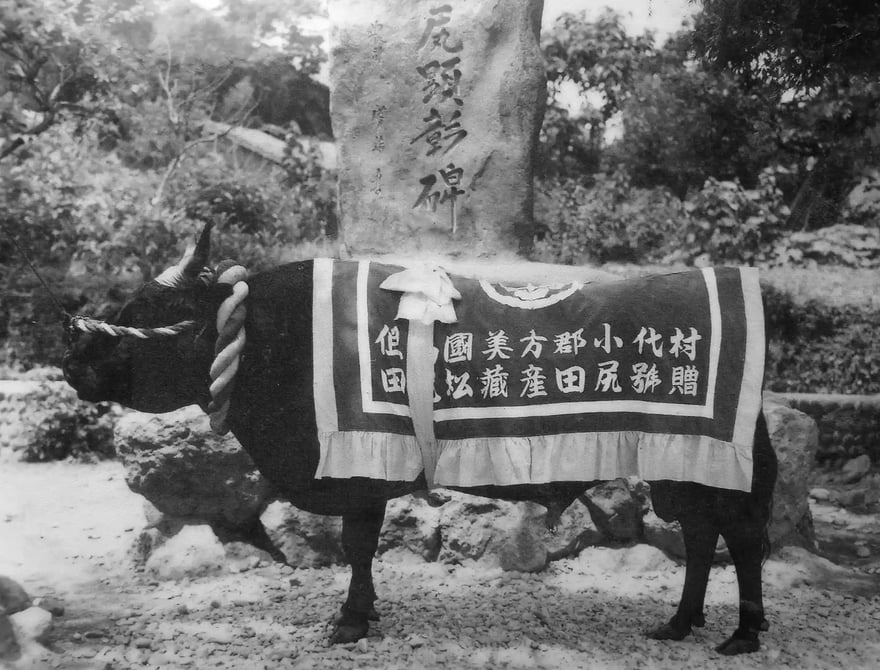
Matsusaka Beef — Tradition of the Ise Region and the “Cattle-Driving Journey” Experience
Matsusaka City and its surroundings in Mie have long prospered along pilgrimage routes to Ise and through a vibrant merchant culture. Matsusaka Beef—hailed as a “work of edible art”—is renowned for its exquisite marbling.
One secret is the tradition of finishing superior Tajima-line heifers over a long period. Only unbred heifers can be certified as Matsusaka Beef, and they are carefully raised for 30 months or more. Producers lavish attention on each animal—some stimulate appetite with beer or sake lees, balance winter feed with rice straw and soybean meal, or take cattle on daily walks to boost circulation.
Such meticulous care yields Matsusaka’s signature fine marbling and tender red meat. The region also hosts events recreating the old “Cattle-Driving Journey,” inviting you to imagine the hardships and passion of drovers.
Tours trace sites linked to Yamaji Tokusaburō and the bustling cattle markets of the era, with guided stories that bring history to life. Experiencing Matsusaka’s culture while tasting its beef creates a rare fusion of “tradition and flavor” that captivates connoisseurs at home and abroad.
At the long-running Matsusaka Beef Carcass Show, winning cattle often fetch tens of millions of yen, headlines that reaffirm the brand’s value year after year.
Ōmi Beef — Visiting the Great Brand Born of Shiga’s Historic Landscape
Produced in Shiga Prefecture, Ōmi Beef is Japan’s oldest Wagyu brand. Centered around Lake Biwa, Ōmi has long been a key east–west crossroads with a rich merchant culture and agricultural heritage.
In the Hikone area—the heartland of Ōmi Beef—cattle rearing and meat processing took place discreetly during the Edo period; we already noted how “medicinal meat” permeated samurai society. A public facility (assumed) like the “Ōmi Beef Museum” allows you to learn about 400 years of history and culture.
You might see reconstructions of miso-preserved beef, records of Edo-era meat merchants, and trophies from nationwide expositions after Meiji—exhibits that let you step into the deep story of Ōmi Beef. In Yasu City, Shiga, “Restaurant Hyakunen-Minka Kurogama,” housed in a more-than-100-year-old traditional home, serves Ōmi Beef in a space that preserves Meiji-era charm (*18).
Pass through the gate and you’re in a concealed retreat. Old window frames and latticework remain, and you can relax over the seasons’ garden views (*18). These culinary experiences tied to historic buildings have become popular with visitors from Japan and abroad as a kind of “slow food where land and Wagyu meet.”
Postwar, Ōmi also influenced improvements in Japanese Black elsewhere. More recently, local producers have championed circular agriculture: returning manure to rice fields and feeding cattle with rice straw grown in those fields—an approach well suited to a major rice-growing region (more on this later).
By innovating in both history and environment, Ōmi Beef offers visitors profound stories and superb taste.
The Appeal of Wagyu Cuisine — Japan’s Dining Culture for All Five Senses
Wagyu Kaiseki in Tokyo and Kyoto — Artistic Dishes and the Beauty of Vessels
Wagyu cuisine is a total art you don’t just taste—you also see, smell, and understand as culture. One pinnacle is Wagyu kaiseki. Rooted in the tea ceremony, kaiseki is a traditional multi-course meal that expresses the seasons through旬 ingredients and exquisite tableware, refining your senses in an art of hospitality (*1).
At high-end restaurants in Tokyo and Kyoto, a Wagyu dish may be woven into the course. A carefully roasted or steamed Wagyu cut, plated on lacquerware or ceramics by master artisans, arrives as if it were a painting.
Some restaurants—like the two-Michelin-star “Kojū” in Ginza—obsess over tableware selection, harmonizing plates and seasons so you feel the aesthetic even with your eyes. Rosanjin once said, “Tableware is the clothing of cuisine.” In such places, dish, vessel, and space tell a unified story. In Kyoto’s long-established restaurants and kappō, Wagyu-enhanced kaiseki also thrives.
Kyō-kaiseki, interwoven with tea culture, creates “quiet rapture,” not just through taste but through vessel design and the formality of service. One restaurant might present an autumn hassun of Wagyu on Arita ware adorned with maple leaves, then in spring serve sakura-braised beef on Kyō-yaki with cherry motifs—seasonality and aesthetics down to the smallest detail.
You savor with your tongue while your eyes enjoy the art, your nose catches the aroma of dashi or charcoal, and your ears hear the comforting sounds of knives and grilling from the kitchen. The tactile pleasure of chopsticks and plates completes the five-sense experience (*1).
Wagyu kaiseki in Tokyo and Kyoto is truly “Wagyu art for all five senses.” It leaves an unforgettable impression if you love cultural discovery.
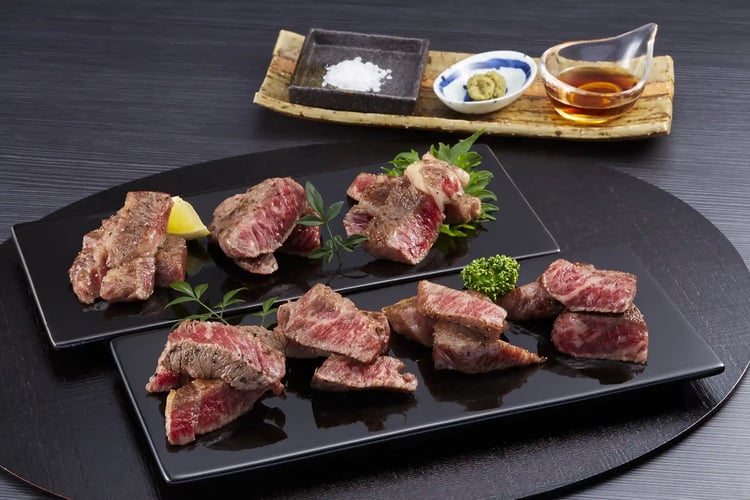
Teppanyaki as an Experience — Live Technique and Spatial Theater
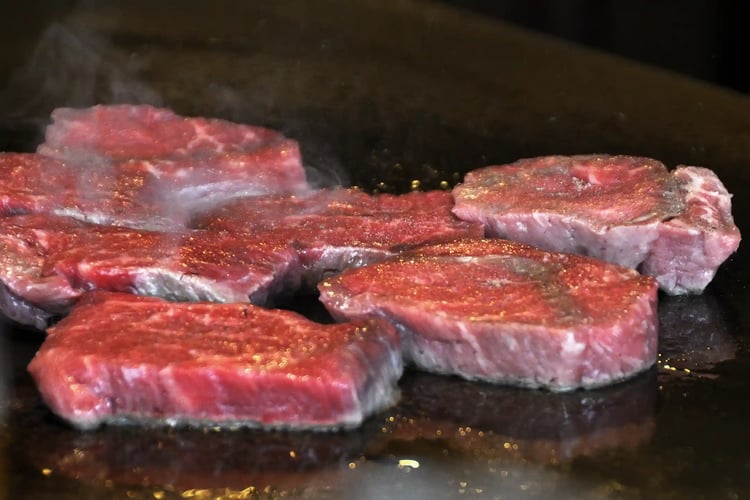
Among Wagyu experiences, teppanyaki stands out. Said to have originated in postwar Kobe, teppanyaki features a chef skillfully grilling Wagyu steak, seafood, and vegetables on a large iron griddle right before your eyes.
The thrill is the live encounter—chef and guest facing each other across the griddle. With deft spatula work, the chef sears meat, sends up flames, and sometimes adds playful touches that delight international guests.
For instance, stacking onion rings into a tower and igniting them to create a “volcano (Fujiyama) performance,” or playfully flipping pepper mills and knives. The original teppanyaki restaurant “Kobe Misono” became famous among foreign visitors early on, and its show-like service drew acclaim. In North America (the Benihana style), this performative spirit took root, elevating dining into entertainment.
In Japan’s high-end teppanyaki, many places favor quiet finesse over showiness. At a serene counter, the chef tends Wagyu attentively and serves it at the perfect moment—live yet almost tea-ceremony calm.
Lighting often highlights the gloss of Wagyu sizzling on the griddle. The aroma and sound, the gradual color change of marbled beef, and finally that first bite—teppanyaki stimulates not only the five senses but a “sixth” sense of live presence.
For many visitors, teppanyaki feels like a quintessential “Japanese highlight,” now a cornerstone of culinary tourism. It’s a “chef-dialogue dinner show” that elevates Wagyu’s appeal into fully fledged entertainment.
Hidden Regional Restaurants in Historic Buildings — A Guide to Well-Kept Secrets
When you travel Wagyu’s heartlands, don’t miss restaurants housed in historic architecture.
As noted earlier, Shiga’s Ōmihachiman offers “Restaurant Hyakunen-Minka Kurogama” (a century-old home), while Kyoto’s Teramachi Shopping Street is home to “Mishima-tei Main Store” (founded 1873), a venerable sukiyaki institution. Tucked into Teramachi, its machiya facade exudes history. Inside, polished wooden floors and exposed beams reflect a calm that has matured since Meiji.
Private rooms beloved by literary figures like Yasunari Kawabata and Shotarō Ikenami remain. Enjoying sukiyaki over charcoal there, you can feel you’re inheriting 150 years of “celebratory flavor.” Across Kyoto, many steakhouses and yakiniku spots are set in renovated machiya.
Slide past lattice doors and along stone paths to discover hidden gems where you gaze at a courtyard garden while savoring rare charcoal-grilled cuts—an urban retreat in every sense. In Kobe’s Kitano district, some restaurants occupy Meiji-era Western houses, offering Kobe Beef courses in classic salons.
With soft light filtered through stained glass and service of consommé and roast beef, the scene feels like time travel. In Matsusaka, you’ll find French restaurants serving Matsusaka Beef in buildings with a romantic Taishō ambience.
These spots are local legends yet remain under the radar for many travelers. Enjoying Wagyu—one of Japan’s culinary treasures—in spaces that embody regional history turns a meal into cultural exploration. For culturally curious explorers, this “heritage architecture × Wagyu” pairing is an ideal experience and a story Japan’s owned media should share.
Sustainability in the Wagyu Market — Japan’s Production in Harmony with the Environment
Sustainable Wagyu Rearing — The Front Lines of Circular Agriculture
Across Japan, producers are advancing circular agriculture that harmonizes with the environment. Traditionally, manure from intensive livestock operations could cause odor and water issues; the new approach sees it as a regional resource.
In Nishiwaki City, home to Kurodasho Wagyu in Hyōgo, cattle and rice farmers collaborate in a loop: cattle manure → soil improvement in rice paddies → rice straw → cattle feed (*1). Manure from Kurodasho Wagyu is matured into compost, applied to fields to reduce chemical fertilizers, and straw from those fields is fed back to cattle (*1).
This circular model turns waste into value, reducing environmental impact at the community level while maintaining premium quality. At Hayashi Farm in Nagato, Yamaguchi, the team cultivates 5 hectares of paddy for feed rice and forage, sharply cutting purchased feed costs compared with the national average (*2).
They compost manure and return it to their own paddies—“nutrients circulate from cattle to rice and back to cattle,” they say (*24). From an SDGs perspective, the results are compelling; Hayashi notes that “old-school methods may be due for a comeback now that feed costs are soaring” (*24). In Hokkaidō, some large farms use biogas plants to ferment manure, capturing methane for electricity and heat (*3).
The Wagyu industry is also experimenting with eco-feeds and renewable energy. While Wagyu evokes luxury, producers are working to build livestock systems they can proudly pass to the next generation—balancing environmental harmony with tradition. Their steady efforts are laying the groundwork for Wagyu’s future.
Environmentally Conscious Facilities and Technological Innovation in Japanese Livestock
Facilities and technology matter, too. With Japan’s hot summers and cold winters—and more frequent heat waves—barn climate control and ventilation must reduce stress on cattle while saving energy.
A Kyushu University–led team has tested a radiant cooling system that more efficiently cools barns without blasting cold air directly on animals (*4). Panels installed on ceilings and walls maintain comfortable temperatures—an animal- and climate-friendly approach for a warming world (*4).
Domestic manufacturers are also developing high-efficiency ventilation fans and insulation materials to improve airflow, reduce odor, and lower electricity use in barns (*5).
Smart livestock tech is advancing as well. IoT sensors and AI monitor vital signs like temperature, heart rate, and steps 24/7, detecting estrus and illness early and even alerting staff before calving.
At Hayashi Farm, internal sensors for calving alerts helped reduce incidents—once a few times a year—to essentially zero, while easing grueling late-night patrols.
Merging environmental and digital technologies is transforming Wagyu production, supplementing experience and intuition with data to create operations that are kinder to cattle and people. Government efforts—like “Smart Agriculture Technology Catalogs”—support adoption, and blockchain-based tracking could soon enhance traceability and efficiency across the supply chain.
Wagyu is an artisanal, tradition-rich product, but it’s also quietly benefiting from cutting-edge tech.
Eco-Friendly Wagyu Travel — A Guide to Tesla Charging Spots and Stays
As environmental awareness grows, traveling Wagyu regions by EV is emerging as a new style. Drivers of luxury EVs like Tesla tend to value sustainability and technology, so charging infrastructure is vital. Fortunately, many hotels and ryokan across Japan now offer EV charging—even in Wagyu heartlands.
For example, “Hill Hotel Sunpia Iga” in Mie’s Iga City is a hot-spring resort where you can enjoy rare Iga Beef, with four on-site Tesla Superchargers. You can relax in mineral-rich baths, savor Iga Beef barbecue, and charge your vehicle—all in one sustainable trip.
“Biwako Hotel” in Ōtsu, Shiga—a luxury lakeside property—offers all-room lake views, fine local cuisine, and open-air baths by Lake Biwa, plus multiple standard chargers. Resorts in areas famed for Wagyu—Awaji Island, Hida-Takayama, and more—are increasingly EV-friendly. Some even bundle “free EV charging” into lodging plans.
With chargers expanding at roadside stations and service areas, you can pause amid pastoral views for a quick charge, then roll into town for an exquisite Wagyu lunch. This “sustainable luxury travel” suits culture-seeking explorers who mix the practicality of an EV with deep-dive culinary experiences.
Producers are embracing the trend, too. In Hyōgo’s Tajima region, local groups are creating EV-friendly maps of Tajima-beef sites, and ryokan associations are subsidizing charger installations.
“Wagyu × Environment” is a compelling lens for high-value tourism. Don’t be surprised to see themes like “Cruising the Wagyu Highway by EV” catching on across regions—uniting sustainability with indulgent experiences.
Experiences to Satisfy Your Curiosity — Classes and Workshops on Wagyu
Wagyu Tasting Courses — Learning Flavor Secrets from Meat Appraisers
If you want to go beyond eating and truly learn Wagyu, tasting courses are gaining popularity. In big cities like Tokyo, specialists—the “sommeliers of meat”—host seminars where you compare multiple Wagyu brands and cuts while learning what sets them apart.
One Tokyo program, for example, serves a seven-course tasting of selected Wagyu paired with sake, teaching you how to evaluate beef like a pro (*1).
Participants sample everything from A5 marbled cuts to lean-forward brand beef, learning from instructors about how fat melting point affects mouthfeel or how aging shifts flavor. Questions like “Why is Matsusaka’s sweetness so pronounced?” or “Why is Ōmi’s fat often described as mellow?” get answered with scientific and cultural context. There’s even a “Meat Proficiency Test” certified by the Japan Meat Certification Association; higher-level holders can identify cuts and proper cooking methods. Direct instruction from such appraisers and chefs is a rare opportunity for beginners and intermediate gourmets alike.
You’ll often use tasting sheets to score aroma and texture—just like wine tastings—so you can discover “your Wagyu.” Alongside flavor, instructors explain how climate, feed, and lineage shape meat quality, leaving you with intellectual satisfaction beyond a standard food event (*2).
English-language classes are growing, making them great for international visitors who want to grasp Wagyu’s essence. “Learn it, taste it, feel it”—these courses are adult education at its tastiest.
Knife Skills with Master Craftspeople — Culinary Technique and Food Culture
To unlock Wagyu’s full potential, technique matters—especially knife work. Japan’s refined culinary skills have been passed down for generations, and some workshops let you experience them firsthand.
In Sakai, Osaka—famed for blades—you can craft and sharpen a Japanese kitchen knife under an artisan’s guidance. The Sakai Tourism & Convention Association’s program lets you attach a handle to a santoku blade, then sharpen it on whetstones to experience true cutting performance (*3).
Beginners are welcome, and you can take your finished knife home (*3). At long-established “Wada Shōten,” a one-party-per-day private workshop offers four knife types (like deba or yanagiba). You can add inscriptions or branding to create a one-of-a-kind piece (*4).
Workshops teach not only making and sharpening but also the culture of knives and tips for handling Wagyu beautifully—like where to cut each beef part and how a smooth, fiber-respecting pull-cut preserves juices.
You’ll also hear artisans reflect on the spirit of Japanese monozukuri: “A good knife has a soul,” “Treat ingredients with respect and they respond.” It’s a chance to learn technique and culture in one sitting.
Community Exchanges with Local Experts and Artists — Deepening Cultural Context
Wagyu’s allure isn’t confined to flavor or technique; it shines through the people and places surrounding it. Across regions, you’ll find events that bring you into direct contact with local experts and artists.
In Ojiro, Kami Town (Mikata District), Hyōgo—the birthplace of Tajima cattle—the “Visit Wagyu’s Hometown, Ojiro” tour takes you with locals through pastures and shrines, sharing regional dishes and conversations (*5). Through exchange, you explore how Tajima cattle benefit the community and what challenges they face, deepening your understanding of food culture (*34).
In Niigata, JA Zen-Noh Niigata organizes exchange tours to Murakami Beef country, visiting producers like Uruma Farm to hear directly from them and even feed calves with rice straw (*6).
You’ll learn the “secrets of Murakami Beef’s deliciousness” right on site, discuss safe management practices, and in the evening join producers and local experts for a convivial exchange over regional sake—unforgettable encounters that linger long after.
In Shiga, an event brought together Ōmi Beef farmers, Shigaraki ceramicists, and folk toy artisans for a “Food and Craft Collaboration Exhibition & Talk.” New plates designed for Ōmi Beef were used to serve dishes, and you enjoyed the marriage of cuisine and craft while hearing cross-disciplinary conversations.
Wagyu is not just an ingredient; it’s a cultural hub. Through human connections, the deeper story comes into view—perfect for travelers with a strong appetite for learning.
The Future of Japan’s Meat Market — Technological Innovation in Wagyu Production
How Next-Generation Traceability Will Transform Transparency
As Wagyu’s rarity grows and international trade expands, transparency across the food chain becomes ever more critical. Since 2003, individual identification numbers have been mandatory for beef in Japan, tracking cattle from production to distribution. Yet in the past, there were cases where numbers were misused to disguise crossbreds as Wagyu (*1).
To address such issues, producers are exploring blockchain-based traceability. Because blockchains are tamper-resistant distributed ledgers, they can securely store production histories and allow consumers to access them via QR code. A Hokkaidō University team is combining IoT sensors and blockchain to build high-trust tracking for foods like Wagyu (*2).
By recording environmental data (temperature, humidity, feed lots) and each stage—slaughter, processing, transport—in real time to the blockchain, anyone can trace the “life story” of a cut of beef (*3).
In the near future, when you scan a QR code on a Wagyu steak, you might instantly see the birth farm, rearing period, feed used, processing date, inspection results, and transport path (*4). That brings producers into view, speeds investigations if problems arise, and deters fraud.
Kumamoto Prefecture has already introduced “Agridential,” a blockchain system for Akaushi (Japanese Brown), enabling consumers to verify origin (*5). The model can extend to many agricultural products. For Wagyu to remain trusted worldwide, transparent tech like this is essential—showing that an artisanal tradition can also embrace cutting-edge IT.
AI/IoT–Powered Smart Farms — The Next Stage of Wagyu Production
Smart farms using AI and IoT are becoming the new vision for Wagyu. We already see sensors tracking estrus and health and systems detecting imminent calving, but more advanced AI analytics will likely guide operations.
AI image analysis can evaluate body shape and gait to detect health shifts or estrus earlier than humans. Cameras in barns feed data to AI that flags subtle behavioral changes—“calving soon,” “possible rumen issue”—reducing burdens on producers.
AI trained on historical rearing data can also suggest optimal finishing plans: “For this animal, introduce this feed at this age for best quality.” Some feed makers and IT firms reportedly co-develop AI systems that simulate Wagyu growth.
AI is even being used to predict carcass yield and grade—metrics once known only after slaughter—so farmers can time shipments more precisely.
On the IoT side, automated feeding robots and robotic milkers (analogous tech from dairies) are maturing, easing labor shortages on large pastures. In the future, AI could update individualized finishing programs in real time, with automated feed, water, and temperature control—and drones performing patrols when alerts arise.
Livestock has long relied on veteran intuition; as populations age, AI will help learn and carry forward that expertise in partnership with people. While the animals themselves create great flavor, AI/IoT can optimize the environment so cattle stay healthier and taste improves.
This isn’t factory-style efficiency at the expense of craft; it’s a fusion of skilled judgment and new tools—bridging tradition and the future of Wagyu.
Outlook for Japan’s Meat Market — Next-Gen Consumption and Lifestyle Shifts
Consumer lifestyles are evolving fast. One sign is the post-pandemic normalization of online purchases of premium ingredients and the spread of at-home entertaining.
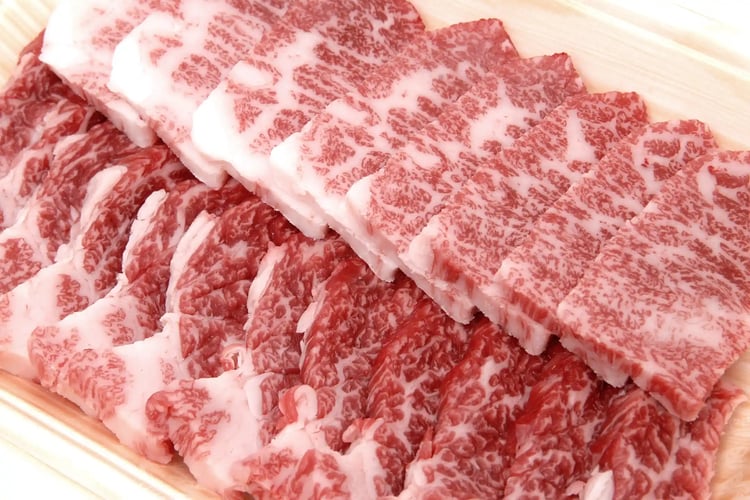
High-grade Wagyu—once mostly for restaurants—now appears in small lots online from butchers and JA co-ops. You might order A5 steaks for a family celebration or coordinate an online gathering with sukiyaki kits delivered to everyone. The result is a broader palette of “special-day flavors” at home.
While preserving the “celebratory” tradition, preferences are diversifying—especially among younger consumers who balance gourmet and health, often preferring lean-forward cuts. Producers are responding by spotlighting lines known for delicious lean beef (e.g., Japanese Brown/Akaushi) and by adjusting finishing periods to avoid overly heavy marbling.
Average BMS (beef marbling standard) has risen year by year, but some suggest consumers don’t necessarily want extreme marbling, and a better balance of fat and lean could become a production focus (*1).
Meanwhile, alternative proteins—plant-based and cultured—are gaining attention for sustainability and animal welfare. Yet, JETRO reports that even as interest grows, the unique value of “authentic Wagyu” remains strong; scarcity may further support a premium strategy (*2).
Strategy-wise, expect a clear positioning: “the ultimate authentic” (Wagyu) alongside “everyday sustainable alternatives.” Transparency and sustainable production will be non-negotiable.
As DX progresses, you may even see blockchain-certified Wagyu NFTs to support producers and reach luxury markets, or virtual farm tours in the metaverse with real-world delivery at a tap. Next-gen consumption is digital-native consumption. Wagyu will evolve accordingly—but real-life experiences will matter even more.
Sharing stories, meeting people, and engaging all five senses on Wagyu journeys will shine as rare luxuries in a digital age.