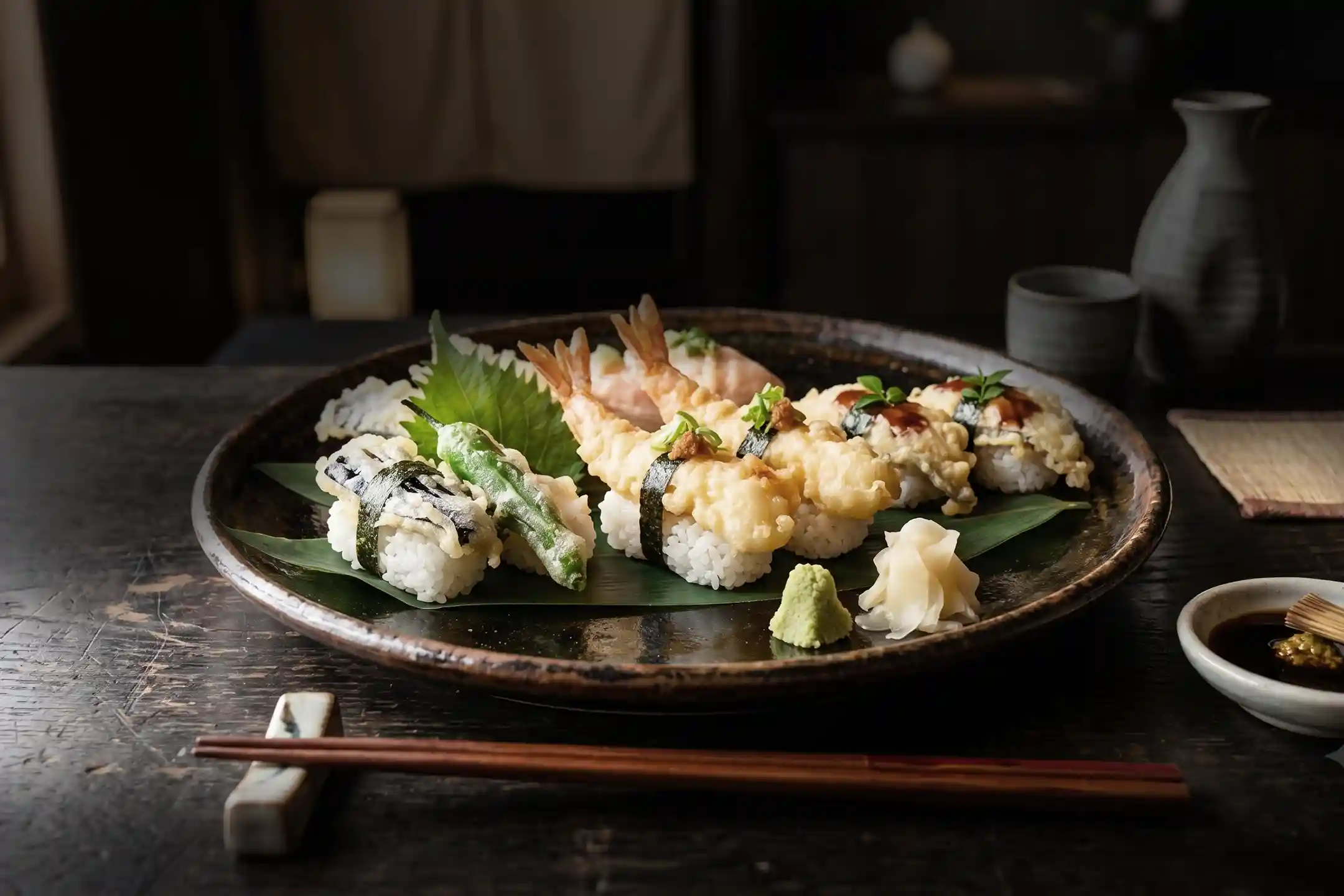
If you searched for “tempura rolls sushi,” you are probably trying to understand one of several overlapping dishes: sushi rolls filled with tempura, tempura laid over nigiri, or fully fried sushi rolls. In other words, “tempura rolls sushi” is less a single formal dish name than a cluster of related fried sushi styles.
This guide explains the differences between fried sushi, tempura sushi, and tempura rolls in clear terms. It also covers the Edo roots behind these styles, the four main types, how to choose among them, how to spot real quality, and how to enjoy them smartly in Japan.
What Is Fried Sushi? Definitions and Boundaries
At the center of sushi is vinegared rice (sumeshi or shari). Unlike older fermented forms such as nare-zushi, the Edo-period development of haya-zushi made sushi something that could be prepared and eaten quickly by seasoning the rice with vinegar from the start (*1). From that foundation, many branches developed—nigiri, rolls, pressed sushi, chirashi, wrapped sushi, and styles such as inro-zushi, in which rice is enclosed in a wrapper like fried tofu (*1). For practical purposes, fried-style sushi is easiest to define as sushi that keeps that vinegared-rice structure while bringing frying into one of four places: (1) the topping, (2) the entire roll, (3) the wrapper, or (4) the design of the course itself.
.webp?width=750&height=500&name=Preparing%20Sushi%20Rice%20The%20Process%20of%20Shari-Kiri%20(Mixing%20and%20Cooling).webp)
What Changes When Frying Enters the Picture? Aroma, Temperature, and Texture
Deep-frying briefly cooks food in hot oil, creating crispness on the surface and a savory aroma that standard sushi does not usually have (*2). Once that layer is added, sushi gains a new dimension built around heat, fragrance, and contrast.
Tempura is especially useful here. One explanation notes that tempura batter contains roughly 60–70% moisture before frying and about 10–20% afterward. When the exchange of moisture leaving the batter and oil entering it happens efficiently, the result feels lighter rather than greasy (*3). Paired with vinegared rice, that can create a sequence of sensations—heat, acidity, toasted aroma, then the quiet sweetness of rice—that feels more layered than simple richness.
At the same time, fried food deteriorates quickly. Research on tempura also highlights the effect of time: the coating absorbs moisture from the ingredient side and gradually loses its crispness (*4). That is why fried-style sushi should be judged not only by flavor, but by service rhythm, humidity, temperature control, and whether “freshly fried” is truly built into the experience (*4).
Four Types of Fried Sushi (A Clear Map for the Category)
Fried-style sushi is easier to understand when you stop looking at appearance first and instead ask a simpler question: what exactly has been fried?
Type A: Fry the topping (example: tempura sushi)
Type B: Fry the entire roll (example: deep-fried sushi roll)
Type C: Wrap it in a fried processed ingredient (example: inari sushi)
Type D: Integrate frying into a course or creative composition (example: fried elements in kappo or creative sushi)
This framework is useful because it tells you what kind of experience to expect before you order. If aroma matters most, choose A or D. If you want the strongest textural contrast, choose B. If you want gentle sweetness, portability, and less time pressure, choose C (*1).
Easy-to-Confuse Terms: Why Aburi Is Not Fried
One of the most common points of confusion is aburi. The verb aburu means to grill or lightly sear over flame (*5). Aburi sushi is therefore heated on the surface with fire or a torch, not deep-fried in oil.
Another easy mistake is to treat all agemono as the same. Agemono simply means fried foods as a broad category, and tempura is only one part of that larger group (*2). So even if “tempura roll” and “fried roll” sound similar in English, they are better understood as different styles: one usually aiming for a lighter batter and cleaner finish, the other often using a bolder fried coating and stronger sauce design (*2).
Historical and Cultural Background: Why Sushi and Fried Foods Crossed Paths
Fried sushi can sound like a modern twist, but sushi and fried foods have shared the same urban rhythm for a long time. The overlap makes more sense when you look at three forces in Japanese food history: city dining culture, the high value placed on food served fresh, and formats that were easy to carry or eat quickly.
Edo Street-Stall Culture: The Freshly Made Logic Shared by Sushi and Tempura
The term Edomae came to refer not only to seafood from Edo Bay and nearby waters, but also to the cooking methods and style associated with Edo itself (*1). As street-stall culture expanded, sushi, tempura, soba, and other foods built around Edomae ingredients became part of a city food culture shaped by speed, freshness, and immediacy (*1).
Tempura is likewise described as a style in which fresh seafood was coated and fried in sesame oil, then eaten hot, often one piece at a time, with street stalls helping to spread it (*2). Once you see that “served right away” was a shared value in both sushi and tempura, their later points of contact feel much less accidental (*1)(*2).
Inari Sushi: Why Fried Tofu Belongs in This Conversation
Inari sushi is not fried to order, but it still belongs in this conversation. Once you treat it as sushi wrapped in a fried processed ingredient rather than sushi that is itself freshly fried, the category becomes much easier to read.
.webp?width=750&height=500&name=The%20Culinary%20World%20of%20Fried%20Sushi%20Varieties%20Balancing%20Temperature%2c%20Fragrance%2c%20and%20Shari%20(Vinegared%20Rice).webp)
There are several origin stories, but one common explanation links it to rice being stuffed into fried tofu offered to Inari, which then developed into sushi (*3). Because it has long been associated with shrine towns, portability, and home-style cooking, inari sushi carries both everyday comfort and cultural weight at the same time (*3).
Overseas Roll Culture: Deep-Frying, Sauce, and the Expansion of Sushi
The globalization of sushi is better understood as adaptation than one-way export. Research describes sushi as something repeatedly reinterpreted for local tastes, dining systems, and ingredient preferences, and in some cases flowing back into Japan again (*4).
That process helps explain the rise of inside-out rolls, California rolls, and fried creations such as spider rolls made with fried soft-shell crab (*5). If you want to understand fried sushi at a high level, it helps to see overseas roll culture not as a mistake, but as a different logic—one that some restaurants in Japan later refine again as creative sushi (*4)(*5).
A Field Guide to the Varieties: Fried Sushi, Tempura Sushi, and Tempura Rolls
Now to the practical question: what should you actually order? Each of the four types tends to appear in a different kind of restaurant, and each has its own strengths, risks, and ideal way of being eaten. Once you understand the structure behind the style, ordering becomes much easier.
Type A: Fry the Topping — Tempura Sushi, Tempura Rolls, and Sushi Rolls with Tempura
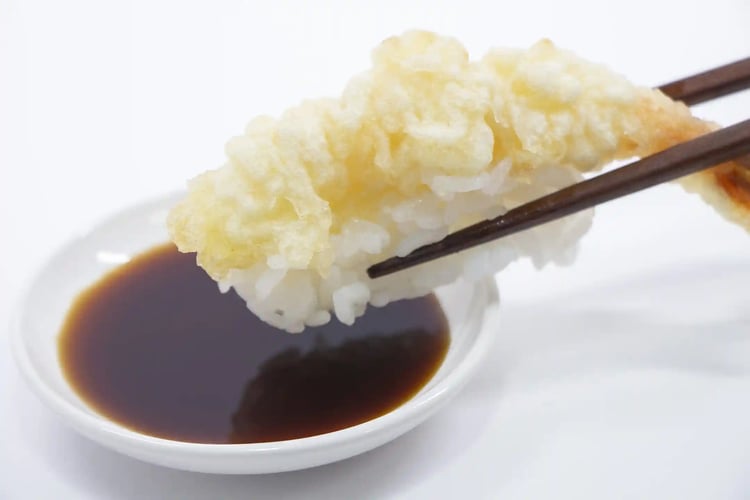
Tempura is a dish in which seafood or vegetables are dipped in batter and fried in oil, and one of its core pleasures is eating it immediately after frying (*1). When tempura enters sushi, it usually appears in one of three ways: tempura placed over nigiri, tempura used as the filling of a roll, or tempura as the defining feature of the roll itself. The structure changes, but the central attraction does not: the savory aroma of frying meeting the bright clarity of vinegared rice (*1).
.webp?width=750&height=500&name=An%20Assortment%20of%20Crispy%20Deep-Fried%20Tempura%20(Seafood%20and%20Vegetables).webp)
The next decision is seasoning. Tempura changes character depending on whether you use tentsuyu made with bonito dashi, salt, or citrus such as lemon (*1). Tentsuyu adds umami depth, salt highlights the fragrance of the oil and the ingredient, and citrus sharpens the finish. The same logic works for tempura sushi and tempura rolls: decide whether you want depth, fragrance, or lift first, and your order becomes smarter (*1).
Type B: Fry the Entire Roll — Deep-Fried Sushi Rolls
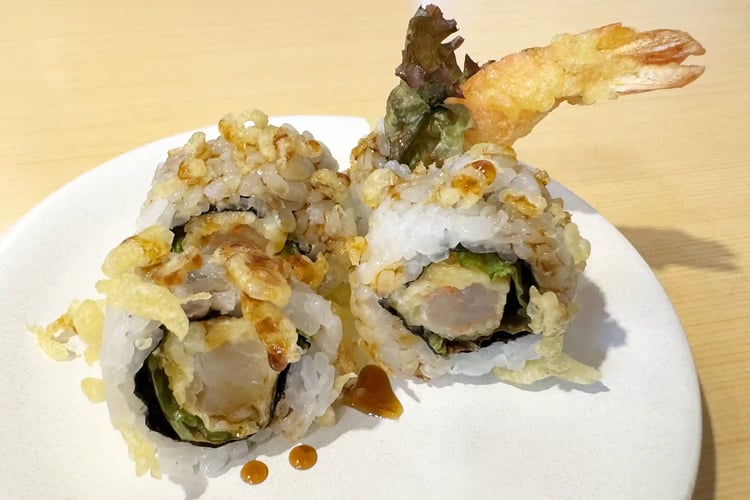
Here, the contrast itself is the point: crisp on the outside, vinegared rice inside. Rolls in this family often include mayonnaise or spicy mayo, together with fried fillings such as tempura shrimp or fried soft-shell crab (*2).
This is the style most closely linked to overseas roll culture, especially inside-out rolls and bolder combinations of texture, sauce, and garnish (*2). To enjoy it well, pay attention not just to richness but to control: how lightly the roll is fried, whether the oil drains cleanly, whether the cut face still looks neat, and whether the sauce supports the fried note instead of burying it (*2).
Type C: Wrap It in a Fried Ingredient — Inari Sushi
The appeal of inari sushi lies in its gentler temperature range. It is still sushi, but it feels closer to body temperature than to the hot-cold contrast of tempura. In its standard form, vinegared rice is tucked into sweet-savory simmered fried tofu, and the balance of seasoning varies by region and household (*3).
Excellent inari sushi does not rely on sweetness alone. The rice should still taste like rice, with acidity and grain fragrance intact, while the fried tofu should feel seasoned rather than heavy. If ingredients are mixed into the rice, the key question is whether they add aroma—such as yuzu or sansho—or texture, such as sesame or finely cut vegetables. That restraint is what makes good inari feel elegant rather than sugary (*3).
Type D: Integrate Frying into Courses and Creative Cooking — Kappo and Creative Sushi
Kappo can refer either to the act of preparing food or to a kappo restaurant itself (*4). In modern kappo and course-style dining, grilled dishes, simmered dishes, and fried dishes may all appear before the meal finally arrives at sushi. When frying is built into that sequence, it usually serves two purposes.
The first is to create an aromatic peak; the second is to leave a memorable texture. Fried soft-shell crab in a roll is a familiar example in overseas roll culture (*2). In Japanese course settings, that same idea may be refined through better oil, dashi, plating, and tighter temperature control, so the effect feels composed rather than flashy.
How to Recognize Quality: The Technique and Ingredients Behind Great Fried Sushi
With fried sushi, quality reveals itself quickly. Price matters less than the places where technique shows: the condition of the oil, the batter design, the temperature and moisture of the shari, the use of aromatics to lighten the finish, and the pace of service. Once you can evaluate those details, you have a much better chance of choosing well—even on a first visit.
Batter and Oil: The Biggest Factors in Aroma, Lightness, and Finish
Start with the batter. One explanation notes that tempura batter contains about 60–70% moisture before frying and around 10–20% after frying, and that the escape of moisture is central to a light, crisp finish (*1). Wheat batter also forms gluten and becomes more viscous as it sits, which makes clean frying harder. So when tempura sushi tastes unusually good, it is often because the kitchen is managing the batter’s timing as carefully as the ingredients themselves (*1).
Then there is the oil. Frying oil contributes aroma, but it also deteriorates through reactions such as hydrolysis, oxidation, and polymerization when it is repeatedly heated (*2). In a good restaurant, the aroma stays clear and the finish avoids the stale heaviness of tired oil. Because vinegared rice makes that contrast more obvious, oil management has a direct effect on how refined fried sushi tastes (*2).
Designing the Shari: Temperature and Moisture That Work with Fried Elements
Sushi rice matters even more once frying enters the picture. Research on shari highlights washing, soaking, water ratio, and vinegar composition as factors that influence texture and sensory quality (*3).
For example, one study reports that beyond a certain point, longer soaking does not meaningfully increase water absorption, and that adding vinegar lowers the pH to below 4.5 (*3). In practical terms, that means the moisture of the batter and the moisture of the rice are always going to interact.
If the shari is too soft, it steals the crispness from the fry. If it is too firm, the temperature contrast becomes harsh rather than pleasant. In refined shops, the rice is adjusted so the grains loosen gently in the mouth while still holding shape beside fried elements (*3).
Toppings and Condiments: How Good Shops Cut Through Richness
What makes fried sushi feel polished is often the idea of cutting through richness. Shiso, citrus, and sansho do more than add flavor; they redraw the edges of oil through aroma, bitterness, brightness, and gentle pungency.
Research also suggests that mild astringency, like that found in tea or wine, can reduce the perception of fatty sensations when the two are taken in alternation (*4). When a restaurant uses condiments well in fried sushi, that is often what is happening in practice: the oily film on the palate is being reset through a distinctly Japanese set of tools (*4).
Service Pace and Guest Conduct: Why Freshly Fried Timing Matters
Finally, timing. Research on tempura shows that the coating absorbs moisture over time and loses crispness (*5). Fried sushi is therefore a food built to be eaten within a narrow window, before that decline becomes obvious.
That is why good shops create a clear rhythm of fry, cut, serve, and eat. Your role matters too: take the piece soon after it is placed, keep photos brief, and let the first bite happen while the aroma is still rising. In fried sushi, respect for timing is part of the technique.
Choosing a Restaurant and Good Manners: How to Enjoy Fried Sushi Smartly in Japan
In Japan, the quality of the experience depends not only on what you eat, but where you eat it and how you behave once you sit down. Because temperature and timing matter so much, fried sushi rewards good restaurant choice more than almost any other sushi subcategory.
Where Should You Eat It? Sushi Restaurants, Tempura Counters, Kappo, and Izakaya
Sushi restaurants tend to be strongest at balancing shari and topping. If a menu includes tempura sushi, tempura rolls, or shrimp tempura rolls and the frying happens after you order, that is a good sign. Tempura restaurants, by contrast, make frying precision the main event, so oil aroma, batter control, and serving tempo are often sharper. Given tempura’s development within Edomae dining culture, a counter where each piece is served immediately is still one of the best ways to experience it (*1)(*2).
Kappo and kaiseki work differently. They are course-based worlds where seasonality, aroma, vessels, and temperature are composed over time. In that setting, fried sushi or a fried sushi element often appears in the middle or latter half of the meal, when the aroma of frying can act as a deliberate peak rather than a casual side note (*3).
Izakaya are looser and more playful, which makes them a natural home for fried rolls and creative combinations. If quality is your priority, focus on two clues: whether the room smells of old oil, and whether fried items seem to be made to order instead of sitting around waiting to be served (*1).
What to Watch for with Takeout
Takeout is the hardest test for fried sushi. Research shows that tempura coating absorbs moisture over time and loses its crispness (*4). To slow that decline, avoid sealing it tightly while hot, avoid trapping steam, and combine sauce or toppings only right before eating.
Shari also becomes firmer and less appealing as time passes (*5). Because both the rice and the fried element deteriorate, a realistic target for takeout is to eat within about 10 to 20 minutes. If that is not possible, Type C—inari—is usually the smarter choice. For Type B, keeping sauce on the side is also safer (*5).
Key Points for Allergies and Dietary Restrictions
Fried sushi is also a category where allergens overlap easily. Under Japan’s food labelling system for processed foods, eight ingredients—shrimp, crab, walnut, wheat, buckwheat, egg, dairy products, and peanut—require allergen labelling, while other items are recommended disclosures (*6). Tempura batter often involves wheat and egg, and inari sushi can bring soy into the picture through fried tofu.
Shrimp tempura rolls and similar items may also overlap with shellfish concerns and shared-fryer issues. At restaurants you do not know well, a few short questions help a great deal: “Does the batter contain wheat flour or egg?” “Do you fry shellfish in the same oil?” “Do your sauces contain wheat or soy?” Official food allergy communication sheets for visitors to Japan are also available and worth saving to your phone before a trip (*7).
(*1 Source: Ministry of Agriculture, Forestry and Fisheries, “Kanto Region, Tokyo (Edomae Cuisine and Street-Stall Culture).” https://www.maff.go.jp/j/keikaku/syokubunka/k_ryouri/area_stories/tokyo.html)
(*2 Source: Ministry of Agriculture, Forestry and Fisheries, “Tempura, Tokyo Metropolis (Edo Street Stalls / Freshly Fried Culture).” https://www.maff.go.jp/j/keikaku/syokubunka/k_ryouri/search_menu/menu/34_6_tokyo.html)
(*3 Source: Japan National Tourism Organization (JNTO), “Kaiseki Guide” https://www.japan.travel/en/guide/japanese-kaiseki-cuisine/)
(*4 Source: J-STAGE, “Changes Over Time in Crispiness and Moisture Content of Tempura Prepared Using Barley Flour, Buckwheat Flour, and Job's Tears Flour” https://www.jstage.jst.go.jp/article/rheology/51/2/51_65/_article)
(*5 Source: MDPI Applied Sciences, “Analysis of Sushi Rice: Preparation Techniques, Physicochemical Properties and Quality Attributes” https://www.mdpi.com/2076-3417/15/12/6540)
(*6 Source: Consumer Affairs Agency, “Japan's Food Labelling System (For overseas visitors to Japan)” https://www.caa.go.jp/en/policy/food_labeling/assets/food_labeling_cms204_240425_01.pdf)
(*7 Source: Consumer Affairs Agency, “Food Labelling (Food Allergy Communication Sheet)” https://www.caa.go.jp/en/policy/food_labeling/)
Pairings: Elevating Fried Sushi with Sake, Tea, and Non-Alcoholic Options
Pairing is what makes fried sushi feel complete. The goal is twofold: clear the palate of oil and extend the food’s savory, toasted notes. That can be done with alcohol or without it.
Sake: When to Choose Dry, Sparkling, or Aged Styles
Sake is made from rice and water, with starch converted into sugar through the action of koji mold, and much of its quality depends on careful control of fermentation and environment (*1). That body of knowledge was also inscribed on UNESCO’s Representative List of the Intangible Cultural Heritage of Humanity in 2024 (*2). For fried sushi, a practical way to think about pairing is to start with dry styles that cut through oil.
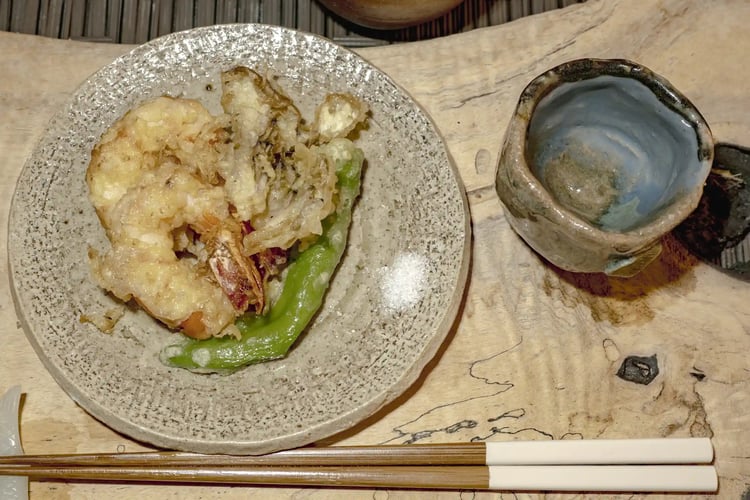
Then move to sparkling styles for lift, and finally to aged styles if you want to echo toastier, deeper flavors. The categories of tokutei meishoshu, such as ginjo, junmai, and honjozo, are distinguished by ingredients and style (*3). As a rule of thumb, the floral lift of ginjo tends to flatter delicate tempura, while the umami of junmai often works better with richer fillings such as soft-shell crab (*3).
Tea: The Roles of Sencha, Hojicha, and Matcha
Tea is one of the quietest and best tools for resetting the palate. The Ministry of Agriculture, Forestry and Fisheries describes sencha as the standard green tea, matcha as powdered tea, and hojicha as tea defined by its roasted aroma (*4). With fried sushi, sencha sharpens the outline through astringency and umami, hojicha resonates with toasted notes, and matcha creates a denser, longer finish (*4).
Research has also reported that green tea catechins may interfere with lipid absorption and that oolong tea can reduce the sensation of oiliness in the mouth more effectively than water (*5)(*6). That makes tea sensible here not only in terms of flavor, but also in terms of mouthfeel and reset.
Wine and Non-Alcoholic Pairings: Why Bubbles and Fermented Drinks Work
If you prefer wine, sparkling styles are a strong choice. One report suggests that carbonation can heighten refreshment and thirst-quenching in the mouth, which helps explain why bubbles feel so effective during richer meals (*7).
With fried sushi, that stimulation helps loosen the oily film on the palate and makes the next bite feel cleaner. For non-alcoholic options, sparkling water, lightly sparkling fermented drinks such as kombucha, and citrus-based sparkling drinks all work well. The key is restraint: too much sweetness can make the fried aroma feel heavier, while acidity and bubbles keep the experience bright (*7).
Sides and the Finish: Soup, Small Dishes, and a Light Sweet
Fried sushi stays in the memory more gracefully when the meal ends with a Japanese sense of balance: clear soup, pickles, a small vinegared side dish, and a restrained sweet.
Washoku is described as a social practice rooted in respect for nature and the valuing of regional ingredients such as rice, fish, and vegetables (*8). Seen that way, the last dishes are not extras. They complete the arc of the meal by letting the aroma of frying fade into something cleaner, more seasonal, and more memorable (*8).