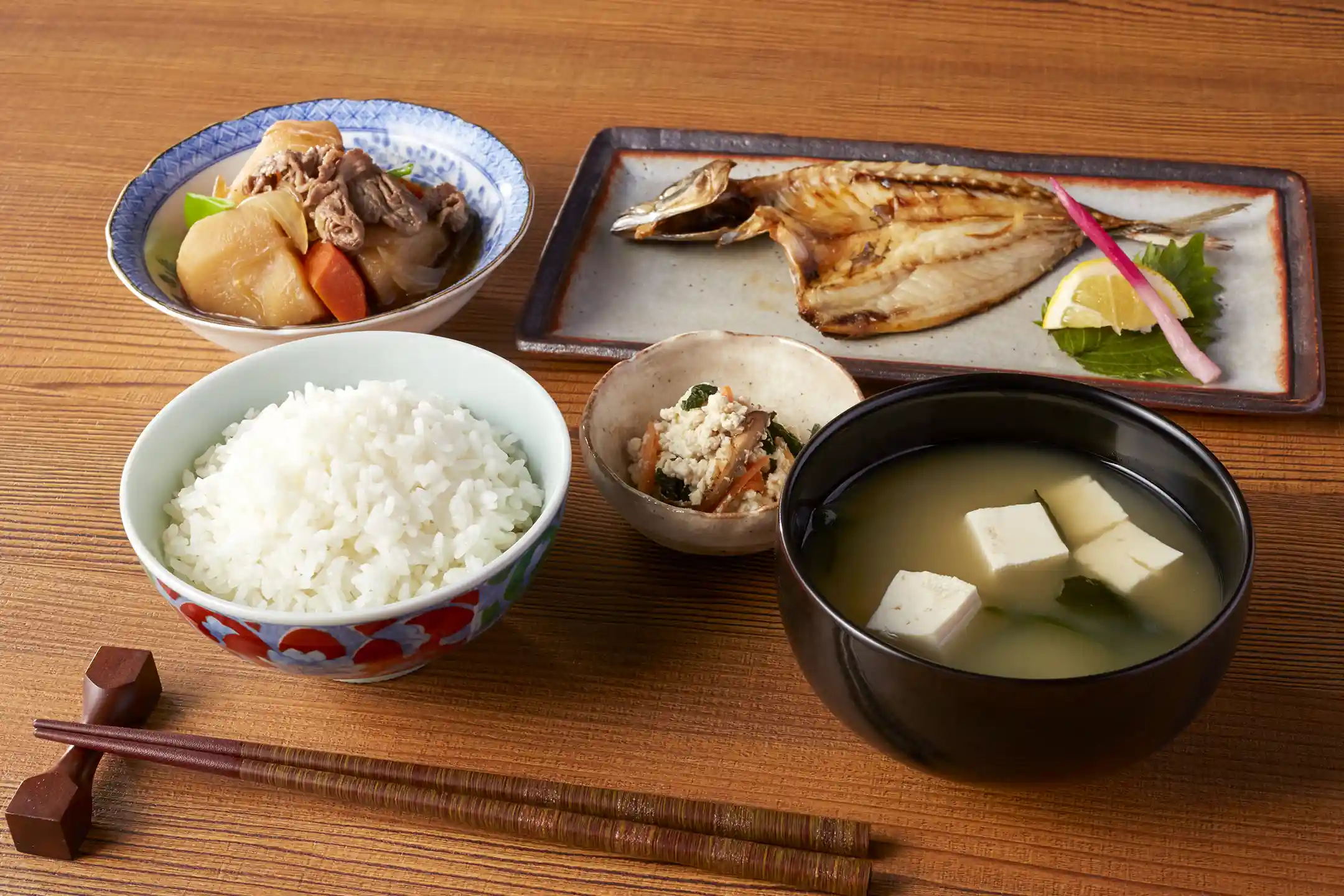
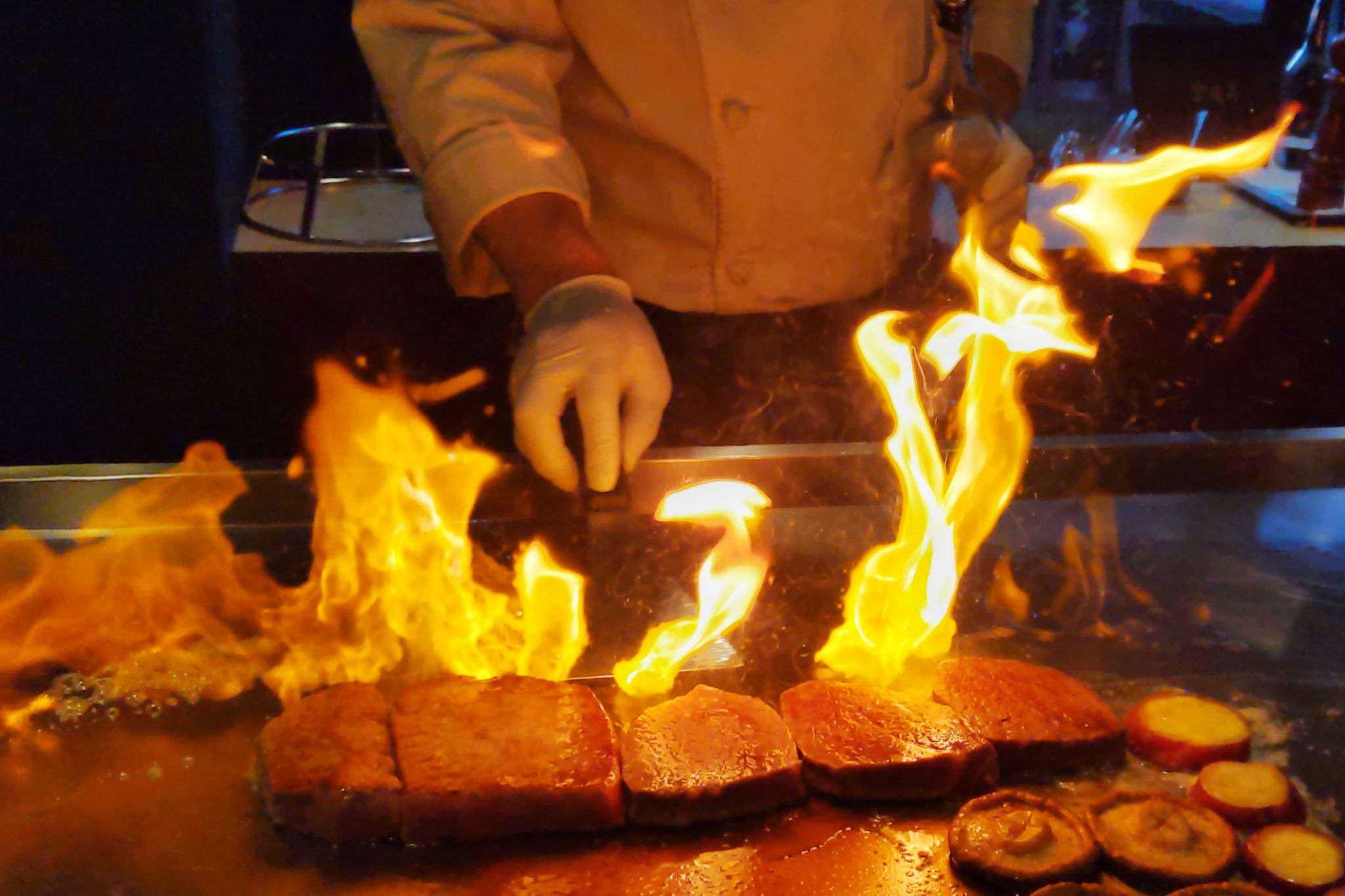
When you travel, you are often looking for more than scenery. You want time that lets you feel the wisdom, craftsmanship, and aesthetic sensibility of a place up close. A well-designed teppanyaki sushi experience can do exactly that, inviting you to sit across a counter and watch skilled chefs shape the meal in real time.
The fragrant lift of teppanyaki and the quiet precision of sushi seem to point in opposite directions. To make them work as a single story, a restaurant needs a clear philosophy rather than a simple two-in-one menu. In this guide, we explain what makes this kind of fusion possible, how to choose the right restaurant, and how to enjoy the meal in a way that brings each flavor into sharper focus.
Start with the Conclusion|Who a Teppanyaki Sushi Experience Suits—and Who It Doesn’t
Whether teppanyaki and sushi feel like the right fit depends not only on your palate, but also on what you want from travel.
The Japan Tourism Agency’s materials on high-value inbound tourism note that these travelers are not defined by spending alone. They also tend to have strong intellectual curiosity and to place value on deepening their knowledge and gaining inspiration through local traditions, culture, and nature. The more you approach dinner with that mindset, the more a single plate becomes an experience—because once you watch the chef’s movements, notice changes in aroma, and understand why each dish arrives when it does, the food in front of you begins to carry more meaning.
This Style Suits You If…
This format suits you if you want more than taste alone and enjoy the full weave of sound, aroma, temperature, and conversation. Research on open kitchens suggests that guest visibility and interaction can shape how chefs work and how the experience itself is perceived. In other words, the counter is not simply where food arrives, but a stage where you share the moment of completion. The sound of a chef making fine adjustments to the heat, or the way a sushi master changes pressure with the fingertips—when you can connect those small differences to what you taste, satisfaction rises sharply.
It also suits you if you enjoy narrative within a course. Recent gastronomy research suggests that carefully designed multisensory elements can increase the value of a meal. If you like a progression such as the cool clarity of the sea in the first half, followed by the aromatic depth of the teppan in the second, then teppanyaki sushi can become one of the most direct ways to encounter Japanese aesthetic sensibility.
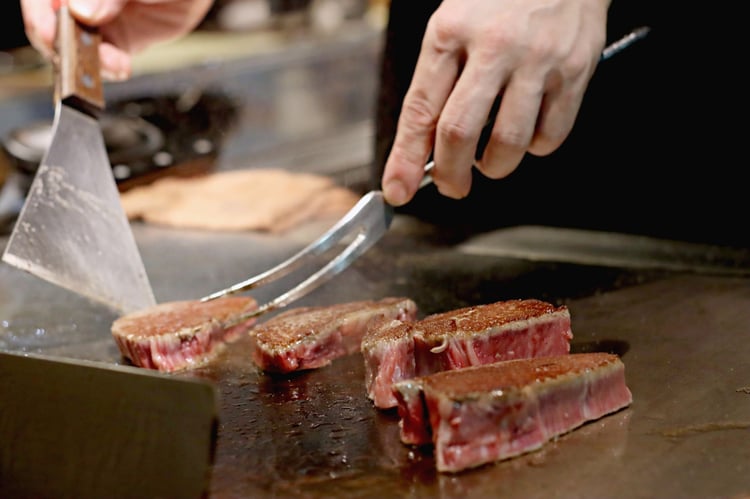
When It May Not Suit You—and What to Choose Instead
On the other hand, this style may not suit you if you want to focus only on the delicacy of sushi, or if you are sensitive to smoke and stronger aromas. The fragrance of the teppan is part of the appeal, but if your priority is catching the quieter aromatic notes in sushi—seaweed, vinegar, or faint aged tones—a calmer setting with tighter aroma control will serve you better.
In that case, the alternative is straightforward. If you want sushi, commit to a sushi omakase (Omakase: a course in which the chef chooses what to serve). If you want teppanyaki, devote the evening to teppanyaki and explore the heat treatment of meat, seafood, and vegetables in full. The more clearly you define your purpose, the less blurred the experience becomes.
And if you find yourself thinking, “But I want to try both,” splitting them across different nights on the same trip is often the smarter move. Fusion is not a convenient bargain. It is a deliberately composed evening—and that is exactly why it resonates deeply with some diners and not with others.
Understand the Difference Between Teppanyaki and Sushi Quickly|A Comparison of Flavor, Temperature, and Pace
Fusion is difficult not simply because the cooking methods differ, but because the two cuisines are built around different flavor goals, temperature design, and service rhythms. Once you understand that, you can judge a restaurant much faster.
Flavor Profile|Smoky Depth (Teppanyaki) and Delicacy (Sushi)
What makes teppanyaki compelling is the aroma that rises through heat and the depth created by browning. In food chemistry, the Maillard reaction—where amino acids and reducing sugars react under heat and help form aroma, color, and flavor—is recognized as one reason cooked foods become so appealing.
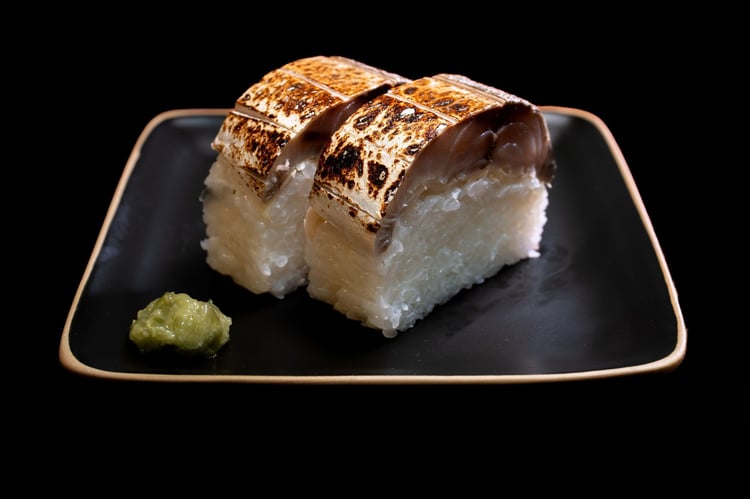
Sushi works in the opposite direction. It draws out the outline of an ingredient by fine-tuning the temperature, acidity, and salinity of the topping (neta, such as sliced seafood) and the rice (shari, or vinegared rice) with as light a touch as possible. Official tourism guidance also makes clear that sushi is not simply “raw fish,” but a cuisine built around vinegared rice at its core.
Put simply, teppanyaki amplifies aroma, while sushi sharpens flavor definition. That difference in direction is what makes fusion difficult to design well.
Temperature and Pace|Hot Live Action and Quiet Completion
Temperature is part of flavor. Research on temperature and taste has repeatedly shown that temperature can influence how we perceive both taste and aroma.
Teppanyaki often centers on dishes that are completed at their peak while still hot, with the decisive moment of heat application as the main event. Sushi, by contrast, quietly places a finished piece in your hand, including the temperature contrast between shari and neta. The tempo differs as well: teppanyaki creates climaxes, while sushi creates ma—breathing space, or intervals of stillness. If those rhythms do not align, the evening can feel busy without letting either cuisine fully land.
The Travel Reality|Price Range, Time Required, and Seat Type
English-language guidance on the sushi experience in Hokkaido describes counter seats as the place where you can watch sushi being made directly in front of you and see the chef’s hands at work. That sense of completion before your eyes is also central to successful fusion. When a restaurant relies mainly on table seating, either the live energy of the teppan or the gestures of sushi craftsmanship become more distant, and the meaning of fusion starts to thin out.
Budget and timing usually scale with a restaurant’s design philosophy. More useful than a rough price range is confirming, when you book, ① the course structure (is sushi leading, or teppanyaki?), ② the expected duration, ③ how drinks are built into the experience, and ④ aroma-related considerations such as ventilation and fragrance etiquette. Government washoku materials also note that, in omakase, the chef watches each guest’s pace and adjusts accordingly.
The value lies in spending time in order to protect temperature, timing, and aroma. So the smart move is not to overpack the rest of your schedule.
“Fusion” Is Not Addition, but Composition|What Makes Teppanyaki Sushi Work Together
A restaurant does not become fusion simply by offering both sushi and teppanyaki. True fusion means that flavor design and experience design have been composed into a single story. Here are the design elements that let you judge a restaurant’s level of finish for yourself.
Clarifying the Terms|Teppanyaki / Sushi / Omakase / Counter
First, let’s align the terms that are easy to blur. Official tourism guidance defines sushi as a cuisine built from vinegared rice (shari) and toppings (neta). Omakase is a style in which you leave the choices to the chef, who builds the flow around the season, the ingredients of the day, and your pace. The counter is where that design works best. Food reaches you at the moment its temperature is right, and the chef’s movements become part of the information you receive.
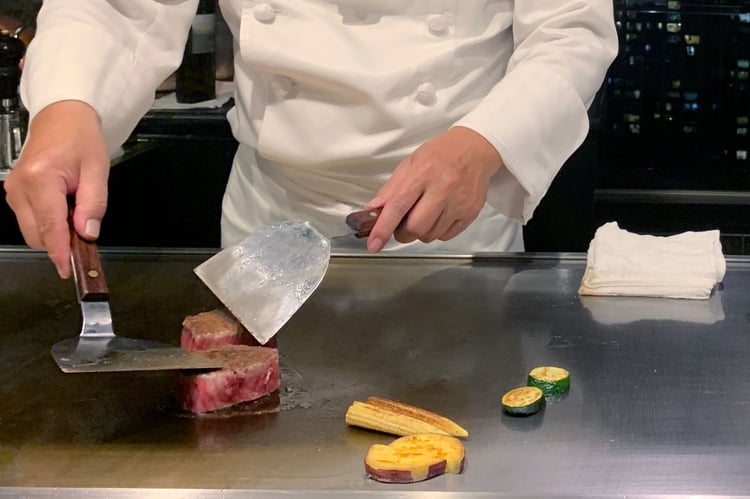
Teppanyaki is a broad term for cooking on an iron griddle, but the high-end form in which steak or seafood is grilled in front of the guest became especially familiar to overseas diners after the war. Misono, for example, describes itself as a long-established restaurant founded in Kobe in 1945. That modern live quality creates a striking contrast with the quietness of sushi, and that contrast is part of the drama when fusion works.
Pattern A: Making Sushi the Lead, with Teppan Used for Aroma and Temperature Accents
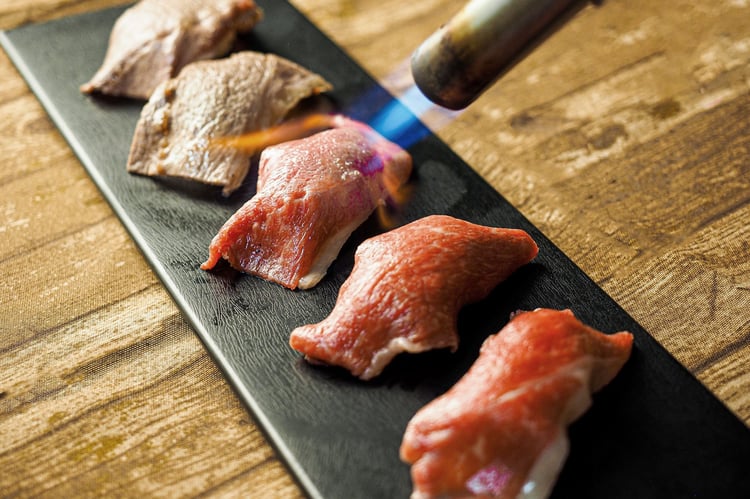
When sushi leads, the key is not to overbuild aroma. The teppan should be used to support fragrance through light warming or aburi (searing), extending the finish without breaking sushi’s delicacy. Lean white fish and shellfish, for example, can reveal the outline of their aroma with only a slight rise in temperature. In this pattern, fire does not dominate; it acts more like lighting, illuminating sushi’s quiet contours.
Pattern B: Making Teppanyaki the Lead, with Sushi Introduced as a Pause for the Palate
When teppanyaki leads, sushi works as a palate reset. If Maillard-driven aroma and the richness of fat continue without interruption, the palate can dull. The acidity of vinegared rice and the temperature shift of sushi reorganize the impression inside the mouth. The key is to place sushi not as a finale, but as a pause. When the rhythm becomes fat → acidity → fat, the course stays lighter and more focused from start to finish.
Pattern C: Not Alternating, but Integrating on a Single Plate
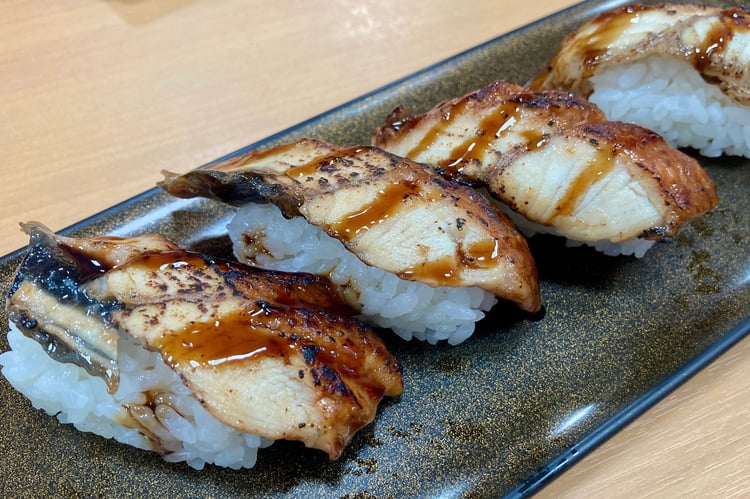
The most advanced form of fusion does not alternate between the two styles so much as integrate them within a single dish. It may apply the grammar of nigiri to cooked seafood, or condense teppan-developed aroma into the scale and balance of sushi.
For that to succeed, the chef has to understand both the grammar of sushi—size, acidity, temperature, and pressure—and the grammar of the teppan—aroma, char, and heat curve. Research in gastronomy and tourism also suggests that embodied multisensory value can raise the appeal of a destination itself. That is why this style can feel not merely unusual, but convincing and delicious on an intellectual level as well.
Cultural Background|What Happens When Edomae Sushi and Teppanyaki Meet
What gives fusion additional value is cultural background. Sushi and teppanyaki are both craft-driven cuisines, but their histories and aesthetic sensibilities are different. Precisely because they are different, layering them into the same evening creates drama.
Sushi|From Edo Fast Food to “Quiet Art”
Nigiri sushi spread in Edo (present-day Tokyo) in the 19th century and is often described as an early form of fast food sold from street stalls. Public cultural materials also explain that nigiri emerged as Edo grew into a city of roughly one million people, where quick, satisfying food was in demand.
From there, sushi evolved into what now feels like a quiet art, supported by preservation methods, distribution, hygiene, and artisan training. Its value lies not in spectacle but in the minimalism of preparation and movement. That is why the atmosphere is already composed from the moment you sit down.
Teppanyaki|A “Stage” Created by Postwar Modernity and Live Performance
By contrast, the symbolic lineage of teppanyaki steak is tied to postwar urban culture. Long-established restaurants cite 1945 as part of their origin story and present grilling on the teppan as a defining element of their identity. The value of teppanyaki lies in choreography—in gaze, sound, aroma, and timing. Flames rise, oil crackles, fragrance spreads through the room, and conversation begins there. Overseas it is sometimes blurred with “hibachi,” but luxury teppanyaki in Japan draws its power from stagecraft that includes ingredient precision and service.
Why Fusion Now Works as a High-Value Experience
In recent years, Japanese tourism policy has increasingly emphasized a shift from quantity to quality, with high-value travel positioned as a strategic priority. These travelers tend to look for experiences that reward intellectual curiosity, so food in this context becomes more than consumption; it becomes learning and immersion.
At the same time, Japanese food culture gained an international framework when Washoku was inscribed on UNESCO’s Representative List of the Intangible Cultural Heritage of Humanity. Within that broader movement, a thoughtfully designed teppanyaki sushi experience can deliver several high-value elements at once: a small counter, closeness to skilled artisans, and a clear sense of story. That is why a meal completed in a single evening can become a primary reason to make the trip.
The Technical Crossroads|How Temperature, Aroma, and Texture Are Integrated
What ultimately determines your satisfaction with fusion is technique. Put simply, how do chefs keep teppanyaki—strong in heat and aroma—and sushi—highly sensitive to temperature and balance—from falling apart inside the same story? Here is how to read that design from a traveler’s point of view.
The Core of Sushi|Shari Design
In sushi, the star is not only the topping but the shari. The vinegar blend matters, but so do stickiness, firmness, grain definition, and temperature. Research has reported that adding vinegar changes the texture of cooked rice, and that the acid profile of the seasoning is linked to both sensory quality and physical characteristics.
There are also studies showing that sushi vinegar affects the texture of rice before and after low-temperature storage.
The takeaway is simple: the impression of shari changes dramatically depending on temperature, grain separation, acidity, and pressure.
In a fusion restaurant, where aroma from the teppan is inherently stronger, the balance of acidity and temperature in the shari becomes even more important. Research on temperature and taste also shows that temperature is one factor that shapes how flavor and aroma are perceived. In other words, if the goal is to protect sushi’s delicacy, it can be more rational to tune the rice into the temperature range where it speaks clearly than to push aroma ever harder.
The Core of the Teppan|Heat Control
Teppanyaki is not only about meat. With seafood and vegetables especially, the precision of heat application becomes part of the experience itself. Reviews of the Maillard reaction note its role in the formation of aroma, color, and texture during heating, and show that temperature and time materially change the result.
Browning is not there for appearance alone. It creates layers of aroma. Resting and gentle finishing through residual heat are what give the dish its structural backbone.
The Ideal Flow of the Course|Sushi → Teppanyaki or Teppanyaki → Sushi?
The best sequence depends on the restaurant’s purpose. A sushi → teppanyaki flow moves from delicacy to depth. A teppanyaki → sushi flow uses acidity and temperature to bring the outline back into focus after aromatic browning.
What matters is understanding that sequence is not just preference; it is design philosophy. Government washoku materials note that in omakase, the chef adjusts the flow by watching the guest’s pace. A restaurant that explains why the course moves in a certain order is, for that reason alone, more likely to have achieved a higher level of fusion.
Ingredients That Shine in Fusion|Reinterpreting Seafood, Wagyu, Rice, and Seaweed
One pleasure of fusion is that, in a single evening, you can move between sea and land. Seafood brings seasonality and origin. Wagyu brings richness and fat-driven aroma. Rice brings acidity, structure, and temperature. Seaweed adds mineral nuance and fragrance.
What sharpens your eye here is not brand names, but whether the course creates meaningful contrast: aging and heat, coolness and warmth, transparency and depth. When those contrasts are handled well, the meal feels not merely luxurious, but intelligible—something you can actually understand as you eat.
Experience Design|When the Counter and the Vessels Become Part of the Flavor
A high-value meal is never completed by food alone. Seating, distance, vessels, sound, lighting, and conversation all become part of what you taste. In fusion restaurants especially, where the heat of the teppan and the quietness of sushi must share one space, experience design is what clearly separates excellence from mediocrity.
The Philosophy of the Counter|The Fact That It Is Completed Before You Is the Content
Sushi guide materials describe counter seating as the place where you sit facing the chef and watch the sushi being made right in front of you. Fusion works by the same principle. When the sound of the teppan and the movements of nigiri connect within a single visual experience, the evening starts to feel like a work rather than a sequence of dishes. What matters here is aroma control through ventilation, and the design of ma—the spacing between moments.
Research also discusses how guest interaction in open-kitchen environments can influence chefs’ work and the dining experience itself.
In other words, the counter is not just seating; it is a site of co-creation. Refraining from perfume and arriving on time are not merely polite behaviors. They are part of the conditions that allow the experience to function.
Vessels and Materiality|Lacquer, Ceramic, Metal, and Wood Shape Temperature and Aroma
Before they are art objects, vessels are tools for shaping temperature and aroma. Studies have shown, for example, that the temperature of spoons and tableware can influence perceived deliciousness and sensory evaluation.
Further research has also found that the temperature of the rim where your lips touch a cup can influence aroma perception and comfort in beverages.
That helps explain why sushi is often served on wood such as hinoki, and why teppanyaki relies differently on metal and ceramic. The point is not visual styling alone. It is to shape how food cools, how aroma rises, and how the surface feels against the mouth. Once you start to see that material and form can change how flavor is perceived, a night at the counter begins to shift from dining into viewing.
Pairings That Maximize Flavor|It’s Not Only About Sake
Pairing is not simply a question of what to drink. It is part of how you map the meal. Whether you choose alcohol or not, once you treat pairing as a way to sharpen aroma, temperature, and contrast, a fusion course opens another layer of depth.
Basic Strategy|Build the First Half Around Clarity, the Second Around Depth
As a rule, build the first half around clarity and the second half around depth. During the sushi portion, drinks that do not cloud transparency—coolness, minerality, restrained acidity—work best. Once teppanyaki begins, you need something with enough outline to stand alongside browning and fat. The point is not to fight the food with equal force all night. In the first half, you subtract. In the second, you support. That contrast makes the course narrative much clearer.
Sake|Bridging Teppanyaki and Sushi Through Acidity, Umami, and Temperature
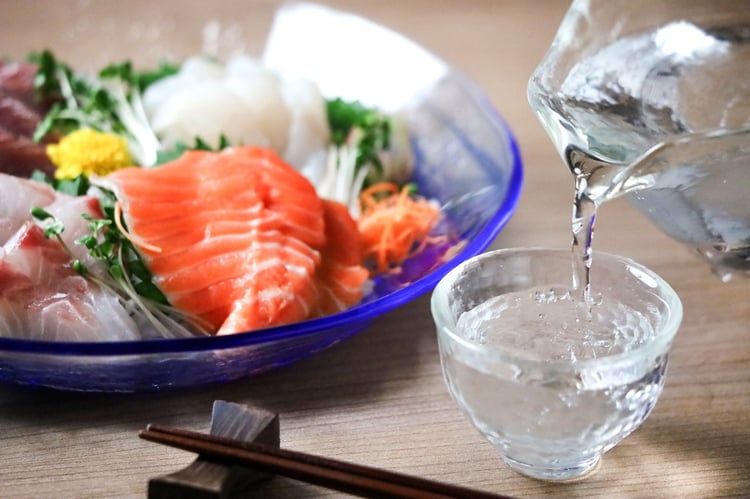
Research institute materials explain that sake generally has lower acidity than wine, while also containing relatively high levels of amino acids linked to umami. That is one reason sake can protect sushi’s delicacy while still connecting naturally with the savory depth of teppanyaki. Sake also offers a broad serving-temperature range, so temperature itself becomes part of the design: serve it cool when you want lift and clarity, or warmer when you want more depth.
For travelers, thinking in styles is more practical than memorizing labels. Sparkling or lighter aromatic styles suit the clear first half of the meal, while more mature or fuller styles can support the richer second half.
Wine|Be Careful with Oak and Tannins; Let Minerality and Acidity Stay Close
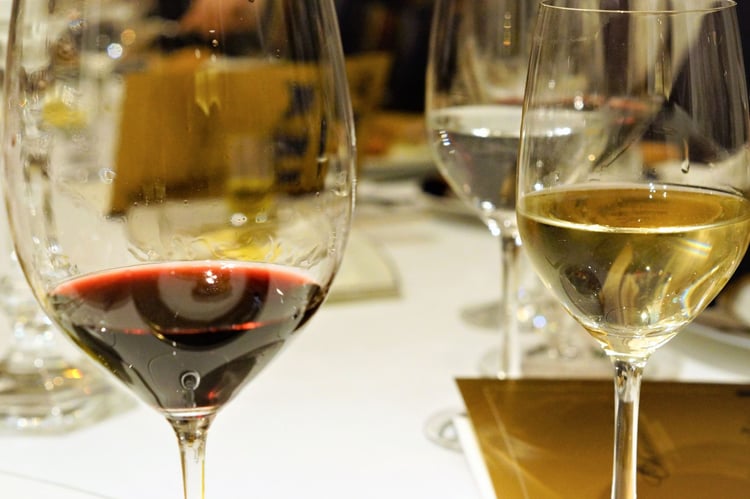
Wine can work with fusion, but red wine deserves particular caution. Research suggests that the fishy aftertaste sometimes created when seafood meets wine is linked to iron in the wine, especially ferrous iron.
So the rule that “red goes with meat” is only half true. On a night that includes sushi, the logic changes. Safer choices are wines without overly assertive oak, with restrained tannins, and with acidity or minerality at the center. One way to protect sushi’s delicacy is to keep wine from trying to become the star of the evening.
Non-Alcoholic Options|Japanese Tea, Dashi, and Fermented Drinks to Raise Aromatic Resolution
Non-alcoholic pairings are not a compromise. They can act like a microscope for aroma. Tea research, for example, has shown that brewing temperature can affect how people perceive umami, bitterness, and astringency. In the first half, lower-temperature Japanese tea can draw out umami and clarity; in the second, dashi or lightly fermented drinks can support the course with more depth. With or without alcohol, strong non-alcoholic design fits both wellness-minded travel and intellectual curiosity.