Sushi is far more than a single dish: it’s an edible art form that distills Japanese culture into a single bite. Seasonal treasures from the sea are set atop gently formed, vinegared rice, and in each piece you can sense the craft, intention, and quiet pride of the sushi chef. As one pillar of washoku (traditional Japanese cuisine), sushi embodies respect for ingredients, an aesthetic that mirrors the shifting four seasons, and refined technique built on generations of practice. If you’ve been searching for “sushi japan food” and want more than a quick definition, this guide is designed to help you taste the cultural depth behind the name.
In this guide, you won’t simply “eat” sushi—you’ll learn how to read its history, values, and techniques, so you can understand and enjoy sushi as a living culture. Everything is explained in a beginner-friendly way, so step into the depth of Japanese culture through the full art of sushi.
What Sushi Means as Washoku: Definitions, Key Traits, and Common Misconceptions
Here, we’ll organize sushi’s place within washoku culture and its fundamental characteristics, while clearing up common misunderstandings. We’ll go beyond the simplistic equation of “sushi = raw fish,” touching on washoku’s unique sensibilities and how traditional Japanese sushi differs from the sushi that spread overseas. The goal is to help you see sushi not merely as “food,” but as “culture.”
Values at the Heart of Washoku: Seasonality, Ingredients, and Harmony (Subtraction / Dashi / Gesture)
As core principles shared across washoku, “seasonality,” “the ingredient’s natural flavor,” and “harmony” are deeply reflected in sushi as well. Respecting shun—ingredients at their seasonal peak—is one of washoku’s defining qualities. Shun itself has stages: hashiri (the first arrival), sakari (the height of the season), and nagori (the lingering end). For example, ayu (sweetfish) in early summer tastes subtly different depending on whether you’re enjoying hashiri, sakari, or nagori.
Sensing these delicate transitions and honoring the most delicious timing is a washoku virtue. Washoku is also often described as “subtractive cuisine”—intentionally not doing too much—so the ingredient’s character can shine. Rather than piling on strong seasonings, washoku builds depth with the gentle umami of carefully drawn dashi from kombu kelp and katsuobushi (bonito flakes), and uses salt or soy sauce sparingly, only to lift the ingredient rather than dominate it (*1).
And there is another dimension: the beauty of the gestures that make up the meal. The quiet, attentive motions of forming sushi, presenting it, and receiving and eating it—this entire flow becomes its own art of harmony. Seasonality, ingredient integrity, and the harmony of movement—these are the values at the core of sushi as washoku.
Sushi Is “Rice Cuisine”: Why Shari Takes Center Stage
When you hear the word “sushi,” you may instantly picture raw fish. But in truth, the star of sushi is the vinegared rice. Sushi is, at its origin, a broad category of dishes that combine rice seasoned with vinegar and some kind of topping or filling. In the case of Edomae sushi, the bite-sized mound of vinegared rice is called shari, and the seafood placed on top is called neta.
A more luxurious neta does not automatically create better sushi. The foundation that determines deliciousness is shari. According to the All Japan Sushi Association, the basic taste that supports sushi is rice, and what underpins that deliciousness is vinegar (*2). Lightly scented with acidity, shari becomes a core of aroma and umami in its own right—and it creates a “conversation” with each neta (*2).
Even with the same tuna, if the shari loosens just right in your mouth, and sweetness and acidity rise from each individual grain, the tuna’s flavor becomes sharper and more vivid. In other words, neta is the supporting role that stands beside shari, the true lead. Only when shari and neta are balanced does a single piece of sushi feel complete.
Overseas, sushi is often seen as “fish-forward,” such as rolls filled with sashimi-style seafood. But in its original form, sushi is rice cuisine—and without vinegared rice, you simply can’t talk about sushi.
How Sushi Spread Overseas Differs: Roll Culture, Sauces, and Bold Flavors
Today, sushi is loved worldwide, and many styles have emerged. In “roll sushi” culture—symbolized by the American-born California roll—ingredients that diverge from Japanese tradition, such as cream cheese, avocado, or even fried tempura, are used enthusiastically.
Popular overseas rolls are often topped with mayonnaise-based sauces or chili sauces, and the seasoning tends to be richer and bolder. Compared with Japanese sushi, these lean more toward “additive cuisine,” layering multiple ingredients and condiments to create high-impact flavors.
Japanese sushi, as described earlier, is closer to “subtractive cuisine,” where simple combinations highlight the ingredient’s innate character. This isn’t about superiority or inferiority—it’s about context. For example, in the U.S., to accommodate people who may be hesitant about raw fish or nori seaweed, the California roll commonly avoids raw fish, using imitation crab, avocado, and cucumber, and wraps the nori on the inside to reduce visual resistance—an approach often discussed as part of its appeal.
As a result, showy, substantial rolls became widely preferred, and restaurants began competing to invent rolls with distinctive names and flavors—like the Dragon Roll (combining eel or shrimp tempura with avocado) or the Spider Roll (filled with deep-fried soft-shell crab) (*3).
By contrast, in washoku-style sushi, a single piece typically uses only two or three elements at most, with seasoning kept to soy sauce and wasabi, and within that restraint it expresses seasonal shifts and layered umami. Again, neither is “right” or “wrong”: the former is an evolution shaped by local tastes and food culture, while the latter is rooted in Japanese aesthetics and tradition. If you’ve come to associate “sushi” overseas with “rolls covered in sauce,” you’ll likely find it eye-opening to experience the delicate finesse of Japanese sushi—built on the beauty of subtraction.
The History of Sushi: From Fermentation to Edomae, and Then to the World
When you understand the path sushi has traveled, you begin to see the background behind today’s styles and etiquette. Sushi began as an ancient method of preservation, changed shape with time, became refined as Edo-era street food, and eventually evolved into a cuisine loved across the globe. As you follow this story, we’ll explain fermentation techniques, Edomae “work” (preparation), and how sushi culture expanded through globalization.
Narezushi as the Origin: Preservation Know-How That Became Culture
Sushi’s origins are sometimes traced as far as Southeast Asia. In ancient times, to preserve fish for long periods, people developed a method of lactic-acid fermentation by packing fish, salt, and rice into barrels. This is what is known as narezushi. This technique reached Japan as well, and by the Nara period, funazushi (fermented crucian carp) from Lake Biwa was being made. At that time, the rice was used to encourage fermentation and was not eaten—people ate only the fermented fish as preserved food (*1).
The process of fermenting fish with salt and rice is somewhat akin to pickling: the rice becomes sour, the fish’s umami transfers into it, and the result develops a distinctive flavor. It was a practical way to preserve and consume valuable protein without waste, and it was also enjoyed as a delicacy among people of high status.
For many years, narezushi continued as sushi’s foundational form, but changes emerged in the Muromachi period. The fermentation time was shortened, and people began to eat the rice along with the fish.
This was called namanare—fish and rice were taken out and eaten before the rice fully dissolved. It brought sushi one step closer to the modern form in which you enjoy rice and fish together (*1). Through innovations like these, preservation methods gradually took on the character of “cuisine,” and sushi began rooting itself in Japanese food culture.
The Rise of Hayazushi and What Vinegar Means: A Design Element, Not Just a Time Saver
In the Edo period, sushi evolved even further. To make sushi that was quicker, easier, and still delicious, people began skipping fermentation itself and seasoning rice with vinegar instead. This marked the birth of hayazushi (“fast sushi”). By the mid-Edo period (around the 18th century), vinegared rice made simply by mixing vinegar and salt into cooked rice became common, and non-fermented sushi became the norm (*2).
The greatest advantage of vinegar is speed—but that’s not all. Vinegared rice gains a fresh aroma and acidity, and its rounded, mellow sourness (different from fermentation) tightens the overall flavor. Vinegar also has antibacterial effects, which helped improve safety when eating raw fish.
Beyond that, vinegar softens fishy odors and enhances the overall fragrance of sushi. In fact, it is also said that vinegar reduces fishiness and stimulates the appetite (*2). In other words, vinegar is simultaneously “seasoning,” “preservative,” and “aromatic design”—a crucial element in sushi.
By using vinegar in this way, people could make delicious sushi without waiting through long fermentation, and sushi became a far more accessible everyday food.
Edomae Sushi: Street Stalls, Urban Culture, and Refinement Born of “Work”
In the late Edo period, the nigiri sushi we know today was born in Edo (Tokyo). It is widely credited that during the Bunsei era (early 19th century), a sushi craftsman named Hanaya Yohei helped popularize bite-sized nigiri in Ryogoku, Edo (*3).
Drawing inspiration from oshizushi (pressed sushi), which was enjoyed in places like Osaka, Yohei developed a distinctive approach: rather than simply placing raw seafood on rice, he paired vinegared rice with neta that had been pre-prepared through methods such as curing with vinegar, marinating in soy sauce, or lightly cooking—this preparation is called shigoto (“work”) (*3).
Early on, Yohei reportedly sold finished nigiri by carrying it around in a container like an okamochi (a box used for transporting food), but he eventually set up a street-stall style shop and began serving freshly formed sushi right in front of customers—an instant hit (*3). This suited Edo commoners like a kind of fast food, and an urban culture known as “Edomae sushi” flourished.
While “Edomae” is often explained as a name derived from Edo, one defining feature of Edomae sushi is its emphasis on neta pre-treatment—its shigoto. In an era without refrigeration, fish transported into Edo required ingenuity to preserve freshness and draw out umami. Techniques such as curing with salt or vinegar, steaming, simmering, or soaking in soy sauce were essential—and over time, they became systematized into refined skills (*4).
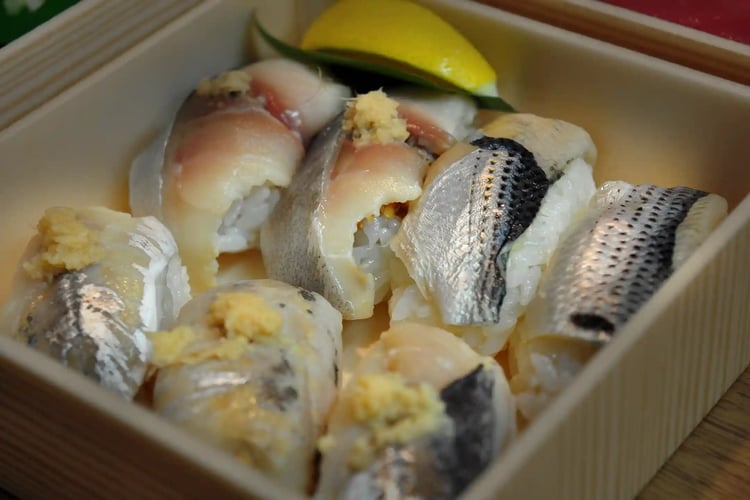
For instance: kohada (gizzard shad) is cured with salt and vinegar; lean tuna is made into zuke (soy-marinated tuna); anago (conger eel) is simmered in a sweet-savory sauce. Through this accumulated wisdom—these careful “jobs”—the ingredient’s umami is maximized, and Edomae sushi is elevated into a highly complete cuisine. By the late Edo period, many stall sushi shops lined the streets, and large, satisfying nigiri became a coveted treat for ordinary people.
From the Meiji era onward, for hygiene reasons and other factors, stalls shifted into indoor dining. After the Great Kanto Earthquake, sushi chefs in cities dispersed to regional areas, spreading sushi culture nationwide. After the war, the size of each piece became smaller and more refined, closer to today’s elegant portions—but the essence of Edomae sushi remains very much alive.
.webp?width=750&height=500&name=Soy-Marinated%20Tuna%20Rice%20Bowl%20(Zuke%20Don).webp)
Sushi Goes Global
After World War II, as Japan’s economy grew and international exchange increased, sushi gradually spread worldwide. Especially after the sushi boom that took hold in North America in the 1960s and 70s, sushi became established as a global cuisine.
One catalyst was the California roll mentioned earlier. Often said to have been created by a Japanese chef in Los Angeles, this roll avoided raw fish, used ingredients like avocado and imitation crab, and placed nori on the inside—making it approachable for local diners and a major hit. After that, regionally original creative sushi appeared in many countries, including the Dragon Roll and the Philadelphia Roll (with cream cheese), and sushi continued evolving in distinctive ways around the world.
Today, even the word “SUSHI” has become a shared global term, and it can feel harder to find a country where sushi isn’t a signature menu item at Japanese restaurants. At the same time, its global spread has also prompted a redefinition of “what sushi is.” In many places, “sushi” may refer primarily to rolls or fusion sushi, sometimes treated as something separate from Japan’s traditional nigiri.
On the other hand, in recent years more sushi chefs around the world have studied Edomae techniques, and the number of restaurants serving authentic nigiri has grown. The globalization of sushi has produced misunderstandings and local reinterpretations, yet it has also brought Japanese food culture to a wider audience and made sushi deeply beloved.
From luxury sushi where a chef forms each piece across the counter, to takeout sushi rolls, the styles are incredibly diverse. Still, the underlying joy—tasting the harmony of vinegared rice and ingredients—is becoming something shared across borders.
Techniques That Make Sushi: Shari, Neta, and “Work” Determine the Flavor
To truly taste the difference between great sushi and merely decent sushi, it helps to focus on the techniques and ingenuity chefs use. Sushi can look simple, but its flavor is shaped by a trinity: shari, neta, and the “preparation work” done on the neta.
Here, you’ll learn in detail about the science and aesthetics of making vinegared rice; the depth of neta that doesn’t rely solely on “freshness”; the concept of aging; traditional Edomae shigoto; and even the supporting stars—nori, wasabi, soy sauce, and gari—that complete the experience.
The Science and Aesthetics of Shari: Rice, Water, Vinegar, Temperature, and Grain Definition
How do sushi chefs create shari that feels perfectly balanced? The key lies in details—rice variety selection, cooking method, water ratio, how the vinegar blend is composed, and temperature control at the moment of forming sushi. First, rice is typically chosen for grains that stand apart without being overly sticky, and in top restaurants, rice may even be custom-ordered by region and variety.
For example, a restaurant serving sushi from Toyama Bay says it chooses a Toyama-grown branded rice that “separates lightly in your mouth” and has less stickiness. When cooking, the water ratio may be slightly reduced so the rice is firmer, helping it keep a pleasant bite and avoid becoming gummy once vinegar is mixed in.
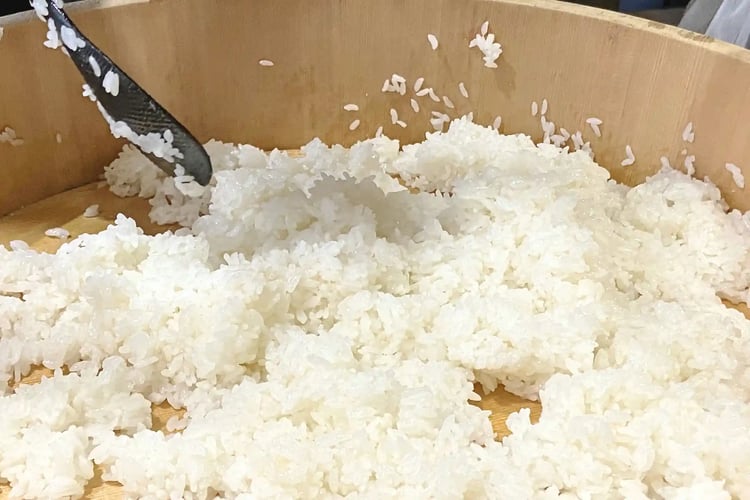
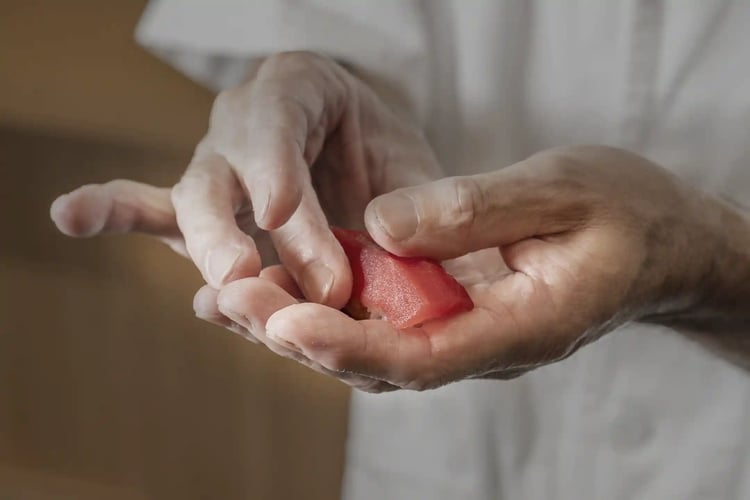
The vinegar blend (awasezu) is built on rice vinegar, with sugar and salt adjusted—but each restaurant has its own secret “golden ratio,” and some long-established shops use akazu (red vinegar). Because a single shift in the taste of shari vinegar can change the entire impression of sushi, people say, “A sushi restaurant’s flavor is decided by its shari.” When making vinegared rice, Edomae shops typically mix vinegar into freshly cooked rice, then quickly fan it with an uchiwa or a fan to soften any sharp acidity while cooling it down to around body temperature (*1).
This creates shari that turns glossy and airy, and loosens beautifully when formed. The temperature of shari must also harmonize with the temperature of the neta. Depending on the neta, the chef may keep the shari slightly warmer to draw out umami, or cool it a bit to emphasize texture—subtle adjustments that vary piece by piece. Even in something that looks as simple as vinegared rice, science and aesthetics are very much alive.
The Essence of Neta: Not a Simple Freshness Contest
When you think of sushi, you may assume “fresh fish is everything.” But that isn’t always true. Of course, any unnatural staleness or deterioration is out of the question—but fish has a best eating moment, and knowing that timing is where a chef’s skill shines.
For example, some white fish and leaner fish can develop deeper umami when rested briefly rather than served immediately after being processed. In the world of Edomae sushi, optimal preparation methods and aging times have been studied neta by neta. As mentioned earlier, kohada is cured with salt and vinegar to remove excess moisture and strong notes, while tuna may be frozen and thawed to settle the flesh, or marinated in soy sauce to concentrate umami.
With shellfish as well, some chefs briefly simmer them and cool them before serving to bring out sweetness. These choices reflect a sushi mindset: it’s not simply “just-caught = delicious,” but “carefully tended into its best condition = delicious.” In fact, one sushi restaurant in Toyama reportedly varies its approach depending on the neta—some are served for peak freshness, some are kombu-jime (kelp-cured), and some are rested for one to two days—adjusting care based on species and condition (*2).
Cutting technique and portion size also matter. For fish with prominent fibers, the knife may be angled to cut across the grain so it feels more tender; for silver-skinned fish (like mackerel or horse mackerel), the skin may be sliced thin to refine mouthfeel. Texture and how the fish “lands” on your tongue are calibrated through knife work. And then there’s temperature at service, adjusted piece by piece.
Fatty toro may be allowed to warm slightly toward room temperature so the fat melts smoothly on your tongue, while squid may be formed at a temperature that makes its sweetness easier to perceive rather than chilled too hard. In short, sushi chefs maximize neta’s essential deliciousness through many techniques—aging, temperature, and cutting—not freshness alone.
Aging Isn’t “Old”: A Way of Maximizing Umami
The belief that “fish is best when it’s as fresh as possible” is widespread, but sushi chefs know the value of aging. When fish is rested appropriately, proteins break down into amino acids, increasing umami components (such as glutamic acid and inosinic acid). Like dry-aging meat, this creates a synergy of umami.
However, aging is a race against time. More time is not automatically better—the ideal period depends on the flesh quality and fat content. Silver-skinned fish like kohada can release umami quickly through salt-and-vinegar curing, while tuna may be rested for several days to give lean cuts greater depth, depending on the part.
With aged neta, umami spreads gradually the moment you bite, and the lingering finish becomes richer. This is not at all the same as “fish that has simply lost freshness.” It is better described as “umami brought to maturity.” In fact, the Edomae tradition is not to serve everything just-caught, but to apply an extra step and identify the best eating moment.
Still, it can be hard for non-experts to tell the difference between properly aged fish and fish that isn’t. That’s why it helps to trust a good sushi restaurant and go with the chef’s selection, then focus fully on what you’re served. Neta optimized for “this moment only” often reveals its completeness the instant it hits your tongue. Aging is wisdom—delivering maximum deliciousness without waste—and it symbolizes the depth of Edomae sushi.
“Work” Creates Taste: Curing, Marinating, Simmering, and Searing
Edomae sushi includes traditional preparation techniques known as shigoto (“work”). As discussed, it means not simply serving neta raw, but applying thoughtful technique to bring it to its best state. Representative shigoto includes “curing,” “marinating,” “simmering,” and “grilling/searing.”
Curing means using salt or vinegar. Blue-backed fish like kohada or mackerel are salted to draw out moisture, then cured in vinegar to reduce unwanted notes, tighten the flesh, and concentrate umami.
Marinating means soaking in soy sauce or a special tare. The classic example is tuna zuke, where lean tuna is marinated so soy aroma penetrates, richness deepens, and the neta keeps better. Simmering is exactly that—cooking gently in liquid. Anago is simmered plump and tender in a sweet-savory tsume sauce, while hamaguri clam may be simmered softly in dashi and soy sauce before being formed into sushi. This yields a delicate, almost falling-apart texture and deeply infused umami.
Searing (grilling) means briefly applying direct flame or a torch. It’s used for fish with fatty skin like mackerel, or for fish like kinmedai (splendid alfonsino) where you want aroma to bloom—bringing out savory fragrance and the flavor of the fat. Searing also helps evaporate excess moisture and can intensify umami. Beyond these, Edomae shigoto includes steaming (e.g., steaming shellfish with salt), boiling (e.g., boiling kuruma-ebi shrimp and cooling it), and suarai (briefly dipping blanched white fish in vinegar), among many others.
These techniques evolved to improve safety, enhance aroma, adjust texture, and add umami (*3). Edomae sushi truly proves that “one extra step creates the flavor.” When you sit at the counter, try asking the chef what kind of shigoto your neta has gone through. If you listen closely, you’ll feel the ingenuity and intention packed into each piece—and the taste will deepen in a way you can actually sense.
Nori, Wasabi, Soy Sauce, and Gari: Designing Layers of Aroma
Let’s also focus on the indispensable supporting players that complete sushi. First, nori. Used for rolls and gunkan-maki, nori wraps vinegared rice and neta in its toasty fragrance and characteristic flavor. In Edomae style especially, roasted nori is used, adding a crisp bite and a rich seaside aroma (*1).
The quality of nori itself is carefully chosen—top restaurants may lightly toast premium nori such as Ariake nori. Wasabi is another essential accent. Its sharp heat and cool clarity help you avoid perceiving fishy odors (*2).
It’s also said that in the Edo period, wasabi began being tucked into nigiri with raw fish in hopes of antibacterial and preservative effects. Because wasabi’s aroma compounds are highly volatile—peaking soon after grating and then fading quickly—chefs often grate it right before serving. Soy sauce, of course, is sushi’s classic seasoning. When applied lightly, it adds umami and saltiness that lifts the ingredient’s flavor.
But too much is a mistake. In Edomae sushi, chefs often brush neta with a special nikiri soy sauce (soy sauce simmered and mellowed) before serving, a method that softens harsh edges and delivers a consistent layer of flavor (*3). If you are adding soy sauce yourself, etiquette is to apply a small amount to the neta—not to the shari.
Gari (sweet pickled ginger) is served as a palate cleanser alongside sushi. Thinly sliced ginger pickled in sweet vinegar contains compounds such as gingerol and shogaol, which have a scientific effect of reducing fishy odors (*2). After finishing a piece, you can take a slice of gari to refresh your mouth, so the next piece tastes even clearer and more delicious.
At the same time, ginger also has antibacterial properties, making it a rational pairing. These supporting players are not mere garnishes; they are essential elements that construct the “layers” of aroma and taste within the artwork of sushi. Nori’s fragrance, wasabi’s spark, soy sauce’s richness, and gari’s reset effect—each is carefully considered, supporting sushi’s overall harmony. Keep them in mind, and you’ll feel the depth even more vividly.
Types of Sushi and How to Choose a Restaurant: From Conveyor-Belt Sushi to Luxury Counters
For travelers and first-timers, sushi restaurants can feel overwhelming—so many options, and you may wonder, “Where should I go?” or “How do I order?” In this section, we’ll organize the basic forms of sushi (nigiri, gunkan-maki, makizushi, chirashizushi, inarizushi, oshizushi, and more), and compare restaurant types (conveyor-belt sushi, standing sushi, neighborhood sushi shops, and luxury counter restaurants) by their differences and characteristics.
We’ll also provide practical guidance on how to order smoothly even at your first sushi restaurant (omakase vs. okonomi, when to add extra orders, and etiquette considerations such as photos and fragrance), so you can enjoy your sushi experience with confidence.
Sushi’s Basic Forms: Nigiri, Gunkan, Rolls, Chirashi, Inari, and Oshizushi
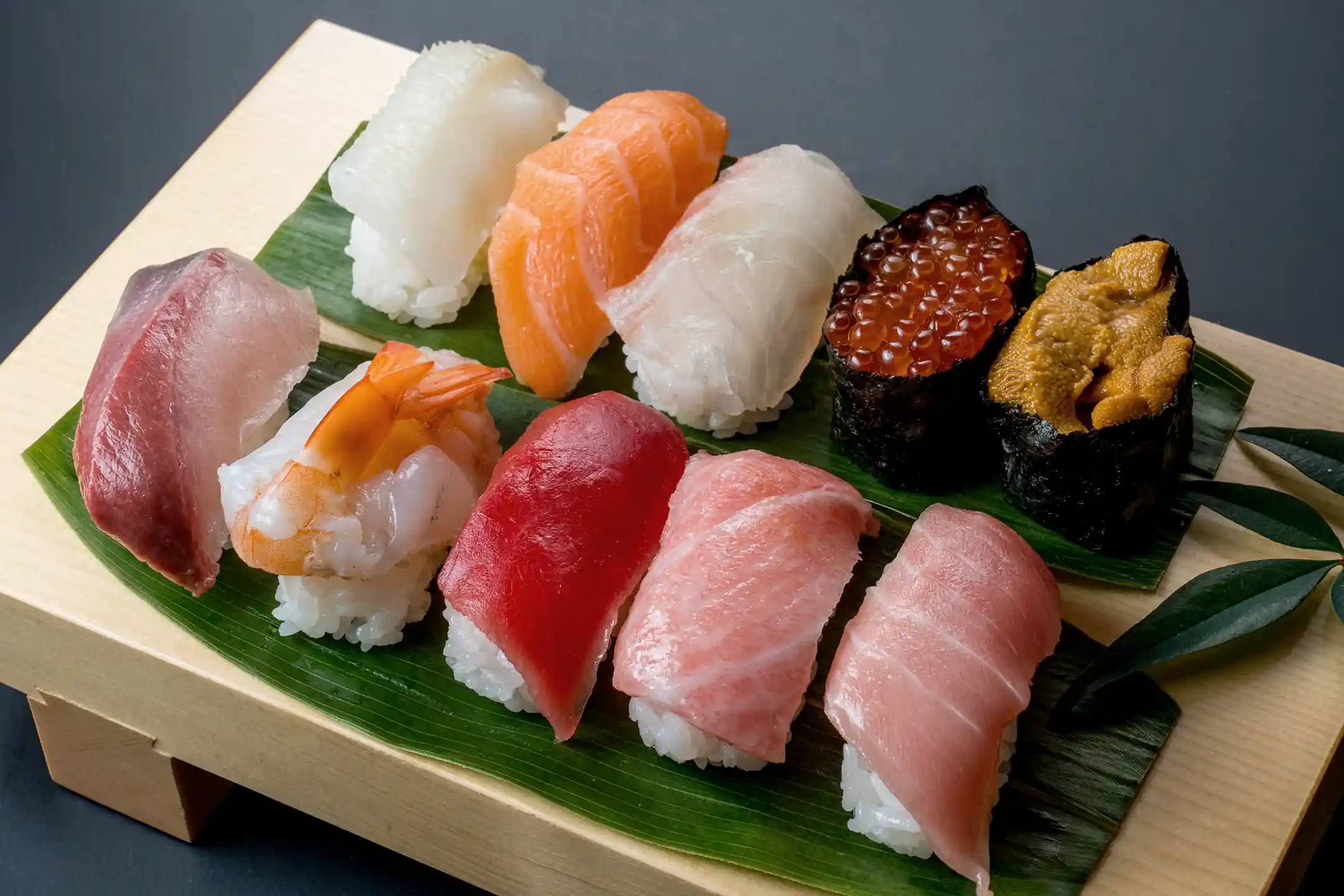
“Sushi” isn’t a single form—it can be grouped into several styles. The most iconic is nigiri sushi: vinegared rice is shaped by hand, and neta is placed on top. When people say “Edomae sushi,” they usually mean this style of nigiri. You’ll see it served as “tuna nigiri,” “squid nigiri,” and so on, and each piece is formed by the chef one by one.
Next is gunkan-maki. Shari is shaped into an oval, wrapped with nori to resemble a “battleship,” and then filled with small or loose neta such as salmon roe or sea urchin. Ikura gunkan and uni gunkan are classic examples. Makizushi (rolls) spread shari over nori and roll fillings inside. There are thin rolls (hosomaki, such as kappa-maki with cucumber, or tekka-maki with tuna) and thick rolls (futomaki, packed with multiple fillings).
Creative rolls with avocado or cream cheese also fall into this category. Chirashizushi places shari in a bowl and scatters colorful toppings—shredded egg, vinegar-cured fish, simmered vegetables, and more. It’s a festive, beautiful sushi often made at home and for celebrations.
Inarizushi stuffs shari into a pouch of sweet-savory simmered aburaage (fried tofu). The name comes from the belief that it’s a favorite of Inari, and it’s a convenient, popular choice for bento. Oshizushi (pressed sushi) is made by packing shari and toppings into a wooden mold and pressing it firmly; it developed especially in Kansai.
Osaka’s hakozushi, Shiga’s funazushi, and Toyama’s masu-zushi (trout sushi) have also long been loved as regional specialties and souvenirs. In this way, sushi has many forms and has evolved uniquely across different regions. When you encounter local sushi while traveling, take a moment to imagine the culture behind it—you’ll find the experience becomes even more meaningful.
.webp?width=750&height=500&name=Chirashi%20Sushi%20(Scattered%20Sushi%20Bowl).webp)
Restaurant Types: Conveyor-Belt / Standing Sushi / Neighborhood Sushi / Luxury Counters
Sushi restaurants also vary widely, and your options change based on budget and the atmosphere you want. Conveyor-belt sushi is casual: sushi plates circulate on a belt, prices are affordable (often a few hundred yen per plate), and you can simply pick what you like and enjoy. Family-friendly chains often offer many side dishes and even desserts, so you can explore a range of foods beyond sushi. Conveyor-belt sushi has spread globally and can feel especially approachable for overseas travelers.
Standing sushi (tachigui-zushi) is exactly what it sounds like: you eat at a counter while standing. Because there are no chairs, prices are often lower, and you can order from a single piece—perfect for dropping in and enjoying a few bites on your way home, carrying forward a modern version of Edo’s stylish, quick dining.
Here we’ll call it “neighborhood sushi” (machi-zushi): local, community-rooted sushi restaurants. Many have both counter and tatami seating, serve locals with okonomi orders or set menus, and feel warm and homey. Prices are not too high, yet you can still enjoy authentic sushi formed by a chef. When you travel outside major cities, stepping into a local sushi shop can be a genuinely fun adventure.
Finally, luxury counter restaurants—often found in places like Ginza or Kyoto, including Michelin-starred names. Many have only a small number of counter seats, and you can enjoy the indulgent experience of having sushi formed for you piece by piece while conversing with the chef. Most offer only an omakase course, sometimes costing tens of thousands of yen per person, but you’re rewarded with carefully selected neta, master-level technique, and a refined space that makes the time feel truly special. The mood is often quiet and intense—this is sushi as art, staged at its highest level.
If jumping straight into a luxury restaurant feels like a high hurdle as a traveler, you can choose a plan that matches your budget—“enjoy local fish at a neighborhood shop,” or “taste the essence of Edomae at a top counter,” for instance. Sensing not only the sushi itself but also the differences in service style and atmosphere is part of the joy of discovering sushi culture’s diversity.
How Ordering Works: Omakase, Okonomi, and When to Add More
Let’s cover how to behave smoothly at a sushi restaurant. Once you sit down, you decide between omakase and okonomi. Omakase is a course where you leave the day’s recommended neta entirely to the chef.
At a restaurant you’re visiting for the first time, omakase is reassuring: you’ll be served seasonal neta and a well-balanced progression that reflects the chef’s sense of harmony. Okonomi, on the other hand, is ordering what you like, one piece at a time—“Two pieces of ___,” “Next, ___,” and so on. At luxury restaurants, it’s common to be served an omakase course first, and after the chef finishes the planned sequence, you may be asked, “Would you like any additional favorites?” That’s your moment to request one more of something you loved, or to order a neta you didn’t want to miss.
However, premium neta such as toro or uni can cost several thousand yen per piece. If you’re uncertain about budget, you can also tell the restaurant in advance that you’d like to stay around a certain amount (*1). As for pacing: with omakase, the chef often watches how full you seem and adjusts the rhythm. You can eat at a relaxed pace—but freshly formed sushi is best immediately, so the basic rule is to enjoy each piece as soon as it’s served.
If you want to take photos, take a quick shot and then eat promptly. Many restaurants allow photography today, but avoid flash and avoid holding your phone up for a long time—both can disturb other guests. In luxury restaurants especially, you’ll want to respect the calm atmosphere. And because washoku is a cuisine of aroma, strong perfume is a major no. In fact, a sushi master in Ginza has said plainly that “guests with strong perfume are difficult” (*2). To protect the delicate fragrance of sushi and tea, keep scent minimal before you arrive. The same goes for cigarette smell. If you smoked before entering, it’s better to wash your hands and rinse your mouth to reduce lingering odor.
If you follow these points, you’ll be able to enjoy sushi comfortably even at a first-time restaurant. Finally, about payment: in some high-end places, you don’t pay at the counter seat but settle the bill at the entrance. Leave with a pleasant afterglow and step back into the street carrying that quiet satisfaction.
Aesthetics and Etiquette: The Counter-Sushi Space, Tableware, and Manners
A sushi restaurant—especially counter seating—has its own aesthetics and etiquette. In top-tier sushi restaurants, meticulous care extends beyond the food itself to the design of the space, the selection of tableware, and the manners of how you eat.
Here, we’ll introduce key points about “space,” “tableware,” and “gestures (manners)” that will help you savor counter sushi more deeply. The goal is for your time at a quiet sushi counter to become not just a meal, but a cultural experience—by unpacking the thinking that shapes it.
The Philosophy of the Counter Space: Distance, Lighting, Quiet, and Materials
When you sit at a luxury sushi counter, you’ll likely feel a crisp, focused atmosphere. Behind it lies a carefully designed philosophy of space. First, the distance between your seat and the chef. The space across the counter has a kind of maai (distance and timing), and some texts mention measurements such as three shaku (roughly just under one meter). Of course, it varies by design and isn’t a fixed universal number. Still, the idea is consistent: it creates a balance of gentle tension and intimacy, while also allowing the chef to hand you each piece immediately at peak condition.
Lighting is also deliberate. Sushi restaurants often use softly warm light, set so the colors of the neta look naturally beautiful. Fish in the display case appears appetizing, and the pale wood counter where sushi is placed is illuminated with a subtle glow—this balance of light is part of the design.
The room is often quiet, sometimes with no background music at all. That silence is a kind of stage setting, allowing you to sharpen your senses and face the sushi directly. Voices, the sound of a knife, even the small clink of a tea cup being set down—everything becomes part of the space, increasing immediacy and presence.
Then there is the commitment to materials. Counters may be made from fine natural woods such as Kiso hinoki (cypress) or Yakusugi (cedar from Yakushima), and a faint wood fragrance may gently reach your nose. Wood can absorb fishy odors and help regulate humidity. Walls, floors, and furnishings often use natural Japanese materials, and you may see a single seasonal flower arranged simply—an aesthetic that makes the space feel integrated with nature.
Some sushi restaurants are described as “like a tea room,” and the comparison fits: by creating an extraordinary quietness, guests can concentrate on sushi and savor it with full attention. This kind of spatial design may be easy to overlook at first glance, but it is an important element that shapes how sushi tastes and how you experience it.
Tableware and Craft: Ceramics, Lacquer, and Woodwork as the Frame for Flavor
Sushi itself may be simple, but the role of the vessels that elevate it should not be overlooked. In many luxury restaurants, nigiri is placed directly on the pale wooden counter, yet the plates and bowls used for sashimi, side dishes, and sometimes even nigiri can be remarkable pieces. Ceramics, porcelain, lacquerware, and wooden tubs—materials and colors become the “frame” for the food, strongly shaping your impression.
For example, if white-fleshed sashimi is arranged on a deep navy or black plate, the contrast makes its freshness appear even more vivid. If nigiri is placed on a red lacquer vessel, the neta’s colors may feel richer and more dimensional. Temperature matters too. Presenting sashimi in a glass vessel chilled with ice heightens a sense of clarity and coolness, while serving simmered dishes in pottery warmed to near body temperature communicates comforting warmth.
With sushi, nigiri is often handed to you directly or placed on a bamboo leaf, but beauty is pursued as a whole—through the harmony of soup bowls, chopstick rests, soy sauce dishes, and more. In Kyoto’s kaiseki culture, people say that “pairing the vessels is part of the cuisine,” and sushi shares the same sensibility. Seasonal touches may appear as well: in spring, small plates with cherry blossom motifs; in autumn, individual plates patterned with red leaves.
There is even a saying: “Food wears the kimono of its vessel,” expressing how crucial vessel selection is for a chef’s craft (*1). Some famous restaurants gather the finest traditional crafts—Kutani ware small plates, Wajima lacquer trays, and more. Once you become aware of this world of vessels and craftsmanship, you don’t simply “eat what’s served”—you begin noticing “what it’s served in,” and your experience becomes richer.
Because sushi is simple, vessels stay in a supporting role. Yet their texture, color, and design can still influence your heart and senses in significant ways. When you visit a sushi restaurant, pay attention to the tableware too, and let yourself feel the aesthetic behind it.
How to Eat Sushi and Key Manners: Hands or Chopsticks / Soy Sauce / Gari / Being Considerate with Scents
The etiquette of eating counter sushi doesn’t need to feel intimidating, but knowing a few points can help you feel more at ease. First, whether to eat with your hands or chopsticks: either is perfectly fine. Edomae sushi is sometimes said to have originally been eaten by hand, but today it is not rude at all to use chopsticks. Choose what feels easiest for you.
That said, in either case, the basic idea is to eat nigiri in one bite. Rather than biting it in half, placing the whole piece in your mouth lets you enjoy the unity of shari and neta. There are also key points for soy sauce.
Unlike sashimi, sushi is generally eaten with a small amount of soy sauce applied to the neta side. If you dip the shari side, the rice absorbs too much soy sauce, becomes overly salty, and can ruin the balance. Often, the chef has already seasoned the neta with nikiri soy sauce or salt, in which case you don’t need to add any soy sauce at all (*2).
If you are adding soy sauce yourself, even then, just a tiny drop is enough. Next, how to use gari. You eat gari as a palate cleanser between pieces. As mentioned earlier, gari resets your mouth so you can perceive the next flavor clearly. You should not wrap soy-sauce-dipped sushi in gari and eat it that way—simply take one slice between sushi pieces, and that’s all you need.
Finally, consideration for scent. This is less “rule” and more “etiquette,” but perfume, strong body odor, and cigarette smell are major no-gos at sushi restaurants. As noted earlier, a sushi chef has clearly stated that “intense perfume is not welcome” (*3), because it destroys the delicate fragrance of the sea, the neta, and vinegared rice.
Likewise, watch your conversation volume. Especially in high-end restaurants, quietness is part of the experience, so keep loud talking and big laughter to a minimum. Some places welcome conversation with the chef, but it’s best to read the room and keep a comfortable sense of distance.
If you keep these manners in mind, you can focus on sushi itself without worrying about disturbing others—and the chef will likely be able to do their best work with a comfortable spirit. The gestures of a sushi restaurant are not arbitrary rules; they are practical wisdom and mindfulness designed to help you taste more beautifully.
Sushi That Changes by Region and Season: Taste Japan’s Diversity as You Travel
When you think of sushi, Tokyo’s Edomae style may come first to mind—but across Japan, sushi cultures rooted in each region’s life and landscape have taken hold. Climate, history, and local ingredients have given birth to countless types of sushi, passed down through generations.
In this chapter, we’ll introduce regional characteristics of sushi: the tradition of Edomae (Tokyo) in the east, Kansai’s pressed-sushi culture in the west, northern Japan’s kombu-driven ingenuity, and western Japan’s local fish and soy sauce traditions. Tasting a region’s sushi as you travel is one of the great pleasures of discovering Japan more deeply.
Edomae (Tokyo): “Work” and the Culture of Course Design
Tokyo’s sushi—Edomae sushi—is a culture where the system of shigoto (“work”) described throughout this article has been refined and elevated. The tradition of using seafood from Tokyo Bay and applying preparation methods with salt, vinegar, soy sauce, simmering, and more continues today.
In famous Tokyo restaurants, you’ll still find kohada cured through multiple stages, tuna aged to draw out umami, and shari made with akazu (red vinegar)—protecting Edo-era wisdom and ingenuity. At the same time, the brilliance of course design is another Edomae hallmark.
In general, high-end sushi restaurants begin an omakase course with several tsumami (small dishes such as sashimi or dressed items meant to accompany alcohol), and then serve a sequence of nigiri pieces. This structure itself can be considered one “complete form” of Edomae sushi. Starting with lighter neta like white fish or silver-skinned fish, moving into richer pieces like chutoro or uni, and finishing with anago or tamago—this progression is designed with rhythm and contrast, letting you feel seasonality and shun through the flow of a single course.
Tokyo sushi shops also have seasonal staples. In spring: sayori (halfbeak), aji (horse mackerel), and shinko (young kohada). In summer: kohada and hamo, often vinegar-cured. In autumn: sanma (Pacific saury). In winter: fatty kanburi (winter yellowtail) and ankimo (monkfish liver). And year-round, tuna is treated as a special, unrivaled centerpiece.
As a Tokyo-specific finishing style, you may also enjoy how some pieces are quickly seared in front of you after being formed (to add a savory aroma), or finished not with soy sauce but with salt or a squeeze of citrus—small final gestures performed at the counter that become part of the pleasure.
Tokyo’s sushi culture has always pursued innovation and iki (stylish refinement). Even today, while incorporating new ideas, it continues to protect the basics of shigoto—offering flavors and styles worthy of the name “Edomae.” When you visit Tokyo, let yourself sink into the craftsmanship of long-established masters, and savor Edomae’s depth through the arc of an entire course.
Kansai: Hakozushi, Oshizushi, and Festival Sushi (Celebratory-Day Culture)
In Kansai—especially around Osaka and Kyoto—a different sushi culture developed from Edomae. A signature example is hakozushi (pressed sushi). Osaka’s pressed sushi is made by packing shari and neta into a wooden box mold, pressing it firmly, and slicing it into beautifully colored pieces.
Before Edomae nigiri sushi appeared, pressed sushi was considered the mainstream form of sushi. Osaka’s Senba district “hakozushi” is said to have been devised in the Meiji period by a craftsman at Yoshino Sushi (the third-generation Torazo), using premium ingredients (small sea bream, shrimp, tamagoyaki, and more) and finishing it with striking visual beauty to decorate merchants’ banquet tables. Because pressed sushi keeps well, it became established in Kansai as celebratory-day food for festivals and happy occasions.
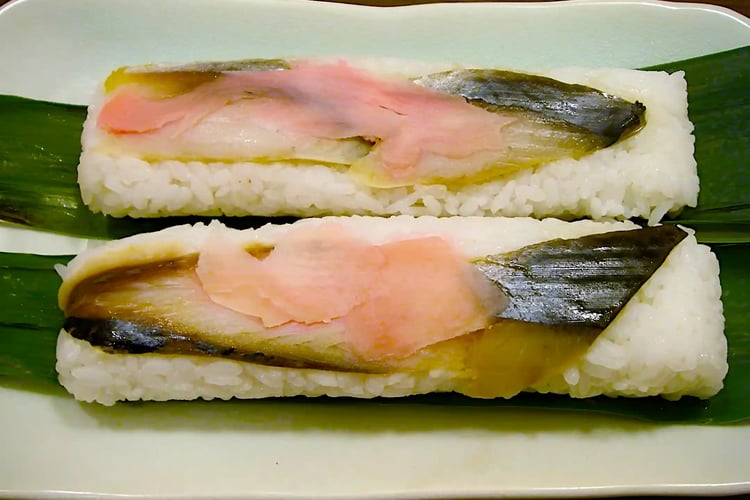
Kyoto also has a culture of festival sushi. For example, chirashizushi may be served for Hinamatsuri, and during the Gion Festival there is a custom of eating saba sugata-zushi (saba bo-zushi). Saba-zushi is Kyoto’s famous local sushi: salt-and-vinegar-cured mackerel is pressed with vinegared rice into a bar shape. Its origin lies in Kyoto’s inland geography—fish spoiled easily, so mackerel caught in Wakasa Bay was cured with vinegar and transported to Kyoto as both preserved food and feast. Even today, it’s valued for festivals and as a gift.
Nara and Shiga also have distinctive sushi. Kakinoha-zushi (Nara) and funazushi (Shiga) preserve traces of older narezushi traditions. Kakinoha-zushi is said to connect in its roots to fermented sushi culture such as “namanare,” but today it is commonly made with vinegared rice, skipping fermentation, and it is known as a Yoshino specialty.
Funazushi from Shiga, as mentioned earlier, is narezushi made by fermenting crucian carp. It is characterized by a bold fermented aroma and acidity, and is cherished by enthusiasts as a delicacy. In this way, Kansai sushi stands out for its craftsmanship-like beauty and its strong ties to seasonal events and celebrations. In Kyoto’s traditional restaurants, seasonal pressed sushi may even appear as part of kaiseki cuisine—so refined and delicate that the boundary between food and art feels almost blurred.
When you travel in Kansai, try hakozushi and saba-zushi. From a different angle than Edomae, they will let you feel just how rich Japan’s sushi culture truly is.
North (Hokkaido & Tohoku): Umami from Cold Seas and a Kombu Culture
Sushi in Japan’s north—Hokkaido and Tohoku—is defined by abundant seafood raised in cold waters and a kombu culture that spread from Hokkaido. Hokkaido is, needless to say, a kingdom of seafood. Fresh uni, ikura, crab, scallops, botan-ebi (large sweet shrimp) and more—premium ingredients are available locally at surprisingly accessible prices.
Hokkaido sushi has outstanding ingredient power, with generously sized neta and a strong emphasis on freshness. In Sapporo and Otaru, you may be served gunkan piled high with uni or ikura—portions that would be extremely expensive in Tokyo—making the region feel like paradise if you love seafood.
Tohoku as well has rich fishing grounds, especially around Sanriku, with delicious seasonal neta throughout the year. One tendency in Tohoku sushi is the use of slightly sweeter shari or soy sauce to highlight the neta’s flavor. In coastal areas of Iwate and Miyagi, you may find restaurants that marinate fatty winter yellowtail or autumn sanma in slightly sweet tare before forming sushi, or that give the shari itself a gentle sweetness. Historically, this may relate to the preference for sweetness as an energy source in colder regions.
Another key point in the north is the culture of kombu-jime. As touched on in the Toyama example earlier, kombu is widely used in northern cuisine. In particular, due to trade connections with Hokkaido—one of kombu’s key producing regions—kombu-based preserved foods spread from Tohoku into Hokuriku. By sandwiching fresh fish between sheets of kombu and resting it, moisture is drawn out, umami transfers, and the fish becomes supple and gently matured. Kombu-jime, common in Toyama and Ishikawa on the Sea of Japan side, is said to have taken root because Kitamaebune trading ships brought high-quality kombu during the Edo period (*1).
In Tohoku too, you can find sushi shops serving kombu-jime—for example in the Shonai area of Yamagata—and in Miyagi, autumn fish may be turned into kombu-jime nigiri. These techniques were born from the question of how to preserve fish deliciously in cold climates, and they represent a northern pursuit of umami.
Overall, northern sushi is compelling for its deep flavor woven from powerful seafood umami and kombu umami. When you travel to Hokkaido or Tohoku, seek out local seasonal neta (uni, scallops, shirauo and more) and taste how the region’s seasoning and curing methods shape them. You’ll likely feel a different kind of excitement from what you taste in Tokyo or Kansai.
West (Hokuriku, San’in, Kyushu): Local Fish and Differences in Soy Sauce Culture
Western Japan also offers remarkably diverse sushi cultures. First, Hokuriku. Along the Sea of Japan coast in Ishikawa, Toyama, and Fukui, you’ll find fatty winter fish such as kanburi (yellowtail) and nodoguro (blackthroat seaperch), making seasonal local sushi like “winter yellowtail nigiri” or “seared nodoguro sushi” truly outstanding.
As mentioned earlier, kombu-jime is also thriving here, and Toyama’s “Toyama Bay Sushi” brand is known for serving nigiri that brings together locally grown rice, local fish, and kombu-jime techniques. Perhaps to highlight the ingredients’ sweetness, Hokuriku shari tends to be sweeter than in Kanto, and soy sauce also leans slightly sweeter.
Next is San’in (Shimane and Tottori). This region is a treasure chest of neta beloved by connoisseurs—matsuba crab, nodoguro, white squid, and more. San’in sushi shops often promote “morning-caught sushi,” forming sushi from fish landed at local ports and served the same day, emphasizing freshness.
In Shimane’s Izumo area, there is also a local dish called bara-zushi, a style of chirashi sushi characterized by finely chopped ingredients scattered in a richly decorative presentation. In terms of soy sauce culture, San’in also tends to use somewhat sweeter koikuchi soy sauce.
Finally, Kyushu. Sushi across Kyushu is distinctive, but one broad point is how noticeably sweet the soy sauce is. Kyushu sashimi soy sauce (amakuchi soy sauce) is thick and sweet, and even if you dip sashimi or sushi generously, it doesn’t become overly salty—it matches the fish’s umami beautifully (*2). Explanations for why sweet seasoning took root in Kyushu often point to multiple factors, including the circulation of sugar during the Edo period (for example, the “Sugar Road” associated with the Nagasaki Kaido), which made sugar relatively more accessible.
The further south you go (Kagoshima and Miyazaki), the sweeter the soy sauce tends to become. Sushi is no exception, and many restaurants brush neta with sweet soy sauce before serving. In Hakata, Fukuoka, for example, sushi may use fresh seafood from the Genkai Sea, while seasoning with gently sweet shari and sweet soy sauce, creating a soft, friendly flavor.
Kyushu is also a stronghold for blue-backed fish like horse mackerel and mackerel. You may see menus that blend local cuisine with sushi—for instance, aji or saba dressed in ginger soy sauce as goma-saba, then used in a sushi-like preparation.
In addition, Kyushu has many unique types of sushi. Nagasaki’s shippoku-zushi is a hearty pressed sushi; Kumamoto has pressed sushi that may even use horse meat. Kagoshima has Satsuma chirashi-zushi, a celebratory meal passed down since the Edo period.
Overall, western Japan’s sushi stands out for its variety of local fish and regional differences in soy sauce flavor. If you try sweet soy sauce sushi for the first time, you may be surprised by its mellow richness. When you travel, taste the local seasoning and let yourself feel that Japan is far broader than “sushi = Edomae.”