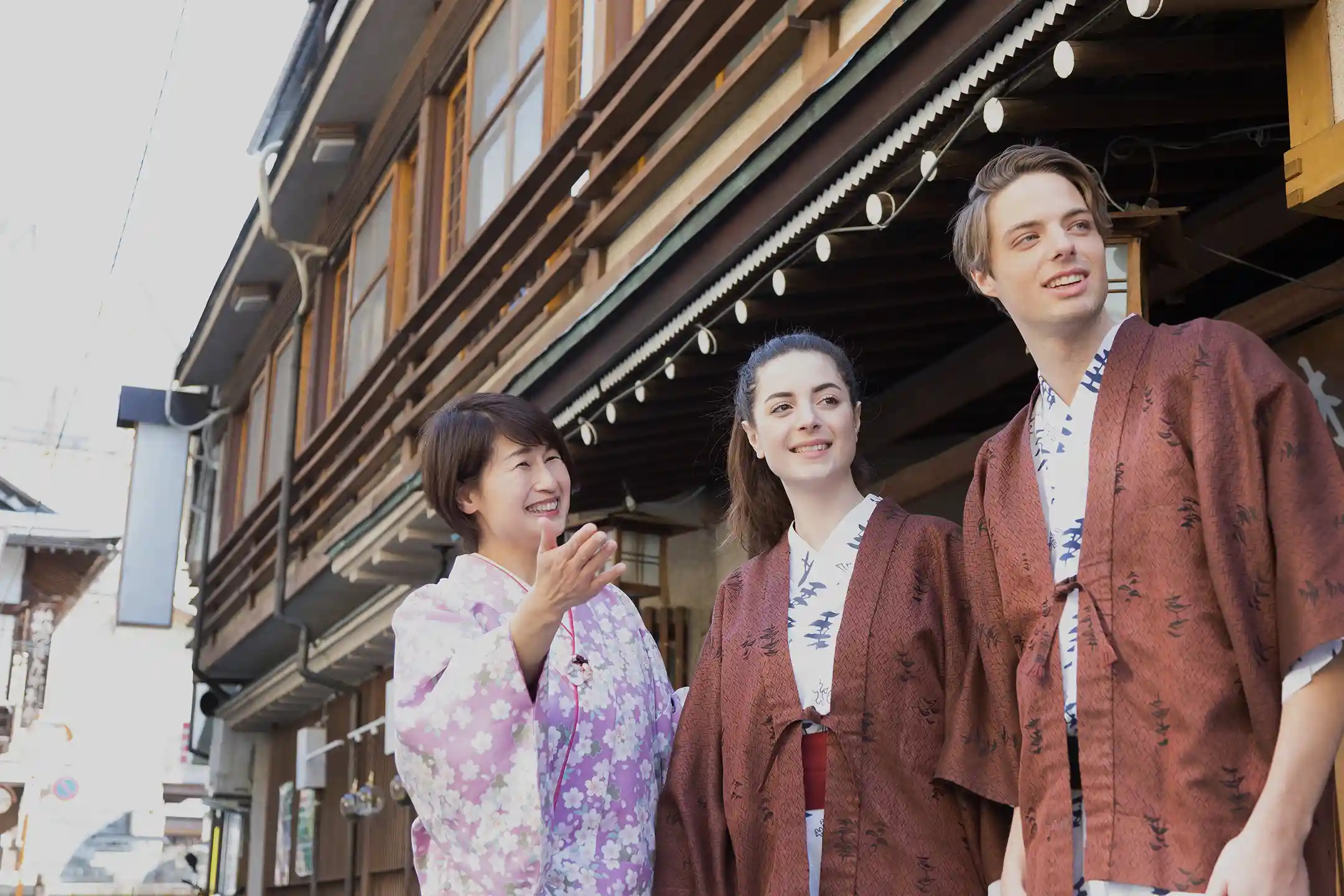
In Tokyo—a city where history and innovation constantly intersect—you’ll find ryokan (traditional inns) that honor time‑honored customs while embracing contemporary sensibilities. Patterns glowing through shoji screens, the quiet ritual of tea, birdsong drifting across a Japanese garden—this is more than an overnight stay; it’s a conversation with culture.
In this article, you’ll explore the intellectually rich and polished ryokan culture you can experience in Tokyo from multiple angles: architecture, art, cuisine, and sustainability.
A Ryokan Culture Unique to Tokyo Where Tradition and the Modern Converge
Historical Roots of Long‑Established Inns Dating Back to the Edo Period
Tokyo is home to venerable ryokan that carry the atmosphere of the Edo period, and their historical backgrounds are part of the charm. In Edo, travelers and feudal lords stayed at hatago and inns, the origin of today’s ryokan culture. Some establishments continued the ryokan business in Tokyo even after the Meiji era, preserving a spirit of hospitality that has been handed down to the present day.
For instance, a ryokan in Nihonbashi—the merchant quarter that flourished in the Edo period—has adapted with the times while remaining in operation, celebrating its 130th anniversary in 2020(*1). In such heritage inns, you can sense not only buildings and furnishings dating back to the founding, but also the footprints of artists and travelers from every era.
Tatami‑matted rooms, the ambience of wooden architecture—the very presence of history ignites your curiosity and offers value far beyond “just a place to sleep.” Tokyo’s ryokan culture stands firmly on traditions that began in Edo, and by fusing with contemporary refinement, it radiates a distinctive appeal.
Modern Interior Design That Incorporates Contemporary Art
In Tokyo, some ryokan artfully weave contemporary art and design into tradition to craft truly sophisticated spaces. A leading example is HOSHINOYA Tokyo, which draws attention as a contemporary “tower ryokan.” Here, the essence of Edo culture is scattered throughout, enlivened by the latest design language.
From afar the exterior appears to be a sleek black tower, but as you approach, an adapted hemp‑leaf motif—reminiscent of Edo komon patterns—emerges, surprising you with its discreet elegance. In the guest rooms, comfortable sofas and beds harmonize with bamboo‑crafted closets and a stand lamp patterned with the Edo‑komon “yabane” motif, creating a modern yet tranquil Japanese atmosphere.
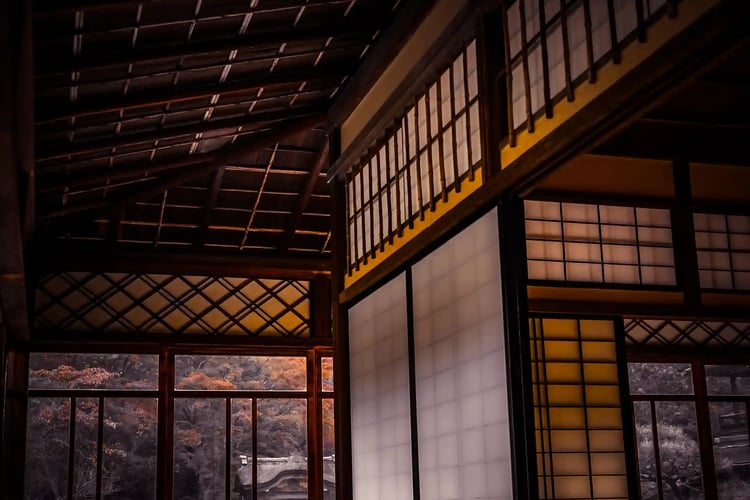
Lighting throughout the property employs silk shades that evoke lanterns, and collaborations between traditional crafts and contemporary art appear at every turn. Most striking is the afternoon interplay of light and shadow as the hemp‑leaf pattern dances across the shoji: sunlight projects the façade’s motif indoors, a fleeting “art made by nature” that only staying guests can witness.
In this way, Tokyo’s ryokan use traditional materials and techniques through a contemporary artistic lens, resulting in a refined design language that resonates with international guests. Time spent in a space where tradition and modernity merge becomes a rare experience in which you encounter the depth of Japanese culture alongside the edge of contemporary art.
Culture‑Rich Experiences That Reward Your Curiosity Simply by Staying
Hands‑On Workshops in Tea Ceremony, Flower Arrangement, and Calligraphy
Many Tokyo ryokan offer programs that let you experience Japanese traditions during your stay. Workshops led by specialists—tea ceremony (chado), flower arrangement (kado/ikebana), and calligraphy (shodo)—are especially appealing if you’re eager to learn.
For example, Ito Ryokan in Ningyocho hosts programs in shamisen, kimono dressing, calligraphy, and more, allowing you to experience traditional arts in an approachable way while you stay(*1). Tea ceremony classes where you learn temae (how to prepare tea) and ikebana sessions covering the basics are often explained in English so first‑timers can enjoy them. Such workshops are popular among guests less familiar with Japanese culture—your time at the ryokan becomes a place of learning rather than “just a stay.”
In Yanaka, a downtown ryokan has created a tea room on site and hosts authentic tea gatherings for guests, offering a direct encounter with the spirit of chanoyu(*2). In calligraphy experiences, you might write your name or a meaningful word with a brush; in ikebana, you arrange seasonal flowers and feel the Japanese sense of beauty through all five senses.
Because these are held in the privacy and comfort of a ryokan, you can relax as you participate—an experience that lingers in memory. Far more than lodging, Tokyo’s ryokan deepen your cultural literacy through traditional workshops and help you shape a “culture‑seeking” journey.
Special Museum & Gallery Tours of Tokyo with Experts
If you’re an inquisitive traveler, expert‑guided tours of Tokyo’s museums and galleries are irresistible.
Tokyo hosts a wealth of cultural institutions—from the Tokyo National Museum, which presents the quintessence of Japanese art, to the Mori Art Museum, a hub of cutting‑edge contemporary art. Some ryokan partner with these venues or curate information, and may arrange special tours guided by curators or art specialists upon request.
The Tokyo National Museum, for instance, sometimes offers curator‑guided tours that let you view masterpieces of Japanese art with expert commentary. As an architecture‑focused option, specialized companies organize programs that trace 400 years of history by visiting traditional and contemporary buildings with a professional guide(an example of a custom tour by a specialist company)(*3).
Contemporary art lovers may prefer gallery‑hopping tours accompanied by a curator who explains the context behind works by noteworthy artists. These special tours open doors to insights that are hard to gain on your own, making them unforgettable experiences if you seek a “journey of learning.”
Tokyo’s ryokan support your curiosity in practical ways during your stay, providing information and booking assistance for museum and gallery visits. Setting out from your inn for a private tour, engaging with experts, and touching Japan’s art and history in dialogue—this is exactly the kind of “intellectually satisfying” luxury that a ryokan stay can offer.
The Appeal of Ryokan Architecture and Design Infused with Local Aesthetics
What Distinctively Japanese Aesthetics Live On in Traditional Architecture?
Traditional Japanese architecture and spatial design embody a unique aesthetic, and Tokyo’s ryokan reflect these qualities. Critic Donald Keene distilled key characteristics of Japanese aesthetics into four traits: “ambiguity,” “irregularity,” “simplicity,” and “perishability (transience)”(*1).
In architecture, ambiguity leaves poetic room for interpretation—an aesthetic of ma (negative space)—as in dry landscape gardens that invite your imagination to complete the scene. Irregularity values the handmade and the asymmetrical: the slight warp of a tea bowl or the uneven floor plan of an old farmhouse finds beauty beyond perfect symmetry.
Simplicity favors restraint over ornamentation: temple architecture often leaves wood unpainted, and a ryokan room with only tatami and shoji can feel strikingly refined. Finally, perishability is the sensibility that finds beauty in the fleeting: seasonal shifts in the garden and the patina of aging wood invite an appreciation of impermanence.
You’ll see these aesthetics throughout Tokyo’s ryokan. In a heritage wooden inn, posts and beams bear the warmth of time, while soft light filtering through washi paper wraps the room—an elegance that revels in shadow rather than chandelier sparkle. A flower in the tokonoma alcove or a hanging scroll conveys the seasons with pared‑back composition—quiet sophistication revealed by understatement.
Even in a vast metropolis, stepping into a ryokan lets you feel the quiet resonance of wabi‑sabi and a harmony with nature. This is the true pleasure of traditional architecture imbued with Japanese aesthetics, offering international travelers a sense of calm and an intellectually moving experience.
The Philosophy of Characterful Ryokan Gardens and How to Enjoy Them
A ryokan garden condenses Japanese aesthetics and views of nature into a single space, and both its philosophy and the ways you enjoy it are central to your stay. Japanese gardens are created with traditional techniques that evoke rich seasonal scenery within limited grounds, becoming a restorative place where you can feel each season while remaining at the inn(*2).
At one long‑established ryokan, the entire property unfolds as a Japanese garden, and the view changes from guest rooms and open‑air baths with every season. Spring brings cherry blossoms and azaleas; in the rainy season, lush greens and hydrangeas deepen the mood; fireflies dance on summer nights; autumn glows with foliage; and in winter, camellias and plum blossoms add quiet color to the cold.
These gardens, composed with seasonal plants and shifting vistas, are a luxurious way to encounter “living Japanese beauty.” Many Tokyo inns feature tranquil gardens that make you forget the city’s bustle; a leisurely stroll can sharpen your senses.
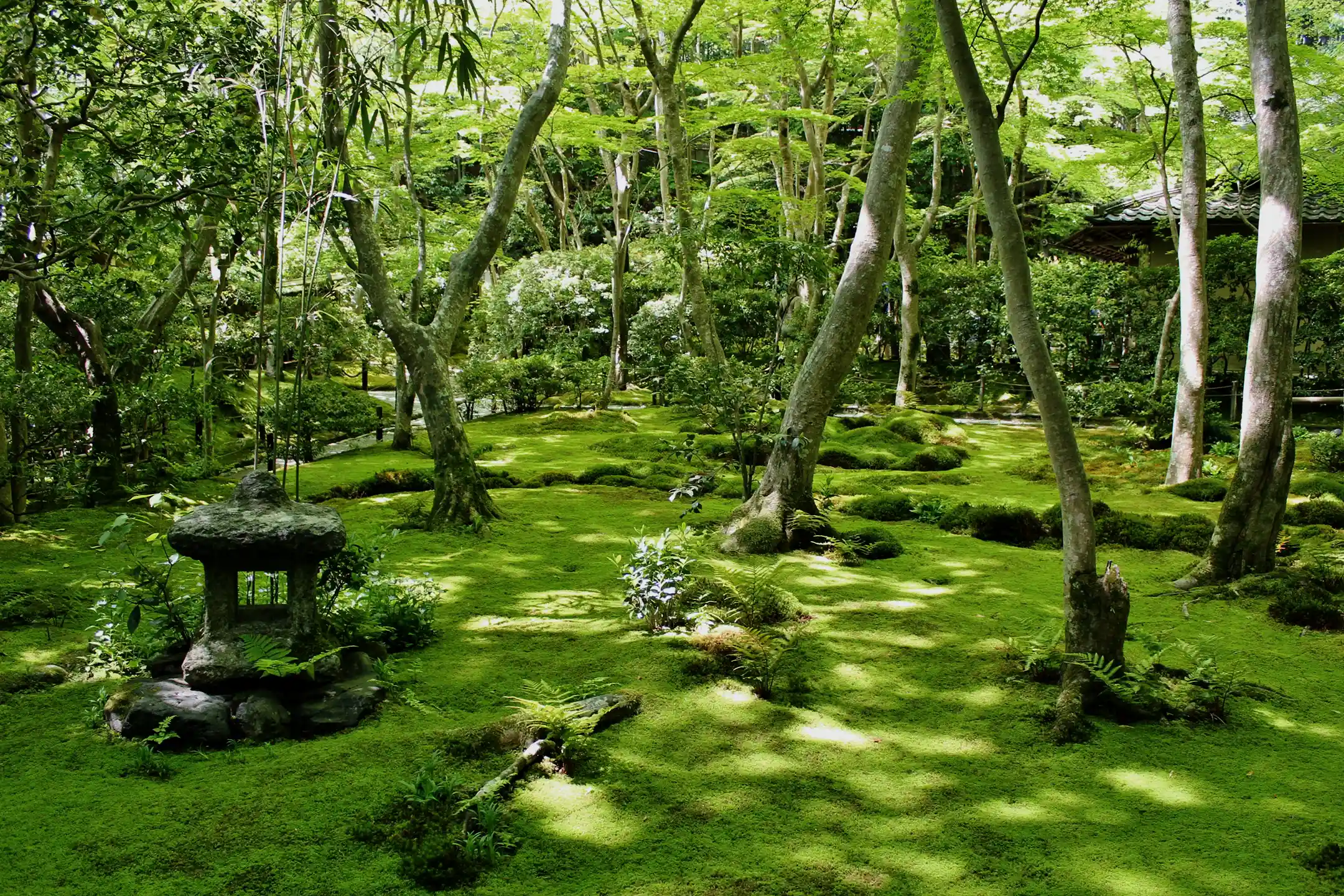
Walk the stone path in the clear morning air and watch sunlight filter through well‑pruned pines onto moss‑covered lanterns as birdsong surrounds you—restorative, almost forest‑like, right in the city. Some properties even arrange private garden tours or gardener‑led talks so you can learn design philosophies such as shakkei (borrowed scenery) and the balance of yin and yang.
You might savor tea as you gaze from an engawa veranda or lounge, or step into the garden to admire seasonal blossoms—either way, you’re engaging the senses. Gardens that soothe you with the passage of the seasons, even in the heart of Tokyo, embody a “fusion of culture and nature,” deepening your understanding of Japan through direct experience.
Interiors & Amenities in Tokyo Ryokan That Create a Truly Special Stay
High‑Quality, Japan‑Made Bedding and Amenity Brands
High‑end ryokan in Tokyo pursue comfort down to the smallest detail, and their interiors and amenities reflect that care.
Many adopt premium Japan‑made bedding to ensure deep, restorative sleep. You’ll find top‑tier mattresses and down duvets from heritage bedding makers who have refined futon craftsmanship over generations—so comfortable it can feel like sleeping on a cloud.
Long‑standing brands such as Nishikawa, known for products that suit esteemed hotels and ryokan, incorporate sleep‑science research into functional bedding tailored for hospitality settings, enhancing guest comfort(*1).
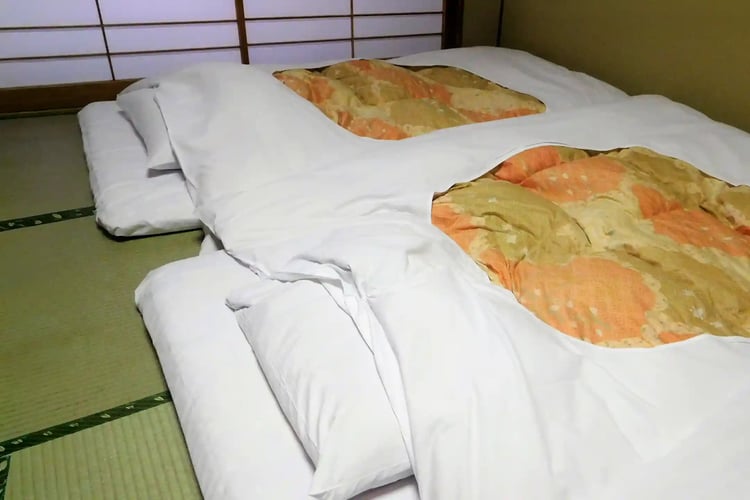
Nishikawa’s “AIR” mattress, for example, is used by numerous inns; its pressure‑dispersion structure delivers a sleep quality praised by elite athletes. Some properties also offer pillow menus so you can choose your preferred firmness—an attentive path to great rest.
Linens are equally considered: ultra‑absorbent Imabari towels and soft organic‑cotton sleepwear are common, pairing safety with comfort by sourcing high‑quality textiles from across Japan.
Bath amenities also reflect a ryokan’s taste. Many partner with Japanese luxury skincare and historic cosmetic houses to provide refined shampoos, soaps, and lotions. Some adopt top domestic brands such as Shiseido or POLA, captivating you with nuanced Japanese fragrances and textures. Others, looking to elevate the sense of occasion, choose select international labels.
High‑end bath amenities like Asprey, favored by the British royal household, and Aesop, known for thoughtful botanicals, bring an uplifting, polished scent profile(*2). Products from Aesop or L’Occitane turn your bath into a small indulgence—an enjoyable chance to try something different while traveling. Many inns also stock state‑of‑the‑art in‑room appliances—from high‑performance hair dryers (e.g., Dyson) to skincare devices—responding to the finding that roughly half of younger travelers appreciate premium dryers in their rooms, which boosts overall satisfaction.
Blending Japanese craftsmanship with advanced technology, Tokyo’s ryokan curate bedding and amenities that deliver quality in every touchpoint. When you surrender to a space tuned with such care, both body and mind can unwind—and your stay becomes unmistakably special.
Collaborative Interior Spaces with Tokyo Artists
Some Tokyo ryokan collaborate with local artists and artisans to create one‑of‑a‑kind interiors. By inviting contemporary creators into the framework of traditional ryokan architecture, they transform the stay itself into a living art experience.
At the aforementioned HOSHINOYA Tokyo, lighting made with Edo‑kiriko cut glass and bamboo‑craft furnishings appear throughout—bespoke pieces created in partnership with craft collectives in Tokyo and beyond. Even the bamboo‑work shoe cabinet at the entrance is a handcrafted work by the furniture artisans of Hinoki Kogei, a seamless fusion of traditional craft and modern design.
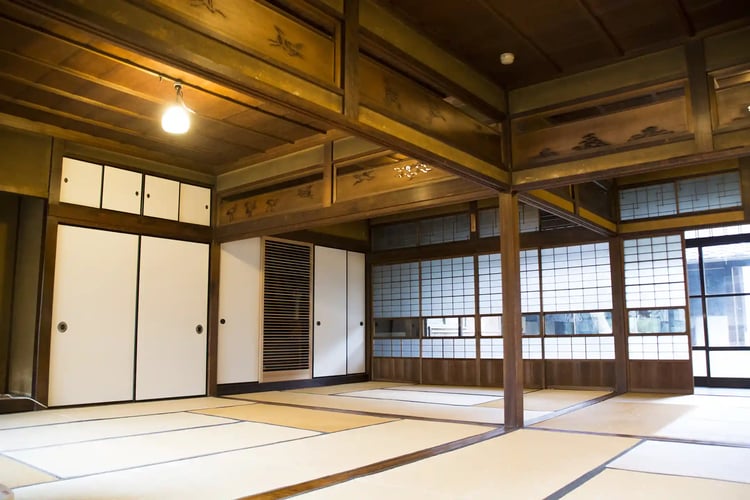
Stand lamps with Edo‑komon patterns and tatami laid in checkerboard arrangements function as art pieces that translate classic motifs into contemporary product design. Across Tokyo, you’ll also find “Artist Rooms” where creators paint directly on guest‑room walls.
At Park Hotel Tokyo in Shiodome, nearly 50 Japanese artists have painted rooms around themes of Japanese aesthetics—castles, cherry blossoms, kabuki—so each room immerses you in a different world(*3). These rooms are more than guest quarters; they’re one‑off artworks, so staying feels like spending the night inside a museum.
The project—conceptualized as a “space‑time where you can experience Japanese aesthetics”—has been highly praised and received a Japan Tourism Award. Elsewhere in Tokyo, properties exhibit works by emerging artists in on‑site galleries or partner with notable architects and designers to renew interiors.
Beyond style, these collaborations offer creative stimulation and a form of hospitality that speaks directly to your senses. In a city where tradition and the avant‑garde coexist, time spent in such co‑creative spaces elevates the value of your journey.
Three Tokyo Ryokan We Especially Recommend
A Curated Shortlist of Tokyo Ryokan Beloved by International Guests
Tokyo has many ryokan, but here are three standouts with consistently high ratings from overseas travelers.
First is HOSHINOYA Tokyo. Located in Otemachi, this “tower ryokan” fuses tradition with contemporary luxury and captivates guests from around the world. Fully tatami‑floored common areas and natural hot springs drawn from underground offer the full ryokan experience in the heart of the city.
Second is cyashitsu ryokan asakusa. Tucked away in Asakusa with just 10 rooms, it features tea‑room‑inspired design and warm downtown hospitality. A private open‑air bath with views of Tokyo Skytree adds indulgence, and since opening it has earned exceptional reviews—averaging above 9.7 in guest feedback(*1)—making it a beloved hideaway where you can savor a serene, distinctly Japanese ambiance.
Third is Ryokan Sawanoya. This family‑run inn in Yanaka, Taito‑ku, offers heartfelt hospitality, fair prices, and spotless Japanese‑style rooms. A pioneer in welcoming international travelers since about 40 years ago, more than 80% of current guests come from overseas, giving it a cosmopolitan feel. It has even ranked first in guest satisfaction among Tokyo accommodations on global review sites(*2), drawing many repeat visitors.
Each inn has its own character yet shares a clear reason international guests choose it. HOSHINOYA Tokyo earns support from luxury‑minded travelers for its refined service and cultural depth; cyashitsu ryokan asakusa is praised for intimate quietude and the spirit of tea; Sawanoya is remembered for family warmth and neighborhood‑rooted experiences. If you’re searching for a ryokan in Tokyo, adding these three to your shortlist is a reliable path to a fulfilling stay.
Signature Experiences You Can Enjoy at Each Inn
Each property offers experiences you won’t easily find elsewhere. At HOSHINOYA Tokyo, focus on the resident‑only public spaces and activities. Every floor has an “Ochano‑ma Lounge,” an all‑tatami living room where you can relax any time and freely enjoy curated Japanese teas and seasonal sweets.
Traditional games such as Edo‑style sugoroku are also available; slip off your shoes, sit on tatami, and while away time with old‑school pastimes. Some evenings bring sake tastings or live shamisen performances, so you can immerse yourself in Japanese culture without leaving the building. The on‑site natural hot spring bath, fed from the property’s own source deep underground, is a star attraction, letting you soak in authentic hot springs right in central Tokyo.
At cyashitsu ryokan asakusa, experiences inspired by the spirit of tea are everywhere. You might be welcomed with a bowl of matcha at check‑in; if you wish, head to the nearby annex “Chashitsu No. 2” for a dinner plan serving Matsusaka‑beef sukiyaki in a private tea‑room setting.
The compact, meticulously pared‑back rooms feel like contemporary tea spaces, and the private cypress bath on the top floor frames Tokyo Skytree up close—blue skies and Asakusa by day, a luminous tower by night(*3). Open to the elements and wrapped in greenery with no roof or walls enclosing it, the bath offers a private soak that carries the charm of the old downtown.
Ryokan Sawanoya stands out for its homey atmosphere and community‑based experiences, both inside and beyond the inn. Seasonal décor throughout the property brings Japan’s four seasons to life.
In summer, guests can even join the inn’s family at the neighborhood shrine festival(*2)—don a yukata, help carry a mikoshi portable shrine, and wander food stalls, an experience cherished by international visitors. Practical touches for long‑stay guests—coin laundry and drying areas—let you “live like a local” in Tokyo’s old town, a reason many return.
Sawanoya also offers tips for bon‑odori summer dances and maps of nearby sento public baths, so you can enjoy downtown culture more deeply. The heartfelt “okaeri—welcome home” greeting unique to a family‑run inn brings a sense of ease, as if you’d returned to your own place even while traveling.
Collectively, these three ryokan provide distinct paths to memorable stays—from luxurious cultural immersion to the serene world of tea and warm, people‑to‑people connections. Dive in and enjoy Tokyo’s many facets through your ryokan experience.
%20and%20Japanese%20tea.webp?width=2048&height=1365&name=Sakuramochi%20(cherry%20blossom%20rice%20cake)%20and%20Japanese%20tea.webp)
Sustainability Initiatives Led by Environmentally Conscious Tokyo Ryokan
Eco‑Friendly Practices Advancing Across the Ryokan Industry
In recent years, sustainability has become a central theme in hospitality, and Tokyo’s ryokan are no exception.
An increasing number actively introduce eco‑friendly measures so your stay can also support the SDGs. One concrete step is reducing single‑use plastics. Many properties have eliminated plastic straws in favor of paper alternatives and wooden stirrers.
Amenities like toothbrushes and razors are being rethought with greener materials or reusable formats. “Eco‑cleaning” is also taking root: during multi‑night stays, linens and towels are changed less frequently to conserve water and reduce detergent use.
At Hotel Chinzanso Tokyo—a flagship property with a vast garden—initiatives include phasing out plastic straws and revising bed‑making frequency, striving to reduce environmental impact across the property(*1). The garden’s spring water is used for irrigation to sustain lush greenery, and each summer, a firefly release event invites guests to feel the importance of nature.
These efforts, balancing hospitality and conservation, earn high marks from guests. Elsewhere in Tokyo, ryokan and hotels are adopting renewable energy and remodeling for efficiency—installing high‑performance systems and insulation to cut CO2 emissions, and reducing food waste by offering smaller portions at breakfast buffets.
Each step may be small, but together they make a meaningful difference and give you the option of a more environmentally conscious stay. For ryokan, sustainable management is essential to carry tradition into the future—pursuing comfort and sustainability in equal measure.
For Tesla Users|The Latest on EV Charging at Ryokan
As electric vehicles become more common, ryokan and hotels are rapidly installing EV chargers. High‑end properties in Tokyo increasingly provide charging stations in their parking facilities for both convenience and environmental stewardship.
If you’re visiting Tokyo by EV—Tesla included—being able to charge at your lodging is key. Travel sites such as TripAdvisor now publish rankings of “Hotels with EV Charging,” where The Prince Park Tower Tokyo and Hotel New Otani rank near the top in Tokyo(*2).
Some ryokan, such as the aforementioned Chinzanso Tokyo, provide both fast and regular chargers in their on‑site parking, so you can top up with confidence—often without reservations—while you check in or overnight, a welcome convenience.
A few properties also offer EV‑user perks: complimentary lobby drinks during charging or late check‑out to allow a fuller charge, extending thoughtful service to guests arriving by EV.
Tokyo Metropolitan Government policies are accelerating charging infrastructure at tourism facilities, so the number of ryokan and hotels with chargers will likely continue to grow. With rapid chargers appearing at some properties, short‑time charging is becoming even more practical. Before long, “touring Tokyo’s ryokan by EV” may be a common travel style. As you drive in, check your inn’s charging options in advance, then relax and enjoy both your stay and your drives with peace of mind.
A Polished Gourmet & Shopping Guide to Pair with Your Ryokan Stay in Tokyo
Cultural Experiences at On‑Site Japanese and Kaiseki Restaurants
If you’re staying at a Tokyo ryokan, don’t miss a meal at the on‑site Japanese restaurant.
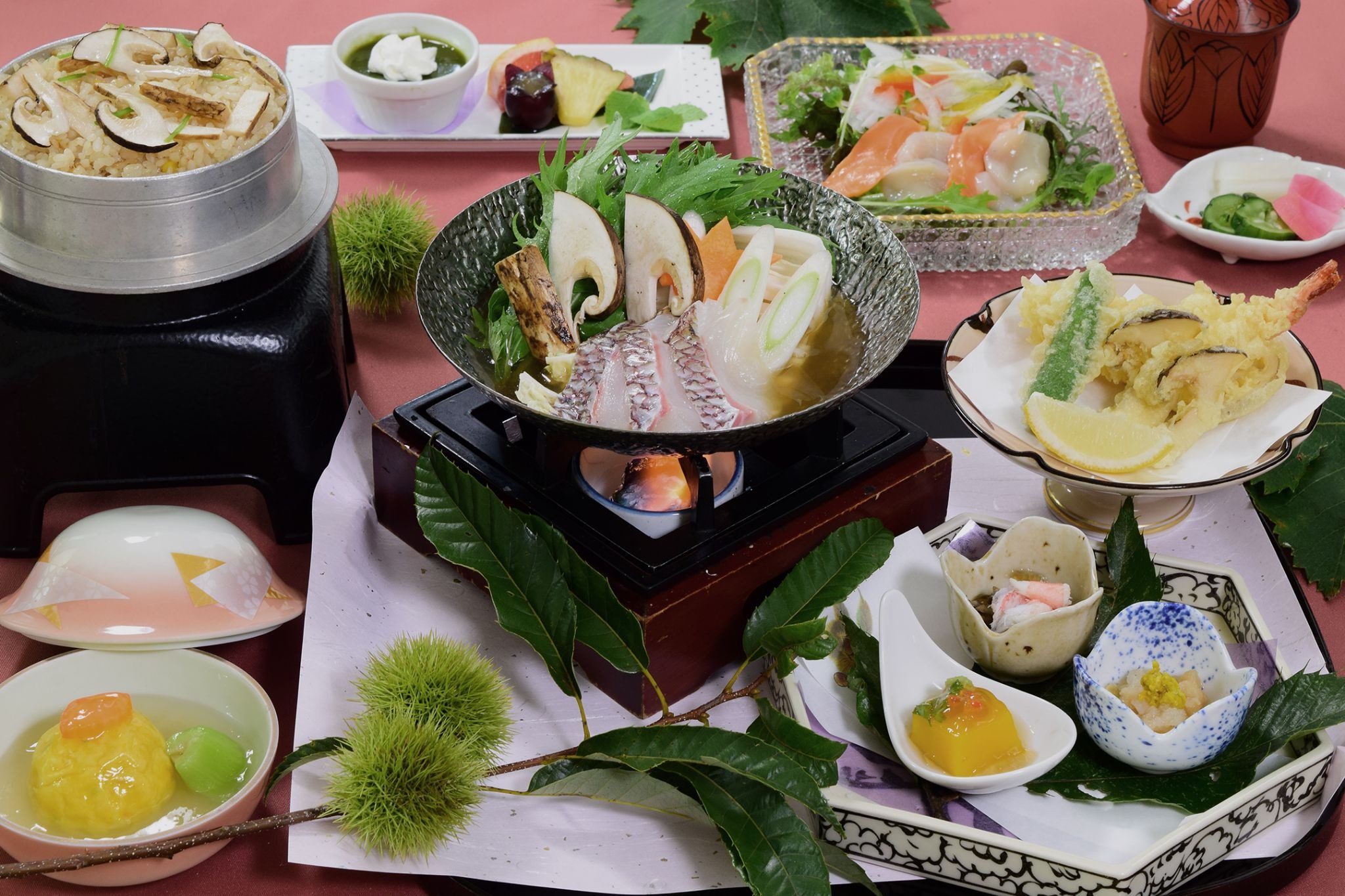
Many properties serve multi‑course kaiseki dinners and set Japanese meals—experiences that are cultural as much as culinary. Seasonal dishes arrive one by one, composed with the care of tea ceremony hospitality. In fact, a typical ryokan plan includes a kaiseki dinner and Japanese breakfast, letting you enjoy local seasonal flavors(*1).
Spring may bring sea bream and mountain vegetables; summer, sweetfish and pike conger; autumn, matsutake mushrooms and chestnuts; winter, blowfish and crab—ingredients that color the season. Chefs craft menus that let you sense the four seasons with all five senses, using traditional tableware such as Arita porcelain and Edo‑kiriko cut glass to add a visual experience of Japanese craft.
Dining spaces reflect the ryokan’s aesthetic: private rooms with tatami, low chairs, or hori‑kotatsu tables; or semi‑private seating in a grand hall overlooking a garden. Attentive service by nakai staff and explanations of dishes hint at the cultural background of Japanese cuisine.
As each course arrives, you may learn names and meanings rooted in annual events and regional foodways. “Learning through food”—ryokan dining is a living cultural experience. Breakfast might include grilled fish, rolled omelet, miso soup, and pickles—traditional dishes that international guests love.
Some properties even offer gentle guidance on chopstick etiquette or how to enjoy miso soup at breakfast. Savoring Japanese cuisine at a Tokyo ryokan means encountering both top‑tier flavors and the depth of Japan’s food culture. Take your time; taste the season and the culture with every bite.
Quality Shopping Spots Within Walking Distance
If you feel like a gentle outing between peaceful moments at your ryokan, Tokyo’s refined shopping areas often lie within a short walk. Depending on where you stay, central neighborhoods offer historic department stores, luxury brand avenues, and streets devoted to traditional crafts.
From ryokan in Otemachi or Nihonbashi, you can browse distinguished department stores like Mitsukoshi and Takashimaya. Their confectioners and craft boutiques are ideal for gifts, and nearby streets still host Edo‑era shops—washi paper specialists, cutlery stores, and makers of fans or lanterns—so you can encounter traditional craftsmanship on a short stroll.
If you’re in Asakusa, explore Nakamise Street by Senso‑ji for classic goods and sweets, or walk to Kappabashi Kitchen Town to see professional‑grade tableware and knives. Between Asakusa and Ueno, artisan districts offer Edo‑kiriko studio shops, leather ateliers, and other unique finds.
From ryokan near Ginza or Marunouchi, glamorous shopping awaits: global flagships and storied department stores such as Wako and Ginza Mitsukoshi. This area spans everything from the newest fashion to collaborations with traditional crafts—window‑shopping alone can lift your mood.
Venture to Omotesando and Aoyama for select shops and gallery‑style lifestyle stores. At Japan Traditional Crafts Aoyama Square, you’ll find curated crafts from across the country in one place (English‑speaking staff are on hand, making it popular with overseas guests).
Your ryokan concierge or staff can suggest stores tailored to your interests—antique kimono shops and accessories if you love wardrobe culture, or nearby galleries if you’re into art. In Tokyo, a ryokan stay and shopping complement each other beautifully.
With the gentle afterglow of wa, a few minutes’ walk brings you to elegant streets and a shopper’s paradise. Step out after a restorative pause and look for a well‑made piece that speaks to you. It will be more than a souvenir—it will become a keepsake that recalls the richness of your time in Tokyo.


.webp)