Have you ever sat down to dinner at a ryokan, only to find both "kaiseki" and "cha-kaiseki" listed on the menu — and wondered what on earth the difference was? Even seasoned Japan travelers find this one genuinely tricky. In this section, we'll untangle three key concepts that are essential to understanding the ryokan table: Kaiseki, Cha-kaiseki, and Regional Cuisine. Once you grasp each one's origins and character, the whole experience clicks into place in a deeply satisfying way.
What Is a Kaiseki Dinner at a Ryokan?
When you see "kaiseki(会席)" on your ryokan dinner menu, that's your main event for the evening. Kaiseki-ryori — written with the characters for "a gathering seat" — is Japan's answer to the grand tasting menu: a multi-course meal served individually to each guest, flowing from delicate appetizers all the way through to dessert. If you're familiar with a French dégustation menu, that's the closest Western equivalent in terms of format and prestige.
The exact lineup varies by chef and ryokan, but the classic progression runs something like this: sakizuke (amuse-bouche), wanmono (lidded soup), mukozuke (sashimi), yakimono (grilled course), nimono (simmered dish), shiizakana (supplementary course), hassun (seasonal platter), rice, miso soup, konomono (pickles), and dessert. Depending on the inn, you might be treated to anywhere from seven to fourteen courses (*1).
The name itself tells you something important. The characters for "kaiseki(会席)" literally mean "a seat where people gather" — and that's exactly what this cuisine was designed for: banquets and convivial dining, which flourished in the Edo period. Because sake-drinking is central to the experience, rice and miso soup are served toward the end of the meal rather than the beginning (*2). That's one of the key distinctions from cha-kaiseki, which we'll come to in a moment. In today's ryokan, a kaiseki dinner is nothing less than a total art form — seasonal ingredients and a chef's lifetime of craft, all on one beautifully set table.
Cha-kaiseki and the Art of Restraint
The word "懐石" (cha-kaiseki) has a wonderfully human origin story. It refers to the warm stones that Zen monks would tuck against their bodies to stave off hunger and cold during long periods of meditation (*2). That etymology says everything about the philosophy: this is food designed not to overwhelm, but to gently quiet the stomach.
Cha-kaiseki is the meal served to guests before koicha (thick tea) at a formal tea ceremony (chaji). It's the culinary expression of wabi-sabi — the tea ceremony's guiding aesthetic — built on three core principles: using ingredients at their seasonal peak, honoring the natural flavors of each ingredient, and welcoming guests with genuine, unhurried care (*2). The menu centers on the ichiju-sansai format — one soup and three side dishes — and crucially, rice and soup are served first, as a warm welcome to guests who have traveled a long way (*3).
.webp)
The practical difference between cha-kaiseki and kaiseki comes down to purpose and sequence. Cha-kaiseki exists to prepare you for tea; kaiseki exists to accompany sake and celebration (*2). Over time, as the boundaries between tea ceremony settings and banquet settings blurred, "cha-kaiseki" became the specific term used to distinguish the tea-world tradition from the banquet world's "kaiseki." It's a small linguistic distinction that carries centuries of meaning (*3).
Why Regional Cuisine Tells the Story of a Place
Beyond kaiseki and cha-kaiseki, there's a third pillar that gives ryokan dining its soul: kyodo-ryori, or regional cuisine. This is food born directly from local geography, climate, and the rhythms of community life. Mountain inns center their menus around river fish and wild mountain greens; coastal inns let the morning's catch take center stage.
Japan's Tourism Agency notes explicitly that ryokan meals frequently feature local specialties and seasonal ingredients rooted in the region's own food traditions (*4). The moment you start thinking of your ryokan dinner not as "a nice multi-course meal" but as a portrait of how people in that particular place have eaten and lived for generations, each dish takes on an entirely different resonance. We'll dig deeper into regional food differences in a later section — it's well worth keeping in mind as you plan where to go.
Ryokan Food: What to Expect (Dinner, Breakfast, Timing, and In-Room Dining Basics)
Your first ryokan stay naturally comes with a whole list of questions. What time is dinner? Where do you eat it? Is food included in the room rate? These are all completely reasonable things to wonder — ryokans operate by their own set of rhythms and customs, quite different from a city hotel or a Western B&B. But once you understand how it all fits together, you start to see just how thoughtfully the whole experience has been designed.
Ryokan Dinner: When, Where, and How It Unfolds
Dinner at most ryokans is scheduled somewhere between 6 and 8 p.m., and when you check in, your nakai-san (the inn's female attendant) will ask for your preferred time (*1). You'll typically choose from a set of time slots — 6:00, 6:30, or 7:00 p.m. are common options.
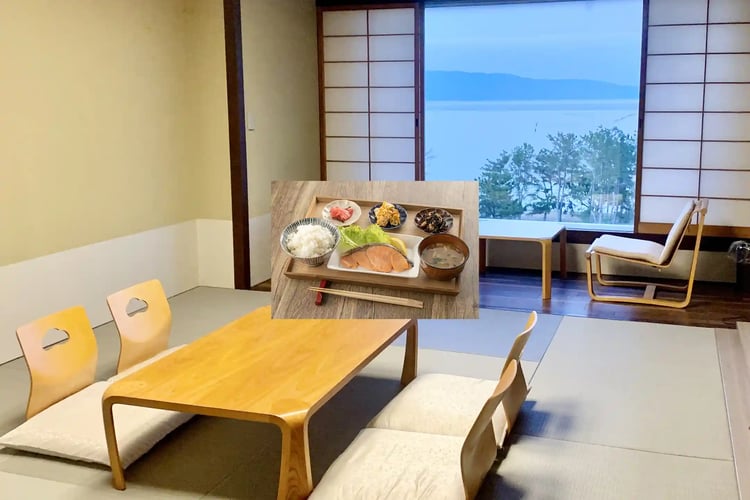
As for where you eat, there are two main formats: room dining (heya-shoku) and a dedicated dining room (shokuji-dokoro). Room dining means your nakai-san brings each course directly to your tatami room, setting it out on the low zazen table — an arrangement that feels wonderfully intimate and deeply traditional. The alternative is moving to a designated dining space, and many higher-end ryokans now offer private dining rooms (kojitsu shokuji-dokoro) that blend the privacy of room dining with the polish of a dedicated culinary setting (*2). Which format applies to you will depend on your room type and package, so it's worth checking before you book.
Plan for the kaiseki course to take somewhere between one and two hours from start to finish. The pacing is deliberately unhurried — each course arrives with space for conversation and a sip of sake in between, so the meal itself becomes a kind of event (*3). More than a few guests have been caught off guard by just how immersive it is. A practical tip: factor in your after-dinner onsen time and work backwards when choosing your dinner slot.
Ryokan Breakfast: What Makes It Special, and How to Spot Quality
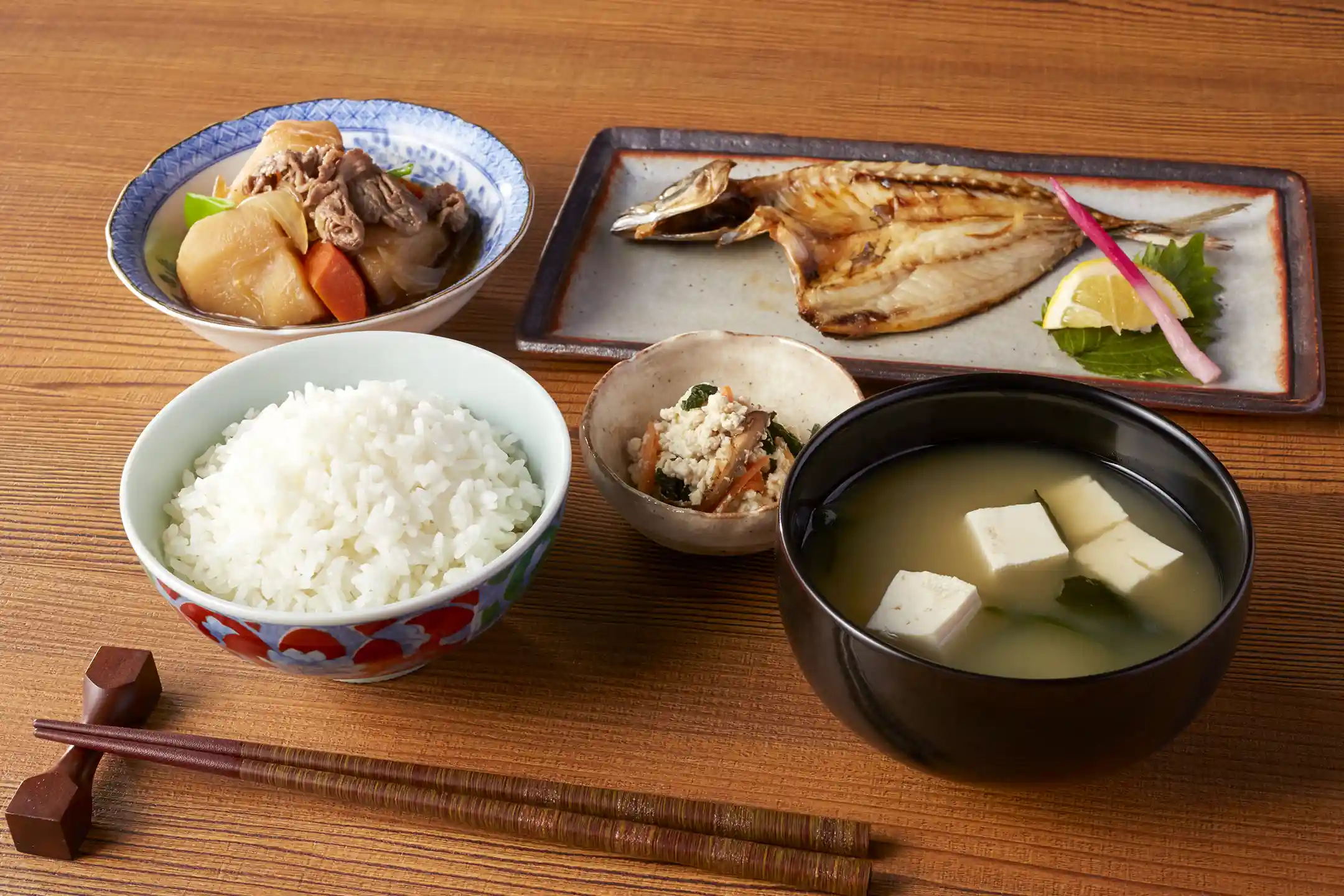
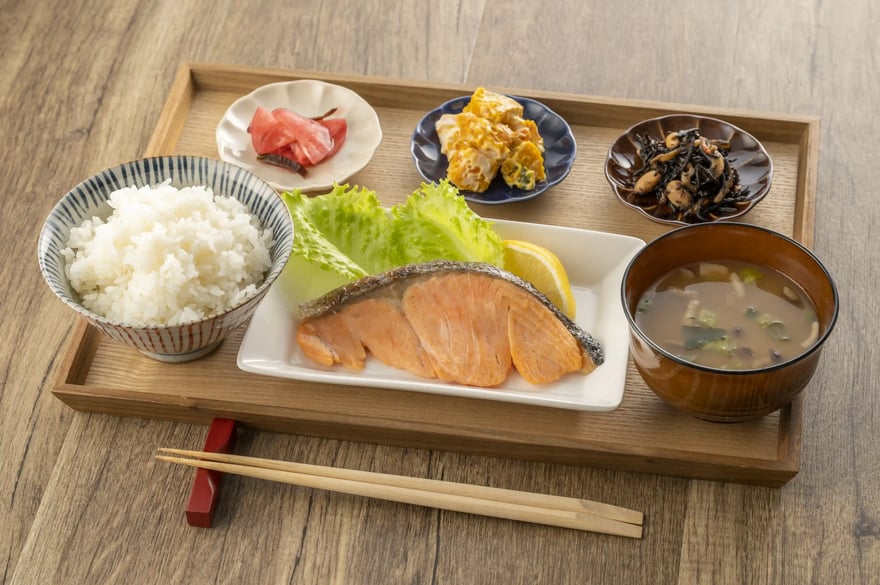
Breakfast (asa-gohan) at a ryokan is the second great food experience of your stay, and it deserves just as much attention as the evening meal. The classic spread includes freshly steamed rice, grilled fish, miso soup, dashimaki tamago (rolled egg omelet), tofu, pickles, nori, seaweed, and a rotation of seasonal small dishes — typically seven to ten items in total, depending on the inn (*4).
If it feels like a lot for 7 a.m., that's precisely the point. Ryokan breakfast is one of the clearest windows into the quality of the house. The details worth paying attention to: Is the rice visibly freshly cooked? Does the miso soup have depth and clarity? What fish is on the grill — a standard mackerel, or something like nodoguro (blackthroat seaperch) or kinmedai (golden eye snapper) that signals real sourcing ambition? Are seasonal ingredients genuinely represented? The best ryokans work directly with local farmers and producers, and that relationship often shows up first at the breakfast table.
Breakfast is usually served between 7 and 9 a.m., and your nakai-san will confirm your preferred time during dinner the night before. Many inns offer a Western-style breakfast as an alternative, but — speaking from the heart — if you've made the trip to a ryokan, the Japanese-style morning meal is absolutely the one to choose.
What's Included (and What Isn't): Drinks, Add-Ons, and Upgrades
Most ryokan room rates are quoted as ippaku nishoku — one night with two meals (dinner and breakfast) included (*1). That's the standard. What typically falls outside that price are beverages during your meals. When your nakai-san opens the evening with "What would you like to drink?", that's the moment a separate tab begins — covering sake, beer, soft drinks, or mineral water.
Many ryokans also offer betchu ryori: supplementary dishes that can be pre-ordered to elevate your kaiseki experience. Think Ise lobster, Matsuzaka beef, or abalone steamed in sake — the kinds of ingredients that take an already exceptional meal into genuine occasion territory.
It's also worth knowing that certain room upgrades — a private villa, a detached hanare cottage with an open-air bath — can come with corresponding upgrades to your dining experience. Before you book, read the plan details carefully and get clear on what's included and what will appear on your final bill. A quick email to the inn before booking is never a wasted effort.
(*1 Source: Japan Tourism Agency "Ryokan Q&A: Answers to Your Questions" https://www.mlit.go.jp/kankocho/ryokan/list_ja.html)
(*2 Source: JTB "Plans to Enjoy Dinner in a Private Dining Room" https://www.jtb.co.jp/kokunai-hotel/list/feature/priroom/)
(*3 Source: Rindo Bike Tour Japan "Kaiseki Meals | Multi-Course Japanese Dining Experience" https://biketourjapan.com/kaiseki-meals-multi-course-japanese-dining-experience/) (*4 Source: Japanese Guest Houses "Special Meal Requirements at a Ryokan" https://www.japaneseguesthouses.com/cuisine/)
Kaiseki is an "Edible Exhibition": How to Read Your Menu Like a Cultural Insider
A kaiseki course is far more than a sequence of dishes. It's a chef's translation of the natural world — the whole arc of a season filtered through the techniques of slicing, grilling, simmering, and steaming — and arranged into a meal that takes you on a journey through time and place. Every dish in a ryokan kaiseki carries the spirit of washoku, Japan's UNESCO-recognized culinary heritage: reverence for the seasons, respect for the ingredient, and beauty as something worth creating even when no one is watching (*1). Here are five perspectives that will make every course you encounter feel richer and more alive.
Seasonality and the Language of Presentation
The beating heart of kaiseki is shun — the principle that every ingredient has a moment when it is at its absolute peak, both in flavor and vitality. A chef who works with shun doesn't need to force anything; the ingredients do the work (*1).
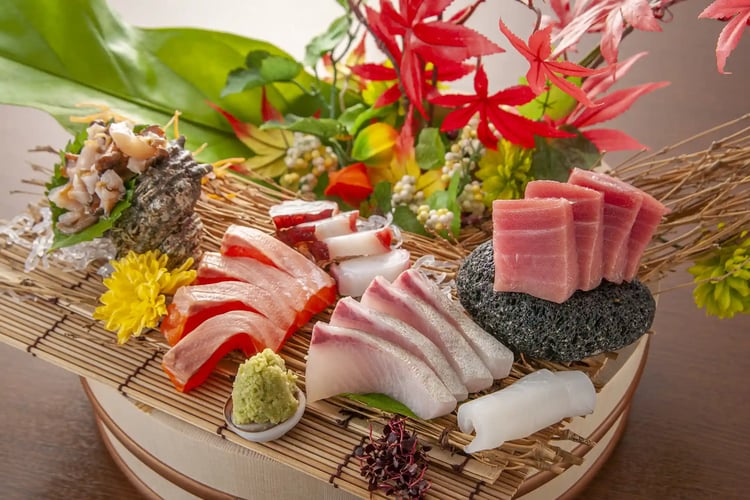
But shun doesn't stop at what's on the plate. In autumn, a single real maple leaf might rest beside your dish; in spring, a scattering of cherry blossoms or the vivid green of foraged mountain herbs becomes part of the composition (*2). This isn't decoration for decoration's sake — it's the core of Japanese aesthetic philosophy made edible: bringing the actual natural world to the table, right now, in this moment. At the finest ryokans, even the vessels change with the seasons: warm, rough-textured earthenware in winter; cool porcelain and glass in summer (*3). When your next course arrives, give it a moment before you reach for your chopsticks. The visual experience is genuinely part of the meal.
Dashi and the Soup Course as a Litmus Test
There's a remarkably simple way to gauge a ryokan kitchen's skill level. Take your first sip of the wanmono — the lidded soup — and pay close attention.
Dashi is the soul of Japanese cooking: a stock drawn from kombu (kelp) and katsuobushi (dried bonito flakes), rich in glutamate and inosinate — the building blocks of umami, that elusive fifth taste that makes everything around it taste more like itself (*4). The combinations of ingredients and sourcing that go into a great dashi are virtually endless, and there's an old saying in Japanese professional kitchens: "Show me your dashi and I'll tell you who you are as a cook."
In the kaiseki sequence, the soup course carries disproportionate weight. The clarity of a well-drawn ichiban dashi, the careful color arrangement inside the bowl, the wave of fragrance when you lift the lid — all of it is deliberate and considered. No serious chef cuts corners here. If what you taste is transparent, quietly profound, and somehow greater than the sum of its parts, that's the mark of a kitchen with genuine depth (*5).
.webp?width=750&height=500&name=Moment%20of%20Opening%20a%20Soup%20Bowl%20(Clear%20Dashi%20and%20Aromatic%20Steam).webp)
Knife Workand the Craft of Fire
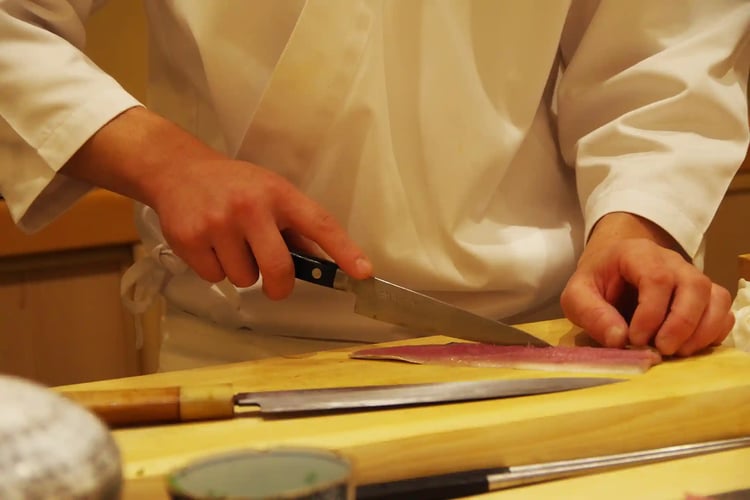
Mukozuke — the sashimi course — is where a chef's knife skills become impossible to hide. The way seasonal fish is sliced reveals everything: the precision of each cut, the consistency of thickness, the three-dimensional elegance of the plating. It's the kind of course where the gap between competent and exceptional is immediately visible.
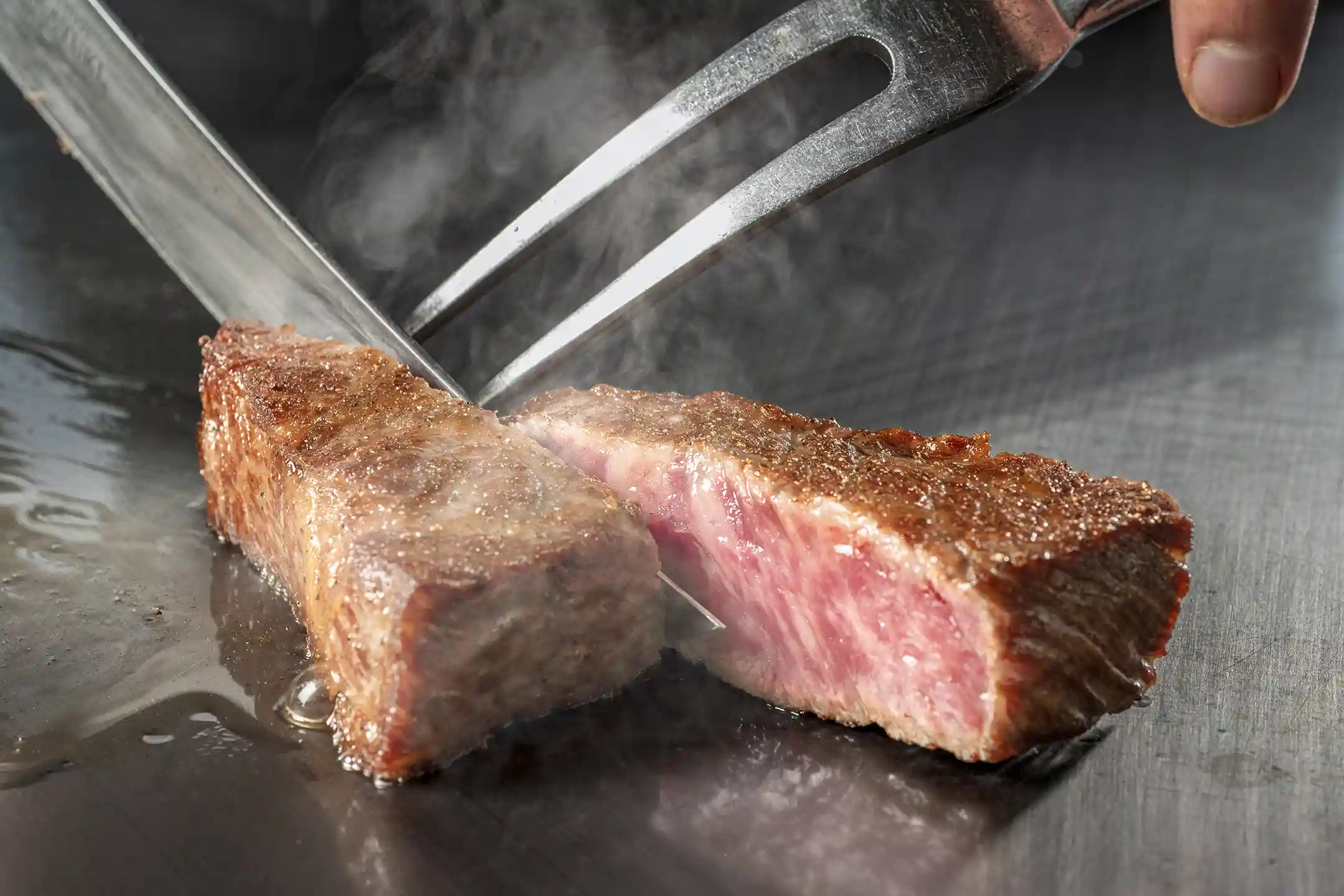
Yakimono, the grilled course, brings a different kind of pleasure — fish or meat over direct flame, fat rendered slowly, the faint perfume of charcoal weaving through each bite. It's one of the most sensory courses in the sequence. Then comes shiizakana — literally "a dish pressed upon you" — a supplementary course that might include simmered vegetables, vinegared preparations, or whatever the chef feels most compelled to share that evening (*6). Each of these courses builds on the last, and together they're what elevates kaiseki from a very good dinner into something closer to a craft exhibition you eat your way through.
Hassun(八寸): The Most Poetic Course on the Table
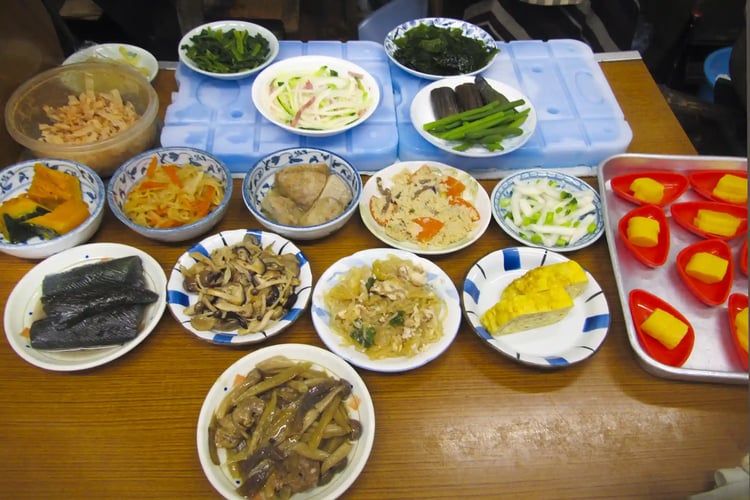
If any single dish in the kaiseki sequence could be called poetry, it's the hassun. Originally rooted in the tea ceremony tradition — where the goal was to place "the gifts of mountain and sea" on a single tray — the hassun presents a curated collection of seasonal delicacies arranged on a roughly 24-centimeter square lacquer board (*7). Seafood and mountain ingredients share the same stage, and the combination itself becomes a miniature narrative of the season.
At a high-caliber ryokan, the hassun functions simultaneously as a sequence of small appetizers and as a condensed portrait of Japan's four seasons. Try looking at it the way you might look at a small installation: which ingredients are placed where? What containers have been chosen? What story is being told? If you're curious about something you can't identify, asking your nakai-san is genuinely the right thing to do. It's one of those questions that everyone in the room will be glad you asked.
Rice, Pickles, Soup, and Sweets: The Beautiful Simplicity of the Ending
However magnificent the journey, every kaiseki course returns to the same quiet destination: freshly steamed rice, miso soup, and konomono (pickles). This trio is the living embodiment of ichiju-sansai — one soup, three side dishes — the foundational principle of Japanese home cooking, and a reminder that no matter how elaborate the feast, the meal always comes home to something essential (*1).
Dessert — mizugashi, written with the character for "water" — typically takes the form of seasonal fruit, sorbet, or warabi mochi, chosen for lightness and a cooling clarity on the palate. The name itself signals the intention: something refreshing, something that gently closes one chapter of the evening. Think of the dessert course not as the end of dinner, but as a soft transition — into the warm quiet of the onsen, into the stillness of a tatami room at night.
Tableware & Setting: How the Vessels and the Space Shape the Experience
What makes dining at a ryokan feel so different from any other meal you've ever had isn't just the food itself. It's the utsuwa — the vessels that hold it — the ma (the meaningful space between things), and the shitsurae, the seasonal arrangement of the room as a whole. A ryokan chef doesn't just design the menu; they choose every bowl, every lacquer tray, every piece of pottery the food arrives in. And the inn's own aesthetic sensibility reaches into every corner of the space around you. Here's how to start reading all of it.
Japanese Tableware: Understanding It Through Touch
One of the most distinctive features of Japanese table culture is that you're meant to hold your dishes while you eat. Because traditional Japanese life was lived close to the floor, and mealtimes happened at low tables, lifting bowls naturally became part of eating. The result is a ceramic and lacquerware tradition that has been shaped — quite literally — by the human hand: weight, balance, texture, and the way a bowl settles into your palm all matter enormously (*1).
At a ryokan table, you'll encounter three main materials. Touki (earthenware) is fired clay, warm to the touch, richly textured, and entirely one-of-a-kind — no two pieces of Shigaraki or Bizen ware look quite alike. Jiki (porcelain) starts from stone powder rather than clay, producing the thin, white, semi-translucent pieces you'll recognize from Arita or Kutani ware, typically adorned with intricate hand-painted designs (*2). And shikki (lacquerware) — wooden bowls and trays finished with layer upon layer of urushi lacquer — has graced Japanese tables for centuries partly because of a beautifully practical reason: lacquer insulates so well that a bowl of hot miso soup stays perfectly comfortable to hold (*1).
Pay attention to what you're holding during the meal. If a bowl feels unexpectedly cool, or a lacquer cup is lighter than you expected, that sensation is itself a form of conversation with centuries of Japanese material culture.
Tatami Rooms and "Ma": How Empty Space Deepens Flavor
There is an atmosphere to eating in a tatami room — seated on the floor around a low table — that doesn't translate into any other setting. The concept at the heart of it is ma: not simply "space" or "silence," but the charged, meaningful interval between things. Ma shows up everywhere in Japanese aesthetics — in architecture, in music, in the pauses of a conversation — and at the ryokan dinner table, it's just as present.
The texture of tatami underfoot, the intimate height of the table, the soft quality of the lighting, the quiet itself — all of these constitute the ma that frames each course. A dish you might eat distractedly in a brightly lit restaurant takes on an entirely different depth when every one of your senses is gently engaged in its reception. If you want to experience ma at its most immediate, choose a ryokan that offers room dining — the food arriving in your own private space is an experience worth seeking out specifically.
Seasonal Decorand the Unified Concept of the Evening
At the finest ryokans, the scroll hanging in the tokonoma (the alcove), the arrangement of flowers in the vase, and even the fragrance drifting through the room are chosen to rhyme with the evening's menu. In autumn, the scroll might carry a painting of maple leaves; the flower arrangement might feature yamabuki and chrysanthemum; and the kaiseki might open with matsutake mushroom, chestnut, and Pacific saury. None of this is coincidental.
The goal — the ryokan ideal — is that food, vessels, space, flowers, and fragrance all tell the same seasonal story together. Glance at the tokonoma before dinner arrives. It's essentially a preview of the theme your chef has been working toward all day. When you start to notice these layers of intention, a ryokan dinner stops being a very good meal and becomes something far closer to total theater — experienced through all five senses simultaneously.
Ryokan Food Etiquette: Moving Through the Meal with Quiet Confidence
Worrying about getting the etiquette wrong is one of the things that keeps some people from fully relaxing into a ryokan dinner. But here's the reassuring truth: the rules are far fewer and more intuitive than you might expect. A handful of basic principles — and a short list of things to avoid — is genuinely all you need to feel at ease.
Chopsticks & Bowls: The Fundamentals
A few chopstick habits are worth being aware of. The most important: don't rest your chopsticks horizontally across the top of a bowl (watashi-bashi) — this gesture is associated with funeral rites and is best avoided. Your chopsticks belong on the hashioki (chopstick rest) when not in use. Similarly, passing food directly from chopstick to chopstick, or using them to skewer food, are both gestures to steer clear of (*1).
When it comes to soup bowls and rice bowls, you're encouraged to lift them with both hands and bring them to your mouth — that's the natural way to eat in this context. If you're wondering whether it's acceptable to make a sound while drinking miso soup, the answer is yes — for hot liquids, it's perfectly fine and, in fact, expected. You don't need a spoon; holding the bowl is right.
Treat the tableware with the respect it deserves. Each piece was chosen by the kitchen specifically for this meal; many are effectively works of art. Handle them carefully, and when you've finished a course, leave the vessel roughly as it was when it arrived.
Pacing: Photography, Conversation, and Reading the Room
Kaiseki arrives one course at a time. At many ryokans, your nakai-san will announce each dish with its name and a brief description of the ingredients — a small ritual that's genuinely worth engaging with. A simple "arigatou gozaimasu" or even a nod of appreciation opens up a warm dynamic. The classic three-step approach to each course: look first, then lift the bowl or lean in to catch the aroma, then taste. That sequence really does change how you experience the food.
Photographing your meal is welcomed at almost every ryokan — just skip the flash, and if your nakai-san is mid-explanation, let the conversation come first. Social media is of course entirely your prerogative, but be mindful of angles that might capture other guests' private spaces or rooms without their knowledge.
Dietary Needs: How to Communicate Yours Clearly and Kindly
If you have allergies or dietary restrictions, the single most important thing you can do is communicate them at the time of booking, or at the very latest three days before your arrival (*3). Ryokan meals are prepared almost entirely from scratch, and the mise en place begins long before you check in. Same-day requests are genuinely difficult to accommodate at most inns.
A useful template for reaching out in English: "I have a shellfish allergy. Could you please prepare my meals without any shellfish or shellfish-based broth? I would be grateful for your assistance."
One area that deserves particular attention is dashi. Japanese cooking relies heavily on fish-based stocks, and they appear in soups, simmered dishes, and sauces in ways that aren't always visible (*4). If you're vegan or vegetarian, being specific is important: phrases like "katsuo dashi-nuki" (no bonito dashi) or "shokubutsusei shokuhin nomi" (plant-based ingredients only) land more clearly than a general request. The better the ryokan, the more thoughtfully they'll handle this — high-quality inns take these requests seriously, and many are actively building out their plant-based menus.
Ryokan Food by Region: Eating Your Way Through Japan's Distinct Landscapes
One of the most compelling things about ryokan dining is that the meal genuinely changes depending on where you are. Japan stretches across a dramatic range of geographies — coastline, mountain, valley, plain — and each of those landscapes has generated its own culinary vocabulary over centuries. The Japan Tourism Agency notes explicitly that ryokan meals are frequently built around local specialties and ingredients rooted in the region's own traditions (*1). That's not a marketing line; it's actually how these kitchens operate. And it means your choice of destination is also a choice about what you want to eat.
Coastal vs Mountain Ryokan Cuisine
The character of a kaiseki dinner shifts fundamentally depending on whether you're at the sea or in the mountains.
At a coastal ryokan, the morning's catch becomes the centerpiece of the evening. In the Ise-Shima region, that means Ise-ebi (spiny lobster) and awabi (abalone); along the San'in coast, the winter tables are built around matsuba-gani (snow crab); in Kyushu, a pot of kue (longtooth grouper) might be the signature of the season (*2). Knowing when the local fisheries are at their peak is itself a compelling reason to time your visit with care — different coastlines offer entirely different kaiseki experiences at different points in the year.
Mountain ryokans draw from an equally rich, if quieter, pantry: the forests, rivers, and cultivated fields that surround them. In Gifu and Nagano, expect ayu (sweet river fish) and iwana (char), foraged mountain greens (sansai), and the autumnal treasure of matsutake mushrooms. In the Shinshu region, buckwheat noodles (soba) and nozawana pickles may appear at breakfast, quietly declaring their provenance. In Shiga and Fukui, you might encounter narezushi — fermented rice and fish, aged in the slow old way — a food that carries the accumulated knowledge of generations (*2). The deeper you go into the mountains, the more a ryokan's menu reads like a document of genuine self-sufficiency and local ingenuity.
Craft-Rich Destinations
If the vessels on your table matter as much to you as what's in them, then your destination choice becomes a matter of craft geography. And no place in Japan makes a stronger case for the ceramics-and-cuisine intersection than Kanazawa.
The city has a name for its local ingredients — jiwa-mon — and a long tradition of presenting those ingredients in Kutani-yaki and Kanazawa lacquerware as part of what's known as Kaga Cuisine (*3). Kutani-yaki, originating in the Kaga region of Ishikawa Prefecture roughly 360 years ago, is immediately recognizable: bold, jewel-like pigments — the five colors of red, yellow, green, purple, and indigo — applied over intricately painted landscapes and birds (*4). Eating dinner at a Kanazawa ryokan means experiencing fine dining and a museum exhibition at the same table, simultaneously.
What makes Kanazawa even more layered is the depth of its tea ceremony and wagashi (traditional confectionery) cultures. Along with Kyoto and Matsue, Kanazawa is considered one of Japan's great wagashi cities — meaning your ryokan experience might extend into an exploration of the city's sweets, teahouses, and craft studios in ways that feel like a completely natural continuation of the table you left the night before (*3).
Fermentation Cultures
Japan's relationship with fermentation is one of the deepest in the world, and once you start noticing it, it shows up everywhere. The five pillars of a ryokan kitchen — miso, soy sauce, mirin, rice vinegar, and sake — are all products of fermentation. But beyond those essentials, each region has developed its own fermented specialties that give ryokan meals their most idiosyncratic flavors.
In the Tohoku region, look for iburi-gakko — the smoky, darkly satisfying pickled daikon that is unmistakably Akita — alongside koji-cured preparations from Iwate and the chewy, broth-friendly tama-konnyaku of Yamagata. In Hokuriku, heshiko (mackerel cured in rice bran) and kaburazushi (turnip and fish layered with koji and slowly fermented together) make their way into kaiseki as small, intensely flavored courses that tend to make a lasting impression on first-time tasters (*2). And down in Kyushu, the soy sauce is noticeably sweeter — a regional characteristic that genuinely changes how sashimi tastes, offering a completely different frame through which to experience a fish you may have eaten many times before.
Tracing Japan's fermentation cultures across its regions is one of the most intellectually satisfying ways to approach ryokan travel — a through-line that connects history, climate, and craft in every bite.
How to Choose a Ryokan for Food: A Checklist for Finding the Real Thing
Choosing the right ryokan is the first big decision of any food-focused Japan trip, and it's worth thinking through carefully. Stunning photography and a celebrated onsen are fine indicators of a good night's sleep, but if the kitchen is what you're really coming for, knowing what signals to look for can dramatically sharpen your judgment.
Menu Storytelling: What the Website Tells You Before You Arrive
Spend some time with the food section of a ryokan's website before you book. A single line saying "seasonal kaiseki cuisine" tells you very little. A page that explains "this month's menu features Aomori-sourced matsutake and river ayu from our local fisherman" tells you a great deal about how seriously the kitchen takes its work.
Three things to look for: First, named sourcing — does the inn identify specific farms, fishermen, or local producers? Second, seasonal variation — is there any indication that the menu changes meaningfully across the year? Third, tableware — does the inn mention the type of pottery or lacquerware used in service? If all three are present, the kitchen's commitment to the full kaiseki experience is almost certainly genuine.
Dining Format(部屋食/個室/ダイニング)and the Value of Privacy
Where and how you eat has a direct bearing on the quality of the experience. Room dining is the most personal format — your nakai-san attends to your table alone, and the slow rhythm of a private kaiseki in a tatami room is close to the ideal of traditional ryokan hospitality. Private dining rooms (kojitsu shokuji-dokoro) offer a compelling middle ground: the intimacy and exclusivity of private service, combined with the efficiency and freshness of dishes coming directly from a dedicated kitchen — a format that the best contemporary ryokans are increasingly adopting (*1). Shared dining halls are more relaxed and social, and the food quality doesn't necessarily suffer, but the depth of one-on-one attention is different.
For the fullest experience, a room with private dining — or a ryokan that at least offers private dining rooms — is the format worth prioritizing. The quiet it creates gives you space to actually hear the descriptions, ask your questions, and settle into the meal without any sense of rush.
Drink Pairing: The Course Within the Course
Adding a sake pairing to your kaiseki dinner is one of the most rewarding decisions you can make. Japanese sake offers a beautifully logical pairing principle: match the region of the rice to the region of the ingredients. A sake brewed from Niigata rice alongside a kaiseki built on Niigata's own produce creates a kind of double portrait of a single landscape — the terroir expressed twice, through liquid and through food (*2).
The best ryokans take this seriously. Some employ kikizake-shi (sake sommeliers) who curate seasonal local sake pairings specifically matched to each course of the evening (*3). Beyond sake, you'll find inns increasingly offering craft beer, domestic wine, and thoughtfully assembled non-alcoholic pairings featuring matcha, hojicha, and other teas — an inclusive approach that makes the pairing experience accessible regardless of your relationship with alcohol.
Check the inn's website for pairing plans before you book, or simply raise the question at the time of reservation. It's a detail that separates a very good dinner from a genuinely memorable one.
Multi-Night Stays: The Most Direct Test of a Kitchen's Ambition
The most honest measure of how seriously a ryokan takes its kitchen? Book two nights and see whether the dinner menu changes. If the inn adjusts the menu — entirely, or even substantially — for returning guests, that's the single clearest signal that the kitchen is operating with genuine creative energy and a real commitment to seasonal, locally sourced cooking. The Japan Tourism Agency's reference to ryokan cuisine being rooted in local produce and seasonal ingredients is meaningful precisely when it's reflected in a menu that renews itself day by day (*4).
Before booking a multi-night stay, it's entirely reasonable to ask: "In case of multi-night stays, does the dinner menu change each night?" The answer — and the speed and confidence with which it's given — will tell you almost everything you need to know.
Deepen the Experience: How to Take Your Ryokan Meal Further
The most wonderful thing about a great ryokan dinner is what it opens up afterward. The moment you find yourself genuinely curious about where that bowl was made, or what the chef meant by the way they arranged the hassun, you've crossed a threshold — and the journey from there can be as long and as rich as you want it to be. Three directions in particular tend to reward exploration: understanding the chef's intentions, following the ceramics back to their source, and connecting the meal to the world of tea.
Ask One Good Question
The most direct way to deepen a kaiseki experience is a single well-placed question. When your nakai-san describes a dish, or on the rare and special occasion when the chef appears at the table, one genuine question can take the conversation somewhere entirely worth going.
A few that tend to open things up beautifully: "Where does this ingredient come from?" "What ingredient is the chef most excited about right now?" "What style of pottery is this dish from?"
Asking these questions is, in itself, a form of respect for the meal. Most ryokan staff take real pleasure in guests who engage seriously with the food. The better the inn, the more these conversations feel like a designed part of the experience rather than an interruption of it.
Follow the Craft
If a particular vessel stops you mid-meal — and they will — treat that as an invitation to go further. A dinner that introduces you to Kutani-yaki in Kanazawa can lead naturally to a morning visit to the Kanazawa 21st Century Museum of Contemporary Art, a kiln tour, or a hands-on ceramics workshop the following day (*1). A bowl that catches your eye at a ryokan in western Japan might point you toward Bizen (Okayama Prefecture) or Hagi (Yamaguchi Prefecture) — both of which are fully formed travel destinations organized around their pottery traditions.
"I ate from that landscape, and then I walked through it" is the kind of travel memory that doesn't fade. Japan's craft geography is extraordinarily rich, and the ryokan table is one of the best possible entry points into it.
Link to Tea Culture: Understanding the Complete Picture
Tracing kaiseki back to its roots in cha-kaiseki puts the whole tradition in a broader and more meaningful frame. A tea ceremony (sado or chado) is not simply the act of drinking tea. It's a total composition: the host selects the hanging scroll, arranges the flowers, chooses the incense, and prepares the food and vessels — all in service of a single unified theme, offered to the guest as a shared experience of a particular moment in time (*2).
The deeper you go into ryokan dining, the more clearly you see that the chef is doing exactly the same thing. Expressing a season through vessels, evoking it through space, articulating it through ingredients — this is the spirit of tea carried forward into the kitchen. Cities like Kyoto, Nara, and Kanazawa offer abundant opportunities for tea ceremony experiences, and pairing one with a ryokan dinner is among the most coherent ways to encounter the full arc of Japanese food culture in a single trip.
FAQ about Ryokan Food
Still have questions? Here are the ones we hear most often — answered directly.
Is Ryokan Food Too Much?
"It looked manageable, but somehow I was completely full by the end" — that's a very common response. The course structure works against you in the most pleasant way: the rice arrives last, and by the time it does, the preceding dishes have already done their work. You'll feel more satisfied than you anticipated (*1). There's no obligation to finish everything. If you'd like to leave a little, a simple "may I leave a little?" (sukoshi nokoshite mo yoroshii desu ka?) to your nakai-san is perfectly fine. Leaving some food is not considered impolite.
Vegan/Vegetarian Options
The number of ryokans that can accommodate vegan and vegetarian guests is growing steadily, and some now do it very well. The complicating factor is dashi — removing fish-based stock from a traditional kaiseki requires rethinking the architecture of multiple dishes, not just omitting an ingredient. This makes advance communication essential (*2). Contact the inn at the time of booking — not three days before, and certainly not on arrival day. The earlier you communicate, the better the outcome.
Kids' Meals
Most ryokans offer an okosama-zen — a children's meal that adapts the kaiseki format into something more approachable for younger diners. Pricing is typically 50 to 70 percent of the adult rate, and the age threshold for adult pricing (usually around 12) varies by inn (*3). As with any dietary consideration, sharing food preferences or allergies for young guests in advance gives the kitchen the best chance to get it right.
What If I'm Late?
Your dinner time is set at check-in, and the kitchen begins its preparation for your course based on that time. If something delays you, call the inn as soon as you know — most ryokans can accommodate minor delays gracefully, but a gap of 30 minutes or more can affect how certain dishes are served. A quick call is all it takes to keep things running smoothly for everyone.
Do I Tip?
No tip is expected, needed, or part of Japanese hospitality culture. Service is considered part of what you're paying for, full stop. The most natural and genuinely appreciated way to express gratitude is through words: "oishikatta desu" (it was delicious) or a simple "arigatou gozaimasu" carries real warmth. If you feel moved to offer something more tangible, a small temiyage (a gift brought from your home region or previous destination) presented at checkout is the culturally fitting way to do it — and often more meaningful than any monetary gesture.