English-language reading lists for Japanese history tend to share a problem: a fair share of what they recommend has never been translated. You cannot read Kyoto Girai or Shiba Ryōtarō's road essays unless you read Japanese, and being told to is not useful.
The other problem is the shape of the recommendation. Most books about Japan history aimed at travelers are survey histories — a single volume covering everything from the Jōmon to the present. Surveys are the wrong shape for this job. You will not retain a chronology of a country you have not yet been to, and a book that gives equal weight to every century gives you no reason to care about any of them.
So this list is organised around what you can actually get. Each entry says what the book is for, what edition to look for, and — where it matters — who translated it, because with Japanese books the translator is often the difference between a readable book and an unreadable one. At the end there is a short section on the important works that remain in Japanese only, so you at least know what you are missing.
Books to Read Before Visiting Japan: Start With Rethinking Japanese History

If you read one book before a trip, make it Amino Yoshihiko's Rethinking Japanese History, translated by Alan S. Christy with a preface and afterword by Hitomi Tonomura, published by the Center for Japanese Studies at the University of Michigan Press in January 2012 — 358 pages in paperback, twenty dollars.
Amino, whom the publisher calls the premier historian of medieval Japan, makes an argument that is destructive in a useful way. The standard picture — an isolated island country of settled rice farmers ruled by warriors — is, he says, largely a back-projection from the modern period. What he puts in its place is a Japan defined by movement: traders, seafarers, artisans, entertainers, outcastes, people who lived on and by the water rather than on the land, and whose existence the agrarian model simply does not account for.
The concrete example he keeps returning to is the sea. A country read as agrarian has a coastline that is merely an edge; a country read as maritime has a coastline that is its busiest thoroughfare, and the people on it — fishers, salt makers, shippers, pirates who were also licensed traders — become central rather than marginal. Amino spent a career on that argument, and the reason it is worth a traveler's time is that Japan's coast is where a great deal of the accessible history physically survives.
This matters for a traveler more than it sounds. Once you have read it, a fishing village stops being a picturesque backwater and becomes a node in a network; the merchant districts of Hakata or Sakai stop being provincial and start being the point.
The Best Book on Japanese History of Taste is In Praise of Shadows
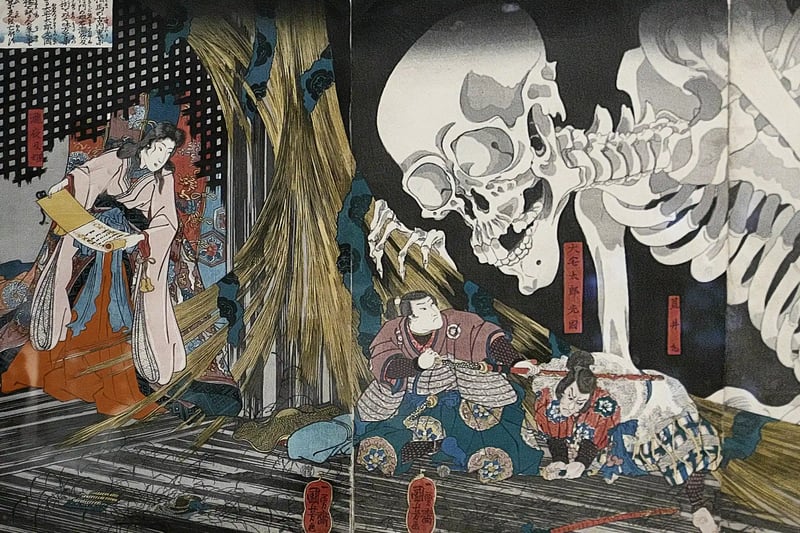
In Praise of Shadows by Tanizaki Jun'ichirō is a short book, serialised in 1933 and 1934, translated by Thomas J. Harper and Edward G. Seidensticker and published by Leete's Island Books in 1977, with a foreword by the architect Charles Moore. It has stayed in print ever since; the current UK edition is a 128-page Vintage Classics paperback. It is the single most useful thing you can read about why Japanese interiors look the way they do.
The argument is that Japanese aesthetics developed in dim rooms, and that the qualities prized in lacquerware, gold leaf, miso soup, jade, even skin tone, are qualities that only appear in low light. Electric lighting, Tanizaki says, destroyed the conditions under which the objects were designed to be seen. He is half joking and entirely serious, and after reading it you cannot walk into a temple hall or a good ryokan room without noticing what the light is doing.
The specific passages worth marking are the ones on lacquerware seen by candlelight, on the colour of miso soup in a dark bowl, and on the design of the traditional toilet, which Tanizaki considered the most refined room in the house and describes at unexpected length. None of these is decoration; each is an argument about what a material is for.
Two cautions. It is a period piece with the prejudices of one, and some passages are uncomfortable. And it is an essay, not scholarship — read it as a designer's manifesto rather than as history. It has been taken up outside Japan more by architects and designers than by historians, which tells you what kind of book it is.
The Samurai Book That Was Written in English — Bushido
%20in%20his%20robes%20(or%20kimono).webp?width=800&height=533&name=A%20Japanese%20sword%20concealed%20(or%20hidden)%20in%20his%20robes%20(or%20kimono).webp)
Bushido: The Soul of Japan by Nitobe Inazō is the book on samurai ethics that Western readers are most likely to have heard of, and the thing rarely mentioned about it is that there is no translation, because it was written in English in the first place. Nitobe dated the first preface to Malvern, Pennsylvania, in the twelfth month of 1899, and Leeds and Biddle published the book in Philadelphia in 1900; the G. P. Putnam's Sons edition of 1905 is the one that went around the world. It is out of copyright and available free from Project Gutenberg.
That fact changes how you should read it. Nitobe was a Japanese Quaker convert, married to an American, and he says in the preface what set him off: a Belgian jurist asked him how Japanese children were taught morality without religious instruction in schools, and he had no ready answer. The book is his answer, written for readers who had asked that question. It explains the samurai by analogy to European chivalry throughout, and the analogies are doing persuasive work. What Nitobe traces the ethic back to is a combination of three things — Zen Buddhism, Confucian ethics and Shintō loyalty — and that three-part structure is the part of the book that has stuck.
It also had one very consequential reader. The National Diet Library's reference database collects the sources on Theodore Roosevelt's admiration for the book, including his buying copies to give away — a fair measure of how far a short book by a Japanese agronomist travelled at exactly the right moment.
So read it as a primary source about 1900 rather than a description of the sixteenth century. It is a document of how Japan chose to present itself at the moment it entered the international order — which is a more interesting thing to have read than a straightforward history would be.
Japanese History Books for the Places You Will Stand In
.webp?width=800&height=533&name=Himeji%20Castle%20with%20full-blooming%20cherry%20blossoms%20in%20the%20foreground%20blur%20(or%20bokeh).webp)
Castles are the one thing where the English-language situation is genuinely good, because the interest is architectural and the material is visual. What you want to know before you visit one is the distinction that governs everything: twelve keeps in Japan are original. Everything else you will see is a reconstruction, and the reconstructions divide into faithful timber rebuilds and the concrete ones put up in the twentieth century.
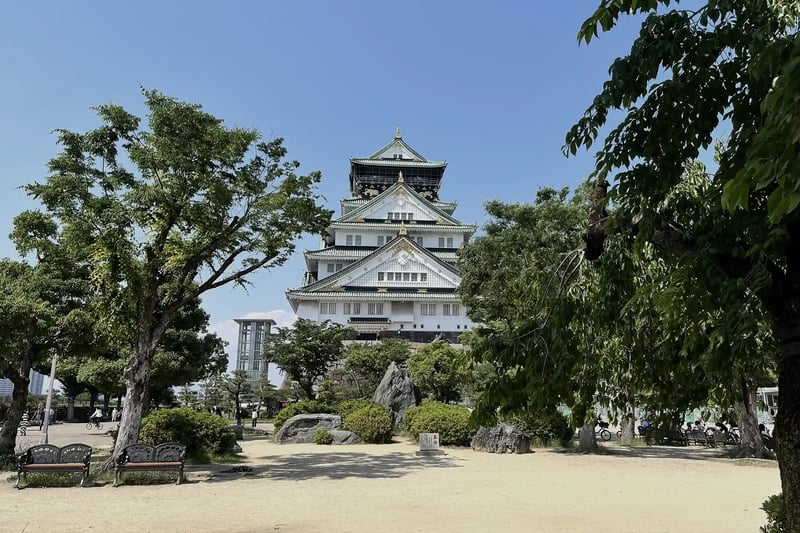
Osaka Castle is the famous example of the second kind — a 1931 ferroconcrete tower with a lift inside it, standing on genuinely old stonework, on a site that decided the country twice. Himeji is the great example of the first. Knowing which you are looking at is the difference between being impressed and being misled, and guidebooks tend not to make the point loudly enough.
The twelve are worth writing down, because between them they are the entire surviving stock. Five are designated National Treasures: Himeji, Matsumoto, Inuyama, Hikone and Matsue. The other seven are Important Cultural Properties: Hirosaki, Maruoka, Bitchū-Matsuyama, Marugame, Iyo-Matsuyama, Uwajima and Kōchi. Matsue was raised to National Treasure only in 2015, on the strength of a dated inscription found in the building.
Several of them are small. Bitchū-Matsuyama sits on a mountain and is reached on foot; Maruoka and Uwajima are modest three-storey buildings. The famous ones are famous partly for being large, and the small ones give you a much clearer sense of what a working keep actually was: a cramped, dark, steep storehouse-cum-lookout, not a palace. Matsumoto and Hikone are the two easiest to reach on an ordinary itinerary.
If you want the political frame that castles sit inside, our guide to the daimyo covers who was building them and why.
Books About Japan History That Prepare You for Kyoto
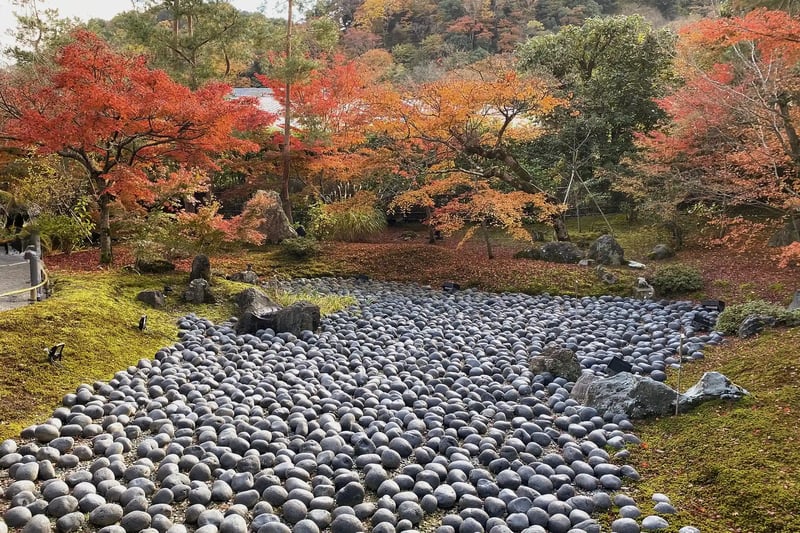
Kyoto is the city most likely to disappoint a reader who arrives with the wrong book. The standard temple-by-temple guide produces a checklist, and the checklist produces a bad week.
What repays reading instead is anything on the city's social structure — the distinction between the old centre and everything annexed later, the persistence of neighbourhood associations, the fact that a great deal of what looks like continuity is post-1945 reconstruction. The Japanese book most often reached for on this subject is Kyoto Girai, and it is not translated (see below). In English the ground is best covered by the essayists rather than the historians.
Two facts are worth carrying in without any book at all. The first is that the city was very largely destroyed in the Ōnin War of the 1460s and 70s and rebuilt afterwards, so the "thousand-year capital" you are walking through is mostly younger than that.
The second is that Kyoto escaped the mass incendiary bombing that flattened Tokyo and Osaka, and was removed from the atomic target list — which is why it kept its street grid and its wooden fabric. It is worth being exact about this, because the shorthand version is wrong: Kyoto was bombed. The Umamachi raid of 16 January 1945 killed around forty people in Higashiyama, and the Nishijin raid of 26 June killed dozens more in Kamigyō; Kyoto Prefecture recorded more than fifty air raids between January and August 1945. What the city avoided was the scale, not the fact.
That survival is also why the preservation arguments here are more bitter than anywhere else — there is simply more left to argue about.
Our own guides can stand in for some of it: the city's shrines, walking the old town, and the tea ceremony, which is the practice most of Kyoto's aesthetics are downstream of.
How to Read a Japanese History Reading List Without Getting Lost
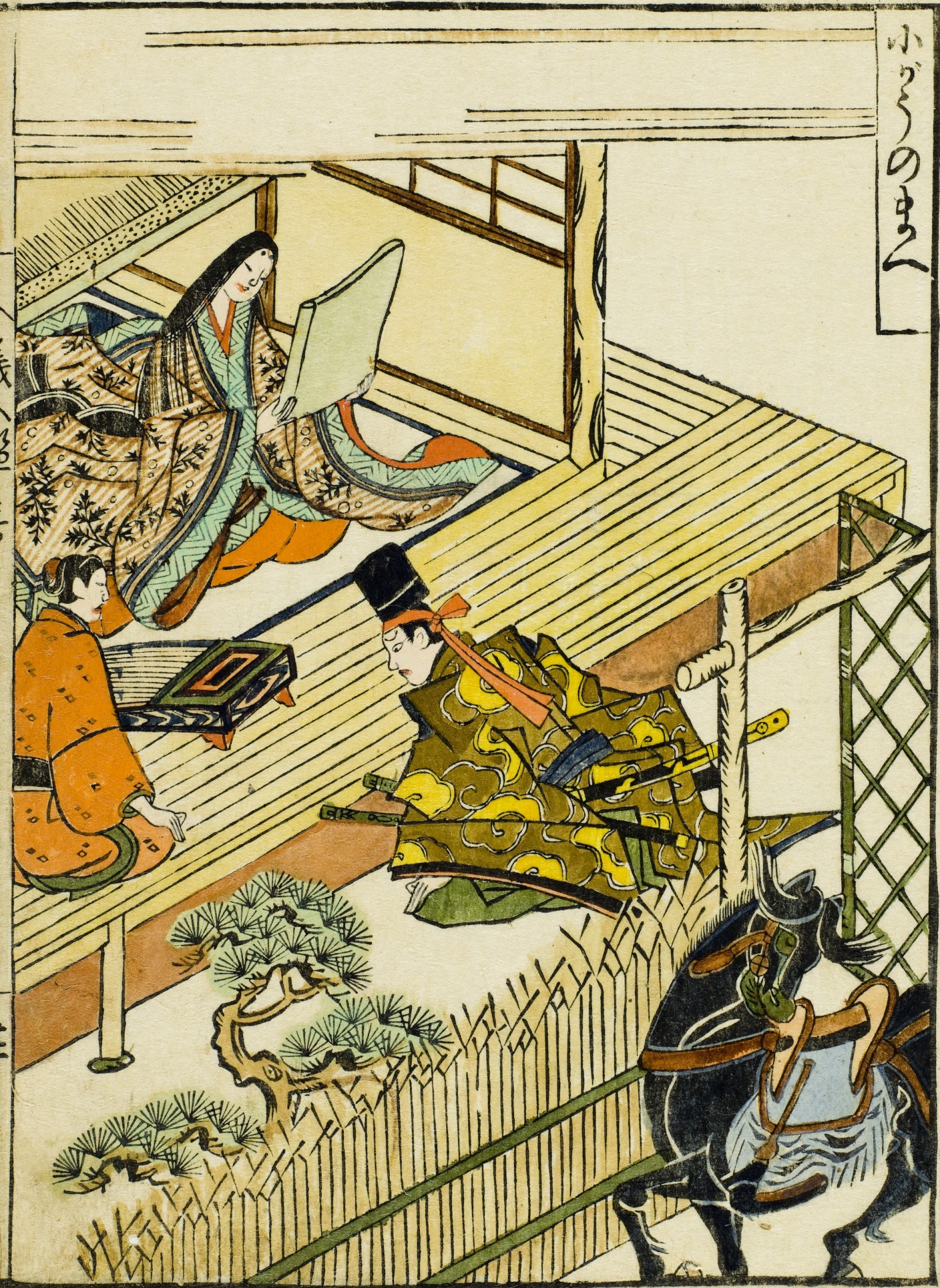
Four practical obstacles account for a great deal of the difficulty, and all four are solvable in a paragraph.
Name order. Japanese works and most academic books put the family name first — Amino Yoshihiko, Tanizaki Jun'ichirō. Trade publishers often flip it. The same person will appear both ways across a reading list, and it is worth deciding which convention you are using before you make notes.
Era names. Japanese sources date by imperial era — Genroku, Meiji, Shōwa — and translations frequently keep them. You do not need to memorise the sequence; you need to know that a date given as an era year is not a typo, and that most books have a conversion table at the back.
Periodisation is contested. When a book says "medieval Japan" it usually means roughly the twelfth to sixteenth centuries, but the boundaries are argued over, and Amino's whole project is an argument about them. Two books will place the same event in different periods without either being wrong.
The translation is the book. With Japanese non-fiction more than most, the translator's choices determine whether a text reads as lucid or impenetrable. Seidensticker and Harper on Tanizaki, Christy on Amino — these are the reasons those books work in English. When there is a choice of editions, look at who did the work before you look at the price.
Best Books on Japanese History You Cannot Read Yet
Worth knowing about. We could find no English edition of any of these in the National Diet Library catalogue or in WorldCat as of August 2026; if one has appeared since, it is very recent.
- Kyoto Girai (Inoue Shōichi, 2015) — a bestselling and deliberately rude book about Kyoto's internal snobberies, written by a scholar from the wrong part of the city. It is the corrective to every romantic account of the place, and its central joke turns on the distinction between the old centre and the districts annexed later, which is a real feature of how the city talks about itself. Inoue grew up in Saga rather than in Rakuchū, the old inner city, and Japanese reviewers read the book as a settling of accounts with the snubs that followed.
- Kaidō o Yuku (Shiba Ryōtarō) — a very long series of travel essays following historical routes. Shiba's novels are translated; this is not. If you want him in English, The Last Shogun and Clouds Above the Hill are the ones to look for — the second is a very long account of the Russo-Japanese War and the making of modern Japan, and it is one of the works through which the Meiji period reached a wide Japanese readership.
- Ukiyo-e to Edo Bunka (Nagata Seiji) — on woodblock prints and the daily life of Edo commoners, by a leading scholar of the field. Untranslated, though Nagata does exist in English: Kodansha International published his Hokusai: Genius of the Japanese Ukiyo-e in 1999, translated by John Bester.
- Nihon no Shiro (Nakai Hitoshi, Yamakawa) — the castle book that goes with the twelve keeps above, written by an archaeologist rather than a popular historian.
- Illustrated Japanese history atlases — the Nihonshi Zuroku type used in Japanese schools. Dense, cheap, and genuinely useful even if you cannot read the captions, because the maps and chronologies are legible on their own.
That last one is a real recommendation rather than a consolation. A Japanese high-school history atlas costs under a thousand yen in any bookshop, and the visual chronology of who held what and when is the thing English narrative histories are worst at.
Where to Buy Them
The Amino and the Tanizaki are easiest bought before you leave; English-language stock in Japanese bookshops is limited and imported prices are higher. Nitobe is free from Project Gutenberg and worth loading onto whatever you read on.
Once you are in Japan, the English sections at Maruzen and Junkudō, at Kinokuniya's larger branches, and at the Tsutaya in Daikanyama are where to look; the last also has the best selection of Japanese-language art and architecture books for anyone who wants the pictures rather than the text. Second-hand, the Jinbōchō district in Tokyo is several streets of nothing but bookshops, and a number of them keep foreign-language stock.
One further note on editions. Several of these titles exist in multiple English printings, and the cheap print-on-demand reissues of out-of-copyright texts — Nitobe especially — are often reset badly, with the notes stripped out and the diacritics mangled. For a free text you are better off with the Project Gutenberg file than with a two-dollar paperback of unknown provenance.
And the atlas point stands: it does something no English book on this list does.
.png)
From a single page to a fuller landscape
This article opens one doorway into Japanese literature. The Digital Guide carries that interest further — placing the writers, the eras, and the cultural threads that connect them within a single, thoughtfully shaped reading. A quieter, more complete way to understand where these stories come from, and what they continue to mean.

Conclusion
If you want a shorter list aimed at culture rather than history, our eight books for deepening an understanding of Japanese culture is the companion to this one.
Three books will carry you a long way: Amino for the shape of the country, Tanizaki for why it looks the way it does, and Nitobe for how it chose to explain itself to outsiders. Between them they cover about a thousand years, cost under fifty dollars, and one of them is free.
The thing they have in common is that none of them is a survey. Surveys are the standard recommendation for a traveler and the wrong one. What you retain is an argument, and all three of these are arguments. Read them, and the country you land in will be one you are already disagreeing with, which is a considerably better place to start than a blank.