



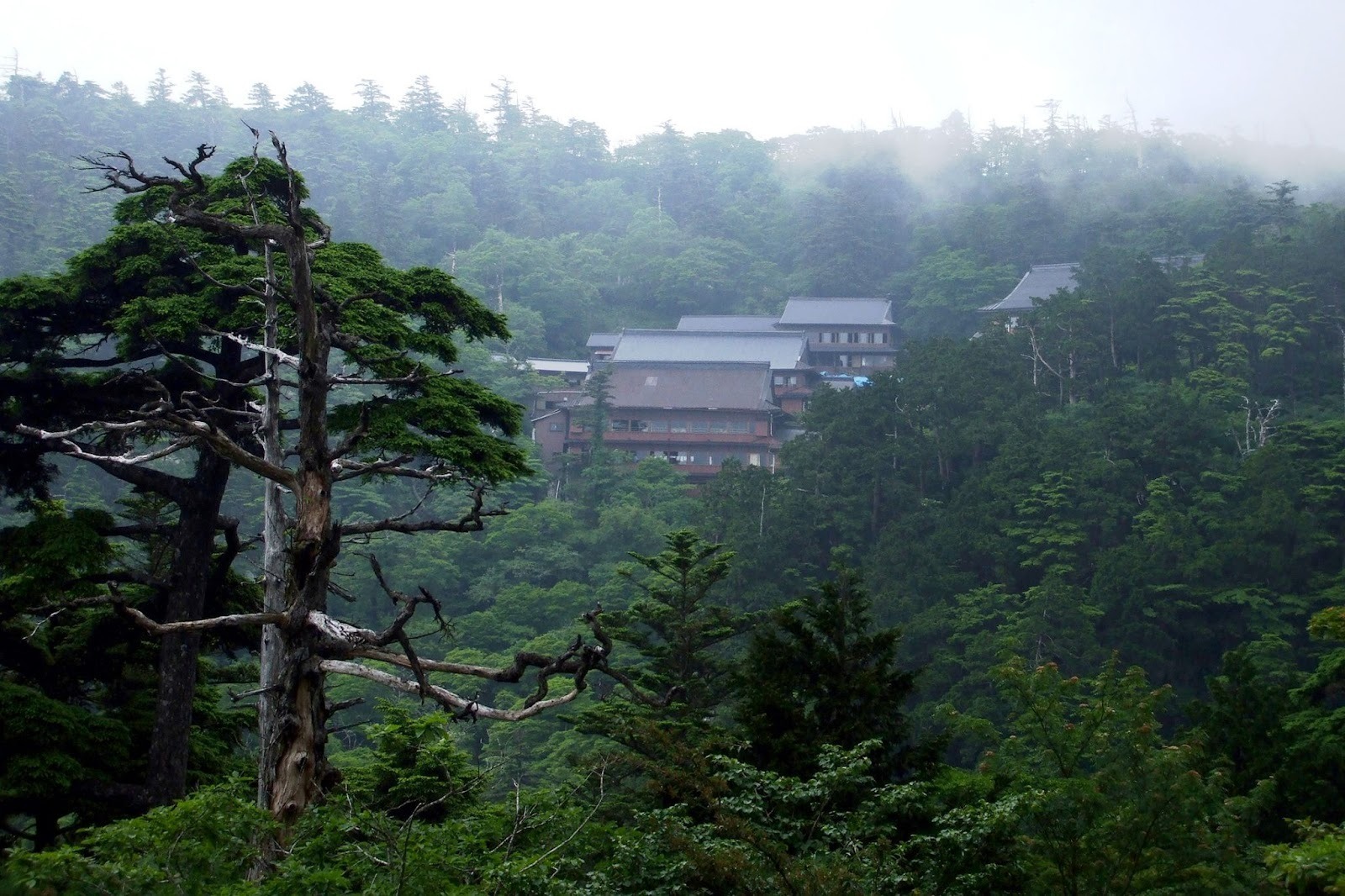
Stepping away from everyday noise to steady your mind—Koyasan’s shukubō (temple lodging) is quietly gaining attention as a way to answer that deep desire so many of us carry today.
Yet behind this interest lies a reality: those of us living in Western, individualistic societies often feel a thirst for community and spirituality. In this sacred land of esoteric Shingon Buddhism—over a thousand years old—solemn temples and pristine nature coexist, offering you a profoundly spiritual experience.
In this article, through a stay at a shukubō in the extraordinary setting of Koyasan, you explore the appeal of a journey where you meet both knowledge and quiet while deepening cross-cultural understanding.
This article offers one way into a vast and layered subject — the quiet rituals, sacred spaces, and living traditions that shape Japan's spiritual landscape. If you find yourself wanting to go further, the Experiencing Sacred Japan Digital Guide gathers these threads into something broader: a more connected understanding of temple lodging, meditation practice, and shrine culture, explored together rather than apart.
What Is Koyasan — The Allure of the Sacred Ground That Sets the Stage for Temple Stays
Koyasan (Kōyasan) is a mountaintop basin at roughly 1,000 meters in elevation and the spiritual center of Shingon Buddhism. Since Kūkai (Kōbō-Daishi) founded it in 816, it has flourished for over 1,200 years as a focus of devotion across Japan. Looking back on this history reveals how Japan’s religious worldview differs fundamentally from Western, Christian monotheism. In the West, the relationship between the divine and humans is often clearly separated; in Japan, the boundaries between nature and humans, deities/Buddhas and humans are fluid—with a tendency toward unity.
Like lotus petals, the basin unfolds into beautiful seasonal scenery: a cool retreat in summer; a snow-clad, mystical landscape in winter. Its distinctive cultural landscape has been highly recognized as part of the UNESCO World Heritage Site “Sacred Sites and Pilgrimage Routes in the Kii Mountain Range,” where traditions of syncretism between Shintō and Buddhism remain alive in a rugged mountain environment deeply intertwined with nature.
What’s striking is how this idea of “living in harmony with nature” is now drawing attention in Europe and North America as well. Amid concerns over environmental degradation and climate change, Western societies are reassessing a Japanese approach that emphasizes harmony rather than conquest. Still, be careful not to flatten Japan’s view of nature into a mere “ecology” frame. Nature veneration in Koyasan stems from a religious worldview that perceives sanctity within nature itself—not simply environmental protection.
Koyasan is home to 117 temples, around 50 of which welcome general visitors as shukubō (lodgings attached to temples). A great many historical buildings and gardens remain from the Edo period, and visitors can purify body and mind amid a hush and solemn air.
From Kongōbu-ji and the Danjo Garan—the Shingon head temple complex lined with vermilion halls and gates—to Okunoin, which enshrines the mausoleum of Kūkai, the landscapes woven of religious architecture and rich nature are not to be missed. Understanding this historical and spiritual context gives your temple stay deeper meaning (*1).
Why Koyasan’s Shukubō Draw Attention Now
In recent years, travel has trended beyond mere sightseeing and comfort toward transformative travel, where you seek personal growth and spiritual fulfillment. Viewed more closely, this trend also reflects a reaction against consumerist society. As Western, capitalist values have pushed the “commodification of experience,” meditative values from the East offer a fresh counter-axis.
Since the pandemic, many travelers want time in nature to rebalance body and mind and to turn inward through spiritual experiences. Koyasan’s shukubō answers that desire exactly. By staying in historic temples and experiencing zazen or Ajikan (Shingon meditation), you can savor a quiet and spirituality that daily life rarely affords.
It’s important, however, not to consume the shukubō experience merely as “healing” or “relaxation.” Historically, shukubō were places of practice—spaces that prioritized inner transformation over comfort. Modern, touristic formats risk diluting the original religious significance. At the same time, they create valuable opportunities for guests from different cultural backgrounds to encounter Japan’s spiritual culture.
As reported by the Asahi Shimbun, Koyasan’s shukubō ranked among the top five luxury accommodations for affluent travelers, praised for “contemporary guest rooms blending hospitality with traditions where you can experience Ajikan in a solemn atmosphere.” Today, with many guests who possess both means and cultural literacy, the value of shukubō—rooted in history and spirituality—is being rediscovered (*2).
Experiencing the Fusion of Religious Culture and Nature in Koyasan
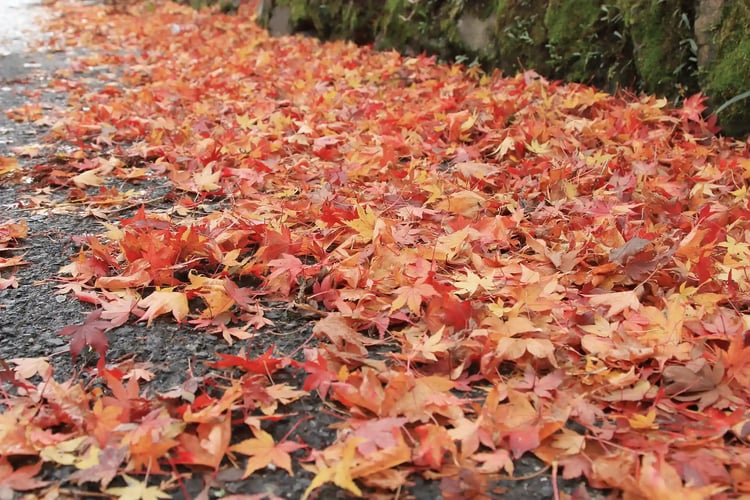
In Koyasan, Buddhist rites, architectural beauty, and the four seasons come together in a single experience. In spring, cherry blossoms color the precincts; in autumn, crimson foliage floods the grounds as you join morning services and goma fire rituals.
This emphasis on seasonality lies at the core of Japanese aesthetics. While Western aesthetics often prize permanence and universality, Japanese aesthetics regard impermanence and seasonality as the essence of beauty. The fact that cherry blossoms are brief is part of their value—an unmistakably Japanese sensibility. If you’re visiting from abroad, this sense of impermanence may not resonate at first; lived experience will gradually reveal its depth.
You can volunteer to join the morning service, sharpening your senses amid resonant chanting and the fragrance of incense. The approach to Okunoin is flanked by sugi cedars over 400 years old; walking in the stillness of this forest gives you a meditative uplift.
Crucially, you step beyond Western individualism by joining communal prayer and meditation. Unlike many Western spiritual practices that emphasize the individual’s inner journey, Japanese religious experience treasures unity with the community. In sutra chanting, the sense that your voice dissolves into collective harmony is a vivid expression of Japanese spirituality.
UNESCO’s World Heritage Centre notes that, alongside Kumano and Yoshino, Koyasan’s sacredness lies in “landscapes rooted in nature worship preserved to the present day,” recognized as cultural landscapes reflecting traditions of holy mountains. This sense of oneness with nature harmonizes with the majestic Shingon complexes and gardens, bringing deep emotion and calm (*3).
What Is a Shukubō — A Travel Style Where You Sleep in a Temple
A shukubō is lodging provided by a temple or shrine for pilgrims and visitors. Originally, it was a place where practitioners and pilgrims stayed under the same roof as monks to purify body and mind; today, general travelers like you can stay more casually.
This “modernization” has a complex side. Historically, shukubō existed within a class system with strict restrictions by status and gender. Women were barred from entering Koyasan until 1872, reflecting the patriarchal society of that era.
Now anyone can stay, but we shouldn’t read this change simply as “progress”; it also marks a transformation of traditional religious order. Equal participation regardless of gender or nationality is taken for granted today, but that shift is relatively recent. Knowing this background deepens cross-cultural understanding.
Facilities and services have expanded, and a major feature of shukubō is the chance to encounter temple culture and traditional arts through your stay. In Koyasan’s network of roughly 117 temples, nearly half accept overnight guests, offering lodging and meditation experiences widely.
Modern shukubō are more than “a place to sleep.” In the hush of the extraordinary, they help you steady your mind and satisfy both intellectual curiosity and spirituality (*1).
.webp?width=750&height=500&name=The%20Head%20Temple%20of%20Koyasan%20Shingon%20Buddhism%2c%20Kongobu-ji%20Temple%2c%20and%20its%20Banryutei%20Rock%20Garden%20(dry%20landscape%20garden).webp)
The Definition of Shukubō and Its Meaning Today
Broadly defined, a shukubō is “a facility that provides lodging by utilizing buildings owned and managed by temples or shrines.” Historically, they developed as lodgings for pilgrims; in the Edo period, faith pilgrimages to Koyasan and Ise Grand Shrine became wildly popular among commoners. You can see in this pilgrimage culture the prototype of modern tourism.
Interestingly, Edo-period pilgrimage wasn’t purely religious—it also had elements of leisure and learning. In that sense, it foreshadowed today’s educational tourism. People traveled not only out of piety but to seek new places, study, and experience.
Numbers declined for a time after the Meiji Restoration, but in recent years temples have responded to rising tourism demand with new builds and renovations, opening to more guests, including international travelers. In this way, shukubō both preserve traditional culture and serve as spiritual retreats for modern people, offering a precious chance to spend time differently while encountering religious teachings (*2).
How Do They Differ from Hotels? Experiences Unique to Shukubō
The greatest difference from ordinary hotels or ryokan is that you feel living tradition and culture firsthand. To grasp the difference, it helps to contrast Western notions of “service” with the Japanese idea of omotenashi.
Western hotel service emphasizes a quid-pro-quo responsiveness to customer demands—a clear exchange of comfort and convenience for money. In contrast, omotenashi at a shukubō values mutual respect and spiritual connection, transcending a purely commercial relationship into deeper communication.
Many shukubō hold morning services the next day, which you can join if you wish. Practices like shakyo (sutra copying) and zazen are special to temple lodgings. These are different in nature from Western “activities.” Rather than chasing entertainment or stimulation, they aim for inner quiet and self-observation.
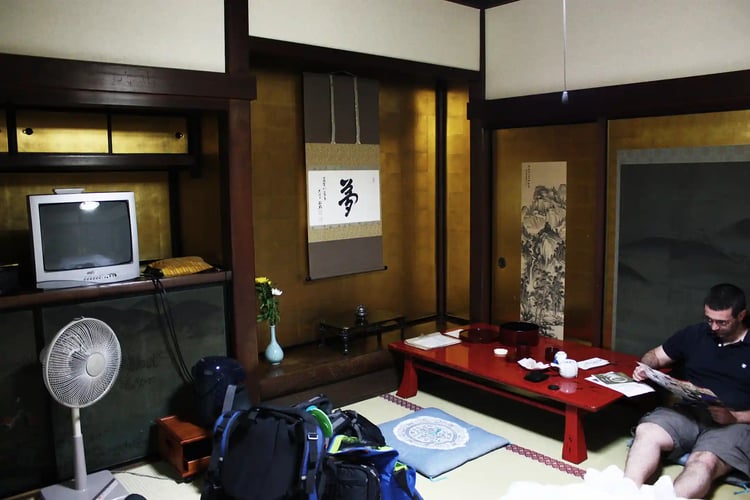
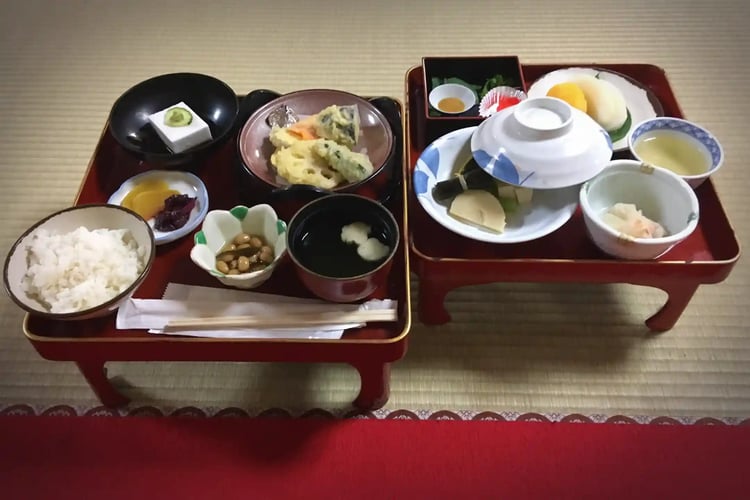
You sleep on futon in tatami-mat rooms, and meals are shōjin ryōri—Buddhist temple cuisine without animal products. Though simple by precept, seasonal vegetables and grains are prepared into delicate, artful courses that you “taste with your eyes.”
Shōjin ryōri has touchpoints with today’s environmental and animal-ethics discussions, but it’s not accurate to equate it simply with “vegan cuisine.” It is a religious practice grounded in non-killing; its motivations differ from modern health or environmental aims. Understanding this nuance lets you engage more deeply with the culture.
There are also solemn rules—early curfews and limits on alcohol—which help you step away from daily clamor, rest your body and mind, and dwell within the aesthetic spirit of the temple. That is the singular power of a shukubō stay.
Space Where Architectural Beauty and Spirituality Converge
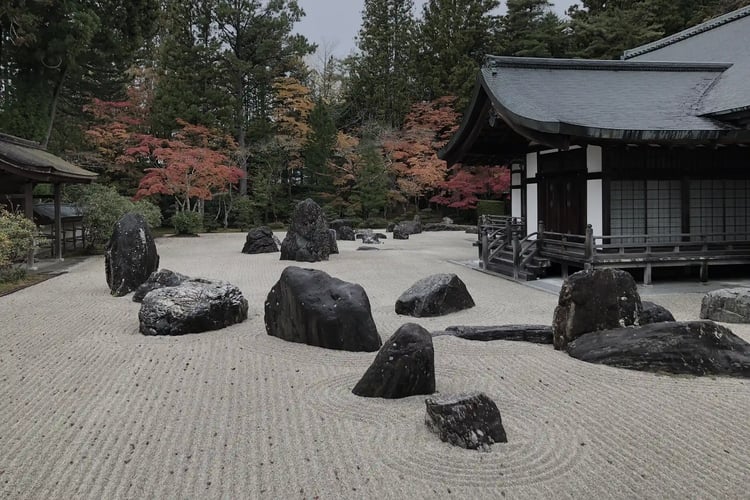
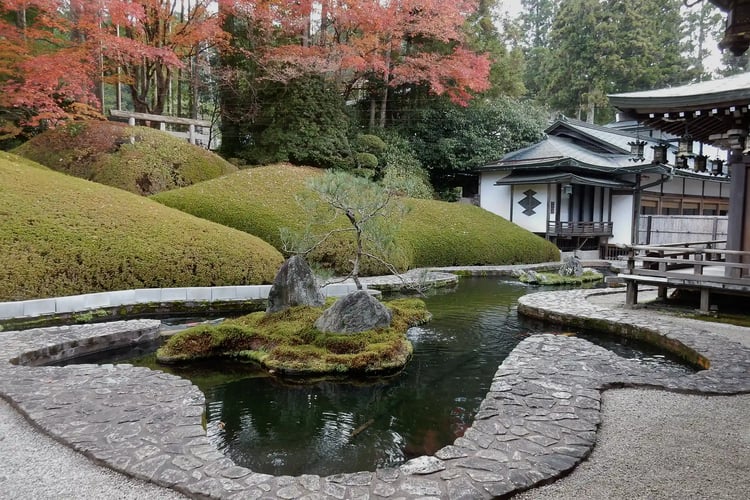
Architecture and gardens at shukubō gather the essence of Japanese beauty: shoin-zukuri study-hall style, karesansui dry gardens, fusuma paintings and hanging scrolls from the Edo period, and stroll-style pond gardens. Bathed in natural light, these elements create an atmosphere akin to spending the night in a living museum.
Crucially, these artworks and buildings aren’t mere “exhibits”; they’re deeply intertwined with religious practice. In Western museums you “view” works; in a shukubō you “live with” them. That difference illuminates contrasting Eastern and Western values about art and daily life.
Stone arrangements and raked patterns in karesansui visually express Zen thought. While many Western gardens place nature decoratively, Japanese gardens abstract nature’s essence. This reflects a more fundamental difference in attitudes toward nature.
Within such spaces, you can look inward and elevate your spirituality. According to Terahaku’s guide, you also have opportunities to hear from monks about temple history and Buddhism—another distinctive shukubō appeal that deepens your understanding of the region and its culture (*3).
What You Can Do at a Shukubō — Programs of Buddhist Culture and Learning
During a shukubō stay, you’ll find diverse practices that satisfy both curiosity and spirit. A key feature is time apart from daily life to settle your mind and face yourself.
Zazen & Shakyo — Meditative Practices That Feed Your Curiosity
Core programs include zazen and shakyo. In zazen held in the early morning or evening, you regulate your breathing, sit quietly, and refine your senses to experience deep concentration.
Note that zazen is not merely “relaxation.” While many Western forms of meditation or mindfulness aim at inner peace or improved efficiency, Zen zazen aims at dismantling the ego and realizing awakening. This difference reflects deeper contrasts between Western cultures that center the individual and Eastern traditions that point beyond the self.
In shakyo, you slowly trace sutra passages with a brush, encouraging self-observation. Writing by hand embodies the teachings, letting your body learn their meaning. For those of us in the digital age, handwriting feels fresh while returning to a primordial human way of learning.
Many guests say, “Through zazen and shakyo, I realized the importance of time to face myself.” Grounded in Buddhist philosophy, these practices bring quiet and insight not easily found in stressful daily life (*4).

Deepening a Buddhist Worldview through Dialogue with Monks
Shukubō also offer opportunities to speak with monks, considering modern concerns and life perspectives through a Buddhist lens. Drawing on years of study and practice, monks share wisdom and practical hints you can apply in daily life.
Such conversations are precious moments of cross-cultural understanding. Whereas Western psychology and counseling often focus on problem-solving and processing emotions, Buddhist guidance emphasizes insight into and acceptance of the roots of suffering. This reveals fundamentally different approaches to human pain.
As the same source notes, being able to chat casually with monks about history and doctrine—and to learn more about local traditions and culture—is part of the unique charm of shukubō. Even amid rapid change, Buddhist concepts like impermanence and compassion can support your heart and prompt you to reexamine how you live (*4).
That said, don’t reduce dialogue with monks to a consumable “cultural experience.” True dialogue rests on mutual understanding and respect. For international visitors, coming to understand Japan’s religious culture is also a chance to see your own traditions in perspective.
Learning Ethics and Aesthetics through Shōjin Ryōri
Shōjin ryōri—the temple cuisine served at shukubō—is a wholly plant-based culinary tradition grounded in Buddhism’s precept of non-killing. Prepared without meat or fish, dishes center on soy, vegetables, and grains, expressing coexistence with nature and sustainability by avoiding animal ingredients.
But reading shōjin ryōri only through modern frames of environmentalism or animal welfare is incomplete. At its core is compassion for all living beings—a religious and philosophical worldview beyond “health-conscious” or “eco-friendly.”
Seasonal ingredients are plated beautifully, letting you taste Japanese aesthetics and seasonality through food. While many Western cuisines emphasize quantity or bold flavors, shōjin ryōri reflects a Japanese sensibility that treasures visual beauty and the seasons.
Its methods and presentation are deeply imbued with Zen thought. Techniques that highlight a food’s inherent flavor eschew artificial processing and decoration, honoring nature’s essence. Rather than a Western notion of “creation,” this aligns with an Eastern aesthetic of “discovery.”
Pursuing deliciousness while bringing out the best in each ingredient becomes a field for cultivating ethics and taste (*4).
Five Recommended Shukubō — Where to Stay in Koyasan
Fukuchi-in — Soothe Your Senses with Hot Springs and Art
The only shukubō in Koyasan with a natural hot spring, where you can bathe while looking out over the garden. The shōjin ryōri prepared by training monks features Koya-dōfu and local seasonal vegetables for refined, deeply flavorful dishes.
Some rooms overlook a karesansui garden designed by Mirei Shigemori, letting you immerse your senses in an artistic space. With a grand hall and tearoom on site and guidance available in English, it’s popular with international travelers (*1, *2).
Rengejō-in — A Quiet Space Wrapped in History
Founded as a Shingon temple in the Kamakura period and associated in the Sengoku era with the Sanada clan, this esteemed temple offers Ajikan meditation in the main hall every evening, plus morning/evening services and shakyo. From the study rooms and gardens you look out on moss gardens and deep forest, enjoying serene time surrounded by traditional fusuma paintings. Morning and evening shōjin ryōri are praised for both quality and flavor. You gain a rare calm and spiritual ease here (*3, *4).
Ekō-in — Experience Esoteric Meditation and Deepening Knowledge
Near the entrance to Okunoin, this shukubō boasts a 1,200-year lineage linked to Kōbō-Daishi. Modern comforts harmonize with traditional shoin architecture, and you can try Ajikan, shakyo, and goma prayer rituals. Daily morning services include sutra chanting before the principal image, and there are opportunities for English Dharma talks by monks. Immersed in Shingon teachings and mandalas, you nourish inner quiet and intellectual curiosity alike (*5, *6).
Ichijō-in — The Art of Shōjin Ryōri and a Refined Stay
Although a shukubō, Ichijō-in offers independent Japanese-style rooms, each with its own design and a polished interior. The signature is shōjin ryōri that brings out the natural flavors of Koya-dōfu and wild mountain vegetables. The artful plating makes each course look like a work of art. With a handcrafted approach and safe, flavorful produce such as pesticide-free vegetables from nearby Yoshino, the dishes shine. Rooms include baths and washbasins, so you enjoy an elegant, relaxing wa space throughout your stay (*7, *8).
Takamuro-in — An Intimate, Hidden-Retreat Experience
A historic shukubō at a Yakushi (Medicine Buddha) sacred site in the heart of the Koyasan temple town. The precincts have expanded in recent years via a merger with a neighboring temple; from the front gate inward, you pass a statue of Kōbō-Daishi and sink into silence. The grounds include a garden where, on clear days, snow resting on moss and stones creates a beautiful, lesser-known scene. Capacity is relatively small, making it ideal if you prefer a cozy, private feel. Surrounded by historic family crests and Buddhist images, you savor a luxurious moment to balance body and mind (*9, *10).
Access and Transportation — Smart Ways to Reach Koyasan
Getting to Koyasan from Kansai International Airport (KIX)
From KIX, take the Nankai Limited Express “Rapi:t” to Tengachaya (about 50 minutes), transfer to the Kōya Line to Gokurakubashi (the cable car transfer station) for about 2 hours, then ride the cable car up to Koyasan Station. In total, it’s around 2 hours 40 minutes. From Koyasan Station, the Nankai Rinkan Bus takes you to the Daimon area in just a few minutes (walkable), making the transfer fairly smooth. In addition to rail, there used to be a seasonal highway/limousine bus, a direct KIX–Koyasan route taking about 2.5 hours in non-winter seasons (currently suspended, so please check the latest information). By rental car, it’s roughly 68 km via the Wakayama Koyasan Road and Keinawa Expressway in about 1 hour 15 minutes. Because Koyasan is an ~800 m-high basin with winding mountain roads, drive with care; the approach offers striking gorge scenery.
Charging for EV & Tesla Travelers
Koyasan has several EV charging stations—for example at Koyasan Onsen Fukuchi-in, Saizen-in, Kumagaya-ji, and the Koya Town Hall—mostly standard chargers, so build extra time into your plan. En route from KIX along the Hanwa Expressway, rapid chargers (e.g., Panasonic units) are available, and depending on your model you may also be able to charge at highway service areas. For Tesla, some service areas in the Kobe/Wakayama corridors have Tesla-dedicated or CHAdeMO-adapter-compatible options; confirm route charging points with your navigation app in advance. Aim for eco-conscious driving and keep current on charging info for a more sustainable trip (*3).
Preparing Well and Mindfully for a Temple Stay
Deepen Your Understanding with Books and Films
Before your stay, exploring Buddhist thought and Koyasan’s history and culture makes the journey more meaningful. Consider works on the life of Kūkai (Kōbō-Daishi) and introductions to esoteric philosophy, or historical novels depicting the Buddhist world of the Heian period. Films that linger on Japanese gardens and the quiet of Zen (e.g., “Dream Window: Reflections on the Japanese Garden”) are also wonderful choices.
With these approachable materials, you’ll feel at home with Japan’s religious sensibilities and aesthetics, making what you experience at a shukubō resonate more deeply. Photo books and guidebooks focused on Koyasan also help you grasp the whole picture. With a bit of reading and viewing, you’ll find it easier to understand the practices and talks once you’re there.
What to Pack and What to Wear: Best Practices
Some shukubō provide yukata, but bring your own toothbrush, towel, toiletries, and any regular medication. Because it’s in the mountains, early mornings and nights can be chilly—especially in fall and winter—so pack warm layers (sweater, down jacket, disposable heat packs).
Wear comfortable clothing; pants that make kneeling easy are useful for zazen and shakyo. Since you’ll take off your shoes indoors, socks are better than sheer stockings, and keeping your feet warm in winter is essential.
Some shukubō do not provide bath towels or sleepwear (amenities can be limited), so check in advance and pack a bit extra. Entrances and precincts often have stone paving or gravel—soft bags or backpacks are kinder to tatami and easier to carry than hard, wheeled suitcases.
Etiquette and Mindset During Your Stay
Remember that a shukubō is part of a religious facility; keep a respectful attitude toward monks and sacred images. Meal times, bath times, and lights-out are usually set by each temple—please follow them.
Because rooms are often divided by fusuma sliding doors, spend your evenings quietly and aim to sleep early. In main halls and before statues, keep conversation to a minimum and only take photos where permitted.
During shakyo and services (chanting), steady your breathing and be mindful of others. Follow the guidance you received beforehand, and if you’re unsure about anything, feel free to ask the head priest or staff—an open, considerate stance will make your stay comfortable.
Best Seasons and How to Book a Koyasan Shukubō
Where Can You Book? (Official Sites & OTAs)
You can reserve through each temple’s official website or via general booking sites like Rakuten Travel or Booking.com. Many temple or association pages provide English information and accept English inquiries, and international bookings are growing.
For example, Ekō-in accepts reservations nine months in advance via its official site and has English-speaking staff. Stays typically include shōjin ryōri, but some temples offer room-only or day-trip shakyo plans—check each site for details.
Booking directly through official sites can come with unique benefits. If English is a challenge, using a travel site or an agency (such as a Japanese hostel booking service) is convenient.
(*1 Source: Ekō-in Official Website, “FAQs” https://www.ekoin.jp/shukubo/)
Seasonal Highlights and Recommended Times
Because Koyasan sits in a basin at around 800 m, each season brings distinct scenery.
- Spring (around mid-April): late-blooming cherry trees reach their peak. See weeping cherry blossoms at Kongōbu-ji and the Danjo Garan. Rhododendrons bloom around Golden Week.
- Summer: relatively cool even on the mountaintop; fresh greenery refreshes the senses and hydrangeas color famous spots in June–July. Some evenings you may see fireflies (around the hydrangea garden).
- Autumn (late Oct–early Nov): Koyasan glows with autumn leaves; see blazing maples along Jabaruro, around Daimon, and near the Reihōkan Museum.
- Winter: known for snow scenes—temples powdered white feel like another world. You can enjoy snow play at nearby ski areas and marvel at juhyō (rime ice/“ice flowers”) on trees, but shady areas ice over easily, so studless winter tires are essential. Each season has its charm; if you want a quieter stay, fresh-green May or winter (for snowy vistas) is recommended.

There's More to Sit With

Conclusion
Koyasan’s shukubō are not merely places to sleep; they are living places of learning where spirituality and cultural experience converge.
In shōjin ryōri, you encounter ethics and aesthetics; through zazen and shakyo, you find quiet and reflection; in dialogue with monks, you gather Buddhist insights. All of this becomes a precious retreat for you today. As a World Heritage site, the region’s abundant nature and historic architecture offer emotions and realizations you can’t find in ordinary life.
Time spent in a shukubō doesn’t only rest your body—it cultivates your heart. In an era when we seek inner richness as much as physical comfort, it’s no wonder that renewed light is falling on the travel style of staying in temples.

%20at%20Hananoiwaya%20Shrine%2c%20Kumano%20Kodo.webp)
.webp)