For global gourmets, steak in Japan is more than a dish—it’s a supreme experience that enriches your sense of culture, art, and even intellectual curiosity. From Wagyu with its artful marbling to delicate, refined plating and the live theater of teppanyaki performed by master chefs right before your eyes—you touch the essence of Japanese culture through food. The emotion you feel on your tongue and in your heart becomes an unforgettable travel memory.
The Basics of Steaks in Japan — An Introductory Guide
Representative Cuts Used for Steak in Japan and Their Traits
When you talk about Japan’s steak culture, you can’t skip the beef cuts themselves. The most common steak cuts are sirloin, ribeye (rib roast), chuck roll, filet (tenderloin), and rump (*1). Sirloin is practically synonymous with steak: it’s known for its fine marbling (fat “sashi”) and tender texture. The word “sirloin” comes from the Middle French surlonge (“upper loin”), and there’s a famous tale that a king even dubbed it with the title “Sir” (*2).
Ribeye (rib roast) comes from the back near the ribs; it balances moderate fat with deep savor, making it as popular as sirloin. Chuck roll spans from the shoulder to the back and offers pleasant bite with a robust, beef-forward richness (*1). Filet (tenderloin), by contrast, is a rare cut—only about 2–3% of a whole cow—lean and exceptionally tender (*1).
Thanks to its clean, elegant flavor, filet is beloved as a high-end steak by seasoned diners and anyone who prefers a lighter, “healthier” profile. Rump, part of the round, is one of the softest of the lean cuts and brings concentrated umami (*1). With less fat and a refreshing finish, it lets you savor the pure character of premium red meat.
Broadly, these cuts fall into “loin-type” and “lean-type.” Loin cuts like sirloin, ribeye, and chuck roll tend to be richly marbled, juicy, and intensely flavorful—the more you chew, the more the meat releases a gentle sweetness from the fat (*1).
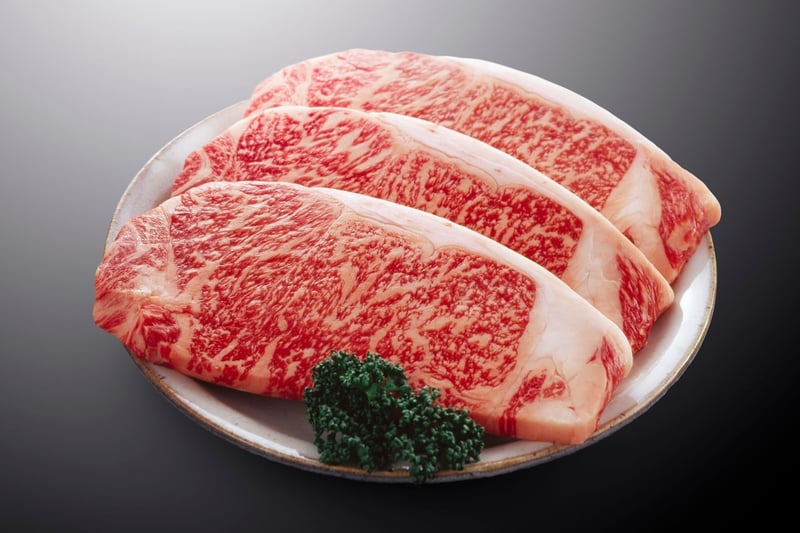
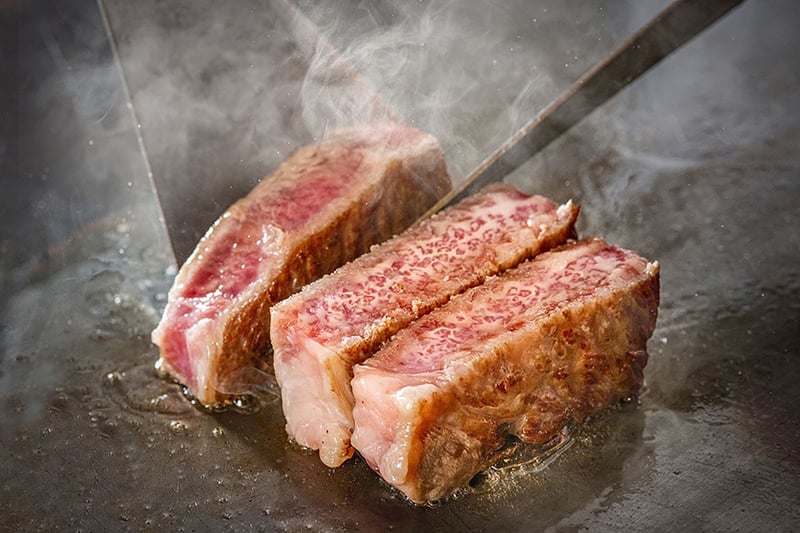
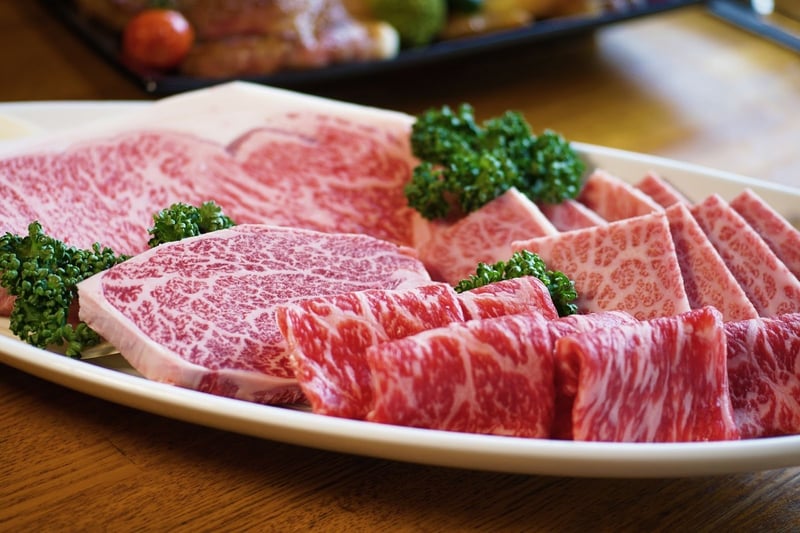
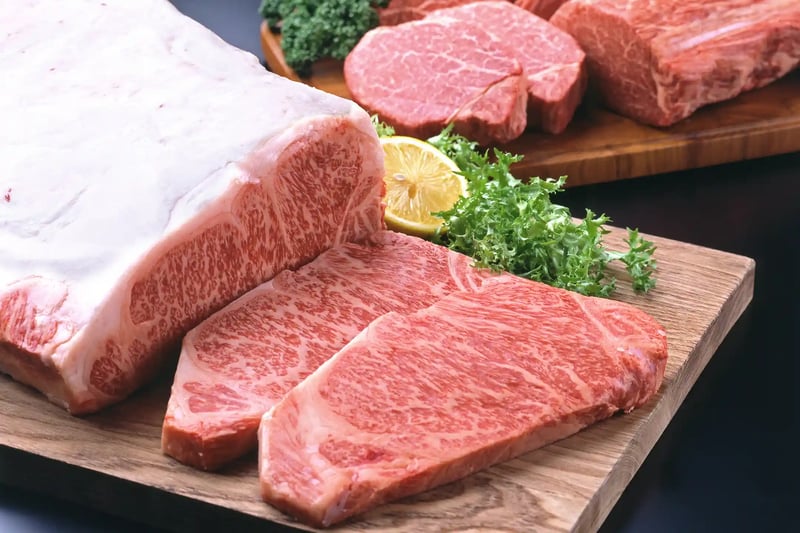
Ribeye fat, in particular, has a refined sweetness, and along with sirloin it’s considered top-tier (*1). On loin cuts, the fine marbling spreads across the meat like lace—so visually striking it’s often called “artful marbling” (*2).
Meanwhile, lean cuts such as filet and rump contain less fat and go down clean. They deliver both the concentrated savor of red meat and a lighter feel; with rising interest in health, lean steaks have been drawing more attention in recent years (*1). Each style is delicious in its own way, and tasting across this variety is part of what gives Japan’s steak culture its depth.
Doneness and Fundamental Cooking Methods in the Japanese Style
Even if you choose the finest cut, the cooking method will make or break your steak. In Japan, the basic doneness terms align with global norms: rare, medium, and well-done as your broad guideposts (*3).
Some houses nuance this into about ten stages—like “medium-rare” or even “blue” (very rare)—but in most cases ordering from those three is perfectly fine. For Wagyu, how heat reaches the center is especially important. Because marbled beef is higher in fat, the key is finishing it at a temperature where the internal fat melts optimally.
Practically speaking, the more luxuriously marbled the Wagyu, the better it tastes when the center is kept rare to medium-rare (*3). By avoiding overcooking and sealing in the meat juices (umami), you get that melt-in-your-mouth texture and juiciness the moment you take a bite.
If you worry about “underdone” centers, properly searing the exterior while leaving a rosy medium-rare core is both safe and delicious for Wagyu. In fact, many teppanyaki steak houses will cook at least to medium-rare to draw out the marbled fat’s fragrance and flavor.
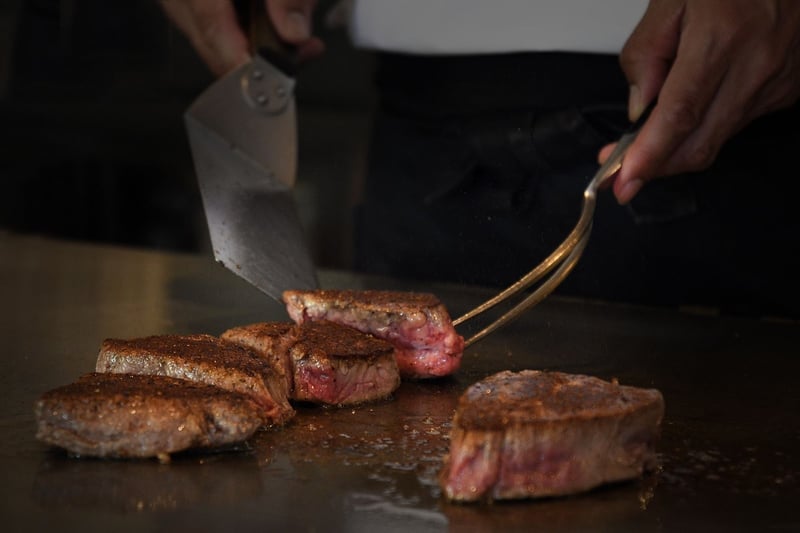
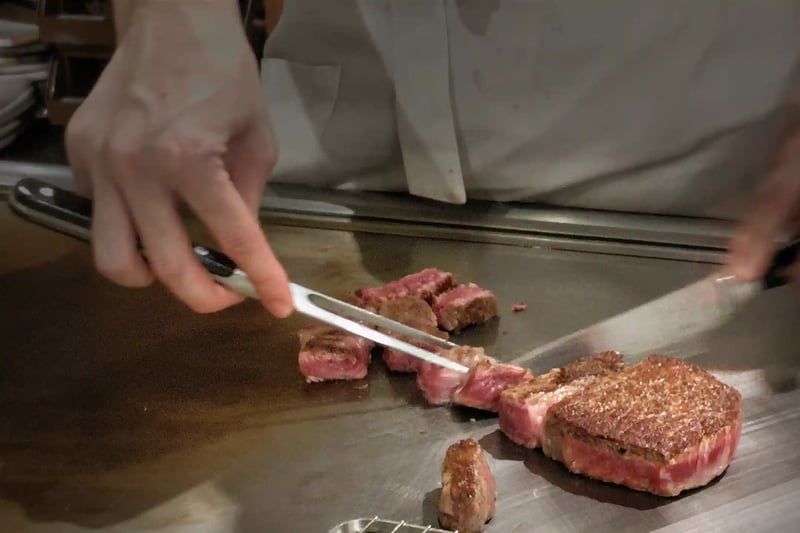
Japan also has distinctive cooking styles. The most famous is teppanyaki. Watching a chef expertly grill on a thick, blazing-hot iron plate right in front of you turns dining into performance—an indulgence for all five senses. The high heat crisps the crust while precise timing keeps the interior tender and almost custardy.
In Kobe—often cited as the birthplace of teppanyaki—high-end steak houses treat that on-stage cooking as part of the meal itself, becoming an unforgettable scene in your travels. Some Japanese steak houses, on the other hand, sear over binchotan and other charcoals. Radiant heat penetrates deeply while the surface turns crisp and aromatic. Charcoal locks in juices and umami and lends a distinctive, alluring aroma.
Thanks to this craft, premium Wagyu’s potential is drawn out to the fullest. Seasoning is typically restrained—just salt and pepper—to let the meat’s inherent flavor shine, which is very Japanese. In these steaks, honed technique and delicate sensibility meet; with every bite, aroma and savor expand across your palate—an experience even seasoned connoisseurs admire.
Exploring the Essence of Japanese Culture Through “Steaks in Japan”
The Aesthetic of Japan Embodied by Wagyu
You cannot discuss Japanese steak without Wagyu. Wagyu refers to four breeds—Japanese Black, Japanese Brown, Japanese Shorthorn, and Japanese Polled—created through careful crossbreeding of native Japanese cattle and foreign breeds since the Meiji era (*1). Japanese Black accounts for about 95% of Wagyu; when people say “Wagyu,” they typically mean this breed (*1). Wagyu’s hallmarks are its tenderness and the snow-white marbling that threads deep into the muscle.
At the highest grades, marbling spreads across the red meat like freshly fallen snow, captivating gourmets worldwide with its unique aroma and gentle sweetness (*1). Kobe, Matsusaka, and Omi—regional brand names—are all lines of Japanese Black, each an expression of local tradition and technique.
Wagyu is more than an expensive ingredient; it reflects a Japanese aesthetic. The three famed brands—Kobe, Matsusaka, and Omi—are often said to embody Japan’s culinary culture and heritage through their extraordinary quality (*2).
There’s no single official definition of “Japan’s Big Three Wagyu”; the trio commonly cited is Kobe, Matsusaka, and Omi, though usage can vary by region and context. Over many years, meticulous husbandry, local climates, and producers’ passion have fused to craft Wagyu—a true expression of artisanal mastery.
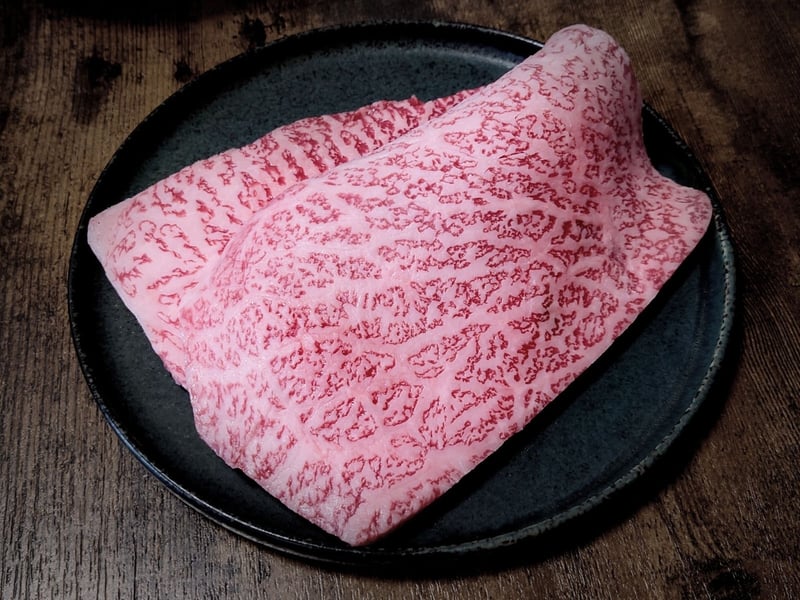
In Matsusaka, for example, producers take painstaking care—from bloodline management to feed composition—raising each animal with devotion. The result is marbling so beautiful and flavor so nuanced that people call it “edible art,” moving anyone who sees or tastes it (*2). On a freshly cut face of Wagyu, you’ll marvel at the marbling’s marble-like pattern woven from lean and fat. It’s not “just fat”—it’s the source of Wagyu’s savor and tenderness. In it, many Japanese see the natural beauty and generosity of the ingredient itself.
What’s more, Wagyu symbolizes the spirit of Japanese food culture. Its value extends beyond flavor to nutrition, versatility in preparation, and even the broader culture that grows around it (*2).
Some say, “To savor Wagyu is to savor Japan’s culture, history, and the makers’ spirit.” When you feel Wagyu’s layered umami on your tongue, you can’t help but imagine the artisans’ skills and pride, and the regional traditions and stories behind it.
Japan’s devotion to uncompromising quality and to beauty in every detail is distilled into a single Wagyu steak. In that sense, eating Wagyu becomes an experience of Japan’s aesthetics and ethos, not merely a meal.
Zen Spirit and Artistic Plating
What makes Japanese steak special is not only the meat and the cooking—it’s also the plating, which carries a uniquely Japanese aesthetic and philosophy.
Since ancient times, Japanese cuisine has prized visual beauty—“food to be enjoyed with the eyes.” Even a minimalist steak plate holds carefully calculated elegance, echoing the serene sensibility passed down from Zen and tea ceremony kaiseki.
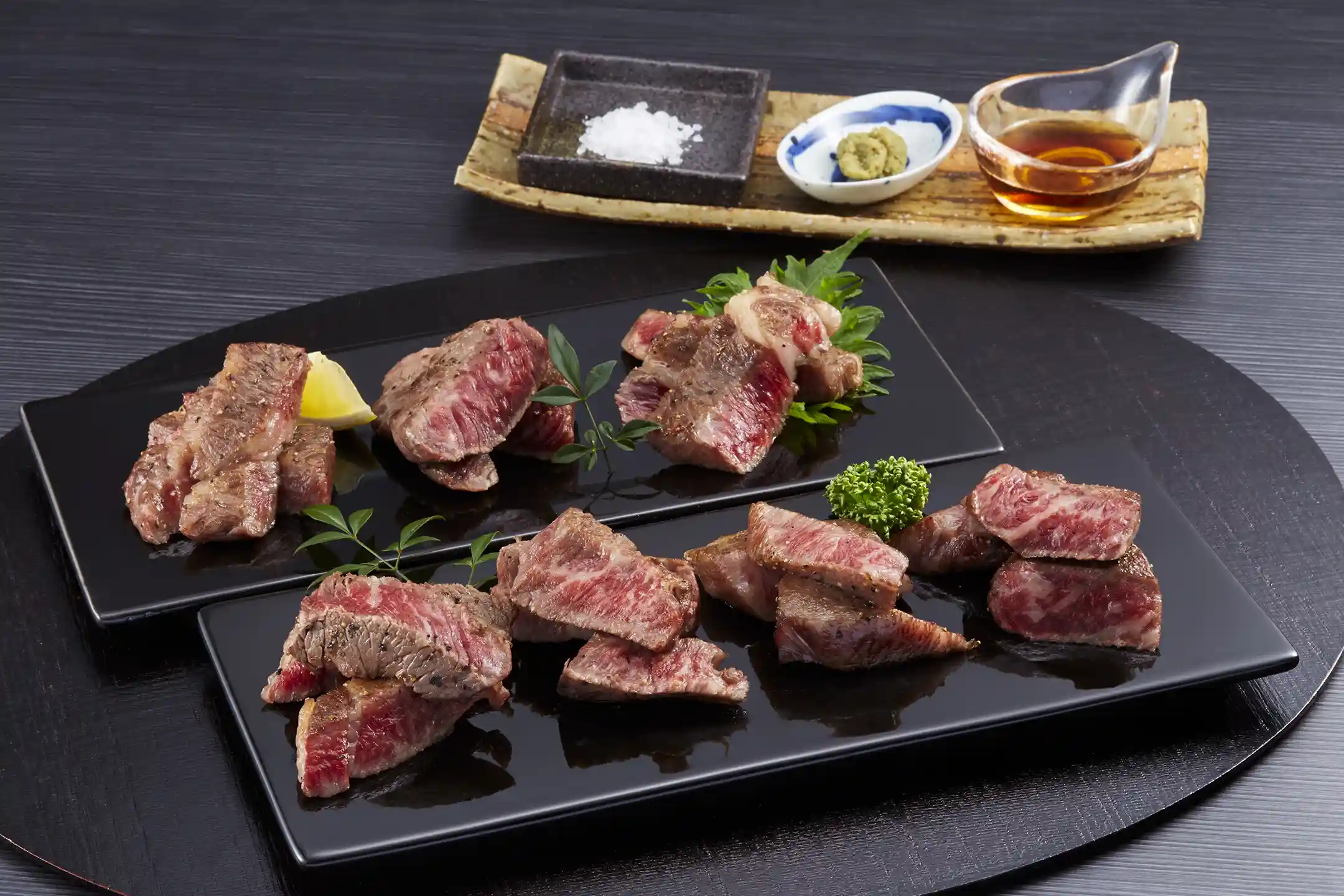
The choice of plate begins the artistry. Pottery, porcelain, or lacquerware with refined textures and colors is selected to harmonize with the food. Place a softly pink, marbled steak on a dark plate, and contrast heightens the meat’s beauty. A signature of Japanese plating is leaving yohaku—intentional negative space.
By embracing space, the dish’s presence grows, and you feel calm sophistication. This appreciation for “empty space” aligns with Zen’s idea of mu (emptiness), inviting a quiet emotional response when you face the dish.
Garnishes—seasonal vegetables and condiments—are chosen for color balance and seasonality. In spring you might see mountain vegetable tempura or salted cherry blossoms; in autumn, momiji-fu or chestnuts—small touches that evoke the seasons on a single plate (*3).
Decorative leaves such as haran or Japanese maple may be used, bringing nature’s forms onto the plate and creating the feeling of a miniature Japanese garden (*3). Arrangement may also consider yin-yang balance and asymmetry, a uniquely Japanese notion that harmony can arise from slight imbalance—akin to the wabi-sabi spirit in tea and flower arts.
Thick steaks are often sliced into bite-sized pieces and arranged beautifully. It’s practical, yes, but it’s also an expression of Japanese hospitality—care taken with every piece. Staggering the slices to reveal their cut faces shows off the marbling and stokes your appetite. Sauces, rock salt, or wasabi soy are presented neatly in small dishes to keep the plate pristine. Overall, negative space, placement, and color stay in poised harmony—the philosophy that “plating is part of cooking” alive and well.
In this way, Japanese steak plating fuses Zen and artistry. The quiet beauty calms you and sets the tone to engage with the food sincerely. This is a meal you savor with your eyes and your mind, not just your appetite—a gourmet experience that deepens your sense of culture, art, and knowledge. As you raise a slice of Wagyu to your lips and close your eyes to taste, you can also feel Japan’s longstanding love of beauty and hospitality. In a single steak lies the essence of Japanese culture—depth and delight you’ll want to share widely.
Japan’s Premier Luxury Steak Brands — History and Regional Culture
Japan is home to world-renowned luxury Wagyu steak brands, each deeply rooted in local history and culture. They’re not just ingredients; they carry living traditions and stories. Savoring them becomes a way to know a region’s culture. Here we trace the origins and development of three representative brands—Kobe Beef, Matsusaka Beef, and Omi Beef—and how each reflects its homeland’s cultural character.
Kobe Beef — Origins and Growth of a Globally Recognized Brand
As the name suggests, Kobe Beef is tied to Kobe in Hyogo Prefecture and boasts global name recognition. In the late 19th century, when Kobe Port opened and a foreign settlement emerged, foreigners first encountered the deliciousness of Tajima cattle—that moment sparked the Kobe Beef legend. At a time when meat-eating was not yet common across Japan, an Englishman tasted Tajima beef—then raised largely for farm work—and praised it effusively, a story said to mark the beginning of modern beef consumption (*1).
The name “Kobe Beef” gradually spread; by the Meiji era it was even being exported from Kobe. As quality initiatives pushed marbling to new heights, brand standards were formalized in the 1980s. Today Kobe Beef has cemented its status as one of Japan’s proudest luxury meats, even receiving protection under the Geographical Indication (GI) system in 2015 (*1). Looking back, Kobe Beef was born of Japan’s opening and cross-cultural exchange, refined at home, and elevated to a brand that resonates worldwide.
Matsusaka Beef — A Traditional Flavor Nurtured by a Storied Land
Matsusaka Beef from Mie Prefecture has long been called “the artwork of Wagyu.” Matsusaka flourished as a gateway to Ise Shrine pilgrimages, and during the Edo period, calves were purchased from Tajima (in modern-day Hyogo) and reared carefully as draft cattle. When meat consumption spread after the Meiji Restoration, beef from Matsusaka—fattened after farm work—became prized for exceptional flavor. Tokyo’s elite restaurants and department stores would travel to buy it, and the brand won accolades at fairs around the country, making its name known nationwide (*2).
A landmark moment came in 1935 at a national exposition in Tokyo, where Matsusaka Beef won top honors, dramatically boosting its reputation (*2). Behind that success lie generations of producers’ ingenuity and devotion—treating cattle like family and drawing out savor through long-term fattening. That tradition endures today, making Matsusaka one of Japan’s foremost tastes—born of a storied land and its people’s passion.
Omi Beef — Heir to a Meat Culture Loved by Feudal Warlords
Omi Beef from Shiga Prefecture is often said to be Japan’s oldest branded Wagyu, with a history spanning over 400 years. Cattle have been raised in Omi since ancient times, and by the Warring States period, a culture of enjoying beef had already emerged. One tale holds that during Hideyoshi Toyotomi’s 1590 Odawara campaign, the Christian lord Takayama Ukon from Omi served beef dishes to Gamo Ujisato, Hosokawa Tadaoki, and even Tokugawa Ieyasu—proof that warlords quietly enjoyed the taste (*3).
In the Edo period, Hikone Domain developed hanpongwan, a nourishing “medicine” of beef preserved in miso, presented to successive shoguns. Even when public meat-eating was taboo, Hikone’s special permission for cattle slaughter kept a local meat culture alive. After the Meiji Restoration, as Western cuisine spread, Omi beef—then called Goshu-gyu—became popular in dishes like sukiyaki. Omi merchants, guided by their “good for seller, buyer, and society” ethos, worked tirelessly to improve quality and expand distribution, helping embed beef in Japan’s culinary life (*3).
Through continuous effort, Omi joined Matsusaka and Kobe among the “Big Three Wagyu,” and today it is known around the world. From warlord anecdotes to the modernization of Japan, Omi Beef encapsulates the nation’s journey into a meat-eating culture—truly an heir to that legacy.
Enjoying the “Steaks in Japan” Experience in Artistic Spaces
In Japan, the setting matters as much as the steak itself. Steak dining rooms that weave architecture and interior design into the experience elevate your meal into culture.
Like visiting a museum or heritage building, simply being there sparks your sensibilities. Enjoying steak in such a space becomes a supreme gourmet moment. Here are examples of Japanese steak houses that offer artistic environments, revealing the charm of the “Steaks in Japan” experience.
Destination Dining Where Architecture Shines
Across Japan, some steak houses make the building itself part of the allure. AKARENGA STEAK HOUSE at Osaka Port is a hideaway restaurant created by renovating a century-old red-brick warehouse.
Savoring top-grade steak in that weighty, otherworldly brick space feels like conversing with history across time. The aroma of wood-fired grilling meets the warehouse’s ambiance, turning the experience into a multisensory work of art (*4). In such places—be they historic structures or design-forward buildings—architectural beauty resonates with cuisine, adding depth to your meal.
You’ll also find stone-built Western houses and traditional Japanese structures repurposed as restaurants. In each, the atmosphere crafted by the space lets you taste steak as part of a journey through local culture and history.
Interiors that Embody Modern Japanese Style
Other steak houses earn acclaim for interiors that blend modern design with Japanese aesthetics.
In Ginza, Ginza Ukai-tei occupies a transplanted and restored Niigata manor house, harmonized with European antiques and art. The fusion of Japanese architecture and Western artistry creates a nostalgic yet splendid atmosphere—a “dining space with a story” reminiscent of the Meiji modern era (*5).
Even global brands adapt uniquely in Japan. Wolfgang’s Steakhouse TEPPAN in Ginza—its first-ever teppan concept—embraces “Zen” as a design theme, using natural materials like stone and wood to craft a space that is simple yet refined.
By stripping away excess decoration and highlighting materials and detail, the design conveys the poised calm unique to Japanese culture—an elegant fusion of an international steak house with Japanese sensibility (*6).
In such modern-Japanese interiors, everything is deliberate, down to the shadows of the lighting. Each bite of steak enjoyed within the artistry of the space lingers not just on your tongue but in your memory—an emotional scene worthy of a travel magazine’s pages.
Teppanyaki — The Live-Performance Heart of the Steaks in Japan Experience
You can’t discuss steak in Japan without teppanyaki. Chefs cooking on an iron griddle before your eyes engages all five senses, turning dinner into a kind of stage art. Here, discover teppanyaki’s origins and cultural value, and the refined presentations you’ll find in Tokyo, Kyoto, and beyond.
Origins of Teppanyaki Culture and Its Cultural Value
Teppanyaki developed uniquely in postwar Japan, tracing back to the 1945 opening of the steak house Misono in Kobe (*1).
Inspired by sushi-counter service, the founder began grilling beef on a thick iron plate and serving it directly to guests. The spectacle delighted foreign patrons then stationed in Japan: the chef’s dexterous performance, paired with perfectly cooked steak, quickly became a Kobe hallmark (*1).
For this reason, teppanyaki grew into more than a technique—it evolved into a uniquely Japanese dining experience built on conversation with the chef. The deft movements at the grill feel like watching art (*2). The sound and aroma, the chef’s dialogue—all add live energy to your meal.
This multisensory presentation embodies omotenashi, Japan’s hospitality, harmonizing taste with cultural experience.
Refined Theatrics at Notable Restaurants (Tokyo, Kyoto, and Major Cities)
You’ll find teppanyaki’s allure polished at restaurants nationwide. In Tokyo, countless luxury venues serve top Wagyu with sweeping night views, where you might catch your breath at a flash of flambé or razor-sharp knife work.
In Kyoto—where tradition meets modernity—you can enjoy Wagyu alongside seasonal Kyoto vegetables in atmospheric townhouses or grand hotels. Kobe, Osaka, Fukuoka, and more cities offer distinctive takes, each drawing on local culture and ingredients.
In Kobe’s venerable establishments, minimal yet masterful technique brings out the fullness of Kobe Beef. In Ginza, sommeliers pair wine to lift teppanyaki into an art form.
Everywhere, the common thread is the special time created not only by flavor but by the chef’s performance. Indeed, specialist teppanyaki houses in Tokyo and Osaka attract diners from around the world (*3). A live-cooked dinner at the grill is widely hailed as a must-do experience.
In refined spaces that immerse your senses, teppanyaki steak transcends “food” to become a supreme gourmet encounter with culture and art.
Deepening Your Knowledge Through the Steaks in Japan Experience and Cultural Exchange
Japan’s steak culture isn’t just about tasting—it’s about learning the history, techniques, and spirit behind the food through hands-on experiences. In recent years, travel programs centered on “food” have surged in popularity among visitors to Japan, offering perfect opportunities to explore Japanese culinary culture (*4). Here are cooking classes and workshops with top chefs, plus guided food-culture tours that enrich your understanding.
Cooking Classes and Workshops with Top Chefs
Cooking premium Wagyu yourself while learning Japanese culinary philosophy is an irresistible draw for gourmet travelers. In major cities like Tokyo and Osaka, you’ll find English-language classes designed for overseas visitors—some taught directly by professional chefs and culinary experts.
One popular Tokyo class in Ebisu has taught Japanese cooking techniques to over 12,000 international participants (*5), covering everything from knife grip to perfect steak doneness.
KAI, a venerable knife maker, launched Japanese cooking classes in Akihabara—teaching home favorites like sushi rolls and dashimaki tamago—and won strong reviews for creating a gateway to Japanese food culture (*6). While a two-hour session costs around ¥7,000, rising interest in Japanese cuisine kept demand high (*6).
In these classes and workshops, you don’t just observe—you absorb technique up close, from selecting ingredients to the aesthetics of plating, discovering depth you can’t get by “just eating” steak. You’ll also deepen cultural understanding through exchanges with instructors and fellow participants—a gourmet education that enriches your trip.
Guided Food-Culture Tours That Teach History and Context
If you want to go deeper into culture through food, consider guided tours led by experts. These tours don’t just take you to great restaurants; they unpack the historical and cultural background behind dishes and ingredients.
In Shiga—the homeland of Omi Beef, one of the Big Three Wagyu—the long-standing restaurant Matsukiya offers a premium tour where you learn 400+ years of Omi Beef history and experience traditional sukiyaki cooking (*7). Guides share anecdotes about how beef was prized in samurai society and how steaks and sukiyaki spread as Western cuisine in the Meiji era (*7).
In Kakogawa, Hyogo Prefecture, tours might take you to meet local meat artisans, observe Wagyu selection and aging, and then enjoy famous Kobe Beef for lunch (*8). Japan is actively promoting such gastronomy tourism; the Ministry of Agriculture, Forestry and Fisheries has launched a “WAGYU Experience” campaign to share Wagyu’s appeal with inbound visitors (*9), partnering with travel agencies to craft special plans that raise the value of your stay (*9).
According to the Japan Tourism Agency, “eating Japanese food” and “experiencing Japan’s history and traditional culture” rank among top expectations before travel (*4). Demand for experiences that fuse food and culture grows year by year. When your steak journey includes visits to production areas or cooking traditions, you feel the story and local pride behind that single plate.
Conversations with guides, chefs, and locals deepen cross-cultural understanding. Gourmet experiences become gateways to cultural exchange, making your trip more moving and memorable. Beyond a food tour, the “Steaks in Japan” experience elevates your appreciation for Japanese culture and art—perfect for a curious, well-traveled mind.