In a space wrapped in silence, the faint sound of water coming to a boil fills the air, and through graceful movements, a single bowl of matcha is whisked to life. The Japanese tea ceremony is far more than the simple act of serving a drink—it is a total art form that unites space, time, and the hearts of those present. At the heart of this experience are the countless tea utensils, crafted by the skilled hands of Japanese artisans over centuries.
In this guide, we'll walk you through the names, roles, historical background, and selection tips for japanese tea ceremony utensils, presented in a way that's accessible to beginners yet rich enough for those cultivating refined tastes and a deeper cultural understanding. Consider this your first step toward bringing a sense of beauty and stillness into your everyday life.
What Are Japanese Tea Ceremony Utensils? The Meaning and Basics
Tea utensils (chadōgu) refer collectively to the implements used for preparing matcha, but they are also something more: physical expressions of the philosophy, aesthetic sensibility, and hospitality of the host who welcomes you. Beyond the tools directly involved in preparation—like the tea bowl and tea whisk—items such as hanging scrolls and flower containers, which set the thematic tone of the entire space, are also considered part of this world. Together, they compose a single tea gathering.
In other words, within the tea ceremony, tools are not chosen merely for function. They are selected to speak of the season, the relationship with the guests, and the particular mood of the day. Once you begin to view tea utensils through both lenses—as objects you use and as objects you feel—the world of the tea ceremony opens up in wonderfully three-dimensional ways.
The Difference Between Japanese Tea Ceremony Utensils and Household Matcha Sets
In the world of the tea ceremony, "tools" are far from being mere objects of physical function. Just as a Western tea set brings elegance and practicality to an afternoon pause, Japanese tea utensils are also designed for the enjoyment of tea. That said, there is a clear distinction between the tools used in formal tea ceremony and the casual matcha sets designed for enjoying tea at home.
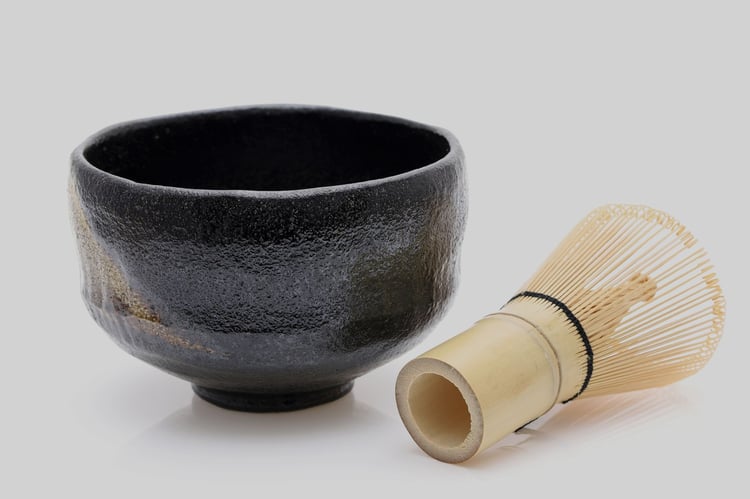
Home matcha sets place their emphasis on ease of whisking, simple maintenance, and designs that blend naturally into modern interiors. You'll often find dishwasher-safe bowls or affordable, mass-produced plastic tea whisks (chasen) included in such sets. These are a wonderful gateway for enjoying the flavor of matcha as part of your everyday life.
Formal japanese tea ceremony utensils, by contrast, are crafted according to strict aesthetic principles and practices refined over centuries. Their materials—clay, wood, bamboo, lacquer, and iron—are drawn from nature's generosity, and each piece is made by hand by skilled artisans. These tools serve as the essential elements through which a host expresses a chosen theme or the feeling of a particular season when welcoming you as a guest.
In this sense, tea utensils are practical objects and, at the same time, works of art that embody the values of the tea tradition, passed down through generations (*1). What Western cultures often separate into "fine art" and "craft" finds a beautiful, seamless union in Japanese tea utensils.
Why Tools Are So Central to the Tea Ceremony
Why are tools held in such high regard within the tea ceremony? The reasons can largely be grouped into four pillars: practicality, ritual, aesthetics, and hospitality.
First, practicality. The iron kettle that heats the water and the bamboo whisk that prepares the matcha must perform flawlessly if the tea is to taste its best. Every detail is refined to near perfection: the comfortable weight in your hand, the way the kettle retains heat, and the suppleness of the whisk tips that creates a fine, delicate froth.
Second, ritual. The temae (the sequence of movements for preparing tea) has a flowing beauty, with every unnecessary motion stripped away. The shape, size, and weight of each tool have been calculated precisely to serve this refined choreography. Only when a tool becomes an extension of the hand does the tranquil atmosphere of the tearoom truly come alive.
Third, aesthetics. In the tea tradition, from the time of Sen no Rikyū onward, tools tied to the aesthetic later known as wabi came to be deeply cherished. The tea ceremony has long been associated with Zen, and tea utensils reflect an aesthetic that honors simplicity and the feeling of the seasons (*1). They give physical form to a sensibility rooted deeply in the spirit of Zen.
Fourth, the spirit of omotenashi—the Japanese art of heartfelt hospitality (*2). The host thoughtfully considers who their guests will be, the season, and even the day's weather, then carefully arranges (toriawase) the ideal combination of tools from a considerable collection. As a guest, you read the message embedded within the tools and feel gratitude for the host's care. This quiet exchange of feeling through objects is precisely why tools are cherished above all else in the tea ceremony.
A Complete List of Japanese Tea Ceremony Utensils and Their Roles
There are many types of tea utensils, and if you're approaching them for the first time, the variety of names and roles may feel a little overwhelming. Yet each tool holds a distinct meaning within the tea gathering, and together they work in harmony to bring to life a single bowl of tea and the space that surrounds it.
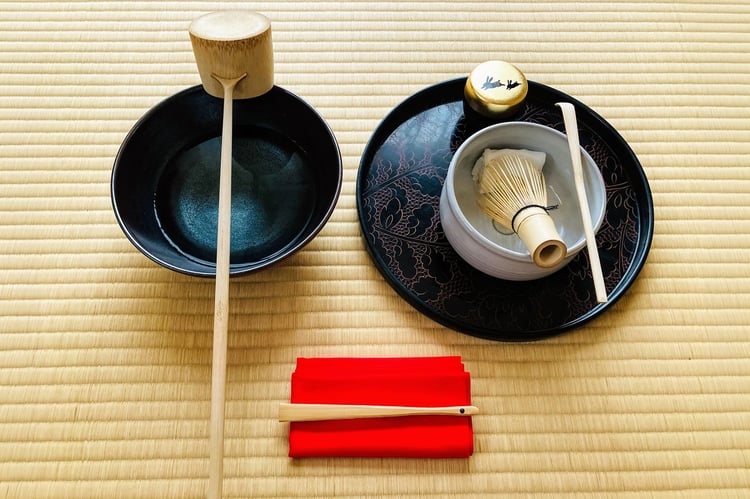
From the tools for whisking matcha, to those used for handling water and hot water, to the cloths used for purification, to the decorative pieces that reflect the season or theme—every element is indispensable. To help you grasp the bigger picture, let's walk through these tools organized by role, looking at each name and characteristic in an approachable way.
Tools for Whisking Matcha
Among all the japanese tea ceremony utensils, the most iconic—and the ones most directly tied to both the flavor of the tea and its visual beauty—are those used to whisk matcha. Let's look at four essential pieces.
Chawan (Tea Bowl)
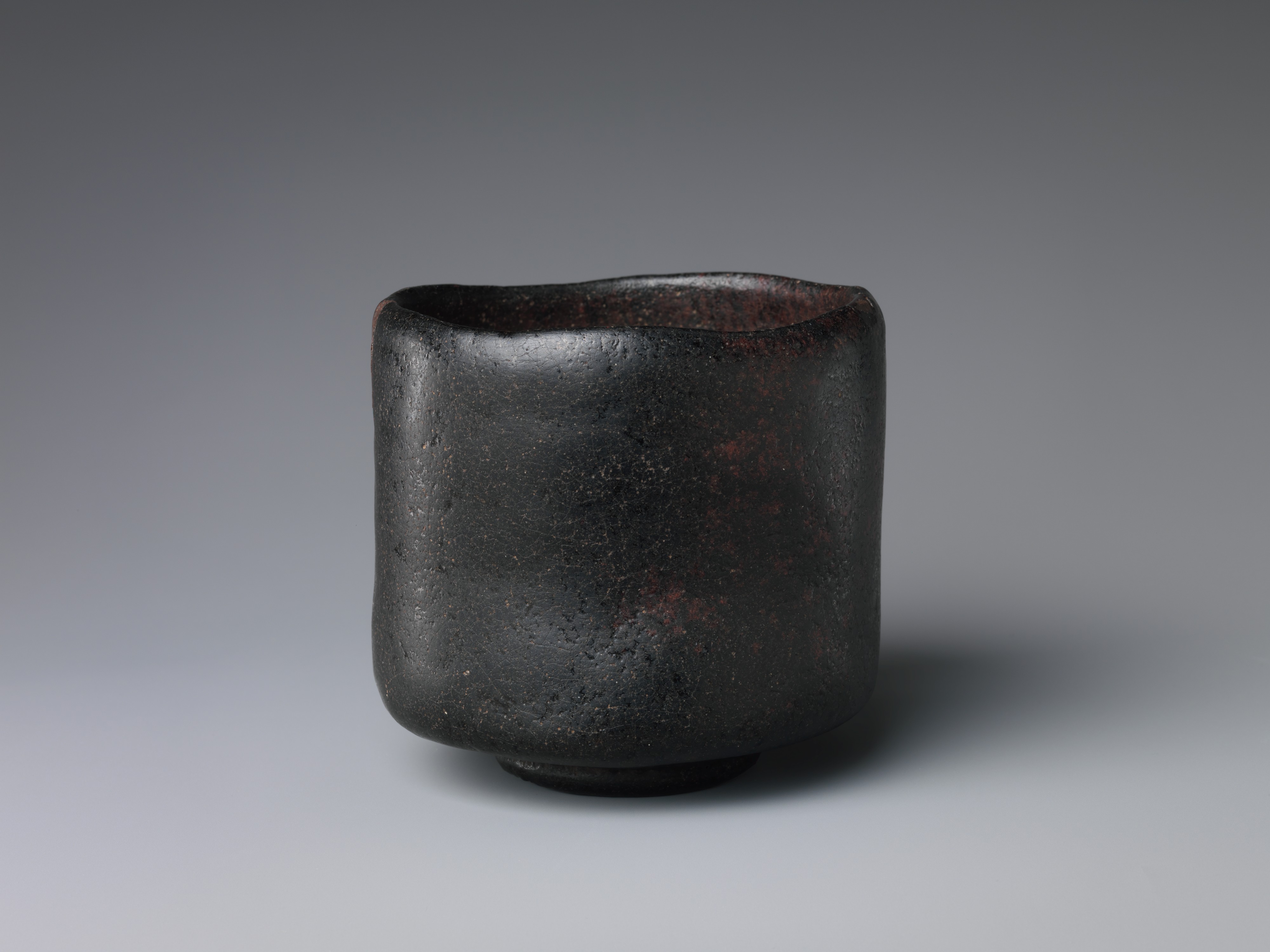
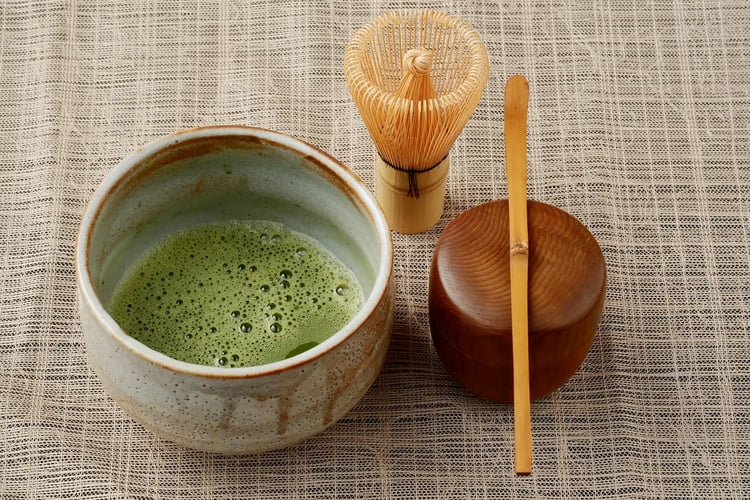
The chawan is the most important vessel of all, the one you hold directly in your hands and bring to your lips, experiencing it through both sight and touch. Different bowls are used for koicha (thick tea, rich and viscous) and usucha (thin tea, whisked light and frothy).
The shape also shifts with the seasons. In winter, deep, cylindrical bowls are favored to help keep the tea warm, while in summer, shallow, wide-mouthed bowls called hira-chawan are used to evoke a sense of coolness.
When you appreciate a chawan, pay attention to its weight in your hands, the warmth of the clay, the landscape formed by the glaze (yūyaku—the vitreous layer coating the surface), and the feel against your lips (*1). Celebrated bowls are given their own individual names (mei) and are cherished across generations.
Chasen (Tea Whisk)
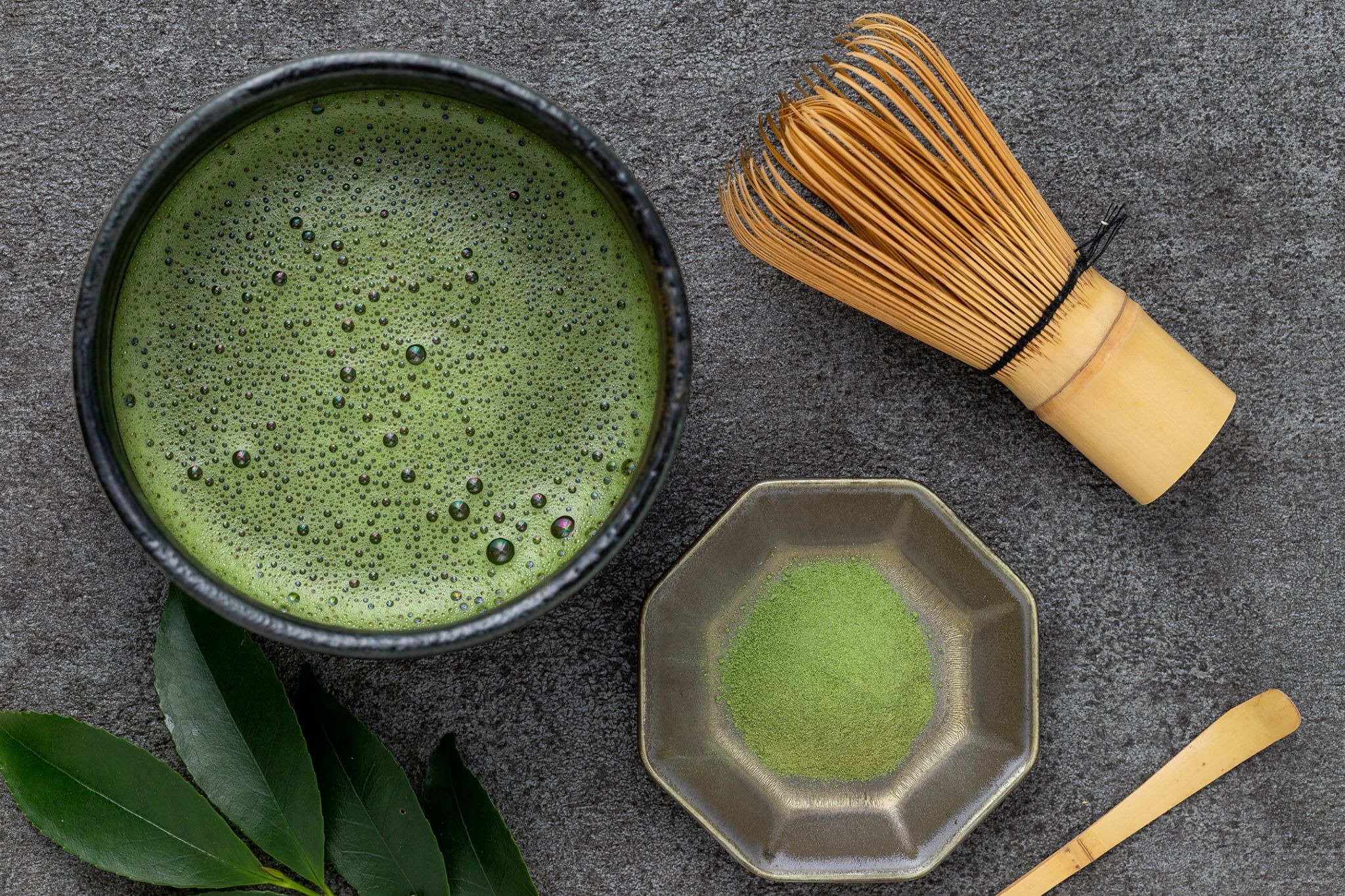
The chasen is a bamboo tool used to blend matcha and hot water evenly within the bowl, creating that signature fine, delicate froth. Depending on the school of tea and the type of matcha (koicha or usucha), the bamboo material (white bamboo, smoked bamboo, purple bamboo, and others) and the number of prongs at the tip will vary (*2).
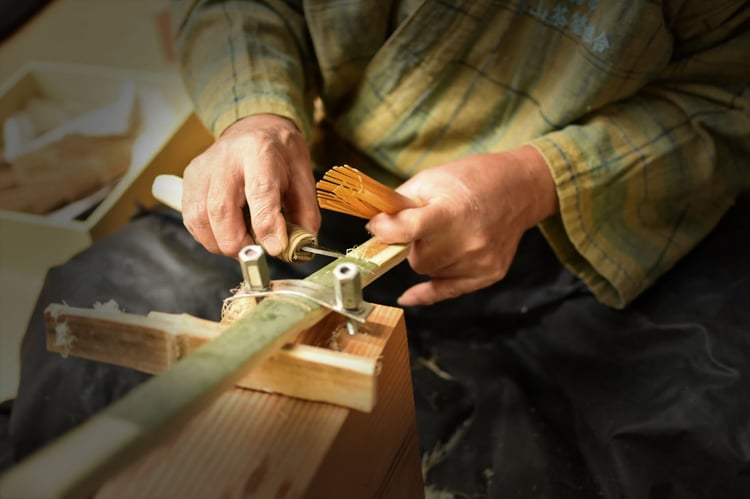
For whisking usucha into a light, fluffy foam, a whisk with a greater number of prongs works best. A skilled artisan splits a single piece of bamboo with a small blade, shaving each prong to an extraordinary fineness by hand in a process called ajikezuri. The suppleness of these prongs has a significant influence on the finish of the tea and how it feels on your palate (*2). Because the chasen is so delicate, it is considered a consumable item as well.
Chashaku (Tea Scoop)
The chashaku is a small scoop used to transfer matcha powder from its container into the tea bowl. Most are carved from bamboo, though you'll also find versions made of ivory, wood, or lacquer. Though it may look simple at first glance, the chashaku is considered second only to the tea bowl in its spiritual significance within the tea ceremony.
Historically, renowned tea masters carved their own chashaku by hand, projecting their aesthetic sensibilities and philosophical outlook into the form itself. The maker's signature and a personal name (mei) are often inscribed on the bamboo tube or box that accompanies the scoop. When you appreciate a chashaku, you are invited to reflect on the story and spirit of its creator.
Chaki (Tea Container)
Chaki is the general term for containers that hold matcha powder. The wooden, lacquered container used mainly for usucha is called an usuchaki or natsume, while the ceramic container for koicha is known as a chaire (*1). The natsume takes its name from the Chinese jujube fruit, which it resembles in shape.
Natsume with maki-e (a technique of decorating with designs drawn in gold powder) on deep black lacquer exude a refined beauty that sits beautifully within modern classic interiors. The chaire, meanwhile, carries greater formality—typically fitted with an ivory lid and lovingly stored in a shifuku, a small pouch made from exquisite brocade fabric (kireji).
Tools for Handling Water and Hot Water
Clean water and properly heated water are the foundation of preparing tea. The tools that handle them form the backbone of the tea gathering.
Kama (Kettle)
The kama is the iron vessel used to heat water (*1). It stands almost as the "master" of the tea gathering—often the first piece to draw your eye as you enter the tearoom. Different regions have long been known for their distinctive kama traditions (*3). The sound of water coming to a boil inside is called matsukaze, likened to wind rustling through pine branches. Listening closely to this subtle sound is a vital sensory pleasure within the tea ceremony.
Furo and Ro (Brazier and Hearth)
These are the fixtures where the kettle rests and the fire is built. They are used seasonally: during the warmer months from roughly May through October, the furo—a portable brazier placed on the tatami—is used. This keeps the heat a thoughtful distance from you as a guest.
From around November through April, when the weather turns cold, a sunken hearth called a ro is used instead, built into a square cut directly into the tatami floor. By kindling the fire closer to you, the host provides warmth you can both see and feel. The seasonal shift between furo and ro is considered one of the most significant transitions in the tea ceremony calendar.
Mizusashi (Fresh Water Container)
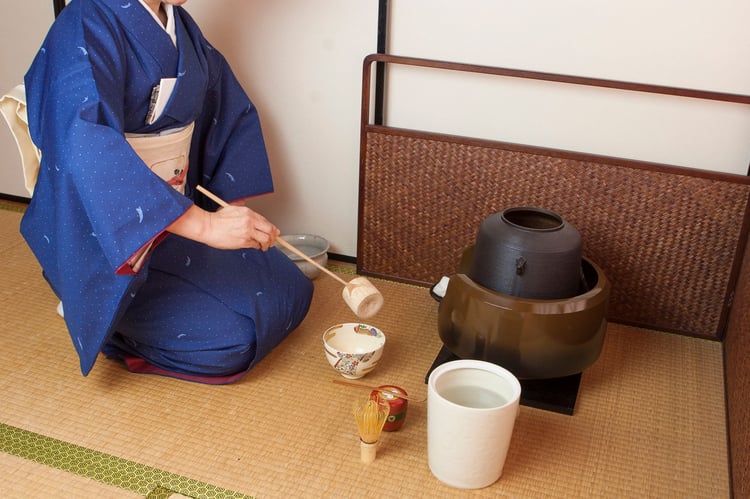
The mizusashi is the vessel that holds the clean water used to replenish the kettle or to rinse the tea bowl and whisk (*4). Ceramic versions are most common, though in summer, glass mizusashi or wooden bucket-style ones (tsurube) are also used to evoke a feeling of coolness. The mizusashi holds the water needed during the temae and comes in a wide variety of materials and forms. Part of the pleasure lies in mitate—repurposing objects originally made for other uses by reimagining them as tea utensils (*4).
Hishaku (Bamboo Ladle)
The hishaku is a bamboo ladle used to draw hot water from the kama or fresh water from the mizusashi. Its form—the size of the cup (go) and the angle of the handle—varies according to the season (ro or furo) and the school of practice. The sequence of holding the ladle, drawing the water, and setting it down is refined to the level of a martial arts kata, making the hishaku perhaps the tool where the beauty of movement shines most vividly.
Kensui (Waste Water Container)
The kensui is the vessel used to discard water after rinsing the tea bowl or whisk. It is a practical piece that quietly plays a supporting role, positioned out of direct view. Yet it is precisely in such unassuming tools that you can see the tea ceremony's philosophy of extending beauty into every corner: even here, fine metals like karakane (Chinese bronze) or beautifully grained woods are chosen.
Tools for Purifying and Preparing
In the tea ceremony, the host performs a ritual act of "purifying" the tools one more time in front of you before use. Cloth utensils make this possible.
Fukusa (Silk Cloth)
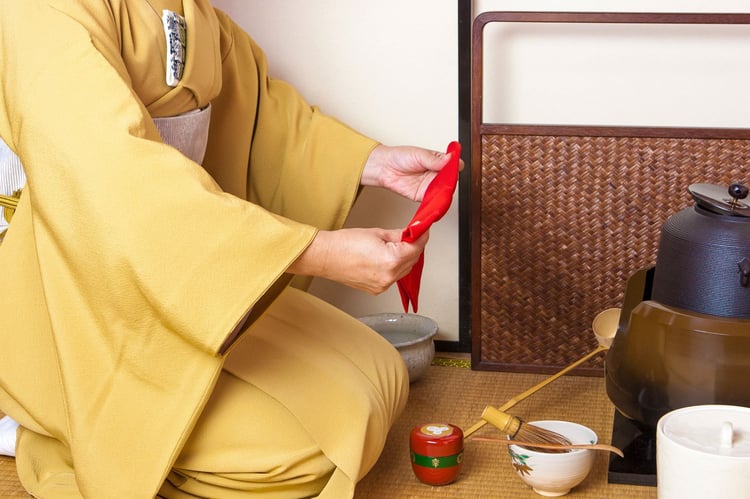
The fukusa is a silk cloth used to wipe and purify the tea container and scoop, or to grip the hot lid of the kettle. Traditionally, men use purple and women use a solid red or vermilion. During the temae, the act of folding the fukusa into precise shapes carries more than a physical meaning—it is a spiritual gesture meant to purify the host's own heart and the space itself. The luster and texture of fine silk lend an unmistakable dignity to every movement.
Chakin (Linen Cloth)
The chakin is a small white linen cloth used to wipe the tea bowl clean after it has been rinsed with hot water. Always kept immaculate, it is dampened and folded to a precise size before use. The sight of pure white linen gliding along the rim of a tea bowl brings a feeling of freshness and calm, communicating the sincerity of the host's hospitality through a single visual gesture.
Futaoki (Lid Rest)
The futaoki is a small stand used to rest the hot lid of the kettle or to temporarily hold the ladle. It can be made from bamboo, ceramic, metal, and more. Often chosen to echo the theme of the gathering, you'll find playful designs shaped like seasonal plants, animals, or symbols of good fortune—a small canvas where the host quietly tucks in a message.
Tools That Express Space and Season
The tools displayed in the tokonoma—the elevated alcove in the tearoom—set the atmosphere of the entire space and define the theme of that day's gathering.
Kakemono (Hanging Scroll)
The kakemono (hanging scroll) is considered the highest-ranking and most important item within the tea gathering (*1). Most commonly, it features bokuseki (calligraphy by a Zen master) or a painting depicting a seasonal scene. The words written on the scroll—often Zen phrases—become the spiritual theme of the gathering. Upon entering the tearoom, you first approach the tokonoma, bow deeply before the scroll, and take its theme to heart.

Hanaire (Flower Container)
The hanaire is a vessel for arranging chabana—the simple flowers of the tea room. They come in many materials: metal, ceramic, bamboo, woven basket, and more (*1). Unlike Western floral arrangements that fill a space with abundance, the tea ceremony follows Sen no Rikyū's teaching to arrange flowers "as they appear in the wild." A single bloom or a few modest stems are placed so as to draw out their natural vitality. Simple bamboo hanaire, free of ornament, are also highly regarded as sophisticated modern classic decor.
Kogo (Incense Container)
The kogo is a small lidded container that holds the incense burned in the tearoom. During the furo season, aromatic woods like sandalwood are placed in wooden or lacquered kogo, while during the ro season, neriko (incense blended with honey and other binders) is kept in ceramic ones. Many kogo are wonderfully small and charming, able to directly express the season or tell a story—making them a favorite among collectors.
Japanese Tea Ceremony Utensils a Beginner Should Gather First
When your interest in tea utensils begins to grow, it is natural to wonder where to start. Imagining a complete set of formal japanese tea ceremony utensils can feel intimidating, but if your goal is simply to enjoy matcha at home, you don't need to gather everything at once.
What matters is getting to know the essentials first and beginning in a way that fits naturally into your life. Choosing quality pieces bit by bit and savoring the time spent with them reflects the very spirit of tea itself. Here, let's look at the tools a beginner should start with and how to think about choosing them.
The Minimal Set for Enjoying Matcha at Home
The world of the tea ceremony runs deep, and if you try to gather every tool from the start, the sheer variety and knowledge involved might feel daunting. But as a first step toward bringing Japanese tradition into your everyday life—simply enjoying matcha at your own dining table or in your living room—no grand preparation is required (*1).
Think of it as enjoying the process of deepening your knowledge. Starting with a minimal set is the way to go. All you truly need are three items—a chawan, a chasen, and a chashaku—along with good-quality matcha (for usucha).
The chawan does not need to be an expensive piece by a famous artist. Look for a simple ceramic bowl that fits comfortably in your hand and complements your modern classic interior. The warmth that settles into your palms will add a sense of ease to your moments of quiet. For the chasen, those with a larger number of prongs—called yasohondate (80 prongs) or hyakuhondate (100 prongs), made from white bamboo—are the easiest to handle and help even beginners achieve a smooth, fine froth.
A chashaku of standard shape will do the job perfectly. As for the hot water, there is absolutely no issue with boiling it in your everyday electric kettle or teapot. Taking a quiet Saturday morning to whisk matcha, surrounded by beautiful furniture in your home, can become one of the finest forms of mindfulness in the rhythm of modern life.
Tools to Add Once You Start Studying the Tea Ceremony
When you take the next step beyond enjoying matcha at home—perhaps enrolling in a tea ceremony class or being invited to a tea gathering as a guest—you'll want your own personal set of belongings. These are the tools that allow you to participate with respect and without disrupting someone else's space.
The first five items to gather are the fukusa (silk cloth), kaishi (pocket paper), kashikiri (sweets pick), sensu (folding fan), and fukusa-basami (pouch).
Kaishi is a versatile Japanese paper that serves as a small plate for sweets or as something to wipe the rim of the tea bowl after drinking. The kashikiri is a small pick—similar to a toothpick—used to cut traditional sweets into bite-sized pieces.
The sensu, in the context of the tea ceremony, is not used to fan yourself. Instead, it is placed in front of you during greetings as a symbolic item that draws a kekkai (a sacred boundary) between you and the other person, expressing respect. All these small items are carried together in a beautifully woven fukusa-basami (a dedicated pouch). Simply carrying this set speaks of your understanding of Japanese culture and the poise of an adult who values courtesy.
Key Points When Choosing Tea Utensils
When the time comes to actually choose your tools, you may be surprised by the vast range of prices—from a few thousand yen to pieces valued in the millions, on par with fine art. When you are shopping, it helps to think not just about price but also about material, the setting in which you'll use the tool, and the story behind it. This makes the experience so much richer.
First, the quality of the material. A chasen crafted from high-grade domestic bamboo with the master's ajikezuri technique behaves entirely differently from an inexpensive, mass-produced foreign equivalent (*2). The suppleness gives you an astonishingly smooth tea.
Another aspect to consider is whether you can enjoy the patina—the gentle transformation a piece undergoes through long use. A quality ceramic chawan slowly absorbs the essence of the tea, and its landscape (the coloring and markings) deepens the more you use it.
Next, harmony with your lifestyle. Just as you would choose a car or a wardrobe piece, opt for refined designs with timeless beauty—you'll find they stay with you for years without losing their appeal. Finally, the story behind the object. Where does the clay come from? What is the history of the kiln? Owning a piece while knowing its background means participating in the continuation of a culture, not simply consuming an item.
Deepening Your Appreciation of Japanese Tea Ceremony Utensils
The appeal of tea utensils expands beautifully once you move beyond knowing their names and uses. Even with a single tea bowl, the slight asymmetry of its form, the flow of the glaze, the texture of the clay, and the writing on its storage box can completely transform how you see it. Tea utensils are not simply objects—they are cultural vessels that reflect how Japanese people have found beauty in nature, the seasons, and the passage of time.
Each tool carries the accumulated skill and history of its artisan, and to appreciate one fully is to read not only its surface beauty but also the philosophy and stories embedded within. Let's explore some of the perspectives that will help you savor japanese tea ceremony utensils more deeply.
Wabi-sabi and the Sense of Season
One of the most profound pleasures of tea utensils is encountering the distinctly Japanese aesthetic philosophy of wabi-sabi. While much of traditional Western aesthetics idealizes symmetry, the golden ratio, and the eternal perfection of materials like marble, the tea ceremony finds its highest beauty in imperfection, asymmetry, and things that change with time.
When a tea bowl's rim is slightly uneven, or when the glaze flows unexpectedly to form an irregular pattern (a "landscape"), it is not treated as a flaw—it is celebrated as a singular work of art shaped by nature itself (*1).
Equally striking is how the tearoom, despite its intimate size, draws in the vast sense of seasons from the natural world. In spring, tools in hues reminiscent of cherry blossoms take the stage. In autumn, designs evoking fall leaves or the harvest moon appear. In winter, thick clay vessels that feel warm to the touch come out. Through these tools, you are invited to move in step with nature's cycle, satisfying both intellectual curiosity and sensitivity at once.
The Charm of Each Material and the Craftsmanship Behind It
Tea utensils represent the pinnacle of the craftsmanship for which Japan is celebrated worldwide. The skill to bring out the very best in each material breathes life into every piece.
Ceramics begin with the careful selection of clay, followed by the flame's dance—a collaboration with nature itself. From warm earthenware to translucent porcelain, each region offers a distinct character.
Lacquer (urushi) is made by applying layer upon layer of tree sap, producing a deep, lustrous finish. The black and vermilion lacquer techniques seen on pieces like the tenmoku-dai—a stand that supports tenmoku tea bowls—combine durability with artistic elegance, and have long been treasured by tea practitioners (*2).
Bamboo is used for chasen, chashaku, hanaire, and more, prized for its straight strength and flexible give. Then there is iron—the forging traditions behind the kama produce a commanding presence softened by the fine, sand-like texture of its surface (*3). When tools of these varied materials come together in a single space, they create an exquisite harmony, like a world-class orchestra performing in unison.
Stories Revealed Through Meibutsu, Shifuku, and Hakogaki
When you appreciate tea utensils, the history and story each tool has carried are just as important as its form.
Particularly outstanding pieces are called meibutsu ("famous objects"), and many have passed through the hands of historical figures like shoguns and daimyo, traded as war rewards at a value equal to entire castles. Such masterpieces were never stored unclothed. They were carefully wrapped in shifuku—custom-made pouches sewn from the finest silks, including meibutsu-gire (renowned textiles) (*1).
The paulownia wood boxes that house these pieces often bear inscriptions from past owners and celebrated tea masters, written by brush, recording the tool's origin, its name (mei), and authentication ("This tool is certainly the genuine article"). These inscriptions are called hakogaki. That said, hakogaki alone do not uniformly determine authenticity.
To appreciate a tea utensil is far more than simply admiring a beautiful object. When you open the box, loosen the cords of the shifuku, and lay your hands on the piece inside, you are engaging in a kind of dialogue across centuries—with the historical figures who once cherished that very object. It is an experience of deeply intellectual romance.
Caring for and Storing Japanese Tea Ceremony Utensils for the Long Haul
Because tea utensils rely so much on natural materials, their delicate nature means that how you handle them day to day has a real effect on their beauty and lifespan. Clay tea bowls, bamboo whisks and scoops, lacquered tea containers—each calls for its own approach to care and storage, and understanding the nature of the material is the most important thing of all.
Through gentle, consistent use, your tools take on a character that goes beyond simple wear. The time you have spent together is quietly engraved into them. This resonates with a deep Japanese sensibility—cherishing what is old and carrying it forward. Here, you'll find basic guidance on care and storage that is easy to practice even if you are just starting out.
Basic Care for Chawan, Chasen, and Chashaku
Just like a fine cashmere coat or an intricate mechanical watch, excellent tools can stay with you for generations with the right maintenance. Caring for tea utensils is not complicated—it is about understanding the nature of natural materials and handling them gently. Let's walk through the basics that often trip up beginners.
First, the chawan. After enjoying matcha, gently rinse the bowl with lukewarm water as soon as you can, using just your fingertips. Avoid detergents and hard sponges—they can damage the glaze and leave the bowl smelling of soap. Once clean, wipe the bowl dry with a fresh cloth and let it dry completely in a well-ventilated spot. Putting it away while still damp can invite mold and unpleasant odors.
Next, the chasen. Because the whisk is formed from extraordinarily delicate bamboo fibers (*1), it needs the most careful handling of all. After use, fill the bowl with warm water and gently swirl the whisk inside to release matcha residue. Then rinse lightly under running water and stand the whisk upright to dry in a well-ventilated spot, away from direct sunlight.
What to watch for here: never use detergent, and don't rub the bamboo tips with your fingers. When storing the whisk, placing it upside down on a dedicated ceramic stand called a kusenaoshi helps preserve the beautiful curve of the tips over time.
Finally, the chashaku. The cardinal rule is never to wash it with water. Because it is made of bamboo or wood, exposure to moisture causes mold to form and the piece to warp. After use, simply wipe away any residual matcha powder with soft tissue paper or a clean, dry cloth—that is enough.
Storage and When to Replace
To keep your tea utensils looking beautiful for years to come, the environment you store them in matters too. In a climate like Japan's, with four distinct seasons and dramatic humidity shifts, the paulownia wood box (kiribako) has been treasured for centuries. Paulownia absorbs moisture and swells when the air is damp, keeping humidity out, and shrinks when the air is dry to allow ventilation—a natural humidity regulator at work.
When storing your own pieces at home, keep them somewhere that avoids direct sunlight and the direct airflow of air conditioning—a shelf with stable temperature and humidity is ideal. Lacquered tools (like usuchaki) are especially sensitive to extreme dryness, so pay close attention to their storage conditions (*2).
Now, when to replace. Ceramic tea bowls, lacquerware, and metal tools that happen to chip or break can be repaired with kintsugi—a traditional technique using lacquer and gold powder—adding a new layer of beauty (a new "landscape") and letting you continue to enjoy the piece. It is an approach beautifully aligned with today's values of sustainability.
The chasen, on the other hand, is clearly a consumable. With repeated use, the tips of the bamboo can break or thin out, losing their spring. If you notice the tea is no longer whisking to a fine froth, or if a few of the tips have broken off, don't hesitate to move on to a fresh one. In Japan, there is a beautiful tradition called chasen-kuyō, where retired whisks are brought to shrines or temples and ceremonially burned—a gesture of gratitude for their service.
Ways to See and Learn About Tea Utensils in Person
Reading about tea utensils in books and articles is valuable, but to really understand their charm, nothing compares to touching them yourself and experiencing them in use. The weight of a tea bowl in your hands, the delicate tips of the whisk, steam rising from the kettle, the soft sound as a tool is placed down—there is a wealth of information here that words alone can never convey.
Seeing japanese tea ceremony utensils in different settings—a tearoom, a museum, a workshop, or a specialty shop—reveals their many faces: practical object, fine craft, and work of art. Let's look at some tangible ways you can move beyond reading and experience tea utensils with your own senses.
Seeing How Tools Are Used in a Tearoom Experience
Once you have gained a base of knowledge about tea utensils, the next step is to experience the "living space" where they are used for their true purpose. The impression you get from text and photos feels entirely different from the five-sense experience inside an actual tearoom.
What we most recommend is joining a tea ceremony experience or a tea gathering designed for visitors—something beginners can easily take part in. In historic cities like Kyoto, there are many venues that offer authentic tea experiences inside renovated kyō-machiya townhouses or traditional Japanese gardens, often with English commentary to guide you (*1).
There, the tools are not sitting behind glass. They are being handled through the host's flowing movements, and you witness them alongside the sound of water, the scent of incense, and a seasonal sweet. The moment you realize, "Ah, this tool was shaped this way for that motion"—when functional beauty and the ritual fit together perfectly—is deeply satisfying to the curious mind.
Appreciating Tea Utensils at Museums
After experiencing the tools as everyday objects, shift your perspective and visit a museum to appreciate them as works of fine art.
At major institutions like the Tokyo National Museum, historically significant meibutsu tea utensils are displayed in permanent collections or in special exhibitions (*2). Even through glass, the latest lighting technology lets you study the intricate hues of a tea bowl's glaze, the microscopic precision of maki-e on a lacquered natsume, the inscriptions left centuries ago by warlords, and the fine details of silk shifuku pouches.
With an audio guide or catalog in hand, you can dig into the dramatic provenance of each piece—what historical currents it has weathered, which powerful figures loved it, and how it has made its way miraculously into the present day. It is an ideal way for a refined adult to spend a quality day off.
Touching Craftsmanship at Workshops and Specialty Shops
For those who want to immerse themselves even more deeply, we recommend visiting the workshops where tools are made or browsing long-established tea specialty shops.
For instance, the Takayama area of Nara—famed for chasen production—along with the tea region around Uji in Kyoto, and various pottery towns across Japan (known for their kilns), offer workshop tours. Watching a rough piece of bamboo transform, through the artisan's almost magical hand (ajikezuri), into an extraordinarily delicate chasen (*3) will leave you with a lasting affection and respect for the tool in your hand.
Visiting a long-established tea shop in a major city gives you another valuable experience: conversation with a knowledgeable owner as you actually hold the pieces you are considering. Simply saying, "I'm looking for a chawan that suits this season," can lead to remarkable suggestions (mitate) you'd never have thought of on your own. That dialogue with a true professional is itself a luxurious way to deepen your cultivation.