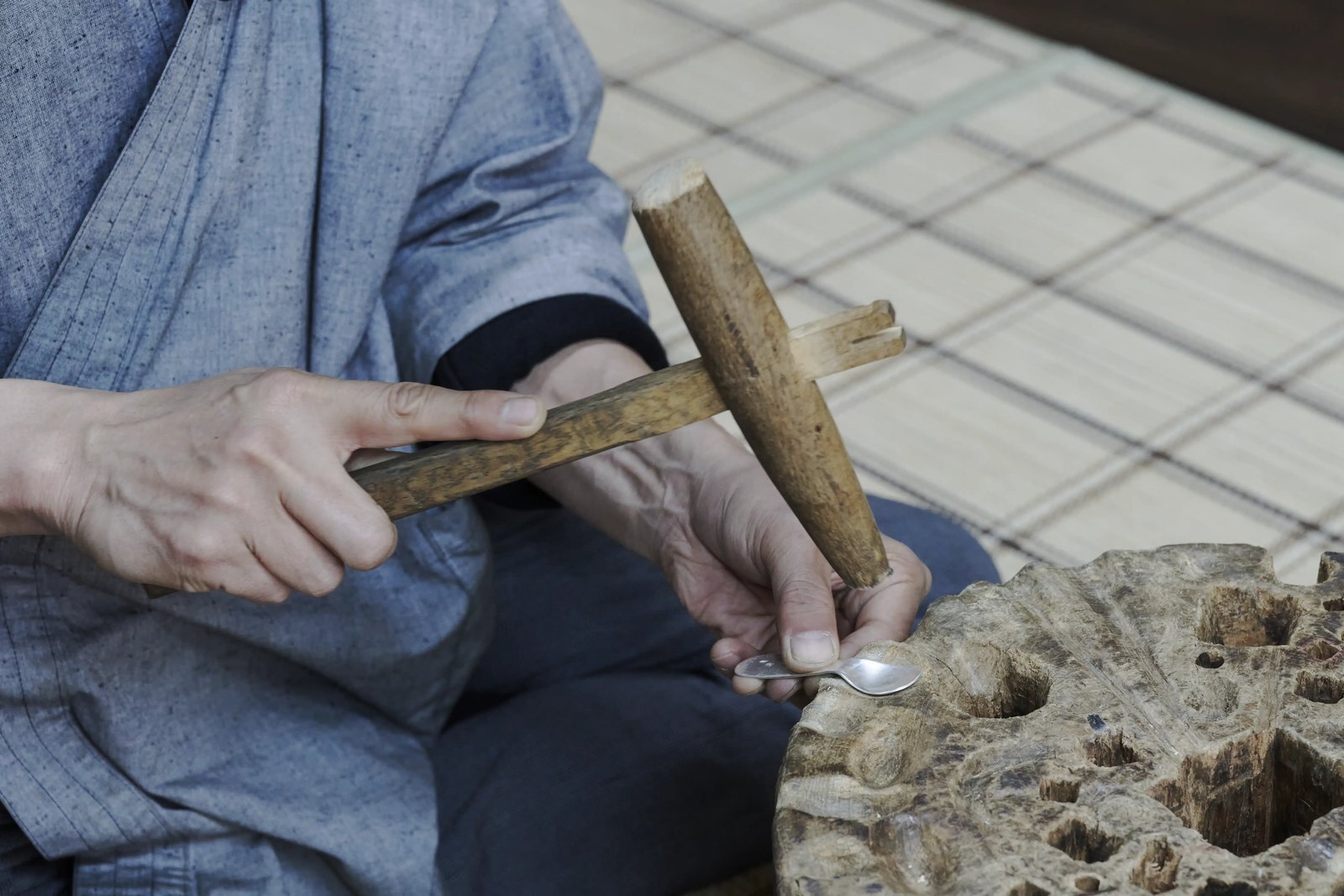
In a quiet workshop in Taito, Tokyo, a father and son strike silver by hand, continuing a lineage that traces back more than 400 years to the Hirata school of Edo metalwork.
Type "Japanese silverware" into a search bar and the results are almost entirely retail: flatware sets, weight-by-gram pricing, souvenir shops — none of it explains what the word protects.
For a traveler drawn to Tokyo for the craft itself, the question is different: what does it take to keep a 400-year hammer rhythm alive into its 13th generation, and what changes in the metal once it leaves the workshop.
Silversmithing (Kinko): What 'Japanese Silverware' Actually Means
Most of what surfaces online under "Japanese silverware" is retail flatware — spoons and forks priced by weight.
That is a real category, but not this article's.
The craft behind hand-shaped Japanese silver has its own name, kinko, and its own specialists, shirogane-shi — easy to conflate with retail if you have only met the word through a shopping page.
Kinko: The Metalworker's Craft Behind the Word 'Silverware'
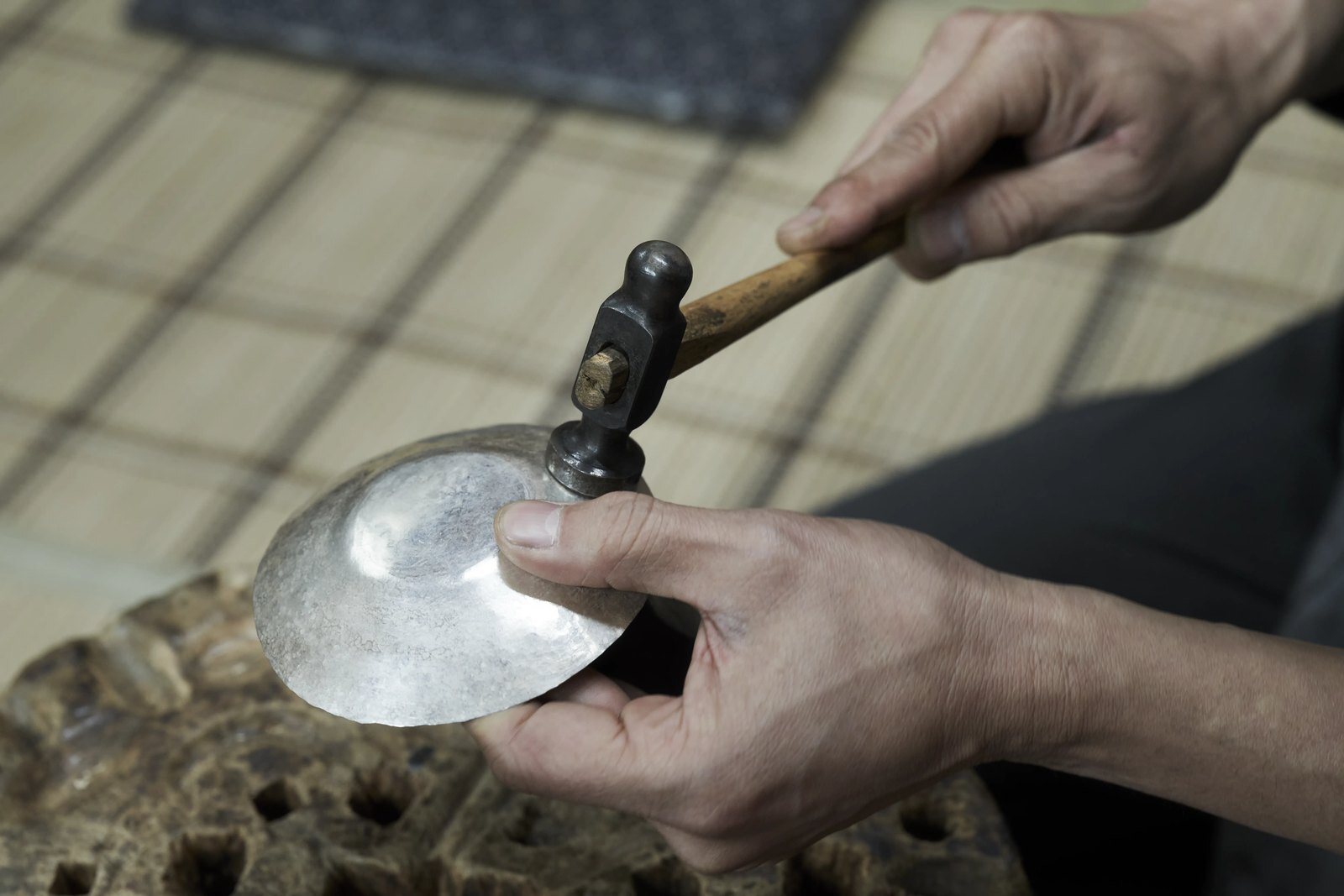
Kinko is the general Japanese term for metalworking as a craft — shaping, chasing, and finishing metal by hand, distinct from casting or stamping.
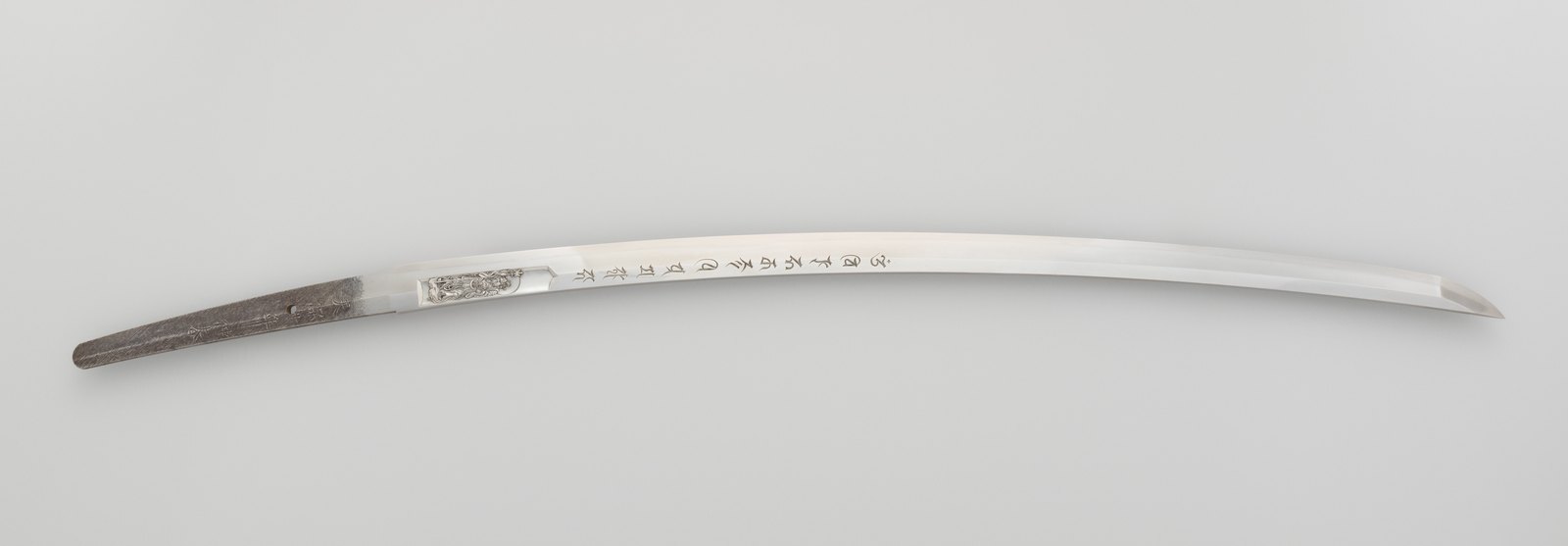
It covers gold, silver, copper, and their alloys, and historically lived inside a bigger world: the decoration of samurai swords and armor.
A sword's blade was the swordsmith's domain; the guard and hilt ornaments belonged to the metalworker.
That distinction matters later: the workshop behind this piece traces its techniques to one named school within that world, not to kinko in the abstract — a difference no shopping page has reason to explain.
Shirogane-shi: Tokyo's Silversmiths, Distinct From Jewelers
Shirogane-shi — literally "silver-artisan" — is the specific term for a craftsperson who works silver within this kinko tradition, not interchangeable with "jeweler."
A jeweler's value lies in the stone or the brand; a shirogane-shi's lies in the metal itself and what hand-forming does to it — the way a surface takes a hammer mark, the way silver's color shifts as it is worked and used.
A shop selling silver jewelry and a workshop practicing shirogane-shi metalwork can look similar from the street, but answer different questions about what the object is for.
From Samurai Armor to the Dining Table: How Edo Silversmithing Survived the Sword's Abolition
The line from "sword ornament" to "dinner spoon" is not a metaphor — it is a documented economic rupture, and surviving it is the reason a workshop like this can still exist in Tokyo today.
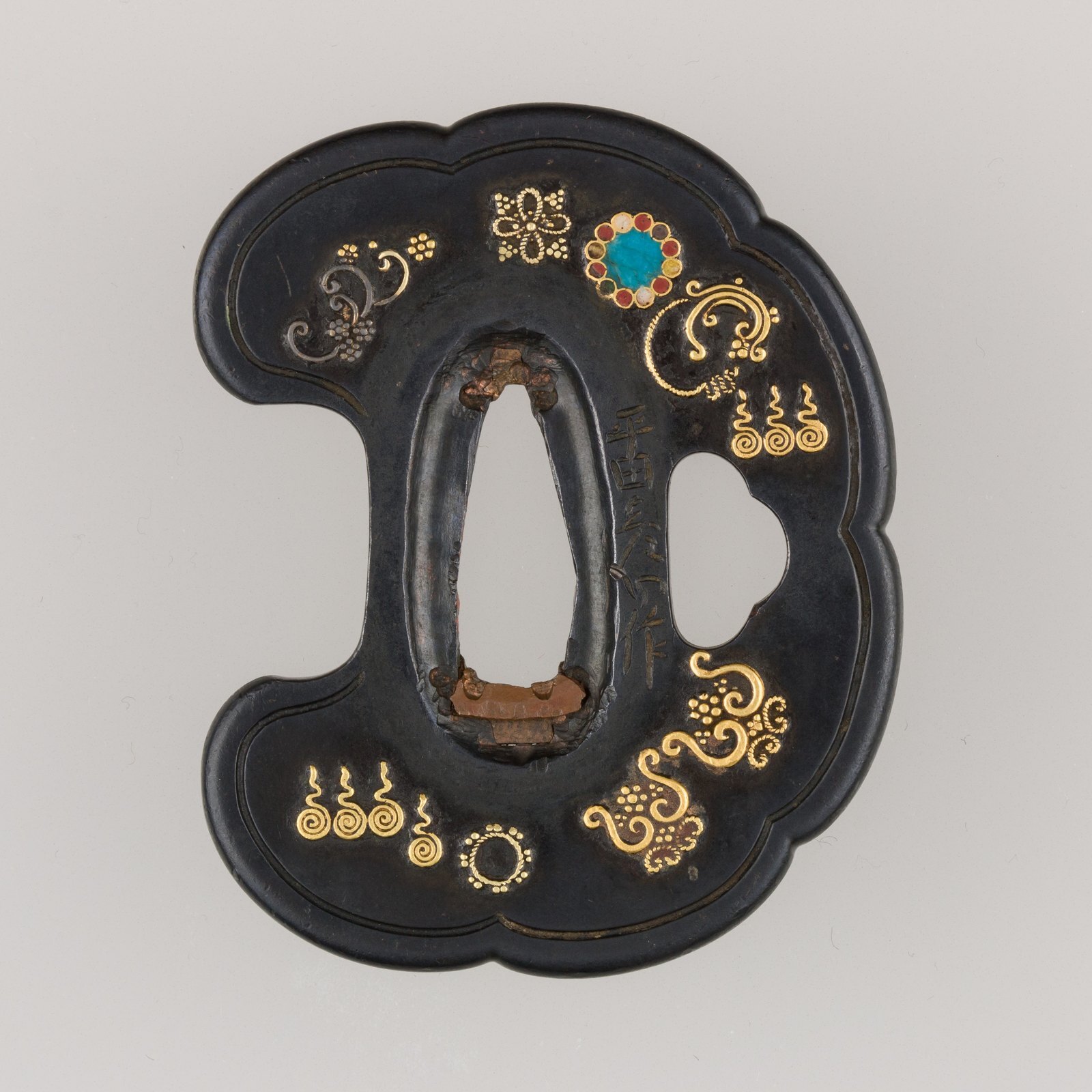
Hirata School Origins: Gold and Silver for the Samurai's Sword and Helmet
The Kamikawa family identifies its lineage as inheritors of "the techniques of the Hirata school of metalwork," a history it describes as more than 400 years old.
According to Tokyo Metropolitan Government's own record, the line begins with Hirata Hikoshiro, known as Hirata Dōnin (1591–1646), "the founder of the craft of Tokyo Shippo," working "in the service of the Tokugawa Shogunate."
Successive generations guarded their techniques in Edo through the early Meiji period — a lineage back to the early 1600s, serving the shogunate itself.
1876: The Sword Abolition Edict That Ended the Old Market
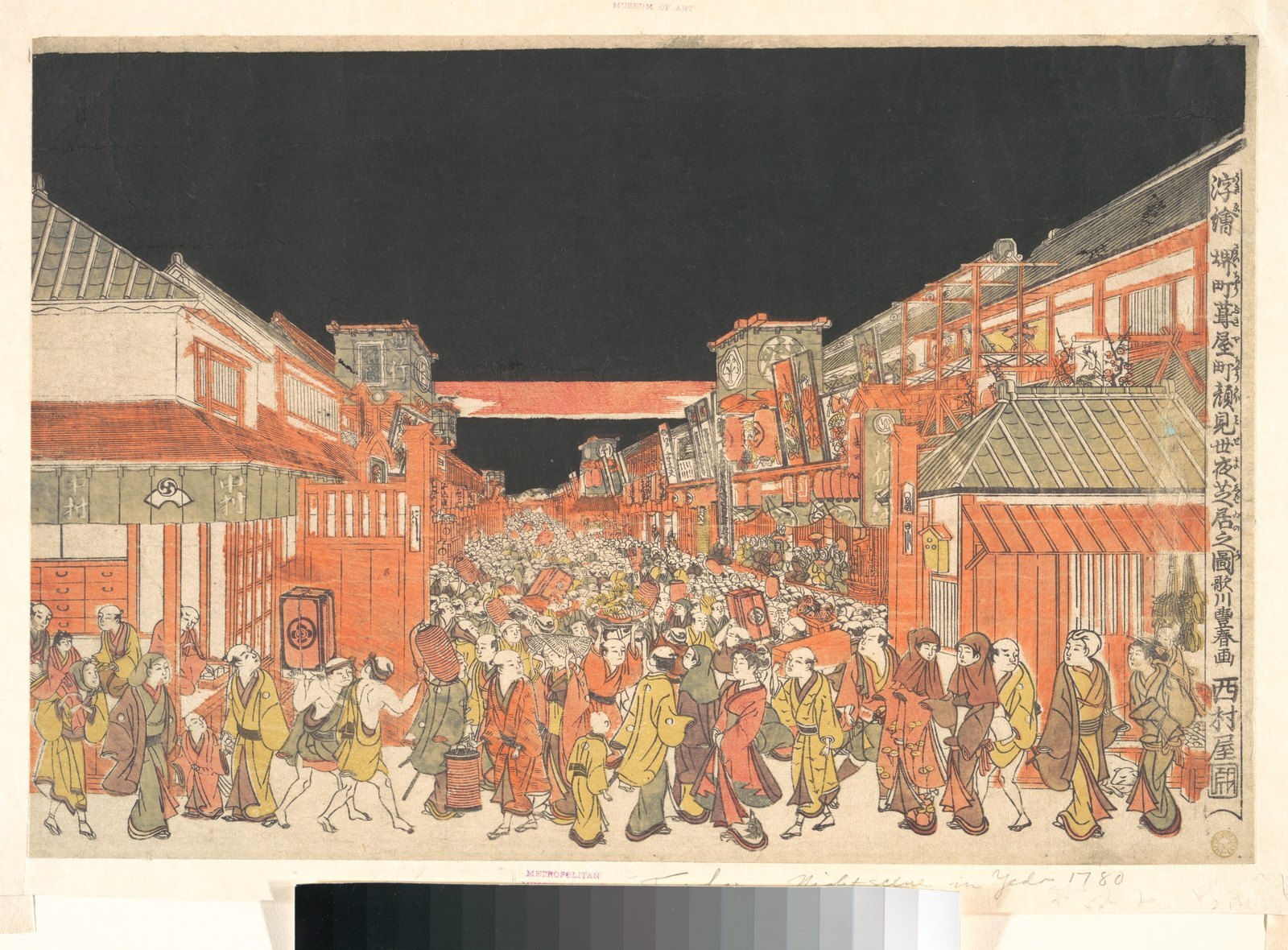
For roughly two and a half centuries, demand for this craft was simple: the samurai class wore swords, and swords needed decorated fittings.
That demand did not decline gradually.
According to the Victoria and Albert Museum, "Samurai status was abolished in a series of measures culminating in the Haitōrei Edict of 1876, which ended the privilege of bearing swords."
A law, not a shift in taste, removed the market in a single stroke — every artisan whose livelihood depended on sword fittings lost their principal customer at once.
From Armor to the Table: How the Craft Found a New Purpose
Metalworkers did not abandon their skills; they redirected them.
Kyoto's Kiyomizu Sannenzaka Museum, which collects late Edo and Meiji metalwork, describes what followed plainly: the techniques used to decorate sword fittings and incense utensils reached "a very high level of development" by the early Meiji years, and then, "for a number of reasons that included the official abolishment of the wearing of swords and the westernization of Japanese daily life, they suffered a rapid decline."
What kept the skills alive was demand from somewhere else. The Khalili Collections records that after 1868 "Japan's new leaders realised that the historic skills of the metalworker, lacquerer, enameller and ceramic artist could play a vital part in the struggle to compete in international markets." The hand that had decorated a sword guard was now decorating objects for export, and later for the table.
The same techniques were redeployed onto vases and, as Taito City's own record confirms, household silverware already used among Edo townspeople.
The use changed; the hand making it did not.
That is why a workshop descended from armor-fitting artisans can, four generations later, be making a spoon.
Atsurae: The Order-Made Philosophy Behind Bespoke Silverware
Sōhaku Kamikawa, the 12th generation of this Tokyo workshop — now operating under the name Gindendo — and his son Sōki, the 13th generation, use one word more than any other to describe what they make: atsurae, often translated as "custom-made."
Sōhaku himself points to the closest English word: "even within the word 'bespoke,' I feel there is something very close to it."
But in his own account, the translation loses something essential.
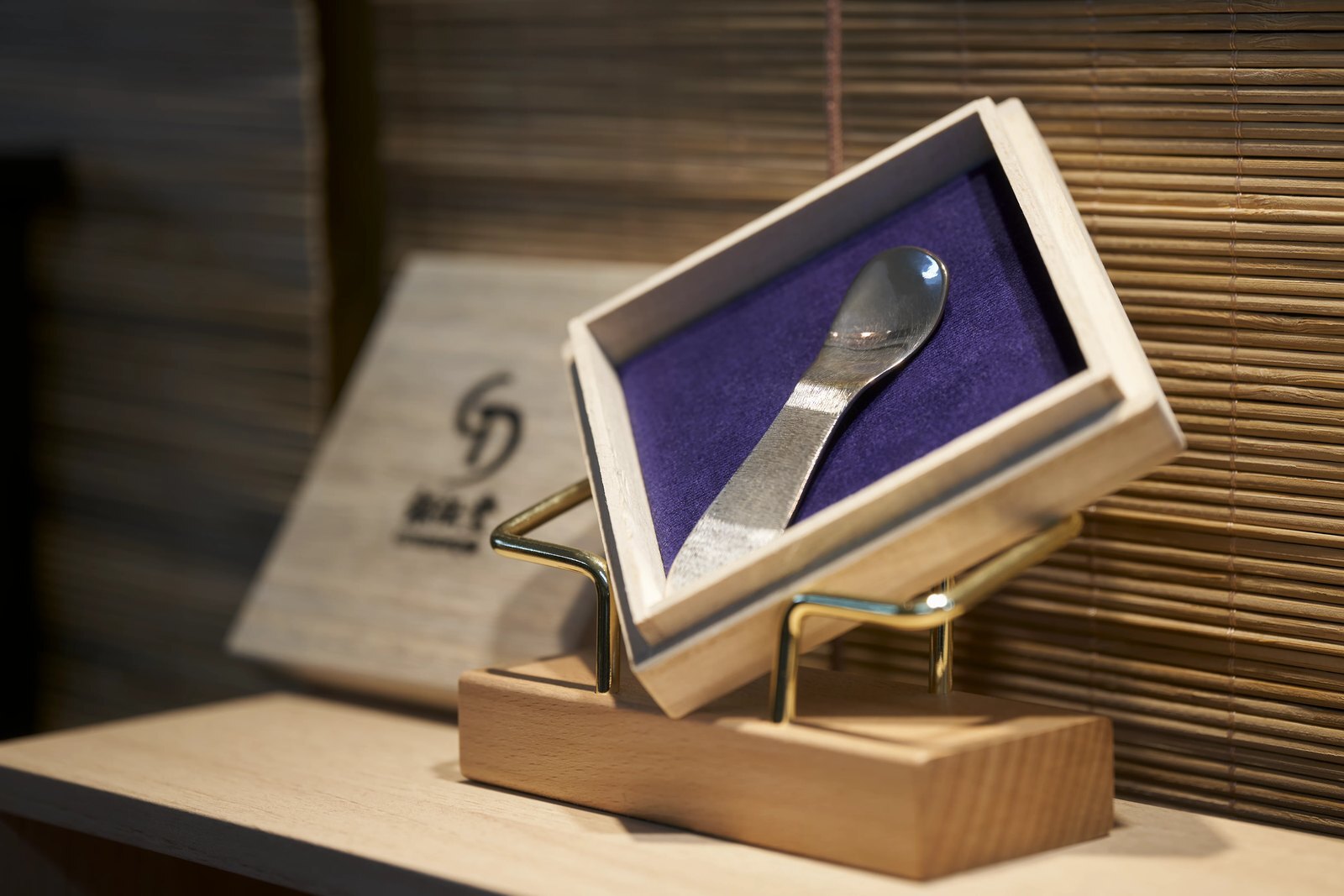
Atsurae Is Not Customization
Customization, in the retail sense, means adjusting a fixed product — a monogram, a finish, a size.
Sōhaku draws a firmer line: "Atsurae is not simply made-to-order work," he says. "It means thinking deeply about the other person, and giving form while imagining even that person's future."
The distinction is between changing variables on an existing template and starting the design from a specific person's life.
Stamping an initial on a mass-produced spoon is customization; shaping the object around a person you have actually thought about is atsurae.
Atsurae Begins by Reading a Client's Life, Not a Spec Sheet
In practice, Sōhaku describes shaping a piece "to imagine how that person will use it, and even to help create that person's future together," before its final form is settled.
He names this value with a word hard to translate: omoiyari, consideration for another person. "It is to think properly and deeply about the other person," he says.
Sōki, in his own account, did not want Gindendo to be merely a place where objects are lined up — he wanted a place for consultations, where people's feelings could be taken in.
What Separates a Master's Atsurae From a Generic Order
What separates real atsurae from an ordinary custom order is this question of imagined future use.
An order specifying only dimensions and finish is a functional transaction.
Atsurae is, in the account Sōhaku and Sōki gave of their own work, closer to a promise made over a longer stretch of time — shaped with an understanding of the life the piece is about to enter, not just the measurements it needs to fit.
That is a standard a visitor can use: does the maker know anything about the person it was made for, or only the specifications.
Passing Down the Hammer: What Changes—and What Doesn't—From One Generation to the Next
Sōhaku is the 12th generation; Sōki is the 13th.
Sōki's grandfather — the 11th generation — is, in Sōki's own words, "elderly as well," and some of the workbench's largest tools still in daily use were made in his era.
Inheritance here did not begin with formal instruction.
It began, both men say, with sound.
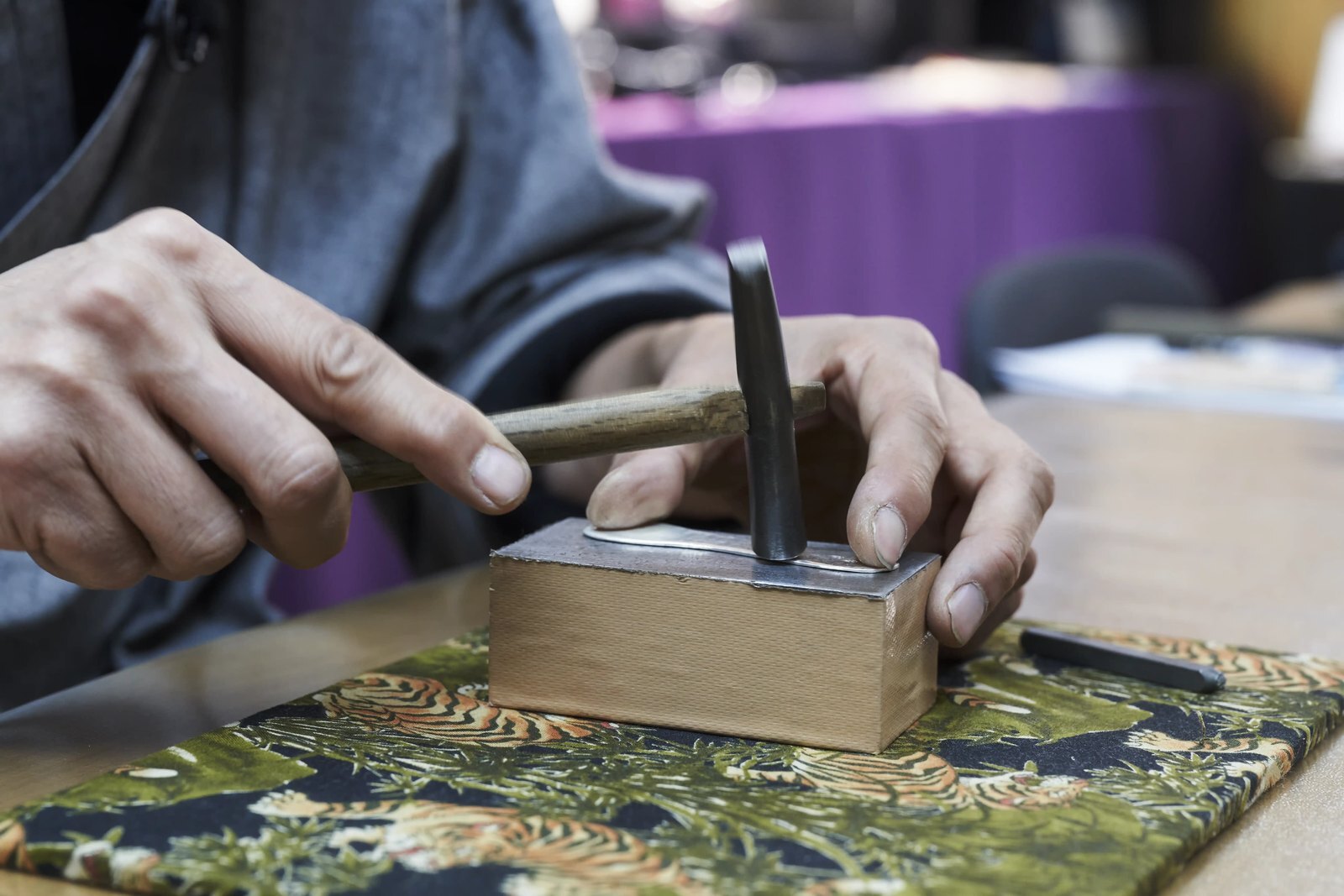
Three Generations of Shirogane-shi, One Workbench
Sōhaku's official career runs 33 years, but he describes the craft's presence in his life as longer: "almost as if I have been doing this for 50 years."
Inheritance started before he was taught anything: "my grandfather — who was still vigorous, even in his later years — would let me sit on his lap, and there was that rhythm as he struck: tonton-ton.
That has stayed with me very strongly," he says.
Sōki recalls the same sensation a generation later, at his father's knee: "listening to that tonton-ton-ton rhythm.
It was a comforting sound."
Some of the workshop's tools — the wooden blocks and hammers still in daily use — are nearly a hundred years old; others, larger equipment in the same work area, date to the 11th generation's own era.
Either way, three generations remain present in the room even when only two are at the hammer.
Ten Years From Now Is Too Late': A Warning From the Workshop
Sōki did not enter this path automatically; he had considered ordinary employment.
What changed his direction was a dated crisis: his grandmother's death coinciding with his father Sōhaku's collapse in health. "I felt right in front of me the reality that, at this rate, the cultural flame might truly go out," he says.
His conclusion is the most direct statement in this interview: "Once culture is lost, it can never be returned to what it was.
So I felt that ten years later would be too late, twenty years later would also be too late — it had to be now."
At twenty, he founded Gindendo.
What a Son Inherits That a Textbook Cannot Teach
Sōki describes learning from tools before he could explain what he was learning — the century-old wooden stand used in the workshop's hands-on sessions, of which he says, "even now I find new things in it every day." "The tools teach us," he says.
Sōhaku frames it in reverse: "Traditional craft is not fulfilled simply by making things to exact measurements.
Tools, oneself, those who came before, and the region — all of it together is what we offer as time to the customer."
What a son inherits is not a technique handed over in an afternoon; it is a relationship no textbook can format.
Ibushi-gin: Why the Finest Japanese Silver Looks Better With Age
The single most common mistake a first-time owner of hand-forged Japanese silver makes is treating the metal's darkening as a defect.
It is closer to the opposite.
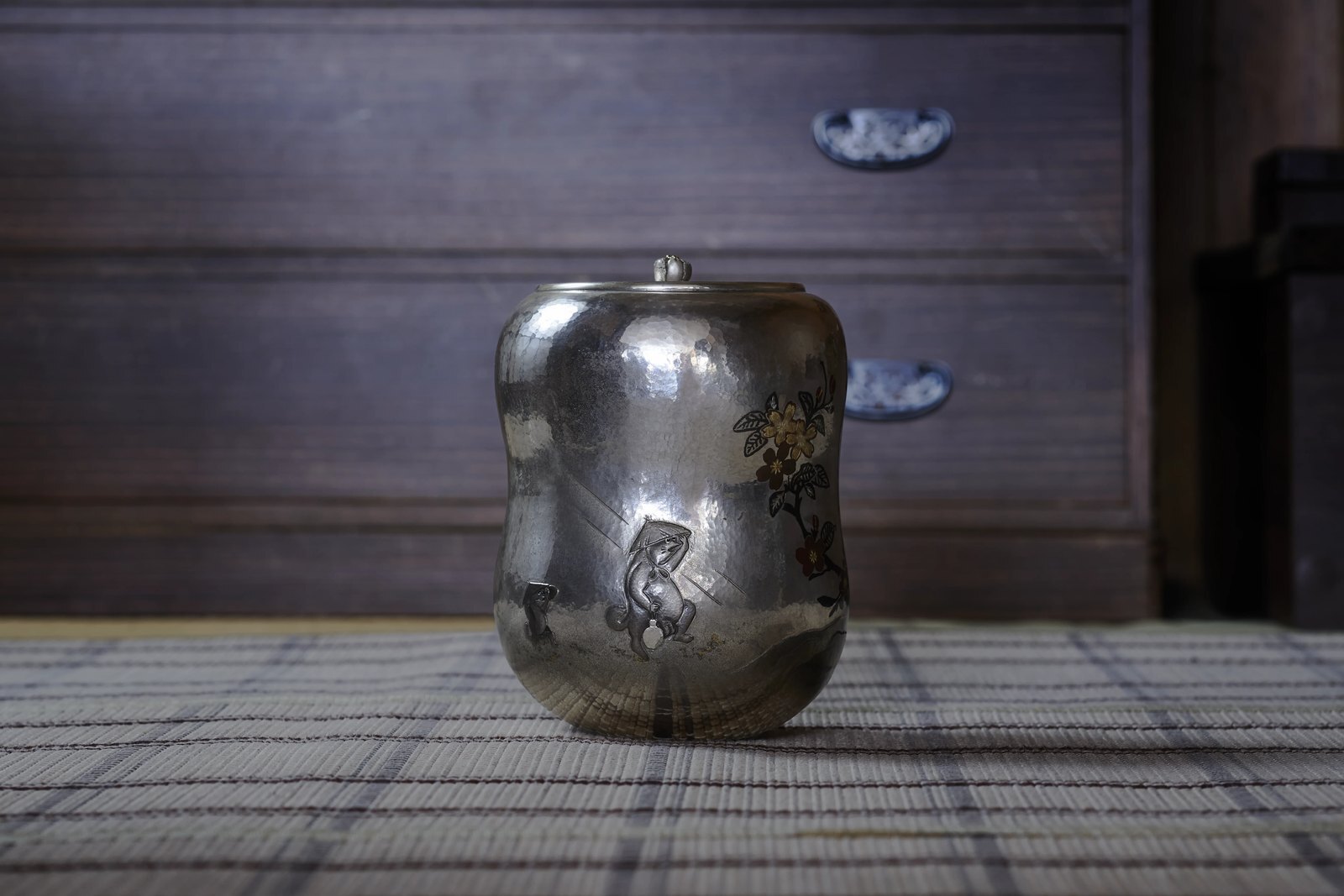
Ibushi-gin: The Patina That Signals Age, Not Damage
Japanese has a specific word for what happens to silver as it ages: ibushi-gin, literally "smoked silver."
Sōhaku is precise about why the word exists: "We do not say smoky iron or smoky copper in the same way.
In Japanese there is the expression ibushi-gin.
It carries within it things like refinement, the flavor that comes from long use, and depth."
The patina is not tarnish in the sense of contamination — it is silver's own chemistry deepening through years of handling, and Japanese craft culture treats it as a mark of value, not neglect.
Why Ibushi-gin Deepens Through the Owner's Own Care
Sōhaku uses one verb repeatedly, deliberately organic rather than mechanical: "through the care the user gives it afterward, silver grows — that is a phrase I often use."
Sōki describes the same process from the customer's side: once the piece leaves the workshop, "the customer becomes the main actor... through use, there emerges the taste called ibushi-gin.
That is something only the person using it can bring forth."
Neither describes silver as a finished product — both describe something that keeps changing with its owner long after the workshop is done.
The Misconception That Sends Good Silver to the Polishing Cloth
Anyone who owns — or is considering buying — hand-forged silver eventually asks: should you polish away the darkening?
Based on how Sōhaku and Sōki describe ibushi-gin, the answer is no, not reflexively.
A commercial polish strips tarnish back to a uniform bright surface, and applied to ibushi-gin it erases years of exactly the depth the craft is built to produce.
An uneven, darkened surface on hand-forged silver is frequently evidence of age and care, not a maintenance failure.
What the Souvenir Shops Get Wrong About Japanese Silverware
Search results for "Japanese silverware" are dominated by shopping pages and how-to-use guides, because the phrase mostly serves a buying intent.
That is a legitimate need, but it is a different one from wanting to know how to tell real hand-forged work apart from it in the first place — which is the more useful skill for a traveler who wants to look at a piece in a Tokyo shop window and actually understand what they are seeing.
Weight and Hammer Marks: What Machine-Made Japanese Silverware Can't Fake
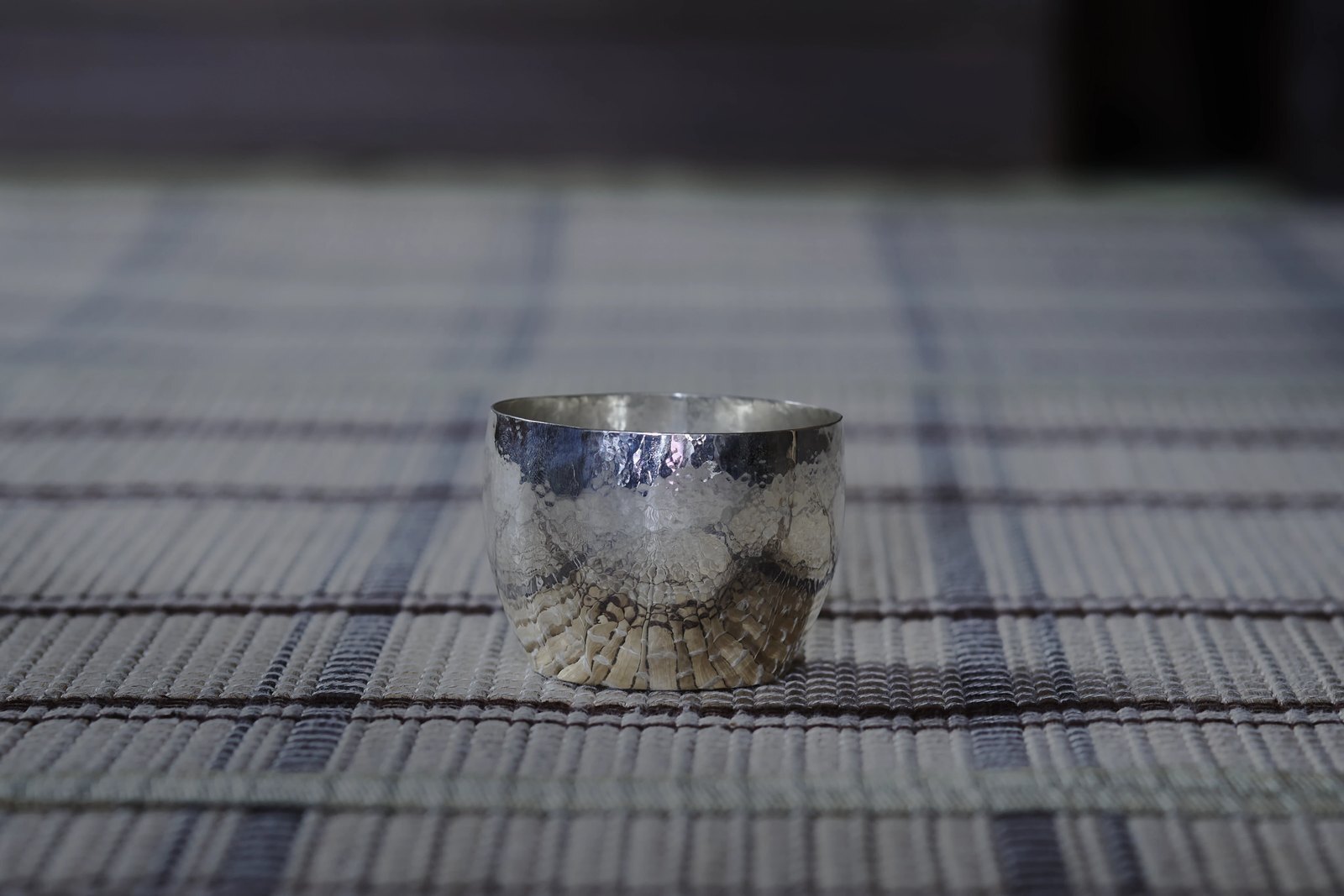
Hand-forging leaves physical evidence stamping and casting do not: faintly irregular hammer-strike texture, since no two sequences of blows are identical.
Sōhaku describes facing, in every piece, "the sound when it is struck by hand, the changes in the material as seen by the eye, and the feeling returned through the hammer" — attention a stamping machine has no equivalent for.
Weight and surface irregularity are not flaws to look past; on genuinely hand-forged silver, they are the fingerprint of the process.
Reading the Hallmark: What a Stamp Actually Tells You
A souvenir-shop guide will tell you to check for a hallmark, as if a stamp were the whole answer.
It is only the first half of one: a hallmark certifies metal purity and identifies a workshop, a claim about authorship and material.
What it cannot certify is everything this article has actually been about — whether that maker practiced atsurae, or shaped the piece with a client's future in mind.
A stamp tells you the silver is real.
It says nothing about whether the making was.
Why 'How to Use' Guides Miss the Point Entirely
Most content online under "Japanese silverware" answers a narrow question: how to clean it, store it, or use it at the table.
For a traveler whose actual interest is cultural, that framing skips past everything that makes the object worth looking at: the 400-year lineage behind the hands that made it, the philosophy of atsurae that shaped it, and the patina that only deepens if left alone.
A guide to using silverware and a guide to understanding it are not the same document — and that gap is exactly what a souvenir-shop shelf card cannot fill.
Beyond Kinko: Where Silver Fits in Tokyo's Wider Craft and Performing Arts World
Metalwork does not exist in isolation from Tokyo's other living traditions — it shares a set of underlying values with crafts that, on the surface, look nothing like it.
Where Kinko Sits in Tokyo's Traditional Crafts Cluster
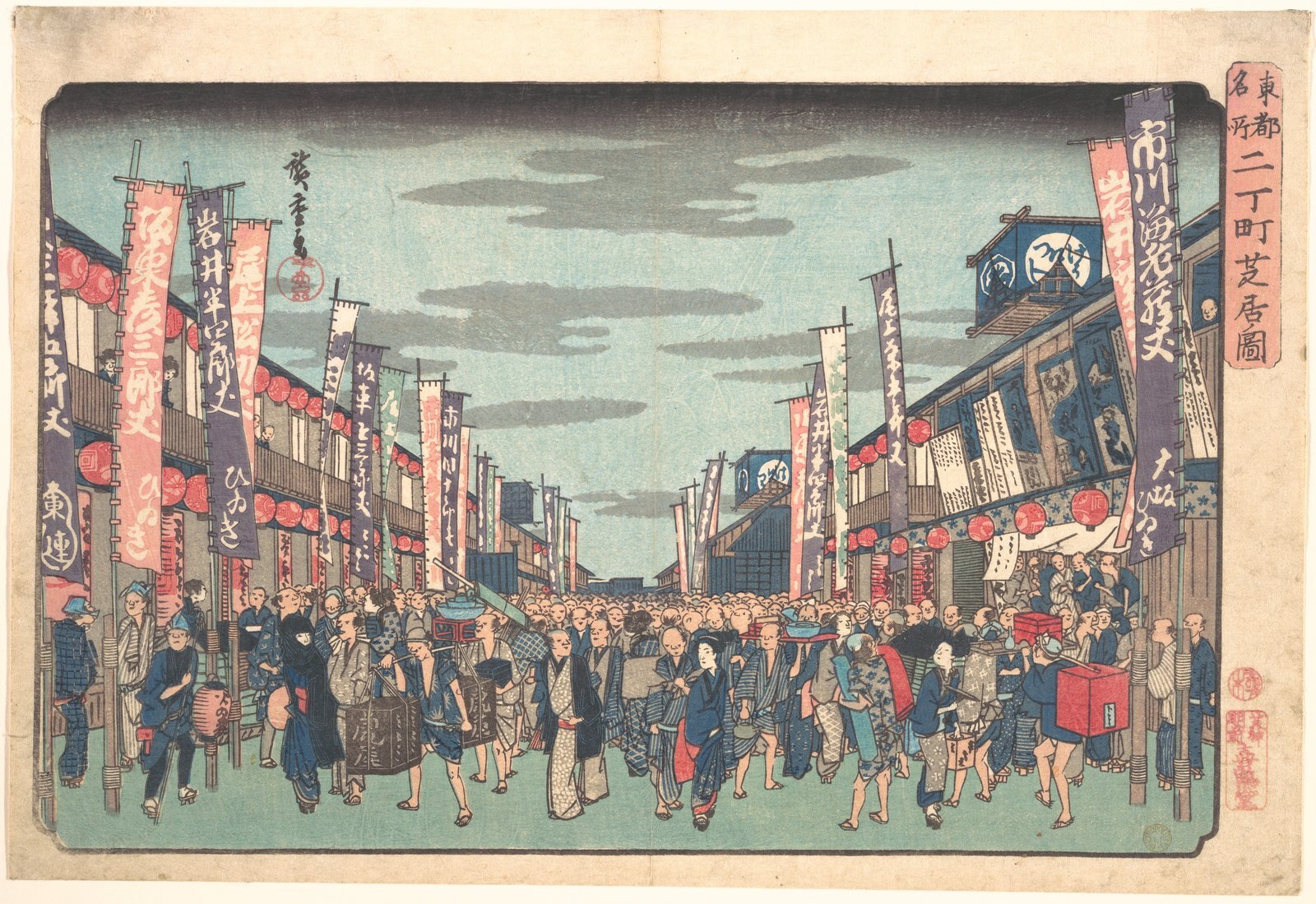
Silversmithing sits alongside bonsai, ikebana, tea ceremony, tatami-making, and washi paper in Tokyo's broader traditional crafts landscape — different materials, a comparable discipline of attention.
Bespoke Discovery's overview of Japan's traditional crafts and artisanal culture maps this wider landscape; kinko metalwork is the piece this article fills in.
Ikebana and Kinko: Two Crafts, One Attention to a Single Object
Ikebana — the art of flower arrangement — and kinko metalwork could not look less alike: one organic and temporary, the other metal and permanent.
But both are disciplines built around total attention to a single object, rather than production at scale.
Readers curious how this same intensity shows up in a different material can see it in Bespoke Discovery's ikebana experience guide.
Planning a Day Through Tokyo's Quiet Craft Quarter
Taito, where this workshop is based, sits inside the part of Tokyo that rewards slower, craft-focused itinerary planning over a checklist of landmarks.
For travelers building that kind of day, Bespoke Discovery's guide to a quiet trip to Tokyo is the place to start mapping the rest of a visit like this one.
Three Ways to Encounter Tokyo's Silversmiths, From Public to Private
Access to a workshop like this is not all-or-nothing.
It exists in layers, and simply knowing the layers exist is itself useful information — most visitors to Tokyo never learn that a level beyond the shop window is even available.
Level One: Read the Story Anyone Can Access
The most open level requires nothing but curiosity: Bespoke Discovery's long-form interview, "What Gindendo Inherits: Silver, Time, and the Meaning of Atsurae," and its companion behind-the-scenes feature are freely available, and go deeper into Sōhaku and Sōki's own words than any shop visit could.
Level Two: Book a Seat at a Shirogane-shi's Workbench
One level in is a hands-on-making experience, built around the same century-old wooden stand the workshop uses for training, where a visitor shapes their own piece under an artisan's guidance rather than only watching one.
This is the level shown directly in the workshop's own "Making Your Own Atsurae Spoon" video above.
Level Three: The Commission That Needs an Introduction
The deepest level is a genuine atsurae commission, explicitly not built for casual browsing.
The workshop describes its ideal guest as comfortable with "experiences shaped through dialogue rather than fixed mass-tour formats," and is direct about who this is not for: visitors "looking primarily for a fast, checklist-style tourist activity" or "interested only in a final product, without interest in the person or context behind it" are, in its own words, "not a fit."
This is not a booking page — it is a relationship that starts with conversation, not a transaction.
Why Tokyo's Silversmiths Matter Right Now
This is not a museum piece.The pressure this craft faced in 1876 — a market disappearing by government decree — is not today's pressure.
But the underlying question is the one Sōki confronted: what happens to a 400-year lineage when the people who can continue it are limited to one family, whose own continuity is not guaranteed.
His grandmother's death and his father's collapse in health, arriving together, were the dated moments that made the line ending feel immediate.His answer was not to wait and see, but to find Gindendo at twenty, on the conviction that "ten years later would be too late."
That urgency shows up in what the workshop is turning to right now: at the time of writing, Gindendo is planning and offering a piece called the Shukufuku Spoon to mark the 60th anniversary of The Beatles' visit to Japan, folding a contemporary moment into a 400-year technique rather than repeating a historical form untouched.
It is a small, telling example of inheritance as something other than preservation —
not freezing the craft as it was, but giving it new form for a person standing in front of them today.The hammer rhythm a grandfather passed to a grandson is the same rhythm striking silver this week, the plainest evidence of a living craft, not a historical account of one.
Author Bio

Shohei Toguri