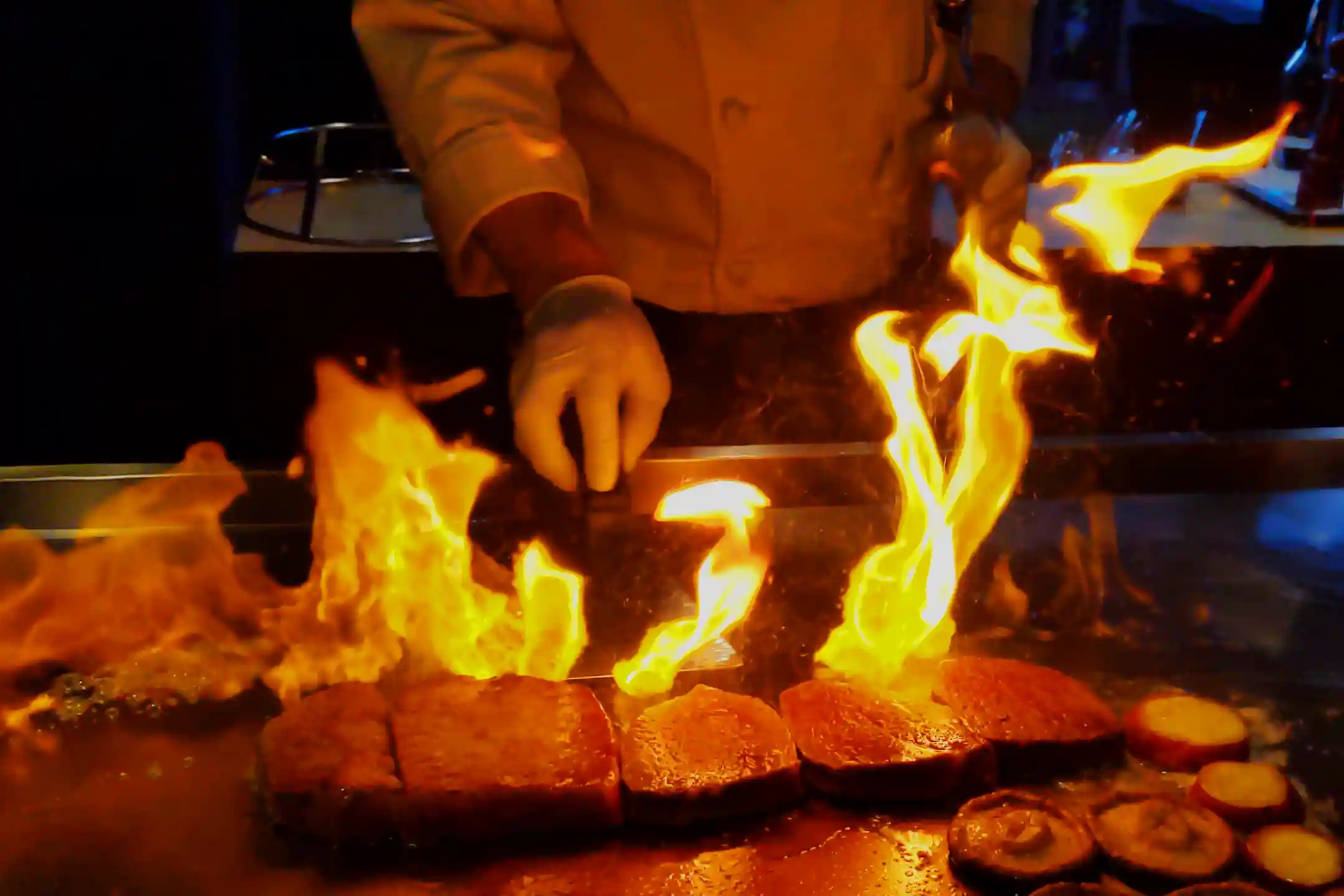
In Japan, teppanyaki is more than a meal—it is culinary art that fuses a chef’s refined technique with a performance that engages all five senses. As premium wagyu beef and pristine seafood are seared right in front of you on a gleaming iron griddle, the exchange with the chef lets you feel Japan’s unique spirit of hospitality and craftsmanship up close. Let’s explore what makes this experience so compelling.
Origins and History of Teppanyaki Restaurants in Japan
Teppanyaki—grilling meat and vegetables on a flat iron griddle—is a relatively modern style within Japan’s dining culture. Traditional Japanese cooking relied on open flames or kamado stoves; before household gas became common, heating a metal griddle at home was inefficient, and iron itself was precious.
Because of this, some say that widespread griddle cooking took off after World War II in black-market stalls and food carts that repurposed scrap iron plates. In reality, however, flat griddles were already used before the war for everyday flour-based dishes like okonomiyaki and monjayaki. (*1)
Amid this backdrop, in 1945—just after the war—the world’s first dedicated teppanyaki steakhouse, “Misono,” opened in Kobe. Inspired by the counter-service style of sushi bars, chefs seared meat on the griddle directly in front of guests and served it straight over the counter—an innovative approach at the time. (*1) Japanese diners had mixed reactions early on, but the chance to admire a chef’s masterful hands from close range proved a hit with foreign guests. Before long, “Misono” became a name widely known among travelers to Japan. (*1)
Through the 1950s and 60s, teppanyaki established itself as haute cuisine, gaining popularity in city hotels and specialty restaurants where theatrical yet refined service elevated the experience. (*2) By then, overseas visitors were also taking notice, and teppanyaki was coming to be regarded as one of Japan’s signature dining styles. (*2)
In 1964, a U.S.-launched chain founded by a Japanese entrepreneur—Benihana—opened in New York, introducing the teppanyaki style abroad. (*1) From there, numerous “Teppanyaki” restaurants sprang up across North America where chefs cooked before guests, and the very word “Teppanyaki” spread worldwide.
Outside Japan, the experience evolved beyond simply cooking on a griddle into high-energy, entertainment-driven shows where chefs vie to delight the crowd. (*3) In the U.S., for instance, the “volcano” performance—stacking onion rings like Mount Fuji and igniting them to release a plume of white smoke—or juggling flaming tools has become a hallmark, blurring the line between dinner and show. (*1)
In contrast, Japan’s homegrown teppanyaki has developed with less emphasis on flashy theatrics and more on the integrity of ingredients and the craftsman’s technique. Watching an expert chef carefully sear top-grade wagyu and just-landed seafood before your eyes creates a luxurious experience that many call a “theater of cuisine,” a culture all its own.
Experiencing Culinary Art at a Teppanyaki Restaurant
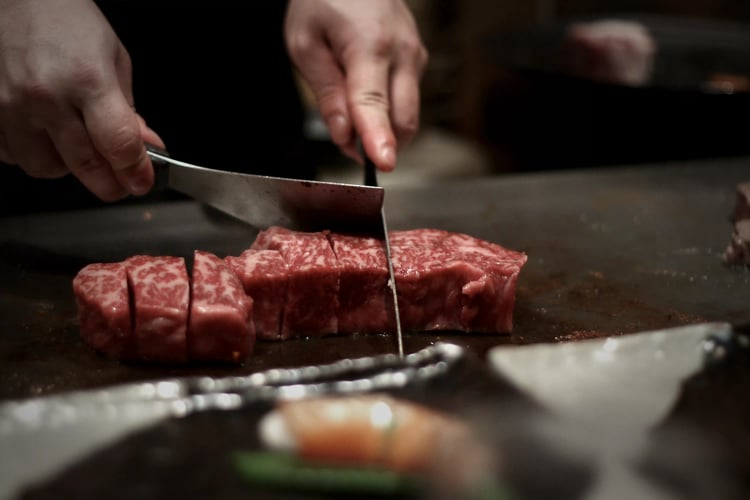
At teppanyaki counters, chefs cook directly before you, and their virtuosity truly earns the name “culinary art.” Knife work and spatula work glide across the polished griddle like a live performance, turning the act of cooking itself into part of the pleasure. (*1) The thrill of dishes finishing one after another in front of you heightens a special occasion even more. (*1)
Teppanyaki also shines in how it engages your senses. The moment a thick-cut wagyu steak hits the steel, you hear a crisp sizzle as a toasty aroma rises. Surrounded by the sound of searing and the perfume of browning butter and beef, you see flames dance as the chef moves with effortless control—letting you experience the entire arc of a dish coming to life through sight, sound, smell, and anticipation. (*1)
Top teppanyaki chefs devote themselves to bringing out the essence of premium ingredients. They adjust heat at just the right moment and finish with minimal seasoning tailored to the ingredient—pure craftsmanship. (*2) The intense focus and seasoned intuition that deliver perfect doneness on meat and seafood within mere minutes create food that is not only dazzling to watch but deeply moving to eat. Because each plate is cooked live, there’s a pleasant charge in the air; you may find yourself wanting to applaud after every serving.
For travelers, the chance to savor skillful cooking and just-finished dishes at the same time is unforgettable. When a chef’s deft spatula work places a superb steak before you, the moment rises beyond “a meal” and becomes an experience you’ll carry with you.
Dialogue with the Chef Becomes Cultural Exchange
At a teppanyaki counter, you’re close to the chef, and conversation springs up naturally. Between courses, the chef might share the story behind the ingredients or respond to your questions with an easy smile—this two-way exchange is a major part of the charm. The chef in front of you is more than a cook; at times, they become a guide to Japanese culture. From how wagyu is raised to what vegetables are in season, the meal opens windows onto Japanese foodways and values.
These interactions let you feel Japan’s distinctive “omotenashi” spirit firsthand. “Omotenashi” is often described as anticipating what a guest wants before they ask. The word traces to “omote-nashi” (to serve without front or back, i.e., sincerely), and it resonates with the tea ceremony’s ethos of treasuring a once-in-a-lifetime encounter.
In practice, teppanyaki chefs watch your expressions and pace closely, fine-tuning doneness and choosing the right moments to check in—answering your needs before you voice them. Serving without expectation of return, they embody a cultural philosophy of wholehearted hospitality.
Across the counter, chef and guest meet eye-to-eye, and food becomes a bridge. You might learn how to handle chopsticks or pick up a custom around the table; in turn, you might share stories about dining in your own country. Those smiles that cross language and culture—while sharing delicious food—are a signature joy of teppanyaki on your travels in Japan.
Elegant Interior Designs of Japanese Teppanyaki Restaurants
Where Tradition Meets Modern Design in Teppanyaki Venues
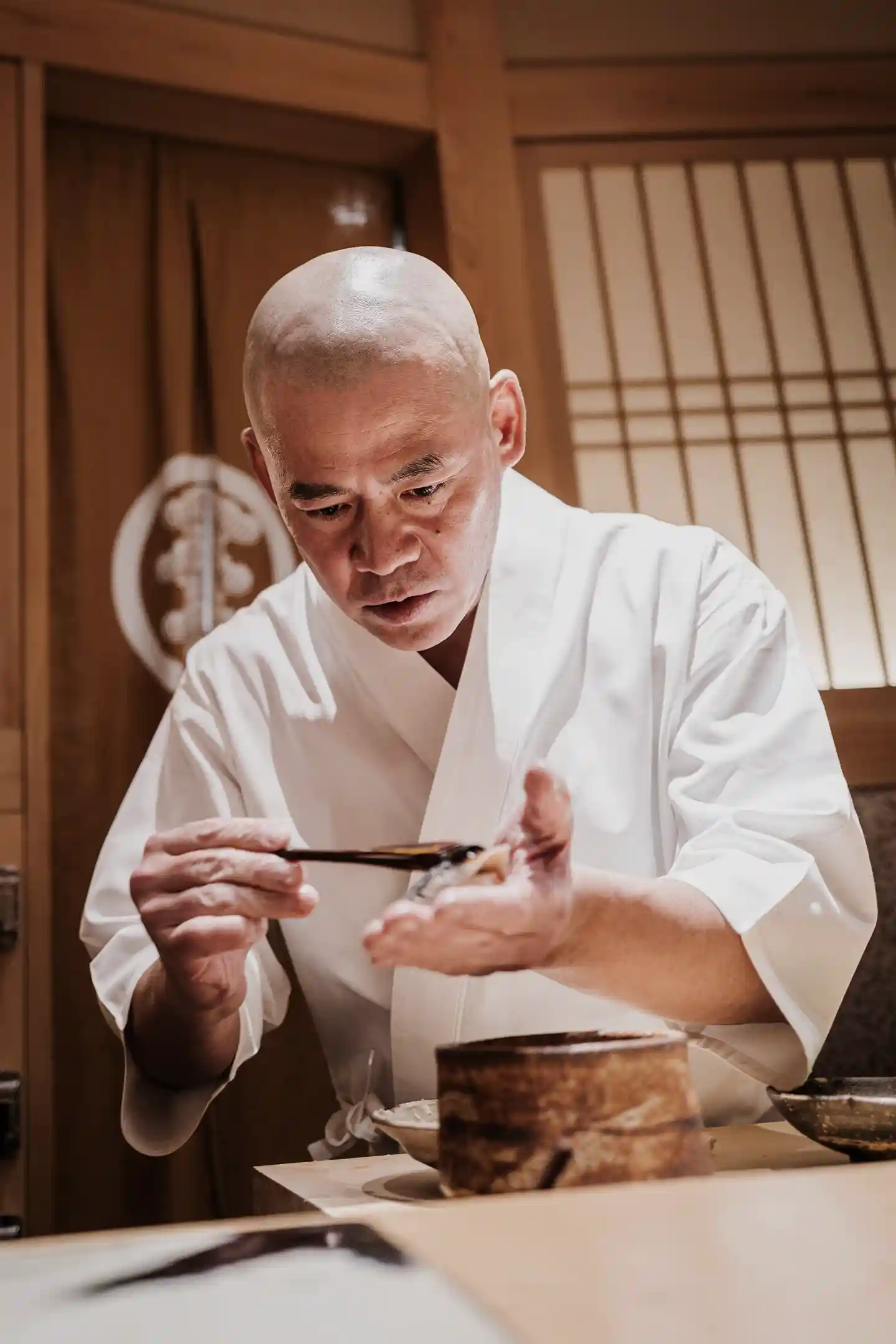
The main hall seating at Marunouchi Icchome Shichijyunikou (Tokyo Station / Tokyo Station Hotel) features soft light filtering through translucent screens of misu (traditional bamboo blinds), creating a space where classical Japanese nuance harmonizes with contemporary minimalism. (*1) Designed by Kengo Kuma & Associates + Chisato Kogo Design Office, the interior expresses a Japanese atmosphere through misu, pursuing comfort in a gently luminous setting where you can relax into the meal. (*1) Private rooms pair traditional hues with refined orishiki (tray-style) accents for an elegant environment—an interior where tradition and modernity truly meet.
Ginza Ukai-tei (Tokyo, Ginza) stands as a quintessential high-end teppanyaki house with the theme “fusion of modernity and nostalgia,” evoking the aesthetic of Japan’s opening to the West. (*2) With relocated historic architecture, it weaves Japanese design—timber joinery and latticework—together with Western art objects to create a narrative-rich dining space. Antique stained glass and furnishings sit amid traditional structures, giving the room a weight and grace only the genuine article can convey. At Omotesando Ukai-tei, for example, a Meiji-era merchant house was transplanted and restored; exposed beams and coffered ceilings pair with state-of-the-art lighting to produce a retro-modern atmosphere.
At Furuyu Onsen ONCRI, “Innovative TEPPAN Watahan” (Saga Prefecture) follows the concept “Innovative & Traditional,” showcasing a “Japanese Contemporary” interior that honors Japanese aesthetics. (*3) A calm, black-forward palette is enlivened with traditional accents, framing the mountain greenery outside and even the dishes themselves like works of art. Discreet indirect lighting creates shadow and depth, shaping an ambiance of quiet refinement.
TENKA (Hilton Osaka) is another example of a polished East-meets-West design. (*4) Robust natural materials are paired with contemporary lines to bring Kansai traditions and urban sophistication into balance. From the live-action counter where you can enjoy the chef’s teppan performance up close to the flattering interplay of indirect light and shadow, the setting elevates the experience.
Local Ingredients and Sustainability in Japanese Teppanyaki Restaurants
Eco-Friendly Sourcing and Seasonal Flavor
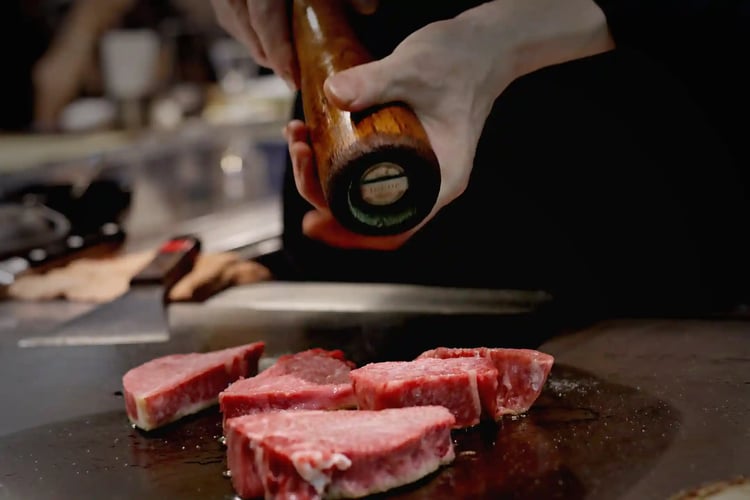
High-end teppanyaki restaurants increasingly spotlight seasonal ingredients from across Japan while reducing food miles through local sourcing. At “Teppanyaki Keyakizaka” in the Grand Hyatt Tokyo, Roppongi, you can savor “Keyakizaka Beef”—Akigawa-gyu from Takeuchi Farm, the only cattle farm within Tokyo—featured in courses that also embrace sustainable seafood and vegetables grown around Greater Tokyo. (*1)
Kobe Plaisir (Sannomiya, Hyogo), directly operated by JA Zen-Noh Hyogo, builds its menu around Kobe Beef as well as produce and seafood from Hyogo Prefecture, earning praise as a restaurant that “delivers producers’ passion to the guest” through true local-for-local dining. (*2)
In Hamamatsu, Shizuoka, “Teppanyaki Matsu” sources from trusted local producers—Hamana Lake clams, Mineno Beef, and seasonal catch from the Enshunada Sea—crafting courses that express Hamamatsu’s four seasons from appetizer to main. (*3)
At Hilton Osaka’s TENKA, chefs feature regional stars like Kobe Beef, Olive Beef, and spiny lobster from the Seto Inland Sea, weaving in origin stories during live cooking so you can feel the “here and now” of season and place. (*4)
In recent years, more venues have adopted organic vegetables, grass-fed beef, and MSC/ASC-certified seafood. This blend of eco-conscious sourcing and local-for-local values is becoming a new hallmark of luxury teppanyaki. (*5)
Eco-Friendly Teppanyaki Restaurants with EV Charging Stations
At Shima Kanko Hotel’s “Yamabuki” in Shima City, the parking area at The Classic is equipped with two standard 200V chargers, and up to four (including Porsche Destination) are available at The Baysuites. Hotel guests and facility users can charge for free (inquiry/reservation required). Charger placement preserves the resort scenery, embodying a sustainable destination in harmony with nature. (*1)
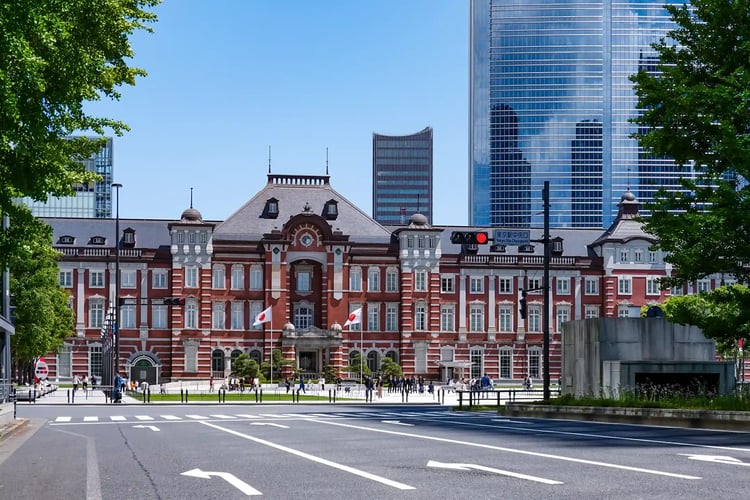
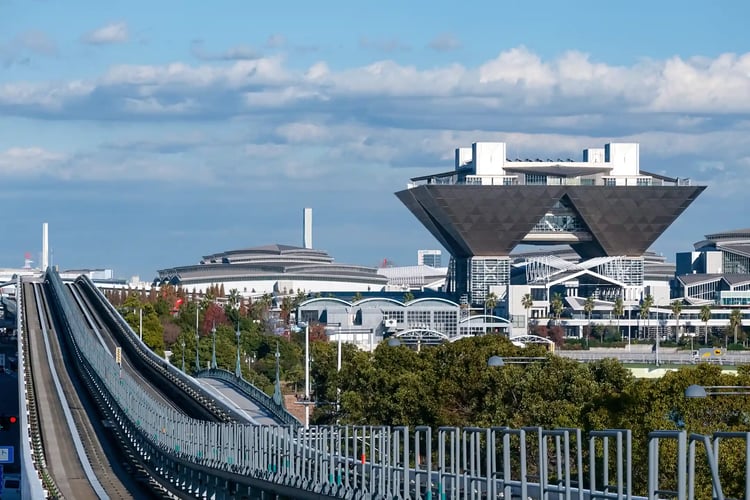
Grand Nikko Tokyo Daiba, in Tokyo’s Odaiba district, has installed eight “WeCharge” standard chargers in its underground car park. While you dine at the hotel’s teppanyaki restaurant, you handle charging and payment seamlessly via a smartphone app—supporting carbon neutrality and making the most of your time. (*2)
Installing standard chargers in restaurant parking lots also helps guests use their dwell time efficiently, which can support customer acquisition. As EV infrastructure expands, “charge while you dine” is poised to become a common lifestyle pattern across the food-service sector, including luxury teppanyaki. (*3)
A Teppanyaki Guide for Culture-Seeking Travelers: Enriched Fine Dining and 5 Curated Japanese Venues
Enriched High-End Teppanyaki Dining
Teppanyaki is live, multisensory cuisine—and lately, more premium venues have woven educational elements into the experience as part of immersive travel. From the counter, you can watch the chef’s virtuosity up close, enjoy the scent and sound of searing, and learn the stories behind the dishes in real time.
That visceral sense of presence—eyes fixed on the cooking as you chat with the chef, savoring the aroma and the hiss of the grill—is the true heart of luxury teppanyaki. (*1) If wagyu breeds or seasonal Japanese produce feel unfamiliar, you can ask questions on the spot and hear expert explanations, deepening your understanding of food culture as you dine.
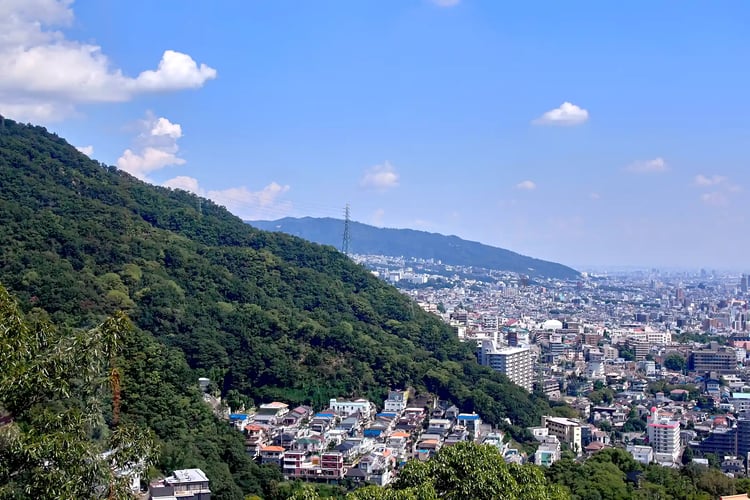
A concrete example is the Kobe Beef Gallery in Kobe City, Hyogo Prefecture, which opened in 2019 in a building directly connected to Shin-Kobe Station as a hub for sharing the history and appeal of Japan’s famed Kobe beef. (*2) Inside, you’ll find an information zone with panels, models, and videos covering Tajima cattle’s roots and the definition of Kobe Beef, as well as a tasting area where professional chefs prepare Kobe steak on a teppan right before your eyes. Learning first and then savoring creates a seamless “know, see, taste” experience—a true fusion of education and fine dining.
In Tajima—the homeland of Kobe Beef—unique programs are also underway. In Shinonsen, Hyogo, for example, a teppanyaki workshop invited guests to cook Tajima beef—the “root” of Kobe Beef—by themselves. (*3) Under a chef’s guidance, participants sear the beef and experience its flavor and technique firsthand. The program also offered a private sake seminar by Miss SAKE Tottori, expanding your appreciation of sake pairings with wagyu. (*4) These high-value tours, curated by local DMOs and tourism boards, blend the luxury of top ingredients with cultural learning, satisfying both curiosity and palate.
Five Curated Teppanyaki Restaurants in Japan
Next are five outstanding luxury teppanyaki restaurants—mainly in Tokyo, Kyoto, and Kobe—where cultural value, history, and technique stand out. These are not merely lavish; each stage reflects local stories and aesthetics. You’ll also find tips on reservations and etiquette to help you make the most of teppanyaki in Japan.
Ganso Teppanyaki Steak Misono (Kobe) – Pioneer of Teppanyaki Culture
Founded in Kobe in 1945, this venerable house is known as the world’s first teppanyaki steak restaurant. (*1) In the postwar years, the founder served Tajima beef steaks to occupying officers—a scene many consider the origin of teppanyaki culture. Today, chefs still sear carefully selected wagyu— including A5 Kobe Beef—right before you, engaging all your senses. With counter seating that encourages conversation, Misono carries a warmth and gravitas befitting the original.
Omotesando Ukai-tei (Tokyo) – A Sky-High Feast Framed by Historic Architecture and Art
A lavish space that relocates and reimagines a circa-150-year-old Kanazawa merchant’s house, blending the beauty of Japanese architecture with Art-Deco antiques. (*2) Panoramic views of Omotesando’s zelkova-lined avenue and the cityscape create the feel of a “sky garden.” At the counter, chefs prepare top-grade kuroge wagyu and pristine seafood right before your eyes—the aroma and sound completing an unforgettable experience.
Kobe Beef Teppanyaki Niyama (Kyoto) – A Long-Loved Taste Anchored by a Secret Sauce
Founded in 1955, this Kyoto stalwart’s signature is a secret sauce devised by its founder, still defining the flavor today. (*3) Chefs carefully sear premium wagyu—often Kobe Beef sourced through trusted channels—offering a place where you can taste history while learning about Japan’s wagyu culture.
Kobe Beef Steak Restaurant Mouriya (Kobe) – Meiji-Era Origins and the Tradition of Beef Culture
Established in 1885, with a brick-built flagship, this historic house has honed its craft for more than 140 years. (*4) Expert selection and aging yield exceptional Kobe Beef steaks. With counter seating (and some tables), you can relish the immediacy of the grill while reflecting on the restaurant’s long story.
Moncher Tonton (Tokyo, Roppongi) – A Glamorous Teppan Soirée Carrying the Spirit of Showa
An early pioneer of luxury teppanyaki from the 1960s Seryna Group. (*5) Courses feature indulgences like Kobe Beef, spiny lobster, and abalone, with finishing touches such as garlic rice and foie gras adding a French accent. A red-forward retro-modern interior sets a festive mood, perfect for lively conversation with the chef.