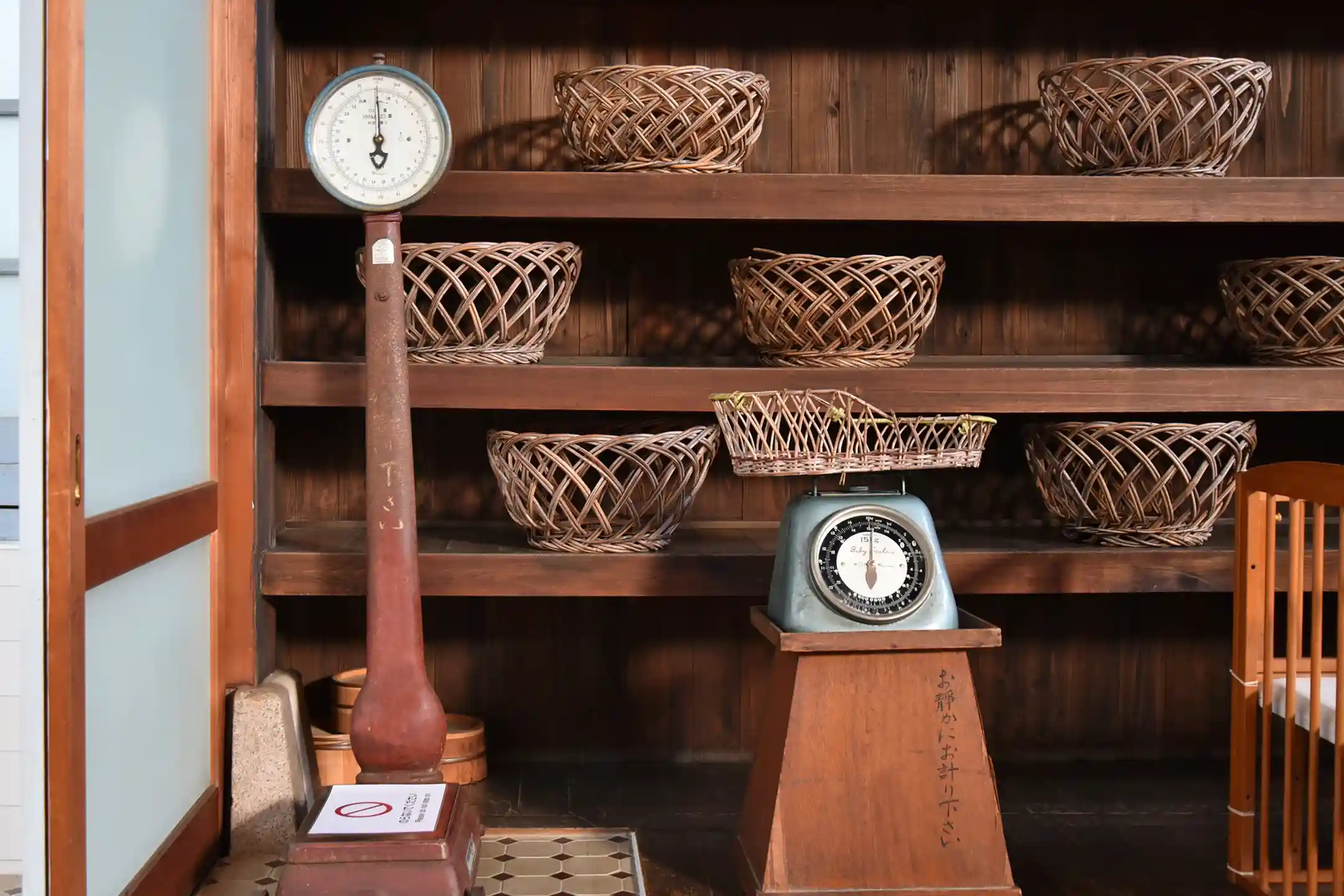
Japan’s onsen culture has long been cherished as a wellness ritual that gently restores both body and mind. So that even if you’re stepping into an onsen for the first time, you can relax and enjoy it with confidence, this guide walks you through everything in detail—from the basic bathing flow and key etiquette, to spring-water types, and important health precautions. If you sink quietly into an open-air bath with steam drifting around you, taking in the seasonal scenery, you’ll likely feel everyday noise fall away as your body and thoughts gradually loosen and soften.
When you understand not only the correct way to bathe but also the benefits and safety points associated with onsen, your moments on the road become richer—and safer, too. If you’ve been wondering “how to use an onsen” without feeling out of place, you’re in the right place. Now, step into Japan’s unique world of yuami (hot-spring bathing), and treat yourself to truly exceptional downtime.
Basic Onsen Bathing Steps (A Fail-Safe Guide for First-Timers)
When you visit an onsen for the first time, it helps to know the full flow—from the entrance all the way to leaving the facility—so you can feel at ease. Below are 10 standard steps. As a rough guide, the bathing itself often takes about 30 minutes to 1 hour, and with resting time included, around 1–2 hours in total—but adjust according to how you feel that day. Once you’ve got the key points down, anyone can enjoy a comfortable, stress-free onsen experience.
Step 1: From the Entrance to the Changing Room
When you arrive at an onsen facility, first confirm the entrance by checking the noren curtain and the signs for men and women. In most places, entrances are separated into “Men’s Bath” (otoko-yu, often in blue tones) and “Women’s Bath” (onna-yu, often in red tones), so take care not to mix them up.
Place your shoes in the shoe locker, and if there’s a key, be sure to keep it with you. Pay the bathing fee at the front desk or ticket machine, and purchase towels or soap if you need them. For valuables, using a coin locker or the front desk valuables box is the safest choice.
After you’ve checked in, follow the guidance to the changing room. Also note: photography is prohibited in changing rooms and bathing areas at most facilities. To protect other guests’ privacy, keep camera-equipped phones put away as well. With those basics in mind, your onsen experience is about to begin.
Step 2: Changing Room Etiquette
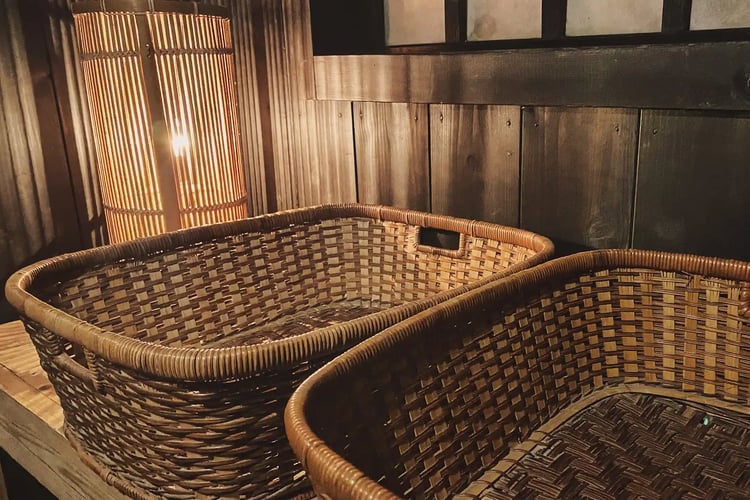
Once you enter the changing room, use an available basket or locker. Fold your clothes neatly into the basket, or place them inside a locker. If you use a locker, lock it, and keep any wristband key secure on your wrist. After you remove all clothing (including underwear), tie up long hair with a band. This is important etiquette so your hair doesn’t dip into the bathwater.
Also, strong perfume or heavy hair-product scents can bother other bathers, so it’s best to avoid them. You might feel a little nervous about being nude, but in Japanese onsen this is completely normal—so you can relax. Keep an eye on your valuables and basic manners, and then head into the bathing area.
Step 3: Kake-yu and a Quick Pre-Rinse
When you enter the bathing area, you may want to slip straight into the bath—but pause for a moment and do kake-yu first. Kake-yu means pouring hot water over your body before entering the tub, rinsing off sweat and surface dirt while gently helping your body adjust to the temperature. Use a washbowl to scoop water (or use the dedicated kake-yu spout, if provided), and pour it slowly starting from areas far from your heart—your feet and legs—then gradually upward.
By easing your body into the heat, you can help reduce the shock of a sudden temperature change and the risk of a rapid blood-pressure spike (*1). After several bowls, once you’ve adapted to the temperature, lightly rinse off perspiration. At this stage, you don’t need to scrub with a towel—simply wash with your hands, gently and lightly. When you’re done with this quick pre-rinse, brush off water droplets and move calmly into the bath.
.webp?width=750&height=500&name=Kakeyu%20(Pouring%20hot%20water%20over%20oneself).webp)
Step 4: Cleanse Your Body at the Washing Area
First, sit down in an open spot at the washing area. Using the provided stool and bucket, wash your whole body thoroughly with the shower or tap water. In Japanese onsen, everyone shares the same bathwater, so it’s considered proper etiquette to clean yourself before entering the tub.
Use the shower while seated, and be mindful not to splash water onto others. When washing your hair and body with shampoo and body soap, rinse carefully so nothing remains. If you have long hair, secure it firmly at this stage; if you don’t have a hair tie, wrapping it up with a towel is a good option.
Avoid leaving the shower running continuously—turn it off as needed to help conserve water. In the washing area, it’s also important to share the space thoughtfully. When you’re finished, lightly rinse the stool and bucket with hot water and return them to where you found them. These small gestures are the first step toward good onsen manners.
Step 5: Enter the Bath
Once you’re clean and ready, it’s time to soak—slowly and gently. Instead of sinking in up to your shoulders right away, begin with a half-body soak (water up to your waist) so your body can adjust. If your shoulders feel chilly, you can scoop water over them, or fold a small towel (tenugui) and place it on your head. As a rule, don’t let the towel soak in the bath; keep it on your upper body or head (*2).
After you’ve settled in with half-body soaking, gradually move into a full-body soak. If you move too suddenly, you may feel lightheaded or overheated, so stay still, breathe slowly, and ease into it. While soaking, try to keep your voice low and your presence calm. Many people come to onsen to unwind, so loud conversation is best avoided.
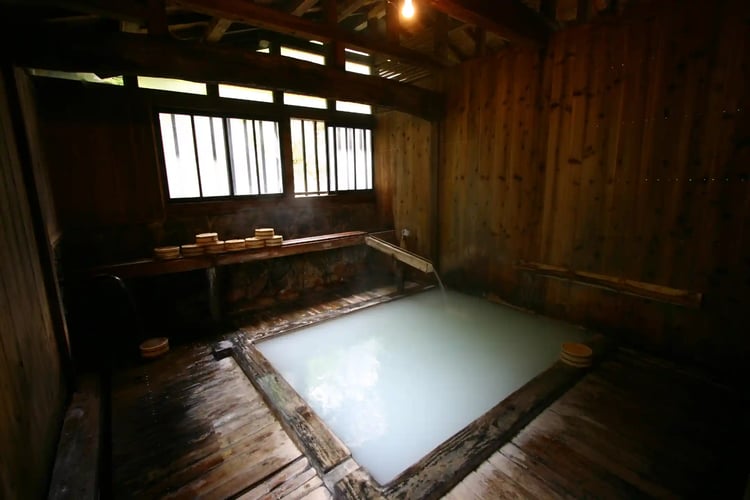
Depending on the onsen, you may find sweeping nature views or a serene garden right in front of you. If you take in the scenery while noticing the feel of the water against your skin, you’ll likely experience a kind of quiet relief that melts tension from both body and mind.
Step 6: Cooling Off and Resting
Once you’re nicely warmed, step out of the bath for a break. Staying in too long can lead to overheating, so it’s important to pause at sensible intervals. When you exit the tub, stand up slowly to prevent dizziness. If there’s a tub edge you can sit on, or a bench inside the bathing area, use it to rest.
As you come out of the bath, a light rinse can help sweat settle more comfortably. In colder seasons, drape a towel over your shoulders so you don’t chill; in warmer seasons, choose a well-ventilated spot to cool down. If you rest for about 5–10 minutes while breathing deeply, your elevated temperature and heart rate should gradually calm.
Alternating soaking and resting encourages your parasympathetic nervous system to take the lead, helping you reach a deeper, more restorative relaxation state (*3). The key is not to push yourself—building in breaks at your own pace is how you enjoy onsen longer, more comfortably.
Step 7: How to Rotate Sauna, Cold Bath, and Rest (When Available)
Some facilities have a sauna and cold bath alongside the onsen. If you enjoy saunas, you can combine them with onsen bathing for contrast bathing—switching between hot and cold. That said, sauna use requires you to listen carefully to your stamina and condition.
A standard flow is: sauna → cold bath → rest (outdoor cooling) as one set, repeated several times; in many cases, about three sets is considered plenty. In the sauna, stay within a comfortable range—about 5–10 minutes until you sweat—and if you feel short of breath, step out sooner. Next is the cold bath: if you’re new to it or sensitive to cold, don’t force yourself; start by easing in from your feet. There’s no need to submerge up to your shoulders until you’re used to it.
In fact, even dedicated sauna fans follow a simple rule to reduce the chance of overheating or feeling unwell: “If it feels intense, get out right away,” and “Don’t push it” (*4). After the cold bath, rest on a chair or bench for 5–10 minutes to let your pulse and temperature settle. During this time, you may experience that refreshing, body-feels-light sensation often called totonou (“feeling perfectly reset”).
By combining sauna sweating, the constricting effect of a cold bath, and the relaxing effect of outdoor rest, you stimulate your autonomic nervous system and may boost the sense of refreshment. However, this can also place a heavier load on your heart and blood pressure, so if you have an underlying condition, don’t force it—consider skipping it. Sauna use is optional; enjoy it in a way that suits your body.
Step 8: Final Rinse and Drying Off
Once you’ve fully enjoyed the onsen, you’ll finish by doing agari-yu before leaving the bathing area. Agari-yu means lightly rinsing off onsen minerals from your body just before you exit. Some people use the shower, but because certain onsen minerals can leave a moisturizing film on the skin, many bathers choose to rinse only lightly—or not at all—depending on the water type.
Especially if you’re hoping for skin-smoothing benefits, or if the spring type suits your skin, gently patting yourself dry with a towel may be enough. However, if the onsen was a stronger type—such as acidic springs or sulfur springs—official guidance also notes that people with sensitive skin may be better off doing a light rinse with lukewarm water.
Either way, before you leave, pause near the tub and let excess water drip off so you’re not carrying large droplets with you. If you return to the changing room while water is dripping from your body, you’ll wet the floor and inconvenience others. Near the entrance, you’ll often find a mat or a small bench—use your towel there to dry your entire body thoroughly.
This completes the bathing sequence. As a final touch, don’t forget to tidy up the shared items you used. Rinse the stool and bucket at the washing area and return them to their original spot. These small actions make it pleasant for the next person to enjoy the onsen too.
Step 9: Hydration and Cooling Down
After you leave the bathing area, hydrate while avoiding over-chilling your body. Because you sweat a lot during bathing, it’s recommended to drink about one glass of water afterward. Rather than very cold drinks, room-temperature water, sports drinks, or barley tea (mugi-cha) are gentler on your body. Many facilities provide a water station or cold water in the changing area—use it as needed.
Also, avoid immediately blasting yourself with air-conditioning or rapidly cooling your body with cold water right after bathing. If your warmed body cools too suddenly, it can contribute to dizziness or lightheadedness. If you feel hot, sit down and let a fan breeze over you, or gently cool yourself with a small hand fan.
Drinking alcohol immediately after bathing is strictly off-limits. Alcohol can worsen dehydration from bathing, and it can also make it harder to notice blood-pressure changes or even your own thirst—making it risky. For a while after bathing, skip alcohol and focus first on replenishing fluids and minerals. Cooling down lasts until your blood pressure returns to normal and sweating settles. If you take care before and after bathing, you can enjoy the onsen’s benefits more safely.
Step 10: Post-Bath Skincare
After you get out of the onsen, don’t forget moisturizing skincare. Many onsen minerals can leave the skin feeling smooth, but it’s also true that bathing can wash away moisture and oils from the surface. If you have dry or sensitive skin, it’s especially recommended to use lotion or emulsion within 30 minutes after bathing to support your skin barrier.
For your face, apply toner and emulsion after cleansing; for your body, use body lotion or oil to lock in hydration. Some onsen are nicknamed bihada no yu (“beautiful-skin baths”) for the way they make skin feel smooth—but to keep that feeling going, aftercare matters.
If you’ve bathed in a stronger spring type such as sulfur springs or acidic springs, your skin may feel slightly prickly afterward. In that case, you don’t need to force minerals to remain on your skin—lightly rinse with the shower or gently wipe with a damp towel if you prefer. Whether you leave minerals on or rinse them off depends on your skin type, so choose what feels right for you.
Finally, before you get dressed, check yourself in the mirror once more to make sure you haven’t missed any water droplets. Dry your hair thoroughly with a dryer as well. Now every step is complete. When you finish your bath with the right flow, you’ll likely feel a pleasant, gentle fatigue—and your skin and spirit can feel replenished, letting you experience the onsen’s gifts to the fullest.
Onsen Etiquette and Basic No-Gos
Public onsen are shared spaces used by many people. To ensure everyone can spend time comfortably, you’ll want to follow basic etiquette and understand behaviors to avoid. So that even if Japanese customs are new to you, you can use onsen with confidence, this section explains common etiquette mistakes and practical ways to prevent them.
From how to handle towels, to why photography is prohibited, to considerations when visiting with children, and rules regarding tattoos—knowing these in advance helps you avoid feeling flustered on the spot. Let’s review the essentials of considerate etiquette for enjoying onsen well.
How to Carry Yourself When It’s Crowded
When an onsen is busy, awareness of others matters even more. In the washing area, if there are few open spots, try not to occupy one place for too long. Once you finish washing, make space promptly so others can use it, and rinse the bowl and stool for the next person before returning them to their place.
When entering the bath, try to make room so other bathers can also get in. That said, if you cram too tightly together, it’s hard to relax—so aim for a comfortable sense of distance that respects everyone.
If you’re visiting with children, stay close, help them rinse properly, and check the facility’s rules on age guidelines and mixed bathing—these can vary widely by location (*5) (*6). When it’s crowded, timing your movements considerately also matters. If you stop along the flow near the kake-yu area or the pathway back to the changing room, you can block people behind you. When you move, check the flow around you and act smoothly—it’s a simple, smart way to be considerate.
And in the tub, being quiet is also part of crowded-time etiquette. Loud conversation echoes through the bathing area and can make many people uncomfortable. Keep chatting to a soft volume, and if you really want to talk, step out and use a resting area instead. The key is simple: when it’s crowded, don’t forget kindness and consideration—it’s what allows everyone to enjoy the onsen.
Tattoo Policies and Facility Rules
In recent years, with more travelers visiting from overseas, perspectives on tattoos have become more diverse. Still, many traditional Japanese onsen retain a “no tattoos” policy. Historically, tattoos were associated with antisocial groups, and facilities often restricted entry to avoid making other guests uneasy.
That said, more facilities now allow small tattoos if they are covered with a patch, and some ryokan accommodate tattoos through designated time slots, private bathing options, or tattoo-friendly policies. As a practical measure, it’s recommended that you bring tattoo cover patches. If you cover a small tattoo with a skin-toned patch, you may be able to bathe without drawing attention.
If you have larger tattoos, or if they can’t be fully covered by a patch, choosing a private family bath (kazoku-buro), a reservable private bath, or researching tattoo-friendly onsen in advance is a reassuring approach. Some facilities even provide tattoo patches at the front desk, so if you’re unsure, consider asking. During bathing, you’ll also want to soak calmly without rubbing, so any patch doesn’t peel off.
Also remember: there isn’t one universal rule that guarantees entry—each facility’s posted policy takes priority. If signs or guidance say “Guests with tattoos are not allowed,” you must follow them. Ignoring rules can lead to trouble and can negatively affect other guests’ comfort.
Understanding is gradually improving so that people with tattoos can still enjoy bathing while following good manners—so prepare in advance, confirm rules carefully, and enjoy Japanese onsen with peace of mind.
Basics of Spring Water Types and Benefits|Choose by pH and Water Character
Onsen water differs depending on the source, and those differences in minerals and components determine how the “spring type” (senshitsu) is classified. In Japan, spring-type names are legally defined—such as “sulfur spring,” “chloride spring,” and “bicarbonate spring”—and there are 10 types in total. Because each spring type has different characteristics and commonly expected effects, knowing the basics can be very useful when you’re choosing an onsen.
In addition, an onsen’s pH value and the temperature at which it emerges also affect how it feels on your skin and how you experience it. In this chapter, you’ll learn the key traits of major spring types, the general effects pH and temperature can have on the body, and what you can infer from scent and color.
Without getting lost in technical jargon, you’ll pick up practical knowledge you can actually use when traveling—like when you find yourself thinking, “This water makes my skin feel unusually smooth,” or “What is that distinctive scent?” Once you understand spring types, it also becomes easier to choose an onsen that matches your preferences and how you’re feeling.
Key Characteristics of Major Spring Types
Spring types are categorized based on the main components contained in the water. Here, we’ll introduce eight representative spring types, along with their traits and the general sensations people often notice when bathing.
Simple Thermal Spring (Simple Spring): This category includes onsen with relatively low levels of dissolved minerals—clean, simple water. Typically colorless, transparent, and nearly odorless, it has little “quirkiness,” and is known for being gentle with minimal stimulation. Because it’s mild on the skin, it’s widely enjoyed by everyone from babies to older adults. Even though it’s called “simple,” it can still warm you thoroughly, and it’s commonly associated with easing shoulder stiffness, supporting fatigue recovery, and encouraging relaxation.
Also, the feel changes depending on pH; in particular, alkaline simple springs with pH 8.5 or higher often make your skin feel smooth, so they’re sometimes called “beauty-skin baths.” It’s often said, “When in doubt, start with a simple spring”—that’s how beginner-friendly it is.
Chloride Spring: These onsen contain higher levels of salts such as sodium and calcium, and the water may even taste slightly salty. After bathing, salt can remain on the skin as a thin film that reduces evaporation of sweat, which is why chloride springs are known for strong heat retention and a moisturizing feel. Because you’re less likely to feel chilled afterward and your body warms deeply, they’re sometimes called “hot baths.” They’re often chosen by people who get cold easily, leaving you pleasantly warmed to the core.
Color varies from clear to lightly brownish; when salt concentration is higher, the water may feel slightly viscous. It can sting on cuts, yet it’s also said that its properties may help keep skin clean. If you leave the salts on after bathing, your skin may feel more moisturized; if the stickiness bothers you, a light shower rinse can help.
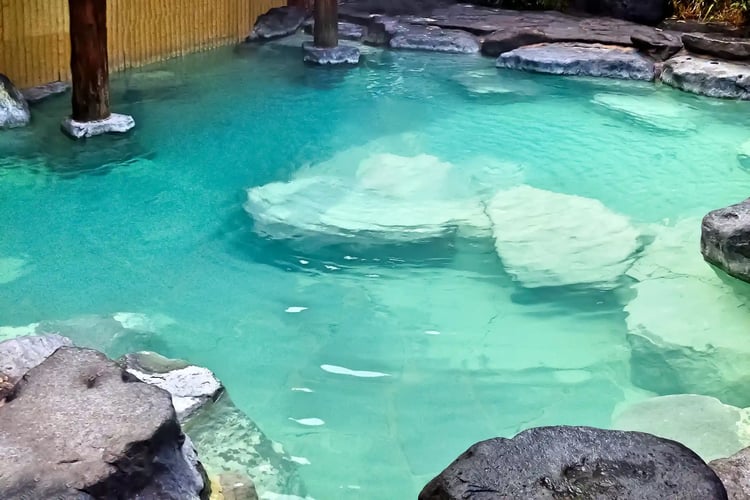
Bicarbonate Spring: Also called “baking-soda springs,” these contain higher amounts of sodium bicarbonate. When you enter, you’ll likely notice your skin feeling smoother and more slippery. Because it can help loosen old keratin and excess sebum, some people say their skin feels soft and refreshed even without soap.
For that reason, it’s considered one of the representative spring types associated with “beautiful skin.” Many onsen towns are even nicknamed “beauty baths” because bathing can leave your skin feeling brighter and smoother (even though an onsen analysis sheet doesn’t literally certify “beauty bath”—this is a popular nickname).
As for its general character, the water is often colorless and gentle on the body, though depending on the source you might detect a faint baking-soda-like scent. Commonly cited indications include support for recovery from minor skin irritation and improved peripheral circulation. Because your skin can feel as if a thin layer has been lifted away, people with sensitive skin should remember post-bath moisturizing care.
Sulfate Spring: These onsen contain sulfate salts of calcium or sodium. A key feature is that your skin often feels pleasantly moisturized afterward, and they’re commonly associated with supporting recovery after minor skin damage. When you soak, the minerals can react with proteins on the skin and form a protective film; similar to chloride springs, they tend to provide strong heat retention. Because they help leave moisture in the skin, they’re also said to suit people with dry skin.
They’re also thought to have a soothing effect on inflammation, and are often chosen by people who want a gentle, comfortable soak. The water is often clear, but depending on components it can become slightly yellow-brown and cloudy. It usually has little to no odor and feels easy to enjoy. For drinking (onsen water taken as a beverage), sulfate springs can promote bile secretion and are sometimes used for lifestyle support, but as a bath, it’s a spring type many people enjoy for that moisturized skin feel.
Sulfur Spring: These onsen contain sulfur components, and their most distinctive trait is the characteristic smell—often compared to rotten eggs. This scent comes from hydrogen sulfide gas, and for some people it reads as “the classic onsen aroma.” Sulfur springs are often described as having cleansing properties and are popularly associated with skin comfort; they’ve also long been associated with supporting circulation.
The water is often milky and cloudy (nigori-yu), giving you the feeling of being wrapped in a soft, white bath. This happens because sulfur components form colloids in the water that reflect light. After soaking, some people feel their skin looks slightly brighter and feels smoother.
However, sulfur can also be drying for some people, especially if your skin is delicate. For that reason, sulfur springs are often paired with the recommendation to rinse your body with fresh water after bathing.
Also, the minerals can be strong enough to tarnish silver jewelry—so remove accessories before bathing. The distinctive sulfur scent can also cling to towels (and swimsuits), so be mindful. Even so, sulfur springs are an emblem of “onsen-ness,” and are beloved in famous hot spring areas such as Kusatsu Onsen and Noboribetsu Onsen.
.webp?width=750&height=500&name=Shikaribetsu-kyo%20Shikano-yu%20(Shikaoi%2c%20Kato%20District%2c%20Hokkaido).webp)
Acidic Spring: This is strongly acidic water, often around pH 2 or below. Some springs are so acidic they can taste sharply sour, and you may feel a mild tingling sensation on your skin. Their cleansing power is strong, and they’ve long been associated with bathing for certain skin concerns, such as athlete’s foot, depending on the individual.
In particular, the Ministry of the Environment lists indications suggesting suitability for certain skin conditions such as atopic dermatitis and psoriasis. On the other hand, for people with sensitive skin, mucous membranes, or older adults with dry skin, the stimulation can be too strong—so caution is important.
When you bathe, the skin can feel slightly squeaky or tight, with a clean, “just washed” freshness. While that can feel clarifying, it can also strip away oils, so moisturizing after bathing is essential.
Many acidic springs also contain sulfur components, so some are cloudy and sulfur-scented as well. A well-known example is Kusatsu Onsen (Gunma Prefecture), where the strongly acidic source is traditionally stirred (yumomi) to help soften both temperature and intensity before bathing. That’s how strong the spring type can be—so rinsing with fresh water afterward is often recommended. It’s a spring type people either love or avoid, but many say once you experience it, it becomes oddly addictive.
Iron Spring: These onsen contain a higher amount of iron, and when the water meets air, it can change to reddish-brown or yellow-brown. Freshly drawn water may be clear, yet over time the edges of tubs and bath basins can become rust-colored. This happens because dissolved ferrous ions oxidize and become iron oxide. The water can have a distinctive metallic scent (kanake-kusa), sometimes described as the smell of an iron pot or even blood.
When you bathe, your skin may feel slightly squeaky; this can be linked to iron’s astringent feel. After bathing, you may feel your skin is more “toned.” Iron-rich water is also known for strong warming effects, and is often chosen by people who get cold easily. If taken as drinking water where permitted, iron-containing onsen water is listed in Japan as an indication related to iron-deficiency anemia (*7).
That said, bathing itself doesn’t mean iron is absorbed in a way that replaces dietary intake—so if your goal is supplementation, you would need approved drinking use. Iron springs are relatively rare, and among onsen fans they’re popular under nicknames like “red bath” or “golden bath.” Be aware, however, that towels can stain brownish, so if that concerns you, use an older towel.
Radioactive Spring: These spring types contain trace radioactive substances such as radon (minute radioactive gases). The name may sound surprising, but the amounts are extremely small, and standards are set so you can bathe safely. Radioactive springs were formerly also called “radium springs” or “thoron springs,” and springs containing radon in particular are also associated with inhalation effects.
When you bathe, radon gas may be taken into the body in tiny amounts through the skin and breathing, and it’s sometimes said that very mild stimulation may influence autonomic and hormonal functions. Because of this, some reports and traditions suggest possible support for metabolism and natural healing processes. Commonly cited indications include concerns such as gout, hyperuricemia, and chronic rheumatoid arthritis.
The water itself is typically colorless, clear, and odorless, with no particularly distinctive texture on the skin. However, because higher temperatures can cause radioactive gases to dissipate, many sources tend to be relatively lukewarm. Famous examples include Misasa Onsen (Tottori Prefecture) and Masutomi Onsen (Yamanashi Prefecture), also known as therapeutic hot-spring areas. It’s said that taking slow, deep breaths while bathing can help you enjoy the atmosphere of these springs, so some people deliberately choose calmer, longer soaks.
Note, too, that radioactive springs are sometimes used for drinking under specific guidance—but excessive drinking without expert direction should be avoided. Use them under professional advice and local rules.
That covers eight major spring types. Depending on spring type, scent and skin feel differ dramatically, and many become known by affectionate nicknames like “___ bath.” It can be a pleasure to look at an onsen analysis sheet at your destination and explore which spring types you personally love.
How pH and Temperature Affect What You Feel
An onsen’s pH value indicates whether the water is acidic or alkaline. This number can dramatically change how the water feels on your skin.
Generally, mildly alkaline water (around pH 8) is often felt as smooth and slippery. That’s because alkaline water can emulsify keratin and sebum on the skin—almost like a gentle cleanser—softening the surface.
The alkaline simple springs and baking-soda springs (bicarbonate springs) mentioned earlier fit this profile, and after bathing you may feel an almost silky smoothness. By contrast, acidic water (around pH 2–3) can feel squeaky or tight on the skin. That’s because oils are removed and the skin feels more “firm,” creating a clean, refreshed sensation similar to after washing.
In strongly acidic springs, you may feel a slight sting while bathing, yet they may suit certain concerns such as athlete’s foot depending on the person. Neutral water (around pH 7) is low-stimulation and mild, and you can usually soak comfortably without overthinking it. Some onsen fans even compare pH values across regions, saying things like, “This one is pH 9—like bathing in soap,” or “This one is pH 2.5—more acidic than lemon.”
Temperature also shapes how your body responds. In hotter baths (42°C and above), your sympathetic nervous system is stimulated, your heart rate increases, and your blood pressure can rise—sometimes by a few dozen mmHg compared with before bathing—depending on the person. That can make you feel energized—“I’m warmed through, I feel revived!”—but it also increases physical strain. With hot baths, keep it short, and take care when you get out so you don’t get dizzy or chilled too quickly. Especially at night, soaking too long in hot water can lead to overheating and may make it harder to fall asleep.
In contrast, in lukewarm baths (around 39°C), your parasympathetic nervous system becomes more dominant, blood pressure tends to drop, and muscle tension loosens. Relaxation deepens, and digestive activity is also said to improve. If you bathe before bed, soaking slowly in water under 40°C is often recommended. With the parasympathetic system activated, mind and body calm, and you may find it easier to drift into deeper sleep.
In short: think “hot and short for a crisp reset, lukewarm and longer for deeper ease.” Of course, some people stay longer even in hot water, while others get out quickly even in lukewarm baths—everyone experiences it differently. What matters is finding the temperature and time that feel best for you. Don’t rely only on a thermometer; listen to your skin and your body as you bathe.
How to Observe Scent, Color, and Skin Feel
Onsen are often said to be enjoyed with all five senses, and among them, scent, color, and skin feel are especially revealing ways to notice each spring’s personality. For scent, the classic example is the egg-like aroma of sulfur springs. It might feel strong the first time you smell it, but it creates that unmistakable “this is an onsen” atmosphere. Because sulfur scent rides on the steam and spreads through the bathing space, some people find simply breathing it in adds to the sense of relaxation.
In iron-rich springs, you’ll notice a metallic scent (the so-called kanake-kusa). It can smell like rust, and it may linger faintly on your skin after bathing. Carbonated springs are close to odorless, but if the water contains a lot of carbon dioxide, you might sense a subtle, refreshing aroma reminiscent of sparkling water.
Strong acidic springs like those in Kusatsu Onsen can smell sour—almost vinegary—when you bring your nose close. In this way, onsen scents vary widely. If you gently smell the surface of the water before entering, you can often grasp something about that particular spring.
Next is color: some onsen are perfectly clear, while others appear milky white, reddish-brown, or even emerald green. Clear water is common in simple springs, and that transparency can feel almost cleansing to the mind.
Milky, cloudy water often indicates sulfur or fine mineral components; when you soak in a milky-white bath, it can feel as though your skin is softly wrapped—an oddly magical sensation. Some onsen look emerald green or cobalt blue, created through interactions between minerals and light reflection. For example, the water at Noboribetsu Karurusu Onsen in Hokkaido can carry a faint bluish tint and is sometimes praised as “sky-colored water.”
Iron springs, on the other hand, can become cloudier with time, turning into a reddish-brown “golden bath.” These colors are signs of components, and some therapeutic bathers even judge a spring as “rich and strong” if they see mineral staining along the tub edge. Still, do note that colored onsen can stain towels (and swimwear), so be careful.
Finally, skin feel: in alkaline onsen, you’ll often hear descriptions like “slippery” or “silky-smooth.” As mentioned, bicarbonate springs in particular can feel like bathing in soapy water, as if your skin has been coated in a gentle lubricant.
Acidic and sulfur springs, in contrast, can feel “squeaky” or slightly resistant when you run your hand over your skin. Some people love that sensation, saying it feels like their skin is “tightened.” Carbonated springs are less about slickness and more about the playful “fizz” of bubbles. Seeing tiny bubbles cling to your whole body feels almost like you’ve stepped into sparkling water, creating a pleasantly ticklish comfort.
These differences are shaped by minerals and pH. If you occasionally run your hand over your skin while soaking and notice, “My skin feels unusually smooth today,” or “My fingertips feel like they catch slightly,” you’ll start to perceive each onsen’s individuality. When you know what to observe—scent, color, and skin feel—your onsen enjoyment deepens dramatically. Try engaging your senses fully and explore what kind of onsen you personally love.
Health Precautions and Contraindications【Important)
Onsen can bring positive effects to both body and mind, but depending on your health conditions or how you’re feeling, there are times when you should avoid bathing. Here, we’ll cover key health considerations for enjoying onsen safely, along with situations where bathing should be avoided (contraindications). For older adults, pregnant individuals, and those with chronic conditions, bathing itself can sometimes be physically demanding—so it’s wise to confirm these points in advance.
Even if you feel perfectly well, you still need to watch for overheating and dehydration. With the right knowledge, you can respond calmly if something feels off. The most important principles are simple: “Don’t push yourself,” and “If something feels wrong, get out immediately.” If you want onsen to support your well-being, make sure you understand the following points.
When You Should Avoid Bathing
First, if you fall into any of the following categories, the general rule is that you should refrain from bathing. During the active phase of an illness involving fever (especially when your temperature is high), bathing is not recommended. If your strength is already depleted, entering an onsen adds further load and may worsen symptoms.
Contraindications also include cases where overall condition is significantly weakened, such as active tuberculosis, advanced malignant tumors, or severe anemia. If you have serious heart disease or lung disease that makes you breathless with minimal movement, or kidney failure with swelling, you should also avoid bathing. Water pressure in the bath can strain the heart and lungs and create dangerous situations.
Additionally, if there is clear bleeding—such as gastrointestinal bleeding—bathing is prohibited. When bleeding is present, stopping the bleeding and resting are the top priority; soaking in a tub is strictly off-limits. Bathing while heavily intoxicated is also extremely dangerous. Alcohol dulls judgment and raises the risk of overheating, falls, and in the worst case, drowning in the bath. On days you drink, it takes courage to choose a shower instead of soaking—and that choice can protect you.
These are general contraindications, but you should also avoid bathing immediately after the onset of an acute illness, or during an acute flare-up of a chronic condition. For example, if you’ve had stable angina but recently noticed chest pain attacks becoming more frequent, that’s a serious warning sign. These contraindications are also defined by the Ministry of the Environment, and you may see them posted in changing rooms at onsen facilities.
If you have any anxiety about your condition, don’t force it—consult a physician before undertaking onsen therapy. With appropriate judgment, onsen can support comfort and recovery, but depending on circumstances, serious risks can also be present. Keep that firmly in mind.
Preventing Overheating and Dehydration
Even healthy people can become overheated or dehydrated in an onsen. Overheating can involve a flushed face and dizziness while in hot water; in severe cases, it can become yu-atari (“hot-spring sickness”), causing nausea, headache, dizziness, or feeling unwell. To prevent this, avoid long, continuous soaks. Rather than staying in for 30 minutes straight, “split bathing”—soaking for around 10 minutes at a time, divided into multiple sessions—is recommended.
The Ministry of the Environment’s guidelines also indicate that until you’re used to it, you should limit yourself to 1–2 baths of 3–10 minutes each, and even after you’re accustomed, keep it to 2–3 baths of about 15–20 minutes (*9). If you build in breaks, you reduce strain while still supporting onsen benefits.
While you soak, you sweat, and that sweating reduces water and salt in the body, concentrating your blood. To prevent dehydration, don’t forget hydration before and after bathing. Drinking a glass of water 15–30 minutes before bathing can also help reduce the risk of yu-atari.
After bathing, similarly drink a glass of water slowly to replenish what you lost. If you also used a sauna or a hot bath, you’ll need even more frequent replenishment of fluids and salts. Sports drinks or oral rehydration solutions can be helpful options.
To prevent overheating, it’s also important not to stand up suddenly in the tub. As noted earlier, rise slowly from a seated position to prevent lightheadedness. If you feel any abnormality at all during bathing—headache, dizziness, palpitations—get out immediately, rest, and hydrate. Pushing through is never worth it.
If after bathing your complexion looks pale, or you feel extreme fatigue that doesn’t lift, that could be a sign of mild dehydration or yu-atari. In that case, lie down in a cool place and rest quietly. When used correctly, onsen can support better well-being—but anyone can overheat if they become careless. Prioritize good breaks and hydration, and enjoy safe, comfortable bathing.
Precautions for Older Adults, Pregnancy, and Chronic Conditions
If you’re older, pregnant, or living with a chronic illness, extra care is especially important when bathing in an onsen. For older adults, temperature regulation and heart-lung function may be lower than in younger years. Avoid sudden hot baths, and aim for shorter soaks in lukewarm water at 41°C or below.
In fact, the Ministry of the Environment also cautions people with hypertension, heart disease, or a history of stroke to avoid high-temperature baths of 42°C or above. Starting with half-body bathing or partial bathing (like a foot bath) and warming gradually while monitoring how you feel is the safer approach. If you have someone with you, check in with each other verbally and bathe within a comfortable range.
For pregnancy: pregnancy itself is not generally considered a contraindication to onsen bathing. According to the Japan Association of Obstetricians and Gynecologists, their view is that there is no clear evidence that onsen themselves negatively affect pregnancy (*10). If you’re in a stable period, moderate bathing may help you relax.
However, in early pregnancy, nausea and instability are common; in late pregnancy, the belly is larger and the risk of falling increases. Therefore, the basic rule is lukewarm water and short soaks. Avoid long baths, saunas, and high-temperature bathing, and take care not to slip in the tub.
If you feel dizzy or notice abdominal tightness, get out and rest immediately. Also, in public bathing spaces, pay attention to hygiene so you don’t take on unnecessary infection risks. If you’re concerned, choosing a private bath or an in-room bath is a good option.
For chronic conditions, considerations vary depending on the illness and severity. For example, people with heart disease should avoid contrast bathing and long soaks because of strain on the heart. People with diabetes may have reduced sensation and may not perceive high temperatures accurately, increasing the risk of low-temperature burns.
If you have hypertension or arteriosclerosis, rapid temperature changes can cause blood-pressure swings, so be mindful of the temperature difference between the changing room and bathing area. In winter, warm the changing room if possible, and do thorough kake-yu before entering the bath. In all cases, avoiding bathing alone is reassuring. If you bathe with family or friends and check in with each other, it becomes easier to respond if something happens.
Onsen can be “a place that soothes,” but if you have an ongoing condition, it’s recommended you consult your primary physician before visiting. Used properly, onsen can be deeply refreshing—so please enjoy within a range that never forces your body.
How to Bathe in Onsen by Situation (Tips for Open-Air Baths and Private Baths)
How you enjoy an onsen can change depending on the facility type and the situation. Soaking in an open-air bath while taking in the scenery, spending private time in a reservable bath, slipping into an in-room open-air bath whenever you like, or experiencing the local atmosphere in a community bath—each offers its own kind of appeal.
In this chapter, you’ll find tips and points to keep in mind for getting more out of onsen in different settings. If you understand the best flow and manners for each scenario, you’ll be able to enjoy your onsen time anywhere without hesitation. Choose the approach that best fits your travel plan and who you’re traveling with.
How to Enjoy Open-Air Baths and Seasonal Tips
An open-air bath with expansive views is one of the great pleasures of onsen. To enjoy it to the fullest, small adjustments for each season make all the difference.
In winter, the temperature gap between warm water and cold air is large, so take care not to chill before and after bathing. If you undress in the cold, your body can become thoroughly chilled, so it’s important to warm yourself sufficiently before heading outside. If a facility has both an indoor bath and an open-air bath, it’s more comfortable to warm up in the indoor bath first, then move to the open-air bath.
Because your shoulders and head cool quickly outdoors, in winter you can warm your towel in hot water and drape it over your shoulders, or place a damp tenugui on your head to help retain warmth. If you’re enjoying a snowy open-air bath, avoid touching piled snow directly for too long—its low temperature can irritate or damage skin—so don’t get too carried away playing with snow.
In summer, watch out for strong sun and dehydration. During times of intense direct sunlight, avoid long soaks; if a hat is allowed, you may keep it on while bathing (just be careful not to soak it in the water). Choose shade when possible and hydrate frequently.
In midsummer, slowly soaking in a lukewarm open-air bath can bring out a gentle sweat, encouraging metabolism and leaving you feeling pleasantly cool afterward. Night-time open-air baths are magical in any season: winter stars, summer fireflies, autumn insect songs, spring moonlight—bathing while surrounded by nature is exceptional.
Still, at night it’s harder to see your footing, so be mindful of steps and rocks as you enter and exit. Open-air baths can make you want to stay longer because of the openness, but to prevent chilling afterward, dry yourself properly and get dressed promptly. With a little seasonal care, open-air baths become an extraordinary healing space where you can feel the season through all five senses.
How to Choose a Private Bath and Reservation Tips
If you want to enjoy onsen privately with family, as a couple, or with close companions, a reservable private bath (family bath) is an excellent option. Private baths are time-based services that let you have the bath to yourselves—no need to worry about anyone else.
Key points when choosing a great private bath include the water quality and the view. If possible, a private bath with free-flowing source water (gensen kake-nagashi) and a beautiful outlook is ideal. When choosing accommodations, confirm in advance whether private baths are available, and check official sites and reviews for notes like “the view was amazing” or “there was a reservable open-air bath.”
For reservations, the most important tip is to book early—popular private baths fill quickly. Many accommodations let you reserve a private bath time together with your room booking, so if you can, book ahead. Some places accept reservations only after check-in, but on busy days with many guests, your preferred slots may already be taken. On weekends and holidays, reserve early; on weekdays or in off-season periods, it’s easier to get a slot, making those times a smart target.
Also, one session is often set at about 40–60 minutes. To make sure you have enough time to bathe and change comfortably, think through your flow beforehand (such as when you’ll wash your body). Most private baths have an inner lock, but just in case, it’s safer to leave valuables in your room. Unless the phone or intercom rings, no one will enter—so relax and enjoy.
Just be sure to finish your final rinse about five minutes before the end, and exit on time for the next guest and cleaning. Enjoying the privacy while respecting rules and time—that’s the adult way to savor a private bath. If you reserve and use it well, your onsen time with someone special can become even more memorable.
How to Make the Most of an In-Room Open-Air Bath
Increasingly common today are guest rooms with a private onsen bath—an in-room open-air bath. If you have one, make the most of the luxury of bathing whenever you like during your stay. After check-in, first confirm the source temperature and water volume. If you can adjust the temperature yourself, set it to what feels best. Taking a first bath right after arrival to ease travel fatigue is wonderful, but it can also be especially lovely to rest a little first—enjoying a welcome drink or sweets—then bathe once you’ve settled in.
Because in-room open-air baths are often available 24 hours, bathing before sleep and after waking is particularly recommended. If you soak slowly in a lukewarm onsen before bed, your parasympathetic nervous system becomes more active, supporting deeper sleep. A night bath while gazing at the stars can feel like it washes away daily stress.
In the morning, a sunrise bath is refreshing. After a light stretch to wake your body, soaking in an open-air bath filled with morning light can give you energy for the day. With an in-room bath, you can also combine bathing with reading or meditation. Bring a favorite book, do a half-body soak, and turn pages quietly—it can feel like a private library. Or incorporate meditation and breathing techniques, creating time in the water where your mind becomes clear and spacious, deepening relaxation.
In-room baths typically come with towels and amenities in your room, which means you don’t need to carry things back and forth each time. And afterward, you can lie down immediately on the bed or sofa—so if you feel a bit tired from bathing, don’t push; simply rest.
Even in your own room, however, soaking too long is still not recommended. Avoid bathing after drinking alcohol, and avoid bathing immediately after eating—enjoy within a range that doesn’t strain your body. Your in-room open-air bath is your own “small onsen.” Make the most of this privilege and savor a luxurious bathing experience free from the clock.
The Best Way to Combine Sauna × Onsen × Outdoor Rest
More and more onsen ryokan are adding well-equipped sauna facilities. Onsen and sauna, cold bath and outdoor rest—combining them is said to deliver exceptional relaxation. Many people pursue that totonou feeling even while traveling.
So how can you enjoy sauna and onsen during your stay without pushing yourself? The key is contrast and pacing. For example, keep high-heat sauna time (around 90°C) short, and take your onsen soaking in a gentler, more leisurely temperature—alternating in a balanced way.
A concrete cycle might be: sauna 5–8 minutes → cold bath 30 seconds to 1 minute → outdoor rest 5 minutes → onsen bath 5 minutes, repeated for 2–3 sets. In the high-heat sauna, focus on sweating; in the cold bath, breathe deeply until your heart rate settles. During outdoor rest, if there’s a place to lie down, lie down; if not, sit and close your eyes. Finish by soaking in a lukewarm onsen to warm up again—then one full set is complete.
Most important is adjusting based on how you feel. If you’re not a sauna person, you don’t need to force it—onsen bathing and outdoor rest alone can be plenty refreshing. Cold baths can also strain the heart, so you can start just by dipping your feet, like a foot bath, and build gradually. There is no rule that says you “must do three sets.” Dr. Yasutaka Kato, a physician and sauna specialist, also says, “The number of sets and the time depend on how you feel that day. Not pushing yourself comes first.” Feel your condition in the moment, and enjoy combinations that stay within what feels comfortable.
If you balance the softness of onsen water, the heat of the sauna, and the crispness of fresh air, your body can feel sharpened and refreshed, and your mind can settle into a calm, clear state. The “best” pattern differs for everyone—so try finding your own golden routine.
Local Rules at Community Bathhouses
When you stroll through an onsen town, you may come across a community bathhouse used by local residents (often called soto-yu or public baths). In these facilities, you may find local rules and manners unique to the area. Before using one, read the posted notices carefully at the entrance, and follow local customs.
For example, some community baths prohibit using soap or shampoo. In bathhouses that are committed to pure, free-flowing source water and do not want the water altered, washing your body may be forbidden so that soap doesn’t affect the water. In that case, the proper approach is to wash yourself beforehand at your room or accommodation, and then visit simply to soak.
In community baths, also be thoughtful with shared buckets and stools. After use, rinse them properly with hot water and return them to their designated spot—and never take them while someone else is using them. If there are only a few, wait your turn and share. Regular locals often operate with unspoken understandings about spaces and tools, so as a newcomer, observe carefully and act with extra care.
As for greetings, you don’t need to force conversation while bathing, but if a local speaks to you, responding with a smile is a nice level of communication. If you enter when no one is around, a simple “Hello—excuse me for intruding” can leave a good impression. Still, keep voices low and bathe quietly as a basic rule.
Some community baths also have rules around keys and entry. Unstaffed places may require you to lock up when you enter and leave, or use a self-service fee box (often a few hundred yen). Follow posted instructions and do it correctly.
Finally, don’t forget gratitude for being allowed to use the bath as a visitor. You’re enjoying a place locals have protected and maintained, so when you leave, aim to depart “cleaner than you arrived”—whether that means tidying, handling tub covers properly, or leaving the space neat. Community baths are expressions of regional culture. When you learn the local rules, your travel experience becomes even richer.