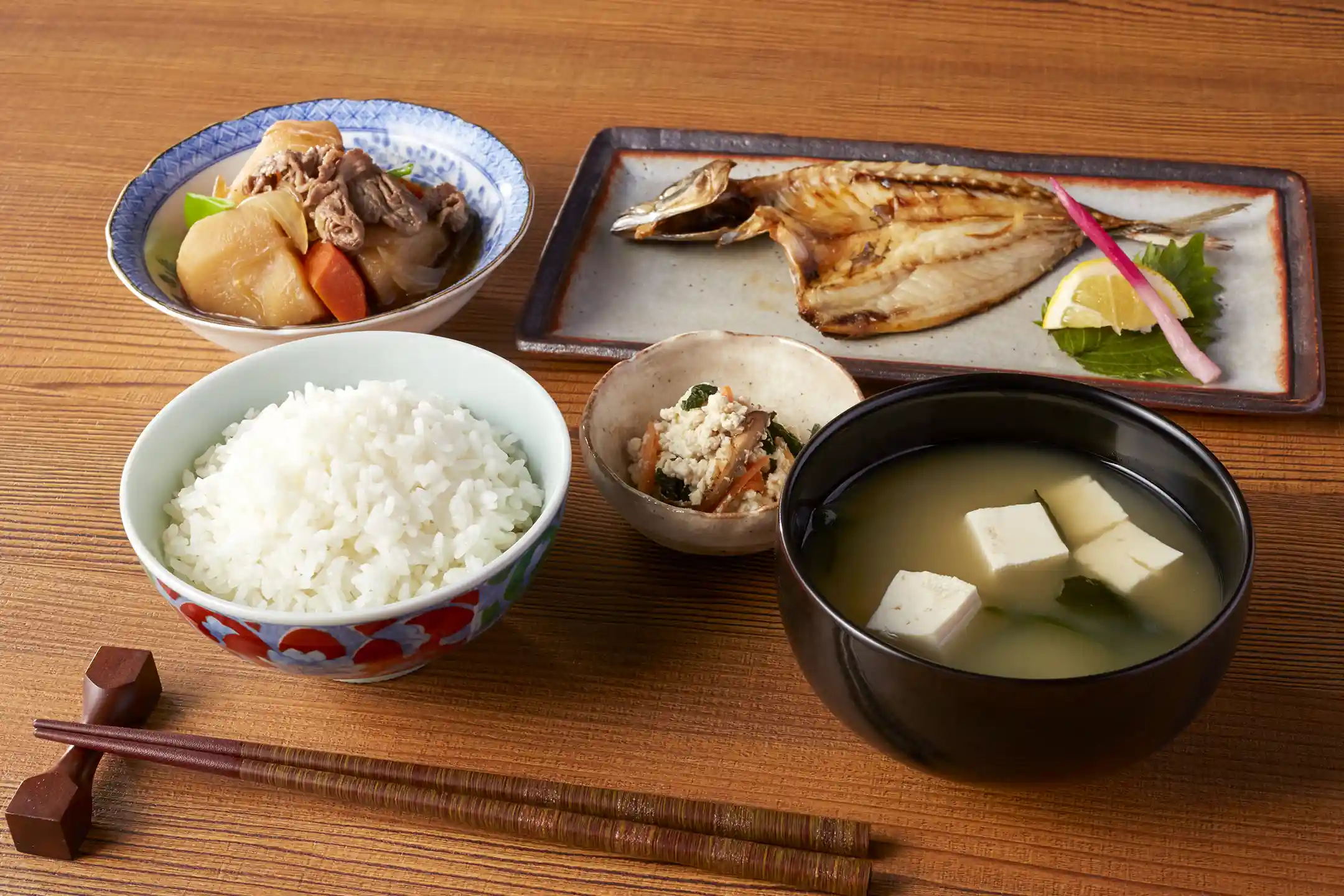

If you are wondering how long can raw sushi stay in the fridge, the safest practical answer is this: refrigerate it immediately and eat it the same day whenever possible. For raw sushi, within 24 hours is the conservative at-home rule for both safety and quality; general seafood guidance allows up to 1–2 days at 40°F (4°C) or below, but finished sushi usually declines faster because it combines raw fish, vinegared rice, and ready-to-eat toppings.
Sushi is, in a sense, a craft exquisitely sensitive to time and temperature. “How long it remains safe to eat” and “how long it remains truly delicious” do not run on the same track. Here, using temperature × time as your axis, we turn those moments of uncertainty into decisions you can actually use, and organize storage rules you can reproduce at home, with takeout, or while traveling.
How Long Can Raw Sushi Stay in the Fridge? The Factors That Control Shelf Life
When you think about storing sushi, the two factors that matter most are temperature and elapsed time. Because bacteria can multiply quickly when conditions are right, the CDC’s basic guidance is to keep perishable food out of the “danger zone” (40–140°F = approx. 4–60°C) and to limit unrefrigerated storage to within 2 hours (or within 1 hour in hot environments). Sushi is a composite food made from raw seafood + rice + (sometimes egg, shellfish, vegetables, and more), and a weakness in any one component shortens the shelf life of the whole.
The Basics of Temperature × Time: Even Short Delays Matter
It is hard to say “it’s fine because I put it in the fridge” because the unchilled time before cooling is often what creates the real risk. Refrigerating it immediately after purchase, keeping it chilled in transit, and not leaving it out on a hotel desk, kitchen counter, or car seat—those differences matter a great deal. Japan’s hygiene manual for large-scale cooking facilities likewise states that time spent in temperature ranges where pathogens grow easily (approx. 20–50°C) should be minimized, and that foods not served immediately after preparation should be managed at 10°C or below or 65°C or above. Takeout sushi fits these conditions exactly.
What you should remember here is that the safety countdown begins the moment it is made, not the moment you remember to refrigerate it. From the restaurant pickup counter to your home or hotel room, in the back seat of a taxi, in a lobby before the theater, on your way back from a museum—each of those moments quietly eats into the margin you thought you had.
What Vinegared Rice Can—and Cannot—Do: pH Helps, but It Is Not a Cure-All
Sushi rice is rice seasoned with vinegar, and that acidity does help suppress microbial growth. However, it is risky to think, “It has vinegar in it, so it’s fine at room temperature.” In the FDA’s supplementary materials for the Food Code, cooked rice is treated as a TCS food (one that requires time/temperature control for safety), and to hold it without temperature control, the pH must be adjusted to 4.2 or below and the acid must be evenly distributed throughout the rice. The same materials specifically note the need for caution regarding Bacillus cereus.
And the important point is this: even if the rice is acidified, finished sushi combined with fish and other toppings becomes a TCS food again and still requires time and temperature control.
In other words, the premise is completely different between a professional setting, where pH is measured and management is handled through HACCP (Hazard Analysis and Critical Control Points), and a home setting, where you are judging only by the vague sense that it tastes “kind of sour.” For takeout sushi on a trip, the safer approach is not to expect too much from vinegared rice alone.
Oxidation and Drying Out: “Not Delicious Anymore” Begins Before “Dangerous”
With sushi, the loss of deliciousness usually starts before actual danger. Refrigeration helps with safety, but rice changes quickly at low temperatures. For example, cooked rice stored at 4°C has been reported to begin retrogradation (starch aging) after about 6 hours, changing its firmness and stickiness. That is why nigiri stored in the refrigerator so often makes you think, the moment it reaches your mouth, “the rice is hard.”
On the topping side, lipid oxidation can dull aroma and leave the finish feeling heavier. The more unsaturated fatty acids a fish contains, the more easily it oxidizes, and research has shown that oxidation indicators rise over time even under refrigeration or freezing. Separate from food safety, changes like “the aroma has faded,” “the fat feels heavy,” or “the sweetness of the sea has gone quiet” often arrive first—and that is why the deadline for deliciousness is so short.
Cross-Contamination: Hands, Chopsticks, and Containers Can Change the Outcome
Sometimes the risk rises not because of the sushi itself, but because of how it is handled. Official U.S. food safety guidance emphasizes handwashing (with soap for at least 20 seconds), cleaning utensils and surfaces, and separating foods in order to prevent bacteria from transferring from raw seafood to ready-to-eat foods.
Japan’s Ministry of Health, Labour and Welfare also repeatedly stresses the basics: plate food with clean hands and utensils, wash your hands before eating, and throw food away once too much time has passed.
In practical terms, four rules are easy to reproduce even while traveling: use serving chopsticks, give each person their own pair of chopsticks, open the box only for the portion you are going to eat, and quickly re-cover and refrigerate the rest.
Can You Freeze Sushi? A Guide to Storage Time and Safer Thawing
Freezing is not magic that simply “makes sushi last longer.” It is a way to slow microbial growth, not a way to reset freshness. It does not reliably destroy all harmful germs, and it does not neutralize toxins that may already have formed. Once you keep that in mind, the decision of whether to freeze sushi or not becomes much clearer.
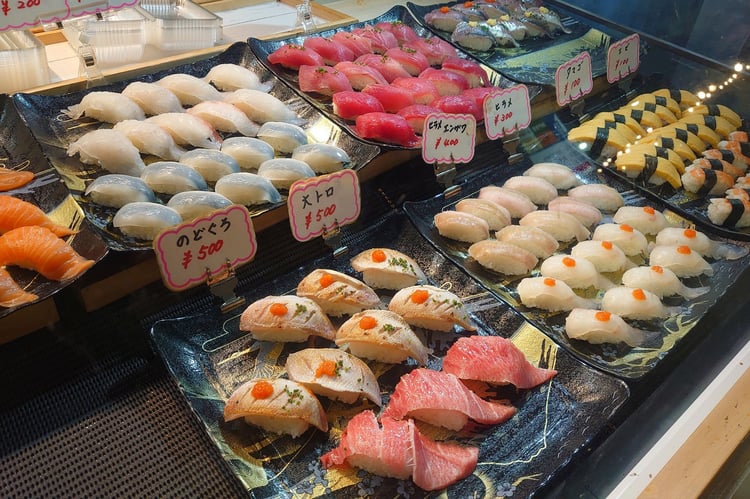
Toppings That Freeze Well / Toppings That Do Not: Typical Cases Where Texture Falls Apart
The core of quality loss in freezing is damage to fine structure caused by ice crystals, along with moisture migration (drip). Materials from Japan’s Ministry of Agriculture, Forestry and Fisheries explain that when ice crystals grow large, they can damage cellular structure and create texture deterioration after thawing, and they organize the point that freezing damage varies depending on the ingredient. From that perspective, ingredients often cited as poor candidates for freezing in sushi include sea urchin, tofu, and kamaboko (fish cake).
In sushi, it is safest to assume that toppings whose appeal depends on delicate aroma and tonguefeel—especially uni—are likely to become something else entirely after freezing.
At the same time, frozen distribution of fish itself is already widespread, and freezing does not automatically ruin seafood. In a Japanese double-blind trial, limited to sushi made with mackerel and squid, frozen products were not shown to be clearly inferior to non-frozen ones. However, that concerns the quality of the seafood itself; once it becomes nigiri, additional deterioration enters the picture through the rice, nori, and assembled structure.
Freezing Procedure: Use Plastic Wrap and Rapid Cooling to Reduce Freezer Burn
Freezer burn (surface drying and oxidation) progresses through air and time. General FDA storage guidance also recommends extra airtight wrapping for longer frozen storage. The same principle is sensible here: close-contact wrapping that limits exposure to air can help suppress quality loss, so wrapping tightly in plastic wrap or sealing it in an airtight bag is the safer choice. Because fish lipids can continue to oxidize even at low temperatures, packaging that limits oxygen exposure is a rational step.
The shortest practical method at home is as follows.
・If possible, separate the topping from the vinegared rice (to reduce freezing damage to the rice).
・Wrap each topping tightly, piece by piece, in plastic wrap, then place it in a zip bag.
・Spread the vinegared rice into a thin, flat layer, wrap it, then place it in a bag (so it freezes quickly).
・Place it in the coldest part of the freezer so it freezes as fast as possible.
Even with this method, the finished form of sushi will not remain perfectly intact. Please think of it only as a last resort to buy more time when you are hesitating between eating it and throwing it away.
Thawing Method: Refrigerator Thawing Is the Rule, with Clear Warnings About What to Avoid
The basic rule is to thaw slowly in the refrigerator. Official U.S. guidance states that seafood should be thawed in the refrigerator, and that cold-water thawing or microwave thawing is acceptable only when followed immediately by cooking. It also explicitly says to avoid thawing at room temperature on the counter. Because sushi is not something you thaw with the expectation of heating afterward, microwave thawing or leaving it out at room temperature tends to complicate both quality and safety at once.
Freezing can also be effective against parasites, but only under specific conditions. Guidance from Japan’s Ministry of Health, Labour and Welfare states that heating (60°C for 1 minute, or 70°C or above) or freezing (-20°C for at least 24 hours) is effective against Anisakis, and that vinegar, salt, soy sauce, and wasabi do not kill it. FDA guidance also gives validated freezing conditions such as -20°C (-4°F) for 7 days, among other approved combinations.
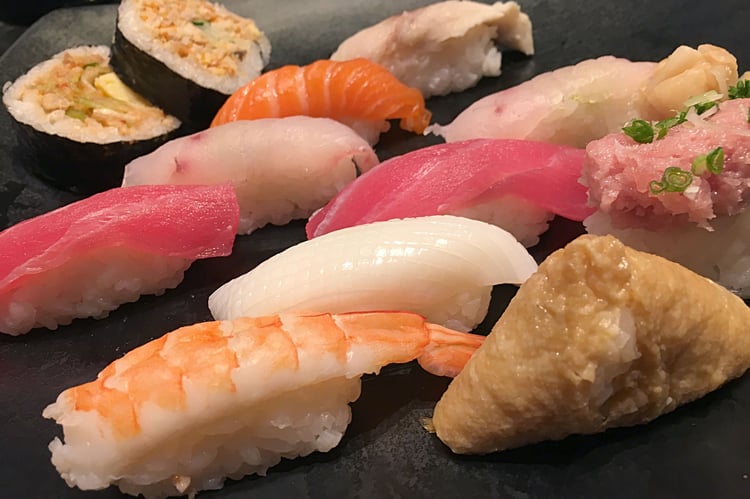
And one exception you should never forget is histamine poisoning. Japan’s Ministry of Health, Labour and Welfare states that once histamine has formed, it is not broken down by heating, so the key is temperature control that prevents it from forming in the first place. The FDA likewise explains that the toxins involved are not destroyed by freezing or heating. In other words, freezing does not restore safety once time-temperature abuse has already happened—and that is exactly why you should not place too much faith in it.
By Topping: A Guide to Sushi Shelf Life and Points of Caution
When you think about whether sushi can be kept, the key by topping is to understand what fails first. Some toppings lose their flavor before bacterial risk becomes the main issue; others become riskier before their appearance tells you much. Here, imagining takeout or room service while traveling, we start from one rule above all: if you are unsure, err on the side of a shorter limit.
Lean Fish / White Fish / Oily Fish: Deterioration Does Not Show Up the Same Way
For red-fleshed fish such as tuna and oily fish such as mackerel, “histamine” is the key word whenever storage comes up. Japan’s Ministry of Health, Labour and Welfare states that histamine forms under improper temperature control and, once formed, is not broken down by heating. A fact sheet from Japan’s Food Safety Commission makes the same basic point, and the FDA likewise explains that the related toxins are not destroyed by freezing or heating. In other words, this is one of the clearest areas where the intuition of “it was refrigerated, so it should be fine” or “it’ll be okay if it’s seared” simply does not work.
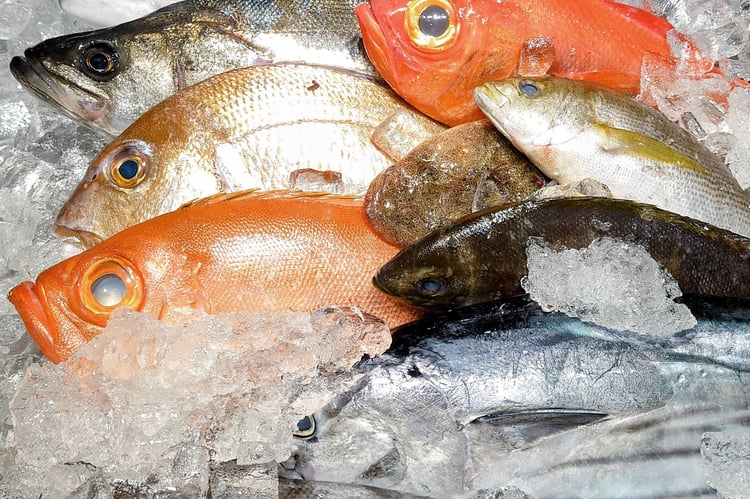
White fish may feel lighter and seem slower to deteriorate, but that does not mean you can treat it casually. Official refrigerated storage charts place many fresh fish and shellfish in the 1–2 day range at 40°F or below, but sushi usually declines faster because it has already been handled, assembled, and combined with rice and other ingredients. The conservative baseline is this: as sushi, eat it the same day, or by the next day at the latest.
Shellfish / Crustaceans: A Category That Changes Fast
Shellfish and crustaceans tend to develop changes in smell, slime, and texture quickly, which means they are easier to judge but also a fast-changing category. Official cold-storage charts also tend to assign short refrigerated storage periods to shrimp, scallops, squid, and similar seafood.
It is also worth remembering that people who are pregnant, older, or immunocompromised are specifically advised to avoid raw or undercooked fish and shellfish, including sushi or sashimi, because they are more vulnerable to severe foodborne illness. In practical terms, that means raw shellfish sushi deserves the shortest leash of all.
Uni / Ikura / Roe: Signs of Quality Collapse Show Up Quickly
With uni and ikura, you can often tell almost immediately when the outline of the flavor starts to blur. Materials from Japan’s Ministry of Agriculture, Forestry and Fisheries also cite uni as an ingredient that does not retain its deliciousness easily under frozen storage. Because freezing does little to hide deterioration here, the best answer is simple: eat it soon after it arrives, and if you need to leave it, do not force yourself to keep it.
Cooked or Processed Toppings: They Have Strengths, but They Are Not Invincible
Anago, tamagoyaki, steamed shrimp, toppings finished with nikiri sauce, vinegared fish (such as shime-saba), zuke, and kombu-jime all use salt, acid, sugar, and umami as part of their flavor design, and as a result, those elements may also contribute somewhat to keeping quality.
Even so, please do not jump to the shortcut of thinking, “it has been processed, so it is safe.” In the context of parasites, for example, the FDA states that salting or pickling does not amount to complete elimination, and that validated heating or freezing conditions may still be required. Vinegaring is a technique of adjustment more than destruction, and it is not a master key for preservation.
By Style: How Shelf Stability Changes with Nigiri / Rolls / Chirashi / Pressed Sushi
Even with the same toppings, changing the form changes how well sushi keeps. That is because the surface area exposed to air, the paths through which moisture moves, and the speed at which temperature falls or rises all change. The more refined the plate, the more its flavor depends on details of design—and that is exactly why the limits of storage are determined by structure as well.
Nigiri: Exposure and Drying Make Deterioration Easy to Notice
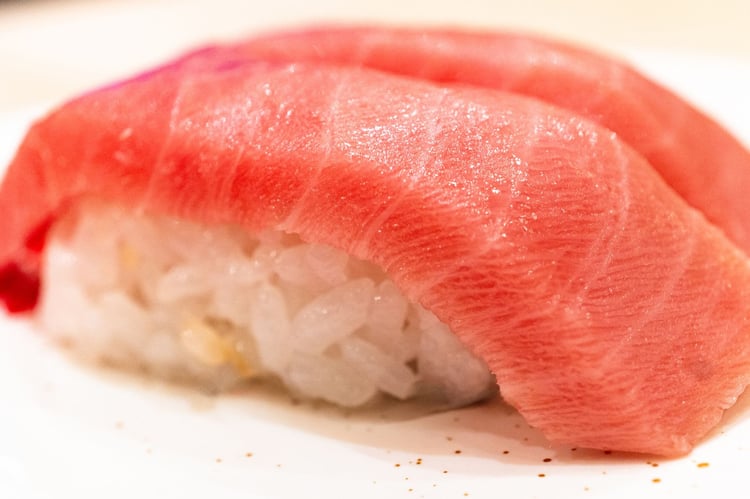
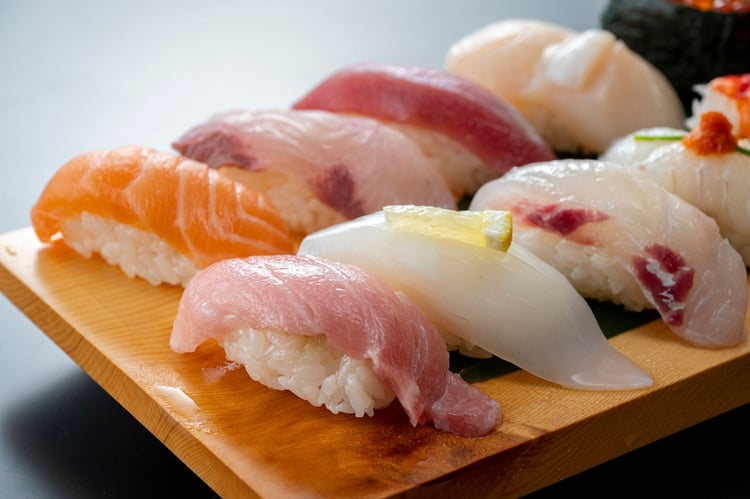
Nigiri is a style in which the topping is exposed, so it is especially vulnerable to drying and oxidation. Once refrigerated, the rice tends to harden, and there are reports that retrogradation begins after about 6 hours at 4°C. The topping also loses aroma as it remains exposed to air, and if the fats oxidize, that refined finish fades away. It is best to think of nigiri as a food of freshness rather than storage, and to prioritize when you eat it—that is, in the end, the greatest luxury of all.
Rolls: Nori Moisture Absorption and Oxidation at the Cut Surface Are the Keys
With rolled sushi, the texture changes dramatically once the nori absorbs moisture. Dry nori is crisp, but as it takes on humidity it can first become firm and then soft; research suggests this change is related to moisture uptake and molecular movement. In sliced rolls, oxidation and drying proceed from the cut surfaces, so even with the same thick roll, whether it has been cut or not changes how it feels when you eat it.
Chirashi: Mixed Ingredients Make Control More Difficult
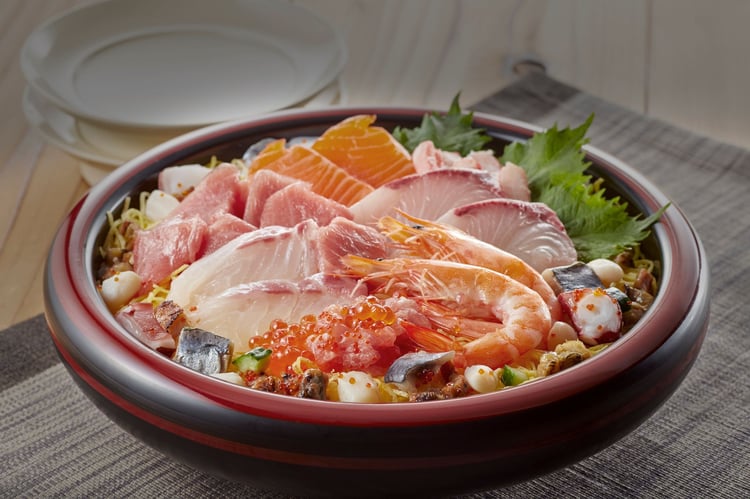
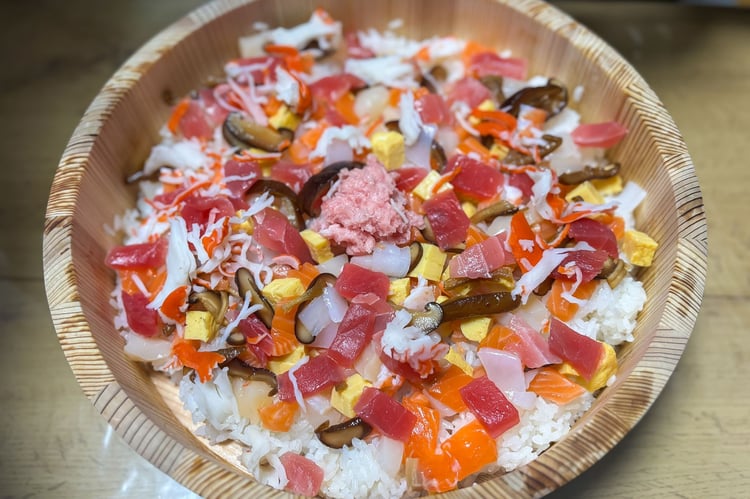
Chirashi sushi contains many kinds of ingredients, and their individual moisture levels and temperatures mingle together. When raw seafood, shredded egg, vegetables, ikura, and more all share the same bowl, the conditions line up easily for the whole dish if even one element has been handled loosely. As official U.S. food safety guidance emphasizes, seafood should be moved into refrigeration or freezing within 2 hours of purchase, and cross-contamination before and after preparation should be avoided—these basics matter especially here. With chirashi, you are less likely to go wrong if you remember that it tastes best when assembled just before eating.
Pressed Sushi: Relatively Stable, but Easy to Underestimate
Pressed sushi is compacted, so it tends to contain fewer air layers. And because the ratio of vinegared rice is also calculated as part of the dish, you may feel that it holds its form relatively well. However, it has been shown that even acidified rice, once it becomes a finished product combined with toppings, still requires time and temperature control. Rather than thinking, “it’s pressed, so it should be fine,” the safer mindset is, “because it is pressed, it is easy to let your guard down.”
Temaki: Made to Be Eaten Right Away
Temaki is a style that invites you to enjoy a structure that is deliberately weak against moisture and time. It is well known that nori changes texture easily as it absorbs moisture, and if the fillings are laid out for too long, temperature control also begins to collapse. If you are serving it at a party, keep the fillings cold and roll each piece right before eating—that is the smartest rule of all.
Signs You Should Not Eat It: A Checklist for Appearance / Smell / Mouthfeel
The last moment of hesitation is always the same: “Is this still okay?” The conclusion, plainly put, is that if you are unsure, throwing it away is the wisest choice. Japan’s Ministry of Health, Labour and Welfare clearly urges you to throw food away once too much time has passed, and not to put it in your mouth if it seems suspicious even in the slightest. Here, to make hesitation easier to resolve, let us turn those judgments into visible words.
Appearance: Discoloration, Slime, Dryness, Liquid Seeping Out
If any of the following apply, we recommend deciding not to eat it as a rule.
・The topping looks dull, brownish, or shows rainbow-like discoloration
・Slime has formed on the surface and your chopsticks slip
・Liquid has seeped into the bottom of the container and the flesh is breaking apart
・The rice is extremely dry and looks cracked
・The nori is damp and sticky (a sign that flavor deterioration has progressed)
Of course, appearance alone cannot tell you whether something is safe. The FDA notes that color and texture are unreliable indicators on their own. So if obvious discoloration, dryness, slime, leaking liquid, off-odors, and long periods of temperature abuse overlap, prioritize the decision not to eat it. The important point is that even if it looks “fine,” it is not necessarily safe.
Smell and Taste: Sourness, Fishiness, Bitterness, and Other Signs That Feel Off
Smell is a powerful clue, but taste should not be your test. The more refined the aroma of the topping, the more likely early deterioration is to appear only as a faint sense that something is wrong.
・An acidic smell that lingers in the back of your nose (a sharp sourness different from the acidity of vinegared rice)
・A fishy smell or an ammonia-like sting
・Bitterness, a harsh off-note, or a metallic sensation that lingers on your tongue
・A prickling sensation the moment it enters your mouth
Histamine, in particular, may sometimes first be noticed as an unusual sensation on the lips or tip of the tongue, according to warnings from Japan’s Ministry of Health, Labour and Welfare. If you notice that feeling after a bite, do not force yourself to go on—dispose of the rest.
Final Judgment: Put Safety Before Waste
Sushi on a journey is an experience crystallized from the sea of that place and the skill of its artisans. That is exactly why, if it leaves you unwell, the entire experience is diminished. Drawing a firm line—discard it once it has gone beyond the basic rule for room-temperature storage (within 2 hours, or within 1 hour if the environment is hot)—is also a way of protecting your peace of mind. Even if it has been refrigerated, throw it away if too much time has passed or if anything about it feels questionable. Public agencies repeat this point again and again for a reason.