.webp)
Fancy Japanese food is a question about money as much as it is a question about taste. Search for it and you get lists of dishes. What you rarely get is the number on the bill, the reason behind it, or a way to tell whether the label in front of you guarantees anything at all. This article works the other way round: it starts from prices that restaurants publish themselves, then takes apart three of the labels that carry the most weight in luxury Japanese food, and shows what each one actually promises.
Every figure below was read off an official page, not a review aggregator, and each is linked so you can check it. Prices in Japan move, and one of the restaurants recommended in the previous version of this article has since closed, so treat the numbers as dated evidence rather than a permanent price list. The Art of Japanese Fine Dining Digital Guide draws together the history of kaiseki, the aesthetics of the table, the regional schools, and the chefs who are quietly redefining what this tradition means today.
What Fancy Japanese Food Actually Costs
The phrase people type into a search box is usually expensive Japanese food, and the honest answer is that the top of the market costs more than the guidebooks suggest, in a way that is published and checkable. The useful move is to look at one restaurant that prints its whole ladder. The same reading applies at a sushi counter or a beef specialist; the kaiseki house is simply where the arithmetic is easiest to see.
Kaiseki at Kyoto Kitcho: the Published Numbers, and the 32 Percent Behind Them
Kyoto Kitcho's Arashiyama main branch lists its courses on its own dishes and drinks page, and it prints two figures for each one. Under the rates in force to 30 September 2026, a lunch-only course is 40,000 yen, shown as 52,800 yen. The courses served at either lunch or dinner are 50,000 yen and 60,000 yen, shown as 66,000 and 79,200 yen. The omakase course carries no fixed price at all: it is listed at market rate from 95,000 yen, shown as 125,400 yen, and the restaurant states that the price moves with the season and the ingredients. A course for primary-school children is 25,000 yen, shown as 33,000 yen.
The gap between the two figures is the part worth understanding. Every course price quoted above is printed as a pair, and every pair stands in the same ratio: the inclusive figure is 1.32 times the menu figure. The restaurant marks the larger number as tax and service included, and 1.32 is the arithmetic you get from a 10 percent consumption tax applied on top of a 20 percent service charge, although the page does not break it down. Either way, the smaller number is the cooking and the larger number is the bill. A 60,000 yen course is a 79,200 yen commitment per person before a single drink. Anyone budgeting from the headline figure is planning for roughly three-quarters of what they will pay.
This is the first practical test to apply anywhere in Japanese fine dining: find out whether the number you were quoted is the inclusive one. A restaurant that publishes both, as this one does, has already answered the question for you.
Why the Same Kaiseki Costs More in October
The same page splits the year into a standard period and a special period, and charges differently for the identical format. The standard rates run to 30 September 2026 and again from 6 May to 30 September 2027. The special period covers 1 October 2026 to 5 May 2027, and 1 October 2027 to the end of that year.
In the special period the lunch-only course is 50,000 yen rather than 40,000, shown as 66,000 yen. The 50,000 yen lunch-or-dinner course disappears from the list, so the cheapest course served at both sittings becomes the 60,000 yen one. The restaurant adds one further line: from around October to around February, the months it names for matsutake, crab and fugu, the omakase starts at 98,000 yen instead of 95,000, shown as 129,360 yen.
Read plainly, that is seasonality with a price tag attached. Writers describe Japanese cuisine as seasonal so routinely that the word has stopped carrying information. Here it is a line item: the same room, the same kitchen, the same number of courses, and a different figure because of what the mountains and the sea are producing. A reader deciding when to travel now has something concrete to weigh.
Bookings Taken from 2027
The restaurant posted a notice of a price revision on 18 August 2026, stating that reservations accepted from 1 January 2027 will be charged at the new rates, and that bookings taken up to the end of December 2026 will not.
The same dishes page prints the new schedule, so the change can be read rather than guessed at. Under it, the lunch-only course is 50,000 yen, shown as 66,000 yen; the lunch-or-dinner course is 60,000 yen, shown as 79,200 yen; and the omakase runs from 95,000 yen, shown as 125,400 yen, with the matsutake, crab and fugu months again starting at 98,000 yen. In other words, the special-period rates become the rates for the whole year, and the 50,000 yen lunch-or-dinner course stops being offered at all. The cheapest dinner rises by 10,000 yen before tax and service, or 13,200 yen on the bill — but only for the months the old schedule called standard. In the special period, dinner already started at 60,000 yen, so nothing changes there.
That makes the timing rule narrower, and more useful, than it first looks. The old schedule's last standard window ends on 30 September 2027. A reservation accepted before the end of December 2026 for a meal between 6 May and 30 September 2027 is therefore charged 40,000 yen for the lunch-only course, where the identical booking made in January 2027 for the same day is charged 50,000. For a winter visit, booking early buys nothing at all: the special-period rate and the new rate are the same figure.
Reading the Wagyu Label: What A5 Guarantees, and What It Does Not
Beef is where the largest amount of money changes hands on the strength of a label, and where the labels are least understood. Three of them do most of the work, and each guarantees something different from what people assume.
The A in A5 Is a Butcher's Number
The grade is issued under the beef carcass standards of the Japan Meat Grading Association, and it is two separate judgments printed side by side. The letter is the yield grade, calculated from a formula using loin eye area, rib thickness, carcass weight and subcutaneous fat depth: A is a yield standard value of 72 or above, B is 69 to below 72, C is below 69. That is an estimate of how much saleable meat comes off the animal. It is a wholesaler's figure, and it says nothing about how the meat tastes.
The digit is the meat quality grade, assessed on four items: marbling, meat color and luster, firmness and texture, and the color, luster and quality of the fat. The rule that matters is how the four are combined. The final grade equals the lowest of the four scores, not the average, so a carcass with superb marbling and one weak score on fat quality does not reach a 5. On the marbling scale itself, the Beef Marbling Standard runs from No. 1 to No. 12, and the association's threshold for quality grade 5 is BMS No. 8 or above; grade 4 begins at BMS No. 5.
So A5 means a carcass that yields well and cleared every one of four hurdles. That is a real achievement and a genuine scarcity signal, but it is not a verdict on flavor, and the association does not present it as one. Reading it as a taste score is the most common mistake made about expensive Japanese dishes, and it explains why people are surprised when a lower grade eats better than they expected.
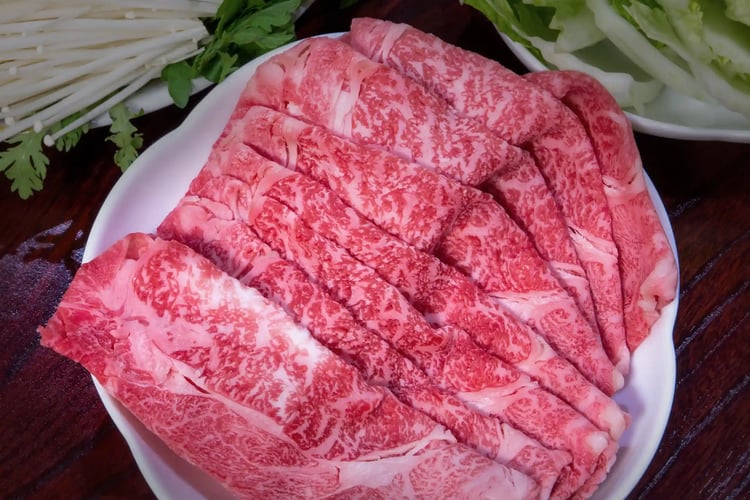
Kobe Beef Does Not Have to Be A5
The most famous name in Japanese beef sets its bar somewhere else. The Kobe Beef Marketing and Distribution Promotion Association defines Kobe Beef as a subset of Tajima cattle, themselves defined as animals descended from Hyogo Prefecture's official breeding bulls, raised by registered producers inside the prefecture, aged 28 to 60 months. To be sold as Kobe Beef, the animal must be an unproven female or a castrated male; the grade must be A or B at quality grade 4 or above; the marbling must be BMS No. 6 or higher; and the carcass must weigh 270 to 499.9 kg for females, 300 to 499.9 kg for castrated males. Where a carcass carries a defect marking, the association's rules send it to a commissioned member company, which verifies it and determines whether the meat still qualifies.
Quality grade 4 or above. BMS 6 or higher. Both thresholds sit below A5. A steak can be authentic Kobe Beef, meeting every condition the association imposes, and still not be A5. The association also caps the carcass weight, so an animal can be excluded for being too large however well it grades. The name and the grade are two different claims, and a restaurant is entitled to make either one. The check is to ask which it is making.
Matsusaka Ushi Sets No Grade at All
The third name goes further in the same direction. Matsusaka City's official definition of Matsusaka ushi, in Mie Prefecture, requires a Japanese Black virgin heifer, registered in the Matsusaka Ushi individual identification management system, introduced into the production zone by 12 months of age and not moved outside it afterwards, with the longest and final period of fattening inside that zone. There is no grade requirement anywhere in the definition. The brand is a statement about lineage, sex, place and time, not about the score the carcass later receives.
That registration system is worth separating from a similar-sounding one. Every piece of domestic Japanese beef carries a national ten-digit individual identification number, because the law requires it; producing one proves the animal existed and can be traced, and nothing about its quality or its brand. The Matsusaka register is a separate, brand-specific system, and it is the one that decides whether the word on the menu is earned.
The city also quietly corrects a story that has followed this beef around the world. Asked about beer, its FAQ page answers that a portion of farmers give cattle beer when their appetite drops, in order to stimulate it, and that this does not mean every animal drinks beer. The page does not mention massage with shochu at all. What it does describe is a premium tier called tokusan Matsusaka ushi: calves from Hyogo Prefecture fattened inside the production zone for 900 days or longer, which it presents as a special grade of high rarity. The real distinction is a number of days, and it is duller than the beer story and harder to fake.
Which Column the Wagyu Olympics Champion Is In
Every five years the National Japanese Beef Cattle Ability Expo settles which prefecture may call itself the best, and the phrase travels into English as the Wagyu Olympics. The trophy that gets quoted is the Prime Minister's Award. The detail that gets dropped is that there are two of them, one for each division: breeding cattle, judged in classes 1 to 6, and meat cattle, judged in classes 7 and 8.
At the twelfth expo, held in Kagoshima in 2022, Kagoshima Prefecture took the Prime Minister's Award in the breeding cattle division, in the class for groups of breeding females, along with first place and the Minister of Agriculture, Forestry and Fisheries Award in six of nine classes, and the award for the most excellent carcass in the meat cattle division. The prefecture publishes that result under the name of its brand, Kagoshima Kuroushi. In the meat cattle division, the Prime Minister's Award went to Miyazaki Prefecture, in a class created for that expo to judge the quality of the fat as well as the quantity and quality of the meat.
Miyazaki's own headline is that it has taken a Prime Minister's Award at four consecutive expos, at Tottori, Nagasaki, Miyagi and Kagoshima, and that no prefecture had done so before. Read the award table on that page by column rather than by row and the claim becomes more interesting than a run of wins in one division. At Nagasaki, the tenth expo, Miyazaki's Prime Minister's Award was in the breeding cattle division; the meat cattle award that year went to Nagasaki. The record Miyazaki is claiming is continuity across both divisions, not four meat titles in a row. Its actual run in the meat division is three of the last four expos, which is more meat-division titles than any other prefecture in that table has taken across all twelve.
Two prefectures, two accurate statements, two different columns of the same table. Even the denominator shifts: Kagoshima counts nine classes because it includes the special class for high schools and agricultural colleges, while Miyazaki counts eight. For a traveler choosing where to eat, the meat column is the relevant one. A claim to be the champion is worth one follow-up question: champion of which division, and in which year.
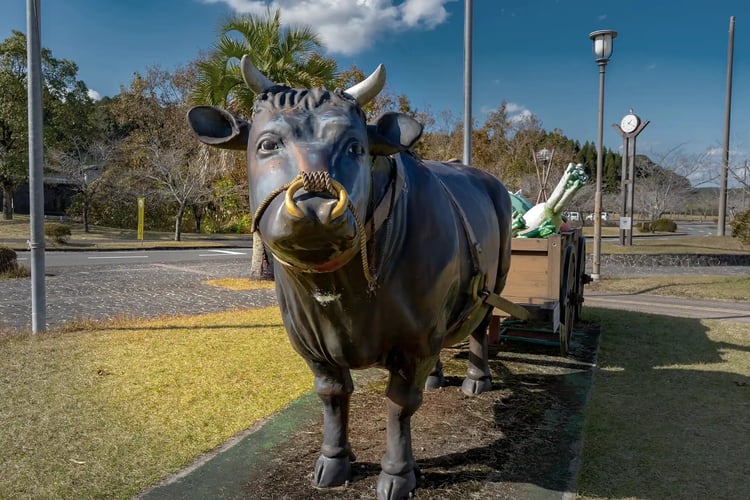
How an Austere Meal Became Japanese Haute Cuisine
The template for the most expensive meal in Japan is a meal that was designed to be modest. That inversion explains a great deal about what the money is buying.
Yūsoku Ryōri and the Court Table
One line of descent runs from the court. Yūsoku ryōri is the cuisine of aristocratic ceremony, governed by rules of etiquette rather than by the cook's preference, and it survives as a living practice in a small number of houses. In Kyoto, Mankamerou states on its own site that it began in 1722 as a sake brewery in the Nishijin district and later became a restaurant under its present name, that the current proprietor is the tenth generation, and that the house formally inherits the Ikama school of shikibōchō, the ceremonial knife work associated with the Imperial Palace.
That last item is the interesting one. Shikibōchō is a form in which a fish or bird is cut with a long knife and a pair of metal chopsticks, without the hands touching the food. It is not a cooking technique in any useful sense: it is a performance of precedence and restraint, inherited by generation, and its presence in a restaurant is a claim about descent. When a Kyoto house sells access to something like this, the price is attached to continuity.
What Cha-Kaiseki Was, and What Kitcho Serves Now
The other line runs from the tea room, and here the source is unusually direct, because the restaurant explains itself. Kyoto Kitcho writes on its dishes page that its courses are grounded in cha-kaiseki, which it defines as the food offered when a formal tea gathering is held: seasonal ingredients served at their best, in good taste and in good order, with every effort made to please the invited guest. Then it says what its own cooking does with that inheritance. Its courses carry more dishes than cha-kaiseki, are more lavish, and continue to be revised in step with the times.
That is the transformation, stated by the practitioner rather than inferred by a writer. The tea meal was a discipline of sufficiency, served before thick tea so that guests would not face it hungry. What sits at the top of the market today keeps its sequence, its seasonal attention and its vocabulary, and has added courses, ornament and revision. The austerity became a grammar, and the grammar became a luxury. Anyone who has wondered why a Kyoto kaiseki meal feels simultaneously restrained and extravagant is reading both layers at once.
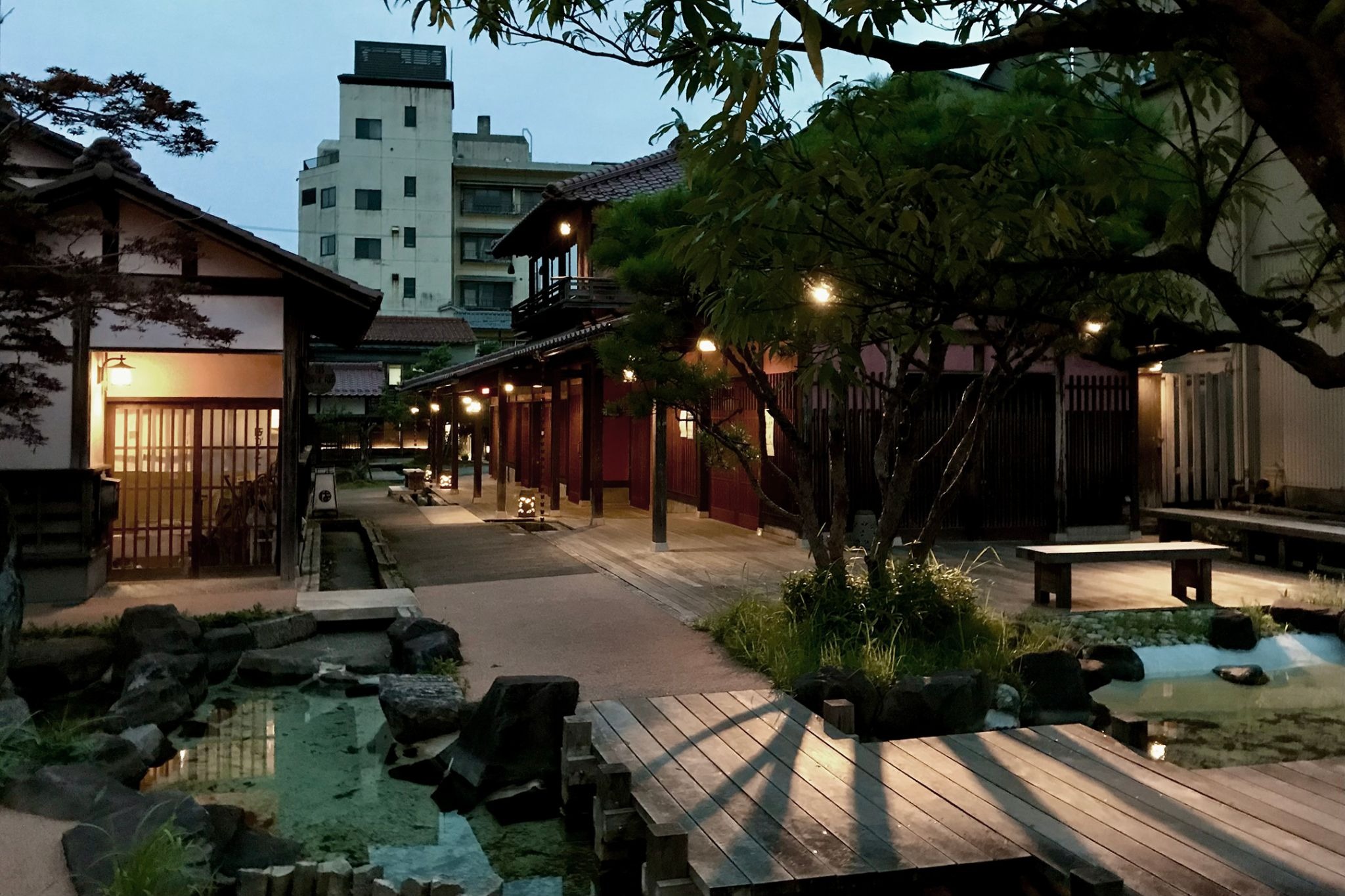
The house that says this has a founder, and his name is the hinge between the tea room and the price list. Kyoto Kitcho's pages for the Arashiyama main branch record that the site itself came to Teiichi Yuki in 1948, when he acquired a villa from the son of Kasuke Kojima, an antique dealer who had been a patron since the restaurant opened and from whom, Yuki said, he learned about food, about art and about business. The room named Taikō-tei arrived later: a shoin-style building from the early Meiji period, acquired from the industrialist Kōnosuke Matsushita in 1962 and moved to Arashiyama to serve as a dining room, then reworked in 2023 by Kyoto craftsmen. The restaurant explains the name as meaning a room for receiving special guests. A house assembled out of other people's buildings, under a founder taught by his own customers, is a fairly literal picture of what the money is buying.
The License in the Kitchen: Why Fugu Costs What It Costs
One dish on the expensive list is priced by law as much as by scarcity. Fugu, the pufferfish, is the clearest case in Japanese cuisine of regulation setting a floor under a price, and the regulation is not what most visitors assume.
There Is No National Fugu License
The obligation itself is national. Hokkaido's food hygiene page on fugu records that the Food Sanitation Act was revised in 2018, with effect from 1 June 2021, so that a business handling fugu must have the fish processed by a person the prefectural governor or an equivalent authority recognizes, or by someone else working in that person's presence.
What the national law does not do is say who counts. Each prefecture decides that for itself, and the schemes differ in name, in entry route and in whether they travel. Hokkaido calls the qualification fugu shorisha and lists five routes to being recognized there, one of which is having passed the certification examination run by another municipality. Tokyo answers the same question differently: its examination Q and A states that holding another prefecture's qualification does not by itself permit handling fugu in Tokyo, with recognition limited to specific qualifications under specific conditions. The person allowed to prepare the fish for you in Sapporo may not be allowed to prepare it in Ginza. That is an unusual arrangement for a food safety regime, and it is the reason a fugu kitchen is a fixed asset.
What Tokyo Changed in 2023
The same page records a change that has not reached English-language writing about the dish. Under the revised Tokyo ordinance, the examination that had been called the fugu chōrishi examination became the fugu toriatsukai sekininsha examination on 1 April 2023. The wording moved from cook to person responsible for handling.
The entry requirements moved further. The page states that there are now no eligibility requirements to sit the examination, and that the two former conditions — holding a cook's license, and at least two years of work experience under a licensed fugu cook — are no longer necessary, with the qualification issued from the age of eighteen. An apprenticeship that had been a legal precondition in the capital is now a professional choice. Whether that reads as sensible liberalization or as the loss of a guarantee is a fair argument, and one a diner is entitled to have an opinion about, because the two-year apprenticeship was part of what the price used to represent.
The Vessel Is Part of the Bill
A recurring surprise for visitors is how much of the cost sits on the table rather than the plate. In this cuisine the vessel is one of the things being served, and restaurants keep it the way a collection is kept.
Kyoto Kitcho's own seasonal note is a plain example. Writing about the setting it prepares for the harvest moon, the restaurant names the vessel used for one autumn course as a work by the fifteenth-generation Eiraku, Shōzen, an autumn-grasses mukōzuke dish after Kenzan, and records it as held in the Arashiyama main branch's own collection. A restaurant that catalogs its bowls the way a museum catalogs holdings is telling you where part of your money goes. The same page identifies the hanging scroll displayed in one of its rooms in late summer as calligraphy by Seigan Sōi, described there as the 170th abbot of Daitoku-ji in Kyoto, also held by the house.
The practice extends beyond one house. Porcelain from Arita in Saga Prefecture does a great deal of this work on Japanese tables, and in Kanazawa, in Ishikawa Prefecture, CRAFEAT presents itself as a restaurant built around experiencing traditional craft, with Wajima-nuri lacquerware as the vehicle.
The kitchen will not announce that the bowl in front of you is a named piece. Asking is not a breach of etiquette; in a house that keeps a collection, it is the question the room was arranged to invite.
Booking: What Fine Dining in Japan Does Not Sell
At this level of luxurious cuisine the seat is rationed by means other than money. The conditions are published, and they are more informative than any guide to etiquette.
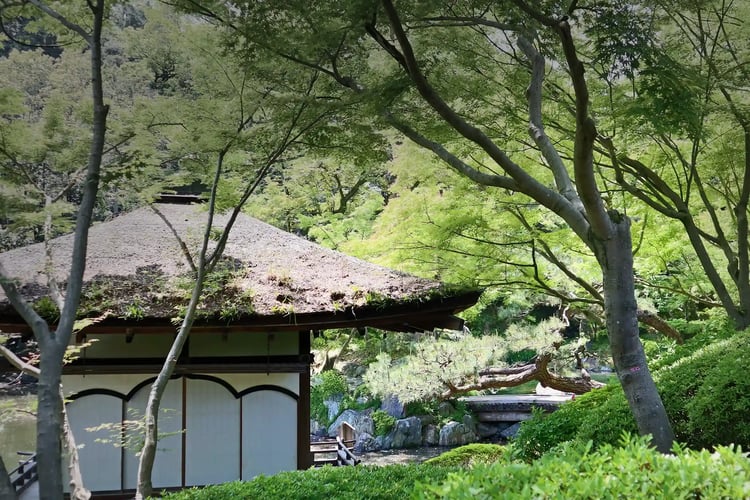
Kyoto Kitcho's Arashiyama pages set out its terms without ceremony. Reservations through the third-party service AutoReserve are not accepted at all. Cancellation charges apply from five days before the booked date, except in unavoidable circumstances. The restaurant seats guests of primary-school age and above, and children below school age are asked not to attend. Parking is limited to about five cars and must be arranged in advance. For April and for November to January, the restaurant asks that you contact it early, and recommends arriving by means other than a car because of congestion. On pricing, the page directs anyone wanting to discuss the figure, the ingredients or the intention of a course to telephone the main branch.
Taken together, those are the mechanics of a room that would rather have the right booking than a full book. What is being managed is not demand but fit. A restaurant that declines an aggregator, insists on a telephone conversation about the menu and charges for late cancellation has decided that the transaction includes a conversation. Arriving prepared for that conversation is the practical skill. The same logic runs through a private kaiseki dinner at a Kyoto ryokan, where the meal is arranged around a specific party.
There is a harder lesson underneath, and the previous version of this article learned it the expensive way. It recommended Tofuya Ukai in Shiba, beneath Tokyo Tower, as a place to eat tofu kaiseki in an Edo-style garden compound. The company's own page now carries a closing message: the Shiba restaurant ended its operations on 31 March 2026, after roughly twenty years. The group's other tofu restaurants, at Owada in Hachioji and at Saginuma in Kanagawa, continue. Nothing about the recommendation was wrong when it was written. It simply stopped being true, and a page that had been left alone went on saying it. Before a long journey, open the restaurant's own site rather than a list, and read the notices before the menu. A broader survey of the field is in our companion piece on fancy Japanese dishes for the elegant traveler.
A wider table awaits
Every kaiseki meal is, in a sense, a condensed argument about time, place, and intention. This article has traced one part of that argument. The Art of Japanese Fine Dining Digital Guide takes the conversation further — gathering the origins of kaiseki, its regional expressions, the tension between tradition and contemporary innovation, and the quiet values that shape each course — into a single, connected reading.

Conclusion
Fancy Japanese food rewards the same habit at every level: find out what the number and the label actually refer to. A published course price may be three-quarters of the bill, and the restaurant will tell you which figure is which. A grade may describe a carcass yield instead of a flavor. A famous brand name may set its threshold below the grade you assumed, or set no grade at all, and a championship may belong to a division you were not thinking about.
None of that makes the tradition less impressive. It makes it legible, and legibility is what turns spending into judgment. The cuisine at the top of this market descends from a meal designed around sufficiency, keeps its sequence and its seasonal attention, and prices both openly enough that a careful reader can plan around them. Knowing that the lunch course changes on 1 October, that booking before the end of December 2026 holds the old rate but saves nothing on a winter meal, that Kobe Beef need not be A5, and that the bowl may be cataloged alongside the calligraphy is not trivia. It is the difference between paying for a reputation and recognizing what is in front of you.
.webp)