As of 2025, “experiential museums” are booming all over Japan. Instead of simply looking at exhibits, you can now step into immersive art spaces that engage all five senses and invite you to take part. Cutting‑edge technology and Japanese culture are coming together, creating a new way to enjoy museums that is attracting worldwide attention. If you have ever typed “experience museum Japan” into a search bar while planning a trip, this is exactly the kind of place you were looking for.
In this guide, you’ll find everything from basic concepts to recommended spots, how to choose by genre, and tips for booking tickets. The aim is to help you fully enjoy immersive experiences that match your personal interests, weaving in an academic perspective while keeping the tone as light and engaging as a travel magazine. Let’s head out together on a special art journey that will stir your senses.
Basics|What Is an Experiential Museum?
First, let’s get clear on what an “experiential museum” actually is. Unlike traditional museums where you mainly stand and look at exhibits, these are places where you learn by physically engaging with interactive displays and hands‑on programs that stimulate all five senses (*1).
For example, you might press a button to trigger a science experiment, or touch part of an installation to change its shape. The idea is that by participating, your understanding deepens. This experience‑centered approach now spans many types of institutions—science museums, art museums, history museums, and more—and in Japan it has become popular as a new kind of cultural facility where both children and adults can have fun (*1).
Behind this trend is a global shift that sees museums as places for community engagement and participatory learning, reflected for instance in the International Council of Museums (ICOM)’s new definition announced in 2022. Instead of passively receiving knowledge, you’re encouraged to experience and reflect for yourself, gaining “discoveries” and “emotional impact” in the process—that is the core of an experiential museum.
So what are the key ideas in the world of experiential museums? Three major keywords are “participation,” “co‑creation,” and “immersion.” Participation means you actively engage with the exhibits. Co‑creation means your reactions influence the work, so you and the artwork effectively create something together. Immersion means entering a space so deeply that you forget the everyday world around you.
In many digital art exhibitions, for instance, the projected images change depending on where you stand or how you move, so everyone in the room together shapes a single artwork in real time. In Japanese museums, curators often value leaving “space” or “margin” in the presentation—avoiding over‑explaining and leaving room for your imagination. Surprise encounters with the unexpected, and a shared sense of connection with others in the space, are very much part of what makes experiential museums so compelling.
Defining “Experiential” and Current Trends
To sum up the definition again: an experiential museum is “a place where you can learn while having fun, through exhibits that encourage you to physically move and participate” (*1). In Europe and North America, interactive science centers and children’s museums have been around for a long time, but in Japan this trend has rapidly accelerated in recent years.
Take the National Museum of Emerging Science and Innovation in Odaiba, Tokyo (commonly known as Miraikan) as an example. It offers a wide range of interactive exhibits that you can touch and explore yourself, so you can enjoy learning about science and technology in ways that match your own interests, whether you’re a child or an adult (*1). In the digital art field, collectives like teamLab—renowned worldwide—have created installations where art and technology fuse to draw you into the work as part of the piece.
These are not just passing fads. You can see them as a response to a deeper desire: to feel something real in physical spaces and to be emotionally moved in your own body, beyond the screen. Experiential museums are becoming important as places where you can reclaim “wonder” and “emotion” that often get buried in the rush of daily life.
In the chapters that follow, you’ll see how Japan’s hallmark attention to detail—its hospitality mindset and refined sense of beauty—is shaping these immersive spaces.
A Quick Primer on the Technologies Involved
To talk about experiential museums in Japan, it helps to understand some of the technologies behind them. Here are some of the most common:
Projection mapping:
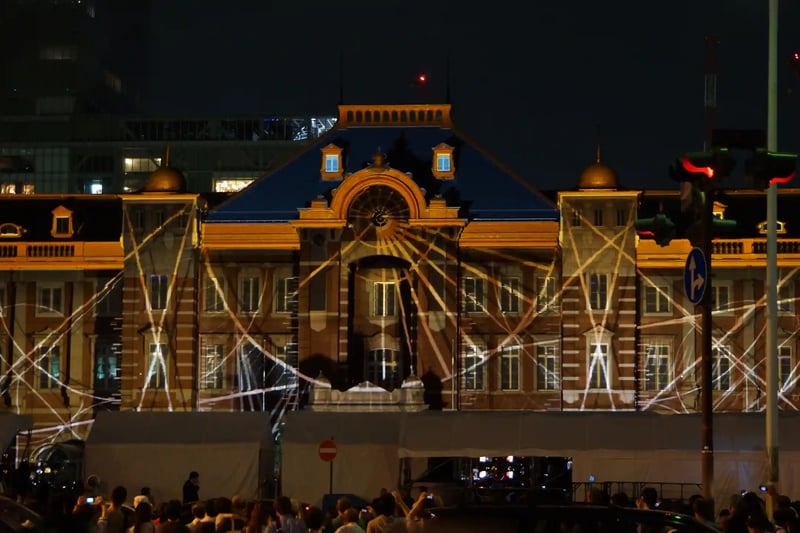
This technique projects moving images onto building facades or 3D objects, effectively “breathing life” into them. A stationary artwork or architectural space is transformed by projected visuals—almost as if the canvas itself has started to move (*1). For example, by projecting seasonal landscapes onto the walls of a traditional building, you get a surreal scene where historical architecture and digital art blend into one.
VR (Virtual Reality) and AR (Augmented Reality):
VR uses special headsets to conjure an entirely different world in front of your eyes. You might walk through a historical scene from centuries past, or experience the feel of a futuristic city in a virtual space.
AR, on the other hand, overlays digital information onto the real world through your smartphone or tablet. In museums, AR often provides background information about artworks or makes static pieces appear to move (*1). In some cutting‑edge facilities, if you put on AR glasses and walk around the galleries, captions and related video clips seem to float beside the exhibits as you go.
Real‑time CG & motion capture:
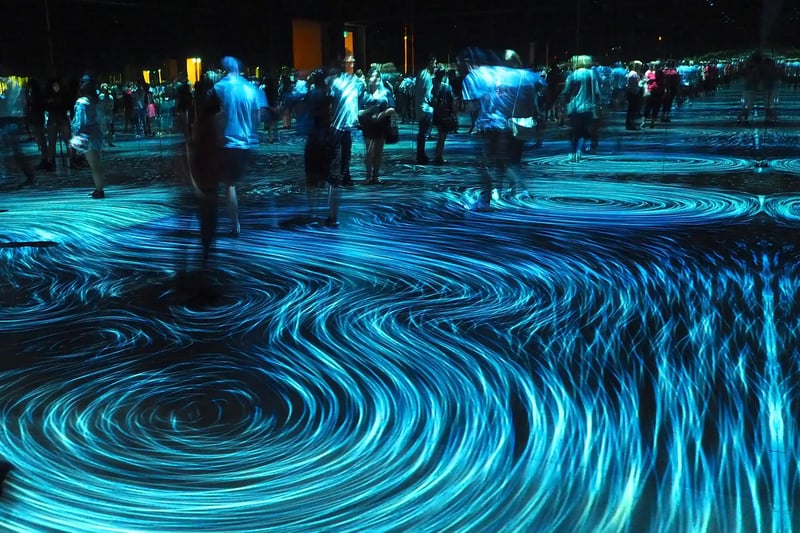
This technology detects your movements and instantly generates or alters computer graphics. Typical examples include floors where flowers bloom along the path where you walk, or screens where characters react when you hold out your hand.
By combining digital sensors with CG, these installations create vivid experiences where your movements and the artwork seem to have a conversation. Children might run around and cause ripples to spread across a projected water surface, or you may scan your own drawing and watch it come alive, moving on a giant screen—like stepping into a waking dream.
Spatial audio (3D sound):
Sound design is crucial, too. By placing many speakers throughout a space and using 3D audio, sound can be made to travel from every direction—front, back, left, right, above, and below—enveloping you completely.
In some of the latest music‑centered experiential museums, dome spaces are equipped with as many as 32.2 channels of speakers, so that natural sounds and music swirl through your entire body in ultra‑three‑dimensional sound (*2). When you surrender yourself to audio that flows from your feet to overhead, you may feel as if your body is melting into the sound itself.
It’s the combination of all these technologies—stimulating not only your sight but also your hearing and touch—that creates the uniquely immersive spatial experience of an experiential museum.
.webp?width=800&height=533&name=Exterior%20of%20Miraikan%20(The%20National%20Museum%20of%20Emerging%20Science%20and%20Innovation).webp)
Reading the Architecture and Visitor Flow
In experiential museums, architectural design and circulation planning are part of the experience. The shape of the building and the layout of its rooms guide how you move and where your gaze travels, and those subtle design choices have psychological effects on how you perceive the artworks.
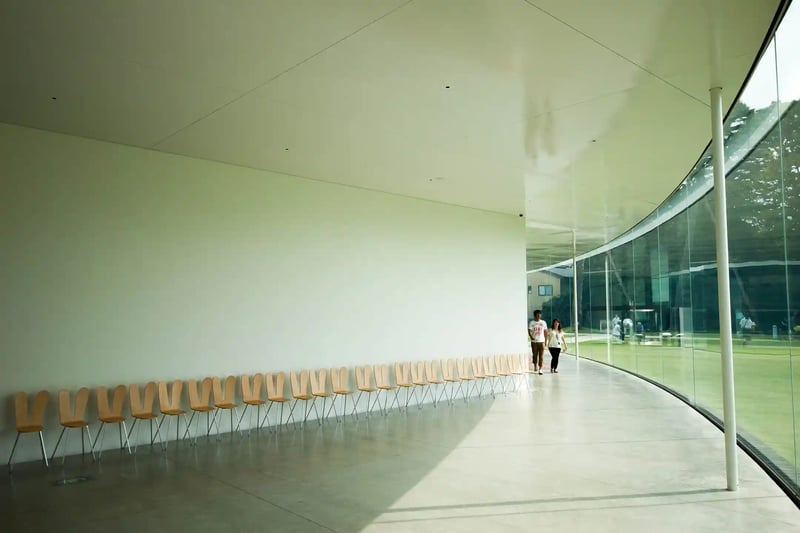
For example, the 21st Century Museum of Contemporary Art, Kanazawa has a distinctive circular floor plan with glass entrances on all sides. This open design creates a sense that “you can enter from anywhere,” and you wander the museum almost as if you’re strolling through a park.
As a result, you’re freed from the feeling that you “must see everything,” and instead you tend to linger, enjoying serendipitous encounters and discoveries. In fact, research has shown that spatial design affects both visitors’ length of stay and satisfaction (*3). A winding approach to a gallery can spark curiosity about what lies ahead, while an open corridor with clear sightlines can offer a sense of ease and security.
Lighting and color schemes are also worth paying attention to. Guiding you from a dimly lit area toward a spotlighted artwork focuses your attention on a single point. Filling a space with a gentle warm hue can create a sense of comfort and being held. Studies suggest that these environmental factors are closely tied to visitors’ emotions and how deeply they understand what they see (*3).
Even the feel of the floor and the sound of footsteps affect your senses. A carpeted floor creates a quiet, calm mood. Stone paving, by contrast, might encourage a brisk walking rhythm and a more energized feeling. Acoustics matter, too. In highly interactive galleries, museums often use sound‑absorbing materials to reduce noise so that conversations and sound effects don’t overwhelm you.
In contrast, open‑air museums that relocate historical buildings sometimes preserve the creak of wooden floorboards or the uneven texture of packed earth floors, letting you feel as if you’ve slipped back in time. Weather is another factor. In museums with outdoor areas, rain‑shelter routes are often planned in case of sudden showers (*4), while some installations only appear in full on clear days.
At the Historical Village of Hokkaido, for instance, indoor dining spaces are made available to groups on rainy days so people can comfortably rest and eat (*4). On Naoshima, the island museums designed by architect Tadao Ando carefully use natural light, so the shifting patterns of sun and shadow throughout the day and changing weather become part of the experience. The way Japanese experiential museums weave in the seasons and the elements is one of their distinctive pleasures.
Recommended Experiential Museums in Japan|Top “Experience Museum Japan” Spots
So, what kinds of experiential museums can you actually enjoy in Japan? Below is an overview of representative facilities by region, along with practical information such as approximate visiting time, English support, and whether they’re suitable for children. First, get a feel for each place from this list; then, in the following subsections, you’ll find more detailed highlights.
Tokyo|National Museum of Emerging Science and Innovation (Science × Art): Approx. 2 hours (add about 30 minutes if you watch a dome theater program); English support available (exhibit texts in both Japanese and English); facilities for children (including a play space for preschoolers) (*1)
Tokyo|Art Aquarium Museum GINZA (Digital Art): Approx. 1 hour (30–90 minutes depending on crowds); partial English support (most signage in Japanese); no baby strollers allowed inside (stroller storage available on the 9th floor) (*2)
Ishikawa|21st Century Museum of Contemporary Art, Kanazawa (Participatory Art): Approx. 2 hours (permanent collection plus experiential works); English support available (multilingual brochures and English audio guides to borrow); suitable for children (the famous underground “Swimming Pool” experience requires a numbered ticket) (*3)
Kagawa|Naoshima, Benesse Art Site (Architecture × Immersive Art): Approx. half a day to a full day (visiting multiple museums); English support available (multilingual signage and website); suitable for children (note: some facilities have age restrictions; for example, Chichu Art Museum is best suited to elementary school age and above to preserve a quiet environment)
Hokkaido|Historical Village of Hokkaido (History Experience): Expect at least 2 hours (outdoor museum spanning 54 hectares); English support available (English pamphlets and information boards); extensive children’s activities (horse‑drawn streetcar rides, traditional toy‑making workshops, seasonal events)
Miyagi|Kankaku Museum (Five‑Senses Interactivity): Approx. 1 hour average stay (some visitors stay 2–3 hours); English support available (audio guide app in English and other languages); enjoyable for children (preschoolers may enter with a guardian; staff are mindful of exhibits that may be overly stimulating)
As you can see, each museum has its own character. Let’s now take a closer look at what you can actually experience at each site, along with practical tips for visiting.
Tokyo|National Museum of Emerging Science and Innovation (Science × Art)
The National Museum of Emerging Science and Innovation, or “Miraikan,” is a large‑scale science museum in Odaiba where cutting‑edge science and artistic expression meet.
As soon as you step into the atrium, your eyes are drawn to “Geo‑Cosmos,” the huge globe‑shaped display of Earth. This 6‑meter spherical screen uses satellite data to beautifully show our planet’s ever‑changing appearance. Many of Miraikan’s exhibits, like this one, let you experience scientific data as if it were art. For instance, installations that visualize genetic information or cosmic structures turn complex data into mesmerizing visuals you may find yourself staring at in awe.
But your role isn’t just to look. Throughout the building, there are hands‑on stations where you can operate devices yourself, try experiments, or learn about new technologies in a game‑like way. In the “life with robots” area, humanoid robots give demonstrations, and you can shake hands with them or try simple conversations.
If you talk to one of the museum’s “Science Communicators,” they’ll explain even difficult concepts in a friendly, easy‑to‑understand way. All exhibit labels are bilingual in Japanese and English, so you won’t feel held back by language if you don’t read Japanese (*1). Around two hours is usually enough to tour the permanent exhibits, but if you want to watch a dome theater program (similar to a planetarium), it’s better to plan in extra time (*1).
There is also a playroom called “Oyattoko Hiroba” for small children, making the museum reassuring for families. If you’re someone whose curiosity is always on the move, Miraikan is an ideal experiential spot: you can rediscover the joy of learning through exhibits that fascinate both adults and kids.
Tokyo|Art Aquarium Museum GINZA (Media Art)
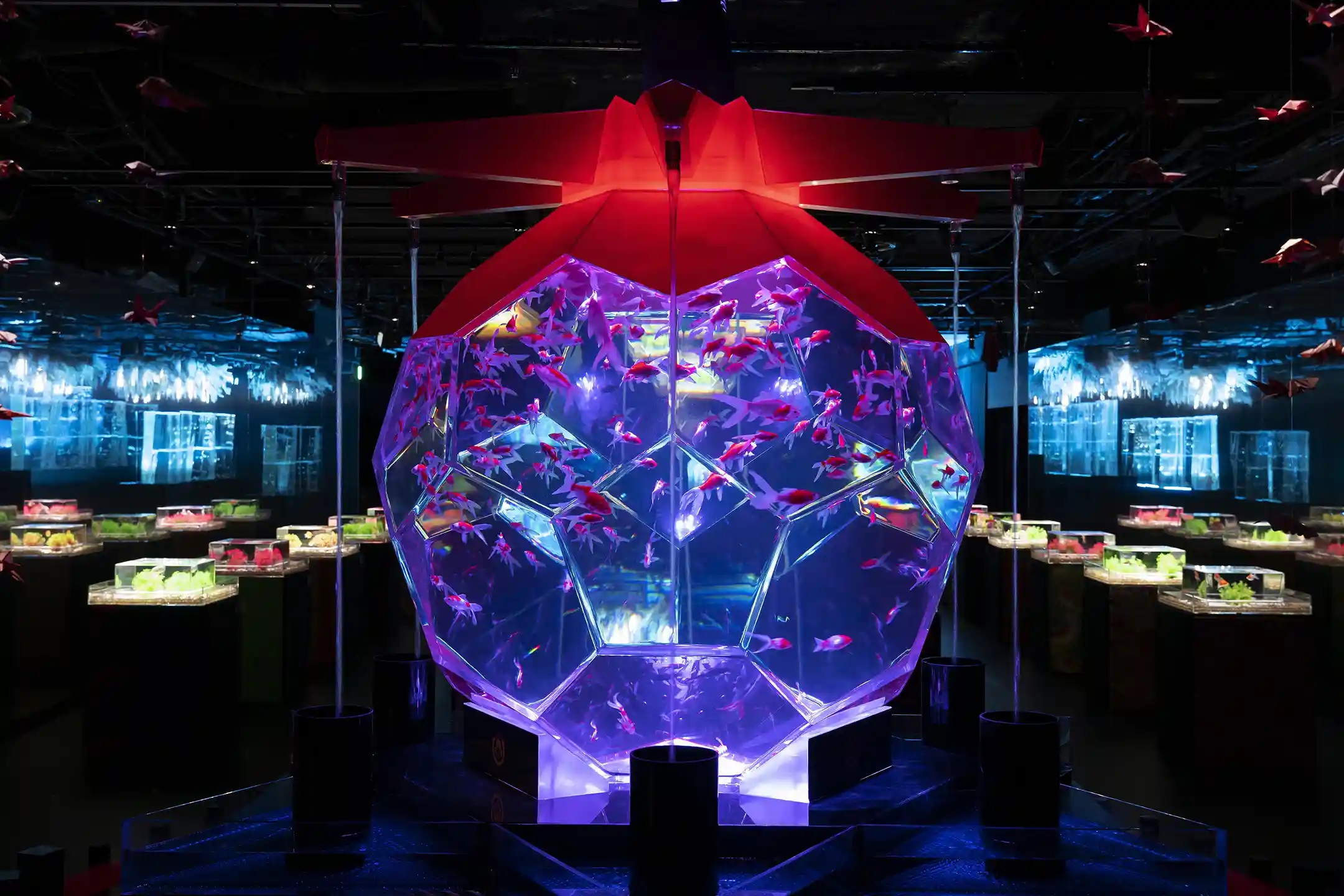
Art Aquarium Museum GINZA is an atmospheric space where traditional Japanese goldfish culture meets cutting‑edge digital art. Produced by artist Hidetomo Kimura, it presents goldfish—beloved in Japan since the Edo period—as “living artworks” enhanced by light and sound.
Once you step inside, you’ll find yourself in a dim space where countless goldfish swim in illuminated tanks, and ripples of colorful light dance across the water. The fish glide through specially designed aquariums, accompanied by projection mapping, sometimes appearing almost like creatures from another dimension.
Sound and lighting are choreographed with great care. The background music shifts from elegant, traditional‑style melodies to modern electronica depending on the scene, creating an experience that envelops all your senses. One of the most iconic works is “Oiran”: a large goldfish‑bowl‑shaped tank where vivid moving images and gracefully swimming fish create a breathtaking spectacle.
Photography is generally allowed inside (*2). The illuminated goldfish installations are extremely photogenic, and many visitors post their images on social media. However, flash and tripods are not permitted (*2), so it’s important to take photos in a way that doesn’t disturb others.
If you want to avoid heavy crowds, aim for weekday mornings or evenings. Reviews indicate that around 10 a.m. right after opening and around 6 p.m. before closing tend to be comparatively calm on both weekdays and weekends, while the 1–3 p.m. window is usually the most crowded (*3). Tickets are sold through an online date‑and‑time reservation system. Same‑day tickets are available, but if reservations are full, visitor numbers are restricted, so it’s safer to book in advance.
Art Aquarium casts a kind of spell on the classic goldfish bowl by adding contemporary technology. You get both a soothing sense of “Japanese calm” and the excitement of digital art at once. Watching the goldfish dance in light and sound, you may find your senses sharpened and your own ideas of “beauty” gently challenged.
Ishikawa|21st Century Museum of Contemporary Art, Kanazawa (Participatory)
The 21st Century Museum of Contemporary Art, Kanazawa, is a contemporary art museum built on the concept of being “like a park open to the city.” Its circular glass‑walled building blends into the surrounding streets and greenery, inviting you to drop by at any time.
Inside, you’ll find important works of contemporary art from Japan and abroad, but the most famous is undoubtedly Leandro Erlich’s “Swimming Pool.” At first glance, it appears to be an ordinary swimming pool filled with water. In fact, there is glass at the “water” level and a chamber underneath where people can enter.
From above, it looks as though people are standing in the pool underwater. From below, you gaze up at the sky through the water and glass. This installation, in which you become part of the artwork itself, has become a symbol of experiential art at the museum.
Because of its popularity, you need a same‑day numbered ticket to enter the lower part of the pool (*4). On weekends and holidays, these tickets can run out by late morning, with time slots booked up through late afternoon (so it’s wise to arrive early).
The museum is dotted with other works that invite you to participate. Outside, for instance, Florian Claar’s “Crankfeld Number 3 for an Arena” lets you speak into horn‑shaped tubes buried in the grounds; your voice travels through pipes and emerges from another horn somewhere else, turning sound into a playful experience.
There is also a workshop space for regular art programs aimed at children. The “Exchange Zone” is free to enter and includes a library and kids’ studio, so you can happily spend an entire day here with your family.
Multilingual support is well developed: maps and audio guides are available in English and several other languages. The museum is popular with international visitors, so if you prefer a calmer visit, consider going on a weekday or taking advantage of the extended opening hours until 8 p.m. on Fridays and Saturdays.
Even if you’re new to contemporary art, the open, relaxed atmosphere makes this museum approachable. It’s a place where you don’t just “look” at art—you experience it. You can enjoy contemporary works as freely as if you were exploring a park, letting yourself encounter art on your own terms.
Kagawa|Naoshima, Benesse Art Site (Architecture × Immersive Art)
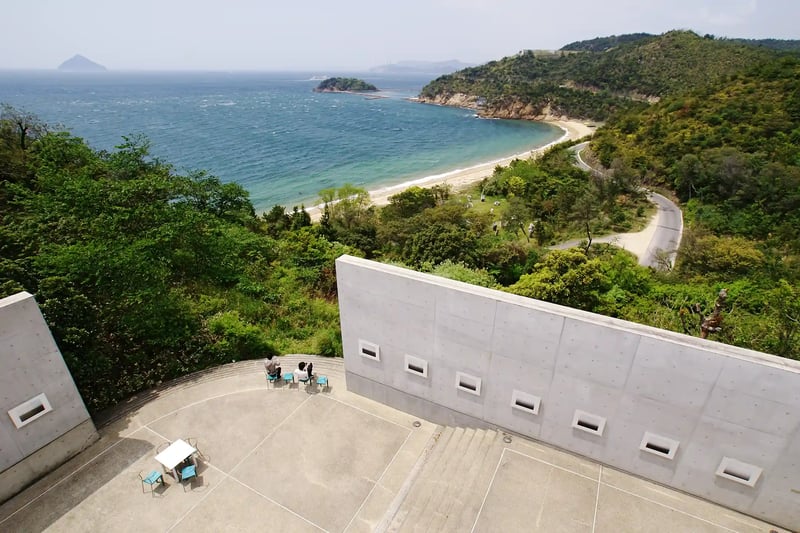
Naoshima, an island in the Seto Inland Sea, is known worldwide as an “art island.” Across the island, a network of contemporary art sites called Benesse Art Site Naoshima offers a unique experience where architecture, nature, and art are tightly interwoven.
One of the flagship facilities is Chichu Art Museum, designed by architect Tadao Ando. Built mostly underground, it displays a small number of carefully selected works—such as Claude Monet’s “Water Lilies” and light installations by James Turrell—in serene spaces that harness natural light. With no building mass rising above the landscape, the architecture harmonizes with the island scenery. As you view the artworks, you’re also moved by the subtle play of light, shadow, and concrete around you.
Naoshima also features Benesse House Museum (a museum‑hotel designed by Ando), the “Art House Project,” in which entire houses in the old village have been transformed into artworks, and a new museum that opened in 2025. As you explore, you’ll encounter art tucked into alleyways or nestled in nature, so the whole island begins to feel like one continuous open‑air museum.
To get around, you can use rental bicycles and shuttle buses, visiting the scattered sites like a treasure hunt. If you focus on a few destinations, a day trip is possible, but if you want to savor more artworks and soak up the island atmosphere, an overnight stay is recommended (*5).
Official information also notes that while day trips are feasible if you narrow down your goals, staying overnight allows you to enjoy much more (*5). Accommodation on the island is limited, so booking early is essential. If you stay at Benesse House, you’ll have the rare chance to enjoy outdoor artworks in the quiet of night or early morning, when almost no one else is around.
Many of the museums on Naoshima operate on a reservation and time‑slot basis. Chichu Art Museum, for instance, requires you to buy a date‑and‑time ticket online in advance, though same‑day tickets may be sold on site if space allows. During busy periods, however, entry may be restricted (*6). You can usually book up to three months ahead via the official website, including for same‑day slots, so if you’re set on visiting a particular place, advance purchase is the safest option (*6).
As a rough guide: plan 1–1.5 hours for Chichu Art Museum, about 30 minutes for Lee Ufan Museum, and around an hour for Benesse House Museum (*7). If you factor in travel time between sites, even a basic circuit of the main spots will take at least half a day. Fortunately, most facilities offer cafés or rest areas where you can pause and enjoy the sea views of the Seto Inland Sea.
Naoshima can be enjoyable with small children as well, though some venues (such as Chichu Art Museum and Lee Ufan Museum) maintain a very quiet atmosphere that may be challenging for toddlers. For school‑age children who are already curious about art, the island can be a stimulating adventure. For younger kids, you might focus on the outdoor artworks—like Yayoi Kusama’s pumpkin sculptures—and open spaces where they can move more freely.
Because artworks are scattered across the island, everyday life and art blend seamlessly. Walking from one piece to another while listening to the sound of the waves creates a travel experience that is likely to stay with you long after you leave.
Hokkaido|Historical Village of Hokkaido (History Experience)
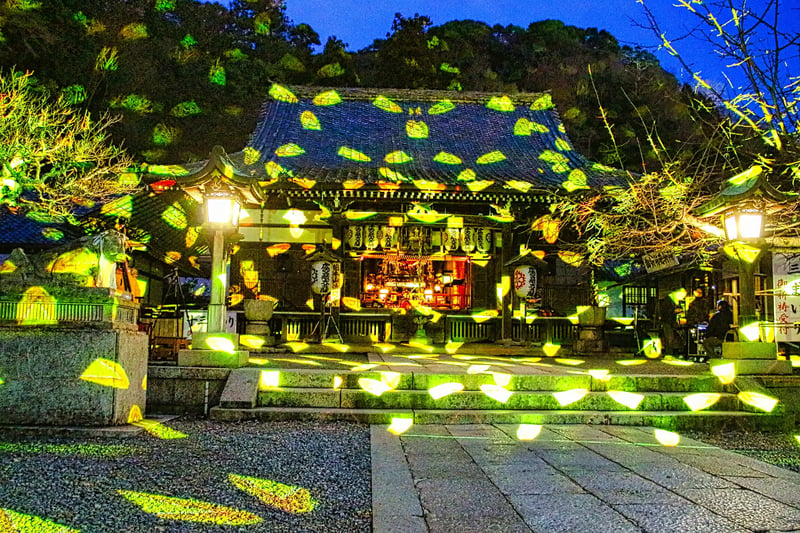
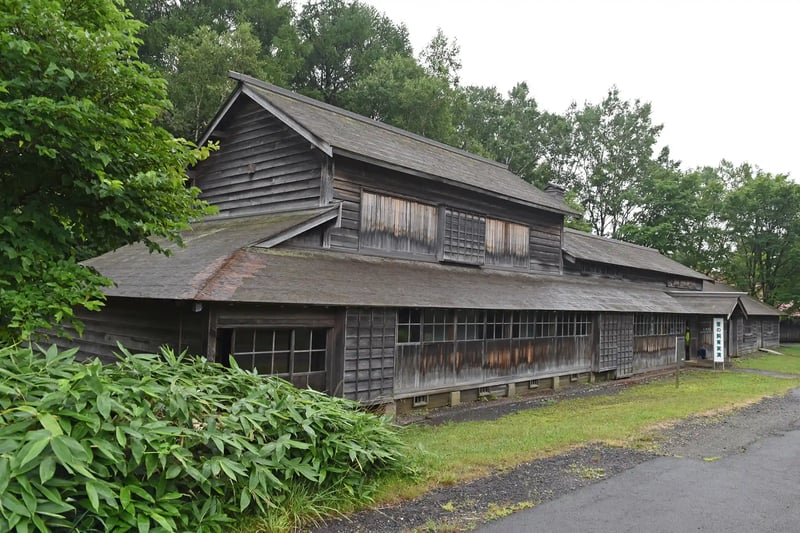
The Historical Village of Hokkaido is an open‑air museum on the outskirts of Sapporo. Around 52 relocated and reconstructed buildings from the Meiji through early Showa periods stand here, allowing you to feel the lives of Hokkaido’s early settlers with your own body.
As you walk across the expansive grounds, you pass farmhouses, merchant houses, a train station, a school, and more, giving you the sense of having slipped through time. Inside the buildings, you’ll find carefully recreated details—such as guest rooms with sunken hearths and old‑style classrooms—so you can almost sense the presence of the people who once lived and studied there.
This is not just a place to “look at” exhibits. There are numerous hands‑on programs. In summer, the horse‑drawn streetcar is a highlight: horses pull a carriage through the village as you sit back and watch the nostalgic scenery roll by (in winter, they run horse‑drawn sleighs instead) (*8). At the learning center, workshops let you make traditional toys like bamboo dragonflies or wooden puzzles—activities that families often enjoy together.
Seasonal events are another draw. The “Village Romance Festival” in spring and the “Furusato Festival” in autumn feature folk performances and demonstrations of old‑fashioned games, filling the grounds with energy. In winter, special “winter life” programs invite you to try old‑style winter wear (cloaks, straw footwear), walk on snow, or play with wooden skis and sleds. Historical buildings covered in snow have their own quiet beauty, and warming yourself by the hearth while sipping sweet amazake is a distinctly Hokkaido winter experience.
You’ll want to allow at least two hours to explore (*8), but you could easily spend half a day without getting bored if you take your time and rest inside the buildings along the way. If you’re traveling with children, they can run around playing tag in the old school building or ride the horse‑drawn streetcar as a family—physical experiences that become powerful memories.
Stepping away from the noise of modern life into the Historical Village of Hokkaido gives you slow, rich time that reveals the depth of Japan’s landscapes and cultural roots.
Miyagi|Kankaku Museum (Five‑Senses Interactivity)
Located in Osaki City, Miyagi Prefecture, the Kankaku Museum is Japan’s first experiential art museum dedicated to the five senses.
Here you’ll find a wide range of unique exhibits that draw on sight, hearing, touch, smell, and taste, creating a space where both children and adults can explore their senses. The museum is broadly divided into two zones: the “Dialogue Zone” (a bodily sensory space where you immerse your whole body in sensation) and the “Monologue Zone” (a meditative space for quiet reflection) (*9).
In one installation, “Ear Object,” you place your ear against a giant ear‑shaped sculpture and hear sounds you would never normally notice. In another, “Dark Forest,” you walk through pitch‑black space, feeling your way forward with hands and listening for subtle sounds and hints of presence as you search for the exit.
In “Fragrant Forest,” shafts of light filter down onto a path along which different scents drift, inviting you to sense the changing seasons through smell alone. Many visitors say that the exhibits awaken dormant creativity and sensitivity within them.
The building is fully barrier‑free, and visitors with disabilities are encouraged to come with companions so they can take their time and feel at ease. A multilingual audio guide app—available in Japanese, English, Chinese, Korean, and more—allows you to tour with explanations on your smartphone, even if you don’t read Japanese (*10).
Placing yourself in this world of sharpened senses can help you recover a sense of “inner spaciousness” and “richness” that modern life often erodes. The Kankaku Museum was created with exactly this idea in mind. A visit here, where you step away from daily stress and spend time in dialogue with your own senses, can become one of the most memorable parts of your trip.
Find by Genre|Immersive Art and Interactive Experiences
Experiential museums in Japan span a wide range of genres. In this section, you’ll find suggested facilities and defining features organized by theme, so you can choose based on your own interests.
Maybe you want to deepen your understanding of science through art, immerse yourself in cutting‑edge media art, or explore how traditional culture and digital technology come together. Use your personal “this is what I love” as your compass and find experiences that best match you. Compare the representative facilities, how to enjoy them, and typical photography rules by genre, and use that as a base when planning your next trip.
Science × Art
In the “science × art” genre, you’ll find museums that combine scientific exploration with artistic creativity.
A textbook example is Miraikan, mentioned earlier, where advanced science is presented through playful, design‑driven exhibits. Instead of just presenting raw data or abstract principles, these museums add interactivity and a sense of beauty, aiming to make you think “wow!” as you learn.
At Miraikan, for instance, you might experience topics such as climate change or space exploration through stunning CG visuals, or try out robotics and other technologies in game‑like setups. Often the sequence of exhibits is carefully designed.
To maximize learning, some museums structure the flow like this: first they introduce basic concepts, then they give you a hands‑on experience, and at the end they offer a recap. If you have time, it’s worth reading the introductory panels near the entrance, then revisiting the explanation area near the exit after you’ve tried the interactive parts.
The special appeal of science × art museums is that they satisfy both your curiosity and your sense of wonder. You might find yourself muttering “I had no idea…” when you encounter new knowledge, and at the same time whispering “that’s beautiful…” in front of a visual installation. It’s this layered enjoyment that makes these places so rewarding.
Media Art and Digital Art
The “media art / digital art” genre is where immersive experiences powered by technology really shine. Works that rely on computer graphics, sensors, and networks create spaces where reality and virtual worlds blend seamlessly.
teamLab Borderless, one of Japan’s most famous digital art museums, is emblematic of this trend. Originally open in Odaiba from 2018 to 2022 and attracting around 2.3 million visitors, it reopened in February 2024 at Azabudai Hills in Tokyo (*1).
In the new Borderless, artworks are planned to interweave even more seamlessly than before, so that the entire museum behaves like a single living world. Art moves not only inside each room, but also across corridors and ceilings, constantly changing. There is no fixed route or “correct” way to see it, so your visit feels like an adventure without a map—something that’s once again drawing huge attention from visitors around the globe.
Also not to be missed is teamLab Planets TOKYO in Toyosu, Tokyo. Originally intended as a temporary installation, its run has been extended through the end of 2027 due to ongoing popularity, and new works have been added (*2). One of its distinctive features is that you literally wade through water, merging your body with installations of flowers and light. Many visitors describe it as “feeling like I became part of the artwork itself.”
For these kinds of museums, you usually need to book tickets in advance. Weekends, in particular, sell out quickly, so it’s wise to purchase a specific time slot through the official website.
Art Aquarium Museum GINZA, mentioned earlier, also uses timed entry (*3). In most cases, once you enter during your reserved time, you can stay as long as you like (*3).
Experiencing digital art in the heart of the city can feel like slipping into another world—but without leaving Tokyo. Once you try these spaces where technology creates near‑magical environments, you may find yourself wanting to return again and again.
Traditional Crafts × Digital
A uniquely Japanese genre drawing attention in recent years is “traditional crafts × digital.” At first glance, it may seem like an unlikely pairing, but across the country, you’ll find attempts to draw out new aspects of age‑old techniques and culture by combining them with digital tools.
One example is Hakuichi’s “Hakurakukan” in Kanazawa, run by a gold leaf manufacturer. Recently renovated as an experiential museum, its underground gallery uses projection mapping to show artisans at work, and AR technology that lets you virtually “try on” the armor of Kaga domain lord Maeda Toshiie (*4).
By creating a place where you can both understand the techniques and see the real thing up close, they’ve attracted new audiences to a field—traditional crafts—that some people once saw as distant or difficult to approach. Live demonstrations by artisans show how gold leaf is hammered and extended, so you can appreciate the combination of cutting‑edge digital production and real craftsmanship.
Elsewhere, Kyoto’s Museum of Crafts and Design (inside Miyakomesse) pairs demonstrations by artisans with projection visuals, and in Tokyo’s Sumida Ward, some workshops use VR to explain ukiyo‑e woodblock printing while letting you try your hand at it. Across Japan, more and more sites are offering experiences where traditional crafts and digital tech work together.
Some workshops add tablet‑based multilingual explanations so international visitors can join without anxiety, and others provide AR apps that let you digitally color patterns on ceramics. These efforts not only increase opportunities for you to engage with Japanese culture, they also help craftspeople themselves rediscover the value of their work.
Digital tools act as bridges, helping people cross language and cultural differences to create things together. Such shared experiences can become especially meaningful memories of your trip. Feeling the “chemical reaction” between time‑honored skills and modern technology with your own senses is exactly what makes this genre so fascinating. If you’re keen to deepen your understanding of Japanese culture, these experiences are well worth seeking out—you’re likely to come away with fresh inspiration.
Planning Your Visit|Tickets, English Support, and Avoiding Crowds
Finally, let’s look at some practical information to help you enjoy experiential museums as comfortably as possible. Knowing how to book tickets, whether same‑day admission is available, how to dodge peak crowds, and what English support or accessibility options exist can really help you make good decisions.
A bit of preparation before your visit—and a few simple habits on the day—go a long way toward making your experience richer.
Ticketing and Reservation Tips
Many experiential museums are extremely popular, so it’s important to check how to get tickets in advance. Your first step should be to find out if online reservations are available.
Most facilities now allow you to purchase date‑and‑time‑specific tickets via their official websites. In Tokyo, many digital‑art museums use timed entry to control congestion (*1). You enter during your reserved time slot, but once inside, you can usually stay as long as you like (*1). This system virtually eliminates long queues outside, so when it’s available, it’s well worth using.
Even if time slots aren’t required, some museums still offer online advance tickets. These may come with discounts compared to same‑day admission, or include perks such as special postcards or small gifts. As a general rule, if you can buy tickets in advance, it’s smart to do so.
Of course, travel plans can change, and sometimes you may decide spontaneously to visit a museum. In that case, you’ll be wondering about same‑day tickets. Many facilities sell same‑day admissions if there’s space, but the number of tickets may be limited, or your entry time might be pushed back. At the 21st Century Museum of Contemporary Art, Kanazawa, for instance, tickets for special exhibitions are capacity‑controlled, and even if you line up, you might not be able to enter immediately.
Other places, such as teamLab Planets, operate more strictly: they are essentially fully reservation‑only, and same‑day sales are not the norm. So the idea of “I’ll just buy tickets on site when I get there” comes with some risk. If you absolutely must rely on same‑day tickets, try to arrive before opening time and be prepared to line up. At museums that distribute numbered entry tickets in the morning, securing one early will make the rest of your day smoother.
If your travel plans suddenly shift and you decide “I really want to go there today,” it’s still worth checking the official website, even on short notice. Some museums release small numbers of additional tickets in the morning of the same day. Social media accounts, such as Twitter/X, also sometimes share last‑minute ticket updates. In reservation‑only facilities, cancellations can free up slots, so it never hurts to ask staff on site if something has just opened up.
Avoiding Crowds and Finding the Best Time to Visit
Crowds are nearly inevitable at popular spots, but a few simple strategies can give you a much more relaxed experience. The basic rule is to choose weekdays whenever possible. Among weekdays, Tuesday through Thursday tends to be calmer in many places.
If you can only visit on weekends or holidays, aim for the first thing in the morning or the final hours before closing. Many facilities see lighter traffic right after opening and toward closing time (*3). At Art Aquarium Museum GINZA, for example, reviews show that the 10 a.m. and 6 p.m. hours are relatively uncrowded across both weekdays and weekends (*2).
In contrast, late morning through mid‑afternoon is often peak time, so it’s wise to avoid that window. If you’re traveling with small children, you might aim for opening time and leave before lunch, avoiding both the midday rush and potential meltdown hours.
Weather is another factor. Outdoor‑heavy facilities like the Historical Village of Hokkaido often see fewer visitors in the rain. Indoor digital art museums, by contrast, can get busier on rainy days, as people look for indoor activities. You might, for example, deliberately choose a light rainy day for an open‑air museum and a sunny day for an indoor art experience.
Golden Week, summer holidays, and other long breaks will generally be crowded everywhere. However, the last afternoon of a long holiday can be unexpectedly quiet. If you have flexibility, it’s ideal to visit in the off‑season or on weekdays outside major national holidays.
Each museum’s event calendar also affects crowd levels. If many local school groups visit in autumn, for instance, weekday mornings in that period can be surprisingly busy. On the other hand, transition periods right before exhibition changes tend to be quieter. Check the event schedule on the museum’s official site; if you prefer a calm visit, try to avoid the opening and closing days of blockbuster exhibitions, or days when big local events are happening nearby.
As mentioned earlier, some museums—like Kanazawa’s 21st Century Museum—stay open late on certain days, often Fridays and Saturdays. These evening hours are usually less crowded, and the nighttime atmosphere is quite different, often more intimate and romantic. Choosing your day and time carefully can dramatically change how comfortable your visit feels, so it’s worth tailoring your plan to your own travel style.
English Support
If you’re visiting Japan from overseas—or planning a trip for international friends—English support is naturally a major concern. The good news is that many of the experiential museums mentioned here have made real efforts to provide multilingual services.
At the Kankaku Museum, for example, there is an audio guide app available in Japanese, English, Chinese, and Korean, so you can walk around listening to explanations on your phone (*4). At Miraikan, English captions are attached to all exhibits, and there are English brochures and staff who can assist in English. The 21st Century Museum of Contemporary Art, Kanazawa provides maps and apps in English, French, Chinese, Korean, and other languages, and Naoshima’s museums have English signage throughout.
Many institutions now also offer virtual tours and artwork lists on their official websites in multiple languages. If you check those in advance, your understanding on the day will be deeper and you’ll feel more connected to what you’re seeing.
Accessibility is another key practical consideration. Most public museums in Japan have elevators and ramps for wheelchair users. Some (like Miraikan) lend wheelchairs on site, and many offer discounted admission for visitors with disability certificates, as does the Kankaku Museum (*3).
Certain installations involve intense light or loud sound; in such cases, warning signs are posted, and staff can often lower the volume or guide you safely upon request. If you are sensitive to noise or light, bringing earplugs or sunglasses can be helpful. It’s also worth asking at the entrance whether you can temporarily step out of certain rooms or take alternate routes if needed.
The most important thing is to move at your own pace. Take breaks when you need to, and feel free to ask staff for help.
A Framework for Seeing|Turning Experiences into Learning
To wrap up, let’s think about how you can turn the impressions you get in experiential museums into deeper learning. Instead of leaving with just “That was fun!”, a little bit of reflection can reveal new insights and knowledge.
Here, this guide suggests a simple “three‑layer framework” that looks at the work, the space, and yourself. Even jotting down a few notes on your phone or in a small notebook right after your visit can make a real difference—try it and see.
How to Use the Three‑Layer Framework
- The work (the artwork itself):
First, focus on what you felt about the work itself. Who created it, and what materials or technologies were used? What themes or messages did you sense? Which colors, shapes, or sounds linger in your mind?
For example, you might write:
“Leandro Erlich, Swimming Pool: The strange view through the water stayed with me. Watching people above and below exchanging waves felt like a metaphor for communication across boundaries.”
Expressing your impressions in your own words—even briefly—is enough. If that makes you want to learn more, you can read the catalog or check the official website for interviews with the artist. Once you’ve experienced the work in person, those explanations tend to sink in more easily.
- The space (the exhibition environment and staging):
Next, think about the space surrounding the work. How big was the room? How bright or dark? What about the sound, or the flow of people through the space? In what ways did the environment affect you?
You might notice, for example, “Goldfish glowing in a dark room under spotlights felt almost mystical, and the quiet music made me forget about time,” or “The mirrored floor made the artwork stretch above and below, so I felt as if I were enveloped by the piece.”
In experiential museums, spatial design is part of the artwork. By paying attention to it, your experience gains an extra dimension. If you like, you can later trace your route on a printed map from the museum, remembering how you moved—“I was drawn first to this installation, then drifted toward that one,” and so on. Sometimes you’ll notice the curator’s intentions in how they guided your movement.
- The self (your inner response):
Finally, and most importantly, reflect on what was happening inside you. After you encountered those works and spaces, how did your body and mind change? Did your heart beat faster in surprise? Did you feel a lump in your throat from nostalgia? Did you catch yourself laughing with a friend? Try to recall the movements of your senses and emotions.
For example, “I was nervous at first in the dark room, but as I felt my way forward, I started to feel excited,” or “Seeing my child completely absorbed in the interactive games made me unexpectedly happy.”
Then, gently ask yourself: why did you feel that way? You might realize, “I felt uneasy in the dark because I rely more on my vision than I thought,” or “Watching my child reminded me of how curious I used to be, and that was strangely uplifting.”
As you put these reflections into words, the personal meaning of the experience becomes clearer. The museum visit stops being just entertainment and turns into a source of your own learning and insight.
Using this three‑layer framework lets you view experiential museum visits in a more three‑dimensional way. For example, after a teamLab exhibition, you could write about the novelty of the artworks (the work), the immersive staging (the space), and the inspiration you took home (the self). That will not only help you describe the experience later to others, it may also spark ideas for your own creative projects.
Even if your mind feels full right after a powerful exhibition, try taking a few minutes during a café break to jot down your thoughts. You’ll likely find that the value of the experience multiplies.