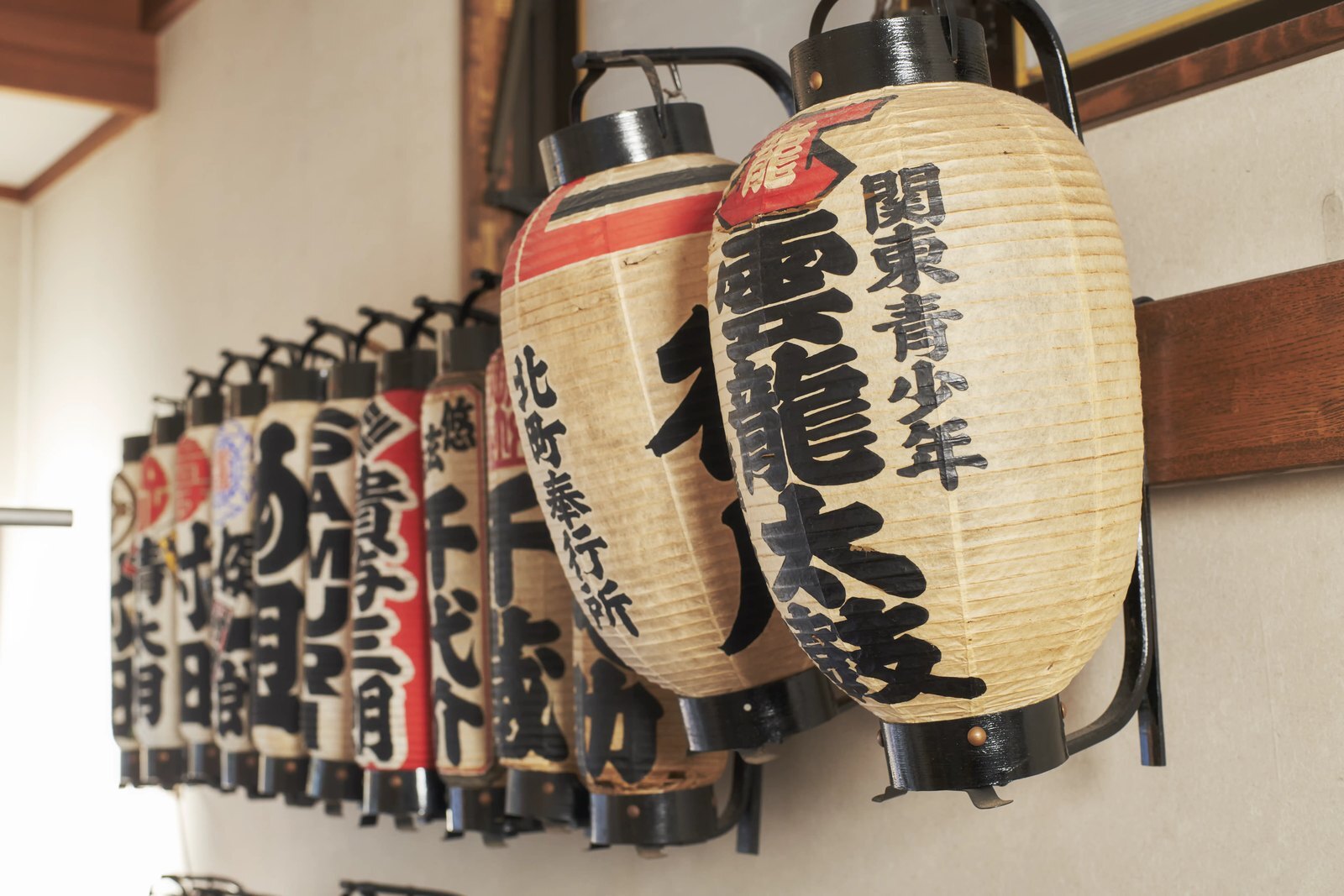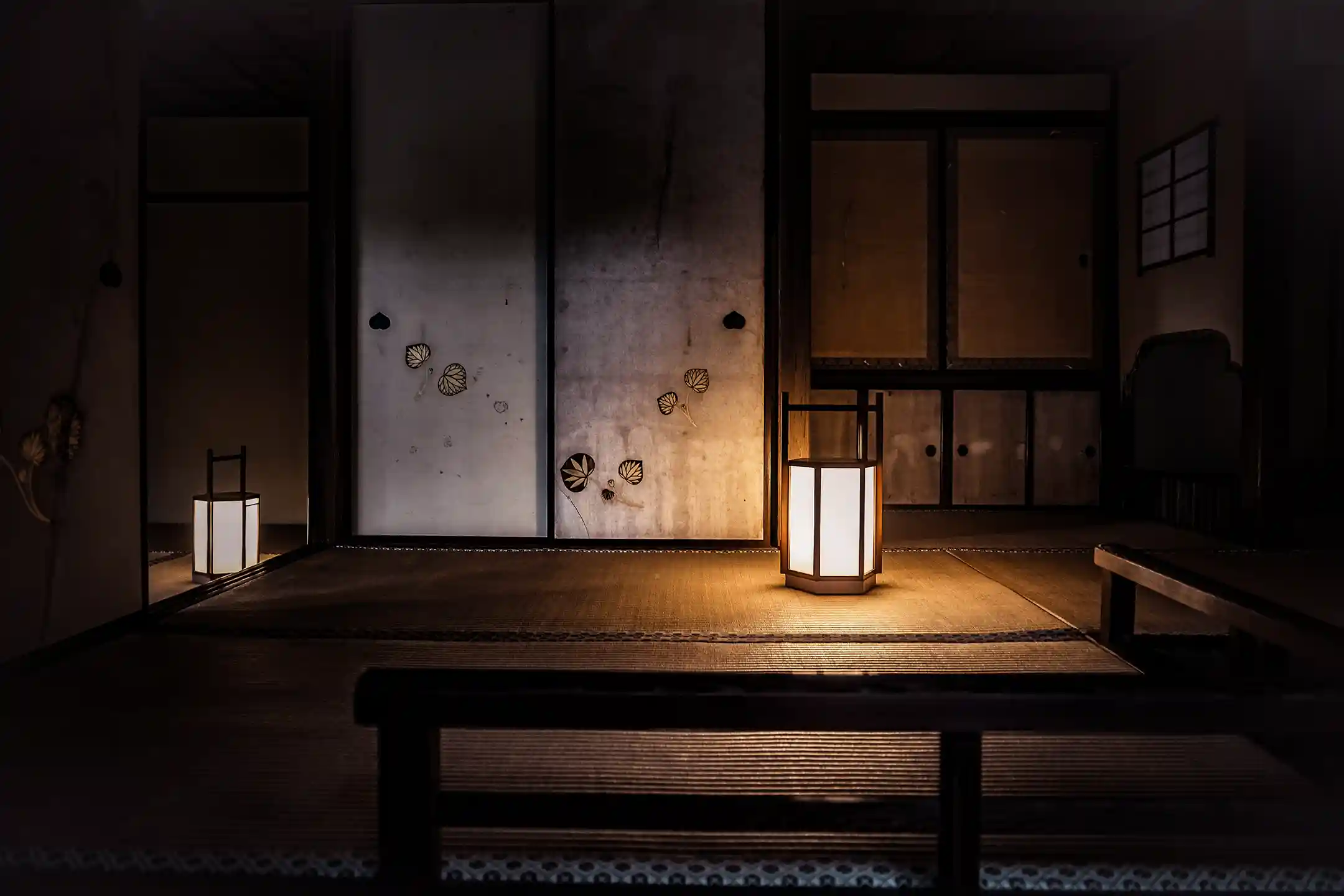
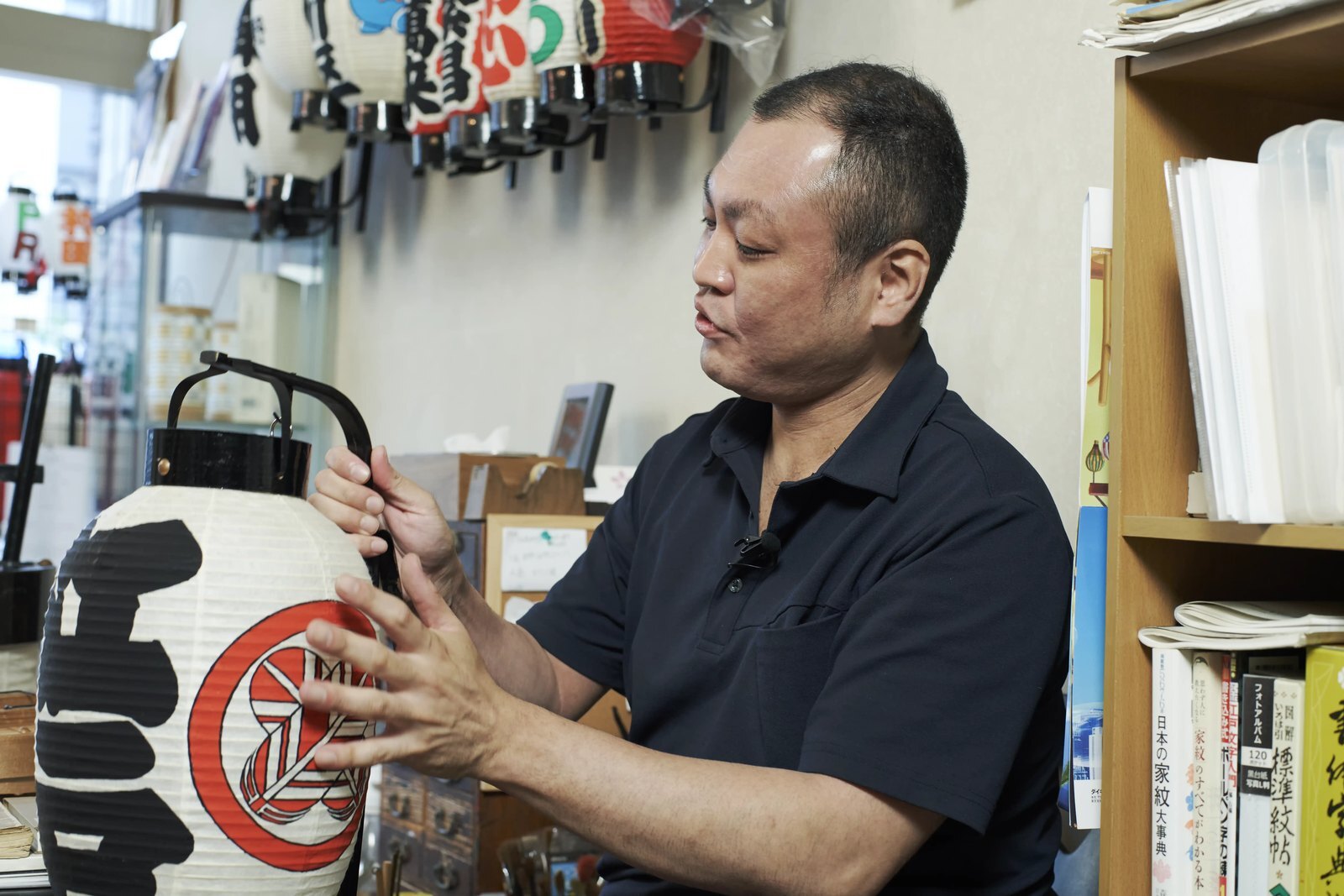
Walk through Asakusa after dark and the light you notice first is rarely electric. It's the warm, uneven glow of a chochin — a folding paper lantern hung outside a shrine gate, a noodle shop, a festival stall. Most visitors photograph it and move on. Fewer stop to ask why the paint on some of these lanterns looks hand-drawn, slightly imperfect, alive in a way that printed signage never is.
Kenichiro Murata can tell you why. He is the fourth-generation owner of Namidabashi Ōshimaya, a chochin workshop near the Namidabashi intersection in Tokyo, and one of a shrinking number of people left who still paint lanterns by hand rather than print them. What follows is his account of a craft easily mistaken for calligraphy, one most guidebooks reduce to a single paragraph — set against the wider currents that shaped the object itself, from its origins as an unfoldable Chinese import to its present, uncertain future. It's part of what makes a quiet, culturally rich trip to Tokyo different from a checklist tour of it.
Chochin: What Japan's Folding Paper Lantern Actually Is
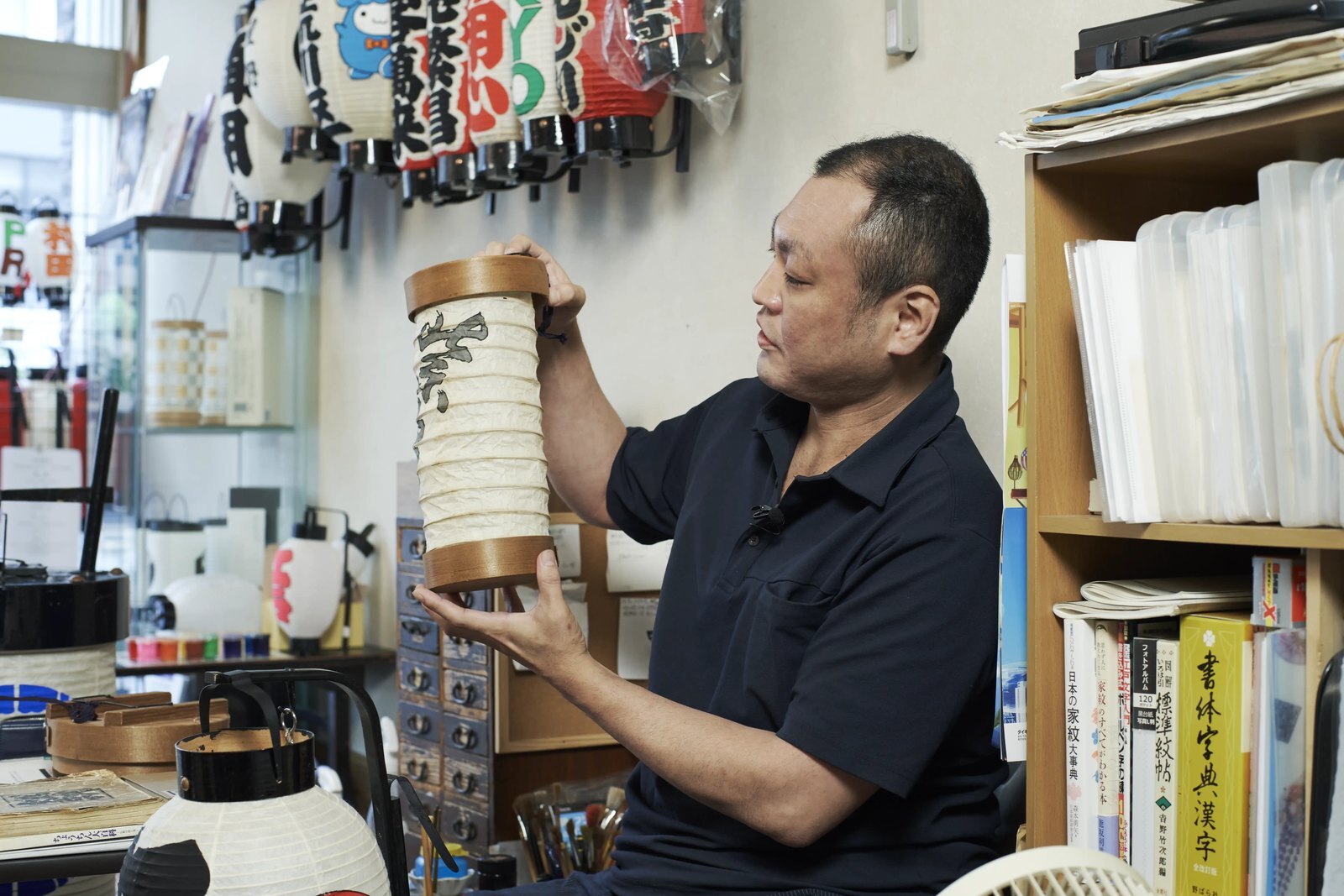
A chochin is a portable lantern with a light frame — traditionally bamboo or wire — wrapped in paper and built to collapse flat, accordion-style, when not in use. That folding action is the whole point of the design: it's what separates a chochin from its older, boxier relative, the andon. Tokyo's own record of its traditional crafts places hand-painted chochin in use by the early 1500s, within the Muromachi period, in an early caged form known as kago-chōchin — a lantern housed inside a bamboo basket. The now-familiar collapsible design came later, taking its developed form around the Azuchi-Momoyama period, and only became a truly everyday object once Edo-period demand made it common (Tokyo's traditional crafts records). Murata's own account of the object's deeper past goes back further still: in his family's telling, the chochin's ancestor arrived from China, in an age before electric light existed at all, in a form that had no folding mechanism whatsoever.
One piece of folklore is worth clearing out of the way, since it crowds every search on this word: a chōchin'obake — a one-eyed, long-tongued yōkai said to haunt an old, discarded lantern — is a ghost story, not a craft object. Everything in this article, by contrast, is about the object itself: paper, paint, and a person still making it by hand near Namidabashi.
Chochin vs. Andon: Why One Folds and One Doesn't
Before the chochin could fold, it didn't. Murata describes the earlier form as an andon, or kago-jōchin — literally a "caged lantern" — a fixed bamboo-and-paper frame that had to be carried or set down whole, the way you'd carry a small paper box. There was no way to collapse it for storage or travel. The chochin's defining innovation, whenever exactly it arrived, was solving that problem: pleating the paper body so the entire lantern could telescope down to a fraction of its lit height. An andon stayed a piece of furniture. A chochin became something you could carry folded in one hand and pop open in the other — which is the version everyone now means when they say "chochin," and the version this article is about.
From a Caged Andon to a Folding Chochin: How the Shape Changed in Edo
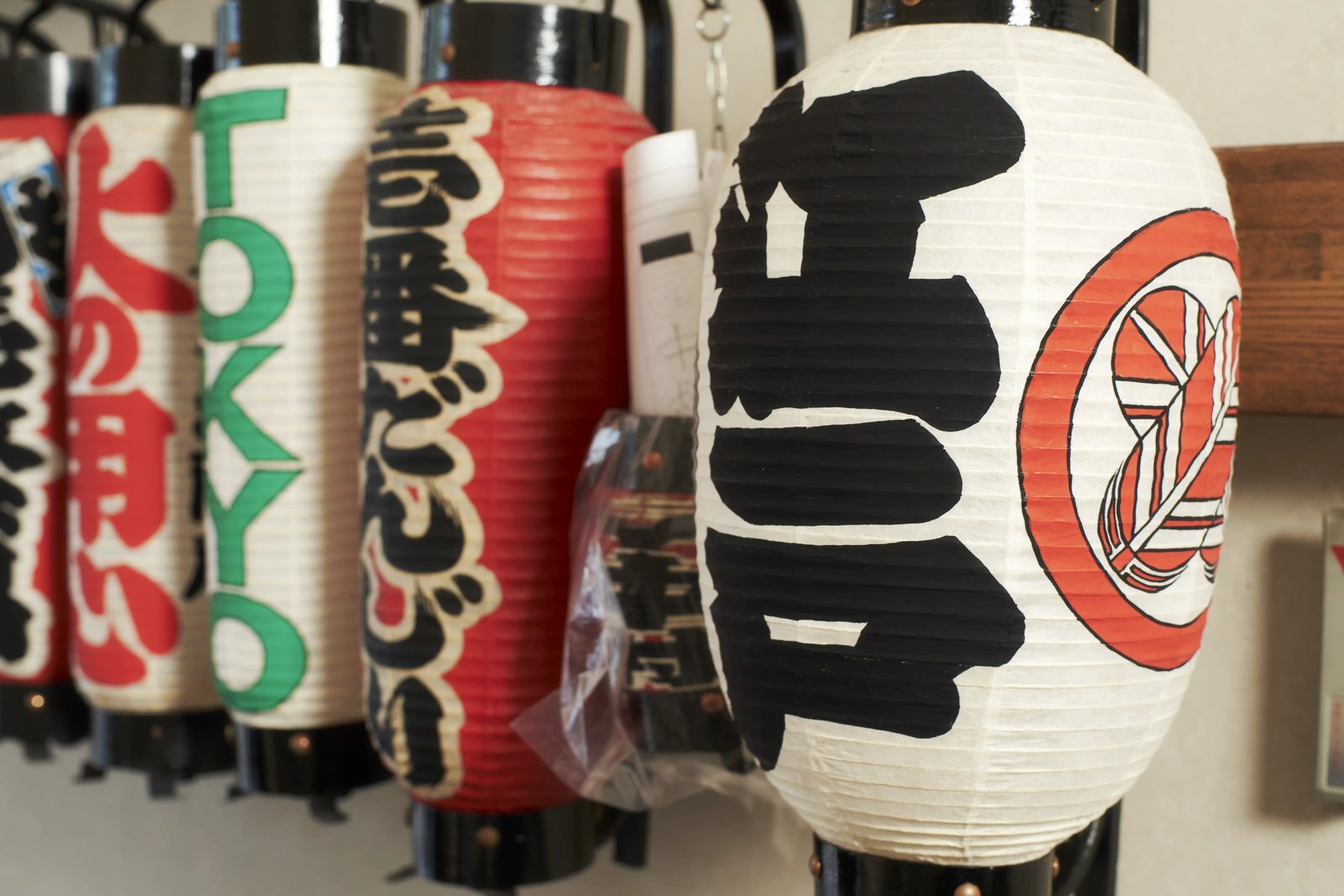
The shift from a fixed cage to a folding lantern was a slow reclassification, not a single invention — a lighting tool for the privileged becoming, within a couple of centuries, an object every household and festival stall owned.
Before It Could Fold: Chochin's Origins in China and Muromachi Japan
As Murata tells the story passed down in the trade, the chochin's ancestor came from China, in the centuries before electric light, when the only alternative was open flame carried in something that would not blow out. Japan's own historical record picks the thread up a little later and a little more narrowly: the earliest confirmed evidence of hand-painted chochin in Tokyo dates to the Bunki era, 1501 to 1504, still within the Muromachi period, and describes the object as a kago-chōchin — a lantern held inside a rigid bamboo basket rather than a pleated, self-supporting shell (Tokyo's traditional crafts records). In other words: the caged, non-folding form Murata describes as the chochin's precursor is also where Tokyo's own documentation begins. The now-familiar folding version didn't yet exist.
The Odawara Jōchin: Edo's Folding Breakthrough, and the Shapes That Followed
The pleating breakthrough is generally traced to Odawara, a post-station town on the Tōkaidō road between Edo and Kyoto. An Odawara artisan built a portable lantern for travelers passing through — light enough to carry, collapsible enough to pack away between stops. As ordinary travel along the Tōkaidō grew more common in the Edo period, before electric lighting existed, this Odawara jōchin became one of the era's essential travel items (the Japanese government's own account of the lantern's history). From that traveler's lantern, the shape multiplied: box-style chochin for carrying goods, long/round/egg-shaped variants for the home, bow-strung yumihari-jōchin that snap open under their own tension, and signboard chochin — the kind outside restaurants today — built to be read as much as carried. "Types of Japanese lanterns" is really a question of which Edo-era branch a lantern descends from; Odawara's traveling lantern sits close to the root.
The Kaminarimon Myth: Tokyo's Most Famous Chochin Is Actually Made in Kyoto
Ask most visitors to picture a chochin and one lantern comes to mind: the giant red one at Kaminarimon, the outer gate of Sensō-ji in Asakusa. Tokyo's own tourism authority confirms it's enormous — roughly 3.9 meters tall, 3.3 meters wide, about 700 kilograms, carved underneath with a dragon and flanked by statues of Raijin and Fūjin, the gods of thunder and wind (Tokyo's official tourism guide). What that same record confirms, and what Murata brings up unprompted, is where it's actually built: Kyoto. "The giant lantern at Kaminarimon is actually made in Kyoto," he says — despite standing at the gate of one of Tokyo's most photographed landmarks. There are voices within the Tokyo trade, he adds, who'd like to make it here one day. The two cities' lanterns differ for a related reason: Kantō-region chochin run rounder, Kansai-region chochin — Kaminarimon's included — more angular, a difference Murata ties directly to where each is made.
Kago-moji: Why a Chochin Is Never Painted Like Calligraphy
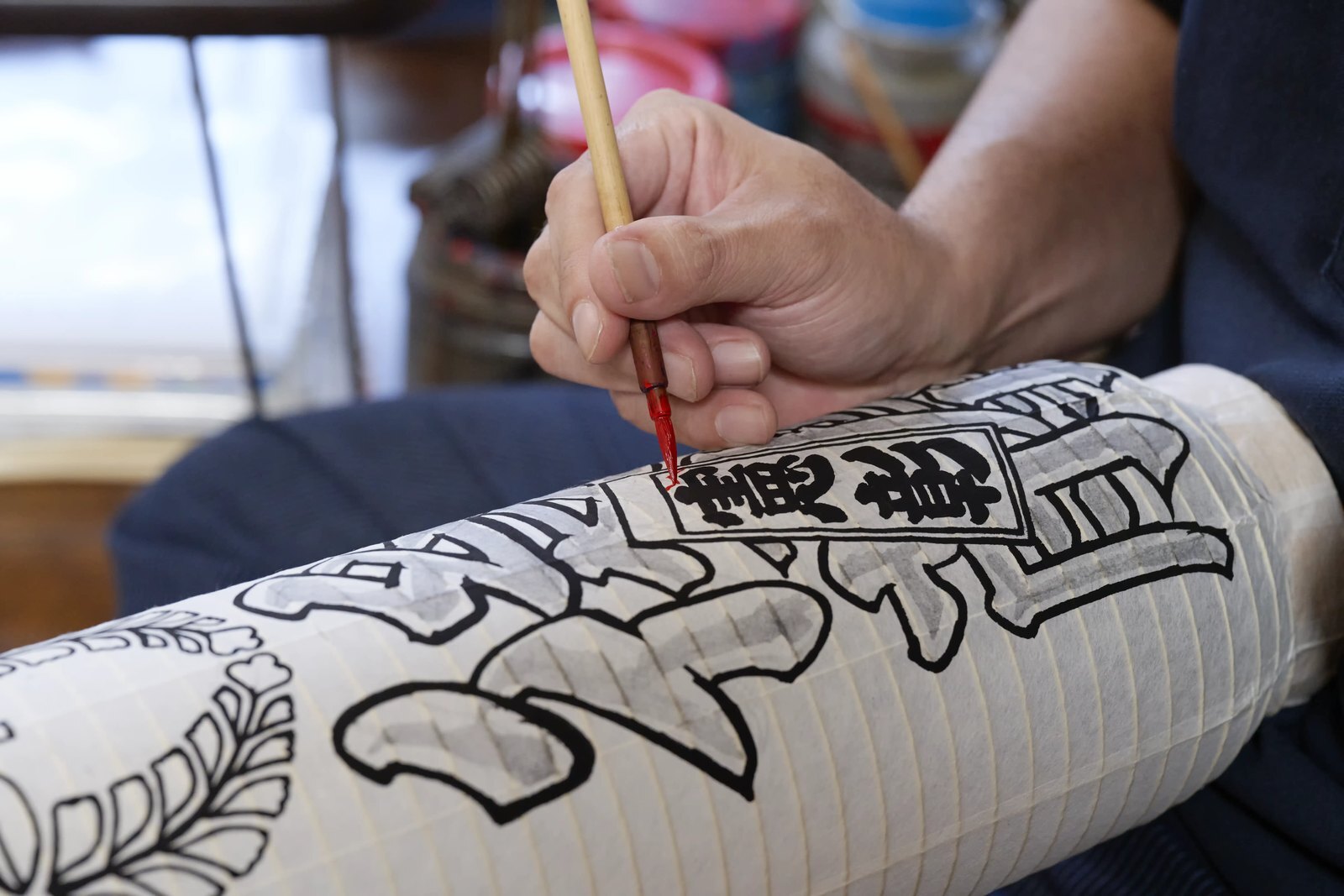
The lettering on a hand-painted chochin has its own name, kago-moji, and its own logic — one that runs in the opposite direction from ordinary Japanese calligraphy.
Kago-moji: Outline First, Then Fill — the Opposite Order of Calligraphy
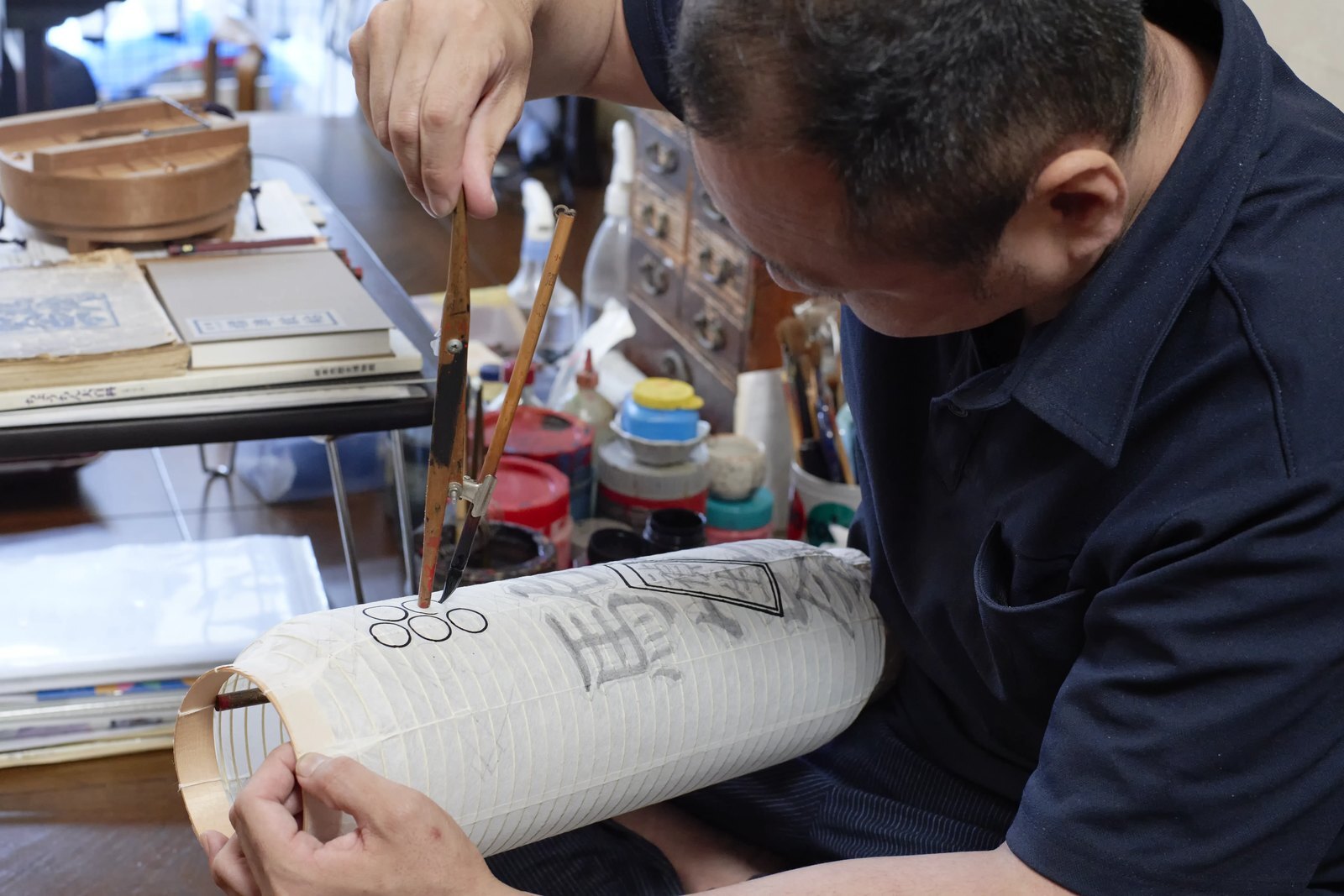
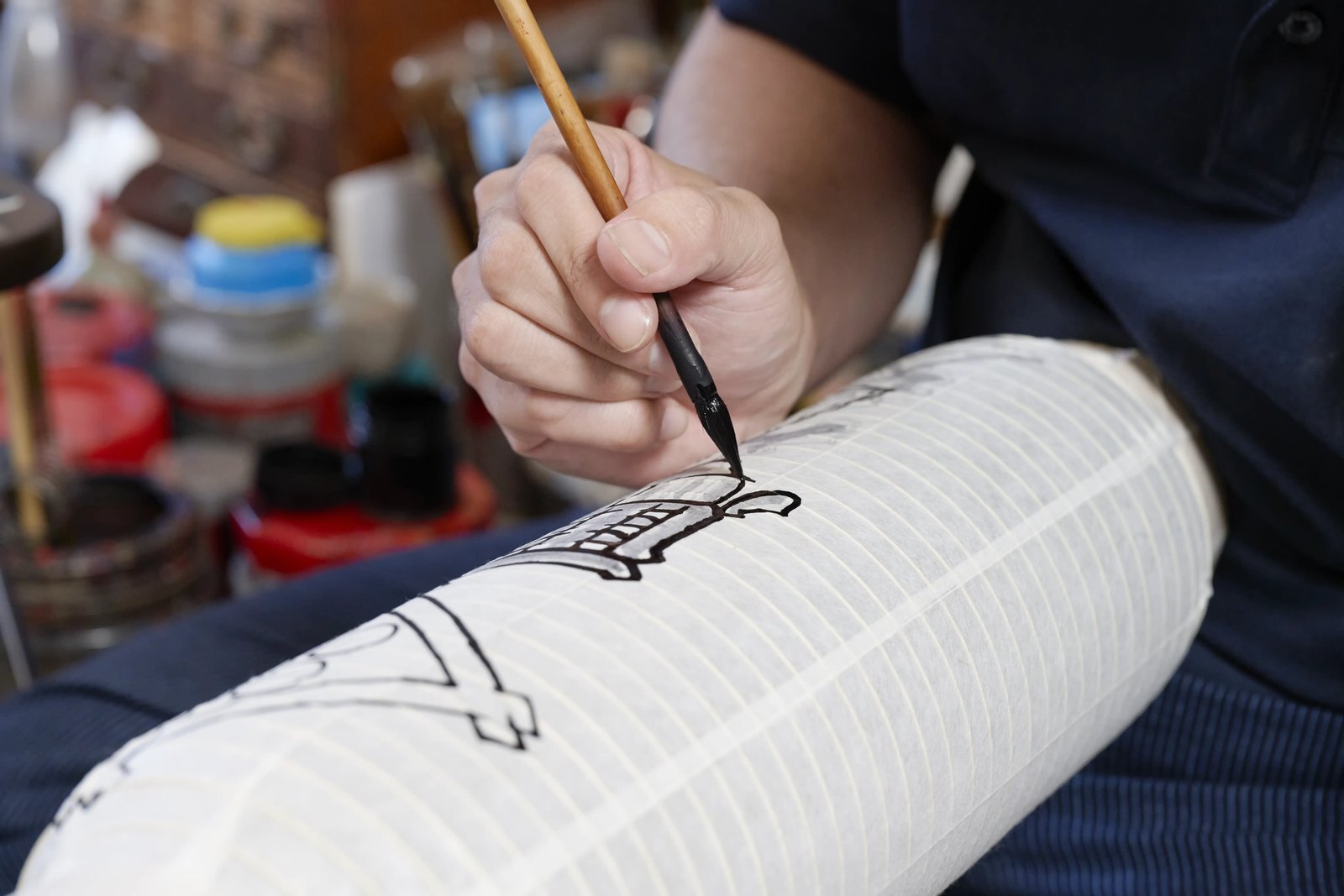
Calligraphy is written in a single continuous motion, the brush loaded once and drawn through the whole character. Murata's process reverses that entirely: a pencil sketch first, then a black outline — what the trade calls sobyō — around each character, and only afterward the interior filled in. The reason isn't stylistic preference; it's physics. A chochin's surface is never flat — pleated paper over a coiled frame, ridged wherever the folds sit — and a single unbroken brushstroke simply breaks apart on it. Outlining first and filling second is how you write legibly on something that isn't a page.
Edo-Moji: The Lettering Family Kago-moji Belongs To
Kago-moji isn't a one-off invention; it belongs to a broader family of Edo-period lettering styles built for specific trades, a family Tokyo's own Edo Taito Traditional Crafts Center documents by name: kanteiryū, the bold script used for kabuki play titles and theater signage; sumō-moji, used on sumo rankings and banners; and yose-moji, used on rakugo and vaudeville handbills (Tokyo's Edo Taito Traditional Crafts Center). Kago-moji is chochin lettering's entry in that same family — each style solving the same underlying problem of writing at a distance, on an irregular or unconventional surface, for an audience that will read it in passing rather than up close.
Why No Machine Can Write on a Finished Chochin
This is also why the process resists automation in a way printing doesn't. "You're not pasting something you've written onto a chōchin — you're writing directly onto something that's already three-dimensional," Murata says. A printed lantern applies flat artwork to a flat sheet before it's assembled into shape. A hand-painted one is written after assembly, directly onto a surface that already curves, folds, and refuses to sit still — which is precisely the surface no printer is built to handle.
One Shop, Four Generations: The Ōshimaya Story at Namidabashi
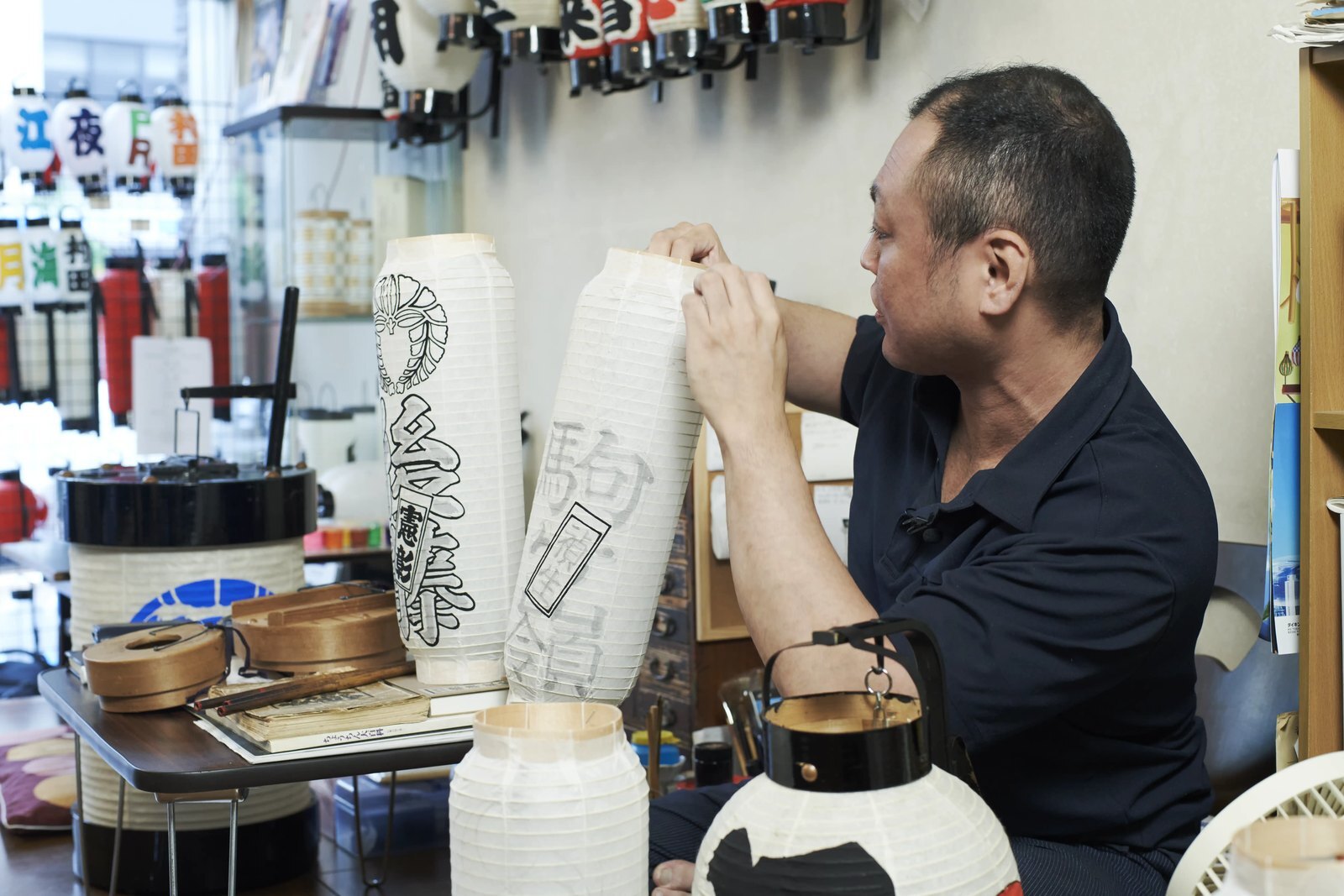
The name on Murata's shop isn't unique to his address, and that's on purpose.
The Ōshimaya Name: A Trade Name That Survived What the Main House Didn't
The original Ōshimaya honke, the Edo-era main house, stood in Asakusa's Kotobuki-chō neighborhood — until wartime bombing destroyed it. What survived wasn't the building; it was the name, passed on through noren-wake, the traditional practice of a master granting a trusted branch shop the right to trade under the parent name. Several independent Ōshimaya branches trace back to that same lost honke, each identified by its own neighborhood rather than a shared address — an Ōshimaya in Ozu, another by the riverbank at Dote. Murata's own branch takes its name from its location: the Namidabashi intersection, which is where this particular Ōshimaya has operated ever since.
113 Years, Four Generations: Who Actually Runs Namidabashi Ōshimaya
Namidabashi Ōshimaya itself was founded in Taishō 2 — 1913 by the Western calendar, making it 113 years old. Murata is its fourth generation. On a given day, the workshop can have two generations of the same family working at separate benches in the same room: Murata and his father.
Two Generations, One Workbench: How the Family Divides the Work
The division of labor follows the same outline-then-fill logic as the lettering itself. Murata and his father handle the outlining, the step that requires reading the character correctly and placing it on a curved, uneven surface. Filling in the color, by contrast, is work either of them can hand off once that outline exists. "Once the two of us have done the outlining, honestly, even my mother can handle the filling in," Murata says — not a dismissal of the work, but a precise description of where the difficulty in kago-moji actually sits: not in applying paint, but in deciding, correctly, where the paint goes.
Paper, Paint, and a Proverb: What a Chochin Is Actually Made Of
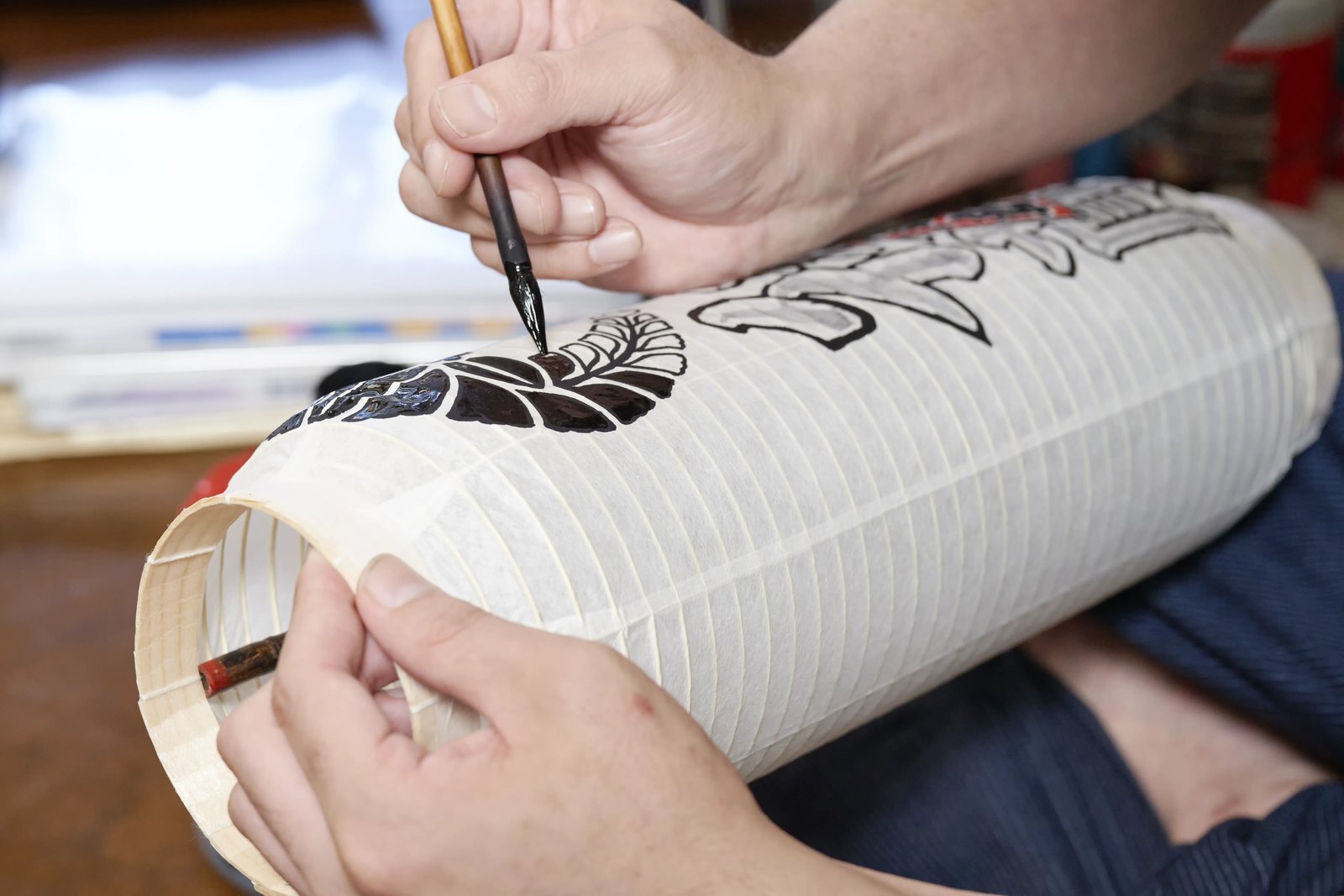
Behind the lettering is a set of material choices that are just as deliberate — and, in at least one case, just as vulnerable.
Nishinouchi Washi: The Paper Body of a Chochin, and Its One Natural Weakness
The paper Murata paints on is Nishinouchi washi, made in the Mito area of Ibaraki Prefecture. Ibaraki's own account of the paper describes roughly 350 years of history and a reputation, even in the Edo period, as an exclusive product of the Mito domain — made from Nasu kōzo, mulberry fiber grown around Hitachiomiya and Daigo, prized for being lightweight, durable, and resistant to both water and folding (Ibaraki Prefecture's own account of the paper's history). That resilience has one specific, unglamorous exception Murata is candid about: the paste used to mount the paper is made from starch, and starch is exactly what a cockroach will eat given the chance — a weakness no synthetic alternative shares. It's the kind of detail you only learn from someone who has had to deal with it, and part of a wider material culture worth exploring on its own — Japan's traditional crafts and artisanal culture runs on exactly this kind of unglamorous, material-specific knowledge.
Three Years Grinding Ink, Eight Years Drawing: From Sumi to Acrylic
There's an old saying in the trade about how long it takes to become competent: three years grinding ink, eight years learning to write. It describes a world built around sumi ink, ground by hand from a solid stick, letter by letter. Namidabashi Ōshimaya has since moved from sumi to acrylic paint for most of its work — a practical shift, not a sentimental one. But it comes with a loss Murata names plainly: fewer and fewer shops in the trade still keep the brushes, ink stones, and grinding habits that sumi work demands at all, whether or not they use them daily. The tool disappearing from a workshop is often the first sign of a skill disappearing from a trade.
Bamboo, Wire, or Vinyl: Matching Material to How a Chochin Will Be Used
Even the frame is chosen for the job, not by habit. A takahari-jōchin, raised on a long pole above a crowd, calls for a light bamboo frame. A chochin meant only to hang in place, where weight matters less than a clean silhouette, is more often built on wire. And a lantern going outdoors for a rain-exposed summer bon-odori dance or a November Tori-no-ichi market stall is built with a vinyl covering instead of paper, since paper isn't built to take the rain.
Where Chochin Still Light Up Tokyo Today
None of this is museum-piece craft. Namidabashi Ōshimaya's calendar runs on the festival year, not the tourist season.
Matsuri Season: Why Namidabashi Delivers a Hundred Lanterns a Month
Spring brings Sanja Matsuri and Kanda Matsuri in May, then Torigoe Matsuri in June. The workshop's busiest stretch, though, is November's Tori-no-ichi market, when Murata describes output running at roughly a hundred lanterns a month — a pace that works out to five or more finished, hand-painted chochin leaving the workshop every single day.
Shrines, Temples, and Hatsumōde: Chochin as Sacred Signage
Outside festival season, chochin do quieter, steadier work marking sacred space — hung at shrine and temple gates, along approach paths, at the entrances travelers pass through for New Year shrine visits like Hatsumōde. In that setting, a chochin isn't decoration so much as signage — telling a visitor, in a form older than any printed sign, that they've arrived somewhere that matters.
Restaurant Fronts and Traditional Facades: Chochin as Everyday Architecture
The same object does entirely secular work outside a noodle shop or an izakaya, where a chochin bearing a restaurant's name functions as signage — and where the outlining-then-filling logic from earlier becomes a way to actually judge one: a printed shop lantern is flat and even everywhere, while a hand-painted one carries the same slightly uneven, three-dimensional brushwork Murata described. Look closely at an old shopping street at dusk and that difference is readable at a glance, part of a longer tradition of treating lanterns and lettering as Tokyo's traditional architecture rather than as an accessory to it.
Writing Your Own Chochin: A Craft You Can Actually Try
Most of what's above, you can see for yourself just by walking Tokyo's older neighborhoods at the right time of year. What you can't see from the street is what happens inside the workshop — and that layer is only open to people who know to ask.
What Actually Happens When You Sit Down to Write One
Visitors who arrange a session with Murata don't simply pick up a brush cold. There's a hearing beforehand — what to write, in what style — followed by a prepared rough draft, so that on the day itself, the visitor is tracing and filling in a design that's already been thought through, rather than improvising from a blank lantern.
What Surprises First-Time Visitors
What catches people off guard is rarely the idea of painting a lantern; it's the physical reality of the surface. "This is harder than it looks," one first-time visitor told Murata — the bumpy, ridged paper resists a brush in ways a flat page never would. There's a second surprise that only shows up later: unevenness in the paint that's invisible in daylight becomes obvious the moment the lantern is lit from inside. Foreign guests, Murata notes, tend to gravitate toward the same handful of words — love, family, good fortune — though not always; he recalls one French guest who asked to have her own name painted instead.
What You Can't Get Anywhere Else
The thing visitors describe afterward isn't usually the lantern itself. It's the one-on-one distance — talking directly with the person making it, at a single workbench, sometimes with the third generation still visibly at work in the same room. That's a layer of access no shrine display or festival stall can offer: seeing chochin lit up in public is available to anyone who walks past at the right hour, but sitting at Murata's own bench is a layer only visited by someone who has been introduced to it.