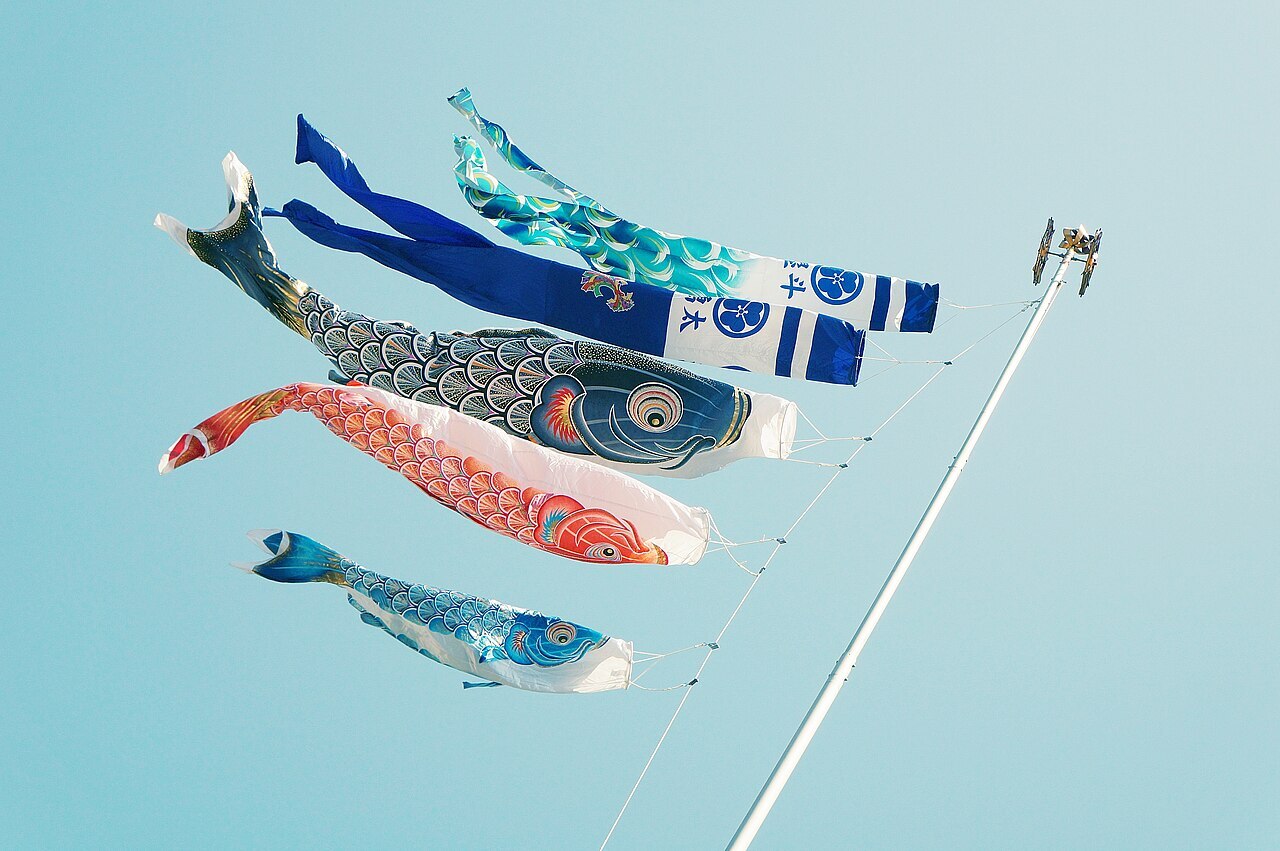
Boys' Day in Japan falls on May 5 and brings carp streamers, a samurai helmet and rice cakes wrapped in leaves. Underneath sits a puzzle. A festival tied to the warrior class is now a national holiday whose legal name is Children's Day, and one of its indoor traditions is a display of armor. How does a day get from there to here?
The answer is a series of hand-offs, not a timeline. In the Diet Library's account, the festival was long marked by horse races, irises and ornamental balls, then passed to samurai households and on to common people, who could not afford real armor and made miniature armor instead. The shogunate's rules on extravagance pushed the decoration indoors. Wikipedia says a change of calendar moved the date, and in 1948 the day was renamed.
This guide leans on the National Diet Library, the Act on National Holidays, nippon.com, the Ministry of Agriculture, Forestry and Fisheries, GO TOKYO and Wikipedia. It also draws on our own pieces: an interview with Kenji Kanabayashi, a third-generation doll maker, who speaks about Sekku dolls in general, not May dolls in particular, and our guide to kimekomi.
Boys' Day in Japan: One Date, Three Names and One 1948 Law
May 5 carries three names, and each answers a different question. Tango no Sekku is the name of the seasonal festival. Boys' Day is the earlier name: nippon.com says the festival's focus was traditionally on male children and that it was once called Boys' Day. Kodomo no Hi, Children's Day, is the name the law gives the date.
Tango no Sekku, Boys' Day, Kodomo no Hi: Which Name Means What
Boys' Day falls on May 5 every year. Is there a national Boys' Day in Japan? No. Japan's list of national holidays has no Boys' Day. May 5 is Children's Day in Japan (Kodomo no Hi), which the Act on National Holidays defines as a day for "honoring the personality of children, working towards their happiness, and expressing gratitude to mothers." Tango no Sekku is the traditional festival held on the same date, and nippon.com says its customs remain strongly connected with boys.
The word tango has a history of its own. The National Diet Library's feature on Japanese confectionery says it originally meant the day of the horse at the start of a month, not only in the fifth month, and that after China's Han dynasty it is said to have come to mean the fifth day of the fifth month. The same page counts Tango among five sekku that the Edo shogunate fixed as set days: the seventh day of the new year, March 3, May 5, July 7 and September 9.
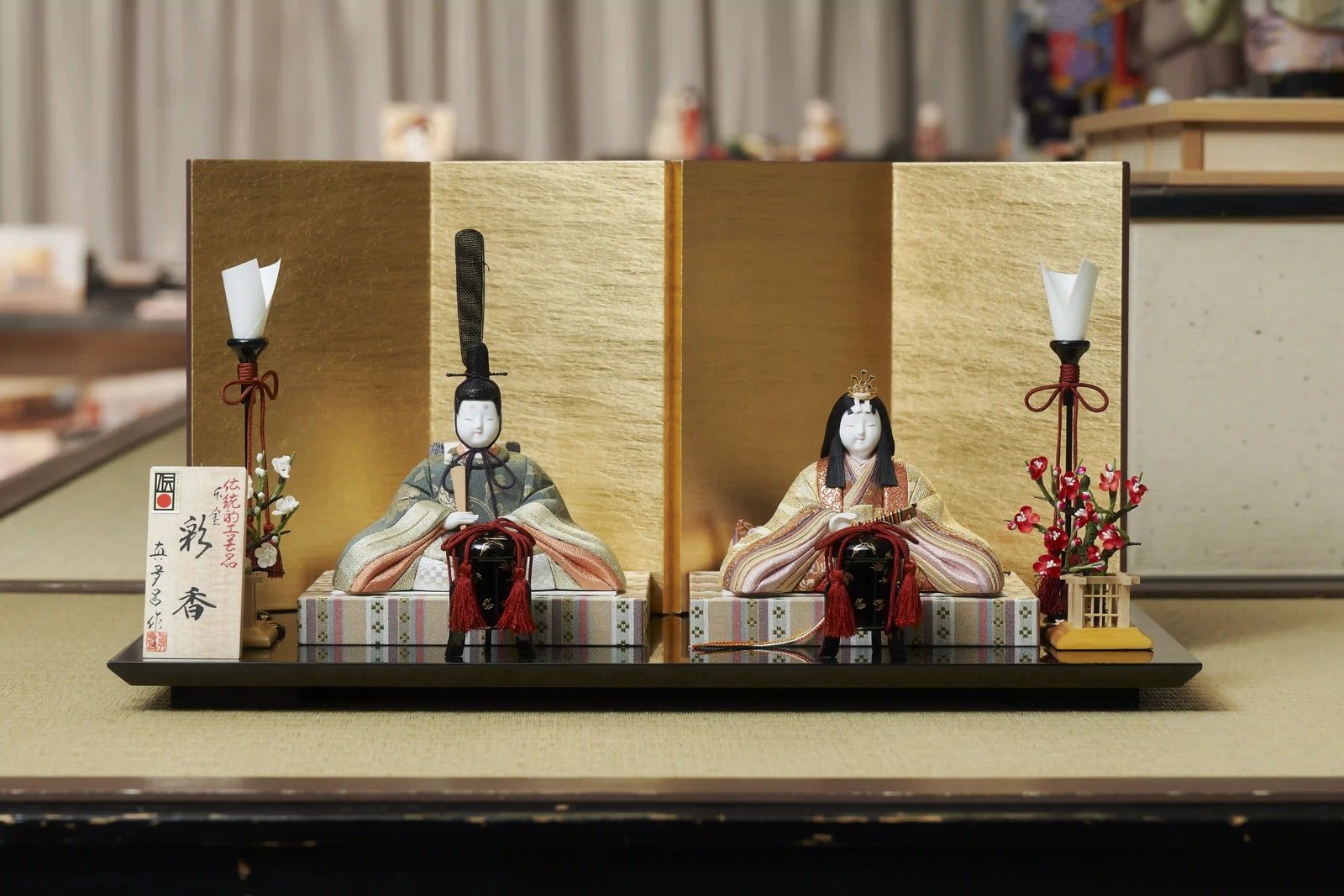
March 3 is a different sekku with its own dolls, which we cover in our guide to hina dolls.
Is May 5 a Holiday in Japan? Golden Week and What the Act Says
Yes, May 5 is a national holiday in Japan. The Act on National Holidays lists Children's Day on May 5, and it also lists Constitution Memorial Day on May 3 and Greenery Day on May 4, so three national holidays fall on consecutive days.
The words Golden Week do not appear in the Act. nippon.com describes May 5 as one of a cluster of four national holidays that make up Golden Week, and by our count of the Act's list, the fourth would be Showa Day (April 29); nippon.com does not name the four. Under Article 3, a national holiday is a public holiday, and if one falls on a Sunday, the closest following day that is not a national holiday also becomes a public holiday.
How Tango no Sekku Became a Boys' Festival: From Horse Archery to Armor on Display
Tango no Sekku was not always a boys' festival. The spine of this part is the National Diet Library's Image Bank column on May dolls. It runs from a medieval day of horse races and irises, through samurai households, to Edo's doll shops and common households. Three things shifted along the way: who celebrated, how real the armor was, and where it stood.
Shōbu, Horse Races and Medicine Herbs: What May 5 Was Before It Was for Boys
The column says that until the medieval period, Tango no Sekku was mainly celebrated with horse races, shōbu (Japanese irises) and kusudama, ornamental paper balls. When samurai society began, it says, the day evolved into a boys' festival with horse races and horseback archery in the samurai's yards.
So May 5 was a day marked by horse races, irises and ornamental balls before it was a day for boys. The library's feature on confectionery says irises have been used to ward off evil spirits since ancient times, and that because the iris is connected to shōbu, the word for martial spirit, samurai families celebrated the day and it became established as the Boys' Festival in the Edo period.
Wikipedia gives a fuller version that we could not match to a public institution, so treat it as a single-source account. It says the day began as a time for women to purify the house with irises on the roof and to rest. It adds that the day was changed into a day for boys in the Kamakura period, 1185 to 1333, when the samurai class took control of the government.
nippon.com says bunches of iris leaves and dried mugwort were hung at home entrances to ward off evil spirits and were put in bathwater. Around this time of year, it adds, some supermarkets still sell iris leaves and mugwort for baths.
Armor Out of the Storehouse: The Samurai Origin of the Kabuto Display
According to the column, samurai families displayed armor (yoroi) and helmets (kabuto) in their homes. In the Edo period, it adds, displaying a kabuto in front of the house became a grand ceremony that showed the helmet to passers-by and announced the birth of a boy.
Wikipedia adds an explanation for why armor came to be displayed. It says samurai took their armor, helmets and swords out of storage in May, before the rainy season, to care for them, and that because this coincided with Tango no Sekku they began to display them in the hope of protecting their children. It places the origin in the Kamakura to Muromachi periods and cites a Japanese sword museum's pages. On how old May dolls are, the Diet Library column says only that they do not have as long a tradition as hina dolls.
Armor in a museum and armor in a family's May display have different jobs. For the first, our guide to samurai museums in Tokyo sorts out where real swords and armor are kept. For the second, nippon.com says the display is traditionally held to protect children from misfortune and disease.
When the Shogunate Limited Kabuto: How a Display Moved Indoors and Shrank
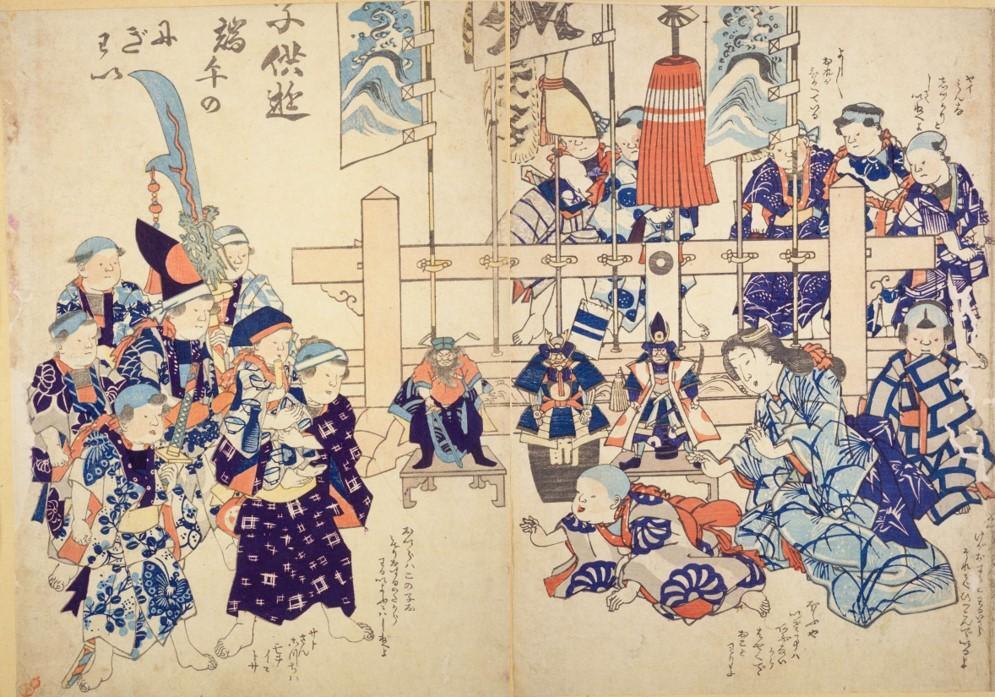
Peace changed the display. The column says that as the era of peace under the Tokugawa shogunate continued, the celebration of seasonal festivals spread from samurai families to common people. Common people could not afford real armor, helmets or swords, so miniature armor and helmets were made as decorations.
The shogunate, meanwhile, began to regulate kabuto adorned with elaborate decorations through sumptuary laws to curb extravagance. The column's next sentence is plain: "As a result, people began to carry out decorations for seasonal festivals inside their homes instead of in front of their houses." The column does not name the laws or give years.
The column adds a detail about how the display grew. Paintings show dolls and other crafts placed on top of decorated kabuto, and these were called kabuto ningyo. It is said, the column writes, that the decorative parts became gogatsu ningyo, the May dolls. Its summary is that May dolls moved from outside the home to inside it and became an increasingly ornamental handicraft.
That is a loss as well as a change, in our reading: the display went from the front of the house, where it announced a birth to passers-by, to the inside and, as the column puts it, became an increasingly ornamental handicraft. The March side of the calendar has a parallel story of Edo regulation, which our hina dolls guide covers under the Edo size laws.
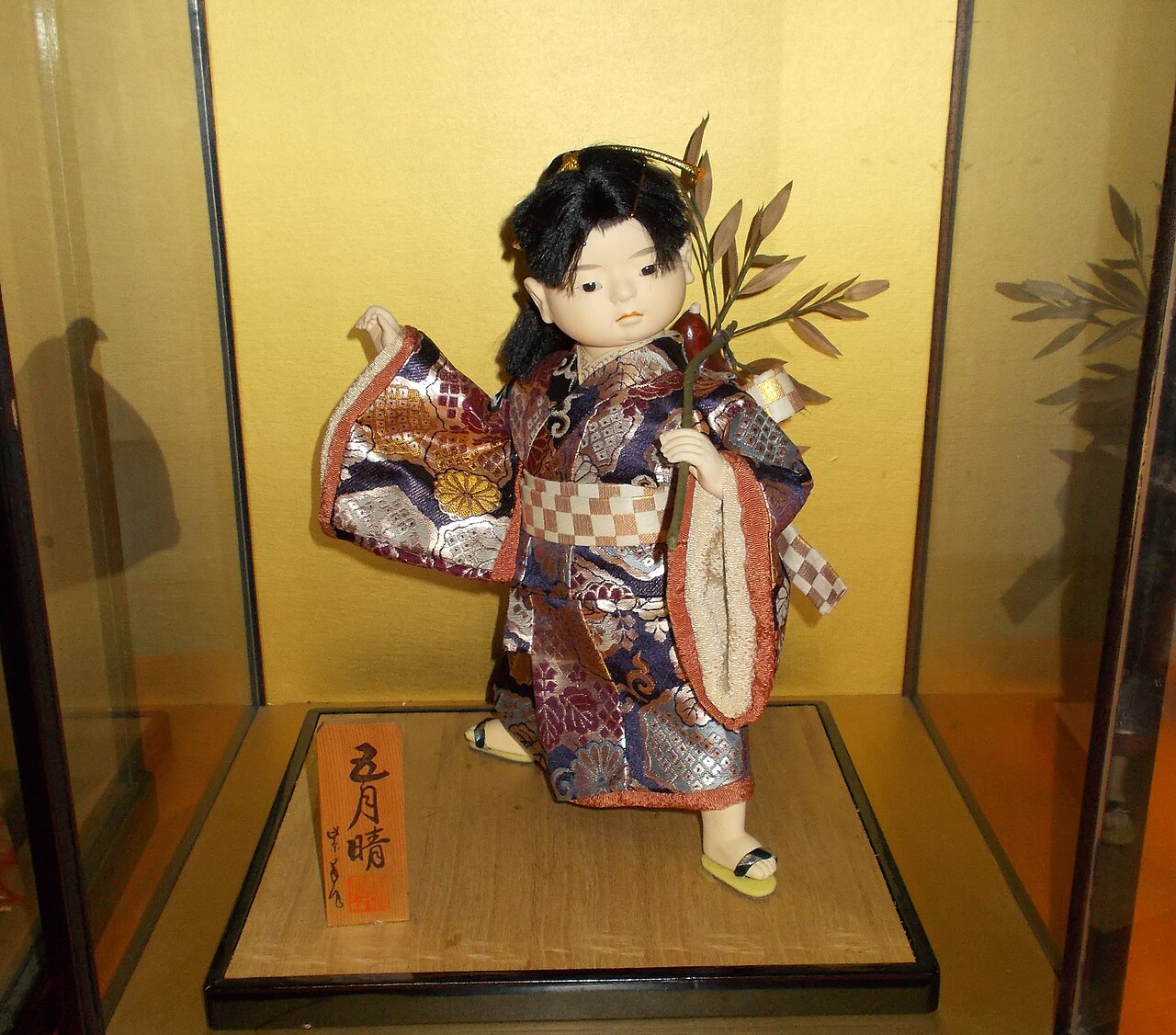
Gogatsu Ningyo: Kabuto, Yoroi and Warrior Dolls on a May Display
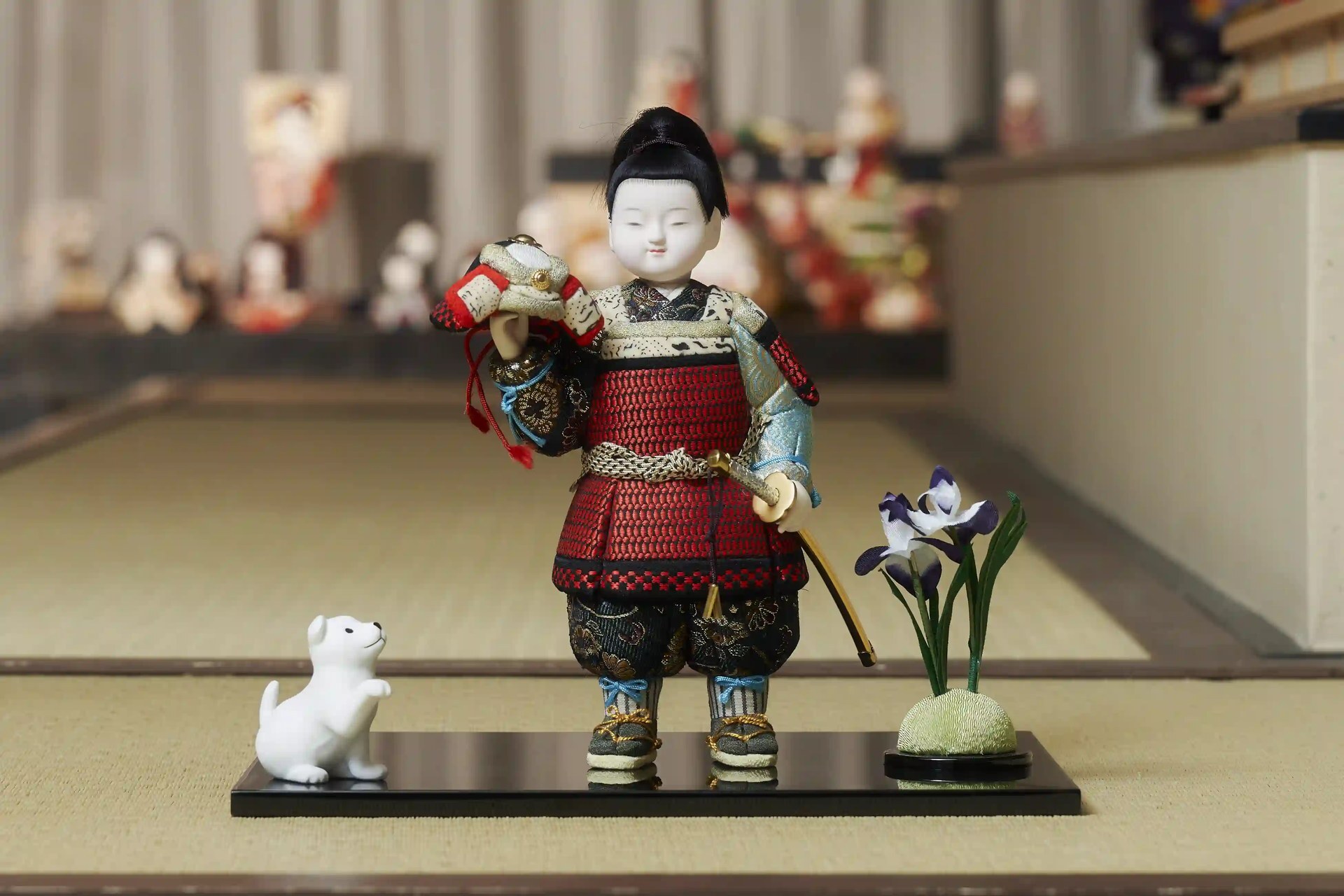
Gogatsu ningyo means May dolls, and two of the sources use the term for different things. nippon.com applies it to warrior figurines, and says dolls clad in armor, decorative samurai helmets and ornamental swords belong to the display. Wikipedia applies it to miniature armor and helmets, and says the formal modern display sits on a tiered shelf with a bow, a long sword, a war fan and samurai hats.
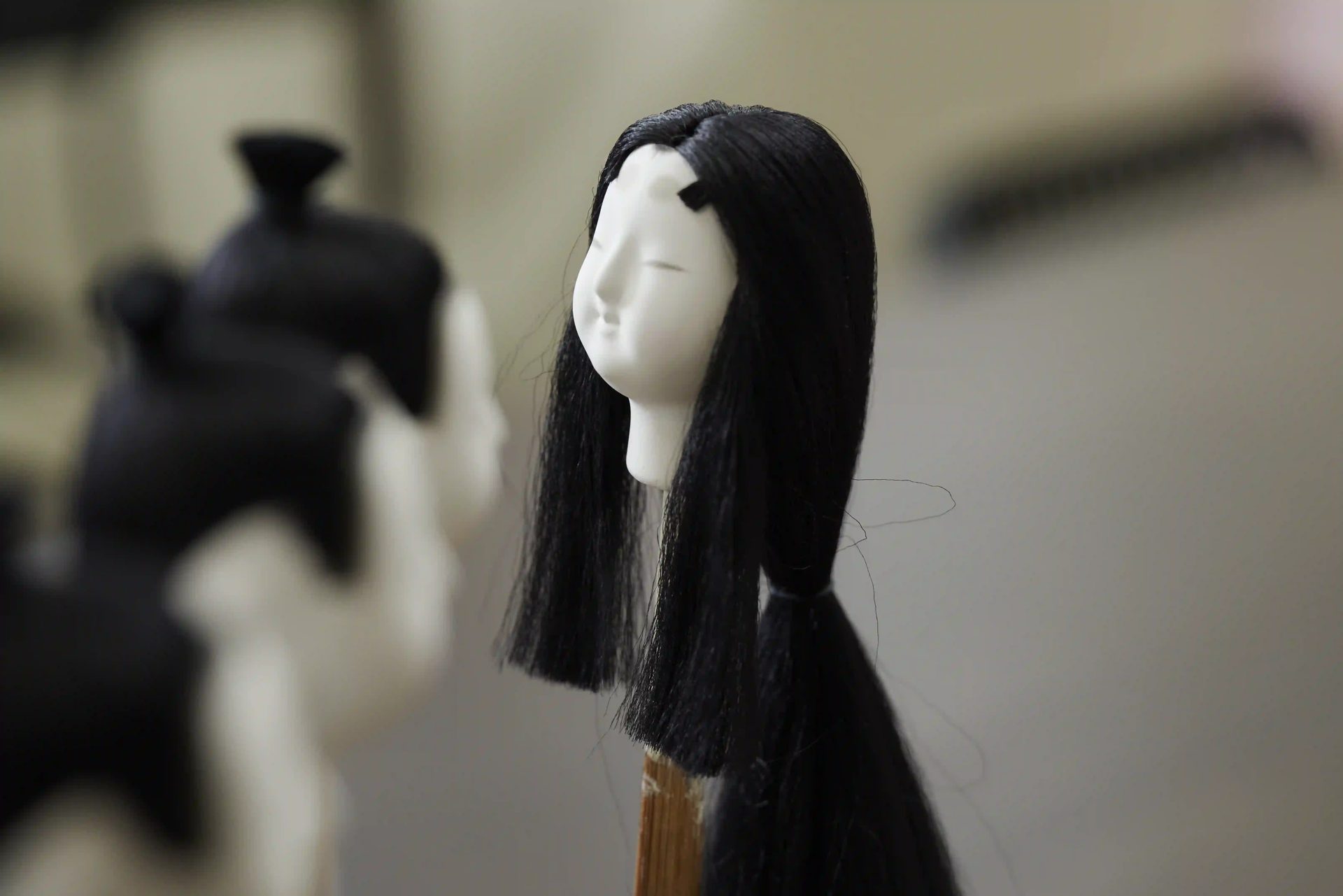
Our guide to kimekomi says that technique was absorbed into both the hina and the May doll trades.
Kabuto, Yoroi and Musha Ningyo: Three Things a May Display Can Hold
The Image Bank column supplies the vocabulary. Yoroi is armor, kabuto is a helmet, and musha ningyo is a warrior doll. These are three of the things the sources describe in a May display.
nippon.com says the warrior figurines and the other military regalia symbolize strength and courage, and that the armor-and-sword display is a tradition started by members of the warrior class.
Wikipedia says that until the Edo period, samurai dolls were more common than miniature armor, with folk heroes such as Momotarō, Kintarō, Ushiwakamaru, Benkei, Emperor Jinmu and Shōki often chosen as subjects.
Gifts for a Newborn Boy: Armor, Dolls and Swords in the Edo Doll Shops of Nihonbashi
The column says that a family with a newborn boy received warrior dolls, decorative helmets and armor, Chinese broadswords and other gifts as congratulations. In the mid-Edo period, it says, doll shops in places like Nihonbashi Jukkendana and Owari-cho displayed armor and helmets alongside dolls of fairy-tale heroes such as Kintarō, Momotarō, Issun-bōshi and Ushiwakamaru, and "bustled with people purchasing dolls to celebrate their children's first Tango no Sekku." Gradually, it adds, extravagant and expensive dolls began to be made. Nihonbashi is a district of central Tokyo today.
Koinobori: Carp Streamers, From an Edo Rooftop to a Tokyo Tower
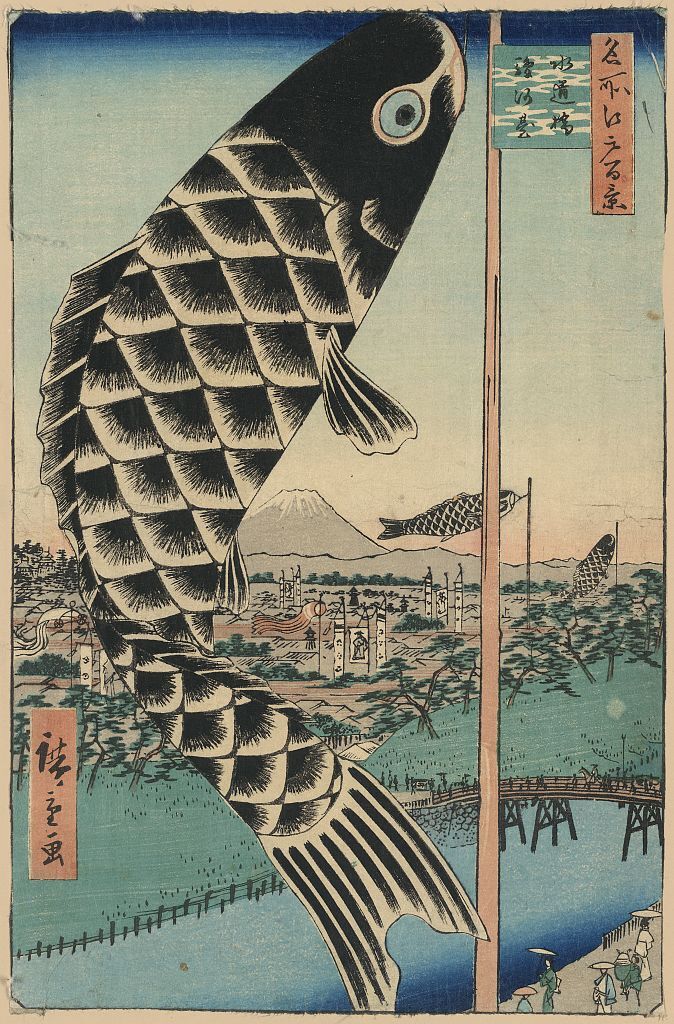
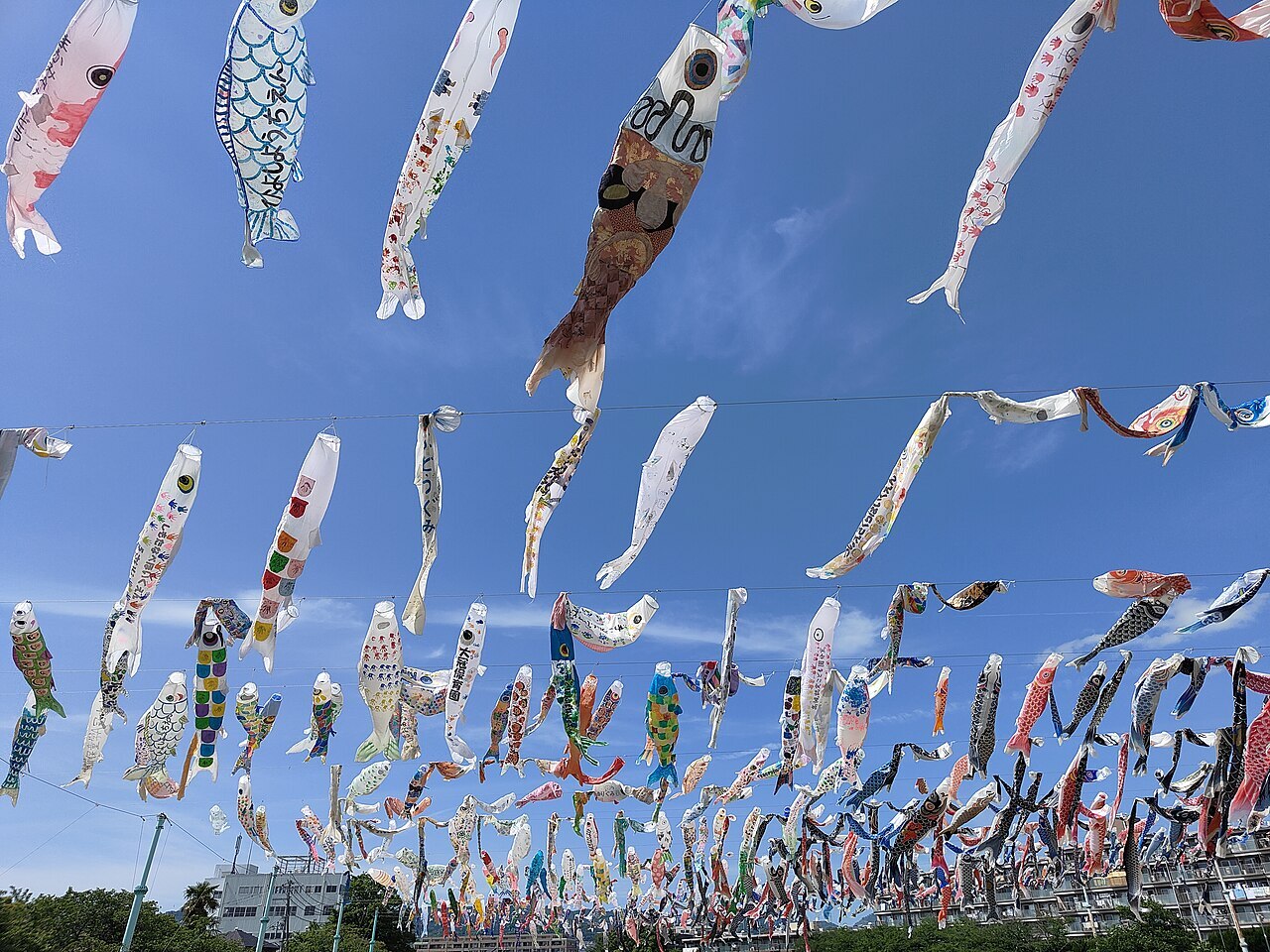
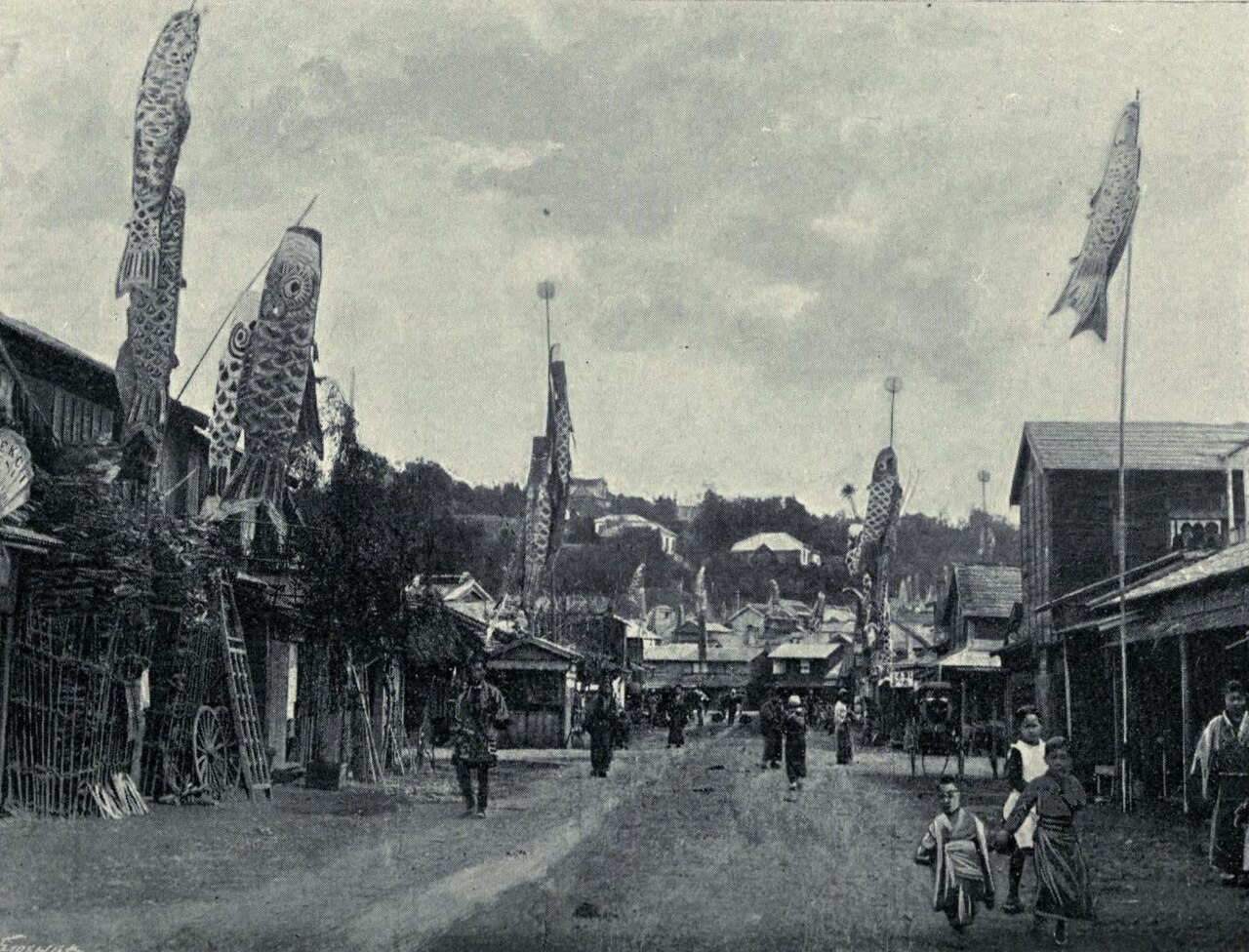
Koinobori, the carp-shaped windsocks, are the outdoor half of the festival. nippon.com calls them the most prominent decoration outside the house and says the tradition began in the Edo period.
Koinobori in Edo: What a Hiroshige Print Shows Over the Rooftops
The Image Bank's Boys' Day page lists, among its prints, one from Hiroshige's series of famous views of Edo, and the library's record dates it to 1857. nippon.com's English title for it is Suidō Bridge and Surugadai. In the print, a huge black carp streamer on a tall pole fills the foreground, smaller streamers float farther off, and Mount Fuji sits on the horizon.
nippon.com's article on the print adds context. It calls the print the forty-eighth in the series, which it says was published from 1856 to 1861, and says the quarter on the far bank, Surugadai, is identified on Edo-period maps as a samurai neighborhood. On Tango no Sekku, it says, Edo samurai families customarily hoisted banners and streamers bearing a family crest or the guardian spirit Zhong Kui, while carp streamers "were strictly for townspeople." Its author wonders whether placing a huge carp over a samurai quarter was a joke about the warrior class's declining authority.
Wikipedia gives an origin: it says the first koinobori appeared in Edo from the merging of two kinds of flag that samurai households flew in their yards, and that the colorful koinobori we know became popular from the Meiji era. The two nippon.com pieces say only that the tradition began in the Edo period and that, in Edo, carp streamers were for townspeople. We have not seen a source that settles the origin, so we give no year and no single origin.
Black, Red, Blue: Reading Koinobori Colors Without Over-Reading Them
What is the meaning of koinobori? nippon.com says the tradition has roots in a Chinese legend of a carp that became a dragon by ascending a swiftly flowing stream to the gates of heaven. Koinobori are hung out, it says, in the hope that children, like the carp in the story, will be blessed with vigor and determination to succeed in life.
For the colors, Wikipedia gives two readings. One is that a black carp stands for the father, a red or pink one for the mother, and one carp, usually blue, for each child. The other, which it ties to the days when the festival was celebrated as Boys' Day, is that the red carp was for the eldest son, with blue and other colors for younger brothers. The two put red in different roles, and the sources we read do not give years for either reading, so we offer them as readings and not as rules.
Is koinobori for boys or girls? nippon.com's Hiroshige article describes parents of boys unfurling carp streamers on May 5, and nippon.com says the festival's emphasis broadened to boys and girls in 1948, though the traditions remain strongly connected with boys.
Kashiwa Mochi, Chimaki and Shōbu: What Gets Eaten and Soaked on May 5
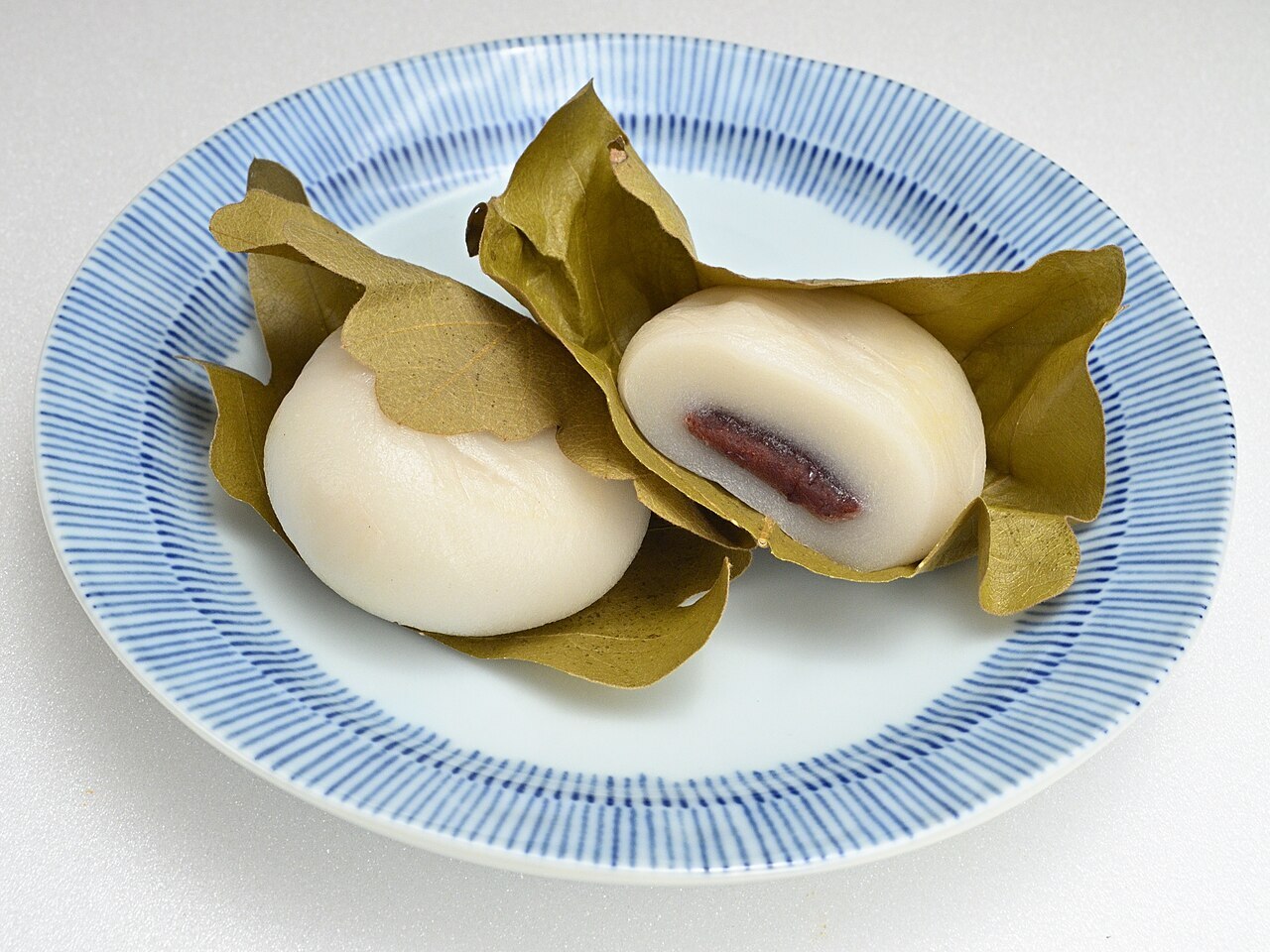
The food of the day is part of the same story. nippon.com says special foods thought to build vigor and ward off illness are served during the festivities. Among them are chimaki, steamed glutinous rice wrapped in bamboo leaves and tied with string, and kashiwa mochi, rice cakes filled with sweetened bean jam and wrapped in oak leaves.
Kashiwa Mochi in Edo, Chimaki in Kansai: Two Foods for One Festival
The National Diet Library's confectionery feature calls chimaki and kashiwa mochi the most famous sweets of Tango no Sekku. It says chimaki appears in a Heian-period dictionary as something eaten on the fifth day of the fifth month, but described there as rice wrapped in wild rice leaves and boiled in lye, so it seems not to have been a sweet food. When sweet chimaki became popular is unclear, it says, but sugar was being used for chimaki by the Edo period at the latest.
The same page records a regional split in gift-giving. According to Morisada manko, the work it cites, in Kyoto and Osaka people gave chimaki to relatives on the first Tango no Sekku after a boy's birth and kashiwa mochi from the second year onward. In Edo, by contrast, kashiwa mochi were given from the first year.
Treat this as one book's record of gift-giving, not a rule. The Ministry of Agriculture, Forestry and Fisheries says kashiwa mochi is eaten throughout Japan, and that depending on the region the sweets of the day also include chimaki, sasamaki and beko-mochi.
The Leaf That Does Not Fall: Why Kashiwa Mochi Is Wrapped That Way
The ministry's regional cuisine page for kashiwa mochi gives the reason for the leaf it describes. It says the sarutori ibara leaves that wrap the rice cake have been used since the Edo period to bring good luck that "the family lineage will never cease," because the leaves do not fall until new shoots appear in early summer. Wikipedia tells a similar story of the oak leaf, calling it a good-luck charm for the prosperity of offspring.
The ministry's page also shows that oak is not the only wrapper. Its entry for Yamaguchi Prefecture lists sarutori ibara leaves, not oak; oak is the usual description in nippon.com and Wikipedia.
A wish that a family will continue is a long way from armor and carp. We come back to it at the end, where a workshop head describes carrying on a family business.
From Boys' Day to Children's Day: A Calendar Reform and a 1948 Law
Two changes turned Tango no Sekku into the holiday on today's calendar. One, according to Wikipedia, moved the date, and the other changed the name. Both appear in the sources below.
Lunar Fifth Month to May 5: The Calendar Switch Behind the Date
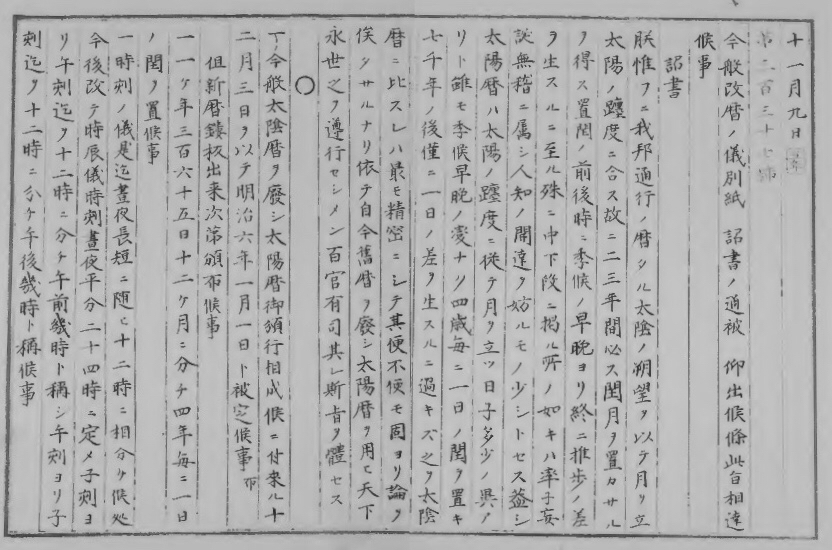
The National Diet Library's history of the Japanese calendar says the Meiji government replaced the old lunar calendar with the Gregorian one in November 1872, the fifth year of Meiji, and that the new calendar took effect the following year. There was little time to prepare: December 3 of the fifth year of Meiji became January 1 of the sixth, and "a great amount of confusion prevailed."
Wikipedia connects this to May 5. It says Tango no Sekku was celebrated on the fifth day of the fifth moon of the lunisolar calendar, and that after Japan switched to the Gregorian calendar the date was moved to May 5. That is the only source we found for the move itself.
Act No. 178 of 1948: Who the Day Was Rewritten For
The Act on National Holidays is Act No. 178 of July 20, 1948. Its first article says the people of Japan "hereby set aside specific days for national celebration, gratitude, or commemoration," and its second article lists Children's Day among them. The text defines the day as one for honoring the personality of children, working towards their happiness and expressing gratitude to mothers. The current English translation mentions neither boys nor girls.
The explanation that the day was renamed to include girls comes from other sources, not from the Act. nippon.com says the emphasis broadened to include both boys and girls when the day was adopted as the national holiday Children's Day in 1948. Wikipedia says the name was changed to include both male and female children, and to recognize mothers along with fathers.
That may surprise anyone who expects a boys' holiday. Boys' Day survives as an older name and as the festival's flavor, but in law the day is not a boys' day.
Where Boys' Day Shows Up in Tokyo: Three Layers of Access
The festival is easy to read about and harder to see in the city. Access comes in three layers: what anyone can see, what you can see if you know where to look, and what you reach only through an introduction or a program.
Anyone can see: Tokyo Tower's carp. The official GO TOKYO listing describes 333 carp streamers on the tower's first-floor entrance, matching the tower's height of 333 meters. Hidden among them is one additional streamer, 6 meters long, a giant Pacific saury. It was first flown in April 2011 to support reconstruction in Ofunato, Iwate Prefecture, after the 2011 Tohoku earthquake and tsunami. The listing gives the 2026 dates as March 18 to May 6, and notes that the 2026 installment has already taken place. The listing sums up the context: "Koinobori are not often seen in Tokyo anymore, but at Tokyo Tower they're still celebrated as a beloved feature of spring." The Diet Library's Boys' Day prints are also open to anyone to browse online.
If you know to look: Asakusabashi in the weeks before. Our kimekomi guide describes the doll district's seasonal rhythm. In the weeks before Hinamatsuri or Boys' Day, the guide says, the street runs at wholesale intensity, with buyers moving cases of dolls to department stores and family homes. That is mostly a wholesale street, not a showroom.
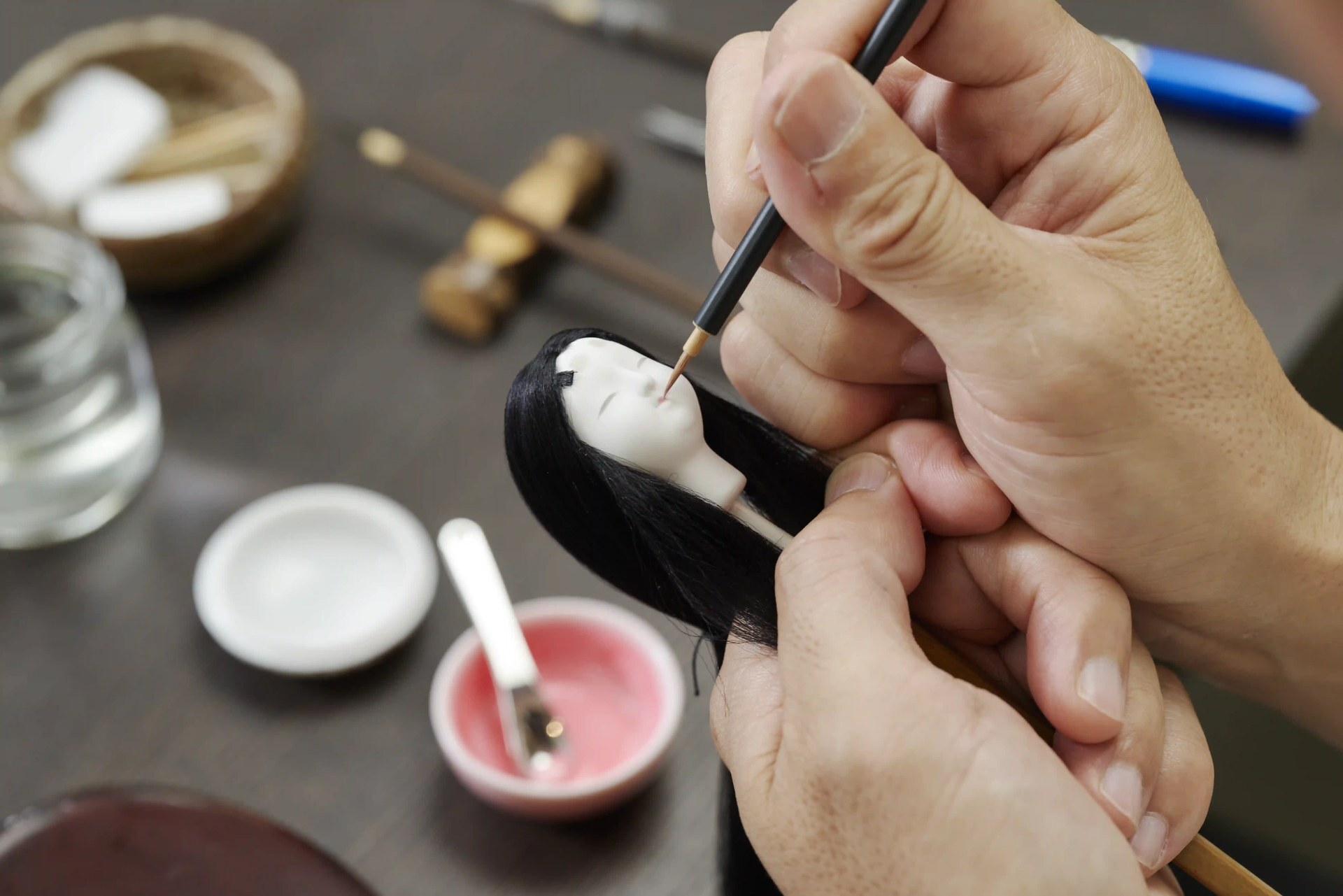
By introduction or program: the maker's workbench. The third layer is the workshop, which our kimekomi guide describes as a bench that typically needs an introduction or a formal program. Our interview with Kenji Kanabayashi takes you to the bench of a kimekomi maker. It speaks about Sekku dolls in general, not May dolls.
Boys' Day Today: Smaller Houses, Postwar Habits and One Workshop's Read
The most recent change involves size again, for a different reason. The public sources describe it, and one doll maker, speaking about Sekku dolls in general, adds a view from inside the trade.
Glass Cases and Wearable Kabuto: What a Smaller House Does to the Display
nippon.com says that as people continue to move to the city, limited living space has kept many families from displaying large koinobori and full sets of seasonal trappings. It reports compact sets of miniature helmets, armor and other decorations arranged in glass cases, small carp streamers made to fit apartment balconies, and a trend of wearable kabuto, helped by a household habit of photographing sons dressed as mini-samurai on Boys' Day.
Wikipedia says the popularity shifted in the Showa era from samurai dolls to miniature armor, and that since the twenty-first century miniature helmets have become popular, "probably due to the size of Japanese homes."
Put beside the Edo story, this is a second shrinking. Our reading is that in Edo, cost led common people to miniature armor and the rules moved the display indoors, and that today the size of the house shrinks it again.
From the 1950s Sekku Boom to Today: How a Doll Workshop Reads the Market
In our interview, Kenji Kanabayashi, third-generation head of the doll workshop Mataro, describes the postwar change in Sekku dolls as a whole. Before that, he says, the celebrations were something only relatively wealthy families could afford to give their children. After the war, that feeling spread to ordinary households. In his words, the feeling was "I want to do this for my daughter too" and "I want to celebrate when my son is born." Combined with the baby boom, he says, the number of Sekku dolls grew all at once. He names the period in the same breath: "The 1950s and '60s, I think, were the period when Sekku goods developed the most."
On size, he says kimekomi dolls tend to be smaller than ishōgi dolls, which are dressed in sewn costumes, and that this suits modern housing conditions very well. He gives a rough split between the two techniques within Sekku dolls: it used to be said that ishōgi held about eighty percent and kimekomi twenty, but it has shifted to something like seven to three, even six to four. This is one workshop head's estimate about two techniques, not a statistic.
He also says what the dolls are for: "The dolls made for Sekku carry a parent's wish that their newborn child grow up happy and healthy." Set that beside the leaf around the rice cake. A wish for a child's health and a wish that a family continues sit side by side in the festival, and he is himself carrying on a family business that he says he felt he had to keep going and pass to the next generation. That echo is our observation, not his words.